
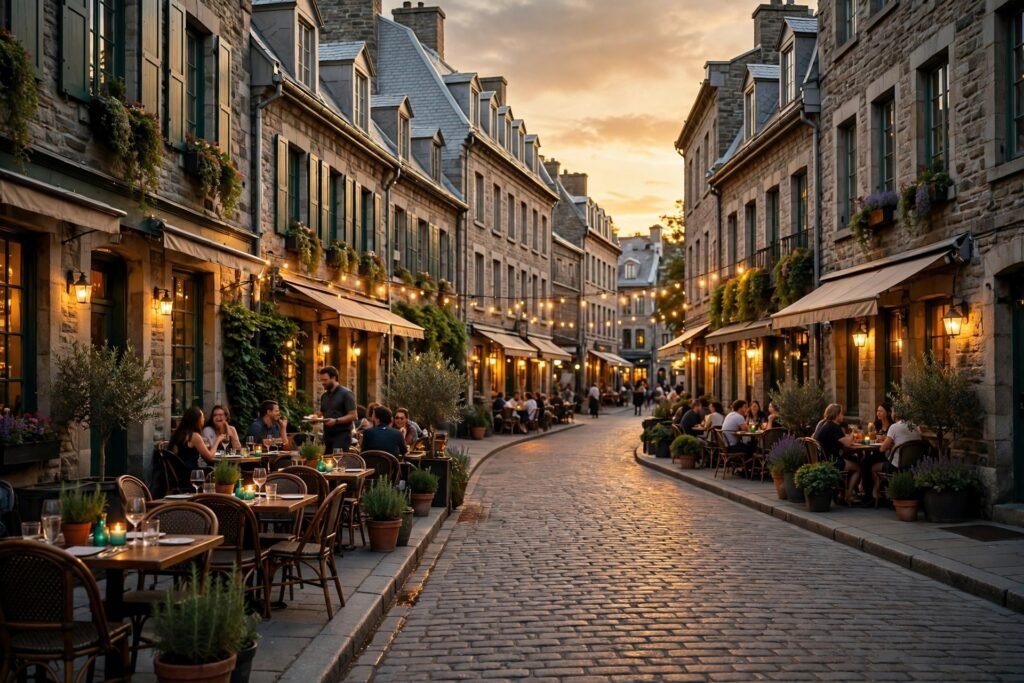
Montreal is the kind of city that wins people over slowly, then all at once. If you are planning a trip and wondering what to do in Montreal, picture this: cobblestone streets and a centuries-old port, a small mountain in the middle of the city, markets piled with Quebec cheese and maple syrup, bagels coming out of wood-fired ovens, and French spoken everywhere with a warm North American smile. It is the largest French-speaking city in the Americas, and it feels like nowhere else on the continent.
The good news is that Montreal rewards any style of trip: a beautifully preserved old town for history lovers, one of the best food scenes in Canada, romantic riverfront walks for couples, and museums and gardens that fill entire days for families. This guide pulls together the best of it, the sights not to miss, the neighborhoods worth wandering, what to eat, and the practical details of a first visit. Leave a little room for the café you find by accident; in Montreal, the detours are often the best part.
The short answer

Short on time? Here are the five things to do in Montreal that belong on every first trip:
- Wander Old Montreal and step inside the breathtaking Notre-Dame Basilica.
- Climb Mount Royal to the Kondiaronk Belvedere for the classic skyline view.
- Eat your way through Jean-Talon Market, the city’s great open-air food market.
- Taste a warm Montreal bagel from St-Viateur or Fairmount in Mile End.
- End a day in the Old Port, with a ride on La Grande Roue as the city lights come on.
Everything below builds on these five, with plenty more to fill two, three or four happy days.
The best things to do in Montreal
1. Wander the streets of Old Montreal
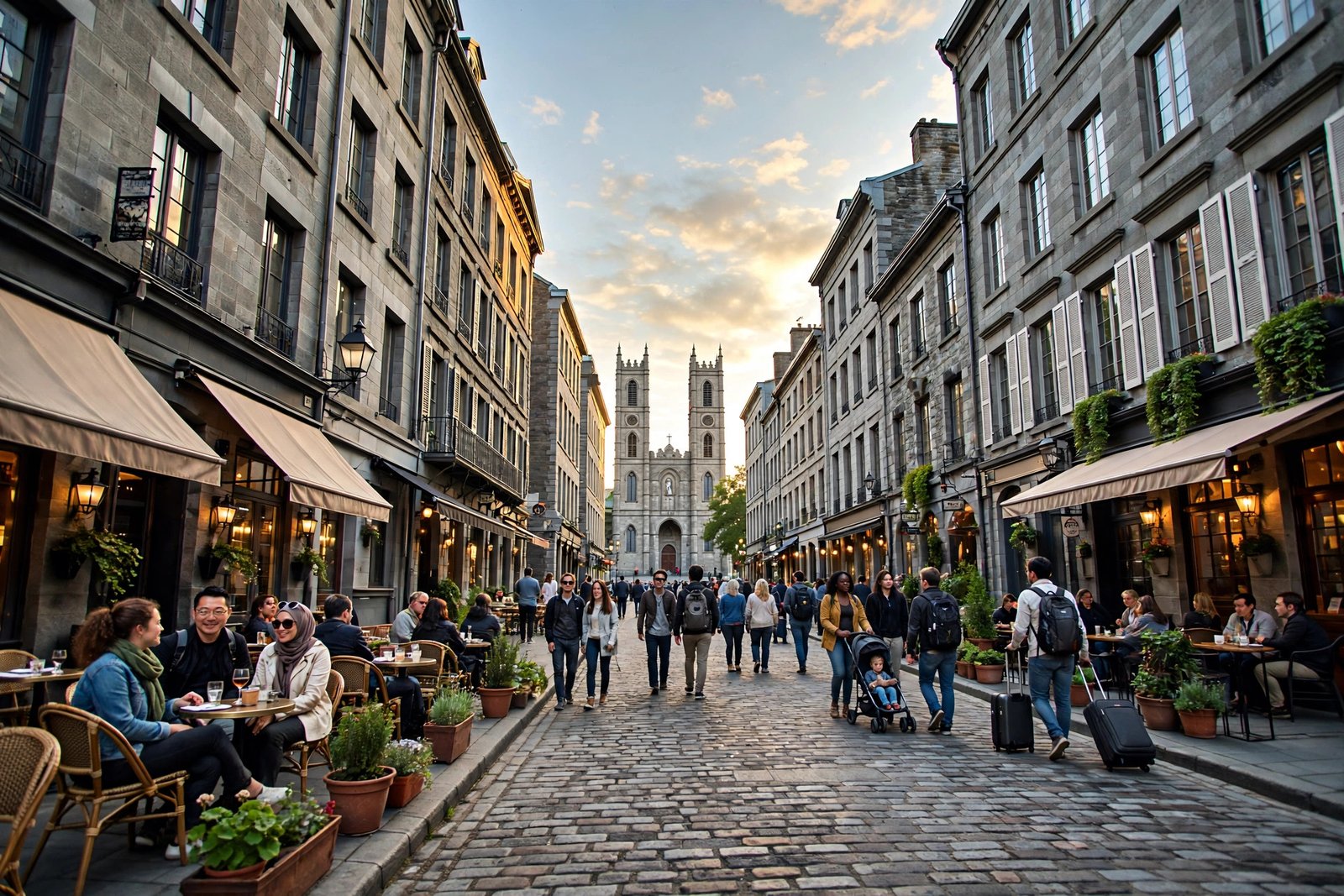
Old Montreal (Vieux-Montréal) is where the city began, and it is still its most atmospheric quarter. Cobbled streets run between stone buildings from the 17th, 18th and 19th centuries, with café terraces spilling onto Place Jacques-Cartier. There is no real itinerary here, and that is the point: start at Place d’Armes, drift down Rue Saint-Paul, peek into courtyards and galleries, and let the neighborhood unfold. Come back in the evening, when the old stone facades are lit and the district turns golden.
2. Step inside Notre-Dame Basilica
From the outside, Notre-Dame Basilica looks like a grand but fairly sober Gothic church on Place d’Armes. Then you walk in, and the interior stops you in your tracks: deep blue vaults scattered with golden stars, carved and painted wood everywhere, stained glass that tells the story of Montreal itself rather than the usual Bible scenes. It is widely considered one of the most beautiful church interiors in North America. Of everything on this list of what to do in Montreal, this is the sight people talk about most when they get home.
3. Go underground at Pointe-à-Callière
Literally at the spot where Montreal was founded in 1642, Pointe-à-Callière is the city’s museum of archaeology and history, built directly over the excavated remains of the original settlement. You descend below street level and walk among real foundations, an old cemetery, and even a stretch of the city’s first collector sewer, all presented with smart multimedia. It is the single best place to understand how a small French mission on the St. Lawrence became a great city.
4. Ride La Grande Roue and stroll the Old Port
The Old Port stretches along the river below Old Montreal, and it is the city’s playground: lawns, cycling paths, river cruises, and the Clock Tower watching over it all. The landmark you cannot miss is La Grande Roue de Montréal, the big observation wheel whose glass cabins lift you high above the rooftops for views over the river, downtown and Mount Royal. Ride near sunset, when the light turns soft and the city starts to sparkle, then walk the promenade and enjoy the river air.
5. Climb Mount Royal to the Kondiaronk Belvedere
Montrealers call it “the mountain,” and it sits right in the middle of the city: a big, leafy park designed in the 19th century by Frederick Law Olmsted, the landscape architect behind New York’s Central Park. Trails wind up through the trees to the Kondiaronk Belvedere, the famous stone lookout in front of the Mount Royal Chalet. From there, the downtown skyline and the St. Lawrence River spread out below you. Go on a clear morning for crisp views, or in autumn, when the park’s maples turn the whole hill red and gold. It is free, it is easy, and it is the view of Montreal you have seen in photos.
6. Visit Saint Joseph’s Oratory
On the western slope of Mount Royal rises Saint Joseph’s Oratory, its great green copper dome visible from all over the city. Founded by Brother André, now Saint André of Montreal, it grew from a tiny chapel into one of Canada’s most important pilgrimage sites, and its basilica is among the largest churches in the country. Pilgrims famously climb the central wooden steps on their knees; everyone else can take the regular stairs and still enjoy the sweeping terrace view. Even if you are not religious, the scale and the calm are impressive.
7. Spend a few hours at the Montreal Museum of Fine Arts
The Montreal Museum of Fine Arts (Musée des beaux-arts de Montréal) is one of Canada’s premier art museums, spread across several pavilions on Sherbrooke Street West, in the elegant Golden Square Mile. The collection runs from Old Masters to Canadian and Inuit art, modern design and major international exhibitions. It is the perfect rainy-day or slow-morning plan, and the mansion-lined surrounding streets are worth a stroll in themselves. Give it at least a couple of hours; art lovers will happily lose half a day.
8. Graze your way through Jean-Talon Market
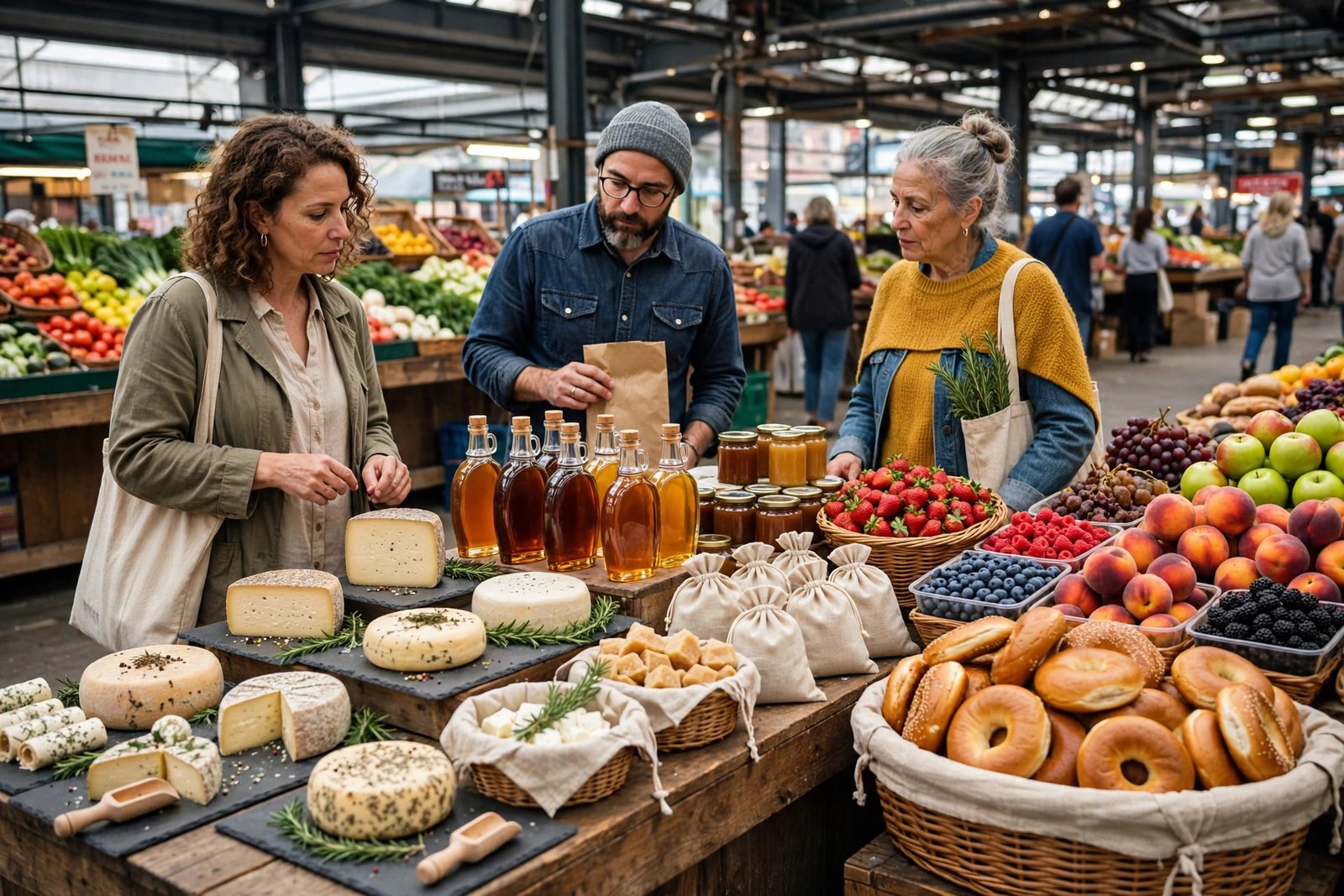
In the heart of Little Italy, Jean-Talon Market is one of the largest open-air markets in North America, and a joyful assault on the senses. Stalls overflow with Quebec produce, farmhouse cheeses, maple products, flowers, baked goods and prepared foods you can eat on the spot, and vendors hand out samples generously. Go hungry, wander the aisles, and build yourself a picnic of local cheese, bread and fruit. This is everyday Montreal at its most delicious.
9. Eat like a local at Atwater Market
Smaller and more polished than Jean-Talon, Atwater Market sits in a handsome Art Deco building near the Lachine Canal, in the Saint-Henri neighborhood. Inside, butchers, cheesemongers, bakers and specialty food shops line the halls, and the upper level is made for a casual lunch. Locals actually shop here, which tells you everything about the quality. Pair it with a walk or a bike ride along the canal. Between the two markets, you will understand why Montrealers take food so seriously.
10. Taste the great bagel rivalry
Montreal bagels are not New York bagels, and locals will happily explain the difference: hand-rolled, boiled in honey-sweetened water, then baked in a wood-fired oven, which makes them smaller, denser, slightly sweeter, and best eaten warm. The two legendary bakeries sit streets apart in Mile End and have been rivals for generations: St-Viateur Bagel, baking since 1957, and Fairmount Bagel, the original, dating back to 1919. The only correct move is to try a hot bagel from each and pick your own champion.
11. Order a proper poutine
Fries, fresh cheese curds that squeak against your teeth, and hot gravy poured over the top until everything melts together: poutine is Quebec’s gift to comfort food, and Montreal is where most visitors fall for it. You will find it everywhere, from old-school diners to late-night counters, plus creative versions topped with everything from foie gras to smoked meat. The rule is simple: the curds must squeak, and the gravy must be hot enough to melt them. Start with a classic before you get adventurous, and do not plan anything ambitious right afterwards. A nap may follow.
12. Explore Espace pour la vie: the Biodôme and the Botanical Garden
Out by the Olympic Park, the Espace pour la vie (Space for Life) complex brings together the city’s great nature museums, and two of them deserve a place on any list of what to do in Montreal. The Biodôme recreates five ecosystems of the Americas under one roof: you walk from a humid tropical rainforest to a Laurentian maple forest, then on to subpolar regions where puffins and penguins dive. Next door, the Montreal Botanical Garden is one of the world’s great gardens, with themed collections including beloved Chinese and Japanese gardens. Together they make a fascinating half or full day, especially with kids.
13. Walk or cycle along the Lachine Canal
The Lachine Canal opened in 1825 to let ships bypass the rapids west of the port, and today its banks are one of the city’s favorite green corridors. A paved path follows the water from the Old Port toward Lake Saint-Louis, passing old factories turned lofts, picnic spots and locks where boats still pass in summer. Rent a bike, ride out along the canal, and loop back through Atwater Market for supplies. It is the most relaxing way to see a different, industrial-chic side of Montreal.
14. End the day in the Quartier des spectacles
Montreal’s entertainment district, the Quartier des spectacles, wraps around Place des Arts downtown and is the beating heart of the city’s festival life. This is where the big stages, concert halls and theaters cluster, and where outdoor festival sites take over the streets in summer, most famously during the Montreal International Jazz Festival, the largest jazz festival in the world. Even outside festival season there is almost always a show or a free outdoor installation around Place des Festivals. Check what is on during your dates, and let the city entertain you.
What to do in Montreal by neighborhood
Big cities make more sense one neighborhood at a time, and Montreal’s districts each have their own personality. Here is how to read the map.
Old Montreal and the Old Port. This is the historic showcase: cobblestones, the Basilica, Pointe-à-Callière, museums, galleries, and the riverfront promenade with La Grande Roue. It is the prettiest part of the city and the most touristy, which means the best strategy is to enjoy it early in the day or in the evening glow, and to eat a street or two away from the busiest squares.
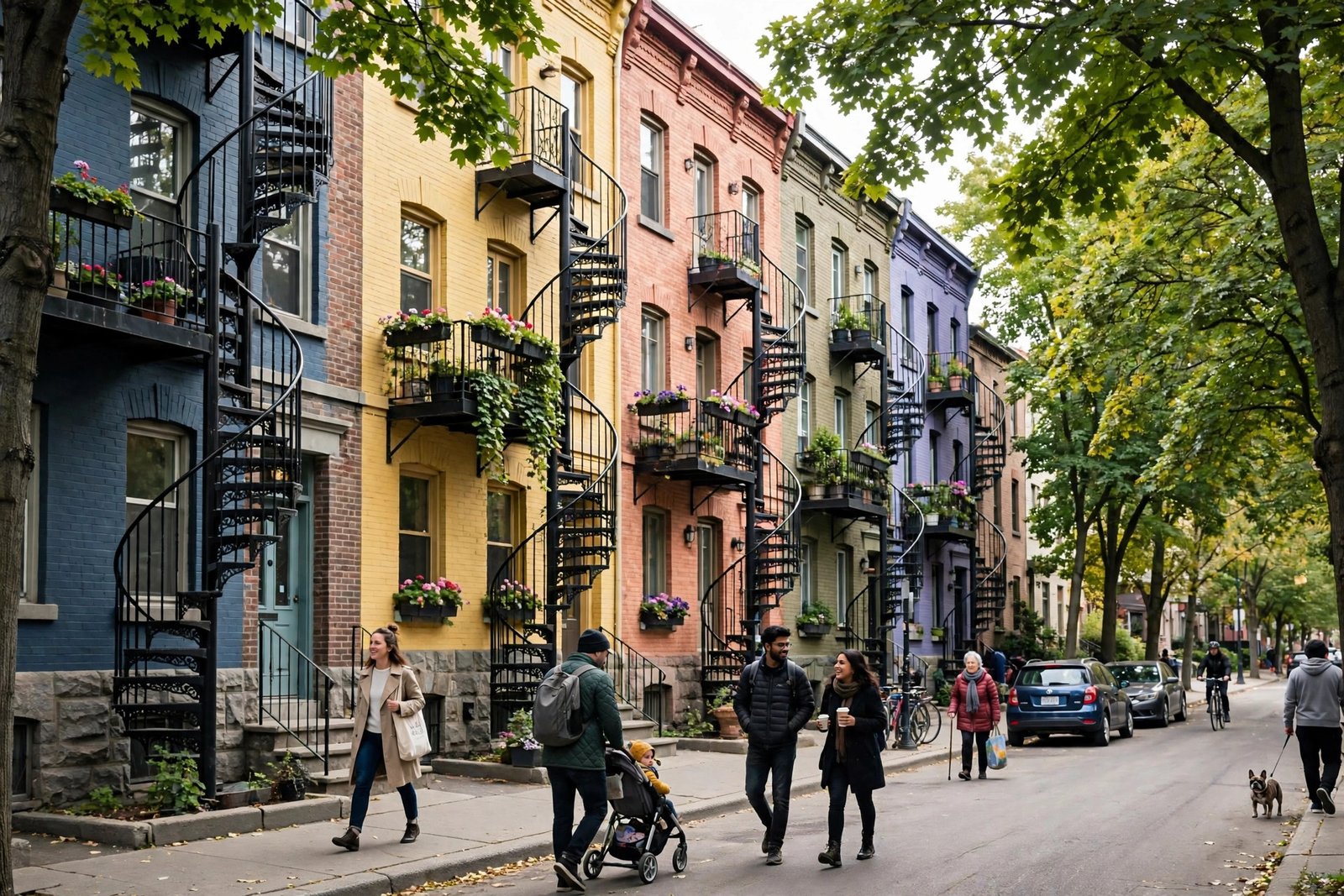
Le Plateau Mont-Royal and Mile End. North of downtown, this is the Montreal people fall in love with: colorful row houses with outdoor spiral staircases, leafy streets, independent cafés, bakeries, vintage shops and street art. Mile End, at its northern edge, adds the famous bagel bakeries, coffee roasters and a creative, laid-back energy. Come here to slow down, brunch, browse and wander with no agenda beyond the next good coffee.
Downtown and the Golden Square Mile. Towers, shopping streets like Sainte-Catherine, big museums and the Quartier des spectacles: downtown is Montreal’s engine room, and the Museum of Fine Arts anchors its historic mansion-lined quarter. Underneath it all runs the famous Underground City, a vast network of tunnels linking malls, metro stations and office towers, a lifesaver on the coldest winter days and a curiosity worth exploring any time.
Griffintown and the canal side. Southwest of downtown, Griffintown was once an Irish working-class district of factories and warehouses; today its old industrial buildings hold lofts, restaurants and trendy tables. It flows naturally into the Lachine Canal path and Atwater Market, a great base for a food-and-bike afternoon: ride the canal, graze at the market, then finish with dinner in the neighborhood.
If you only have one day in Montreal

One day is not much, but Montreal’s essentials cluster nicely. Here is a realistic plan that hits the highlights without running you off your feet.
Morning. Start early in Old Montreal, before the crowds. Walk the quiet cobblestones to Place d’Armes and go into Notre-Dame Basilica first, while the light is soft and the lines are short. Then descend into Pointe-à-Callière for the story of how the city began. Finish the morning with coffee and a pastry on Rue Saint-Paul.
Afternoon. Head up to Mount Royal. Walk the main path to the Kondiaronk Belvedere and take in the skyline you have been walking through. Come down on the Plateau side and reward yourself: a warm sesame bagel from St-Viateur or Fairmount in Mile End, then a slow wander through the Plateau’s streets and shops.
Evening. Make your way back to the Old Port. Ride La Grande Roue at dusk, stroll the promenade along the river, then settle into dinner: this is the right moment for a classic poutine, a smoked meat sandwich, or a proper bistro meal. If a festival or show is on in the Quartier des spectacles, let it close your night.
Where to eat in Montreal
Montreal takes eating seriously, and a first visit should be built around its classics. These are dishes and food experiences, not a list of fashionable addresses, so you can find great versions in many neighborhoods.
Montreal bagels. Smaller, denser and slightly sweet, boiled in honey water and baked in wood-fired ovens. The pilgrimage is to Mile End, where St-Viateur and Fairmount bake around the clock. Eat one warm, straight from the paper bag, standing on the sidewalk like a local.
Poutine. Quebec’s iconic trio of fries, squeaky cheese curds and hot gravy. Diners, snack bars and late-night counters all over the Plateau and downtown serve it, from the classic version to loaded variations. It is not delicate, and that is exactly the point.
Smoked meat. Montreal’s other famous sandwich: beef brisket, cured and smoked with a peppery spice blend, steamed and hand-sliced, piled high on rye with mustard. The historic delis along Saint-Laurent Boulevard, Schwartz’s being the most famous, have served it for generations. Expect a queue at peak times; it moves fast and it is worth it.
The markets. Jean-Talon in Little Italy and Atwater near the canal are where the city’s food culture shows itself best: Quebec cheeses, charcuterie, maple products, baked goods and seasonal produce. Go in the morning, taste widely, and assemble a picnic for Mount Royal or the canal banks.
Beyond the classics. Montreal is also a great French bistro city, layered with Portuguese, Italian, Jewish, Haitian, Vietnamese and many other cuisines. The Plateau, Mile End and Little Italy are all safe bets for a memorable, unpretentious meal.
Practical tips for visiting Montreal
- Getting around. The metro is clean, simple and covers most sights, with four lines color-coded for easy navigation. Pair it with walking: the central neighborhoods (Old Montreal, downtown, Plateau, Mile End) are compact and made for strolling. Biking is excellent too, with a large network of protected paths and a widely used bike-share system.
- When to go. Late spring through early autumn is prime time: terraces open, festivals fill the calendar, and the city lives outdoors, with the world-famous Jazz Festival as the summer peak. Autumn adds glorious fall colors on Mount Royal. Winter is genuinely cold, often well below freezing, but the city embraces it with festivals, skating and the Underground City; pack serious layers between December and March.
- Language. Montreal is a French-speaking city where English is widely understood, especially in central and tourist areas. A friendly “bonjour” to start, then switching to English if you need to, is the polite local rhythm, and people appreciate the effort. Menus and signs are often bilingual.
- Mistakes to avoid. Do not try to see everything in one day; Montreal rewards lingering. Do not skip the neighborhoods for only the old town; the Plateau and Mile End are where the city’s soul lives. Do not compare the bagel to New York’s within earshot of a Montrealer unless you want a long, passionate lecture. And in winter, do not underestimate the cold: the right coat and boots make the difference between miserable and magical.
- Money and basics. Canada uses the Canadian dollar, cards are accepted almost everywhere, and tipping in restaurants follows the usual North American custom. If you are coming from abroad, check current entry requirements before you travel.
FAQ
What is Montreal best known for?
Montreal is best known for its French language and culture in the heart of North America, its historic Old Montreal district, and its food: bagels, poutine and smoked meat are practically civic symbols. Add Mount Royal and its famous lookout, a packed summer festival calendar led by the International Jazz Festival, and a reputation as one of Canada’s most creative big cities, and you have the picture.
How many days do you need in Montreal?
Two to three days is the sweet spot for a first visit. One day lets you cover Old Montreal, the Basilica and Mount Royal at a brisk pace. A second day adds the markets, Mile End and the Plateau, and a third gives you the big museums, the Biodôme and Botanical Garden, or a relaxed canal-side afternoon. If you are asking yourself what to do in Montreal for a longer stay, the city easily fills four or five days once you add day-trip pacing, festivals and slow neighborhood time.
Is Montreal worth visiting?
Yes, without hesitation. Montreal offers a combination that is hard to find elsewhere: a genuinely historic old town, a major food scene, big-city culture and a European feel, at a pace that stays relaxed and welcoming. It suits first-time visitors to Canada, couples, families, and food lovers above all. Many visitors arrive curious and leave planning their return.
What should you not miss in Montreal?
If you trim this guide down to the essentials, do not miss these: the interior of Notre-Dame Basilica, the view from the Kondiaronk Belvedere on Mount Royal, a warm bagel eaten on a Mile End sidewalk, and an unhurried wander through one of the great markets, Jean-Talon or Atwater. Those four moments capture the history, the landscape, the food and the everyday life of the city in one trip.
Final thoughts

Montreal is not a city you “do” in a checklist; it is a city you settle into, one terrace, one market aisle and one neighborhood at a time. Start with the classics in this guide, then let your curiosity take over. The best answer to what to do in Montreal usually turns out to be the café you ducked into, the festival you stumbled on, or the street you wandered down just because it looked beautiful.
Ready to plan the rest of your trip? Browse the city guides and ideas in our Travel section to keep building your itinerary. And because Montreal is one of the most romantic cities in Canada, couples will also find plenty of inspiration in our Love & Relationships reads. For official visitor information, events calendars and seasonal ideas, the Tourisme Montréal website is the city’s own reference and a reliable companion to this guide.
Bon voyage, and enjoy every minute of it.
Pingback: How to Build a Morning Routine That Protects Your Energy - The Honest Truth
Pingback: How to Start Reading Again as an Adult - The Honest Truth
Pingback: How to Host Thanksgiving Without Burning Out - The Honest Truth
Pingback: What to Gift Your Best Friend - The Honest Truth
Pingback: How to Find Your Personal Style - The Honest Truth
Pingback: How to Host a Dinner Party Without Stress - The Honest Truth
Pingback: What to Do in Toronto - The Honest Truth
Pingback: What to Wear When You Feel Like You Have Nothing to Wear - The Honest Truth
Pingback: How to Start Moving Again When You Hate Exercise - The Honest Truth
Pingback: How to Host a Movie Night Everyone Remembers - The Honest Truth
Pingback: How to Start Your Own Holiday Traditions as an Adult - The Honest Truth
Pingback: Why Is Everyone Quitting Social Media - The Honest Truth
Pingback: What to Do in Quebec City: A Complete Guide - The Honest Truth
Pingback: How to Survive Family Holidays Without Losing Your Mind - The Honest Truth
Pingback: What to Do in Laval: A Complete Guide to Montreal's Island Neighbor - The Honest Truth
Pingback: What to Do When You Spend the Holidays Alone - The Honest Truth
Pingback: The Best Book Club Questions That Actually Start Conversations - The Honest Truth
Pingback: The Best Feel-Good Movies to Watch When You Need a Reset - The Honest Truth
Pingback: The No-Buy Trend: Why Women Are Freezing Their Spending to Save Money - The Honest Truth
Pingback: The Rise of Solo Travel for Women: Why Everyone Is Going Alone - The Honest Truth