

Quebec City is the rare North American city that stops you in your tracks within the first ten minutes. Stone walls, church spires, narrow streets climbing a cape above the St. Lawrence River, and a castle-like hotel watching over it all. If you are wondering what to do in quebec city on a first visit, the good news is that the city rewards simple plans. Walk slowly, eat well, and let the Old Town do most of the work.
This guide covers what to do in quebec city in a practical order. It starts inside the walls, moves down to the Lower Town, then heads beyond the historic centre to waterfalls, an island of farms and villages, and neighbourhoods where local life takes over. You will find a quick plan, a full day itinerary, food ideas without invented prices, and honest advice on timing, weather and walking.
One thing to know before you arrive: Quebec City is proudly French speaking. You will hear French first in shops, cafes and museums, and English is widely understood in the visitor areas. A simple bonjour goes a long way, and trying a few words is part of the pleasure of being here.
The quick plan

If you have limited time and need the short version of what to do in quebec city, start with these five experiences. Together they give you the history, the views, the food and the one great natural sight near the city.
First, walk the fortified Old Town from end to end. Old Quebec was designated a UNESCO World Heritage Site in 1985, and the official visitor guide describes it as the most intact fortified town north of Mexico, with more than 400 years of history in the birthplace of French North America. That is not marketing language. The walls, gates and stone houses are still the living centre of the city.
Second, stand on Terrasse Dufferin beside the Fairmont Le Chateau Frontenac and look out over the river. Third, descend to Petit-Champlain and Place-Royale in the Lower Town for the oldest streets and the prettiest shopping in the city. Fourth, walk the Plains of Abraham and visit the Citadelle to understand the battle that changed Canada. Fifth, leave the centre for half a day to see Montmorency Falls, a waterfall taller than Niagara, and, if you have time, cross to Ile d’Orleans.
That list is the backbone of what to do in quebec city. Everything else in this guide adds depth, flavour and breathing room around it.
What to do in quebec city inside the walls: Upper Town

The Upper Town sits on top of Cape Diamant, inside and around the fortifications, and it is where most first visits begin. When people picture what to do in quebec city, this is usually the picture: stone, slate roofs and river views at the end of every second street.
Fairmont Le Chateau Frontenac and Terrasse Dufferin
The Chateau Frontenac is the most photographed landmark in the city, a grand hotel that looks like a French castle and dominates the skyline from almost every angle. You do not need to stay there to enjoy it. Walk around it, admire it from below in the Lower Town, and then take your time on Terrasse Dufferin, the wide boardwalk that runs beside it.
The terrace is one of the essential answers to what to do in quebec city because it gives you the geography of the whole place in one view. Below you is the Lower Town and the Old Port. Across the wide St. Lawrence is Levis. In winter, a toboggan slide operates on the terrace, a tradition that turns the viewpoint into a small festival of speed and laughter. In summer, street performers and slow evening light do the same job more gently.
Notre-Dame de Quebec Basilica-Cathedral and Rue Saint-Jean
A short walk from the terrace brings you to the Notre-Dame de Quebec Basilica-Cathedral, one of the oldest parishes in Canada, standing on a site with centuries of worship behind it. Step inside for the calm, the artwork and the sense of how central faith was to the founding of the city. The surrounding streets hold City Hall, small squares and the kind of bookshops and cafes where a morning can happily disappear.
From there, drift toward Rue Saint-Jean and the Saint-Jean gate. This street mixes visitor shops with places locals actually use, and it marks the gentle transition from monument Quebec to everyday Quebec. If your list of what to do in quebec city is all landmarks so far, this is where you balance it with an hour of unstructured wandering, a bakery stop and people watching from a terrace.
The fortifications and the gates
Quebec City is the only walled city in North America north of Mexico with its fortifications still largely intact, a fact confirmed by the official Old Quebec guide. Walking a section of the walls and passing through gates such as Porte Saint-Louis gives you a physical sense of why the city was built here: a defensible cape, a narrowing river and a port below.
You do not need a military imagination to enjoy the ramparts. Treat them as a raised walking route with changing views, part park and part open air museum. It is one of the most satisfying free feeling experiences in the city, and it connects the Chateau area naturally toward the Citadelle and the Plains.
Lower Town, Petit-Champlain and Place-Royale
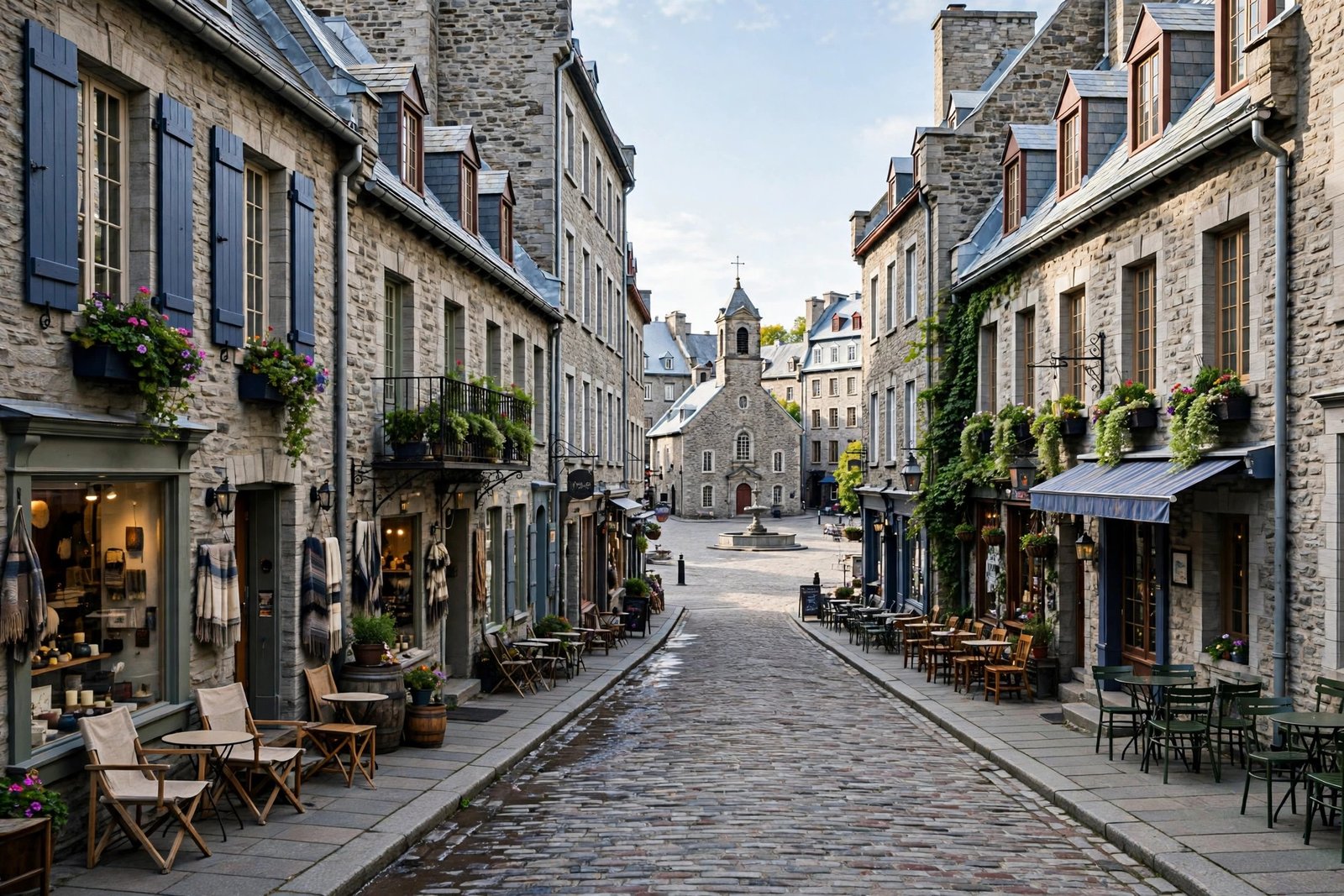
If the Upper Town is the city on display, the Lower Town is the city at its origins. Any serious answer to what to do in quebec city has to bring you down the hill, either by the steep streets and staircases or by the Old Quebec Funicular, which links the Lower Town to Terrasse Dufferin and saves your legs for more exploring.
Rue du Petit-Champlain
Petit-Champlain is often described as one of the oldest commercial streets in North America, and the official visitor guide calls it a fairytale area known for cobblestone streets, European architecture and great shopping. For once, fairytale is fair. The street is narrow, lined with stone houses, small boutiques, galleries and bistros, and decorated in a way that changes with the seasons.
Go early in the day if you want photographs without a crowd, and come back in the evening if you want the lights and the dinner atmosphere. This is a place to buy something made locally, to try a maple treat, and to sit down rather than rush. Many visitors decide what to do in quebec city based on postcards of this single street, and in person it usually lives up to the postcard.
Place-Royale and Notre-Dame-des-Victoires
A few steps away, Place-Royale is where Samuel de Champlain founded Quebec in 1608. The square is small, stone paved and ringed with historic houses, and it holds Notre-Dame-des-Victoires, a small stone church that is among the oldest in Canada. Stand in the middle of the square and you are standing at the starting point of French North America.
The Musee de la civilisation sits nearby in the Old Port area and is worth building into your plan, especially with children or on a rainy or very cold day. Its exhibitions on Quebec society and world cultures give context to everything you have been walking through. Pairing the museum with Place-Royale turns a pretty walk into an actual understanding of the place.
The Old Port and the market area
The Old Port stretches the Lower Town experience along the river. The official Old Quebec guide highlights antique stores, art galleries and restaurants in the streets around the port, and the area feels calmer and more local than Petit-Champlain at midday. Wander Rue Saint-Paul for antiques and galleries, watch the marina, and use the port as your flat, easy walking zone after the hills of the Upper Town.
In the warmer months, the port area hosts events and terraces. In winter it becomes quiet, bright and severe in the best way, with ice on the river and very few people between you and the views. Whatever the season, the Old Port rounds out what to do in quebec city below the cliff.
The Citadelle, the Plains of Abraham and Parliament Hill
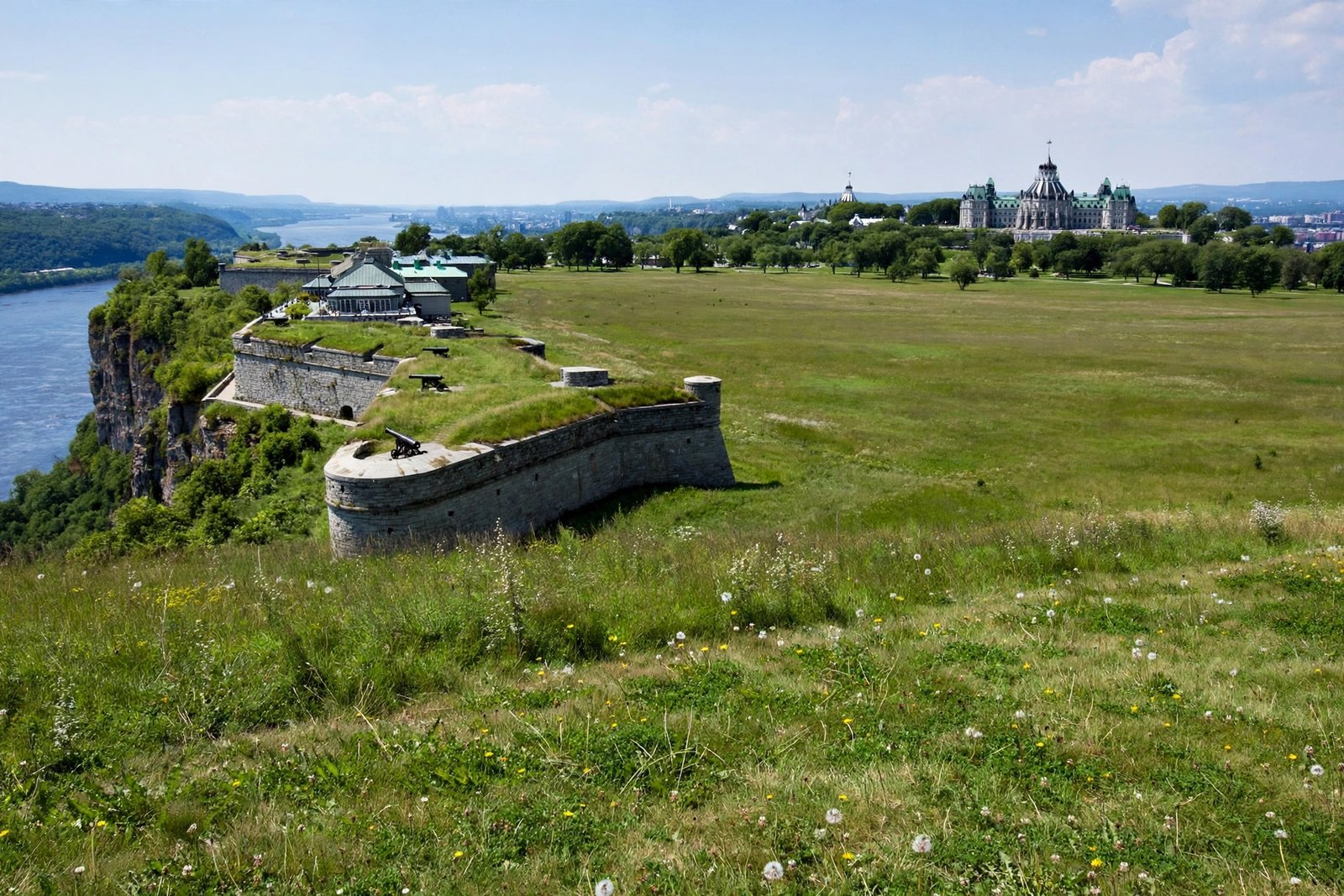
West of the Chateau, the city opens into its great historic landscape. This is the section of what to do in quebec city that explains how a French colonial capital became part of a new country, and it does so in open air, on grass, above the river.
La Citadelle de Quebec
The Citadelle is a star shaped fortress at the highest point of Cape Diamant, and it remains an active military installation as the home of the Royal 22e Regiment. Guided visits are the way to see it, and they combine the fortifications, the regimental museum and some of the best views back over the Old Town and the river.
Even if you normally skip military sites, the Citadelle earns its place. It completes the story of the walls, it explains the British chapter of the city, and its position makes sense of the whole cape. Build it into a morning, then walk directly onto the Plains next door.
The Plains of Abraham
The Plains of Abraham are where the famous battle of 1759 took place, the short and decisive fight between French and British forces that changed the future of Canada. Today the site is a large urban park within the Battlefields Park, used for walks, picnics, outdoor concerts and festivals, and visited by millions of people each year according to the National Battlefields Commission.
The Plains of Abraham Museum serves as the information and reception centre for the park, with a multimedia exhibition about the siege of Quebec and the battles of 1759 and 1760. Start there if you want the story, then walk the park itself. The scale surprises people. This is not a small memorial plot. It is the green heart of the city, big enough for cross country skiing in winter and for major summer events such as the Festival d’ete de Quebec.
Parliament Hill and Grande Allee
Below the Plains stands the Parliament Building, home of the National Assembly of Quebec, a grand Second Empire style building that anchors Parliament Hill. The official Old Quebec guide notes that this area gives access to Grande Allee, a broad avenue of restaurants, terraces and nightlife that feels elegant by day and lively by night.
Grande Allee is useful in practical terms too. It is a natural dinner and drinks zone close to the Plains, the fine arts museum and the Cartier Avenue neighbourhood. If you are choosing what to do in quebec city in the evening and you want to be where residents go after work, start here and on Avenue Cartier, with its local shops, cafes and small restaurants.
Near the Plains you will also find the Musee national des beaux-arts du Quebec, set in pavilions on the edge of the park. Its collections focus on Quebec art from the colonial period to today, plus Inuit art, and the modern Pierre Lassonde pavilion is an attraction in itself. Art lovers should protect real time for it rather than treating it as a rainy day backup.
What to do in quebec city beyond the Old Town
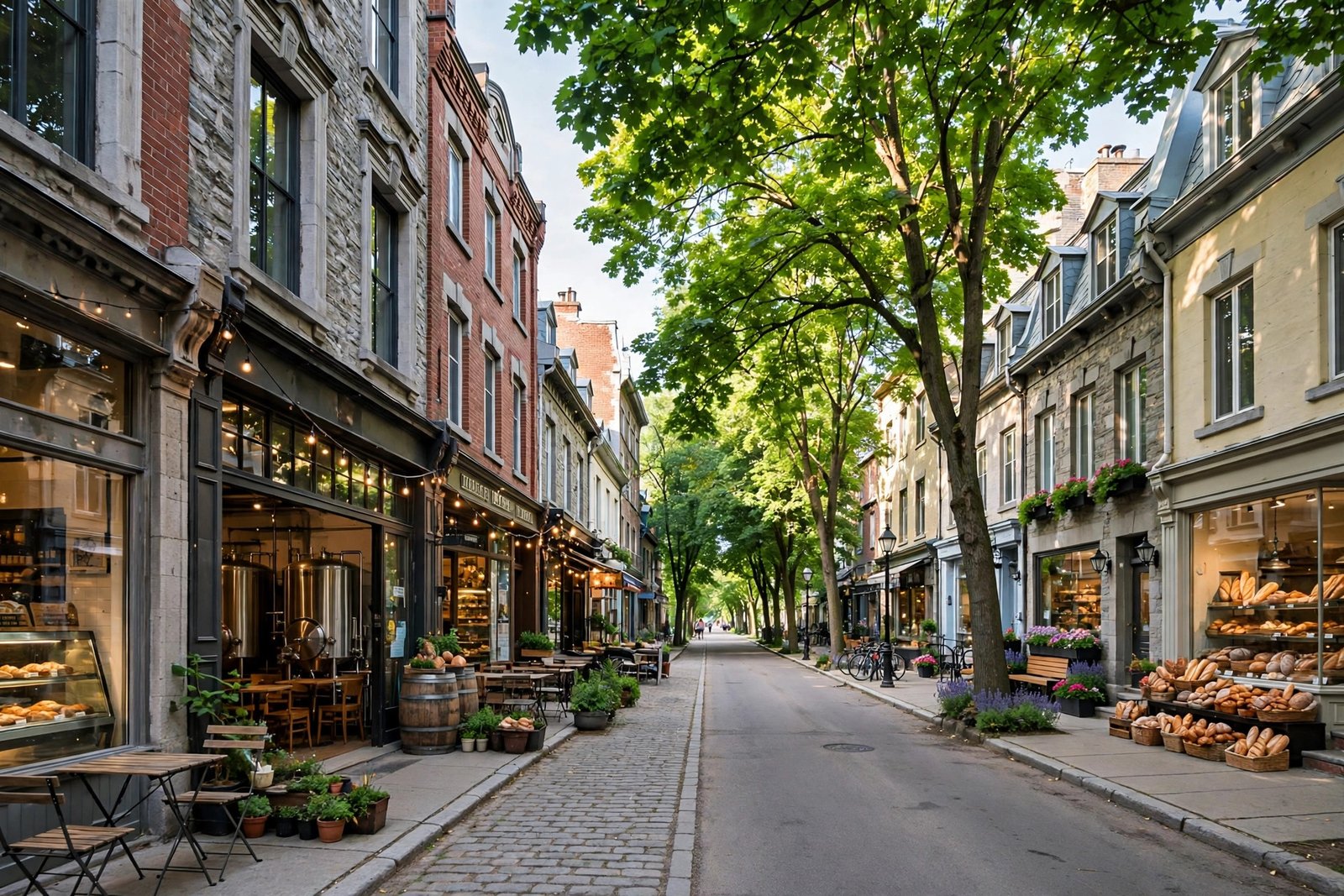
The Old Town can fill two happy days, but Quebec City is more than its postcard. Adding one or two areas beyond the walls changes the trip from a visit to a place you feel you have actually met. This section covers what to do in quebec city when you are ready to widen the circle.
Saint-Roch and the Saint-Charles River
Saint-Roch, along Rue Saint-Joseph, is the downtown neighbourhood that reinvented itself with technology offices, independent shops, microbreweries and restaurants that aim at locals first. It is flatter, younger and less polished than the Old Town, and that contrast is exactly why it is worth your time.
Walk Saint-Joseph, browse the food shops, stop for coffee where students and workers do, and continue toward the landscaped banks of the Saint-Charles River if the weather invites a longer walk. Saint-Roch is also a smart area to consider for dinner when the Old Town feels full. It answers a different version of the question, namely what to do in quebec city when you want the city as it is lived now, not only as it was preserved.
Montcalm, Avenue Cartier and Saint-Jean-Baptiste
The Montcalm district, around Avenue Cartier and the fine arts museum, is residential, cultured and calm. Leafy streets, good bakeries, a public library and small delicatessens make it the neighbourhood many visitors say they could live in. Saint-Jean-Baptiste, just outside the walls along Rue Saint-Jean, adds a main street feel with bookstores, grocers and everyday cafes.
These areas need no ticket and no plan. They reward a slow morning, a picnic assembled from local shops eaten on the Plains, and the simple realisation that Quebec City is a provincial capital where people raise families, not an open air theme park. That realisation is, quietly, one of the best things about coming here.
Wendake and winter experiences
A short drive from the centre, Wendake is the community of the Huron-Wendat Nation and offers cultural experiences, a museum, traditional crafts and dining rooted in Indigenous heritage. Visiting with respect and curiosity adds an essential and often missing layer to a Quebec trip, which did not begin in 1608 for the peoples already living along this river.
In winter, the city leans into the cold instead of apologising for it. The Quebec Winter Carnival, listed by the official visitor guide among the major events in Old Quebec, brings ice sculptures, parades and outdoor celebrations in the deep winter weeks. Skating, snowshoeing on the Plains and the toboggan on Terrasse Dufferin complete a season that many travellers end up loving more than summer. Pack for it properly and winter becomes a reason to come, not a warning.
Montmorency Falls and Ile d’Orleans: the easy day trip
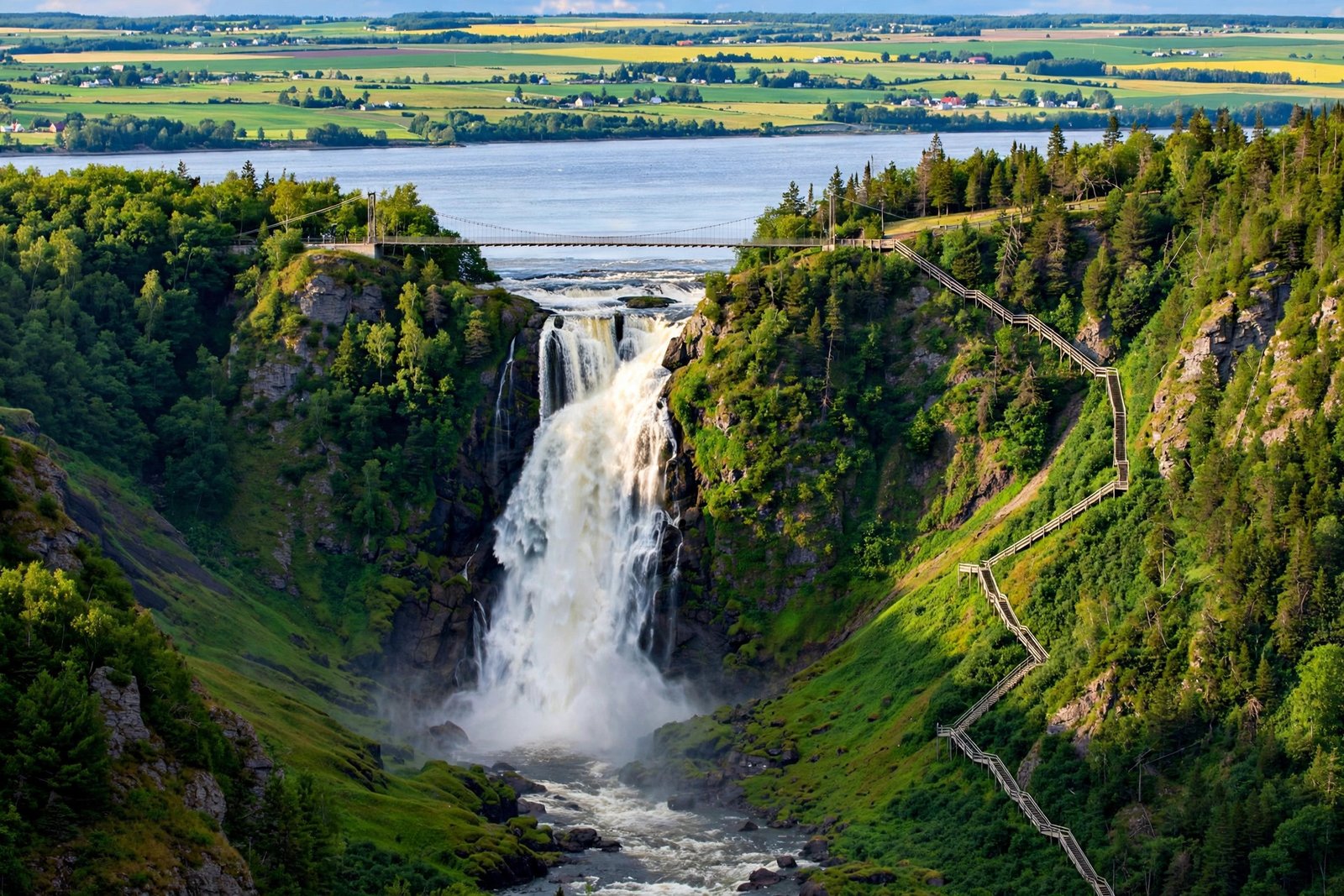
Every good guide to the city eventually sends you east of the centre, and rightly so. Within a short drive you trade streets for a waterfall and a rural island, and the contrast makes both the city and the countryside look better.
Parc de la Chute-Montmorency
Montmorency Falls drops about 83 metres where the Montmorency River meets the St. Lawrence, which makes it taller than Niagara Falls, though narrower and less voluminous. The site is managed as Parc de la Chute-Montmorency by Sepaq, the Quebec parks organisation, and it offers several ways to experience the falls: viewing platforms, a suspension bridge across the top, a cable car between the base and the upper level, and a long panoramic staircase for those who want the climb.
Allow a few hours rather than a quick photo stop. The view from the bridge, looking straight down the falling water, is completely different from the view from the base, where the spray and the scale take over. In winter, spray freezes into a famous cone of ice at the foot of the falls, drawing ice climbers and photographers. Check the official park information before you go for current access and seasonal activities, since conditions and services change through the year.
Ile d’Orleans
From the falls, the bridge to Ile d’Orleans is close, and crossing it changes the pace instantly. The island is a ring of villages, farms, orchards, vineyards and roadside stands facing the river and the mountains beyond. A drive around the island, stopping for cheese, berries in season, cider, chocolate or a bakery, is one of the most loved excursions in the region.
There is no need to overplan the island. Pick a direction, stop where something looks good, visit a village church or a small gallery, and let lunch happen where it happens. Combined with the falls, Ile d’Orleans makes a full and gentle day, and it shows you the agricultural landscape that fed the city for centuries. If your time is short, choose the falls alone. If you have the day, the pairing is the strongest day trip answer to what to do in quebec city.
Where to eat and drink
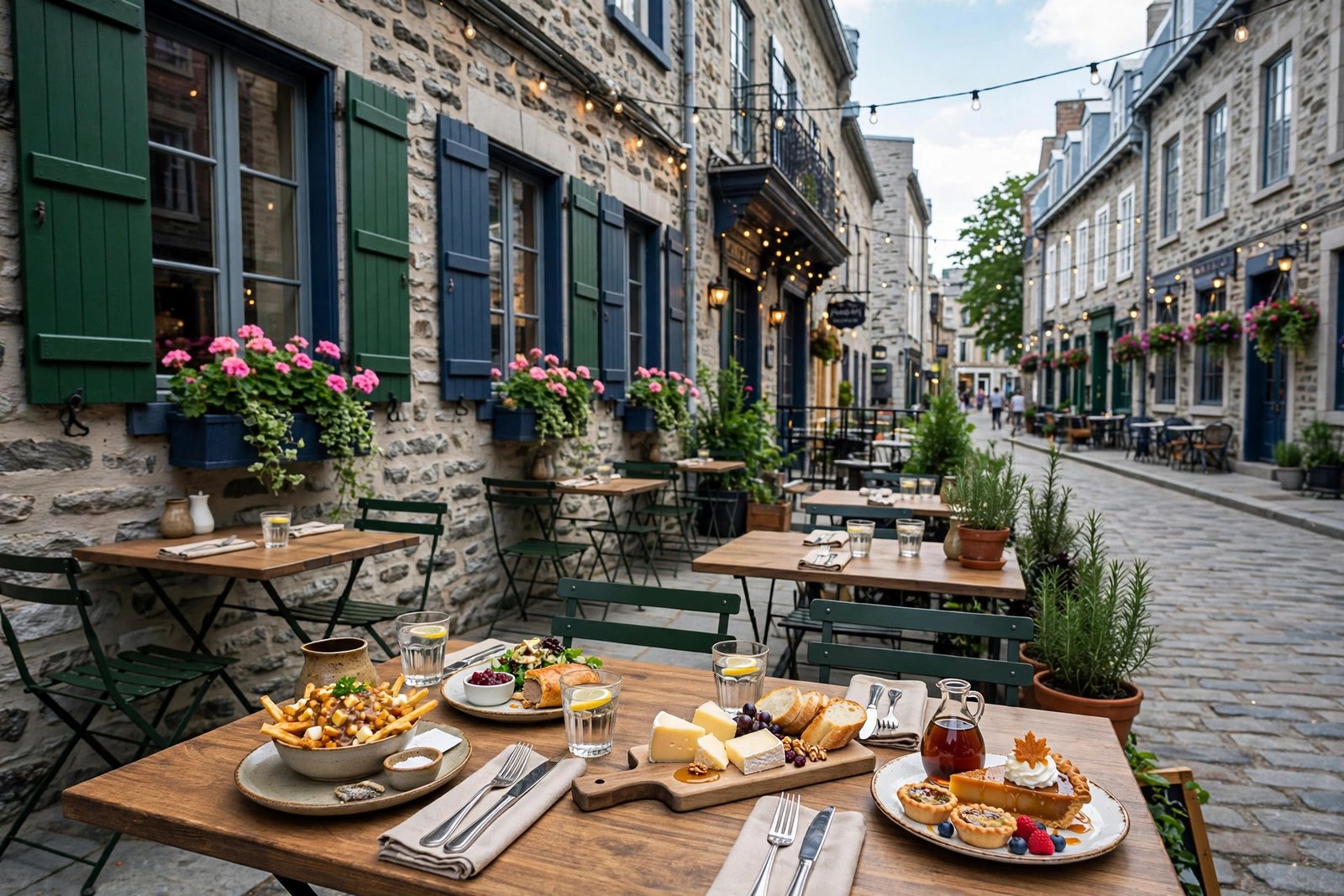
Quebec City eats with pride, in French, and with a strong sense of its own classics. You will find refined dining in the Old Town, but the memorable meals are often simpler: a long lunch in Petit-Champlain, a bakery breakfast in Saint-Jean-Baptiste, a market picnic from the Old Port area.
Start with the local signatures. Poutine in its home province is a baseline experience, and you can find everything from classic versions to chef led variations. Tourtiere, pea soup, maple desserts and Quebec cheeses anchor traditional menus. In the warmer months, look for menus built on produce from Ile d’Orleans and the surrounding farms. The city also has a serious sweet tooth, so save room for patisserie and for maple products in their many forms.
For neighbourhoods, eat one meal inside the walls for the atmosphere, one on Grande Allee or Avenue Cartier for the local evening energy, and one in Saint-Roch for value and variety. Reserve ahead for well known Old Town restaurants in high season and during major events, and be ready to eat a little earlier or later than the crowd. Ask your server what is local and in season. It is the most reliable ordering strategy in the city.
Coffee culture is strong, microbreweries are woven into neighbourhoods like Saint-Roch, and winter adds its own rituals of hot drinks and long, lamplit dinners. Eating well is not a separate activity here. It is a central part of what to do in quebec city, so budget time for it the way you budget time for museums.
A perfect day: what to do in quebec city from morning to night

Here is one full day that strings the highlights together without rushing. Use it as written on a first visit, or treat it as a template and swap the afternoon to fit your interests.
Morning: Start in the Lower Town while the streets are quiet. Coffee and a pastry near Place-Royale, a look inside Notre-Dame-des-Victoires, then a slow climb through Petit-Champlain as the shops open. Ride the funicular up and spend time on Terrasse Dufferin in the clear morning light, with the river at its calmest.
Midday: Walk to the Citadelle for a guided visit, then cross onto the Plains of Abraham for air and views. Have lunch on or near Grande Allee, or assemble picnic supplies from shops on Avenue Cartier and eat on the grass if the season allows. This middle of the day is where the city stops feeling like a checklist and starts feeling generous.
Afternoon: Choose your depth. History lovers stay with the Plains of Abraham Museum and the Parliament Hill area. Art lovers go to the fine arts museum. Shoppers and wanderers return to the Old Port and Rue Saint-Paul. Families often do best with the Musee de la civilisation back in the Lower Town, which pairs easily with an early dinner nearby.
Evening: Return to Petit-Champlain or Grande Allee for dinner, then walk the walls or the terrace after dark. The Chateau lit above the river, the quiet squares and the sound of French conversation spilling from terraces are, for many people, the memory that lasts longest. End the day there, and your plan for what to do in quebec city tomorrow will probably start with doing some of it again, more slowly.
If you have a second day, give the morning to Montmorency Falls and the afternoon to Ile d’Orleans or to Saint-Roch and Montcalm. If you have a third day in winter, give it to the Carnival or to museums and cafes without guilt. Quebec City rewards lingering more than speed.
Practical tips for your visit
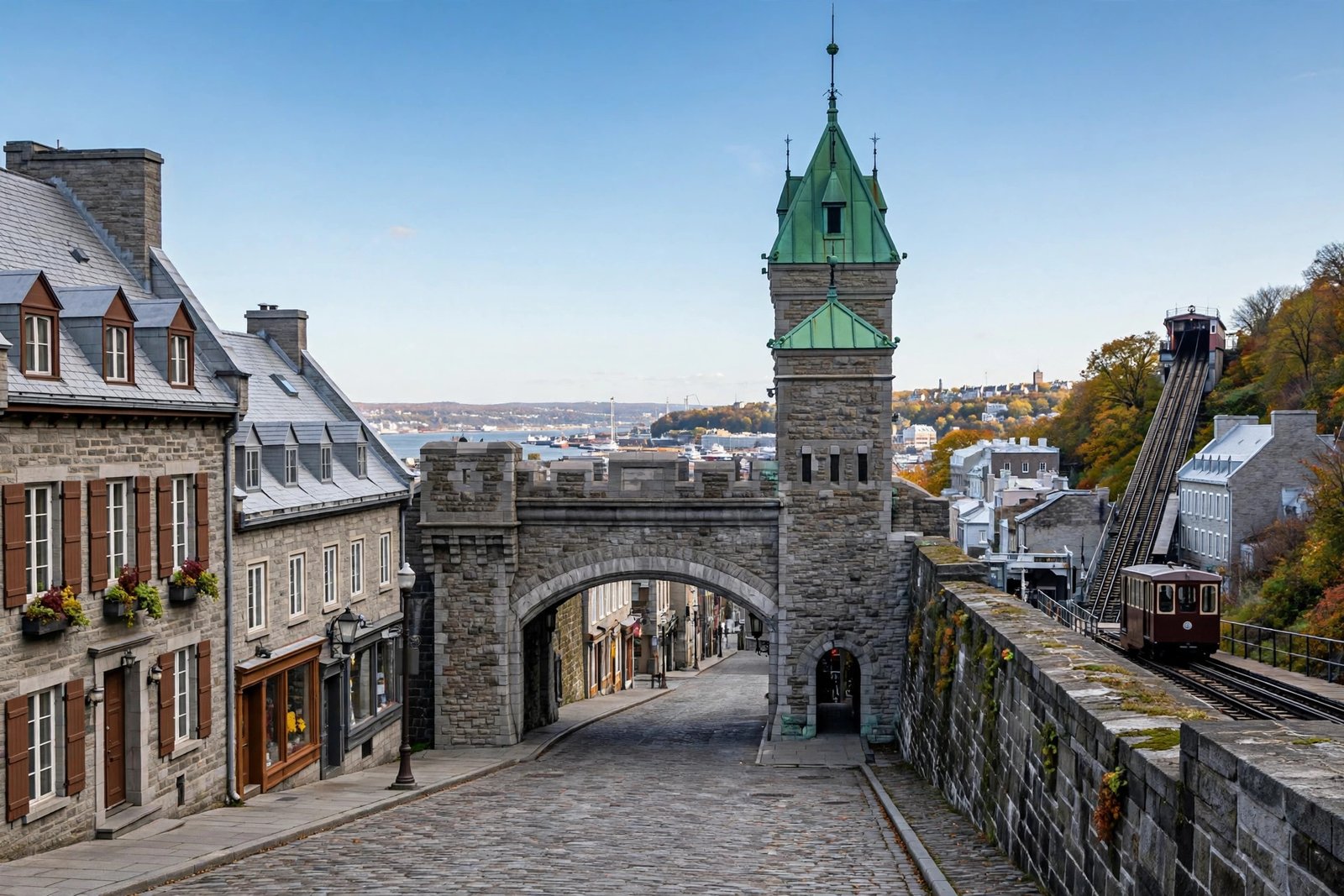
Getting around: The Old Town is compact and best explored on foot, but it is built on a cape, so expect hills, stairs and cobblestones. Wear shoes with grip, especially in winter. The funicular connects the Lower and Upper Town at the steepest point. Local buses serve the wider city and the route toward Montmorency Falls, and taxis and rideshares fill the gaps. A car is useful for Ile d’Orleans and Wendake, and unnecessary, even a burden, inside the walls.
When to come: Summer brings festivals, terraces and long evenings, plus the biggest crowds. Autumn is many locals favourite season, with colour in the surrounding hills and a calmer Old Town. Winter is cold, bright and festive, built around the Carnival and a city that knows how to dress for the season. Spring is quieter and can be muddy as the snow leaves, but it offers space and a local rhythm. There is no wrong season, only the wrong clothing.
Language and manners: Start interactions in French with bonjour, merci and s il vous plait, even if you switch to English right after. Menus in visitor areas are often bilingual. Tipping customs follow the Canadian norm in restaurants and bars. Book accommodation early for the summer festival period and the Winter Carnival, when the city fills.
Weather and packing: Conditions change fast near the river. Bring layers in every season, real winter boots, hat and gloves in the cold months, and rain protection in spring and autumn. Cobblestones plus ice demand respect. Give yourself extra time on travel days in winter.
A note on combining cities: Many travellers pair Quebec City with Montreal, and the two make a perfect contrast, one intimate and historic, the other larger and more contemporary. If that is your plan, read our companion guide to what to do in Montreal to build the second half of your trip. And if this is a romantic getaway, our reflection on how to know if a man truly loves you is the Mxralis read travellers keep sending us from this city of winter lights and long dinners. For official visitor information, neighbourhood guides and event listings, start with the Old Quebec guide from the official Quebec City tourism office.
FAQ

What to do in quebec city in winter?
Embrace it. Visit the Winter Carnival if your dates align, ride the toboggan on Terrasse Dufferin, walk the snowy Plains, skate, and use museums such as the Musee de la civilisation and the fine arts museum as warm, unhurried anchors between outdoor sessions. Dress in true winter layers and plan shorter walking stretches with cafe stops between them.
How many days do you need in Quebec City?
Two full days cover the Old Town, the Citadelle and Plains, and one neighbourhood beyond the walls at a comfortable pace. Three days let you add Montmorency Falls and Ile d’Orleans without rushing, or give winter visitors a proper Carnival day. One day is possible for the highlights, but the city deserves the second night.
Is Quebec City worth visiting if you do not speak French?
Yes, completely. Quebec City is French speaking and proud of it, and visitor facing staff in hotels, major attractions and most Old Town restaurants work comfortably in English. Learning a few polite phrases improves every interaction, and translation apps handle menus and signs easily. The language is part of the charm, not a barrier.
What is Quebec City best known for?
The fortified Old Town, a UNESCO World Heritage Site, the Chateau Frontenac, and its position above the St. Lawrence River. Add the Winter Carnival, the Plains of Abraham, French language and food culture, and nearby Montmorency Falls, and you have the identity of the city in one list.
Can you see Quebec City and the falls in one trip without a car?
Yes. The Old Town is walkable, the funicular handles the steepest climb, and public buses and organised excursions connect the centre with Montmorency Falls. A car mainly helps for a full loop of Ile d’Orleans and for Wendake at your own pace. Without one, choose the falls as your excursion and keep the island for a future visit with wheels.
Quebec City is small enough to feel manageable and old enough to feel inexhaustible. Come for the walls and the Chateau, stay for the neighbourhoods, the food and the river light, and leave with a list of reasons to return in a different season. That, more than any single sight, is the real answer this city gives you.