

The guests are arriving in twenty minutes, the sauce is not thickening, there is flour on your sleeve and the playlist you meant to make does not exist. If that scene feels familiar, learning how to host a dinner party without stress is not a luxury. It is the difference between giving a dinner and surviving one.
Here is the secret nobody tells anxious hosts: your guests did not come for perfection. They came for a warm room, food made with care and a host who actually sits down. Almost everything people remember about a dinner party is atmosphere, and atmosphere collapses the moment the host disappears into the kitchen in a silent panic.
This guide explains how to host a dinner party without stress from start to finish. You will find the short answer first, then the real reasons hosting feels so heavy, what research says about pressure and enjoyment, a menu rule that removes most of the work, a realistic timeline, and a step by step plan you can reuse for years.
The short answer

The short answer to how to host a dinner party without stress is this: decide less, earlier, and do less, better. Choose a menu you have cooked before, prepare most of it before the doorbell rings, and protect your own evening as carefully as you protect the food.
That means a short guest list, one main dish that waits patiently, sides that tolerate being served warm rather than piping hot, and a table set hours in advance. It also means accepting a simple truth about how to host a dinner party without stress: the host sets the emotional temperature of the room. A calm host with ordinary food gives a better dinner than a frazzled host with a masterpiece.
Keep that order in mind. First your calm, then the plan, then the food. Most stressed hosts reverse it, chasing a spectacular menu while their own enjoyment quietly leaves the building. The sections below rebuild the evening in the right order.
Why dinner parties feel stressful in the first place

Stress at a dinner party rarely comes from cooking. It comes from what the cooking represents. For many hosts, especially women who absorbed the lesson that feeding people well is proof of love and competence, a dinner party feels like an exam with witnesses.
That pressure has roots. In many families, one person, often the mother, carried the entire invisible work of gatherings: remembering who dislikes what, planning the menu, shopping, cleaning, cooking, serving and smiling through it. Psychologists call this kind of planning and anticipating the mental load, and it does not disappear because the invitations were casual.
There is also the comparison problem. Social media shows tables that look styled by professionals, with matching linens, layered dishes and a host who seems to have cooked all day without sweating. Real homes have mismatched chairs, a pan that sticks and a drawer that will not close. The gap between the image and the reality is where most stress is born.
Perfectionism plays its part too. Research on perfectionism consistently links the fear of negative evaluation, worrying about what others will think, with higher stress in social situations. A dinner party concentrates that fear into one room: your food, your home, your taste and your timing, all judged, or so it feels, at the same time.
Understanding this is the first step in how to host a dinner party without stress. You are not bad at hosting. You are carrying an inherited script that says a good host does everything, alone, flawlessly, and makes it look easy. That script is the problem, not your cooking.
There is one more quiet source of tension worth naming: money. A dinner party can easily drift into quiet overspending, because each small upgrade feels harmless on its own. Better wine, fancier cheese, flowers, new serving dishes, a dessert on top of the dessert. The bill grows, and with it a feeling that the evening must now justify its cost.
Set a simple budget before you shop, and let the budget make decisions for you. Guests have never once compared the price of two cheeses. They remember whether there was enough bread, whether the room felt warm and whether you seemed glad they came. Spending follows those priorities, or it follows anxiety. Choose the first.
The same honesty applies to your home. A dinner party is not a house inspection. People you invite into your home already like you, and they see a lived in room the way you see theirs: kindly, and mostly not at all. Clean what guests will use, clear the surfaces they will see, and let the rest of your life stay where it lives.
Once you see the script, you can rewrite it. Help becomes allowed. Shortcuts become intelligent rather than shameful. A bought dessert stops being a failure and becomes what it always was: dessert. The rest of this guide is that rewritten script, in practical form.
What research says about how to host a dinner party without stress

Research cannot season a sauce, but it does explain what guests actually notice, and the findings are kinder than hosts expect. Studies on shared meals associate eating together with stronger social bonds, higher life satisfaction and a sense of community. The benefit comes from the sharing, not from the complexity of the menu.
Research on the psychology of taste points the same way. Expectations, company and mood shape how food is experienced. A relaxed table, good conversation and a host who is present genuinely change how a meal tastes to the people eating it. This is why learning how to host a dinner party without stress is also, quietly, a cooking technique.
There is a second useful finding, this time about the hosts themselves. Psychologists who study generosity and wellbeing note that giving tends to lift mood when it feels freely chosen, and to drain it when it feels forced or performed for approval. The same dinner can feel joyful or exhausting depending on whether you chose the effort or felt trapped by it.
Time pressure research adds a practical clue. People judge a task as far more stressful when several demands land at the same moment. Dinner parties fail, emotionally, at pile up points: guests arriving, a dish finishing, drinks empty and music missing, all at once. Spreading those moments apart is the entire logic of the timeline later in this guide.
So what research says about how to host a dinner party without stress can be summed up simply. Protect the shared part of the meal, reduce simultaneous demands, and keep the effort chosen rather than forced. Your guests will taste the difference, even if they never know why.
The menu rule: how to host a dinner party without stress starts in the kitchen
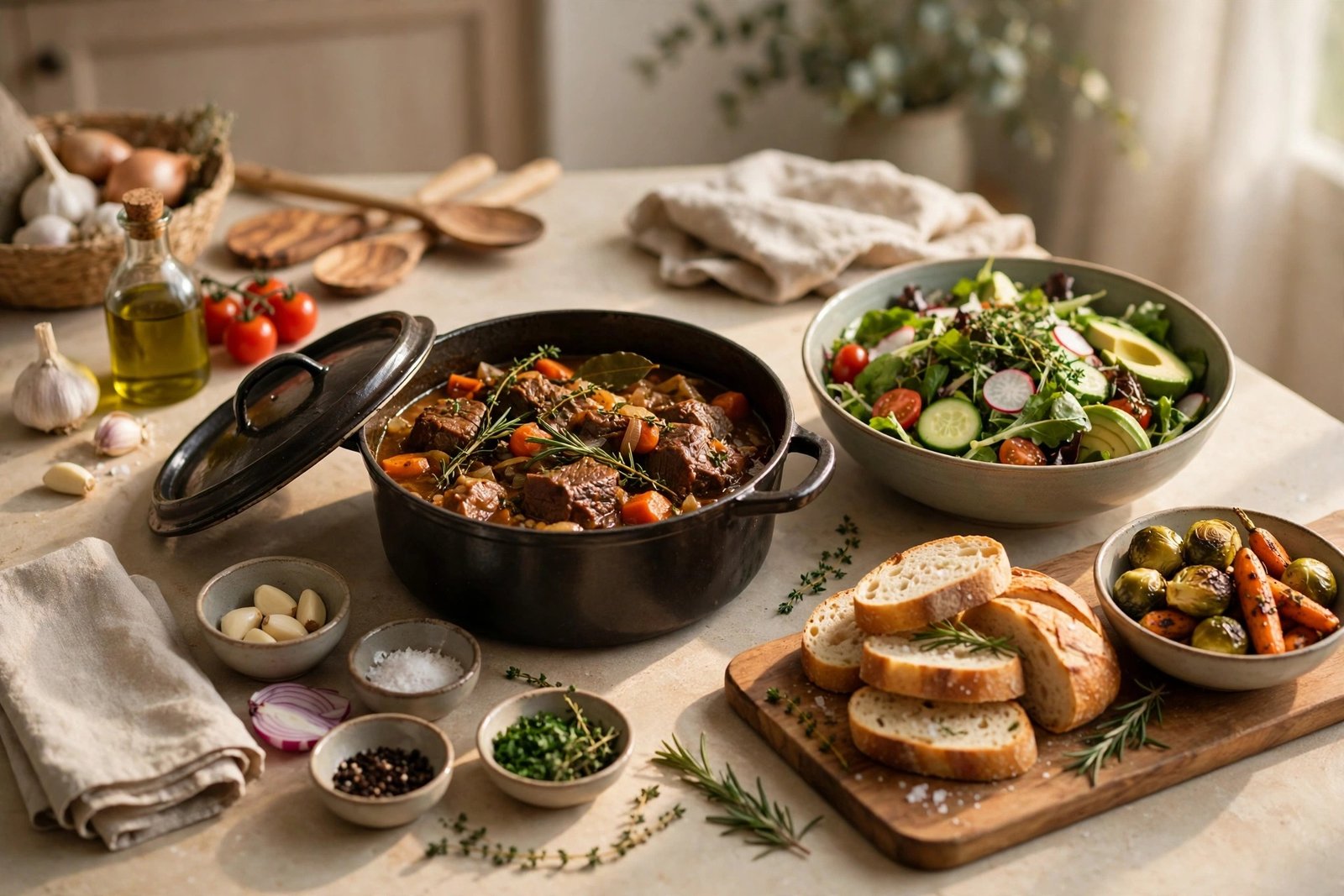
Every calm dinner party begins with a disciplined menu, and the rule is strict: one hero, two simple sides, something bought, nothing new. Follow it and how to host a dinner party without stress stops being a mystery and becomes a shopping list.
The hero is a main dish that improves with waiting or at least tolerates it. Slow braises, stews, curries, baked pasta dishes, roast chicken and hearty gratins all share this quality. They do not demand a precise minute of serving, and they forgive a guest who is twenty minutes late. Dishes cooked to order, by contrast, chain you to the stove while everyone else starts the evening without you.
The sides should be simple and mostly prepared ahead. A big green salad that you dress at the last moment, roasted vegetables that are delicious warm or at room temperature, good bread, a grain dish that holds well. Choose sides for their patience, not their ambition. Two sides are enough. Three is generosity, four is a cry for help.
Something on the table should be bought, proudly. Bread from a good bakery, a dessert from a patisserie, quality ice cream, olives and charcuterie to start. Buying one element is not cheating; it is budget management for your energy. Professional cooks call this mise en place thinking applied to a whole evening: everything in its place, including your limits.
And nothing on the menu should be new. The night of a dinner party is the worst possible moment to test a recipe, because a new dish demands attention at exactly the moment your guests do too. Cook the new thing on a quiet Sunday for yourself. Serve guests the food your hands already know.
Write the menu down, in serving order, with the dish each course needs. This small act removes a surprising amount of anxiety on the day, because a written menu answers questions your tired brain would otherwise keep asking. It is a modest tool, but hosts who study how to host a dinner party without stress return to it every single time.
A word about drinks, because drinks quietly break more evenings than food does. Offer one welcoming drink on arrival, water that never needs asking for, and a simple choice after that. A host who tries to run a full bar becomes a bartender, and bartenders do not sit at their own tables.
Coffee and tea deserve the same simplicity. Prepare what you can in advance, put sugar and cups where you can reach them without a search, and let dessert be the event rather than the drinks menu. The end of the evening should slow everybody down, including you.
Dessert itself is where bought elements shine brightest. A good cake, quality ice cream with warm fruit, or a simple plate of chocolate and clementines all end a meal gracefully. Homemade dessert is a pleasure only when it was made the day before, in a calm kitchen, by someone who was not also making everything else.
Finally, plan for appetites and needs without turning the menu into a negotiation. Ask guests in advance about allergies and serious restrictions, choose a main that most people can eat, and keep one simple vegetarian option in mind if needed. One question at invitation time prevents three problems on the night.
A realistic timeline for how to host a dinner party without stress
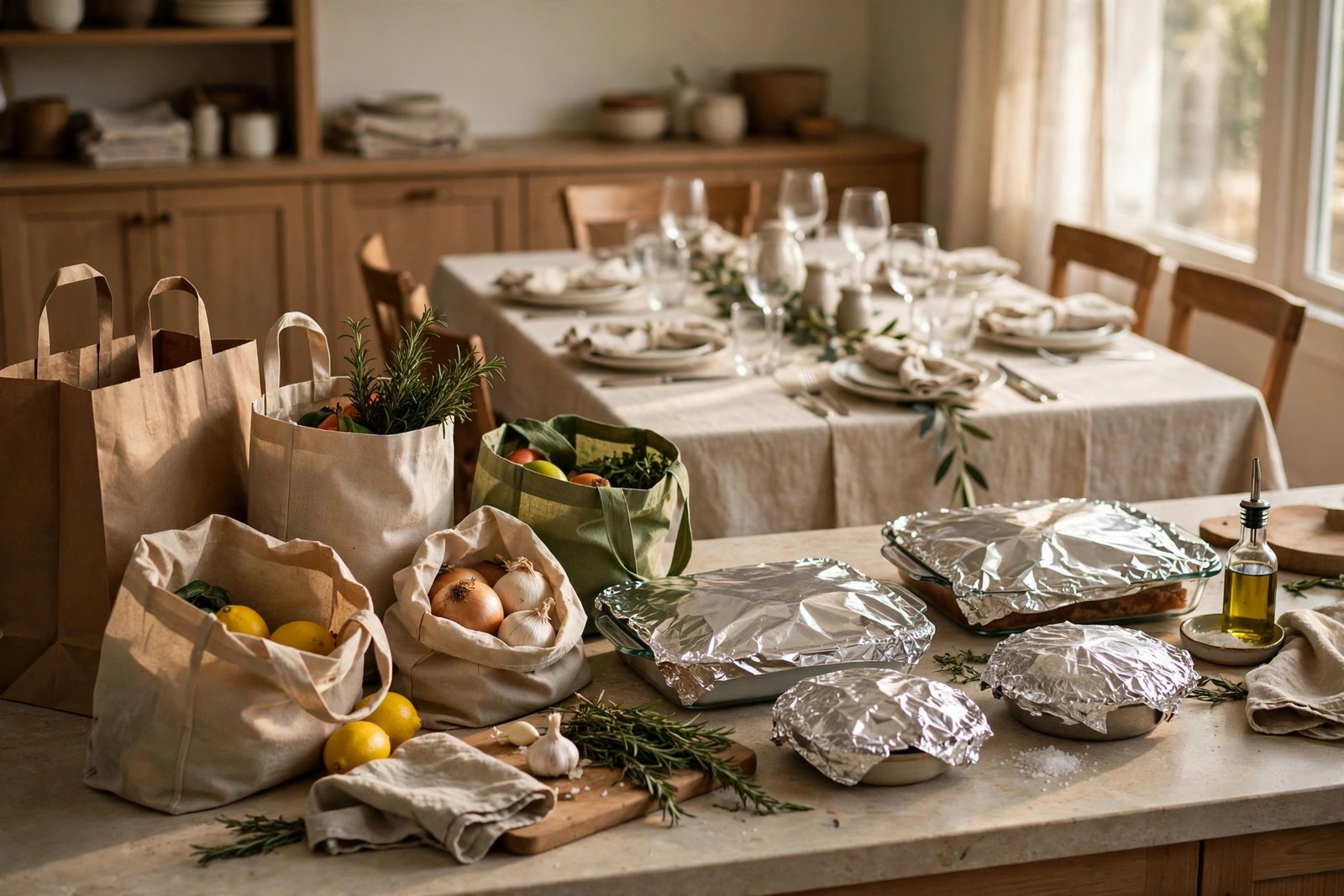
A timeline is where how to host a dinner party without stress becomes real. The goal is not military precision. The goal is that no two demanding moments ever collide, and that the last hour before guests arrive belongs to you, not to the cooking.
Three days before, confirm the guests, check allergies and write the menu and the shopping list together. Shopping from a list built around the menu prevents the classic failure: a beautiful plan and one missing ingredient discovered at the worst possible hour.
Two days before, shop for everything that keeps: drinks, dry goods, cheese, dessert if it stores well, candles and ice. Buy more ice than feels reasonable. Running out of ice is a small thing that feels like a collapse, and it is entirely preventable.
One day before, do every job that can be done. Make the sauce, the braise, the dessert and the salad dressing. Chop sturdy vegetables. Set the table completely, down to glasses and napkins. A table set the day before is a gift to your future self, and walking past it all day quietly lowers your heart rate.
On the day itself, work in the morning, not the evening. Finish the main dish early and let it rest or hold gently. Tidy only the rooms guests will see. The bedroom door exists for a reason, and no friendship has ever ended because a host closed it.
Two hours before, shower, dress and eat a small snack. Hosts forget to eat, then meet their guests hungry, tired and one drink away from wobbly. Getting ready early also changes your role in your own mind: you stop being the staff and become a person receiving friends.
One hour before, light the candles, start the music, put drinks and glasses where guests can serve themselves, and plate the starter snacks. Then stop. The final thirty minutes should contain no task more serious than reheating and opening the door with a smile.
During the evening, serve in the order you wrote down, clear plates in one calm pass between courses, and resist washing up beyond stacking. The dishwasher can wait. A host who scrubs pans while guests sit alone at the table has optimized the wrong thing.
Notice what this timeline really does. It moves effort to the days when nobody is watching and leaves the evening itself almost empty. That emptiness is not laziness. It is the whole strategy behind how to host a dinner party without stress, and it is why experienced hosts always seem suspiciously relaxed.
Setting the table, the room and the mood

Guests relax when a room looks decided. That does not mean expensive or styled. It means the small signals of readiness are in place when they walk in: lights low and warm, music already playing, a clear place to put a coat and a drink in hand within the first few minutes.
Lighting does more work than any decoration. Overhead white light makes everyone feel examined. Lamps, candles and dimmed lights tell the nervous system that the evening is safe. If you change only one thing, change the light.
Set the table simply and completely. Plate, cutlery, glass, napkin, water on the table. A small green branch, a bowl of fruit or a few candles in the middle is enough. An uncrowded table also leaves room for serving dishes, which matters more than a dramatic centerpiece that has to be removed before anyone can eat.
Think about flow, not just looks. Guests need a natural place to stand with a drink that is not inside your cooking zone. A small drinks station, a bottle opener that stays in one place and water always available will quietly prevent half the interruptions hosts complain about.
Music deserves five minutes of thought. Choose something warm and low, make a long playlist or pick a long album, and set the volume below conversation. Silence at the start of an evening makes early guests feel exposed, while music that is too loud forces people to compete with it all night.
Smell is part of the welcome too. A home that smells gently of the dinner is inviting. A home filled with frying oil or cleaning products is not. Cook fragrant things late if you can, ventilate early if you must, and skip scented candles at the table, where they fight with the food.
None of this requires talent or money. It requires doing these small jobs before the doorbell, which is why room setup belongs in any serious guide to how to host a dinner party without stress. Mood is not decoration added at the end. Mood is the evening, prepared in advance.
Guests, conversation and the problems that actually happen

Even with a perfect plan, people remain people. A guest arrives forty minutes late. Two guests discover they disagree about everything. Someone spills red wine, someone else eats almost nothing. Knowing how to host a dinner party without stress includes surviving these moments without letting them define the night.
For late guests, the rule is simple: start without drama. Serve drinks and starters, hold the patient main dish, and welcome the latecomer warmly when they arrive. A braise does not care about twenty minutes, which is exactly why you chose it. Punishing lateness with visible suffering only makes the table tense.
For conversation, seat people with a little intention. Place a quiet guest beside a warm, curious one. Separate the couple who finish each other sentences if you want them to meet anyone new. Put yourself where you can reach the kitchen without an obstacle course, ideally near an end of the table.
Prepare two or three easy topics that are not work, news or other people failures. A recent trip, a film everyone might know, a question about how people met or what they are cooking lately. If your entertaining life takes you further afield, our guide to what to do in Montreal is full of restaurants, neighborhoods and food experiences that make excellent table conversation.
For spills and accidents, move fast and laugh first. Salt, water, a cloth, no apology tour. Guests take their emotional cue from you: if you treat a spill as a disaster, it becomes one. If you treat it as weather, it passes like weather.
For the guest who eats little, says little or seems unhappy, resist the urge to fix them publicly. Offer once, kindly, then let them be. People bring whole invisible days with them to dinner. A good host offers warmth and does not interrogate the response to it.
Children, if they are part of the evening, need a plan of their own rather than hope. Feed young children early if they are tired, give them a defined place and something to do, and decide in advance whether they join the table for part of the meal or settle elsewhere with a film. A clear plan protects their mood and your conversation at the same time.
Leftovers are the last small system worth preparing. Have containers ready before the evening, decide what you will happily keep, and offer guests food to take home as they leave. It clears the kitchen faster, wastes less and turns the dinner into a small gift that continues the next day at their table.
And for yourself, one rule above all: sit down. Eat your own food while it is warm. A host who never sits teaches guests to feel guilty for being served, and guilt is a poor seasoning. Sitting down is not the reward for finishing the work. It is part of the work.
There is a deeper point here, and Mxralis readers will recognize it. Being loved, liked or appreciated is not the same as being needed every minute of the evening, a confusion we explore in can you love someone but not want them. At the table, as in relationships, presence matters more than performance.
What to do next: your calm plan for how to host a dinner party without stress

If you are planning a dinner now, here is how to host a dinner party without stress, reduced to the actions that matter most, in order.
First, shrink the event before you grow it. Four to six guests, one evening, your home as it is. A smaller party is not a lesser party. It is the size at which conversation stays whole and a single host stays human.
Second, write the menu using the rule from earlier: one patient hero dish, two simple sides, one bought element, nothing new. Put the menu on paper with the serving order and keep it visible in the kitchen.
Third, build your timeline backwards from the moment guests arrive. Assign every task to three days before, two days before, the day before, the morning of, or the final hour. If a task cannot find a home before the final hour, simplify the task until it can.
Fourth, prepare the room the day before: table set, lighting decided, playlist ready, drinks station planned, coats given a home. Walk through the door as if you were a guest and fix what a guest would notice in the first sixty seconds.
Fifth, on the night, follow the written plan and do less than you think you should. Serve, sit, eat, talk. Let silences happen. Let guests help when they offer, with small defined jobs like opening a bottle or carrying a dish, because helping makes many guests more comfortable, not less.
Sixth, end the evening gently and on time. Dessert, coffee or tea, a natural slowing. Walk guests to the door, accept compliments without correcting them, and leave the real cleaning for tomorrow. A host who ends the night standing in a clean kitchen at two in the morning paid too much for the evening.
Finally, keep a small notebook or a note on your phone after each dinner: what you served, what worked, what ran out, what you would repeat. Within a few dinners you will own something far better than a recipe collection. You will own a personal system for how to host a dinner party without stress, tested in your own kitchen, with your own people.
For a wider look at the thinking behind calm hosting, the guides and essays at Serious Eats are a reliable place to deepen your cooking technique, especially their work on preparation, timing and making classic dishes ahead. Good technique, learned slowly on ordinary days, is what makes a party night feel easy.
Your next dinner does not need to impress anyone into silence. It needs warm light, patient food, a written plan and a host at the table. Start with one small dinner this month, use this plan exactly once, and let the evidence change how you feel about hosting.
FAQ

What is the easiest menu for how to host a dinner party without stress?
The easiest menu is a braise or baked dish you know well, a big green salad, roasted vegetables or good bread, and a bought dessert with ice cream or fruit. It waits patiently, needs almost no last minute cooking and lets you sit with your guests. Choose patience over novelty every time.
How many guests should a beginner host invite?
Four to six guests is the kindest size for a beginner. Conversation stays in one piece, one main dish stretches comfortably and you can remember everyone needs without a system. Grow the guest list only after one small dinner has gone well from start to finish.
How far in advance should I prepare?
Do the shopping two days before and the main cooking the day before whenever the dish allows it. Set the table the night before, finish small tasks on the morning of the dinner, and keep the final hour free except for reheating, dressing the salad and welcoming people.
What should I do when a guest has a food restriction?
Ask about allergies and serious restrictions when you invite, not on the day. Choose a main most guests can share, adapt one side to be safe for the restricted guest, and label nothing or make a performance of it. Quiet inclusion feels far more welcoming than a separate, visibly different meal.
How do I enjoy my own dinner party instead of working through it?
Decide in advance that sitting down is one of your jobs. Eat when your guests eat, accept help with small tasks, skip non essential washing up and let the written plan carry the details. Hosts who learn how to host a dinner party without stress all describe the same turning point: the night they finally joined their own table.
Pingback: How to Set a Beautiful Table on a Small Budget - The Honest Truth
Pingback: What to Cook When You Want to Impress Without Trying Too Hard - The Honest Truth