

It starts quietly. Someone stops posting. A friend takes weeks to answer a message that would once have taken minutes. A colleague turns up with an old phone that cannot run the apps everyone else checks all day.
Then you notice your own habits. You open an app without deciding to. You close it and open it again. You feel informed and tired at the same time, and you cannot quite say what you actually learned.
That small, repeated moment is where this story begins. The question why is everyone quitting social media sounds dramatic, as if millions of people deleted their accounts on the same morning. The reality is slower, messier and more interesting.
Most people are not staging a grand exit. They are posting less, deleting one app at a time, moving conversations into private messages, or taking breaks that quietly become permanent. Understanding why is everyone quitting social media means looking at that gradual withdrawal, not only at the final deletion.
This article explains the trend in plain terms. It looks at what people say when they leave, what psychologists point to underneath, what surveys and reporting actually show, and where the evidence is weaker than the headlines suggest. It also looks at the counter-examples, because many people still find real value online, and at what to do next if your own feed has started to feel like work.
The short answer

The short answer to why is everyone quitting social media is that, for many users, the exchange stopped feeling fair. The apps promised connection, entertainment and useful news. What many people feel they receive now is comparison, advertising, arguments, artificial looking content and a constant low level pressure to keep up.
No single cause explains it. Mental fatigue matters. So do privacy worries, the feeling that feeds are built to hold attention rather than serve the reader, and a simple sense that the fun has gone. When a habit costs sleep, mood and time, and the reward keeps shrinking, people renegotiate it.
That renegotiation takes different forms. Some people delete everything. Some keep one account for family or work and remove the rest. Some stop posting while still reading, a pattern sometimes called posting zero. Others set strict hours, remove apps from their phones and only check from a computer.
So why is everyone quitting social media, if so many accounts still exist? Because quitting, in practice, often means stepping back from public, endless, everyday use. The accounts may remain. The daily hold the apps had on attention is what is loosening.
Coverage of the trend makes the same point. A report in the Fluvanna Review described people reducing or leaving social media to protect their mental health, ease anxiety and escape content fatigue, while shifting toward smaller and more private ways of staying in touch.
What quitting actually looks like in real life

Quitting rarely looks like a speech. It looks like a phone home screen with empty spaces where colourful icons used to sit. It looks like someone saying, text me instead, or I am not on there anymore, try my email.
One common path is the trial break. A person deletes an app for a weekend, or for January, expecting to miss it badly. The first days feel strange. Their hand still reaches for the phone at red lights, in queues and during television ad breaks. Then the urge fades faster than expected, and the break gets extended without much discussion.
Another path is the slow fade. Posting drops from daily to monthly. Stories stop. The person still scrolls, but with less interest each month, until one day they realise they have not opened the app in six weeks. There was no decision point. The habit simply lost its place in the day.
A third path is selective quitting. Someone leaves the platform where arguments and comparison hit hardest, but keeps a video app for learning, a messaging app for family abroad, or a professional network for work. This is why is everyone quitting social media is partly the wrong frame. Many people are not rejecting the internet. They are rejecting specific feeds, specific pressures and specific designs.
There is also the public announcement version, familiar to anyone who has seen a goodbye post. Ironically, announcing a departure on the platform itself often restarts the very cycle the person wants to leave, as comments and messages pull them back in. Many experienced quitters now advise leaving quietly, telling close friends directly how to reach you, and letting the account go silent. That quiet exit is a common answer to why is everyone quitting social media.
Finally, there is the return. Plenty of people quit, come back for a school group, a job search, a house hunt or a new baby in the family, and then leave again. Treating departure as a permanent identity misses how practical these tools still are. For most people, the pattern is a series of adjustments, not a single dramatic door slam.
Why the feed stopped feeling social

Ask people who have stepped back what changed, and a phrase comes up again and again: it stopped feeling social. Early social media, whatever its flaws, was mostly people you knew sharing ordinary updates. The feed today is a mixture of brands, creators, advertisers, recommended strangers, short videos engineered to hold you, and posts selected by systems you cannot see.
That mixture changes the emotional experience. A birthday photo from a cousin now sits between an advertisement, a frightening news clip, a celebrity argument and a video designed to make you angry enough to comment. Your brain treats it as one environment, even though it was assembled for commercial reasons.
Artificial intelligence has sharpened this feeling for many users. When images, comments and even whole accounts may be generated, the sense of talking to real people weakens. Reporting on younger users leaving has repeatedly mentioned AI driven feeds and influencer advertising among the reasons the apps feel less fun and less trustworthy. If everything might be an ad or a fabrication, relaxing into the feed becomes harder.
There is also the matter of performance. Posting used to be casual. Now many users feel, rightly or wrongly, that a photo will be judged against professional looking content. Ordinary life looks dull by comparison, so people post less, which makes feeds even more dominated by professionals, which makes ordinary life look duller still. The circle feeds itself. The circle is one more reply to why is everyone quitting social media.
Understanding why is everyone quitting social media requires taking that loss of casualness seriously. People did not only lose time to these apps. Many feel they lost a low effort way to be loosely in touch with people they like. The replacement, endless recommended video, is entertaining in the moment but does not leave the same feeling of having connected with anyone.
Private spaces are filling the gap. Group chats, direct messages and small communities feel closer to the original promise. The conversation is bounded. You know who is there. Nothing is being performed for an invisible audience, and leaving a chat does not require a public decision.
The psychology underneath: comparison, rewards and mental load
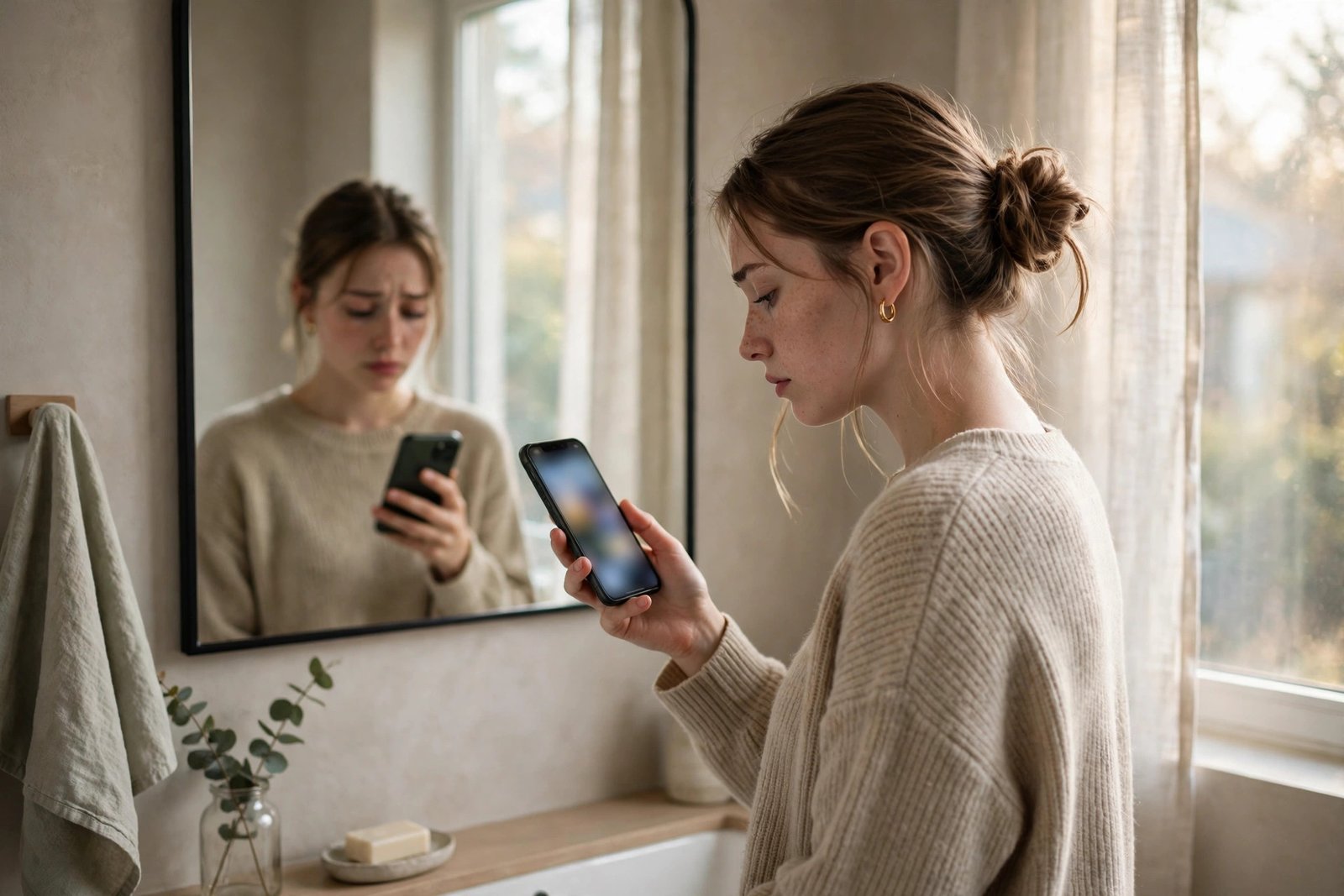
The psychological mechanisms behind the trend are not mysterious. Three of them explain a large share of what people describe: social comparison, variable rewards and mental load.
Social comparison is the habit of measuring your own life against what you see. Feeds make that comparison unfair by design. You see other people’s selected highlights, filtered faces, career wins and holidays, and you compare them with your own unedited Tuesday. Even people who know this intellectually feel it emotionally, because the images arrive faster than the reasoning.
Variable rewards are the second mechanism. Notifications, likes and new posts arrive on an unpredictable schedule. Behavioural psychology has long shown that unpredictable rewards keep a behaviour going more strongly than predictable ones. Press coverage of the detox trend often notes that psychologists compare this checking cycle to gambling, because you never know whether the next refresh will bring something rewarding, so you keep refreshing.
The third mechanism is mental load. Each app carries small obligations. Messages to answer. Birthdays to acknowledge. News to react to. A version of yourself to maintain. None of these tasks is large, but together they create a background hum of unfinished business. People describing why is everyone quitting social media often use work words: chore, job, performance, maintenance. The feed became another inbox.
Self determination theory adds a useful frame here. People feel better when they experience autonomy, competence and real connection. Endless scrolling can undermine all three. Autonomy suffers when the next video is chosen for you. Competence suffers when hours pass with nothing to show for them. Connection suffers when interaction is reduced to brief reactions under public posts.
None of this means every user is harmed, or that the apps cause every problem people bring to them. A lonely person may scroll more because they are lonely, not the other way round. Good analysis keeps both directions in mind. What the mechanisms explain is why stepping back can feel like relief so quickly: you remove comparison triggers, break the reward loop and clear a layer of mental load in a single move.
It also explains why willpower advice so often fails. If the loop is built into the design, telling yourself to simply try harder fights the design with the weakest tool you have at the end of a tiring day. Changing the environment, by removing the app, logging out, or moving the phone out of the bedroom, works with the psychology instead of against it. This practical relief explains much of why is everyone quitting social media. That is why so many quitters describe practical tricks, not heroic discipline, as the thing that finally worked.
Burnout, sleep and attention

Burnout is usually discussed as a work problem, but the pattern fits heavy social media use well. There is constant input, frequent emotional spikes, no clear stopping point and a feeling that resting means falling behind. Young adults juggling study, work, side projects and an online presence describe exactly this accumulation.
Sleep is where the cost becomes concrete. Late scrolling delays bedtime, news and arguments raise alertness when the body should be winding down, and the phone on the nightstand invites one last check that becomes forty minutes. People who step back frequently report better sleep in press coverage of the trend, and it is one of the first benefits quitters mention in interviews.
Attention is the quieter cost. A day broken into thirty second fragments trains a particular kind of restlessness. Long books feel slow. Films get paused for phone checks. Conversations compete with a device that vibrates. Many people only notice this after a break, when a weekend offline reveals how often they were reaching for stimulation they did not actually want.
There is a physical side too. Headaches from long screen sessions, sore eyes, a stiff neck from looking down, and the low mood that follows a sedentary evening indoors all add up. None of these alone explains a cultural trend. Together, they lower the threshold. When an app already feels less fun, a tired body makes the decision to delete it much easier.
This is also where age differences show up. Younger users grew up inside these systems and talk about fatigue with unusual clarity, because they have no memory of adult life without them. Older users who leave often cite time and grandchildren, hobbies and peace. The vocabulary differs. The underlying complaint, that the apps take more than they return, is strikingly similar across generations. That shared complaint sits at the heart of why is everyone quitting social media.
What research says about deleting apps and taking breaks

It is tempting to treat every survey headline as settled science, so this section separates what is reasonably supported from what is still debated. That honesty matters, because the question why is everyone quitting social media deserves evidence, not just vibes.
First, the behaviour itself is well documented. Deloitte’s UK Digital Consumer Trends survey of more than 4,000 people, reported by CNBC in February 2026, found that nearly a quarter of consumers had deleted a social media app in the previous twelve months, and nearly one third of Gen Z respondents had done so. People were not only talking about leaving. A large minority had actually removed at least one app.
Second, the reasons people give are consistent across surveys and interviews: protecting mental health, saving time, reducing comparison and stress, and disliking what the feeds have become. When different research teams, journalists and platforms hear the same reasons from different groups, that consistency is worth taking seriously, even if each individual study has limits.
Third, the effects of taking a break are more mixed than social media posts about detoxing usually admit. Some experiments find small improvements in mood, sleep or life satisfaction during a break. Others find little average change, because people miss real connections and useful information at the same time as they escape comparison and noise. Benefits and losses can cancel each other out, which is why results vary so much between studies and between individuals.
That mixed picture actually fits everyday experience. A break from a feed full of arguments helps one person a lot. Losing the group chat that organises a sports team or supports new parents hurts another person. Research that averages everyone together can hide both stories. The sensible conclusion is not that breaks are magic, or useless, but that what you leave, and what replaces it, decides the outcome.
Fourth, replacement matters in the studies and in real life. People who fill the freed time with sleep, movement, friends, reading or hobbies tend to describe the break positively. People who simply switch to another endless feed, or sit with the same worries in a quieter room, are less impressed. Deleting an app removes a habit. It does not, by itself, build a life on the other side of the habit.
Researchers also warn about who gets studied. Many experiments recruit university students in wealthy countries, run for a week or a month, and rely on people reporting their own feelings. That is useful evidence, but it is not the final word on families, older adults or long term change. Keeping those limits in mind protects you from both hype and dismissal.
The overall research picture, then, is this. Large numbers of people are reducing use. Their stated reasons are stable and plausible. Breaks help some people, in some ways, especially when the time is well replaced. Anyone promising that quitting will transform your mental health in seven days is selling something the evidence does not support. Keeping that limit in view gives a more honest picture of why is everyone quitting social media.
The analog turn: dumbphones, vinyl, hobbies and smaller circles

One of the most visible parts of the trend is what people do instead. Basic phones that only call and text, sometimes called dumbphones or brick phones, have become a deliberate choice for some younger users. So have film cameras, vinyl records, paper notebooks, printed books and MP3 players that do one thing and then stop.
These objects share a quality the smartphone lacks: they end. A record finishes. A roll of film runs out. A notebook page fills. Single purpose tools do not open a door into forty other activities, notifications and opinions. For people tired of infinite feeds, that built in limit feels like rest.
Hobbies are returning in the same spirit. Knitting, baking, running clubs, board game nights, community sports and language classes all offer something feeds struggle to provide: progress you can touch, people in the same room, and an identity built on doing rather than displaying. The hobby does not need to be photographed to have happened, and for many former heavy posters, that privacy is the point.
Offline social time is being rebuilt deliberately, not left to chance. Friends schedule recurring dinners, walks and coffee dates that survive without a group platform organising them. If you want ideas for that kind of in person time, our guide to what to do in Montreal is built around real places and shared days out rather than content to post about them.
Smaller circles are the other half of the analog turn. Instead of broadcasting life updates to hundreds of followers, people send photos directly to the six people who actually care. Instead of following hundreds of accounts, they subscribe to a few newsletters, listen to long podcasts, or read sites they chose on purpose. The internet gets quieter, more deliberate and more finite.
None of this requires rejecting technology altogether. The same person who carries a basic phone on weekends may use sophisticated tools at work all week. The analog turn is best understood as people reintroducing friction and limits where the frictionless version left them drained. Choosing a tool that does less is, for them, a way of doing more of what they actually value. Those choices show why is everyone quitting social media is also a story about what people want more of.
Nuances and counter-examples: quitting is not always the answer

A balanced answer to why is everyone quitting social media has to include the people for whom these platforms remain genuinely valuable, and the situations where leaving can make life harder.
For people who live far from family, who are housebound, who belong to a minority community with few local members, or who run a small business that depends on social discovery, these apps can be a lifeline rather than a burden. Support groups for rare conditions, new parent communities and diaspora networks do real work that private messaging alone may not replace.
Creators and freelancers face a sharper trade off. Leaving can protect their attention while removing their shop window. Many solve this by separating roles: a work account checked at set hours on a computer, and no personal scrolling at all. The boundary is occupational, not moral, and it shows that design and scheduling can fix some problems that deletion is not required for.
There is also a loneliness risk. Removing feeds without replacing the contact they carried can leave quiet evenings emptier. Researchers studying detoxes note this offsetting effect, and it matches common sense. If your main daily contact with friends runs through one app, plan the replacement first: regular calls, a standing walk, a class, a community. Deletion works best as a move toward something, not only away from something.
Nor is every heavy user unhappy. Some people curate feeds that teach them languages, crafts, science and news they value, keep tight lists, mute aggressively and log off satisfied. Their experience is a reminder that the unit of analysis is not the platform in the abstract. Their experience also qualifies any simple answer to why is everyone quitting social media. It is the particular feed, habits and life of a particular person.
Finally, beware of turning quitting into a new performance. Posting daily updates about your digital detox, checking how the detox content performs, and judging others for still scrolling keeps the same status machinery running under a healthier looking label. The quiet version, less discussed and less displayed, is usually the one that changes daily life.
Observable signs can help you judge your own case. You open an app without meaning to, several times a day. You close it feeling flatter or more envious than when you opened it. Scrolling regularly displaces sleep, reading, exercise or people in the room. Absence feels risky rather than restful. Written down over one week, those patterns answer, for one person at least, the practical side of why is everyone quitting social media. The same after effect question is explored in our guide on how to know if you are in a toxic relationship.
What to do next: a calmer way to use or leave social media

If this article has clarified why is everyone quitting social media and you suspect some of those reasons are yours, you do not need to start with a dramatic deletion. Start with an honest audit and a small experiment you can actually learn from.
First, for three days, simply notice. Note each time you open an app without intending to, and how you feel after long sessions. No judgement and no changes yet. Most people have never actually observed the habit they are trying to judge, and observation alone often reduces automatic use.
Second, clean the environment. Remove the most draining app from your phone while keeping computer access, turn off all non human notifications, unfollow or mute accounts that reliably leave you envious or angry, and charge the phone outside the bedroom. These are one time changes that protect you on tired days when motivation is low.
Third, run a time limited experiment. Try one week, or one weekend pattern repeated for a month, rather than a forever vow. Decide in advance what will fill the gaps: a book by the sofa, a morning walk, a standing call with a friend, a hobby with the materials already out. At the end, judge by your notes on sleep, mood and time, not by whether the experiment looked impressive.
Fourth, tell people how to reach you. A short message to close friends and family, with your number or email and a note that you check messages in the evening, prevents most practical problems. Groups that organise real life, like childcare swaps or sports teams, deserve a specific alternative arrangement before you disappear from the channel they use.
Fifth, decide what stays, and why. Perhaps one platform stays for work, one messaging app stays for family, and the rest go. Perhaps everything goes for a season. Write the decision and the review date down. A choice with a review date is a policy. That kind of deliberate policy is the mature form of why is everyone quitting social media. A vague intention is just a mood, and moods lose to well designed apps.
If, during a break, you feel persistently low, anxious or isolated, treat that as important information rather than failure. Restore the contact that was helping, in a bounded form, and consider speaking with a health professional if low mood continues. The goal was never purity. The goal is a daily life that feels like yours, with tools serving it instead of steering it.
FAQ

Is everyone really quitting, or is it just a headline?
It is a real behavioural shift, but not a mass disappearance. Surveys such as Deloitte’s UK research, covering more than 4,000 people, found nearly a quarter had deleted a social media app in a year. Many more people reduce use, stop posting or take long breaks without deleting accounts, so the change in daily attention is larger than account numbers suggest. That gap between accounts and attention is key to why is everyone quitting social media.
Why is everyone quitting social media at the same time?
The timing reflects several pressures arriving together: feed fatigue, comparison and mental load, privacy concerns, dislike of AI heavy and advertising heavy content, and a cultural moment where offline hobbies and basic phones carry positive status. When leaving becomes normal and even admired, people who were privately tired act on feelings they have held for years.
Will quitting improve my mental health?
It might, especially if your feed reliably leaves you anxious, envious or short on sleep, and if you replace the time with rest, people and activities. Research on breaks is mixed on average, because people also lose real connection and useful contact. Judge your own experiment by your sleep, mood and time over several weeks, and seek professional support if low mood or anxiety persists with or without the apps.
What if my work or family depends on these apps?
Separate the function from the feed. Keep the specific tool you need, on a computer or at set hours if possible, remove personal scrolling, and give family a direct channel that does not depend on a public platform. Many people who appear to have quit have actually done exactly this: they kept the useful function and left the endless public feed behind.
How long should a first digital detox last?
Long enough to learn something, short enough to keep. A single weekend shows you the urges. One to four weeks shows you the effects on sleep, attention and social life. Decide the length, the exceptions and the replacement activities before you start, write them down, and review the result honestly at the end rather than extending or abandoning the experiment on impulse.