

Everyone has been to a movie night that quietly fell apart. The film took forty minutes to choose. Two people scrolled on their phones. The sound was too low, the subtitles were off, someone kept pausing to explain the plot, and by the end nobody could quite say why the evening felt flat.
Everyone has also been to one that worked. The room felt warm before the film even started. The food was simple but right. The movie pulled the whole group into the same story, and people stayed at the table long after the credits, still talking about a scene, a character, or a line that landed.
The difference is rarely money, a huge screen, or a perfect house. Learning how to host a movie night everyone remembers is mostly about decisions made before anyone arrives: who you invite, what you choose, how you set the room, and how you pace the night.
This guide breaks the whole evening down, step by step. You will learn how to host a movie night everyone remembers in a small apartment or a big house, for close friends, family, a date, or a mixed group that does not know each other well yet.
The short answer

The short answer is this: a memorable movie night is built, not improvised. Pick a group that fits your space, choose the film before guests arrive, make the room comfortable and dark enough, serve food that is easy to eat in low light, and leave time before and after the film for real conversation.
If you want one sentence on how to host a movie night everyone remembers, it is this: remove every small friction in advance, so guests can give the film and each other their full attention.
That means testing the streaming login before the doorbell rings. It means subtitles set, remotes charged, blankets within reach, drinks cold, and a start time that is real. None of it is glamorous. All of it is what guests actually feel.
It also means accepting that the film is only half the event. People remember how an evening made them feel: welcomed, relaxed, well fed, and included in the choice. When people ask how to host a movie night everyone remembers, they are usually asking about that feeling, not about equipment.
Everything below expands that short answer into a complete plan, from the first invitation to the moment the last guest puts on their coat.
Why some movie nights stick in memory and others fade
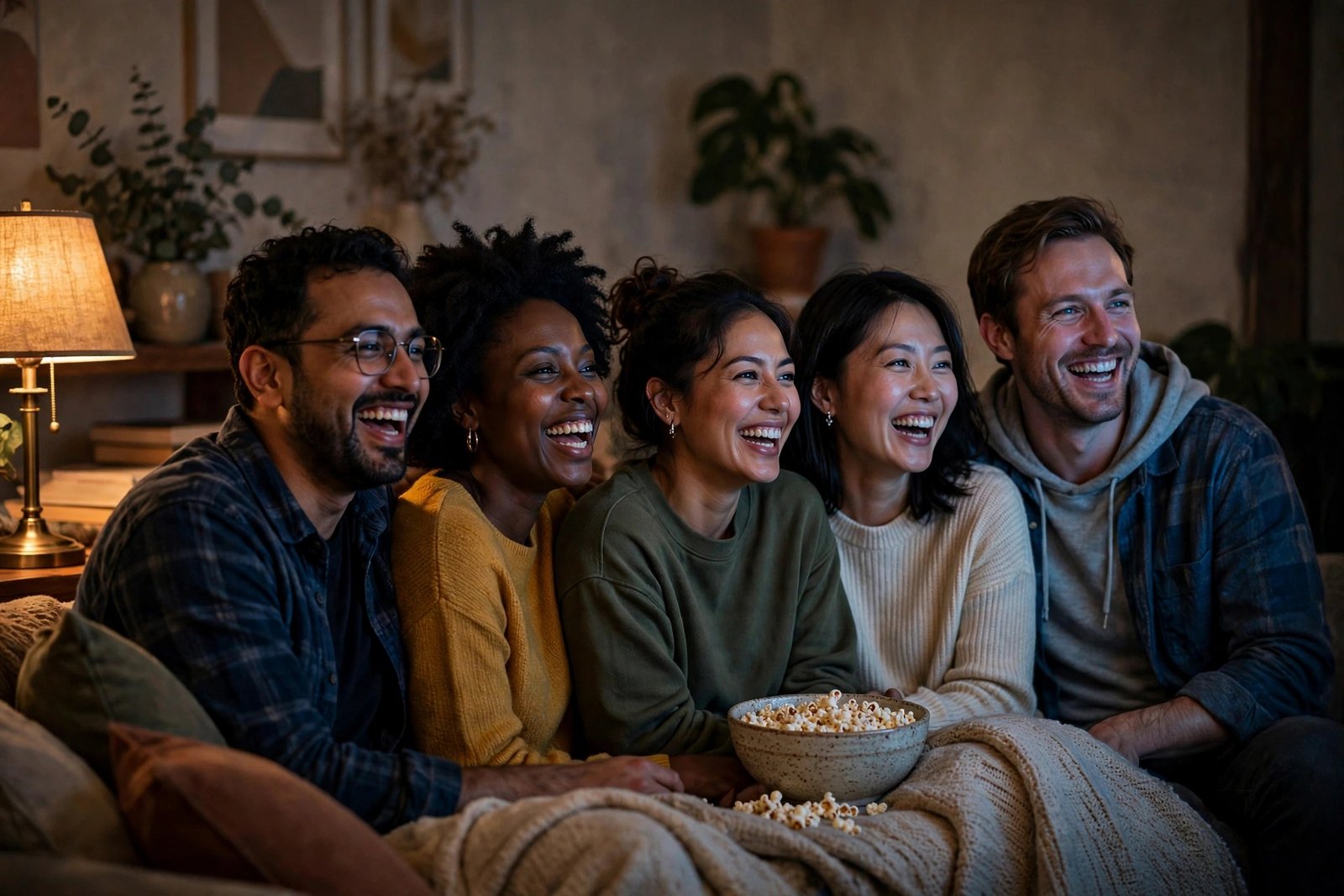
A movie night fades when it is treated as background. The television is on, food appears at some point, and people drift between the screen, their phones, and the kitchen. Nothing goes badly wrong. Nothing pulls the group together either.
A night sticks when it has a shared focus. Psychologists who study attention describe a simple truth: we remember experiences we fully attend to far better than experiences we half watch. A film gives a group one story, one set of faces, and one emotional arc to share at the exact same time.
That shared timing matters. When the whole room laughs at the same second, or goes quiet at the same scene, something social happens. People glance at each other. They check reactions. They feel, briefly, like a single audience instead of separate guests sitting near each other.
This is also why the choice of film carries more weight than hosts expect. A film that is too familiar becomes wallpaper. A film that divides the room on quality can still work if it gives people something to argue about happily. A film that nobody can follow, in a language nobody reads comfortably, with sound nobody can hear, kills the shared focus entirely.
Memory also loves a small signature detail. It might be the popcorn with a seasoning nobody expected, a short introduction from the host, a printed ballot for a friendly prediction game, or the dessert that arrives exactly when the credits roll. One detail, done on purpose, gives the night a name in people’s minds.
There is a counter example worth naming. A very elaborate night can also fail if the host is stressed, the rules are rigid, and guests feel managed instead of welcomed. Themes, costumes, and matching menus are lovely when they lighten the mood. The moment they make guests feel they have performed the evening wrong, the memory turns sour.
The goal is warm structure, not control. Enough planning that the night flows. Enough looseness that people can be themselves inside it. That balance is the thread running through how to host a movie night everyone remembers.
Start with the guest list, not the screen

Most planning mistakes begin with equipment and end with people. Reverse the order. The guest list decides the film, the food, the seating, and even the start time, so it comes first.
Start with space. Count real seats, not theoretical seats. A couch for three fits two comfortably for two hours. Floor cushions work for younger guests and shorter films, but a three hour epic on a hard floor is a quiet act of cruelty. If seats are limited, invite fewer people and do it without guilt. Getting the people right is fully half of how to host a movie night everyone remembers.
Next, think about mix. A movie night is an easy way to introduce friends from different circles, because the film gives everyone a shared topic and takes pressure off small talk. Still, one guest who knows nobody needs a small kindness: introduce them properly before the film, sit them near a friendly talker, and never leave them holding a plate in a corner.
Consider sensitivities early, not at the door. Ask about food allergies when you invite, not when you serve. Think about who has lived through things a film treats as entertainment. A war film, a story about illness, or a horror film with a very specific fear can land very differently on different people.
Children change the equation too. If kids are included, the film, the hour, and the food all shift, and that is fine as long as the adults know the plan. A mixed night works best when the film truly suits the youngest viewer in the room, not when adults hope the child will fall asleep before the hard scenes.
Group size shapes conversation as well. Four to six guests is the sweet spot for most homes: enough energy for a lively discussion, few enough that everyone can speak. Eight to ten can work for a comedy or a well loved classic, where the mood is closer to a small party.
Finally, send a real invitation, even a simple message, with the essentials: date, arrival time, film start time, what the film is or how it will be chosen, and whether dinner is included or snacks only. Clarity is a form of hospitality. Guests relax when they know what kind of evening it is.
A note on dates and couples: a movie night for two follows the same logic at a smaller scale. The care is the message. Choosing a film your partner has mentioned, preparing their favourite snack, and putting the phone in another room says more than any grand gesture.
Choosing a film everyone can actually enjoy

The longest, deadliest part of many movie nights is the scroll. Twenty minutes of trailers and opinions can drain the room before the film begins. The first rule of how to host a movie night everyone remembers is simple: never let the group choose from an infinite catalogue in real time.
Choose in advance, or narrow the choice to two or three titles and let guests vote quickly on arrival. A short vote feels inclusive. An endless browse feels like homework. That rule alone teaches most of how to host a movie night everyone remembers.
Match the film to the group, not to your own taste alone. Ask yourself three questions. Will everyone be able to follow it? Will its length fit the evening, including conversation after? And does its tone fit the mood you want people to leave with?
Length is the quiet killer. On a weeknight, a film under two hours protects the whole evening. Long films are for weekends, committed fans, and groups who have agreed in advance. Always count the full runtime, including the talk after, when you set expectations about when the night ends.
Genre deserves honest thought. Comedy is the safest shared pleasure and the easiest for mixed groups. Thriller and mystery hold attention and give the after film conversation real material. Drama can be wonderful with the right group and exhausting with the wrong one. Horror is a strong bonding experience for fans and a miserable evening for anyone who agreed under pressure.
Check content the way a thoughtful host checks ingredients. If you are unsure whether a film suits your guests, a resource like Common Sense Media summarises themes, language, and intense scenes in plain language. Five minutes of checking beats an awkward apology in the dark.
Consider a theme when you want the night to feel distinct. A film from one country paired with food from that country. A director’s early work and a later one across two nights. A beloved classic that older guests love introducing to younger ones. If you are building a run of themed evenings in a city you love, our guide to what to do in Montreal is a good reminder that a great night out, or in, starts with knowing your audience and your setting.
Subtitles are a hosting decision, not a technical detail. For films in another language, confirm everyone can read comfortably and that the subtitle size is legible from the back seat. Test it before guests arrive, from the farthest chair, with the lights as they will be during the film.
And if the night is built around a love story, choose one with something to argue about. A film that asks whether loving someone is the same as choosing them will keep a table talking. It pairs naturally with the questions we explored in can you love someone but not want them, and guests will bring their own answers.
What research says about watching stories together

Research on shared experiences offers a useful backdrop for hosts. Studies in social psychology have repeatedly found that doing something at the same time as others, even something as simple as watching the same video, increases feelings of connection and makes the experience itself feel stronger.
Researchers sometimes call this shared attention. When people know that others are seeing and hearing the same thing at the same moment, emotions intensify and memories align. It is part of why cinemas still matter, why live sport feels different from a replay, and why a living room can borrow some of that power.
Narrative research adds a second layer. Stories transport us. When viewers are absorbed in a story, they track characters, predict outcomes, and feel real emotion for fictional people. Afterward, discussing the story helps the group process what it meant, which is why the conversation after a good film can move surprisingly quickly from plot points to real life, values, and memories.
There is also honest nuance here. Research does not say that any film, watched any way, bonds any group. Divided attention weakens the effect, which is why phones are such a problem. Discomfort weakens it too. A guest who is cold, hungry, unable to hear, or quietly distressed by the content is not sharing the experience the host imagines.
The practical lesson is encouraging for hosts. You do not need research grade conditions. You need the basics that protect shared attention: a film everyone can follow, sound everyone can hear, comfort everyone can settle into, and a social agreement that the film gets the room’s attention for its full running time.
That is the real science behind how to host a movie night everyone remembers. Protect the shared moment, and the bonding mostly takes care of itself.
Setting up the room, sound, and light

You do not need a home theatre. You need a room where every guest can see, hear, and sit comfortably for the length of the film. Work through those three things in order.
Seeing first. Arrange seats in a gentle arc facing the screen, close enough that faces and subtitles are clear. Remove the seat with the bad angle rather than offering it and apologising all night. If you use a projector, test the image in the lighting you will actually have, and know where the spare cable or remote batteries are.
Daylight is the enemy of afternoon screenings. Curtains or blinds that truly darken the room matter more than screen size. For evening screenings, one warm lamp behind the seating area gives enough light for people to move safely without washing out the picture.
Hearing second. Most televisions push sound from small speakers that struggle with dialogue. If dialogue is hard to follow in your own tests, fix it before the night: a soundbar, a borrowed speaker, or even the dialogue or night mode in your television settings can help. Turn subtitles on for films with quiet speech, heavy accents, or lots of overlapping talk, and tell guests you have done so. Many will be quietly grateful.
Volume needs a host decision too. Set a level that suits the film, then leave the remote with one person. Constant volume riding, up for speech and down for action, distracts everyone. A steady, slightly generous level with clear dialogue beats a perfect level that keeps changing.
Sitting third. Add what the room lacks: cushions, a folded blanket per guest or per couch, a small side surface for drinks within reach of each seat. People settle when they do not have to balance a glass on their knee for two hours.
Temperature is part of comfort. Rooms full of people warm up. Crack a window before the film or lower the heating slightly, so the second hour does not turn sleepy and stuffy.
Small logistics finish the job. A clear path to the bathroom that does not cross the screen. Phones on silent, yours first, stated lightly as you dim the lights. A charging spot in the kitchen for anyone who wants their phone out of reach but not dead.
Test the whole setup the day before if you can, at the same hour, from the worst seat. Ten minutes of testing is the least glamorous and most reliable part of how to host a movie night everyone remembers.
Food, timing, and the flow of the night

Food can lift a movie night or quietly sabotage it. The rules are practical: food should be easy to eat in low light, quiet enough not to compete with dialogue, and timed so nobody is watching the best scene through a cloud of hunger.
Separate dinner from the film when you can. Eating a real meal at a table first gives guests conversation, light, and both hands. Then the film gets clean laps, simple snacks, and full attention. If dinner and the film must overlap, choose food that needs no knife, no assembly, and no looking down.
Snacks deserve one signature item and a few reliable supports. Popcorn is classic because it is warm, shareable, and part of the ritual. Add one twist if you like: a seasoned salt, grated cheese, or a sweet version for the second half. Then cover the other bases: something fresh, something sweet, and a drink option with no alcohol and no caffeine for guests who want the evening to stay gentle.
Drinks work best on a self serve basis, set up before the film, away from the screen. Ice, water, glasses, and a bottle opener in one visible place means guests never have to whisper requests across the room mid scene.
Timing is the host’s invisible craft. A workable rhythm for most evenings looks like this. Guests arrive and settle for thirty to forty five minutes with drinks and first food. The host gives a two minute welcome and a one sentence introduction to the film. The film starts on time. A short pause at the midpoint suits long films only, announced in advance, kept to ten minutes for bathrooms and refills. After the credits, the lights come up slowly and the conversation gets its own protected time.
Starting on time respects the guests who arrived on time, and it protects the end of the night. A film that starts forty minutes late ends with people checking the time instead of discussing the ending.
Timing, more than menus, is the quiet heart of how to host a movie night everyone remembers. Allergies and preferences are handled quietly and early. Label the dish that contains nuts. Keep one snack that everyone in the room can eat. A guest who can eat nothing remembers the evening for the wrong reason, and it is one of the easiest failures to prevent.
Cleanup follows the same philosophy: little and often, never theatrical. Clear plates before the film, not during it. Put a small bin or tray where guests can leave wrappers without a search. The host who disappears to wash dishes during the best scene has misunderstood the job. Your presence is part of the hospitality.
Small hosting details people remember months later

By now the basics are covered, and basics are what make a night work. Details are what make it remembered. The good news is that the details guests recall are small, cheap, and mostly about feeling considered.
A personal welcome is the first. Greet people at the door yourself, take the coat, offer a drink by name if you know their preference. Thirty seconds of real attention at arrival sets the emotional temperature of the whole evening.
A short introduction to the film is the second. Tell guests, in two or three sentences, why you chose this film and one thing to watch for: a performance, a famous scene, a question the film asks. Do not summarise the plot and never reveal a twist. A good introduction turns passive viewing into active watching, and it gives the after film conversation a starting thread.
Predictions and light games are the third, used sparingly. Before a mystery, ask each guest to name their suspect. Before a well known classic, ask who has never seen it and let them predict the famous line’s context. Keep it to a minute, keep it optional, and pay it off after the credits. People love discovering whether they were right.
Comfort details are the fourth. A blanket offered before someone asks. A cushion appearing for the guest on the floor. The volume adjusted for the older guest without a public announcement. These micro acts of noticing are the substance of hospitality, and guests recount them later with surprising precision.
The ending is the fifth, and hosts undervalue it. Do not let the night dissolve the second the credits roll. Offer tea, dessert, or a last drink. Ask one good question and let it run: What scene stayed with you? Would you have made the same choice? Who changed most? Then, when the evening truly ends, walk guests to the door, thank them for something specific, and mention the next night only if you mean it.
A follow up the next day takes thirty seconds and doubles the memory. A message with a photo of the group, the name of that song someone asked about, or the recipe for the snack everyone ate is a small gift. It also quietly tells guests they were not an audience. They were the point.
Notice what is absent from this list: expensive upgrades. Learning how to host a movie night everyone remembers is a practice of attention, and attention is free. The hosts people love are not the ones with the biggest screens. They are the ones who noticed what their guests needed slightly before the guests did.
What to do next: your simple planning timeline

If the full picture feels like a lot, use this timeline. It spreads the work so thin that hosting stays pleasurable, which guests can always feel.
One week before, choose the film and send the invitation with arrival time, start time, and whether food is a meal or snacks. Ask about allergies in the same message. If the film needs a rental or a specific streaming service, confirm you have access now, not on the night.
Three days before, plan the food around one signature snack, write the shopping list, and check your equipment: remote batteries, speaker, cables, seating, blankets. Borrow what you lack while borrowing is still easy.
The day before, buy the food, clear the room, arrange the seats, and run the full test from the worst seat: picture, sound, subtitles, lighting. Charge what needs charging. Chill the drinks.
On the day, cook or prepare what can be ready early, set up the drinks station, and finish your own preparations before the first guest arrives. A host who is still showering when the doorbell rings starts the evening apologising, and the apology lingers.
Thirty minutes before guests arrive, dim the room to evening levels, put the snack smells in the air, and put music on low. The house should feel like an evening is about to happen.
During the night, follow the rhythm: welcome, settle, introduce, start on time, protect the film, then protect the conversation after it. Keep your phone in the kitchen. Be a guest at your own event whenever the plan allows it, because a relaxed host is contagious.
After the night, send the follow up message, note what worked while you remember it, and write down the film your guests asked for next time. That small notebook, physical or in your phone, is how one good night becomes a tradition, and traditions are the real answer to how to host a movie night everyone remembers.
Start small if you are new to hosting. Four guests, a comedy under two hours, one great snack, and a film you already love. A modest night that flows beats an ambitious night that wobbles, and you can grow from there.
Before your next evening, run this simple test against every choice you make: does it help how to host a movie night everyone remembers, or does it only look impressive? That question, asked honestly, is how to host a movie night everyone remembers in practice. Hosts who return to it while choosing the film are learning how to host a movie night everyone remembers. Hosts who return to it while setting the room are learning how to host a movie night everyone remembers. And hosts who return to it while planning food and timing are, step by step, becoming the kind of host who already knows how to host a movie night everyone remembers.
FAQ

What is the best night of the week for a movie night?
Friday and Saturday suit long films and late conversations. Weeknights work well with shorter films, an earlier start, and a clear end time. The best night is the one your guests can attend without paying for it the next morning, so ask your group rather than guessing.
How long should a movie night last in total?
Plan for the film plus about an hour of social time, split between arrival and the conversation after the credits. For most groups that means a total of three to four hours. Stating the expected end time in the invitation helps everyone relax, especially on weeknights.
What if my friends cannot agree on a film?
Never open the full catalogue to the group. Offer two or three titles that all suit the group, take a fast vote, and commit. If tastes truly clash, rotate the choice between nights, so each host or guest gets a turn across the season rather than a battle each evening.
How do I handle phones without sounding strict?
Lead by example and keep it light. As you dim the lights, say that you are putting your phone in the kitchen and invite anyone who wants a break from theirs to join it there. Most guests are relieved. For anyone expecting an important call, a silent phone face down is a fair compromise.
How can I host a great movie night on a very small budget?
Spend on comfort and one good snack, not on gear. Borrow cushions and blankets, use the television you have, choose a beloved classic that costs nothing to rent, and make popcorn well. The core of how to host a movie night everyone remembers has never been equipment. It is a well chosen film, a comfortable room, and a host who planned the small things in advance.