
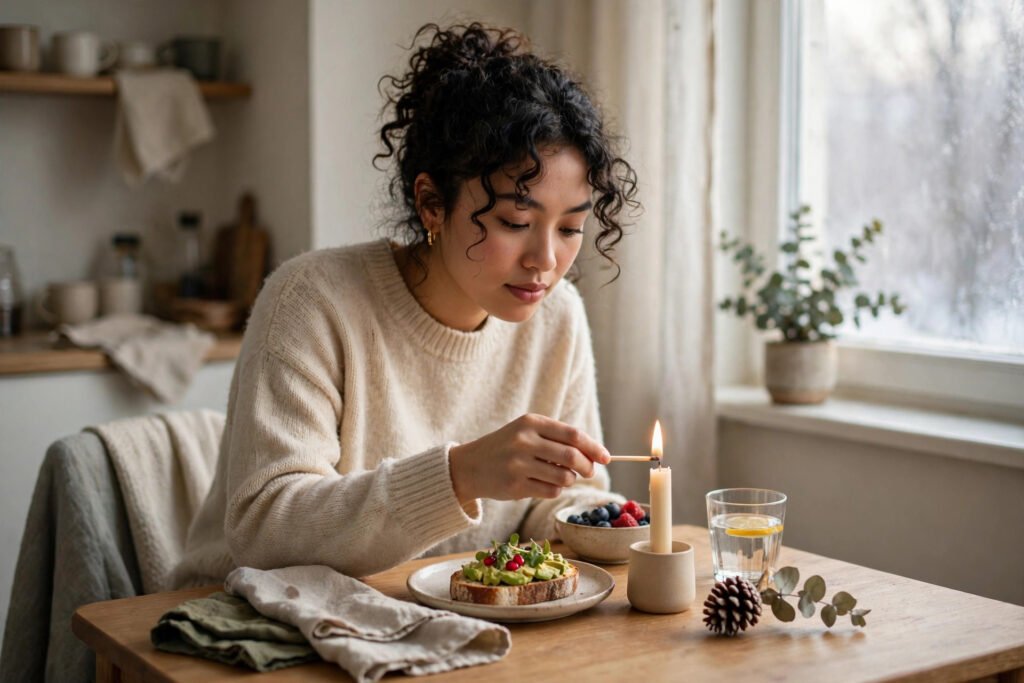
There is a quiet moment in adult life that nobody warns you about. The holidays approach, and instead of the automatic excitement you felt as a child, you feel something more complicated. The old family script may no longer fit. You may live far away, have a partner with different customs, have lost someone, have a small budget, or simply have realized that you spend every December performing a holiday designed by and for other people.
That moment is not a failure of gratitude or family feeling. It is an invitation. Learning how to start your own holiday traditions as an adult is one of the real tasks of growing up, as concrete as signing a lease or opening a savings account. A tradition is how a person says: this is my life now, these are my people, and this is what we do to mark the year together.
This guide treats that task with the seriousness it deserves. It explains why starting traditions feels emotionally harder than it looks, what research says about rituals and belonging, how to choose values before activities, and how to build small, durable rituals that fit a real budget and a real schedule. It also covers the hard parts honestly: partners who want different things, parents who take change personally, and new traditions that fall flat the first year.
You do not need a big house, a big family or a big income to do this well. You need clarity about what matters to you, a few repeatable moments, and the patience to let repetition do its slow work. That is how to start your own holiday traditions as an adult, and it is available to you this year, not someday when your life looks more settled than it does today.
The short answer

The short answer to how to start your own holiday traditions as an adult is this: choose two or three small rituals that express what you actually value, attach them to dates or moments that already exist, repeat them on purpose, and let them grow slowly. A tradition is not found. It is built, the way a path is built, by walking the same route until it becomes yours.
Small is the key word. One special breakfast on a December morning, one walk after a holiday meal, one ornament bought each year, one evening with friends that happens every year without negotiation. These sound modest, and that is exactly why they survive. Grand productions collapse under their own cost and complexity. Simple rituals get repeated, and repetition is the entire mechanism of tradition.
It also helps to separate the feeling from the format. Most people who ask how to start your own holiday traditions as an adult are not really asking for activities. They are asking for belonging, continuity and a sense that the season means something in their own home. Once you name the feeling you want, the activities become much easier to choose, and much easier to change when life changes around them.
Why starting your own traditions feels harder than it looks

On paper, starting a tradition is easy: pick something enjoyable and do it every year. In real life, the task touches identity, loyalty and grief, which is why it can stir up feelings that seem out of proportion to a question about, say, a Christmas breakfast or a Thanksgiving walk.
Start with loyalty. Childhood traditions were rarely presented as choices. They were simply what the family did, and they carried an unspoken message: this is who we are. Changing them as an adult can feel, irrationally but powerfully, like betraying the people who raised you. Many adults keep attending or reproducing holidays they do not enjoy because stopping feels like a verdict on their parents. It is not. It is a normal developmental step, the same step your parents once took, or wished they had taken, with their own families.
Then there is grief, which hides inside many holiday decisions. Traditions hold people. The dish a grandmother made, the song a father played, the house everyone returned to. When those people die, move or change, the tradition becomes a container for missing them. Starting something new can feel like closing a door on them. In truth, a new tradition and an old memory can live side by side. You are allowed to keep one ritual from childhood exactly as it was, precisely because it carries someone you love, while building the rest of the season in your own way.
Comparison makes the work harder still. Other people holidays appear finished and effortless from the outside: matching families, full tables, houses that look designed for December. What you cannot see is that most of those traditions are also improvised, argued about and held together by one tired person. Your first attempts will look rough next to the highlight version of everyone else season. Rough first attempts are not evidence that you are doing it wrong. They are what year one of anything looks like.
Finally, adulthood itself is fragmented. Friends move, partners arrive with their own histories, work schedules ignore the calendar, and money is finite. The village that once produced traditions automatically no longer exists for many people. This is genuinely harder than it was for earlier generations in some ways, and it is worth saying plainly. But the same freedom that fragments the season also permits something new: traditions chosen on purpose, by you, for the life you actually have. That chosen quality is the heart of how to start your own holiday traditions as an adult, and it is a strength, not a consolation prize.
What research says about how to start your own holiday traditions as an adult

Psychologists who study family life make a useful distinction between routines and rituals. Routines are repeated practical actions: who cooks, when people eat, how the day is organized. Rituals are repeated actions with symbolic meaning attached: this meal, this song, this toast, because it says something about who we are. Research reviewed by Barbara Fiese and colleagues, covering decades of studies on family routines and rituals, links meaningful rituals with stronger family functioning, a clearer sense of identity for children and adolescents, and greater satisfaction in relationships. The meaning, not the repetition alone, is what carries the benefit.
Later work on holiday rituals points the same way. Studies discussed in research on family rituals and the holidays find that families who enact rituals tend to enjoy holidays more, and that the enjoyment comes through feeling closer and more involved, not through spending more or staging more. In other words, a ritual works because the people in it feel that it is theirs. That finding matters enormously for adults starting from zero, because it says the emotional quality of a small ritual beats the production value of a large one.
Anthropologists add another layer. Rituals, in their work, are markers of belonging. Taking part in a shared ritual tells every participant, including the person who invented it last year, that they are inside the group. This is why a friends holiday dinner, repeated annually, can start to feel like family within a few years, and why being invited into someone else rituals is experienced as a real rite of passage in a new relationship or a new city.
Self determination theory, the framework developed by psychologists Edward Deci and Richard Ryan, explains the adult side of this. People thrive when three needs are met: autonomy, feeling that your actions are your own; competence, feeling able to do what you attempt; and relatedness, feeling connected to others. Inherited traditions sometimes meet all three, and sometimes they meet only relatedness, at the cost of autonomy. A holiday you attend out of pure obligation can leave you surrounded by people and oddly empty. What research says about how to start your own holiday traditions as an adult follows directly from this: rituals you choose yourself are more likely to feed all three needs at once, which is why they so often feel better than bigger holidays that were chosen for you.
Memory research offers a final, hopeful clue. Psychologists who study how people evaluate past experiences describe a peak end pattern: we remember the best moment of an event and how it ended far more than we remember the long middle. A holiday does not need to be wonderful for twelve hours. It needs one genuine peak, a shared laugh, a beautiful table moment, a song everyone sings badly, and a warm ending. Designing for a peak and an ending is a realistic strategy for how to start your own holiday traditions as an adult, because it lets a small gathering create a large memory. For a readable overview of this evidence, see the summary of research on the power of family traditions published by Psychology Today.
Values first: what you are really choosing when you build a tradition

Before choosing any activity, answer a prior question: what should your holidays feel like, and what should they say? Adults often skip this step and copy activities they have seen, then wonder why the activities feel hollow. A tradition built on someone else values will always feel like a costume. A tradition built on yours can be tiny and still feel completely right.
Try naming three values from a simple list. Rest. Generosity. Faith or reflection. Play. Food and abundance. Nature and fresh air. Creativity. Remembrance of people who are gone. Connection with friends. Connection with family. Quiet. Service to others. There are no correct answers, but there are honest ones, and they differ. A person whose deepest holiday value is rest should not build a season of hosting. A person whose value is generosity might build everything around one meal cooked for others, or one day of volunteering that returns every year.
Notice, too, which values in your childhood holidays were actually yours and which were inherited furniture. Many adults discover that what they loved was never the formal dinner. It was the morning, the music, the one relative who made them laugh, the feeling of a house that was awake early. You are allowed to keep the living part and release the rest. That act of sorting, keeping what carries meaning and letting go of what only carries obligation, is the real beginning of how to start your own holiday traditions as an adult.
Write your three values down, in plain words, before you plan anything. Then test every candidate tradition against them with one question: does this activity actually produce this feeling, for us, at our scale? A candlelit dinner produces quiet and connection. A huge party produces energy and play, but not rest. A morning hike produces nature and reflection. The test takes ten seconds and it will quietly delete half of the ideas you were about to force yourself through.
One more distinction helps. Some traditions are anchors: they happen every year, at the same time, and people organize around them. Some are accents: small repeatable touches, a particular playlist, a first toast, a dessert that only appears in December. A healthy adult holiday usually needs only one or two anchors. The rest can be accents, which are cheaper, easier and surprisingly powerful, because they are the details memory keeps.
How to start your own holiday traditions as an adult, step by step
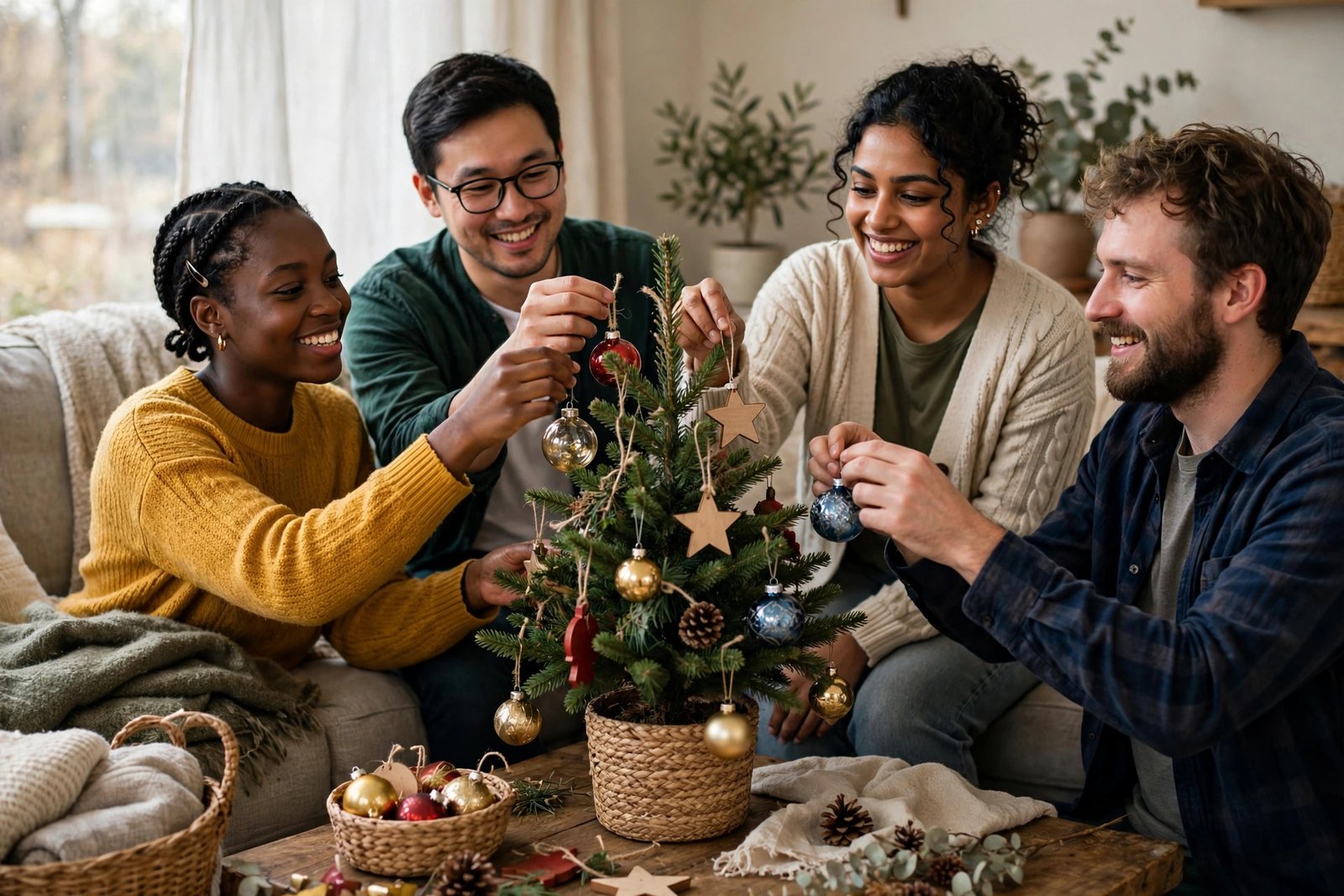
Step one is an honest inventory. List what already happens in your holidays, including the accidental parts. The takeout you always order on a certain night, the call you always make, the film someone always puts on. Most adults are surprised to find that they already have the seeds of two or three traditions. Starting does not always mean inventing. Sometimes it means noticing what already repeats, deciding it counts, and doing it on purpose next year.
Step two is to choose one anchor ritual for this year only. Not five, and not for life. One. Choose it by three criteria: it expresses one of your values, it is easy enough to repeat in a bad year, and it involves the people who are actually in your life now. A simple test helps here. Ask whether you could still do a small version of this ritual if you were tired, short on money or living somewhere else. If yes, it has the bones of a tradition. If it only works under perfect conditions, it is a party, not a tradition.
Step three is to attach the ritual to an existing moment. Traditions survive when they have a fixed place: the first Saturday of December, the morning of the holiday itself, the evening after the big family meal, the last Sunday of the year. A floating plan competes with everything. An attached ritual becomes part of the calendar, and other plans start bending around it, which is exactly the feeling people mean when they say a tradition took root.
Step four is to give the ritual one sensory signature. A specific dish, a smell, a song, a candle, a walk along the same street, a game with the same ridiculous rules. Memory is sensory before it is verbal, and a signature is what turns an activity into a place the mind returns to. This is a concrete, underrated part of how to start your own holiday traditions as an adult: do not just plan what you will do. Plan what it will smell, taste and sound like, and repeat that part faithfully even when everything else is simplified.
Step five is to say it out loud. Tell your partner, your friends or your family: “This is our thing now, we do this every year.” The sentence sounds small and it changes everything, because it converts an event into an expectation. People begin to ask about it, plan around it and miss it if it is skipped. Traditions are social contracts, and contracts start with someone stating the terms kindly and clearly.
Step six is to repeat once. The second year is the tradition. The first year is just an event with ambitions. So protect the second occurrence even more than the first: put it in the calendar months ahead, keep it even if attendance is smaller, and resist upgrading it into something unrecognizable. Upgrades are how young traditions die. Sameness, with small natural growth, is how to start your own holiday traditions as an adult that are still alive in ten years.
How to start your own holiday traditions as an adult on a real budget and schedule

Money is where many good intentions quietly end, so let us be direct. A tradition does not need to cost anything beyond ordinary food and time. The most durable rituals in most families are nearly free: a walk, a recipe, a game, a story told every year, a photograph taken in the same place. Cost is a weak predictor of meaning. Repetition and feeling are strong ones.
If you do spend, spend on the repeatable signature, not on volume. One good ornament a year instead of a box of decorations. Ingredients for one special dish instead of gifts for everyone you know. A single outing that returns annually. Some adults turn the outing into the tradition itself, for example one winter weekend away each year, planned with the same simple logic as a guide to what to do in Montreal: a few beloved places, one good meal, and no attempt to do everything. The trip matters less than the fact that it is the same trip, together, every year.
Time deserves the same honesty. Working adults, parents and caregivers do not have a free December, and a tradition that requires three days of preparation is a tradition designed for a different life. Build rituals that fit inside an evening, a morning or an hour. Protect that small block fiercely rather than apologizing for its size. An hour that happens every year beats a weekend that happened once.
Seasonal timing helps too. The holidays in the United States cluster tightly, from Thanksgiving in late November through the end of December, and many adults feel the whole period collapse into a single obligation. Spreading your own rituals across the season changes the experience. One anchor in late November, one in mid December, one quiet one at the new year. A season with rhythm feels authored. A season of pile up feels imposed. Rhythm, more than scale, is how to start your own holiday traditions as an adult without quietly reproducing the exhaustion you were trying to escape.
Blending, borrowing and letting go: partners, family and chosen family
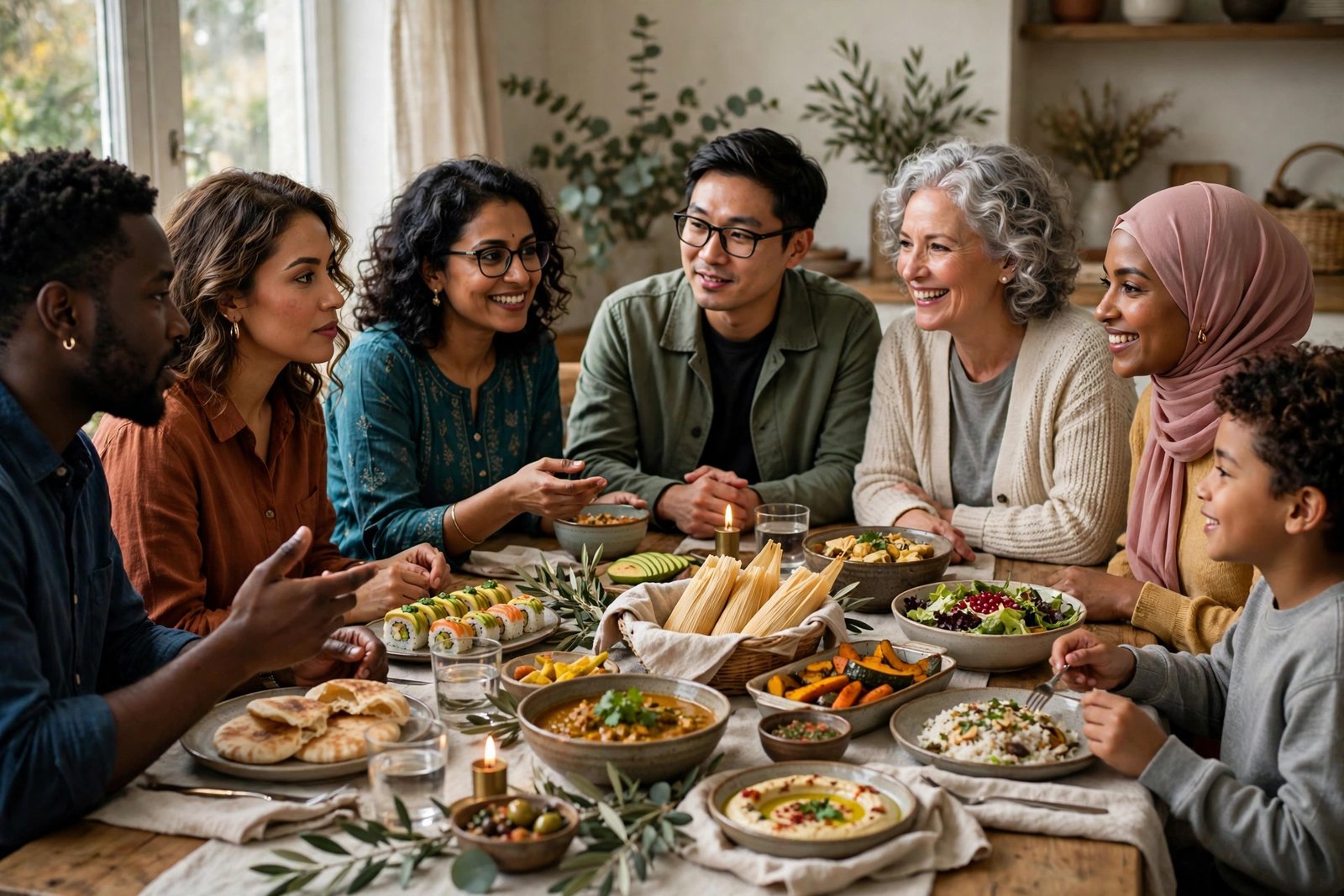
Few adults build traditions alone, and negotiation is where ideals meet reality. A partner arrives with a family that does the holidays loudly, or quietly, or on different days, or with different food, faith and expectations. The common mistake is to run the negotiation as a contest between two childhoods, where each person defends their family format like a flag. Nobody wins that contest. The holidays just inherit a yearly argument.
A better method is to trade in elements, not wholes. Each person names the one or two things that genuinely matter to them, the non negotiable core, and willingly releases the rest. “The morning matters to me, the big dinner does not.” “I need to see my parents on the day itself, but our own evening can be entirely ours.” Most people discover their core is smaller than they feared, and that the two cores rarely collide. What collides is everything around the cores, the inherited extras both people were defending out of habit rather than love.
With parents, honesty needs timing and warmth. Announce changes early in the season, not at the table, and frame them as additions to your life rather than rejections of theirs. “We are starting a small tradition at our place this year, and we will be at yours for dinner as always” lands very differently from a late announcement that you are skipping everything. Some parents will still feel the change as loss, because for them it partly is one. Their child holidays are ending. A little patience with that grief, without surrendering the decision, is the adult position, and it is usually rewarded within a year or two.
Chosen family deserves a full place in this picture. For adults who live far from relatives, whose family relationships are strained, or who simply love their friends like kin, a friends tradition is not a substitute holiday. It is a real one. The psychology here is simple and worth stating plainly: you can love your family and still build your season elsewhere, a distinction explored in can you love someone but not want them in the context of wanting closeness and distance at the same time. Love and format are different questions. Answering the format question honestly is how to start your own holiday traditions as an adult when your heart and your calendar do not point to the same house.
Borrowing is allowed, too. Traditions from a friend culture, a partner heritage, a city you lived in or a book you loved can become genuinely yours if you adopt them with respect and repeat them with feeling. Originality is not the standard. Ownership is. A borrowed ritual, practiced for years by your household, told to your children as “what we do”, is a tradition in every way that matters. That, in practice, is how to start your own holiday traditions as an adult in a world where families blend, move and rebuild: take the best of what you have seen, keep it faithfully, and let time make it yours.
When a new tradition fails, feels forced or creates conflict
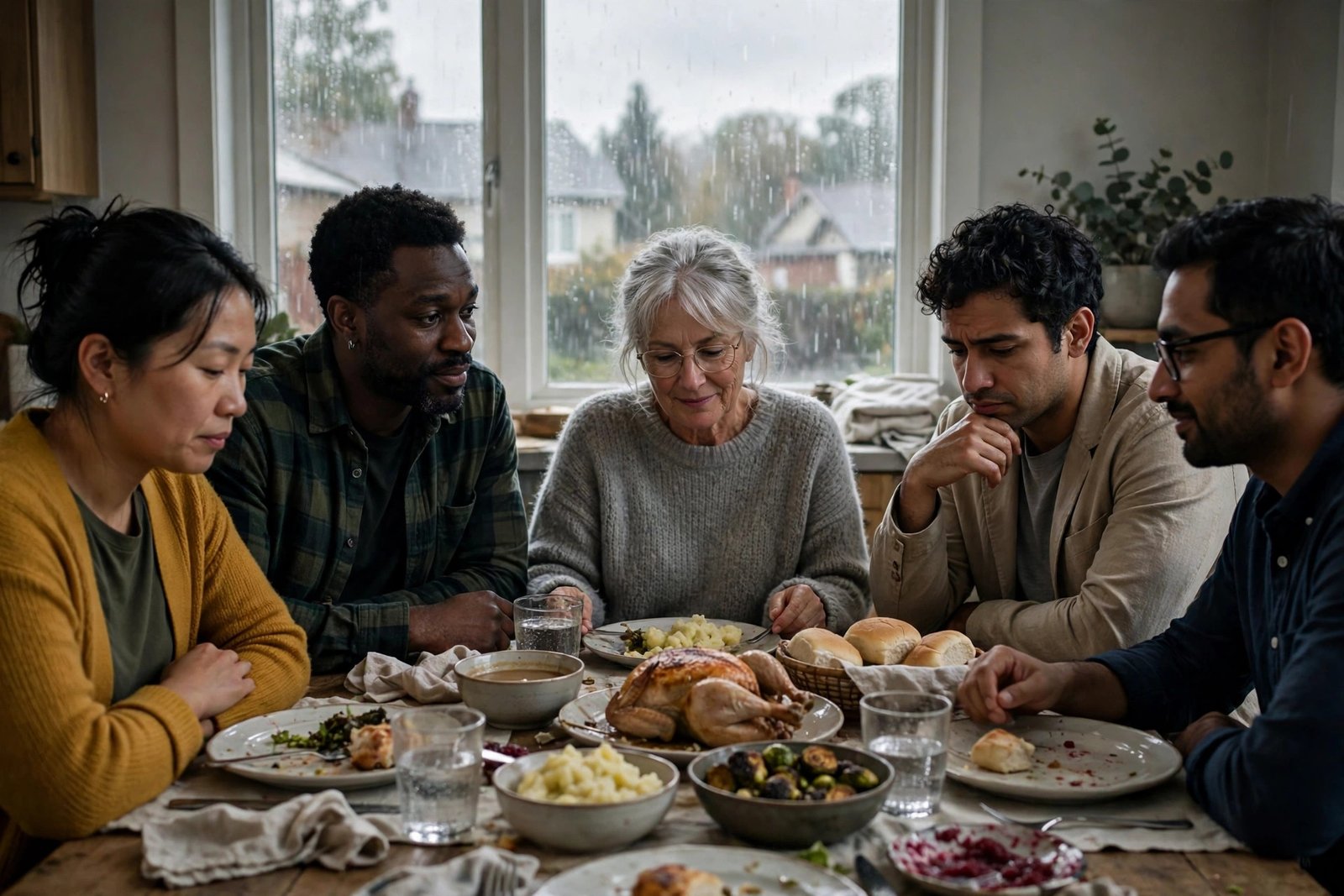
Some first attempts fall flat. The dinner nobody warmed to, the outing that rained, the ritual that felt like theater because everyone was performing enjoyment instead of having it. Treat a flat first year as data, not verdict. Ask one question afterward: was the idea wrong, or was the execution wrong? A good idea with bad timing, too many people or too much effort deserves one adjusted retry. An idea that nobody, including you, actually cared about deserves a clean goodbye, without a season of guilt attached.
Forced feeling usually has a specific cause. The ritual was copied from someone else life, it was too elaborate to enjoy while running it, or it was installed to prove something, that you are a proper adult now, a good parent, a real family. Proof based rituals feel hollow because they are aimed at an audience. Pleasure based and meaning based rituals feel alive because they are aimed at the people in the room. If yours feels forced, shrink it, simplify it, and reconnect it to a value you named earlier. Small and true beats large and impressive every time.
Conflict follows a similar logic. When a new tradition creates friction, the friction is rarely about the activity. It is about what the activity announces: independence from parents, priority given to a partner or friends, a change in who hosts, who travels, who pays. Name the real subject gently and deal with that. “This is not about the dinner. I think it is about us hosting for the first time. That change is real, and we still want you at the center of the day.” Conversations like that are uncomfortable for ten minutes and relieving for years.
And some traditions should simply be released. Lives change. Children age, relationships end, people move, money tightens, someone beloved dies and a ritual becomes a wound instead of a comfort. Letting a tradition end is not failure. It is the same authorship that created it, exercised again. You are allowed to close one chapter of your holidays and write another, as many times as your life requires.
What to do next

Start this week, while the season still feels distant enough to think clearly. Write down your three values, list the small moments that already repeat in your holidays, and choose one anchor ritual for this year. Tell the people involved, put its date in the calendar, and plan its one sensory signature: the dish, the song, the walk, the candle.
Then lower every other expectation. Your first authored holiday season will be imperfect, and imperfect is the correct texture for year one. What matters is that it is yours, chosen and repeatable. That is how to start your own holiday traditions as an adult: not with a grand launch, but with one small promise to your future self, kept when the season comes.
FAQ
What is the very first step in how to start your own holiday traditions as an adult?
Name your values before choosing any activity. Decide whether your holidays should mainly feel restful, generous, playful, reflective or connected, then pick one small ritual that produces that feeling. An activity chosen from a value feels meaningful from the first year. An activity copied from someone else usually feels like decoration.
How many traditions do I need to start with?
One anchor is enough. Add at most one or two small accents, like a repeated dish, song or toast. Adults who launch five traditions at once usually keep none of them, because each one demands planning and energy. One ritual, repeated and protected, builds more belonging than a crowded season that collapses by year two.
What if my parents are hurt that I am changing the holidays?
Tell them early, warmly and clearly, and keep one bridge to the old format if you genuinely can, like attending their dinner while hosting your own smaller moment. Remember that how to start your own holiday traditions as an adult almost always involves this conversation, and most families adjust within a season or two when the change is explained as growth, not rejection.
Can I start traditions if I am single or live alone?
Yes, and you should. A ritual shared with friends, neighbors, a community group or even kept solo, like a yearly walk, a special meal cooked for yourself or an annual letter you write, still creates continuity and meaning. Traditions mark a life. They were never reserved for large families, and chosen company counts fully.
What if my first attempt at a new tradition goes badly?
Adjust it once, or release it without guilt. A weak first year usually means the timing, size or effort was wrong, not that you are bad at this. The deeper lesson in how to start your own holiday traditions as an adult is that you are the author. Authors revise. Keep what felt alive, cut what felt performed, and let next year be the second draft.