

The holidays are built like a group photograph. Everyone is expected to be in it, smiling, holding a drink, standing close to people who love them. If your life does not match that picture this year, the season can feel less like a celebration and more like a spotlight aimed at the empty spaces.
Maybe you are far from family. Maybe you are newly single, newly divorced, newly widowed, or simply the one whose plans fell through. Maybe you chose this, and you are surprised by how much a chosen solitude can still sting on the biggest days of the year.
Knowing what to do when you spend the holidays alone is not really about filling every hour so you never feel anything. It is about building a holiday that is honest: some ritual, some pleasure, some contact with people, some rest, and no performance of a life you do not currently have. A holiday alone can be lonely, but it is not automatically a failed holiday. The difference usually lies in whether the day was chosen and shaped by you, or simply endured while you watched everyone else’s version scroll past.
This guide is for both kinds of readers: the woman who chose a quiet season and wants to enjoy it without guilt, and the woman who did not choose it at all and needs a plan that respects her grief. What to do when you spend the holidays alone depends on which of those you are, and many people are honestly a bit of both.
The short answer

The short answer is that what to do when you spend the holidays alone is to plan the day like it matters, because it does. Decide in advance how the morning, the meal, and the evening will look. Give the day at least one ritual, one pleasure, one moment of human contact, and one thing to look forward to on the far side of it.
Do not leave the biggest day of the season to chance and mood. Mood on a holiday morning is unreliable for almost everyone, and it is especially unreliable when you are alone with it. A plan is not a denial of feeling. It is a kindness you arrange in advance for the version of you who wakes up that day.
The other half of the short answer is about other people. A holiday spent alone does not have to be a holiday spent without contact. A call with a friend, a walk with a neighbor, a community meal, a shift volunteering, a long video chat with family in another time zone: contact counts even when it is not a crowded table. What to do when you spend the holidays alone includes deciding, early, which people will hear your voice that day, and telling them so before the day arrives.
Why spending the holidays alone feels louder than ordinary alone time
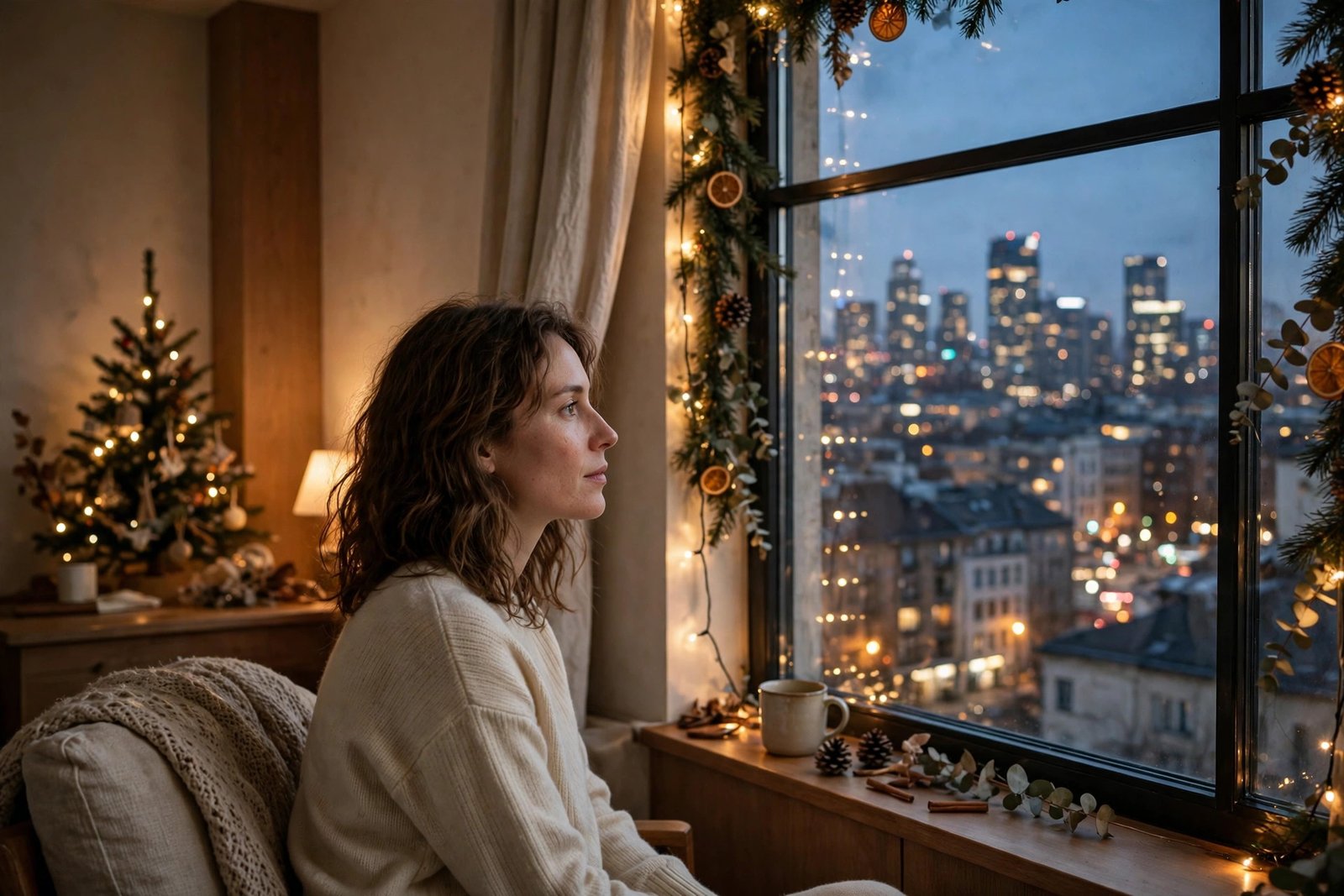
Most adults spend plenty of time alone without distress. You eat alone, work alone, travel alone, and enjoy quiet evenings all year. So why does the same solitude feel so much heavier in late December? The answer matters, because once you understand the volume, you stop blaming yourself for feeling it.
First, holidays are comparison machines. Advertising, films, and social media present one narrow image of the season: large families, coupled people, full tables, matching joy. Ordinary life never matches an advertisement, but on ordinary days nobody is measuring. During the holidays, the measuring is constant, public, and sentimental, which is the hardest kind.
Second, holidays carry memory. A solo holiday is rarely experienced on its own. It is measured against the holidays when someone was alive, when a marriage was intact, when the house was full. Grief researchers sometimes describe this as the contrast effect: the present day hurts partly because of the vivid days it is compared to, including by your own mind at two in the morning.
Third, the season removes your normal structure. Work stops, routines pause, friends travel, and the ordinary scaffolding that holds your week together disappears for days at a time. Many people who feel steady all year feel strangely unheld during the holidays for this simple reason. It is not that their life got worse. It is that their life got unstructured, in a season when everyone else seems gathered somewhere specific.
Fourth, there is the story our culture tells about being alone at holidays, a story so strong it appears in almost every seasonal film: the person alone is the person to pity, rescue, or set up with someone by New Year’s Eve. If you have absorbed that story since childhood, part of your discomfort is not loneliness at all. It is shame, added by a script you never agreed to. Naming that script is often the first real step in deciding what to do when you spend the holidays alone on your own terms.
None of this means the feelings are imaginary. It means they are amplified by contrast, memory, lost structure, and an old story, and amplifiers can be turned down. You cannot delete the season. You can absolutely change your exposure to its loudest inputs for a few days.
What research says about solitude, loneliness, and choice

Psychology makes a distinction that is genuinely useful here: loneliness and solitude are not the same thing. Loneliness is the painful feeling that your need for connection is not being met. Solitude is simply the state of being alone, and it can be neutral, restorative, or even deeply pleasurable, depending on one crucial factor.
That factor is choice. Research on solitude, including work by psychologist Virginia Thomas and others who study time alone, has repeatedly found that alone time people choose tends to restore them, while alone time imposed on them tends to hurt, even when the hours look identical from outside. The same quiet apartment can feel like peace in October and like exile in December. The season did not change the apartment. It changed how chosen the quiet feels.
This is why advice about what to do when you spend the holidays alone should never begin with keeping busy. It should begin with reclaiming small choices inside a situation you may not have chosen overall. You did not choose the divorce, the distance, or the empty chair. You can still choose the menu, the music, the walk, the film, the hour you call your sister. Each reclaimed choice moves the day, measurably, from imposed toward chosen.
Research on loneliness adds an important warning and an important comfort. The warning: loneliness is driven less by the number of people around you than by the quality of connection you feel, which is why a person can feel profoundly lonely at a full table. The comfort: brief, warm contact genuinely helps. Studies of social connection find that even short positive interactions, with acquaintances and community members as well as close friends, lift mood and a sense of belonging. You do not need a perfect family day to feel connected. You need some real contact, in doses you can manage.
There is also honest research on rituals. Psychologists who study ritual find that small, deliberate ceremonies help people through grief and transition, because ritual gives shape and meaning to days that otherwise feel formless. Lighting a candle for someone who died, cooking one dish from childhood, taking the same walk you take every year: these are not decorations. They are how human beings mark that a day matters and that they survived it with intention. You can read more in Psychology Today’s overview of loneliness and connection.
Taken together, the research points to a clear formula for what to do when you spend the holidays alone: maximize choice, schedule real contact in modest doses, and give the day a ritual shape. None of that requires money, a partner, or a different past. It requires only planning, which is something you can do this week, while the season is still in front of you.
The hardest moments, and what is actually happening in them

A holiday alone is not uniformly hard. For most people it has three or four sharp moments and long stretches of perfectly ordinary time in between. If you can predict the sharp moments, you can soften each one in advance instead of being ambushed by feelings you then judge yourself for having.
The first hard moment is waking up. The quiet of the morning, before any plan begins, is when the contrast with other years hits hardest. The defense is a morning ritual decided in advance and made slightly special: good coffee, a pastry you bought on purpose, music, a walk before the streets fill. Do not wake up on the biggest day of the year to an empty fridge and no first move. The first hour sets the weather for the rest.
The second hard moment is the meal. Eating is social in every culture, and a table for one on a feast day carries symbolism far beyond food. Treat the meal as the centerpiece it is. Cook something you genuinely love, or order it without apology. Set the table properly, with the good plate and a candle, not because anyone is watching, but because you are someone. Many people find that deciding the menu early, and shopping for it like an event, transforms what to do when you spend the holidays alone at mealtime from the saddest question of the day into a small act of self respect.
The third hard moment is the phone. Photos arrive in waves: other people’s tables, trees, children, engagements. Each image is harmless, and together they can feel like evidence in a case against your life. Decide your phone rules before the day. Perhaps you check messages at set times to receive love from people who sent it, and you stay off the scrolling feeds entirely until the day after. Protecting your attention for one day is not bitterness. It is hygiene.
The fourth hard moment is the evening, when the day is done, the world goes quiet, and reflection arrives whether invited or not. Plan the evening like a host would: a film you have saved, a bath, a call with someone in a later time zone for whom it is still afternoon. And if sadness comes anyway, let it be a guest with a departure time. Grief that is expected, named, and given an hour behaves very differently from grief that ambushes a person who believed she was not allowed to feel it.
Notice what all four moments have in common: none of them is improved by pretending, and all of them are softened by a small plan made in advance. Anticipation is not pessimism. It is how a person takes her own feelings seriously enough to prepare for them kindly.
How to build a holiday that is yours, hour by hour
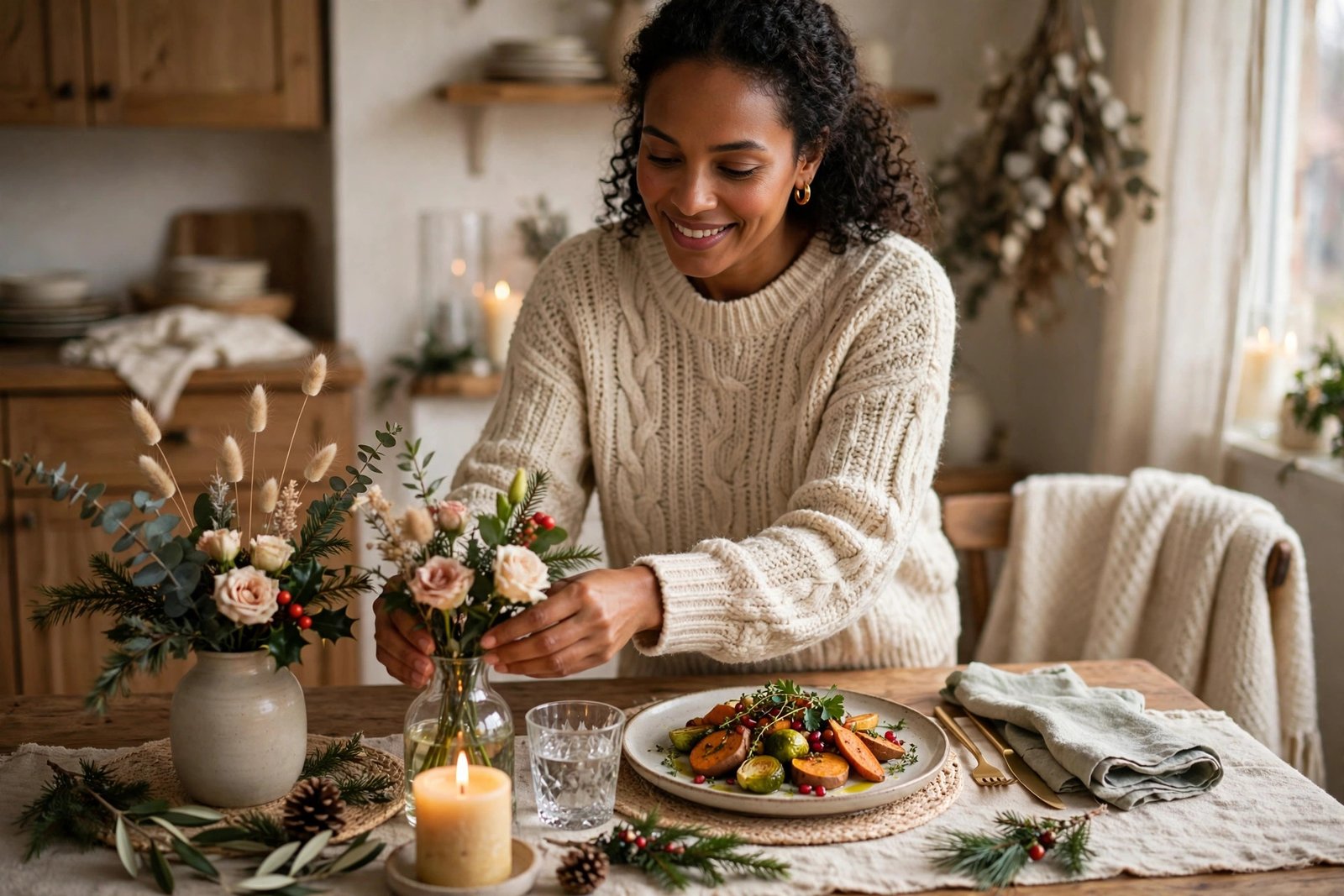
The most practical answer to what to do when you spend the holidays alone is to design the day the way a thoughtful host would design it for a guest she likes. Not a packed schedule that leaves you exhausted, and not an empty stretch you must endure, but a loose shape with anchors: a morning ritual, a middle that includes people or the world in some form, a real meal, and an evening with a warm ending.
Start by choosing one anchor of pleasure. A dish you only make once a year. A film that feels like an old friend. A long bath, a good book, a drive to see lights, a hike if the weather allows. Pleasure is not a consolation prize here. It is a legitimate purpose for a holiday, and many crowded holidays contain surprisingly little of it. That is often the most honest answer to what to do when you spend the holidays alone: make the day smaller, warmer, and unmistakably yours.
Add one anchor of connection. Call the friend who also spends the day quietly and agree on a time. Visit a neighbor. Attend a service, a community dinner, or an open house if your town offers one. Volunteer for a morning shift, which many people describe as the fastest way to feel part of the day rather than exiled from it. Connection by appointment sounds unromantic until you realize that everyone else’s connection is also, quietly, by appointment: they call it tradition.
Add one anchor of meaning. Write the letter. Visit the grave or the place that holds the memory. Donate in someone’s name. Finish the year with one honest page in a journal about what this year actually was. Meaning is what separates a holiday that heals from a holiday that merely passes, and deciding what to do when you spend the holidays alone is, at its best, a chance to choose your meaning instead of inheriting someone else’s script.
Consider changing the scenery for part of the day, or even for the whole holiday. A solo trip, a night in a hotel in your own city, or a day exploring somewhere festive can reset the story completely. Some readers borrow ideas from guides like what to do in Montreal and build a winter day around markets, skating, and good food, entirely on their own schedule. The principle travels anywhere: a place that is busy being beautiful gives a solo holiday a backdrop of life, not emptiness.
Prepare your home like you would for a guest, because the guest is you. Clean sheets, a clear table, flowers or a candle, food already in the fridge. Waking up in a cared for space sends a message that the day, and the person in it, are worth effort. It costs little, and people consistently report that it changes the emotional temperature of the morning more than any pep talk.
Finally, build the day after as well. A plan for the twenty sixth, a friend to meet, a project to start, a sale to browse, a long walk, signals to your mind that the holiday is a day in your life, not a verdict on it. Much of the dread around what to do when you spend the holidays alone actually lives in the days before and after. Shrink the holiday back to its actual size, one day with a shape you chose, and the dread shrinks with it.
Scripts for invitations, questions, and well meaning pressure

Being alone at the holidays attracts two kinds of social pressure: pity invitations, offered warmly and sometimes awkwardly, and questions that carry concern, curiosity, or judgment. Having words ready for both protects your peace and your relationships at the same time.
For the kind invitation you want to accept, accept cleanly: “Thank you, I would love to come for dinner. I may head home a little early, and I am really glad you asked.” Naming your early exit in advance makes the evening relaxed for everyone, including your host, who no longer has to wonder whether you are having a good time.
For the invitation you want to decline, decline without a wound: “That is so kind, and I am keeping the day quiet this year by choice. Please eat something wonderful for me, and let us get together in January.” Notice the two gifts inside that answer: it reassures the inviter that you are not suffering in secret, and it offers a real alternative, which turns a no into a bridge instead of a door closing.
For the pity invitation, the last minute offer that feels more like rescue than welcome, you are allowed to weigh how it will actually feel. Some are genuinely lovely and become favorite memories. Others place you at a stranger’s table as the object of everyone’s kindness, which can feel lonelier than your own couch. Trust your reading of the specific people, not the general rule. What to do when you spend the holidays alone includes permission to choose your own quiet over someone else’s crowded pity, without guilt.
For the probing question, at work, at a party, or from family on the phone, keep a short public answer ready: “Quiet plans at home, a good meal, and some people I love on the phone. I am set.” The confidence of the delivery does most of the work. People take their emotional cues from you; if you report your plans like good news, most will receive them that way.
For the relative who insists your choice must be a tragedy, try warmth plus a boundary: “I know it sounds sad from the outside. From the inside, it is peaceful, and I planned it that way. Ask me about the food, I am proud of the food.” Humor, used once and kindly, often succeeds where explanation fails, because it shows the room that you are the expert on your own experience.
And for yourself, prepare one sentence for the moment someone else’s happiness makes yours feel small: “Their day is not evidence about mine.” Repeat it as needed. It is true, it is complete, and it returns your attention to the holiday you are actually having, which is the only one you were ever going to live. On the hardest evening, remind yourself that what to do when you spend the holidays alone is already written in your plan, in your own handwriting, waiting for you on the fridge.
When being alone is healing, and when it is a warning sign

Honesty requires two truths at once. A solo holiday can be genuinely restorative, and a pattern of isolation can also be a sign that something deeper needs care. Knowing the difference is part of answering what to do when you spend the holidays alone with wisdom instead of slogans.
Being alone is likely healing when it feels chosen, even partly. When you can still enjoy food, music, rest, and small pleasures. When you reach out to people in some form and feel glad you did. When the sadness that visits has edges: it comes, it says something true about love or loss, and it goes, leaving an ordinary evening behind it.
Being alone deserves a second look when withdrawal spreads beyond the holiday. When invitations all feel impossible, when messages go unanswered for weeks, when you stop caring for your home, your body, or your own future. When the quiet stops feeling like rest and starts feeling like disappearance. Those patterns can accompany depression or deep grief, and they deserve support from a professional, not another article. Reaching out to a doctor or therapist is not an admission that your holiday failed. It is maintenance for a life you value.
Context matters too. A woman spending her first holiday after a death is not in the same situation as a woman enjoying her tenth chosen quiet Christmas, and neither should use the other’s rules. Fresh grief gets gentler expectations and more contact, not less. Settled solitude gets trust. If you are unsure which situation you are in, ask the friend who knows you best and believe her first answer.
There is also a specific loneliness that follows the end of a relationship, when the holiday arrives like a test of whether you have moved on. If that is your season, some of the honest work described in how to forget a man who does not want you may speak to you more directly than any holiday tip. A solo holiday after a breakup is not a relapse. It is often the first clear evidence that a new life is being built, quietly and on purpose.
Whatever your situation, hold this line: one hard holiday is a season, not a sentence. People rebuild their traditions after loss, distance, and change every single year. The holiday you design this year, however modest, is the first draft of a tradition that can grow warmer as your life grows fuller. That perspective is not decoration on what to do when you spend the holidays alone. For many readers, it is the whole point.
What to do next
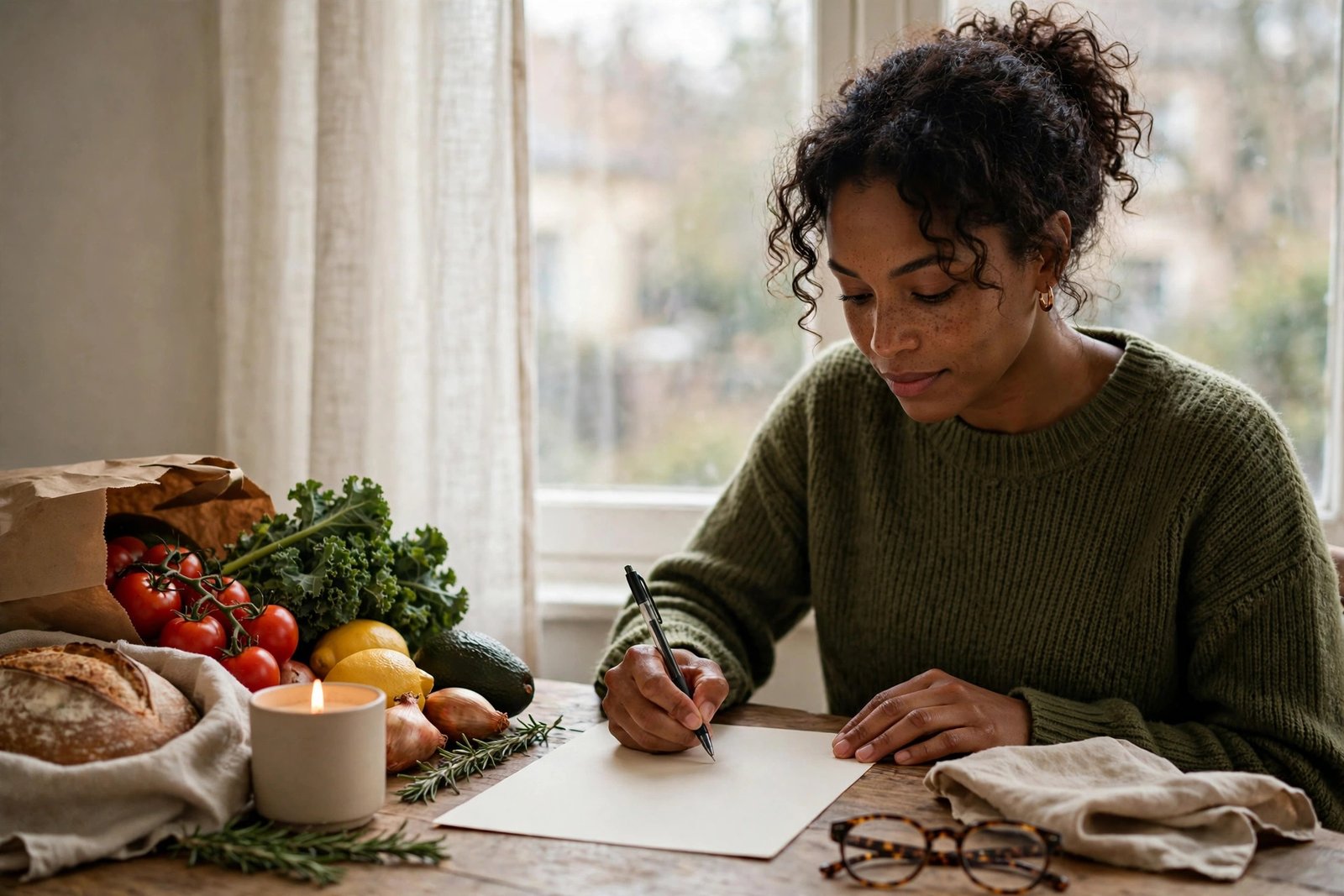
Start today by writing the shape of your day: morning ritual, one pleasure, one point of contact, the meal, the evening plan. Keep it on paper, on your fridge, where doubt cannot edit it at midnight. A written plan survives a bad mood, which is exactly what it is for.
Next, do the practical shopping and inviting early. Buy the food, the candle, the book, the film. Call the friend and set the time. Book the community dinner or the volunteering shift while places remain. What to do when you spend the holidays alone becomes much easier once the decisions are made in a calm week rather than in an emotional hour.
Then set your phone rules and tell one person what they are, so someone who loves you knows when and how you will be reachable. Silence by design feels peaceful. Silence that worries people who care about you does not, and the difference is a two minute conversation held in advance.
Finally, plan the far side: the day after, the week after, one thing in January that you genuinely want. Holidays end. Yours will end with a person who fed herself well, marked the day with intention, and kept her connections warm. That is not a small thing. That is, in practice, what to do when you spend the holidays alone and come out of the season steadier than you entered it.
FAQ

What to do when you spend the holidays alone and you did not choose it?
Start by admitting that this year hurts, without arguing yourself out of it. Then borrow the structure anyway: one ritual, one real meal, one point of human contact, one kind plan for the evening. You do not have to feel chosen solitude for the structure to help. Many people find that acting gently toward a day they did not choose is how the day slowly becomes bearable, and sometimes even meaningful.
Is it strange to enjoy spending the holidays alone?
No. Many people quietly love it: the calm, the freedom, the absence of travel and performance. Our culture simply gives them few chances to say so without being corrected. If your solo holiday restores you, let it. Enjoyment is not a symptom to explain away, and you do not owe anyone a performance of sadness to make your peace acceptable.
How can I help a friend who will be alone this year?
Offer something specific rather than a general kindness. A set invitation with a time, a delivered dish, a scheduled call, a walk on the day itself. Ask once, warmly, and respect the answer you receive, because a declined invitation given with respect still tells your friend she was thought of as a person, not managed as a problem. Then follow through on whatever you promised.
What if being alone brings up grief for someone who died?
Let the grief have a place in the day rather than fighting it for territory. Light the candle, cook their dish, tell one story about them out loud, even if the only listener is you. Grief with a ritual tends to visit and leave. Grief that is suppressed tends to wait for the quietest moment. If your loss is recent and the pain feels bigger than one day can hold, support from a grief counselor or a support group is a strength, not an escalation.
Should I travel alone for the holidays instead of staying home?
If you can afford it and the idea brings energy rather than dread, yes, travel can be a wonderful answer. New scenery removes the contrast with old holidays and gives the days their own story. If travel feels like running away, or would strain you financially for months, a well planned holiday at home will serve you better. The test is simple: choose the option your January self will thank you for.
A holiday alone is still a holiday: a real day, in your real life, that deserves food, beauty, contact, and rest. Shape it with the same care you would offer someone you love, because that is exactly who it is for. And when the season turns, you will know from experience what to do when you spend the holidays alone: you will make the day yours, on purpose, and let that be enough.