
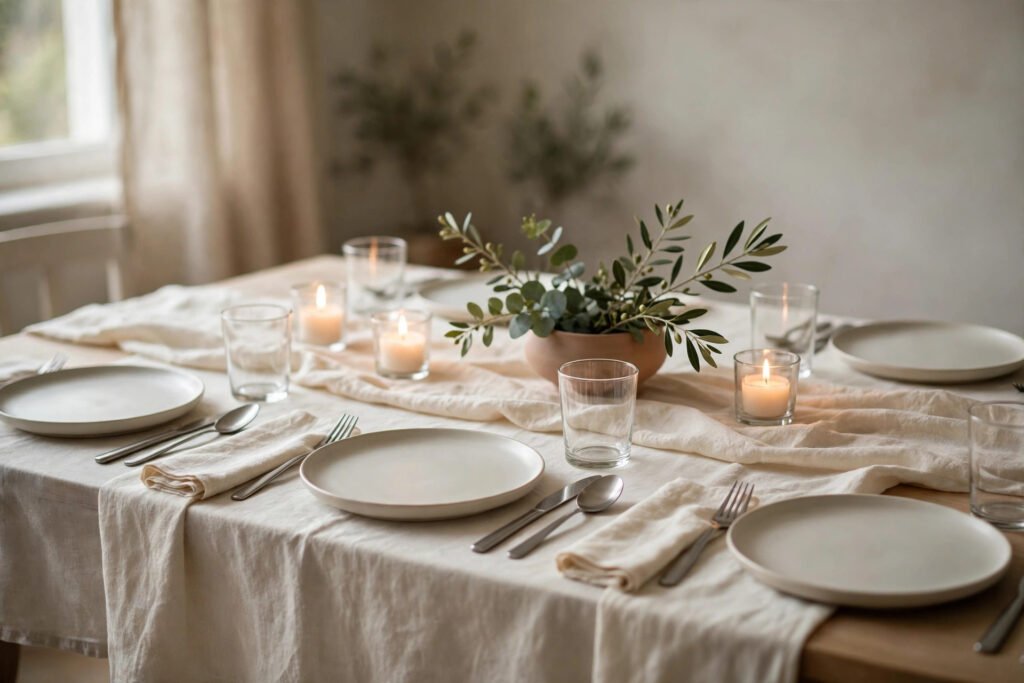
Most people believe a beautiful table is something you buy. Matching porcelain, crystal glasses, a centrepiece ordered for the occasion, chairs that all agree with each other. Then they look at their own mixed cupboards and small bank balance, and quietly conclude that beautiful tables belong to other people.
That conclusion is wrong, and learning how to set a beautiful table on a small budget starts by replacing it. Guests do not remember what a table cost. They remember how it felt: warm light, a place clearly prepared for them, room to breathe, and food arriving without hurry. Every one of those things is free.
This guide shows how to set a beautiful table on a small budget as a learnable method rather than a shopping exercise. You will find the layering rules that do the real work, how to build the base from cloth and texture, how to mix the plates and glasses you already own, how thrifted and borrowed pieces fill the gaps, and the small finishing details, napkins, place cards and light, that make a modest table look considered and calm.
You do not need a dining room, eight identical chairs or a single new purchase to begin. You need a cleared surface, an honest look at your own cupboards, and about twenty quiet minutes before your guests arrive. That is the whole foundation of how to set a beautiful table on a small budget, and the sections below turn it into a routine you can repeat for a weeknight dinner, a birthday or a holiday meal.
The short answer

The short answer to how to set a beautiful table on a small budget is this: build the table in layers. Start with a clean cloth or runner, add plates with even spacing, one glass and one set of cutlery per person, a low centrepiece made from what you have, and warm light at table level. Repeat one colour or material at every place, and leave some of the table deliberately empty.
Notice what is missing from that list. No charger plates, no matching serving set, no seasonal linen bought for one evening. Those are decorations placed on top of a structure. Without the structure, expensive objects still look scattered. With it, plain everyday objects look elegant, because the eye reads order and repetition as beauty long before it reads price.
So if you keep only one rule for how to set a beautiful table on a small budget, keep this one: layers, repetition and light, in that order. Get those three right and mismatched plates become part of the style. The rest of this guide unpacks each layer in the order you would build it, standing at your own table.
Why beautiful tables are about layers, not price
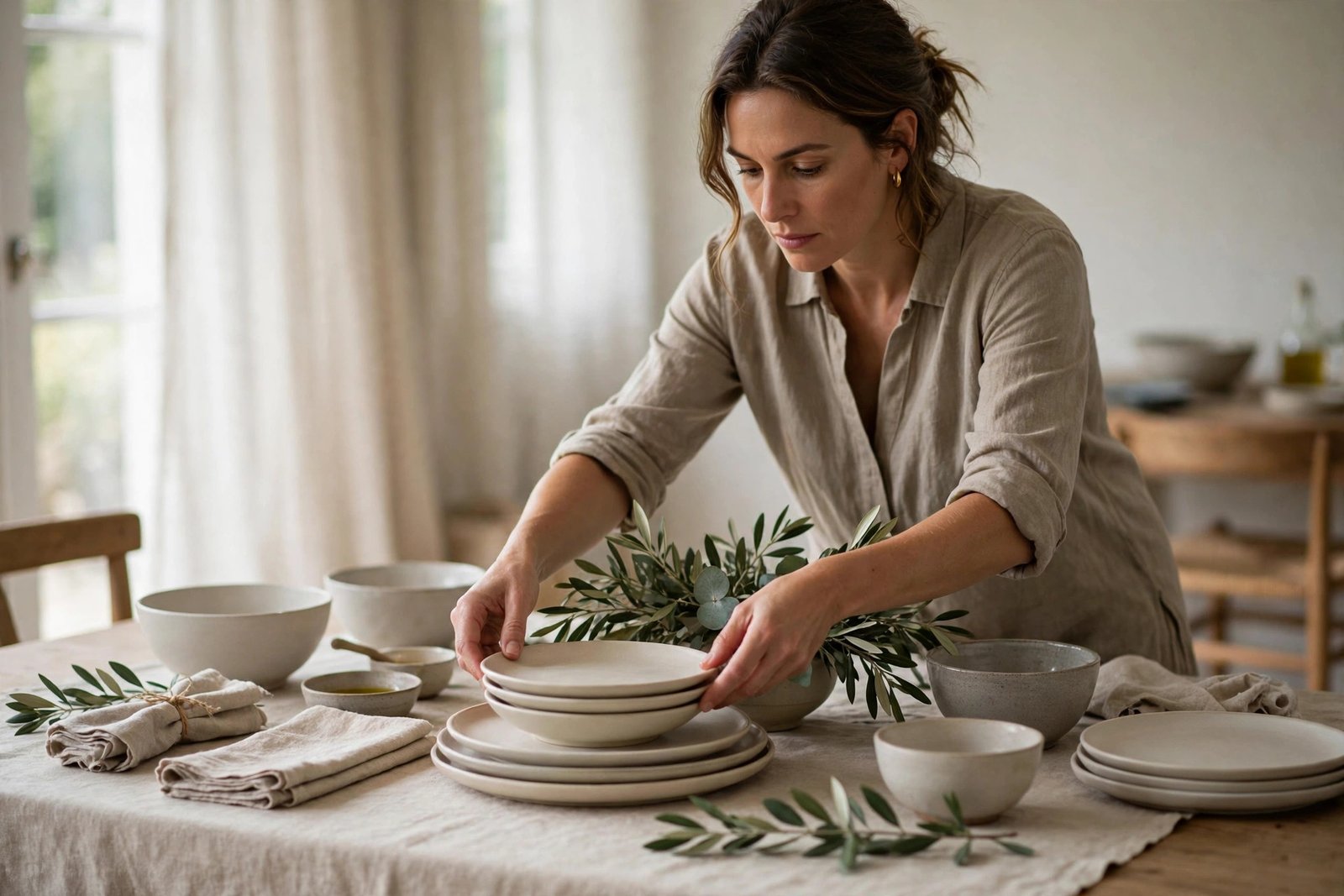
A set table is built the way a good outfit is built: a plain base, one layer of texture, a few repeated elements, and one point of interest. Price enters the picture surprisingly late. Stylists and set designers know this instinctively, which is why magazine tables so often turn out, on inspection, to be made of ordinary things arranged with discipline.
Layers work because each one solves a different problem. The base layer calms the surface and hides a worn or mismatched table. The place layer gives every guest a complete, comfortable setting. The centre layer gives the eye somewhere to rest. The light layer decides the mood of the whole room. When a table looks wrong, it is almost always because one layer is missing or one layer is trying to do every job at once.
This is why how to set a beautiful table on a small budget is not a diluted version of expensive entertaining. It is the core skill underneath it. A large budget can hide weak layering under beautiful objects for one evening. A small budget forces the layering to be right, and layering that is right works at every budget, in every home, for decades.
There is a psychological layer too, quieter than the others. A table set with care tells guests the meal was anticipated and their presence was expected. Research on shared meals consistently links eating together with stronger bonds and better conversation, and the effect depends on attention, not on tableware. A calm, ordered table protects that attention. It marks a boundary between the rush of the day and the hour you are about to spend together, and that boundary is something money genuinely cannot buy. It can only be arranged, which is what how to set a beautiful table on a small budget really teaches: arrangement as a form of welcome.
None of this asks for training, or for a kind of taste some people are born with and others are not. Layering is a sequence, and a sequence can be learned by anyone in one careful attempt and then repeated from memory. That learnability is the encouraging heart of how to set a beautiful table on a small budget: the skill is ordinary, the materials are ordinary, and only the order is new.
The base: cloth, runner, texture
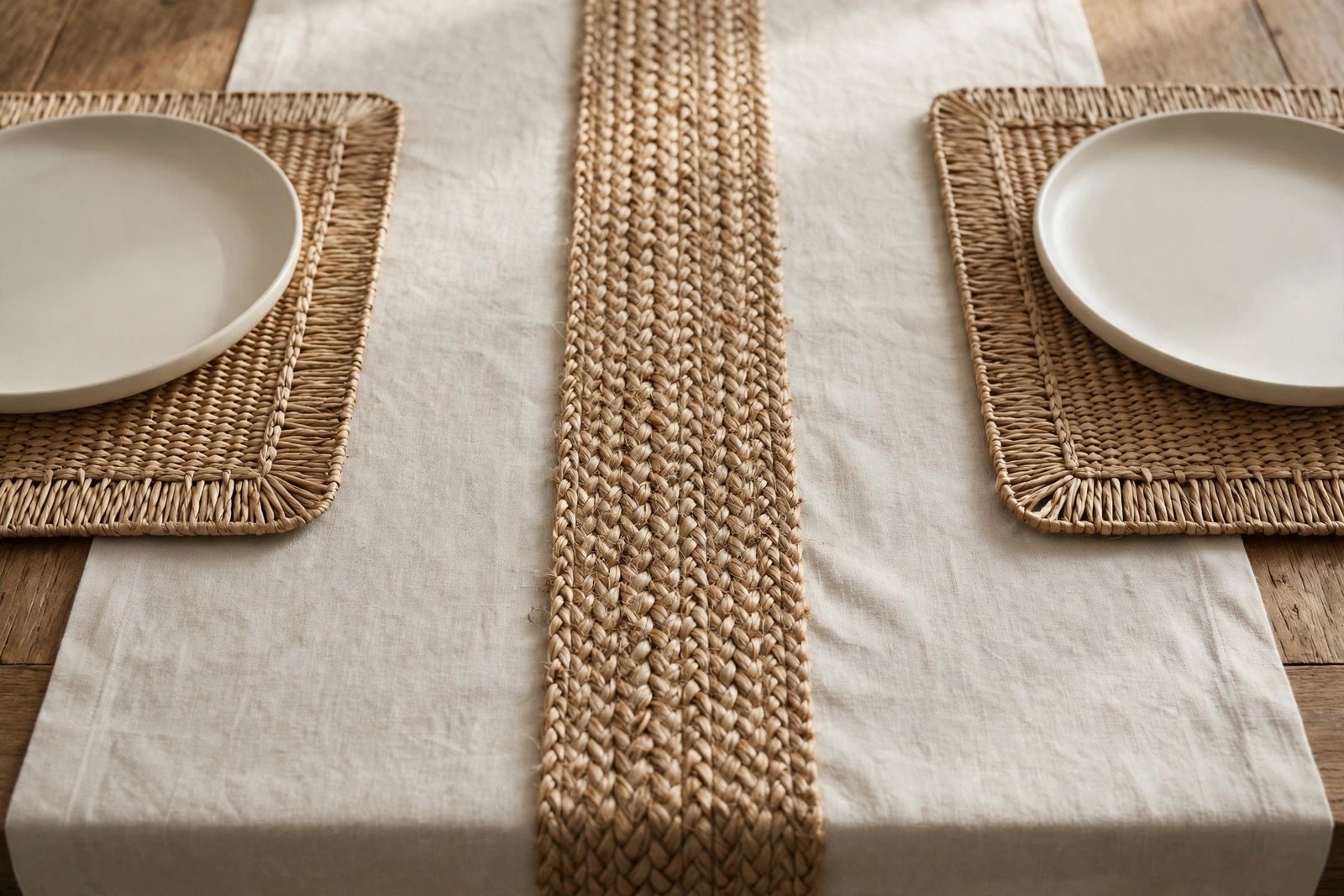
Every beautiful table starts with the base layer, and the base is where how to set a beautiful table on a small budget gets its biggest transformation for the least money. A cloth or runner does three jobs at once: it unifies a table that may be scratched, stained or simply ordinary, it gives plates a calm background to sit on, and it adds the first note of texture.
A full cloth is the classic choice. Plain is better than patterned at small budgets, because plain cloth forgives mismatched plates on top of it, while a busy print fights everything. White, cream, natural linen tones and soft grey all work with almost any cupboard. If you do not own a tablecloth, the honest substitutes are good ones: a clean flat sheet, a length of plain fabric, or a large scarf or throw with a quiet pattern. Iron it if you can. A smooth cloth reads as care; a crumpled one reads as an afterthought, whatever it cost.
A runner is the lighter alternative: a long strip of cloth down the centre of the table, leaving wood visible at the edges. Runners suit smaller tables and casual meals, and they are easier to wash and store. A runner plus placemats combines both ideas and protects the table from hot dishes at the same time.
Texture is the point of this layer, not colour. Woven cloth under smooth plates, a rough runner beneath shiny glass, a placemat with a visible grain: these contrasts are what make a table feel rich to the eye. Expensive tables often feel flat because everything on them is equally new and glossy. A home table already owns variety. The base layer is where how to set a beautiful table on a small budget turns that variety into an asset instead of an apology.
The base layer has one more detail worth a moment: edges. A cloth should fall evenly on all sides, a runner should sit centred rather than drifting toward one end, and placemats should line up with the chairs rather than with each other at random. These alignments take ten seconds to correct and are read by the eye instantly, long before any guest could name what improved. Small corrections of this kind are the daily substance of how to set a beautiful table on a small budget, precisely because a small budget leaves nothing to hide behind.
Plates, glasses, cutlery: mixing what you own
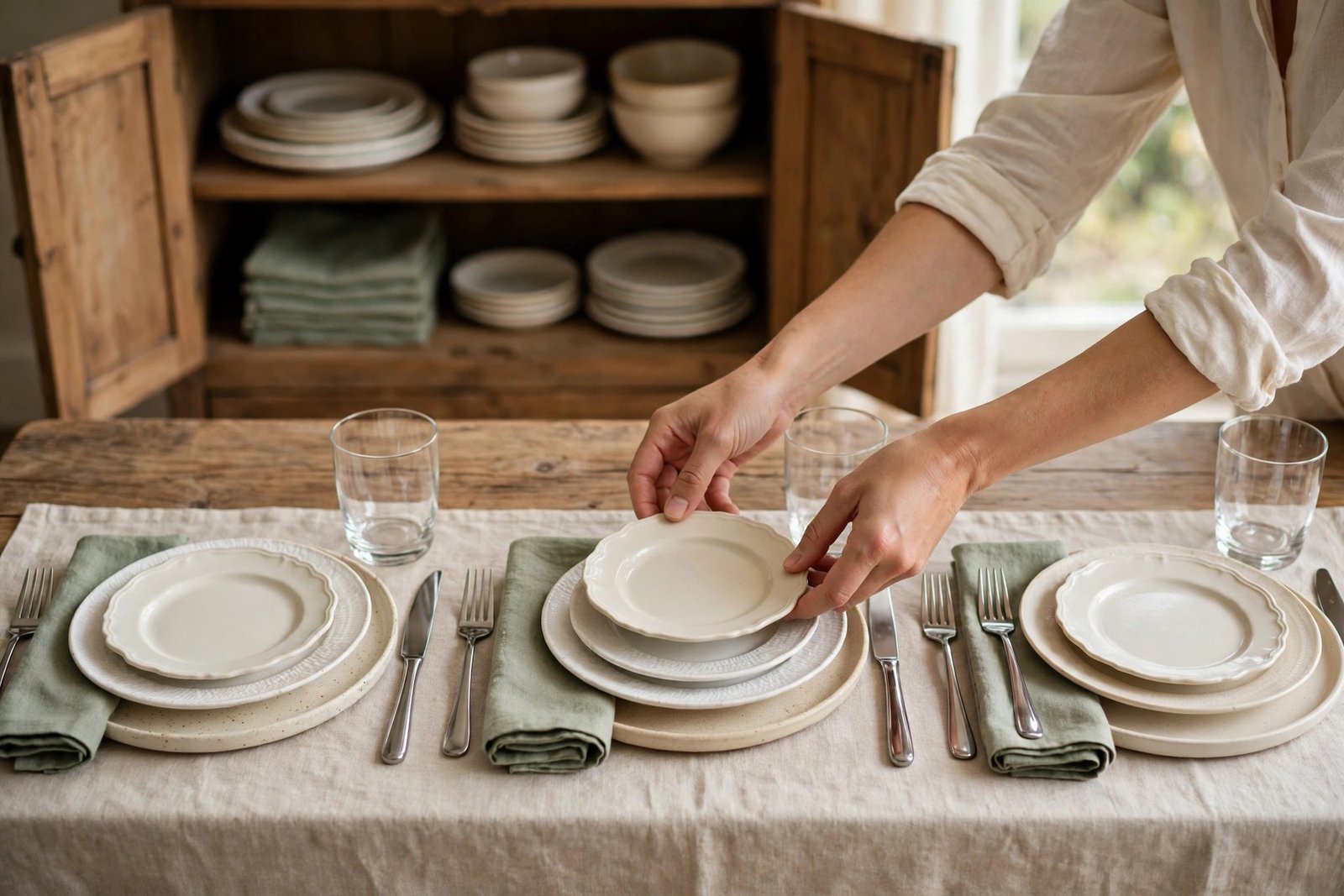
The place layer is built from what you already own, and the first step is to stop seeing your cupboard as failed sets and start seeing it as families. Lay everything out and group by tone and material: all the white and cream plates together, all the clear glass together, all the wood and dark pieces together. Sets are a retail idea. Tables are built from families, and a family of near matching pieces reads as intentional the moment it is placed evenly.
Mixing follows one rule: vary one dimension at a time. Plates of slightly different whites work together. Glasses of different shapes work if they share a height or a weight. What fails is everything different at once, different colours, sizes and styles competing at every place. Choose the dimension that varies and keep the others calm, and repetition will do the rest. A repeated accent, the same napkin colour at every setting, the same small herb sprig on every plate, tells the eye that the mixture was a decision.
Cutlery needs less than people think. One fork, one knife, one spoon if the menu needs it, placed in the order of use, forks on the left, knife and spoon on the right with the blade facing the plate. Extra cutlery that will never be used adds clutter and washing up, not sophistication. Dessert cutlery can arrive with dessert.
Glasses follow the same restraint. One water glass per person is the foundation; add a second glass only if you are actually serving a second drink. Polish the glasses until they shine, because this detail is wildly disproportionate: a sparkling ordinary glass looks luxurious, while a cloudy expensive one looks neglected. Comfort completes the layer. Every guest needs elbow room, a plate they can reach, and cutlery that suits the food. How to set a beautiful table on a small budget never sacrifices comfort to appearance, because a table guests cannot relax at has failed before the first course arrives.
How to set a beautiful table on a small budget with thrifted and borrowed pieces
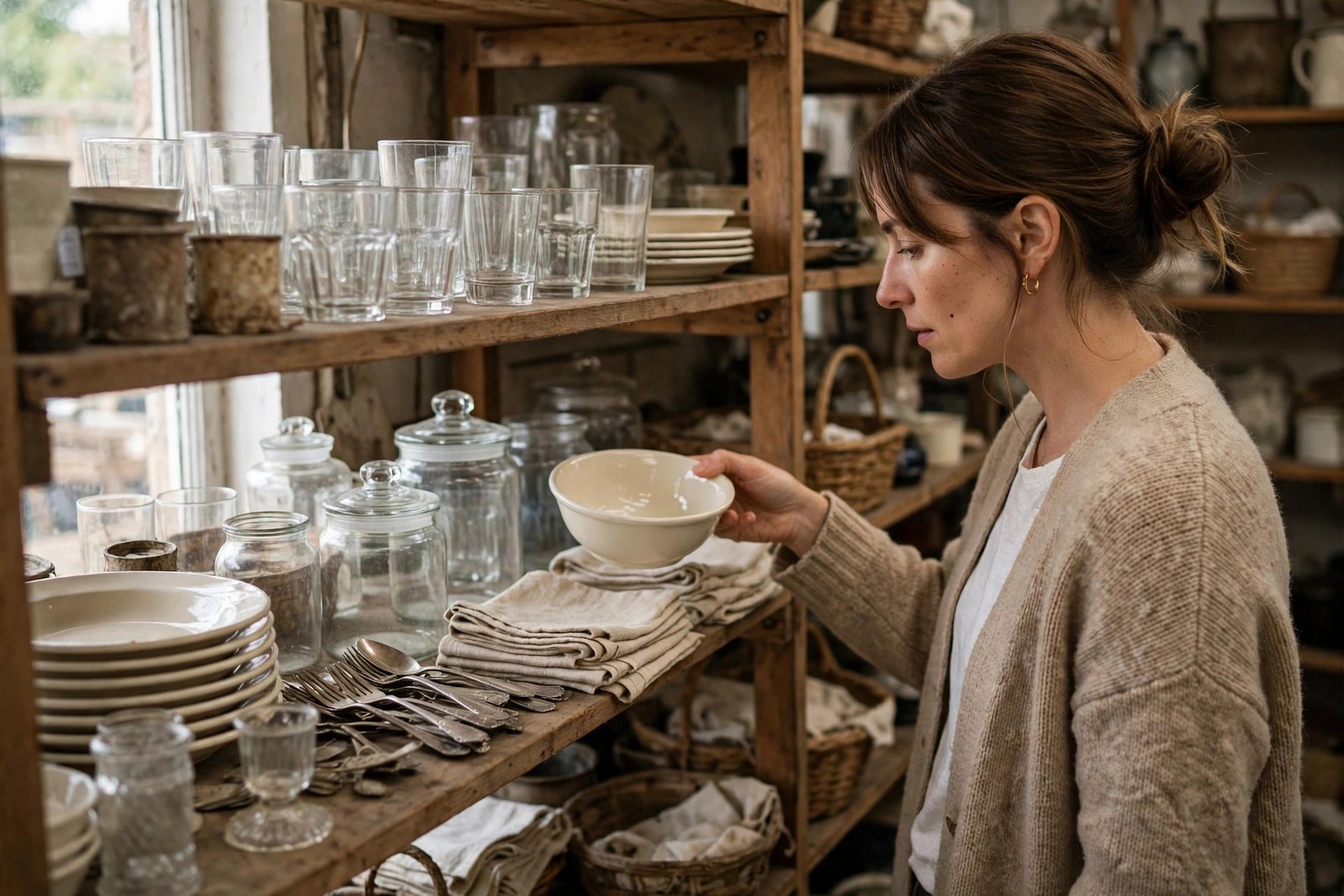
Once the layers are understood, gaps become specific: perhaps you lack two glasses, a serving bowl, or enough matching napkins. This is where thrifted and borrowed pieces enter, and they are not a compromise. Some of the most characterful tables anywhere are built from secondhand finds, because old pieces carry shapes and weights that new budget ranges rarely offer.
Thrift shops, charity shops, estate sales and flea markets are the natural hunting ground for how to set a beautiful table on a small budget. Look for plain glass, which is abundant and nearly free secondhand, sturdy white or cream plates that mix with any family, silver toned cutlery sold loose, glass jars and small vases, candle holders, and linen, which washes back to life beautifully. Buy slowly and buy plain. One useful piece found per visit builds a cupboard that fits your actual meals, unlike a boxed set bought in a panic.
Borrowing is the second channel, and it deserves to be used without embarrassment. Every circle of friends and family holds a collective surplus: extra chairs, a big serving platter, a cake stand, six matching glasses that come out twice a year. Borrowing for a specific evening, and returning pieces washed with a small thank you, is an old and honourable part of home entertaining. It is also how most households hosted large meals for most of history, long before anyone expected one cupboard to hold everything.
Two cautions keep this section honest. Inspect thrifted pieces for chips on rims and cracks in glass, and wash everything thoroughly before its first use. And keep a short list, on your phone, of what you genuinely lack, so that lucky finds solve real problems instead of becoming new clutter. Thrifted, borrowed, already owned: used in that order, these three sources are how to set a beautiful table on a small budget stays beautiful month after month without the budget quietly growing.
The centerpiece: candles, greenery, fruit, height
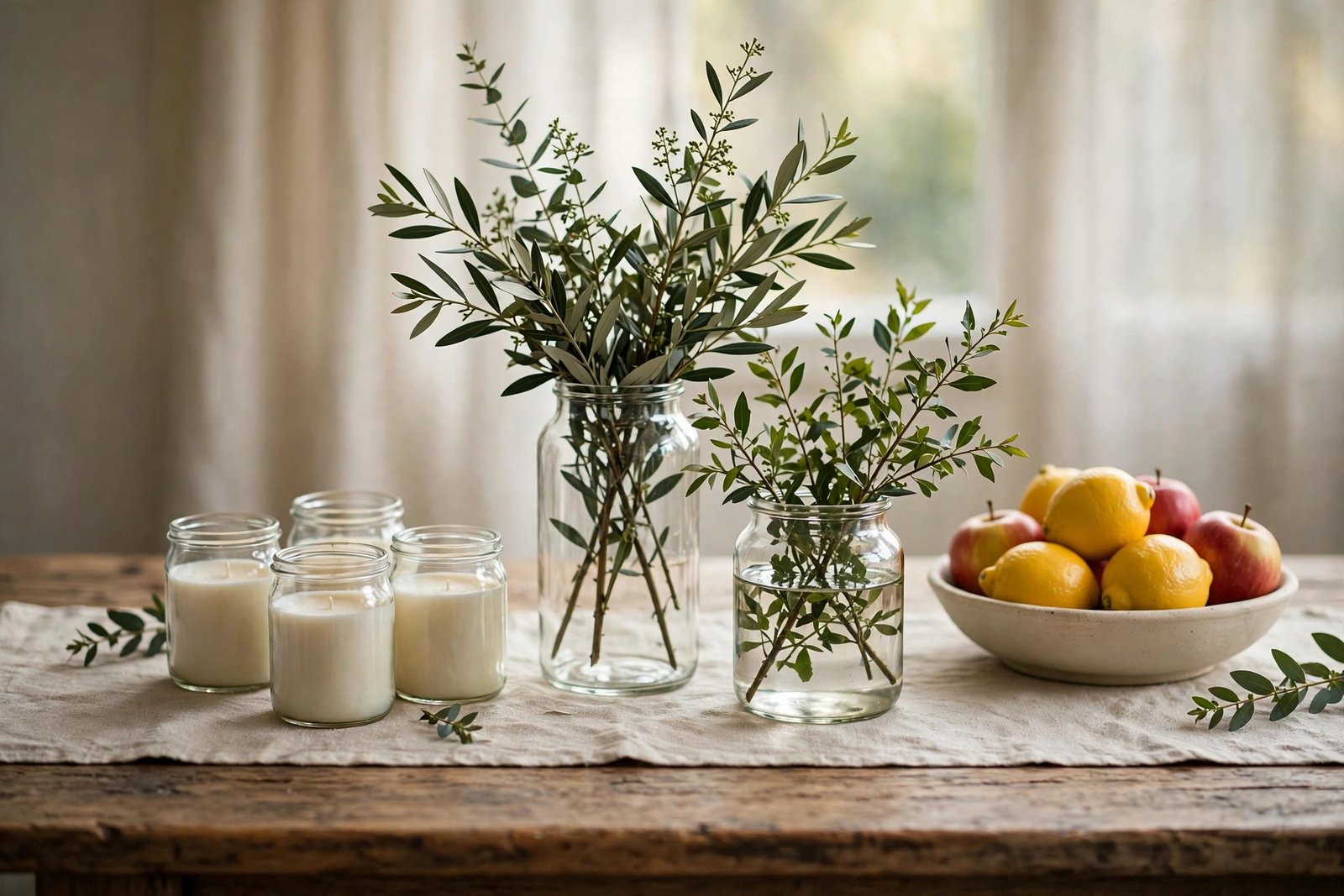
The centrepiece has one job: to give the table a focal point without competing with food or faces. The governing rule is low and narrow. Anything tall enough to hide the person opposite will split the table into side conversations, so build below seated eye level and leave generous room for serving dishes, because the food itself is part of the display.
Candles are the classic material, grouped in odd numbers, three or five, in plain glass jars or holders of similar height. Tea lights give the same warm effect and are safer around sleeves and children. Greenery is the second material: branches in a jar of water, leaves laid along the runner, a small potted herb that moves to the windowsill after the meal. Garden offcuts that would otherwise be composted are free, seasonal and alive in a way bought flowers rarely manage to be.
Fruit is the third material, and the most practical. A bowl of lemons, apples, pears or whatever the season offers brings colour, shape and scent, then returns to the kitchen to be eaten. Nothing is wasted, which matters when the budget is the point of the exercise.
Height, used carefully, is what stops a low centrepiece from looking flat. One slightly taller element in the middle, a jar of branches, a small stack of two beautiful books with a candle on top, a cake stand holding fruit, gives the arrangement a gentle peak while conversation still flows over the low pieces around it. Think of the centre as a low landscape with one small hill. And watch scent: strongly perfumed flowers or candles compete with the aroma of the food, so keep the centre mild. Restraint here is another place where how to set a beautiful table on a small budget quietly beats spending, because a calm centre is almost always a cheap one.
If you entertain often, keep a small centrepiece kit in one box: plain glass jars, tea lights, a neutral runner, a few unscented candles and one small vase. When the kit exists, the centre of the table is decided in five minutes instead of being improvised from cupboards at the last moment, and the pieces inside it get better with use rather than stranger. Keeping that box ready is part of how to set a beautiful table on a small budget without a fresh round of decisions before every meal.
Napkins and place cards: the two dollar details
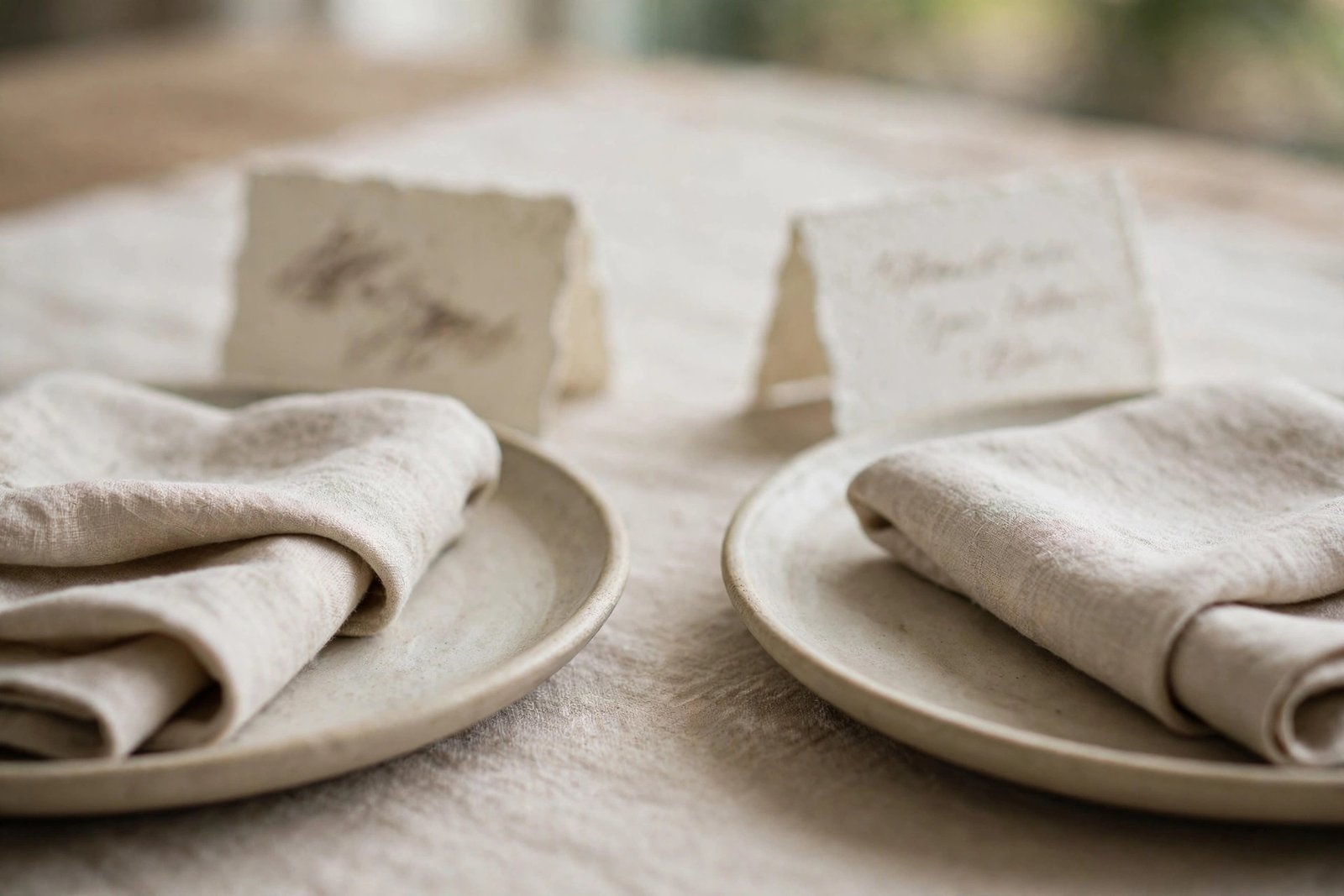
If the layers are the structure, napkins and place cards are the signature, the two smallest details on the table and the ones guests mention afterwards. Their power comes from what they signal: that the table was set for specific people, not for an audience.
Napkins first. Cloth napkins, even unmatched ones within a shared tone, make an everyday meal feel considered, and they wash and return for years, which makes them the economical choice over time. Fold them simply: a plain rectangle on the plate, under the fork, or standing loosely in the glass. The fold matters far less than the consistency. Eight napkins folded the same way read as style; eight improvisations read as haste. Good paper napkins, plain and decent, folded with the same care, are also entirely respectable. What undermines a table is never paper. It is a napkin tossed down without thought.
Place cards second. A name written by hand on a scrap of card, a luggage tag, a leaf, or a piece of the same paper used for the menu tells each guest exactly where they belong and removes the small social shuffle of choosing seats. Hosts gain something too: the seating plan, decided calmly in advance, is a real hosting tool. Separate the two people who will argue, seat the quiet guest beside the warm one, and keep yourself near the kitchen if you are serving.
Together these details cost almost nothing and change how a table is read, which is the whole argument in miniature. How to set a beautiful table on a small budget depends on signals of care far more than on signals of spending, and no signals are cheaper or clearer than a folded napkin and a handwritten name.
Lighting, the cheapest luxury of all
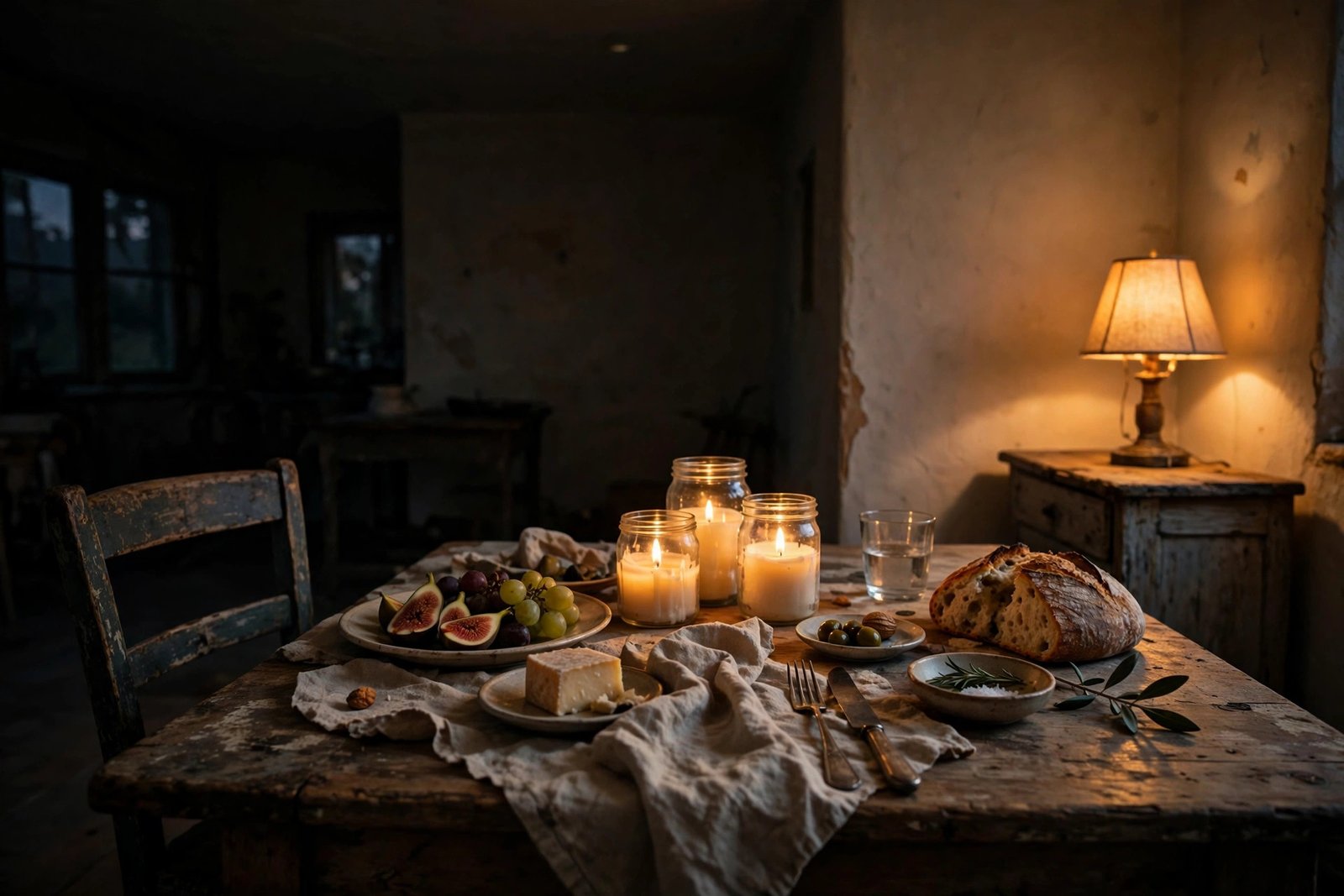
Lighting is the cheapest luxury of all because most of it is not bought but arranged. Warm, low light flatters faces, food and worn furniture equally, hides a multitude of imperfections, and changes the emotional temperature of a room more reliably than any object you could place on the table.
Start by lowering the main light. A harsh ceiling light flattens everything it touches. If it cannot be dimmed, turn it off once guests are seated and let lower light do the work: candles on the table, a lamp in the corner, light from the kitchen doorway. Table level light is the key. Faces lit gently from the side look rested; faces lit from directly above look tired, and the food follows the same rule.
Daylight asks for the same thought at lunch or brunch. Pull the table toward the window if the room allows, open curtains fully, and avoid seating a guest facing straight into glare. A brunch table set in natural light needs almost nothing else, which is why the tables in our guide to easy brunch ideas for a slow weekend morning rely on a window, a plain cloth and one bowl of fruit.
Candles deserve one practical note: keep flames below eye level, in stable holders, away from the reach of sleeves and serving spoons, and prefer unscented ones so the food keeps its own aroma. Battery candles are a fair substitute where open flame is unwise, and their light, softened inside a jar, is surprisingly kind.
Test the light before the day, from a guest chair. Sit where your most light sensitive guest will sit and look honestly at the table. Adjust once, in peace, rather than nightly at the door. This small rehearsal is part of how to set a beautiful table on a small budget, because light planned early replaces purchases made late.
What to do next

Turn the method into a routine you can run for any meal. The next time you host, or simply want a family dinner to feel like an occasion, work through the layers in order. First, choose the palette from what you own: one base cloth, one plate family, one accent colour that will repeat. Take a phone photo when a combination works. That photo becomes your free style guide for the next occasion, and it ends the habit of reinventing the table from zero every time.
Second, clear the surface completely, then set one trial place and sit in it. Check spacing, glass position and light from the guest chair, correct what bothers you, and only then set the remaining places to match. Third, build the centre low from candles, greenery or fruit, add napkins folded one way and place cards if the meal has guests, and set the finished table hours before anyone arrives.
An early table catches missing chairs and glasses while neighbours and shops can still help, and it lets you greet people as a host instead of a stagehand. For the wider calm hosting routine that surrounds the table itself, our guide on how to host a dinner party without stress covers menus, timing and the art of sitting down with your guests.
Practise on ordinary days. Set the full table for a Tuesday supper, cloth, polished glasses, candle lit, even if the food is soup and toast. Practice removes performance pressure from guest meals, because the gestures are already habits, and it gives the people you live with the beautiful table most often, which was the point all along. Slowly, the method becomes invisible. How to set a beautiful table on a small budget stops being a project and becomes simply how meals happen in your home.
If you want a reliable walkthrough of formal and informal place settings to compare against your own routine, the table setting guide at BBC Good Food shows the classic arrangements clearly, and every one of them can be reproduced with the mixed, thrifted pieces this article is built on.
FAQ

What is the single cheapest upgrade for a table?
Light. A handful of plain candles or tea lights in glass jars, with the harsh ceiling light dimmed or off, transforms a room more reliably than any tableware you could buy. The second cheapest upgrade is a clean, ironed cloth, because it unifies mismatched furniture and gives every plate a calm background. Both last for years and suit almost every style of home.
How many pieces does one place setting actually need?
Fewer than most people fear: one plate, one fork, one knife, a spoon only if the menu calls for it, one glass, and one napkin. A side plate and a second glass are welcome additions when you own them, not requirements. A complete, comfortable setting built from five or six pieces is the practical heart of how to set a beautiful table on a small budget, because money and attention go to arrangement instead of accumulation.
Where should I look for secondhand tableware?
Charity shops and thrift stores first, especially for plain glass, sturdy plates and loose cutlery, then flea markets and estate sales for linen, candle holders and serving pieces with character. Go with your short list of genuine gaps, inspect rims and glass carefully, and buy slowly. Online resale listings work too, but seeing weight and condition in person prevents most disappointments.
Can I set a beautiful table without a dining room?
Yes, because the method is about layers, not furniture. A kitchen table, a cleared desk, or a folding table under a cloth all take the same treatment: base, places, low centre, warm light. Clear the surrounding clutter as well as the table itself, so the small space feels calm, and keep serving dishes on a counter or side stool. Small tables set with restraint often feel more intimate than large ones crowded with objects.
How do I make the same pieces look different across the year?
Change the soft layers and keep the hard ones. Swap the runner colour, the napkin tone and the centrepiece material with the season: citrus and green leaves in spring, herbs and tomatoes in summer, apples and branches in autumn, candles and evergreen in winter. The plates and glasses stay constant, and the table still reads as new, because the eye notices colour and centre long before it notices crockery.
A beautiful table is not a purchase. It is a series of small, ordered decisions: a calm base, even places, a low centre, kind light, and two tiny details that tell guests they were expected. Practise those decisions with what you already own, and how to set a beautiful table on a small budget stops being a problem to solve. It becomes the way meals happen in your home: thoughtfully, warmly, and entirely within your means.