
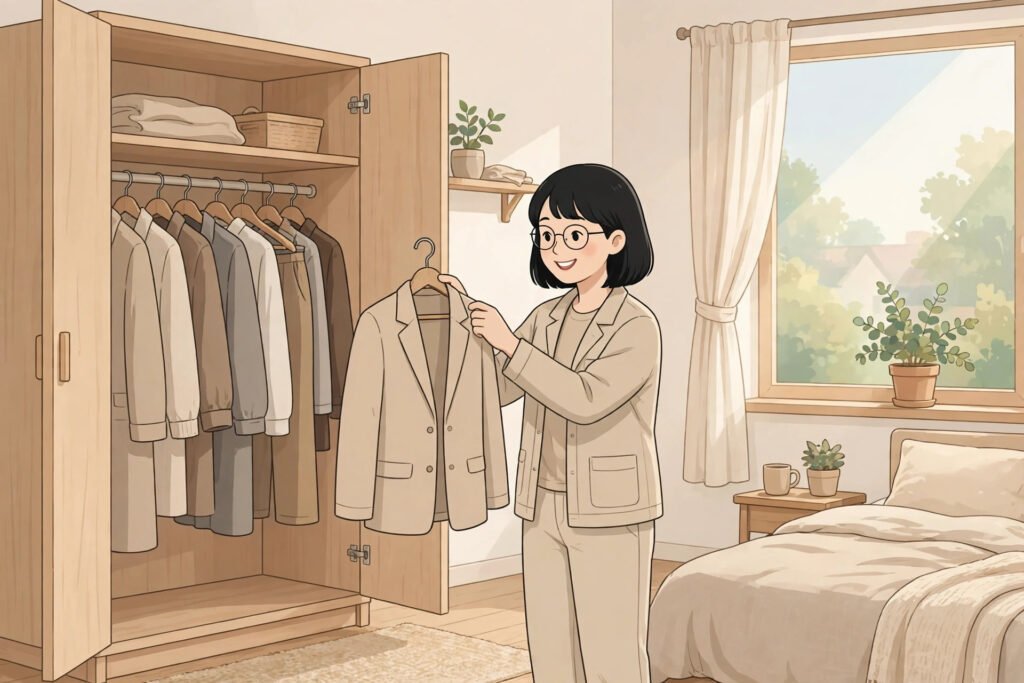
You know the scene. It’s 7:40 in the morning. Your closet is full, your bed is covered in rejected outfits, and you’re already late. You own plenty of clothes. You just don’t own a style. Half of what hangs in front of you was bought for a life you don’t live anymore. The other half was bought in a hurry, for one event, under bright shop lights and mild panic.
School dressing was easy, even when it felt hard. You had a uniform of sorts, even without a uniform. You wore what your friends wore, what the girls on your feed wore, what fitted the body you had at seventeen. Nobody asked those clothes to survive a job interview, a commute, a work dinner, or a body that’s changed since graduation. Adult dressing asks all of that at once. No wonder the closet feels like a stranger’s.
If you’ve ever typed find my clothing style as an adult into a search bar late at night, you’re not behind. You’re right on time. Almost every woman hits this moment somewhere between her first real job and her late twenties. The copied outfits stop working. The trends stop feeling like you. And the question changes from “what’s in fashion” to “what’s actually mine.”
Here’s the honest starting point. To find my clothing style as an adult, you don’t start with shopping. You start with looking. Your style isn’t hiding in a store, and it isn’t hiding in an influencer’s wardrobe either. It’s hiding in your own repeated choices, the pieces you grab three times a week without thinking. This guide is about learning to see those choices clearly, then building on them on purpose.
And yes, it’s completely possible to find my clothing style as an adult on a normal salary, in a normal flat, during a normal busy week. You don’t need a stylist, a walk in closet, or a dramatic before and after photo. You need a mirror, an honest hour, and a little patience with yourself.
We have a broader guide on how to find your personal style at any age, and it’s a good companion read. This article is the adult chapter of that story. It’s for the woman who wants to find my clothing style as an adult with a job to dress for, a rent payment to respect, and a body that’s lived a little since school. No overhaul. No panic haul. Just a clear method that fits a real week and a real salary.
The Short Answer
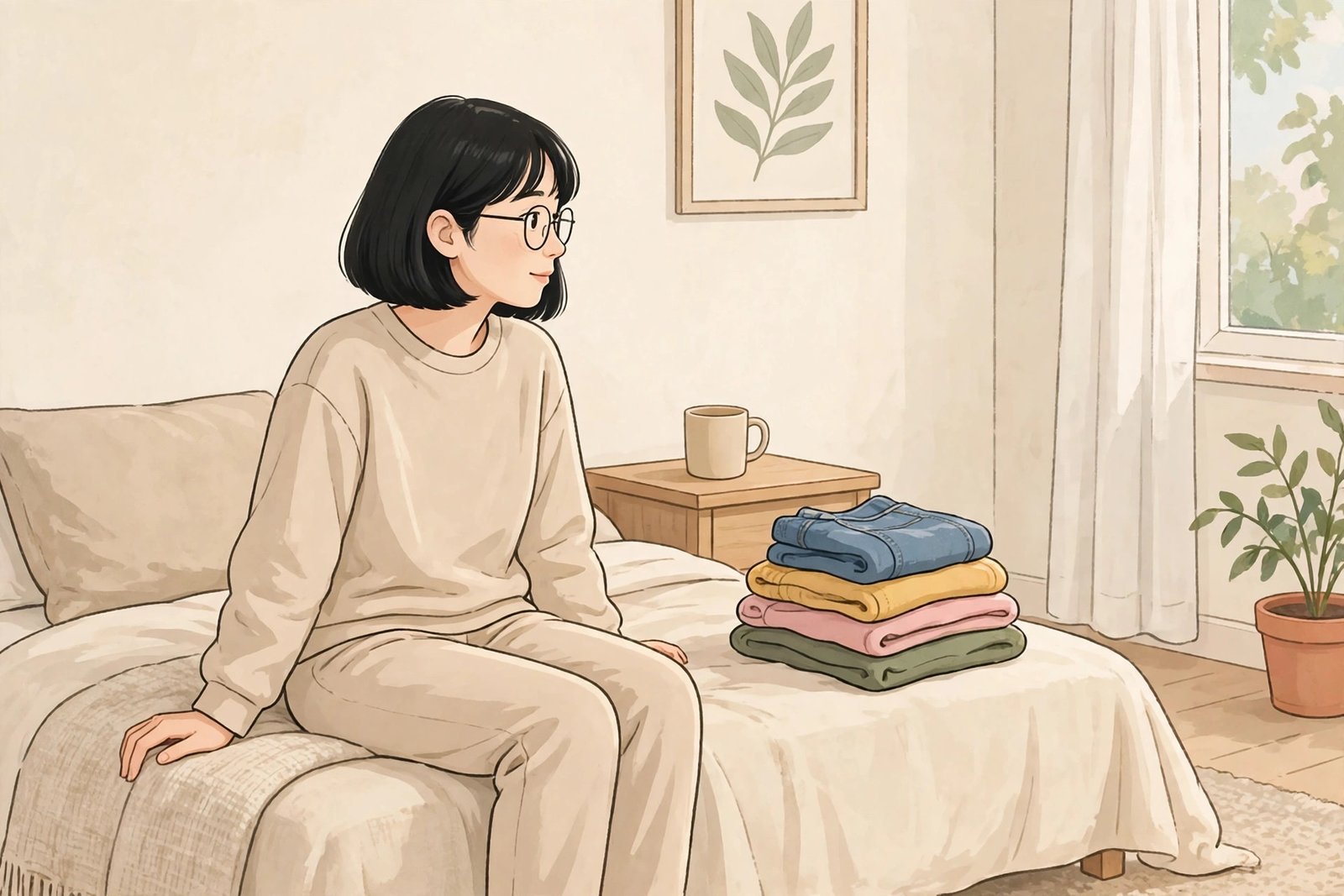
The short answer is this: you already own most of your style. To find my clothing style as an adult, stop copying your feed for a while and study your real life instead. Look at the outfits you repeat without thinking. Notice the colors your hand reaches for. Dress the body you’ve today, not the one in your school photos. Write down what your actual week needs: work, errands, dinners, rest days. Then buy slowly, on purpose, inside a budget you choose in advance.
That’s how women find my clothing style as an adult without a dramatic wardrobe bonfire. Style isn’t a personality you buy in one weekend. It’s a pattern you notice, then repeat on purpose until it looks like a signature. When women say they’ve finally managed to find my clothing style as an adult, this is almost always what they mean. Their closet matches their life. Their mornings got quiet. Getting dressed stopped being a daily argument.
Read Your Real Life Before Your Feed

Your feed knows what looks good on other women. It doesn’t know your life. It doesn’t know that you commute forty minutes, that your office runs cold, that you walk the dog before work and cook after it. Before you can find my clothing style as an adult, you need honest data about your own days. Not your dream days. Your Tuesday days.
Start with a simple week map. Take a blank page and write your real week, block by block. Work days, gym days, family dinners, couch evenings, the Saturday market run. Next to each block, note what the clothes there have to do. Sit for eight hours. Walk in the rain. Look sharp on a video call. Survive a toddler nephew’s sticky hands. This list is unglamorous, and it’s gold. Most closet frustration comes from owning clothes for a fantasy week while living a completely different one.
Then run a two week outfit diary. Nothing fancy. A quick mirror photo each morning, or a note in your phone with three words about what you wore. At the end of two weeks, look for the repeats. Which outfits did you wear twice without being forced? Which pieces did you reach for on your worst, most rushed mornings? Those aren’t accidents. That’s your style, already working, waiting to be noticed and named.
Pay attention to the misfits too. The dress that only works with one specific jacket. The shoes that hurt by lunch. The top you love on the hanger and avoid on your body. Each misfit is a clue about what to stop buying. Women who find my clothing style as an adult almost always start here, with a boring honest list instead of a shopping cart. The feed can come back later, once you know what you’re looking at it for.
One more thing to track: how you want to feel. Not how you want to look in a photo, but how you want to feel at 3 p.m. on a normal workday. Calm. Sharp. Soft. Taken seriously. At ease in your own skin. Feelings are data too. An outfit that photographs well but makes you tug at it all day has failed its real job, no matter how many likes it would get.
Dress the Body You Have Now
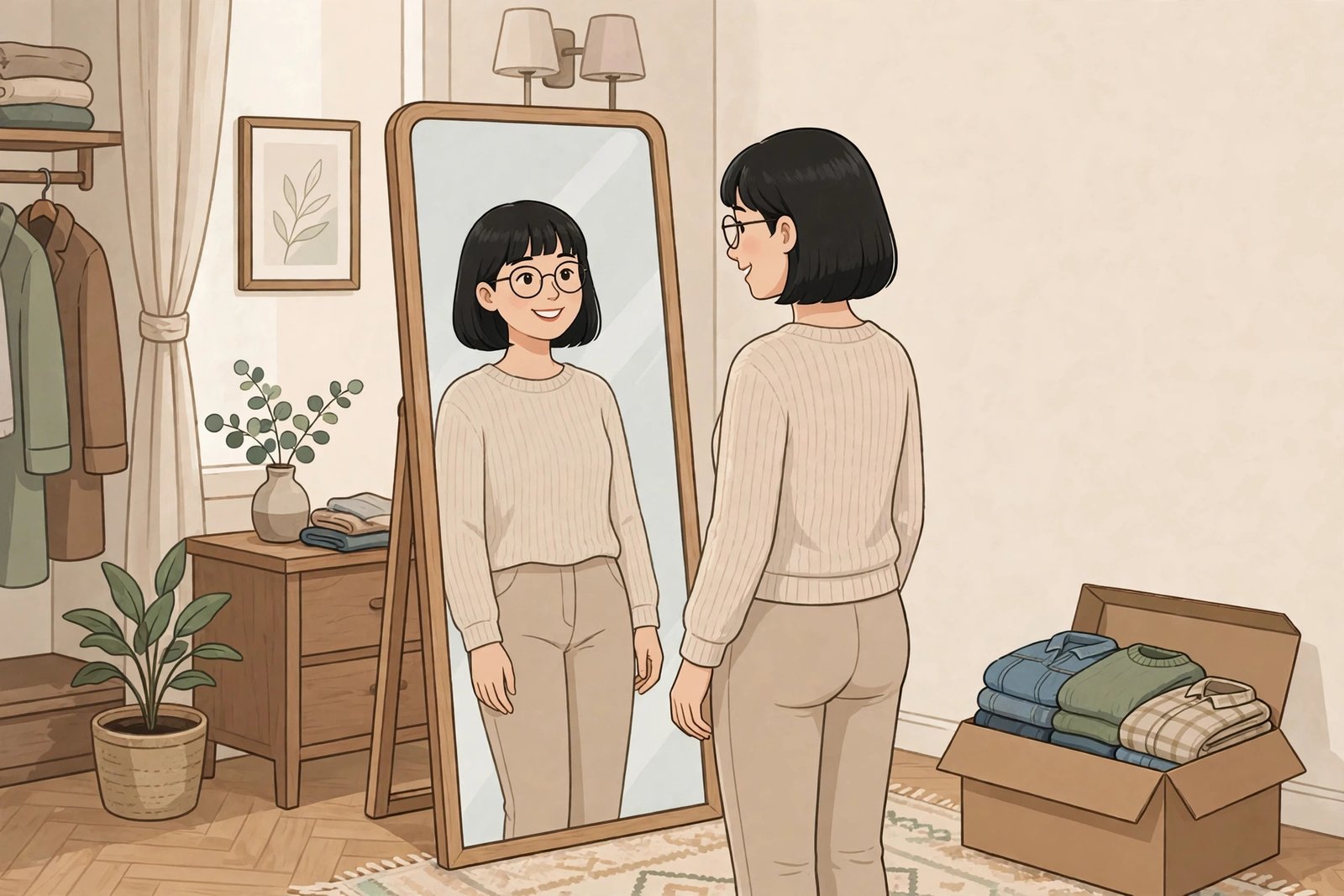
Let’s say this part plainly, because it matters. Your body isn’t the same as it was at seventeen, and that’s not a problem to solve before you’re allowed nice clothes. Bodies change across the twenties. Work sits you down. Life feeds you differently. Hormones, stress, joy, grief, and plain time all leave their marks. That’s normal adult life, not a personal failure.
It’s very hard to find my clothing style as an adult while you’re still dressing a younger version of yourself. The jeans kept “for when I’m back to that size.” The tops bought for a chest, a waist, a life from three years ago. Every morning, those pieces whisper that your current body is a rough draft and the real one is coming later. It’s a miserable way to start a day, and it has nothing to do with style.
Dress the woman standing in front of the mirror today. That starts with fit, not size. The number on a label is a rough guess made by a factory. It isn’t a grade. Two women can wear the same dress size and need completely different cuts. What matters is how a piece sits on your shoulders, your waist, your hips, right now. Can you sit, reach, breathe, and climb stairs in it? Does it stay where it should without constant adjusting? That’s fit. Fit is also the cheapest luxury there is, because a simple piece that fits beautifully looks richer than a costly piece that fights you all day.
A tailor can be a quiet ally here. Shortening trousers, taking in a waist, fixing a gaping button: small alterations turn almost right into exactly right. Plenty of women keep a short list of pieces worth altering and let the rest go without guilt. You can’t find my clothing style as an adult in clothes that pinch, ride up, or need fixing every ten minutes. Comfort isn’t the enemy of style. Discomfort is. Style you’ve to endure is just a costume, and costumes come off the second you get home.
So give yourself permission to clear the “someday” clothes out of your daily view. Store them, donate them, sell them, your call. Just stop asking them to dress you today. Your style lives in the present tense, and so do you.
Your Job Is Part of Your Style Now

School never taught us this part. For most women, the real push to find my clothing style as an adult starts at work. A first office, a first client meeting, a first manager title. Suddenly your clothes are saying things in rooms where you’re not speaking yet. They say whether you look rested or rushed, careful or careless, junior or ready. Fair or not, that first read matters, and you deserve some say in what it says.
Start by reading your workplace honestly. Every job has a visible dress code and a real one. The visible one sits in the handbook. The real one walks around on the backs of the people who get promoted. Look at the women a level or two above you. Notice the shapes, the shoes, the level of polish. You’re not copying their taste. You’re learning the local language. Then translate it into your own words. If their language is “structured and neutral,” your version might be structured and warm, or structured with one bold color you love.
Build your work style around a few repeatable formulas. A formula is an outfit recipe you trust on a tired morning: trousers, knit top, blazer. Or a midi skirt, a plain tee, a cardigan, clean loafers. Two or three formulas, in your colors, can carry a whole work month with small swaps. Formulas aren’t boring. They’re freedom. They free your brain for the actual job, and they make your style look intentional instead of random.
And keep one foot in your own life. You don’t find my clothing style as an adult by splitting yourself in two, a work robot from nine to five and a stranger on weekends. The goal is one woman, one style, adjusted by degrees. The same blazer over a dress for dinner. The same jeans with a softer top on Sunday. When your work clothes and your life clothes start sharing pieces, colors, and a mood, that’s the sign the style is truly yours. It isn’t a uniform you rent from your employer. It’s you, at work.
Audit the Closet You Already Own
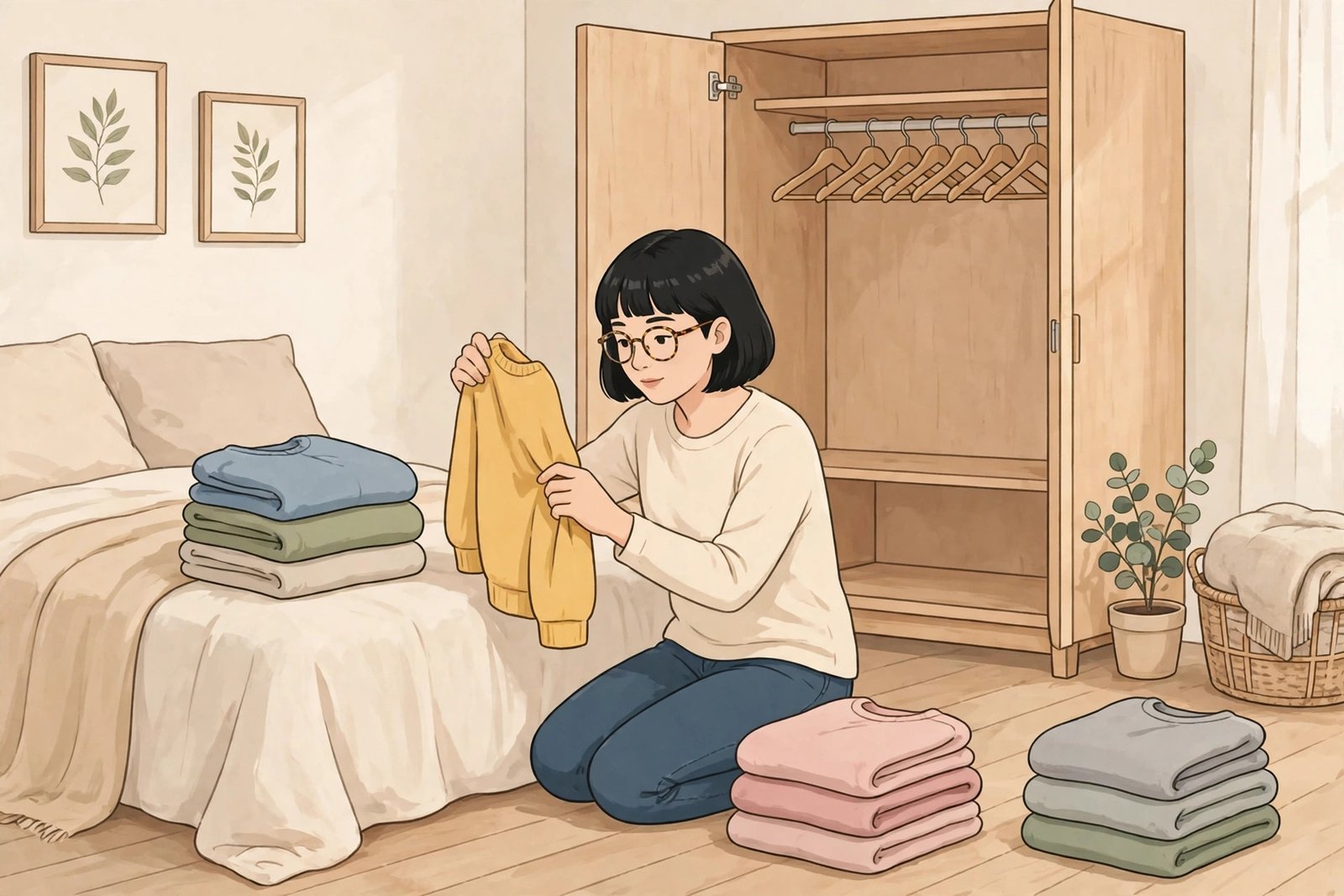
Now for the part that feels like homework and pays like a lottery win. An audit sounds dull, but it’s where you actually find my clothing style as an adult, hiding in your own habits. Set aside one hour, put on music, and take everything out by category. All the tops together. All the bottoms together. Seeing the full truth of one category at a time is strangely calming. You own less chaos than you feared, and more repeats than you knew.
Sort each category into three honest piles. Pile one: worn often, feels good, you’d buy it again. Pile two: fine, useful, no strong feelings. Pile three: not worn in a year, doesn’t fit your body or your life, kept out of guilt or hope. Be gentle with yourself during this. Every woman has a pile three. The money is spent either way. Keeping a mistake in the closet doesn’t refund it. It just charges you a small guilt fee every morning.
Editors at Who What Wear suggest a trick that makes the next month easy: keep a separate rail or section, and every time you wear something, move it there. After a month, that rail is your real wardrobe. Everything still hanging elsewhere is a story you tell yourself. Their step by step guide to defining personal style also backs the mood board idea, saving looks you love in one place so patterns can surface. It works because it replaces guessing with evidence.
Once the audit is done, give the keepers a home you can actually see. Our guide on how to organize my wardrobe walks through simple systems that keep the good pieces visible and easy to reach. Visibility matters more than fancy storage. You wear what you can see. The audit ends with a short, precious document: your gap list. Not a wish list, a gap list. The black trousers that would unlock six tops. The warm layer your commute keeps demanding. That list is your shopping map for the next season of your life. By the end of the audit, you won’t need a quiz to find my clothing style as an adult.
Your closet will have told you, in evidence, exactly who you dress like when nobody’s watching.
Find Your Patterns, Colors, and Silhouettes

Patterns are the raw material when you want to find my clothing style as an adult. Lay out your pile one pieces, the loved and repeated ones, and read them like a detective. What colors keep showing up? Which fabrics? Do you reach for soft and loose, or clean and structured? Long lines or short ones? Plain pieces or prints? Most women are shocked by how consistent they already are. The pattern was always there. It was just buried under impulse buys.
Give the pattern words. A simple method stylists love is the three words exercise. Pick one word for your baseline, the style of what you wear most: classic, relaxed, sharp, romantic, minimal. Pick one word for where you want to grow: polished, bold, elegant, playful. Pick one word for how you want to feel: calm, powerful, soft, free. Three words, taped inside the closet door, will quietly edit every future purchase. If a piece fits none of the words, it probably isn’t for you, however pretty it looks on someone else.
Colors deserve the same honest look. Forget the idea that you must crack one perfect color palette before you’re allowed to buy a sweater. Start from evidence: which colors in your closet get worn, and which get skipped? Which colors make friends say you look rested? Build your core around the shades you already prove you love, usually two or three neutrals plus one or two colors that feel like you. A tight color story is the secret behind women whose outfits always seem to match. Nothing matches by accident. It matches because the closet was edited to a palette on purpose.
Don’t skip the small stuff, either. Style often lives in the details you repeat without noticing. The gold hoops you wear four days a week. The red lipstick that only comes out when you mean business. The scarf you tie the same way every winter, the watch you never take off, the way you always roll your sleeves to the same point. Friends recognize you by these things before they could describe a single outfit you’ve worn. That’s not an accident, and it isn’t shallow. Signature details are the punctuation of your style. They’re cheap, they’re portable, and they work on your plainest days, when the outfit is just trousers and a knit and the earrings do the talking.
When you spot yours, protect them. Buy the backup pair of hoops. Replace the lipstick before it runs out. A style doesn’t need to be loud to be unmistakably yours.
Silhouettes work the same way. Most of us have two or three shapes that always feel right: a defined waist, a straight column, an oversized top with slim trousers. Once you know your shapes, shopping gets ten times faster. You stop trying on the whole store. You scan for your shapes, in your colors, and you walk past the rest without a flicker of doubt. Write your words down where you’ll see them. Every time you dress or shop, they help you find my clothing style as an adult again, instead of starting from zero each season.
Shop Like an Adult: Slowly and on Budget

Shopping slowly isn’t a punishment. It’s how you find my clothing style as an adult without draining your account or your peace. Adult shopping looks different from school shopping. There’s no Saturday haul just for fun. There’s a gap list, a budget line, and a woman who knows her three words. That might sound less fun. Give it one season. It feels better than fun. It feels like control.
Rule one: the gap list goes first. Buy to fill a proven gap, not to chase a mood. Rule two: set a per season budget that respects your real life, rent, savings, fun, all of it. A small budget spent on the right piece beats a big budget scattered across almost right pieces. Rule three: think in cost per wear. A coat worn a hundred times is cheaper, in the end, than a party top worn twice. Your future self pays for every purchase either way. Let her pay for things she’ll actually use.
Slow down the moment itself too. Sleep on purchases above a price you set for yourself. Try pieces with your own shoes and your own clothes, not the store’s perfect lighting and loaner heels. Check the fabric, the seams, the lining, the care label. Ask three questions: Does it fit my body today? Does it match my three words? Does it work with at least three things I already own? Three yes answers, and you can buy it with a clear conscience. Any no, and it stays in the shop, where it can be someone else’s perfect piece.
Watch the traps. Sale racks that turn “not needed” into “too cheap to skip.” Event panic shopping the night before a wedding. Revenge shopping after a bad week at work. Copy buying a whole outfit from one photo, head to toe, then feeling oddly absent inside it. Each calm, planned buy is proof you can find my clothing style as an adult and still respect your money. That proof stacks up. One season of it rewires how shopping feels, from a lottery to a craft.
A Style That Grows With Your Life
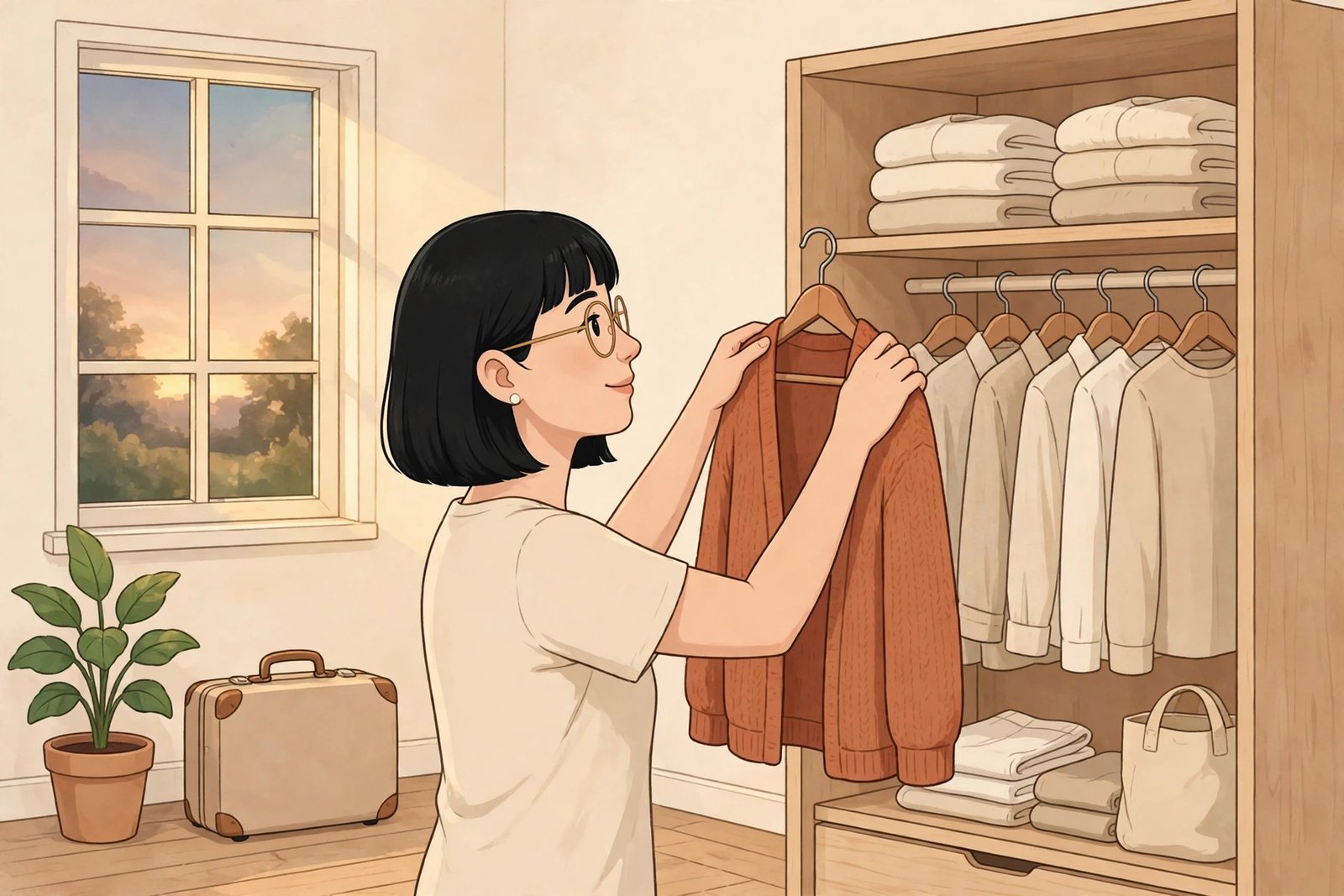
Here’s the part nobody tells you at the start. You won’t find my clothing style as an adult once and be finished forever. Life keeps moving, and your style moves with it, and that’s health, not failure. A new job may ask for more polish. A new city may change your weather, your walking, your whole daily shape. Your body will keep having its own opinions across the decades. Friendships, love, loss, children or no children: all of it shows up in a closet eventually.
The trick is to build a style with a strong core and soft edges. The core is your palette, your silhouettes, your three words. That core can stay steady for years, and it’s what makes your style recognizable across all the changes. The edges are free to play: a new color tried in one piece, a trend tested cheaply, a vintage find that surprises you. Core steady, edges curious. That balance is what grown up style actually looks like from the inside.
Keep the maintenance light but real. A small audit each season, twenty minutes, keeps pile three from growing back. A photo diary for one week a year refreshes your data when life shifts. And when a big change arrives, give yourself a grace period. Nobody dresses well in the middle of a move, a breakup, or a brand new job. Basics carry you, and your style catches up once life settles down.
So find my clothing style as an adult the way you build any good adult thing. Slowly. Honestly. With your real life as the plan and your real body as the model. The goal was never to look like someone else on your best day. The goal is to open your closet on an ordinary Tuesday and feel, quietly, like yourself. Dressed as the woman you are. That’s the whole prize, and it’s closer than you think.
Frequently Asked Questions
How long does it take to feel like my adult style is really mine?
For most women, the honest answer is one full season of paying attention. The audit and the outfit diary give you clarity in about two weeks. After that, each month of dressing on purpose makes the pattern stronger and the mornings easier. You don’t need a dramatic reveal moment. It builds quietly, outfit by outfit, until one day you realize you haven’t had a closet crisis in weeks.
I have a tiny budget right now. Can I still do this?
Yes, and a small budget can even help, because it forces the slow, deliberate method. Most women find my clothing style as an adult using clothes they already own, once the audit shows what’s really there. Start with fit fixes and styling what you’ve in new combinations. Then fill one gap at a time, second hand first when you can. Style is about pattern and intention, not about spending.
What if my job has a strict dress code?
A dress code narrows your choices, but it doesn’t erase your style. Work inside the code with your own palette, your best silhouettes, and small personal signatures: the earrings you always wear, your color worn as a top, a scarf pattern that’s unmistakably you. Keep your off duty wardrobe fully yours, and let a few pieces, like a great blazer or your favorite shoes, live in both worlds so the two halves still feel like one woman.
My body keeps changing. Should I wait before buying anything?
Don’t wait to be comfortable. Buy a small number of well fitting basics for the body you’ve this season, and favor forgiving cuts, wrap shapes, elastic backs, and fabrics with a little give. Skip the big investment pieces during fast change if money is tight, but never skip dressing kindly today. Waiting to live in your own style until your body settles is a trap. Bodies keep changing for decades.
How do I stop copying influencers and trust my own taste?
Start by muting, for one month, every account that makes you feel like your closet is wrong. Fill the gap with your own evidence: your outfit photos, your three words, your worn and loved pile. Notice how often your favorite real life outfits came from your own repeats, not from a screenshot. That’s the quiet moment when you find my clothing style as an adult for real. It stops being a copy and starts being a signature.