
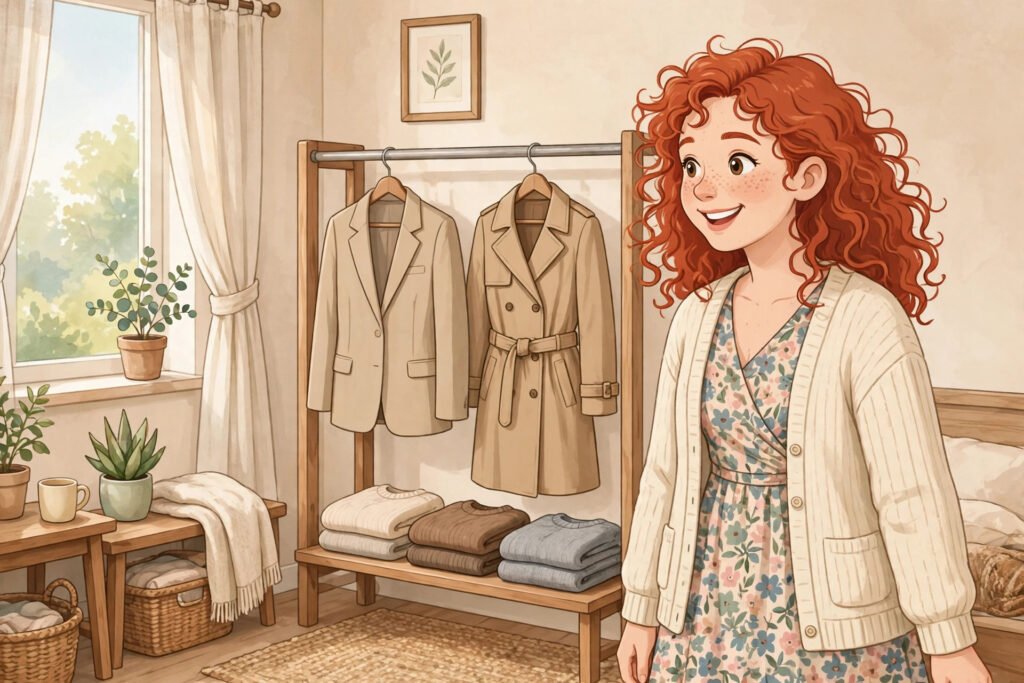
Open your closet and do a quick count of regrets. The sequin top from one New Year’s Eve. The trendy jeans that fit for exactly one summer. The sale dress you never wore because it needs shoes you don’t own. Most women in their twenties have a small museum of almosts hanging between the clothes they actually live in. It’s not a character flaw. It’s what happens when you buy for moments instead of for a life.
If you want to build a timeless wardrobe, start by forgiving those past hauls. You were dressing for school, for first jobs, for a body and a budget that kept changing. Nobody handed you a plan. The timeless wardrobe is the plan. It’s the decision to stop renting your style from the trend cycle and start owning a core of pieces that work hard, mix freely, and stay good looking for years.
Here’s the truth nobody prints on a sale tag: you don’t build a timeless wardrobe in one weekend, and you definitely don’t build it in one panic order before a new job starts. It’s built slowly, the way you’d furnish a first apartment. One solid piece at a time, each one chosen to earn its space.
Think about the math of the trend cycle for a second, because it explains the museum of almosts. A loud piece gets worn while it’s everywhere, which is about one season if you’re lucky. Then it starts to look dated, then it embarrasses you a little, then it hangs there taking up rail space and quietly charging rent in guilt. Multiply that by a few buys a year across your whole twenties and you’ve spent real money building a closet that serves your past instead of your present. The women whose style you admire from across the office aren’t richer than you. Most of them just stopped paying that tax earlier.
This guide shows you how to build a timeless wardrobe piece by piece, in the right order, so your money starts working for the woman you’re now.
If a small starter set is where you’re beginning, our guide to a capsule wardrobe on a budget covers that first step well. This article goes further. It’s about the long game, the pieces you’ll still reach for in ten years. To build a timeless wardrobe that lasts, you buy less, you buy better, and you buy in the right order. This guide gives you the list, the order, and the judgment to make both work on a real salary.
The Short Answer
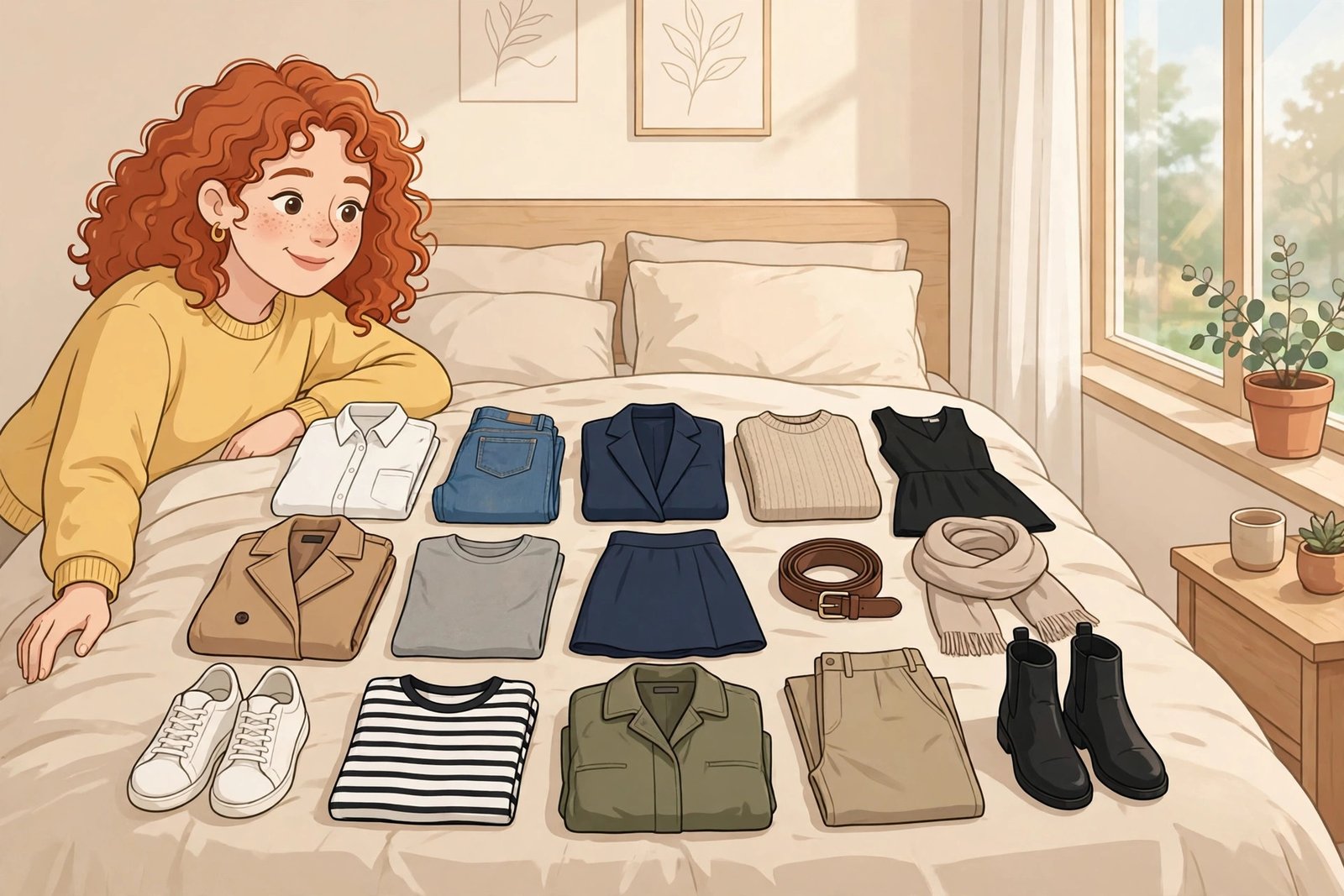
The short answer is this: you build a timeless wardrobe around a core of classic pieces in neutral colors, bought slowly and chosen for fit and fabric first. Think a white shirt, a blazer, a trench coat, great jeans, tailored trousers, a knit sweater, a simple black dress, clean shoes that go with everything. Fifteen or so hard working pieces can carry most of your work weeks, dinners, and weekends, because each one pairs with almost all the others.
Women who build a timeless wardrobe and actually keep it share one habit. They buy for their real life, in an order that follows their biggest needs first, and they skip the loud trend pieces that expire in a season. They don’t chase a finished closet. They grow one. That’s the whole method to build a timeless wardrobe without going broke, getting bored, or standing in front of a full closet feeling like you own nothing.
If that sounds less exciting than a big seasonal haul, give it one honest try. The reward isn’t a dramatic reveal. It’s quieter and better: mornings where three outfits assemble themselves in your head before you’re fully awake, a suitcase that packs itself for any trip, and the calm of knowing that almost everything you own still works, still fits, and still feels like you. That’s what the money was supposed to buy all along.
What Makes a Piece Timeless
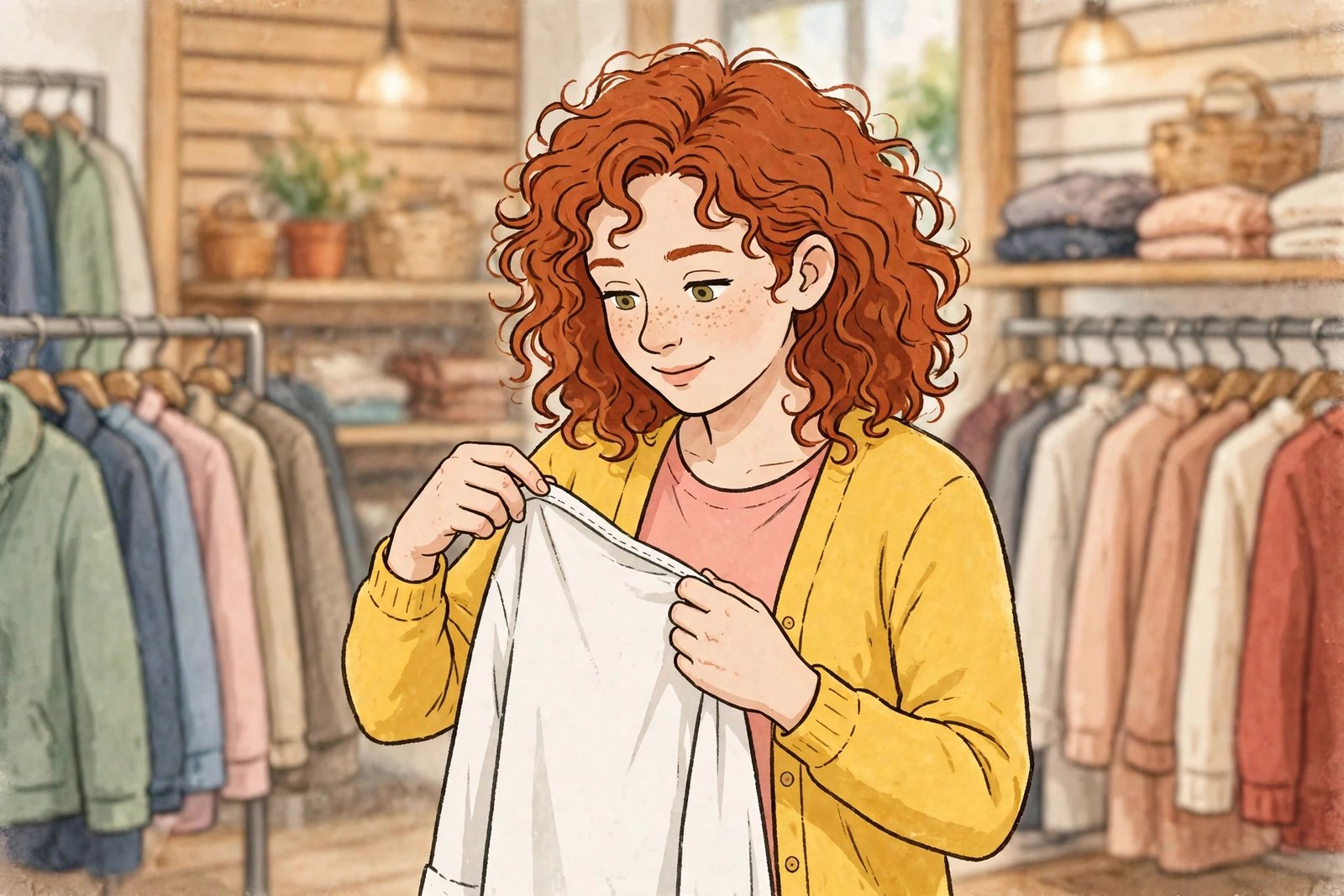
When you set out to build a timeless wardrobe, the first skill isn’t shopping. It’s judging. A timeless piece isn’t magic, and it isn’t always expensive. It’s a piece that passes four quiet tests. It fits your body well. It’s made of fabric that holds up. Its color plays nicely with most of your closet. And its shape is simple enough that no one can date it to a specific season.
Run any candidate through those four tests. The white shirt that’s been sold, in some version, for fifty years? Passes. The top with the extreme cut out that three influencers wore last month? Fails the shape test before it reaches the till. Timeless doesn’t mean boring, by the way. A red dress can be timeless if the cut is clean and the fabric is good. A black dress can be fast fashion junk if it’s flimsy and badly sewn. Age isn’t about color or drama. It’s about construction and restraint.
Versatility is the test that matters most in daily life. Ask how many outfits a piece joins. A blazer that works over trousers, jeans, a skirt, and a dress is doing four jobs. A statement top that only works with one specific skirt is doing one job, loudly, twice a year. When you build a timeless wardrobe on pieces that pass these tests, trends can do whatever they like out there. Your closet stays calm, and your mornings stay short.
Timeless also doesn’t mean pricey, and pricey doesn’t mean timeless. A costly piece in a loud seasonal shape will date just as fast as a cheap one, and it’ll sting more while doing it. Meanwhile, some of the hardest working pieces in real closets cost very little: the plain tee that fits perfectly, the second hand blazer with beautiful shoulders, the jeans you found on your fifth try and now guard like jewelry. Price buys you better fabric and construction when you choose well. It doesn’t buy you judgment, and judgment is the actual engine here. That’s good news for a normal salary. It means the skill comes first and the spending follows, in small amounts, exactly where it counts.
One last quiet point. Timeless is personal at the edges. Your core should match your climate, your job, and your body, not a magazine’s idea of a Parisian stranger. A woman who walks to work in a rainy city needs different heroes than a woman who drives in a hot one. The tests stay the same. The answers are yours.
The Core Pieces Worth Buying Well
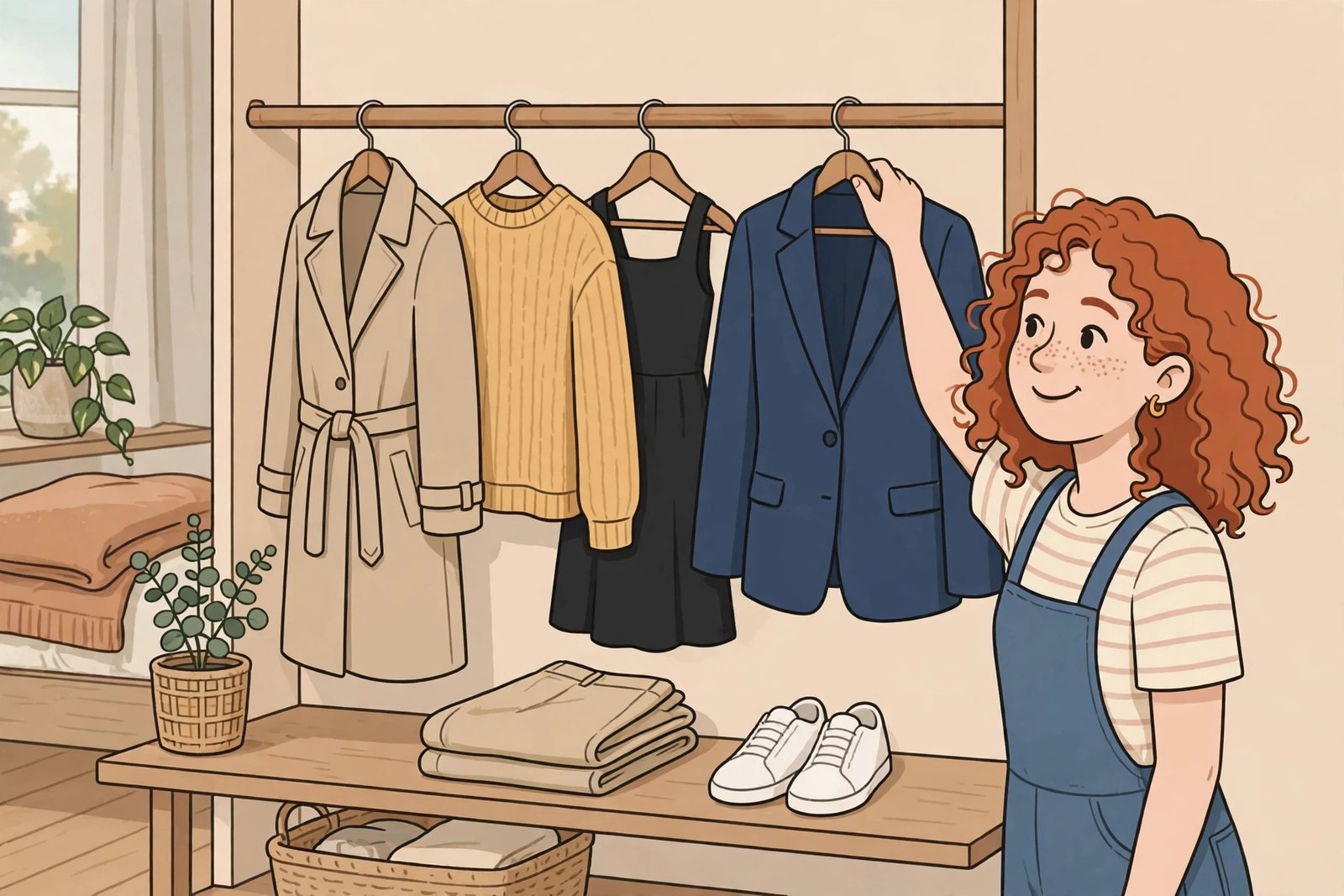
Here’s the working core most stylists come back to, in some version, again and again. A white shirt. A blazer that fits your shoulders. A trench coat or a clean wool coat. Jeans in a straight or slim cut that make you feel great. Tailored trousers. A knit sweater in a neutral shade. A plain white tee that isn’t see through. A simple black dress. A skirt that sits well and moves with you. Shoes that cover your real life: clean white sneakers, loafers or ballet flats, and a pair of boots. Add a simple bag in a color that goes with everything, and you’ve the skeleton of a wardrobe for years.
The editors at Ethos count fifteen classics along the same lines, from the white button down to the trench coat, and they land on advice worth stealing: an honest closet audit first, then buy better and wear longer. It’s the same conclusion from the other side of the fashion world. The list isn’t the secret. The order and the quality are.
You don’t need all of it this year. You build a timeless wardrobe in layers, season by season, as your budget honestly allows. Maybe the trousers and the knit this autumn. The coat next winter. The good boots when the old ones give up. Our guide on how to style a white shirt shows why that one piece tops so many lists: it can carry a work meeting, a dinner, and a Sunday market without breaking a sweat.
Fit each piece to your own palette and your own shapes. If you never wear black near your face, your core dress might be navy. If skirts aren’t your life, trade the skirt for a second trouser cut. Pick the versions that fit the body you’ve and the days you actually live, and you’ll build a timeless wardrobe that feels like you, not like a costume of a stylish stranger.
The Order to Buy Them In

Order matters more than speed when you build a timeless wardrobe. Buy in the wrong order and you’ll own a gorgeous coat with nothing decent to wear under it. Buy in the right order and every new piece makes the pieces you already have more useful. Here’s a sequence that works for most working women.
Start with your biggest pain point, the category you wear most and enjoy least. For most of us, that’s the daily base: trousers or jeans, plus the tops that go with them. If your work bottoms fit well, half your mornings are fixed. Next, buy the layer that finishes outfits: your blazer or cardigan, the piece that turns separates into a look. Then shoes, because tired feet and scruffy shoes quietly downgrade everything above them. Then the coat, since it’s the piece the world sees most in cold months, and a good one can serve a decade.
Save the black dress and the special occasion pieces for later in the order. They feel exciting to buy, which is exactly why they jump the queue and eat the budget. But you wear your trousers two hundred times a year and the dress six times. Fund the two hundred first. Within about two years of this calm order, a piece or two per season, you’ll have managed to build a timeless wardrobe almost by accident. Except it won’t be an accident. It’ll be a list, followed patiently.
Give the order a rhythm you can actually keep. One core piece per season is a calm pace for most budgets, two if a salary bump or a birthday helps. That sounds slow until you picture it: four to eight serious upgrades a year, each one worn dozens of times. Compare that to the old rhythm, a bag of maybes every few weekends, most of it forgotten by the next season. Slow here isn’t a sacrifice. It’s the whole strategy. A wardrobe built at walking pace fits your life at every stage, because you’re living in it while it grows instead of unveiling it like a costume.
One rule protects the order: never buy a later piece to celebrate skipping an earlier one. The trench doesn’t fix the trousers problem. It just gives you a beautiful coat to wear over trousers you hate. Unsexy order, glamorous results. That’s the trade, and it’s worth it every single time.
Fabrics and Fit That Outlast Trends
Fabric is the quiet difference between a trend piece and a keeper when you build a timeless wardrobe. Trends are mostly shapes. Longevity is mostly material. Natural and sturdy fabrics age gracefully: cotton that still holds its body after twenty washes, wool that keeps its shape, denim with real weight, linen that softens instead of sagging. Thin, shiny, stretchy everything tends to look tired fast, pills quickly, and loses its shape in the wash. Read labels like you read ingredients. You don’t need to become a textile engineer. Just learn to spot a fabric that feels substantial between your fingers and a seam that’s stitched, not glued.
Construction tells the same story. Check the seams inside: are they even, finished, firm? Is there a lining where a lining helps? Do the buttons feel sewn on or barely introduced to the garment? Does the zipper run smoothly? Two minutes of checking in the store saves you from the classic heartbreak, the piece that was perfect twice and shabby forever after.
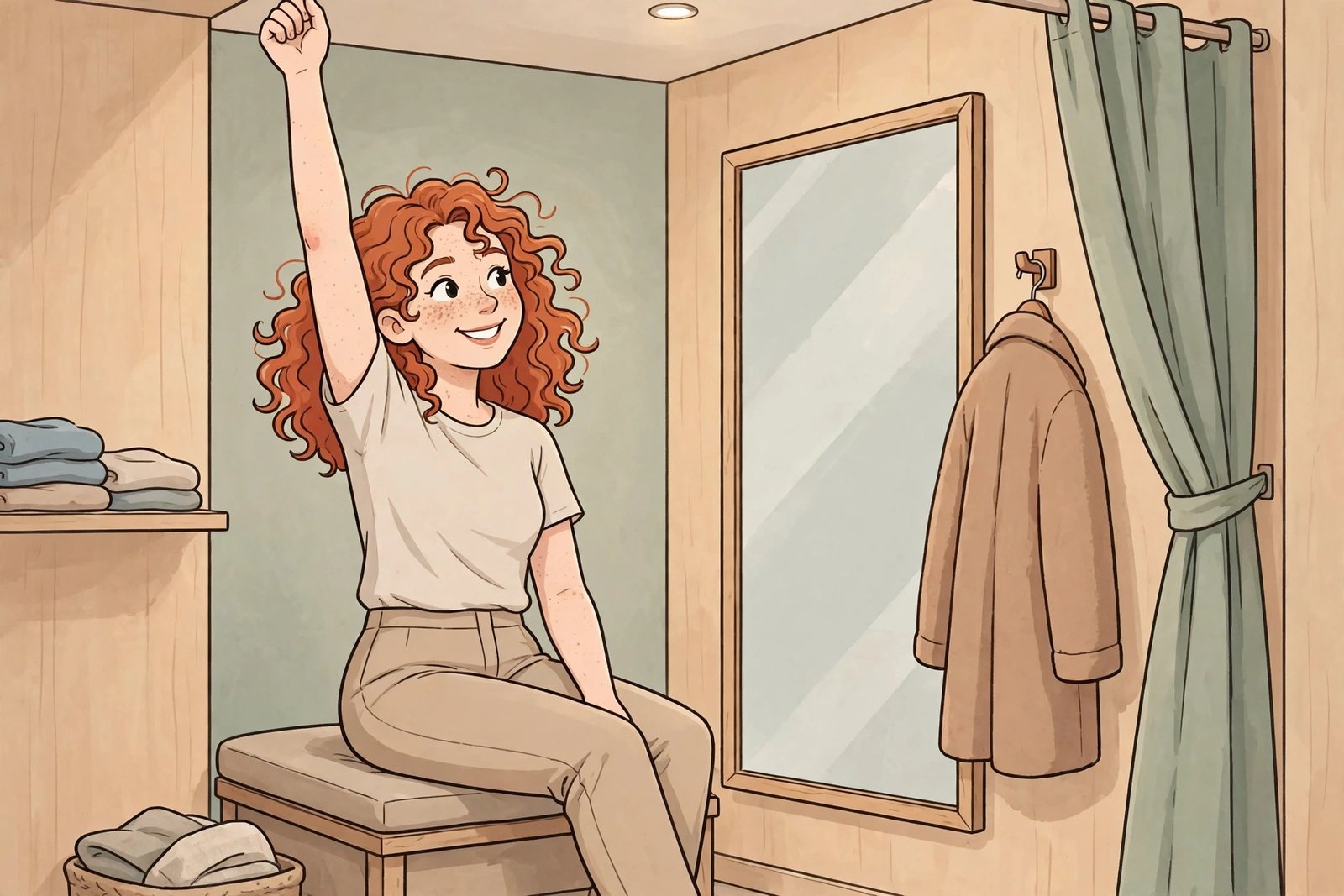
Fit finishes the job. You can’t build a timeless wardrobe on pieces that need constant tugging, and you can’t judge fit standing still in a bright fitting room. Sit down in it. Reach up. Walk a few steps. Cross your arms. If it only works while you hold your breath and stand like a statue, it doesn’t work. Budget a little for tailoring on the core pieces. Hemming trousers to your exact shoe height or taking in a waist costs little and makes a mid range piece look made for you, which is the oldest luxury trick in the book.
And be honest about care. A timeless piece you’ll never dry clean or hand wash is a piece you’ll stop wearing. Match the care label to the life you actually have. Low maintenance and long lasting is the sweet spot, and it exists in every category if you check before you fall in love.
Colors That Mix Without Thinking
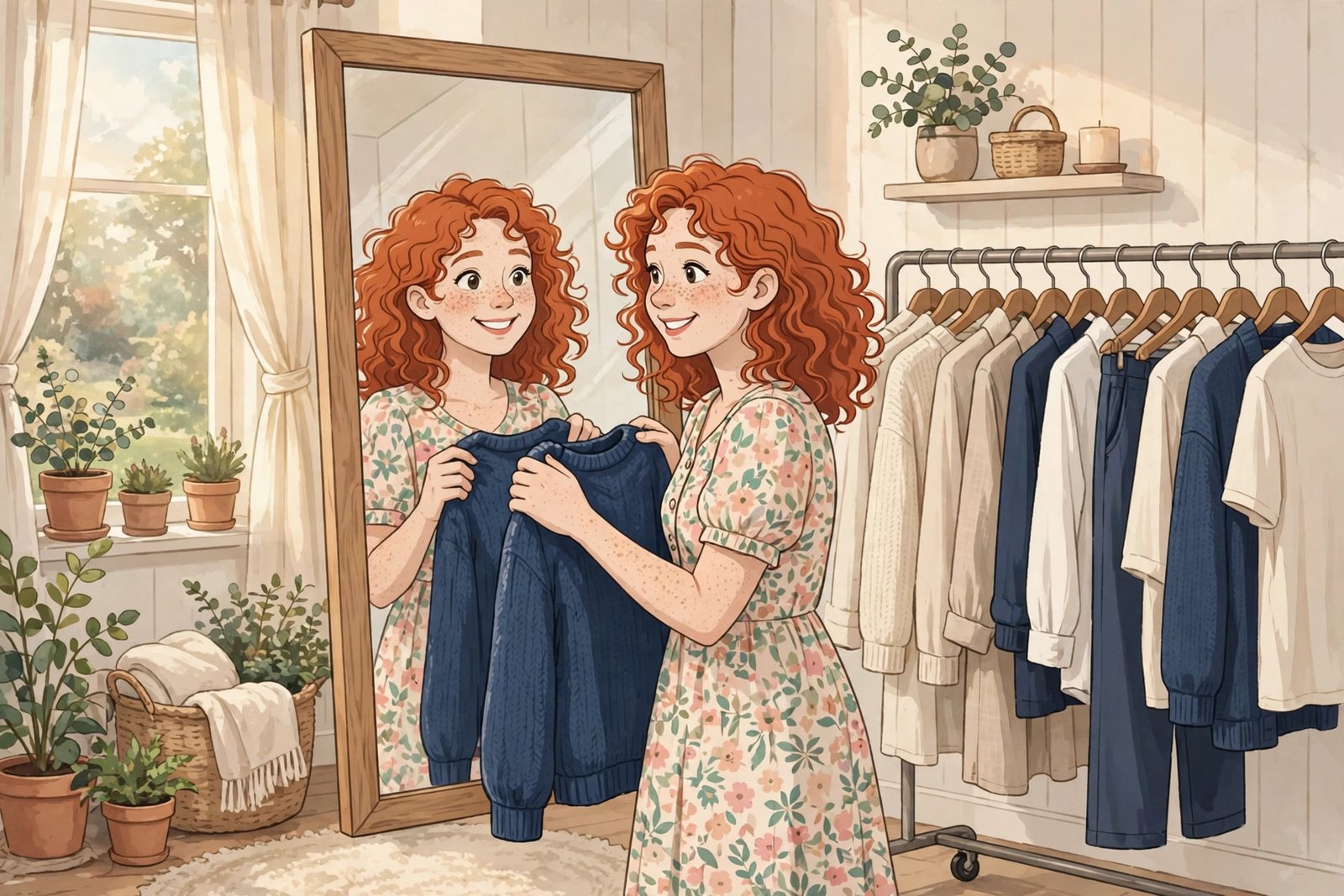
Color discipline is a superpower when you build a timeless wardrobe. Not because neutrals are morally better, but because a tight palette turns fifteen pieces into dozens of outfits. Pick two or three core neutrals that suit you and your life: some mix of black, navy, white, cream, grey, beige, or brown. Build most of the core in those. Then choose one or two accent colors that you genuinely love wearing, the shades that make your face look awake. Let accents live in tops, knits, scarves, and one or two fun pieces, where they’re easy to swap as your taste evolves.
Here’s the payoff, in plain morning terms. When nearly everything in the closet pairs with nearly everything else, getting dressed stops being a puzzle. Trousers plus any top plus any layer equals an outfit that looks deliberate. That’s how you build a timeless wardrobe where a rushed Tuesday still looks pulled together. Women with “effortless style” are usually just women with disciplined palettes. The effort went in once, at buying time. It pays out every single morning.
Prints get a small, careful role. One classic print in your palette, stripes are the usual winner, can live in the core happily for years. Loud novelty prints date fast and argue with everything, so let them visit as cheap seasonal guests if you love them, not as expensive core citizens.
Your accents deserve a rotation plan, too. Keep two or three accent pieces in play each season and store the rest. A rust knit in autumn, a soft blue top in spring, the scarf that makes your winter coat look intentional. Rotating accents is how a small core never feels like a uniform. Nothing new was bought. The same wardrobe just keeps telling slightly different stories, and getting dressed stays interesting enough that you don’t go hunting for novelty with your credit card. Novelty is the most expensive spice in fashion. Rotation gives you the flavor for free.
Test before you commit. Hold a color near your face in daylight, not store light. Notice whether your skin looks clearer or more tired. Your mirror at home, on a normal morning, is the only review that matters. A palette that flatters you at 8 a.m. without makeup is a palette that will never let you down.
What to Skip, Even on Sale

Knowing what to skip protects your budget while you build a timeless wardrobe. The skip list is short and ruthless. Skip shapes that belong to one exact moment: the extreme cut, the novelty sleeve, the silhouette that needs a specific bra, a specific event, and a specific mood to work at all. Skip loud logos doing the design work, since a logo dates a piece to its season faster than any cut. Skip fabrics that already look tired on the hanger. They won’t improve at home.
Skip duplicates with tiny differences. The fourth black tee that isn’t better than the three you own. The second pair of boots in the same color because the sale was good. Duplicates feel like safety, but they eat the budget your coat is waiting for. And skip occasion only pieces bought at core prices. A very expensive dress for one wedding is a rental you store forever. Rent it, borrow it, or buy it gently priced, and keep your serious money on the pieces with two hundred wears in them.
The hardest skip is the almost right piece at a thrilling discount. Almost right is a full price problem at a discount: the trousers that nearly fit, the blazer in the almost color. They’ll be worn with a small daily apology, then not worn at all. Every skipped almost is money and closet space kept free to build a timeless wardrobe that actually serves you. Sales will come back. They always do. Your standards get to stay.
A gentle test for the fitting room door: if this piece were full price, in a quiet store, with no music and no crowd, would I still want it? If the thrill was the discount, leave it. If the want survives the quiet test, it’s probably a real yes. Your closet will thank you in the only language it knows: open space and easy mornings.
Care for Them So They Actually Last
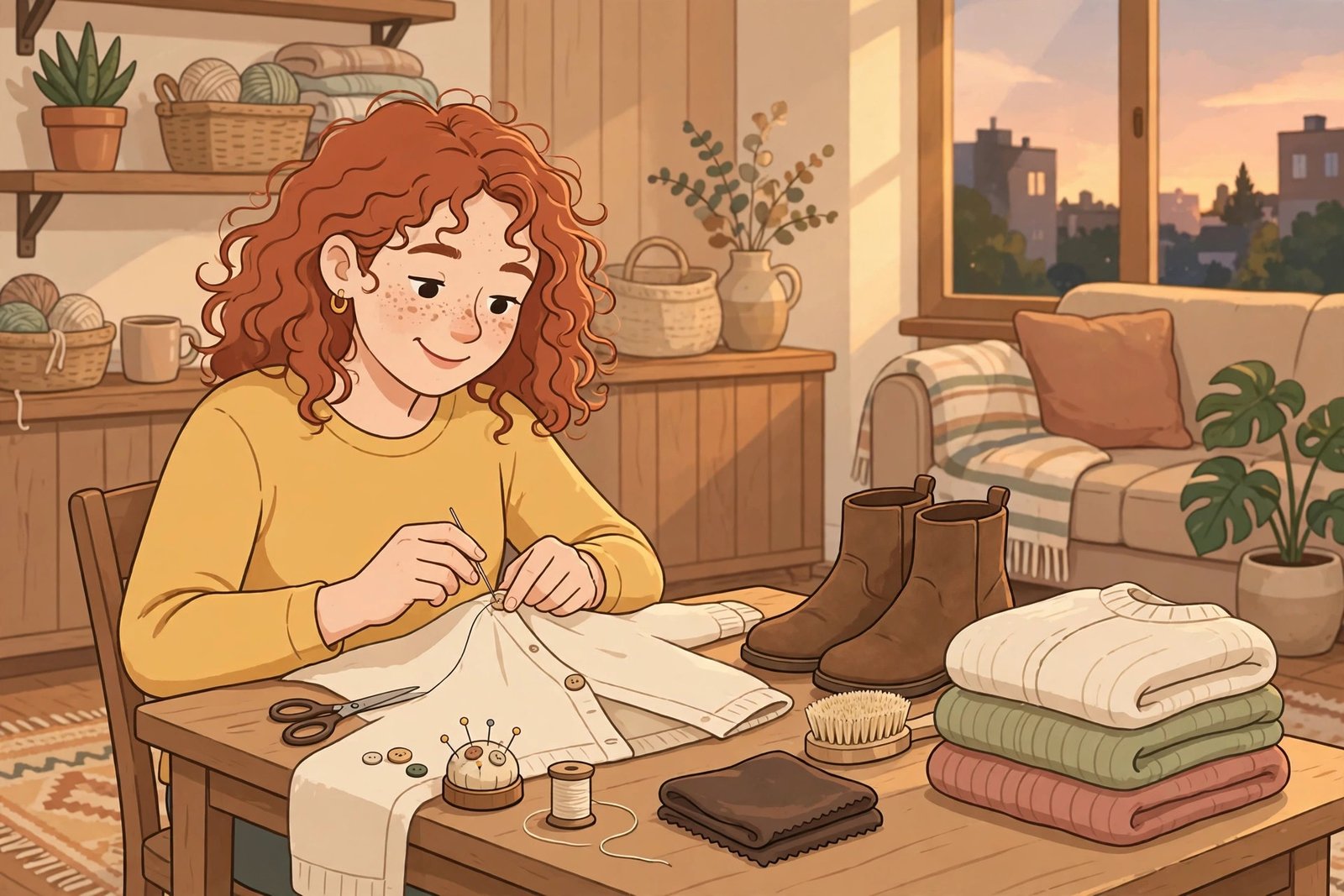
Care is the second half of the work when you build a timeless wardrobe. A well bought piece can still die young in a hot wash. The good news: lasting care is mostly cheap habits. Wash less often, at lower temperatures, with clothes turned inside out. Air knitwear on a chair overnight instead of washing after every wear. Fold knits instead of hanging them, so shoulders don’t grow little horns. Give shoes a rest day between wears, and keep their shape with simple inserts or rolled paper.
Storage matters more than people think. Crowded rails crush shapes and hide pieces until you forget them, then buy them again. Give core pieces breathing room. Use decent hangers for blazers and coats. Keep the trench where you can see it, not buried behind occasion dresses. A wardrobe you can see is a wardrobe you use fully, and full use is the whole point of buying well.
Repairs are the quiet hero skill. A loose button is a five minute job, not the end of a shirt. A worn heel tip costs little at a cobbler and saves the boots. A small snag in a knit can be pulled through to the inside before it becomes a hole. Learn three fixes, button, hem tape, snag, and you’ll extend the life of half your closet. Women who keep clothes for a decade aren’t lucky. They’re just quick with tiny repairs before small damage becomes big damage.
Laundry day deserves one honest paragraph, because that’s where good clothes quietly go to die. Hot water and a roaring dryer will age a knit faster than a year of wearing it. Wash core pieces cold, on gentle cycles, and hang or lay them flat to dry whenever you can. Zip zippers and button buttons before washing so they don’t snag their neighbors. Empty pockets, always, unless you enjoy tissue confetti on your black trousers. None of this takes extra money. It takes an extra ninety seconds of attention, twice a week, and it pays you back in years.
Treat your clothes like the long term colleagues they are, and you’ll still be reaching for them when today’s loudest trends are a funny memory. That’s how you build a timeless wardrobe that earns the name. Not just bought well, but kept well, season after season, until the pieces feel less like purchases and more like old friends.
Frequently Asked Questions
How many pieces do I actually need for a timeless wardrobe?
Fewer than you fear. A working core of about fifteen well chosen pieces, tops, bottoms, layers, one good dress, and shoes that cover your real week, can produce weeks of distinct outfits because everything mixes. Add your accent pieces and seasonal items around that core. If your closet already holds far more than that, don’t panic and don’t purge wildly. Use the core list to see what you truly own, then fill only the gaps.
Can I do this on a small salary?
Yes, if you let time do the heavy lifting. You can build a timeless wardrobe on a modest salary by buying one or two core pieces per season, in the order that fixes your biggest pain point first. Second hand shops and resale platforms are full of sturdy classics from good makers, often barely worn. The method costs patience more than money. What it refuses is the expensive habit of buying five cheap almosts instead of one right piece.
Which single piece should I buy first?
Start with the piece you wear most that currently annoys you most. For many working women, that’s well fitting trousers or jeans, because they anchor four or five outfits a week. For others, it’s the coat, the thing the whole world sees daily. Look at your last two weeks honestly, find the repeat player that’s letting you down, and upgrade that one first. Momentum matters: one piece you love wearing teaches you the standard for all the rest.
Are timeless pieces always neutral and plain?
No. Neutral and simple is the easiest route to mixing, but it isn’t a law. A red wrap dress in a clean cut and good fabric can serve you for a decade of weddings and dinners. A leopard print that’s been in fashion for generations can be a core accent. The rule isn’t “be plain.” The rule is that the cut, fabric, and fit must outlast the moment. Color and character are welcome, as long as the bones are classic.
How do I keep a timeless wardrobe from feeling boring?
Boredom usually means your accents stopped moving, not that your core failed. Keep the core steady and let small things play: a scarf in a new color, different earrings, a belt swapped in, shoes that change the mood of the same trousers. One trend piece per season, bought cheap and worn often, keeps the whole thing feeling current. That’s the deepest way to build a timeless wardrobe: a calm center that lasts, with lively edges you can change whenever you like.