

Picture two women walking into the same office. One wears a designer label and somehow looks unfinished: wrinkled shirt, scuffed shoes, hair still damp at the roots. The other wears a plain outfit from a normal shop and looks like a deep breath: smooth shirt, clean shoes, hair brushed and settled, everything quietly in its place. Same morning. Same weather. The difference isn’t money. It never was. If you’ve been wondering how to look polished without spending a fortune, that second woman is your proof that you already can.
Here’s the secret nobody sells, because it can’t be bottled: polished is maintenance, not shopping. It’s the state of your clothes, not the price of them. A steamed ten dollar shirt beats a creased two hundred dollar one every day of the week. Clean shoes beat new shoes. Neat hair beats styled hair. When you learn to look polished without spending a fortune, you’re really learning to see what people actually notice, and it was never the label. It’s the care. Care is cheap. Care is a habit. Care is learnable this week.
Let’s also say this out loud early, because it matters: polished is not a debt you owe anyone. It isn’t a measure of your worth, your discipline, or your womanhood. Some days you’ll skip all of it, and you’ll still be a whole person who deserves her coffee in peace. This guide exists for the days you want the boost: the interview, the big meeting, the dinner where you’d like your outside to match the capable woman inside. On those days, you can look polished without spending a fortune, on purpose, with what’s already in your closet.
What follows is the whole picture for a working adult. Fit and fabric care first, because they do most of the work. Then hair, the small grooming details people register without knowing why, shoes and bags, and a ten minute morning routine that ties it together. Finally, the cheap weekly rituals that keep it all running, and the mindset that keeps it kind. By the end, look polished without spending a fortune won’t sound like a makeover. It’ll sound like a system: small, steady, and mostly free. And when a glossy ad tells you polish comes in a shopping bag, you’ll smile, because you’ll know the truth in your bones.
You can look polished without spending a fortune because polish was never in the bag. It was in the ten quiet minutes before you left the house.
The Short Answer

Polish is care, not cost. To look polished without spending a fortune, keep your clothes clean, smooth, and fitting well, keep your hair neat and your shoes clean, and run a short morning routine that checks the details: collar, cuffs, lint, shine. None of that needs a shopping trip. Most of it needs a hanger, an iron, and ten honest minutes.
Start with maintenance, not purchases. Wash, mend, steam, polish what you own before you buy anything new. That order is the whole secret of how to look polished without spending a fortune: the wardrobe you already have, cared for properly, outperforms a new wardrobe ignored. Your closet isn’t empty. It’s just waiting for someone to take it seriously. That someone is you, starting this week.
Fit and Fabric Care Do Most of the Work
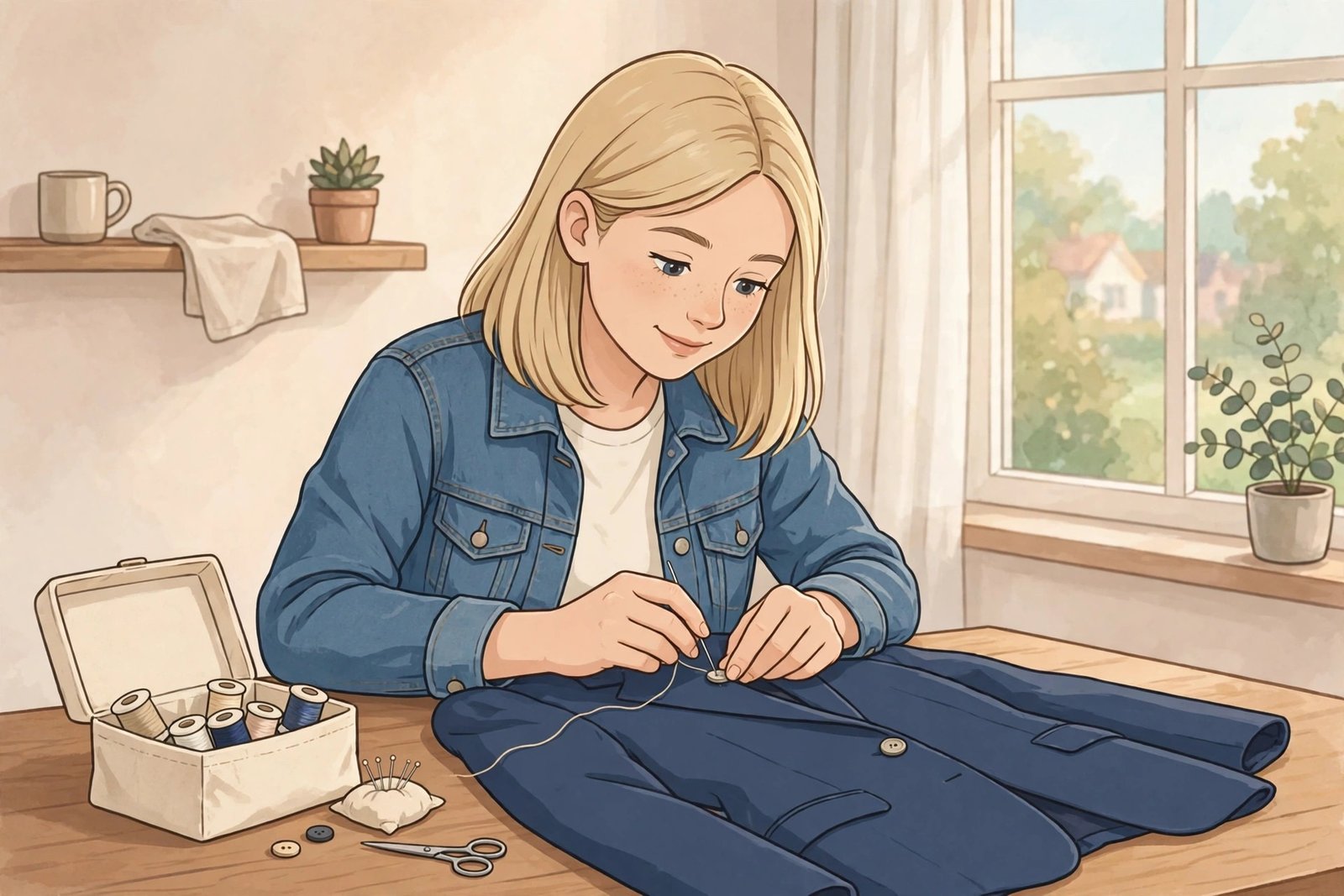
If polish were a pie chart, fit and fabric care would take up most of the pie. A garment that fits your body looks expensive even when it wasn’t. One that pulls, sags, or twists reads as careless even when it cost a fortune. Fit is the first language people read, before color, before brand, before everything. The good news: fit can be fixed for the price of a coffee. A tailor can shorten sleeves, take in a waist, and lift a hem for less than one new top. Your own hands can move a button in five minutes with a needle and thread.
Start with a closet audit, one honest hour. Try on your work staples and sort them into three piles: fits now, fixable, and done. Fixable is the gold pile: the skirt that only needs a hem, the blazer whose sleeves swallow your hands, the trousers that gap at the back. Those pieces aren’t failures. They’re bargains waiting for a ten dollar fix. The done pile leaves, kindly, to donation. A smaller closet of things that fit beats a stuffed closet of almosts.
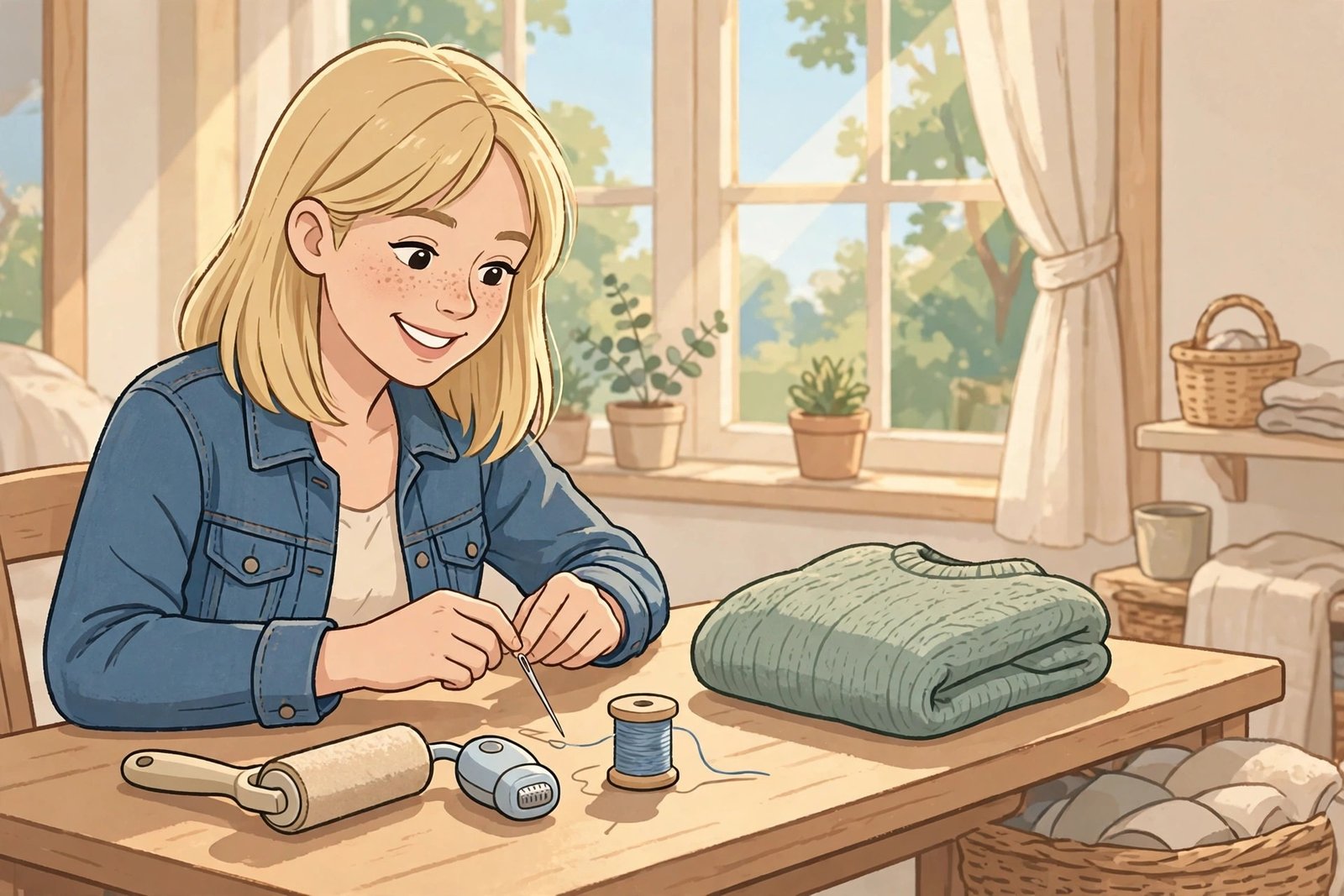
Fabric care is fit’s quiet partner. Wrinkles are the loudest cheap signal there is, and a steamer or iron silences them in minutes the night before. Lint and pet hair undo a dark outfit in seconds; a cheap lint roller by the door fixes it in ten. Pilling sweaters look tired long before they’re worn out; a fabric shaver from the dollar aisle makes them look new again in one pass. Buttons matter. A loose button says “unfinished” louder than any stain. Sew it before it goes. Two minutes, total silence from the critics in your head.
This is also where a small wardrobe works harder than a big one. If you’re building from near zero, a capsule wardrobe on a budget shows how a few pieces that all fit and all match can outdress a closet three times its size. Fit first, care always. That’s the foundation under everything else in this guide. Get these two right and you’re most of the way to looking polished before you’ve touched your hair or your shoes. Women are always surprised by that, and then they never unlearn it: the fastest way to look polished without spending a fortune is a needle, an iron, and standards.
And here’s the lovely part: once fit and care are handled, every later tip in this article gets twice as powerful. That’s how you look polished without spending a fortune from the ground up, literally starting with the clothes on your back.
Hair That Looks Finished, Not Expensive
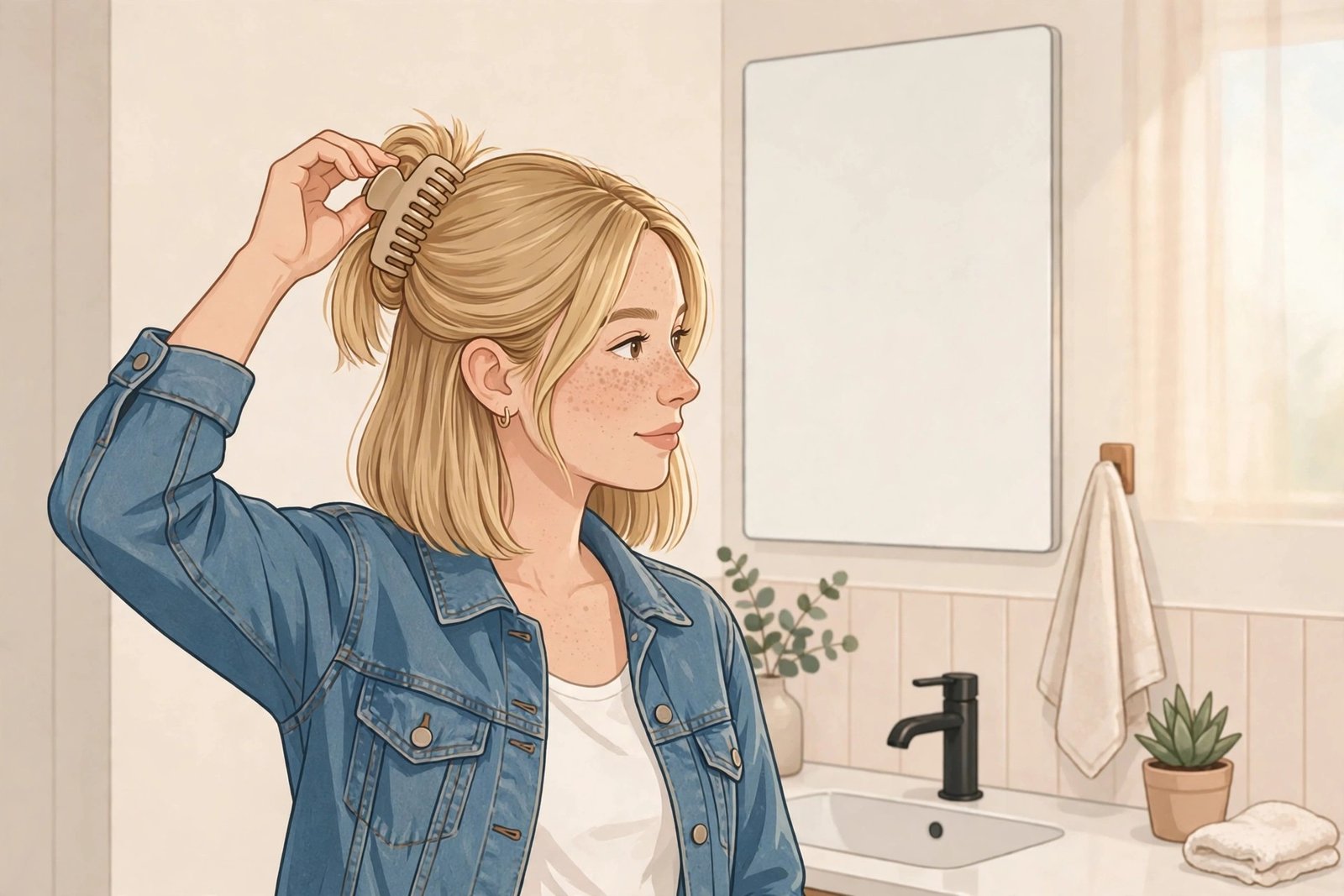
Hair is the second thing people read, and the rule is the same as clothes: finished beats fancy. A simple style done neatly reads polished. An ambitious style done halfway reads rushed. You don’t need salon blowouts or a drawer of products. You need your hair clean, detangled, and settled into a shape on purpose. That shape can be a low ponytail with a smooth top. It can be a braid. It can be your natural texture, moisturized and defined. Finished is a decision, not a price point.
Build two or three default styles you can do in under five minutes, tired, in bad light. Practice them on a Sunday so your weekday hands know the way. A sleek low bun for serious days. A side part with the front pieces tucked and smooth for normal days. A claw clip twist for the days in between. Defaults end the morning panic of inventing your hair from scratch. They also end the expensive habit of emergency salon visits before every big event. Your defaults are your salon, and they’re already paid for.
Between washes, a few cheap tricks keep hair looking intentional. Dry shampoo at the roots the night before, not the morning of, so it absorbs while you sleep. A drop of conditioner or oil smoothed over dry ends to kill the frazzled look. A soft brush over the top layer to calm flyaways. And edges matter: baby hairs lying wild can make a whole style look undone, while thirty seconds of smoothing makes it look deliberate. Small things. People can’t name them, but they read them as polish.
One more honesty break: healthy hair looks polished faster than damaged hair does. If your ends are fried from daily heat, no style will fully hide it, and that’s fixable with gentler habits and regular small trims, not pricey rescue products. Rest days from heat are free. A trim every few months costs little. Put them together and your hair starts finishing itself. That’s the deep game here: hair that behaves because it’s cared for, the same lesson your clothes just taught you. When women ask how to look polished without spending a fortune, they expect a product. The answer keeps being a practice. Brush it, settle it, rest it, trim it.
Your hair will do the rest of the talking, quietly, all day long.
Small Grooming Details People Notice First

Now the details. People can’t list them, but their eyes collect them in the first thirty seconds: the state of your hands, the shine on your skin, whether your collar sits straight, whether your eyebrows look calm. Small grooming details are the punctuation of your whole look. Get them right and the sentence reads clean. Get them wrong and even a good outfit feels slightly off, like a typo in the first line.
Start with hands, lightly, because hands are always on stage: typing, gesturing, holding a coffee. Clean nails of one even length, cuticles pushed back after a shower, a coat of clear polish or a good buff if you like the shine. That’s the whole requirement. Nobody needs a salon set to look polished. Chipped bright polish, on the other hand, reads louder than bare nails ever will. If you can’t keep colour perfect, go bare or clear without a shred of shame. Neat and bare beats fancy and peeling, every time.
Skin and face stay simple too. A washed face, moisturizer so nothing looks flaky or tight, and lips that aren’t cracked: that’s the canvas. Makeup, if you wear it, reads most polished when it’s even and unfussy. If some days you’d rather skip it entirely, that’s a real option too, and how to feel pretty without makeup makes the case warmly. Polish was never about a full face. It’s about looking cared for, and cared for has a hundred faces, most of them wearing almost nothing.
Then the thirty second sweep, the one polished women do without thinking. Collar flat. Cuffs even. No lint on dark fabric. No toothpaste ghost on your top. Earrings matching, necklace untwisted, bag strap not chewing your shoulder seam. Career guides say the same thing in drier words: in Indeed’s advice on workplace appearance, the tips that come up again and again are grooming, ironed clothes, and laying your outfit out the night before. Not shopping. Grooming. The professionals are telling you the same secret this whole guide is built on.
Keep a tiny kit where you dress: lint roller, clear polish, a needle and thread, safety pins, a spare button, a small cloth for glasses. Five cheap things that rescue a hundred mornings. The sweep plus the kit is how you look polished without spending a fortune in the detail department: you catch the small stuff before the world does. And it takes less time than reading this paragraph did. Honestly, once the sweep is a habit, you’ll do it in the elevator mirror without breaking your train of thought. That’s when you know the system works: looking polished without spending a fortune has stopped being an event and become a reflex.
Shoes and Bags: Clean Beats New

Shoes are the most honest item you own. They record your week in scuffs, dust, and worn heels, and people read them more than you think. The fix is almost embarrassingly cheap: a wipe, a brush, and five minutes on a Sunday. Leather shoes glow after a quick polish with an old cloth. Sneakers come back to life with a damp cloth on the soles and a wash of the laces. Suede wakes up under a dry brush. None of this costs more than a coffee, and it changes the whole bottom half of your outfit.
Repairs punch way above their price here too. A cobbler can replace a worn heel tip, restitch a loose strap, and make a three year old pair look cared for again, all for less than the discount rack charges for their replacements. A good pair kept up for years beats three cheap pairs falling apart in public. Look at your shoe shelf like a tailor looks at a hem: what here just needs care? You’ll be surprised how rich the answer is.
Bags follow the same law. A clean, structured bag in a plain colour reads polished with almost anything. A stuffed, peeling bag makes even a good outfit look tired. Once a week, empty yours fully. Out go the receipts, the loose mints, the pen that died in March. Wipe the outside, check the strap, and reload only what earns its place. A bag that isn’t bursting holds its shape, and shape is polish you can see from across the street.
Here’s the mindset that ties this section together: maintenance is a louder signal than novelty. New shoes shout for a week. Cared for shoes speak well of you for years. When the budget is tight, spend your tiny bit of money on the upkeep of what you own, not on replacing it for a stranger’s glance. That’s how you look polished without spending a fortune below the ankle and over the shoulder. Clean beats new, kept beats bought, and your cobbler becomes a better friend than any sale rack. Ask any polished woman her secret and she’ll rarely name a purchase. She’ll name a ritual. Shoes are where that ritual shows.
And if you want proof it works, watch a room read two pairs of the same boots, one wiped and one dusty. Same boots. Different woman, apparently. That’s the entire lesson of how to look polished without spending a fortune, written in leather.
A Ten Minute Morning Polish Routine
Let’s put the whole thing on a clock, because “polished” dies fast when it sounds time consuming. Ten minutes. That’s the budget. Not an hour of transformation, not a five step anything. Ten quiet minutes between you and the door, run the same way every workday until it feels like brushing your teeth.
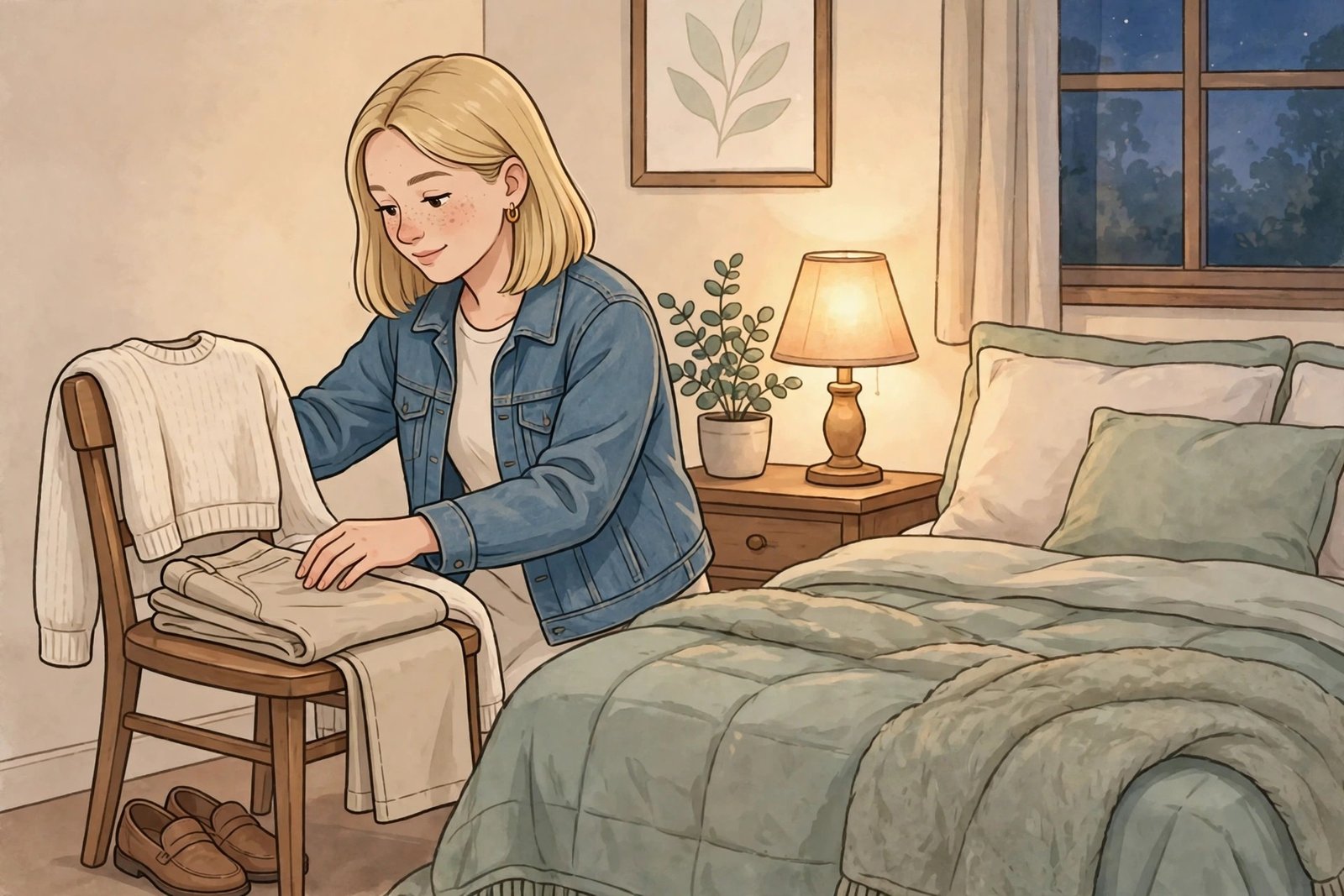
Minutes one to three: dress from the night before’s decision. This is the cheat code. Future you, at 9 p.m., picks the outfit, checks it for wrinkles and buttons, and hangs it ready. Morning you just puts it on, half asleep, grateful. No closet staring. No third outfit change. If an item fails the check at night, it gets fixed or swapped while you still have time and light. Morning is for wearing, not for deciding.
Minutes four to six: hair and face. Run your default style, the one your hands know. Wash your face or refresh it, moisturize, add whatever little makeup is your normal. Smooth your brows, check your teeth, done. Minutes seven and eight: the detail sweep from the last section. Collar, cuffs, lint, nails glance, earrings. Minutes nine and ten: shoes and bag. Wipe the shoes if the day is wet or dusty, grab the bag you emptied on Sunday, keys, phone, out. Ten minutes, and you look like a woman whose life is in order, which on most days is the exact impression you were hired, promoted, and trusted for.
Notice what this routine never includes: a purchase. It runs entirely on preparation and care. The night before does the heavy lifting; the morning just collects the result. If ten minutes still sounds like a lot, start with five and only two moves: outfit ready the night before, and the detail sweep. Even that much will change how your mornings feel within a week. The routine is how you look polished without spending a fortune on a Tuesday, not just at events. Polish that only shows up for interviews isn’t polish. It’s costume. Daily, easy, repeatable: that’s the real thing.
And on the rushed mornings when the routine collapses to three minutes and a lint roller in the elevator, it still counts. A system that bends is a system that survives. That’s how you look polished without spending a fortune in real life, where alarms fail, buses leave early, and coffee spills happen to good people.
Cheap Maintenance Rituals That Beat Shopping
Everything so far stays alive through one weekly ritual, and it costs less than your Friday coffee. Pick a slot, Sunday afternoon works well, and give your wardrobe and grooming kit thirty to forty minutes of honest attention. This is the engine room of the whole system. Shopping adds things. Maintenance makes the things you have perform like they cost more. Guess which one your budget prefers.
Run it like a checklist. Shoes first: wipe every pair you’ll wear this week, polish the leather ones, check heels for wear. Clothes next: scan for loose buttons, small stains that need treating now instead of at 7 a.m., and anything begging for the iron. Steam or press the week’s main pieces and hang them where morning you can reach them blindfolded. Bag: empty, wipe, reload. Kit: check the lint roller still has sheets, the clear polish hasn’t gone gloopy, the needle still has thread.
Add one grooming ritual to the same slot and it stops feeling like a chore list. Trim and file your nails. Push back cuticles after a shower. Do the hair mask or the gentle treatment your hair likes. None of this is about becoming a different person on Sundays. It’s about handing your weekday self a head start she didn’t have to earn at dawn. She walks into Monday with the hard part already done, and she knows who to thank.
Cost check, since that’s the point: a lint roller, a fabric shaver, a needle and thread kit, a shoe cloth, and clear polish together cost less than one impulse top, and they serve you for a year or more. That is the arithmetic of how you look polished without spending a fortune month after month. The ritual also protects you from the most expensive habit of all: panic buying replacements for things that only needed care. Every item you rescue in that Sunday half hour is money that stays in your account. Do the ritual for a month and watch what happens to your shopping urges. They quiet down, because your closet finally looks like it has enough.
It usually did. It just needed someone to maintain it, and that someone, it turns out, is the cheapest stylist you’ll ever hire: you, with a checklist, on a Sunday. This is how you look polished without spending a fortune as a way of life, not a one week project.
Polished Is a Habit, Not a Price Tag

Let’s land where we started, with the two women walking into the office. The polished one wasn’t richer. She was running a system: clothes that fit and got cared for, hair with a default, details swept, shoes wiped, mornings prepared. Every part of it was cheap. The expensive looking part was the consistency. Anyone can look put together once, for a wedding, with help. Looking put together on a grey Tuesday in February, on a normal salary, with a normal life: that’s a habit, and habits are free to build and cheap to keep.
So guard the anti pressure promise from the start of this guide. You don’t owe polish to anyone. Not to an employer beyond basic neatness, not to a partner, not to the internet. Do less whenever less is what you need. A woman in a clean plain outfit who skipped the sweep because her baby was up all night is not a failure of this system. She’s the reason it has a dial. The goal was never perfection. The goal was a tool you can pick up on the days you want it, that never asks your bank account for permission.
Here’s your one week challenge, small enough to actually do. Tonight, lay out tomorrow’s outfit and check it. This week, run the ten minute routine on workdays and the five minute version when life happens. On Sunday, give the ritual thirty minutes. That’s all. Seven days of proof, gathered by your own mirror, that you can look polished without spending a fortune with the closet, the hair, and the budget you already have. No haul. No new you. Just you, maintained, on purpose.
And when it works, because it will, notice what actually changed. Not your face. Not your body. Not your income. Your systems. The hanger by the door, the kit in the drawer, the Sunday half hour, the night before decision. Systems are the least glamorous answer in the beauty world, and the only one that keeps working while you sleep. You now know how to look polished without spending a fortune because there was never a fortune involved. There was a woman, her closet, and a little bit of care, repeated. Repeat it kindly, repeat it loosely, and let the compliments land where they belong: on your habits, not your receipts.
You look polished without spending a fortune because you finally treated polish as what it always was: a practice, not a purchase. Practices are yours forever. Purchases are just visitors.
Frequently Asked Questions
What do people actually notice first?
They notice care, not brands. A smooth shirt, clean shoes, settled hair, and nails that look kept. Those four signals land in the first thirty seconds, long before anyone reads a label. That’s good news for your budget, because all four are free or nearly free. If you want to look polished without spending a fortune, start exactly there: with the signals people actually read, not the ones ads say they read.
I have almost no budget. Where do I start?
Start with the free pile: iron or steam what you own, sew the loose buttons, wipe your shoes, and empty your bag tonight. Then spend your first tiny amount on a lint roller and a fabric shaver, the two cheapest upgrades in this whole guide. After that, one small tailor fix on your most worn piece. Care first, tools second, tailoring third. Shopping comes last, and by then you’ll need far less of it.
Do I need to do this every single day?
No. Polish is a dial, not a switch. Full effort for interviews, presentations, and days you want the boost. A lighter version for normal workdays: outfit ready, hair settled, quick sweep. And some days, none of it, because rest is also a life skill. The system works because it’s flexible. A routine you can scale down is a routine you’ll still be using next year, and that consistency beats any single perfect outfit.
Is looking polished just about work?
Work is where it pays you back fastest, but it isn’t the whole story. The same care shows up at dinners, dates, family photos, and the school gate. Anywhere you want your outside to stop distracting from what you’re saying. And there’s a quieter benefit: getting ready with care tends to steady your mood for the day. You did one thing well, early, for yourself. That feeling travels further than any outfit.
What’s the cheapest change with the biggest effect?
The night before. Laying out a checked, wrinkle free outfit costs nothing and changes everything about your morning. Add the thirty second detail sweep and you’re most of the way there. That’s the honest secret of how to look polished without spending a fortune: preparation beats purchase, every single time. Try it for one week. You’ll look polished without spending a fortune, and you’ll feel the calm that comes with it before your coffee’s even poured.