

Watch your cousin at a family lunch and you’ll see a small magic trick. With your grandma, she’s soft, polite, and quiet. Twenty minutes later, on the phone with her best friend, she’s loud, wild, and swearing like a sailor (well, almost). Same girl. Same day. Two versions. If you’ve ever wondered why do people act differently around certain people, you’ve spotted one of the most normal things humans do. We all adjust. Teachers adjust. Parents adjust. That older boy who is all confidence with his friends gets shy and stiff in front of adults. The change is everywhere once you start looking.
But here’s where it gets tricky. Sometimes the switch is healthy and kind. Sometimes it smells fake. And sometimes it leaves you wondering which version of a person is the real one. This article answers why do people act differently around certain people, shows the main reasons behind the switch, and gives you a fair way to judge whether a person’s changing is normal adapting or real two-facedness. By the end, the question why do people act differently around certain people will feel less like a mystery and more like a skill you can read.
The Short Answer

Here’s the short version. People act differently around different people because every relationship pulls out a different side of us, and because we all read the room and adjust. Tone, jokes, manners, even posture change with the audience. Most of the time it’s a normal social skill, not a lie. It only turns sour when the change is used to mock, use, or betray someone. If you’re asking why do people act differently around certain people, start with this: look at how big the change is, and look at who pays the price for it. Small changes with nobody hurt? Normal. Big changes that leave someone used or mocked? That’s a warning sign.
Keep that test in mind, because it’s the clearest way to understand why do people act differently around certain people.
Everyone Has More Than One Setting
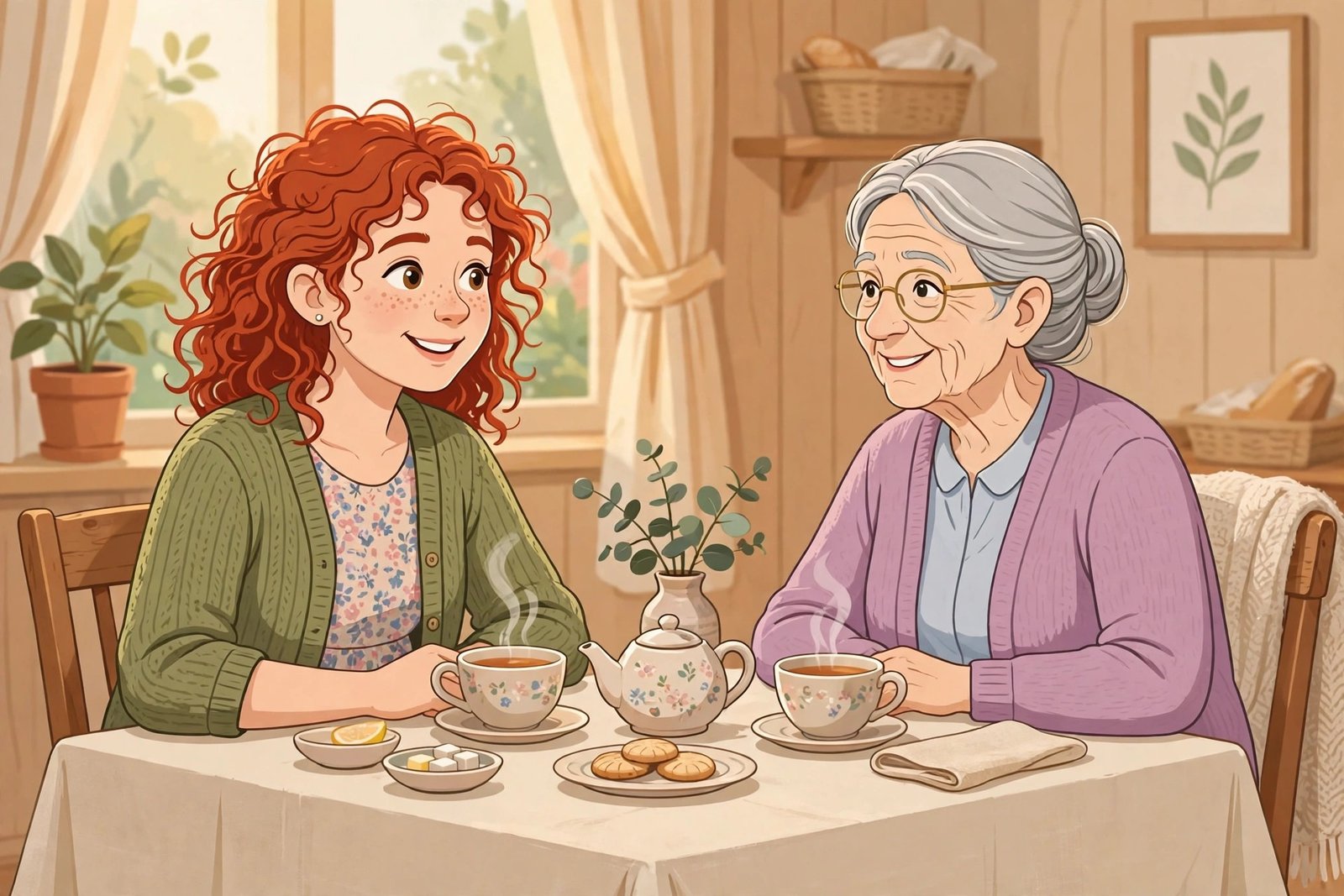
Think of a person like a music app. The songs are all really theirs, but the playlist changes with the moment. Quiet playlist with grandma. Loud playlist with friends. Focus playlist during an exam. The app is the same. The setting changes what plays.
You already live this yourself. You talk to your best friend in a voice you’d never use with your principal. You’re sillier with your little cousin and more careful with a teacher you respect. None of that makes you fake. It makes you socially fluent. Humans are built to read a room and fit their energy to it, the way you lower your voice in a library without anyone telling you to.
This is the first big answer to why do people act differently around certain people: because a “person” is not one fixed performance. We’re a set of sides, and each relationship invites a different side forward. With old friends, your guard drops and the goofy side comes out. With new people, the polite side leads while you figure out if it’s safe. With someone you admire, the careful, try-hard side shows up. All of them are you. All of them are real.
Trouble starts only when we judge a whole person by one setting. The quiet version of your cousin at lunch isn’t the “fake” one, and the wild version on the phone isn’t the “true” one either. They’re both true, in context. Once you accept that everyone you know runs several settings, the question why do people act differently around certain people stops feeling like an accusation. It becomes a fact about people, like the fact that water takes the shape of its cup. And when you ask why do people act differently around certain people in a specific case, you’re really asking which setting you’re seeing, and why that setting got chosen for you.
Think about a teacher you know well. In class, she’s structured and formal. Catch her at the school fair with her own kids and she’s silly, loud, and eating cotton candy. You don’t think she’s a fraud. You think she’s a person with range. Range is the word to keep. People with range aren’t hiding; they’re equipped. The more settings a life includes, the more versions it needs. A girl with one setting is not more honest. She’s just less practiced at moving through the world. When you see range in someone, you’re watching social equipment doing its job, and that equipment is a big part of why do people act differently around certain people.
The Main Reasons People Switch

Once you know switching is normal, the next step is reading the reason behind a switch. Reasons matter more than the switch itself. Here are the big ones you’ll see at school, at home, and everywhere else.
Respect is the most common one. People speak more gently to elders, teachers, and anyone they look up to. It’s not fear. It’s manners doing their job. Comfort is another. With close friends, people relax, get louder, get sillier, and drop the polish. Safety is a third reason. If someone feels judged or outnumbered, they shrink into a quieter, more careful version until the room feels safe again.
Wanting to fit in is a powerful fourth reason, especially for teens. A girl may laugh at jokes she doesn’t find funny, or hide a hobby she loves, because the group in front of her runs on different tastes. Status plays a part too. Some people turn extra charming around popular or powerful people, because being liked by them feels like a prize. And simple habit explains a lot: families, teams, and friend groups each have their own slang, humor, and rules, and we absorb them without noticing.
Culture and language count as well. A bilingual teen may be one person in her home language and slightly another in her school language, because each language carries its own warmth and jokes. None of these reasons are dark. They’re the everyday gears of social life.
So when you wonder why do people act differently around certain people, run through this list before you run to judgment. Was it respect? Comfort? Safety? Fitting in? Most switches are explained by one of these, and most are harmless. The switch itself is just a door. The reason tells you what’s behind it. Keep that in mind every time you catch yourself asking why do people act differently around certain people about a classmate, a cousin, or a friend.
There’s also a reason nobody likes to admit: showing off. Some switching is pure performance, a quick costume change meant to impress whoever just walked in. You’ll spot it by its timing: the laugh gets louder when the popular boy arrives, the stories get bigger when the teacher starts listening. Performance switching isn’t always evil, but it’s the least honest kind, and it often sits behind the question why do people act differently around certain people in the cases that confuse you most. And don’t forget energy matching, the quietest reason of all. Calm people calm us down. Wild people wind us up.
Half the switching you see is just one person’s mood borrowing another’s, like a song you start humming because the room is playing it. No plan, no mask, just humans syncing up. That’s also why do people act differently around certain people: we’re wired to tune to the nearest instrument.
Code Switching: The Quiet Skill Behind It

There’s a name for the skilled version of all this: code switching. It means adjusting your speech, tone, style, or energy to fit the setting you’re in. A teen might use slang with friends, full polite sentences with a teacher, and soft short answers with a shy little kid. Same person, three codes, all chosen in seconds, often without even thinking.
Code switching is a skill, not a flaw. It helps people work in teams, calm tense moments, and connect with all kinds of humans. A Psychology Today piece on code switching explores the fine line between healthy adapting and losing yourself to please others, and it’s worth a read if this topic sticks in your head. The healthy version keeps your core values the same in every room. You may change your volume, but you don’t change your kindness. You may change your words, but you don’t change your honesty.
The unhealthy version crosses that line. If someone has to hide everything they are, all day, just to be accepted, the switching starts to hurt them. It can leave a person tired, resentful, and unsure which self is theirs. That’s why the goal is balance: adapt your style, keep your core.
For you as an observer, code switching explains a lot of what you see. The boy who’s gentle with his little sister and rowdy with his team isn’t wearing a mask. He’s switching codes, like everyone. When you understand the skill, the question why do people act differently around certain people loses its sting. You stop seeing actors and start seeing people doing something you’ve done a hundred times yourself. And that understanding is the strongest base for judging the rare cases where switching does turn two-faced.
You do it too, by the way, and probably before breakfast. Softer voice for your sleepy mom. Brighter voice for your best friend’s call. Careful words in the message to your coach. If someone filmed your morning, they’d see three codes in one hour, all of them yours. Remembering your own switching is the fastest way to judge others gently. It’s also a clue for the bigger puzzle: why do people act differently around certain people is a question about all of us, not a strange few. The skill is universal. Only the reasons and the honesty change.
When Switching Is Just Good Manners

Some switches look dramatic but are pure politeness. Picture a classmate who’s pure chaos at recess, all jokes and energy. Then a teacher walks up, and she becomes calm, clear, and respectful in one second flat. Nothing fake happened. She simply gave the teacher the version that setting asks for, the way you’d take off your shoes at a friend’s front door.
Family life is full of these. Your dad may be stern about rules at home and a total softie at your grandma’s table. Your friend may be brave in your group chat and quiet at her strict aunt’s house. Even you: you’re careful with a friend who’s sad, even if you’re usually the loud one. That’s not pretending. That’s kindness with good timing.
A useful test here is the direction of the change. Manners-based switching almost always moves toward respect: quieter, cleaner, kinder, more careful. It also moves back. When the teacher leaves, your classmate’s recess energy returns, and nobody feels tricked or used. The switch served the moment, then ended.
Another sign it’s just manners: the person is the same with you in private as in public, in the ways that count. They may be politer in front of adults, but they don’t mock you behind your back or drop you when cooler people arrive. Their values hold steady even when their volume doesn’t.
So before you label anyone two-faced, ask what the switch was for. If the answer is respect, comfort, or care, you’ve found good manners wearing work clothes. This is the answer you’ll reach most often when you honestly ask why do people act differently around certain people. The dramatic explanation is rarely the right one. People are usually just being polite in one room and relaxed in another, and both rooms get a real version of them.
School rules make some of this automatic. Hallway voice, classroom voice, assembly voice: kids learn them by age eight and run them without a thought. Workplaces, teams, and families run the same quiet training all life long. So a lot of what looks like a personality change is really just a person hearing the room’s rule and obeying it politely. Obedience to a dress code doesn’t make someone two-faced, and neither does obedience to a tone code. Keep that in your pocket for the next time you wonder why do people act differently around certain people in a formal setting. The setting is doing half the talking.
The Signs It Has Turned Two-Faced

Now the darker side, because it does exist. Switching turns two-faced when the change isn’t about the setting. It’s about using people. The setting is just the stage. Here are the signs that separate a social skill from a character problem.
The first sign: the versions contradict each other on things that matter. It’s fine to be louder with friends. It’s not fine to swear your loyalty to you at lunch and then join in mocking you at the popular table an hour later. When someone’s words to one audience destroy what they promised another, you’re not watching manners. You’re watching betrayal with good acting.
The second sign: there’s always a benefit. The switcher is sweet to people who can give them something: status, invites, homework, attention. And they’re cold to people who can’t. Kindness that only flows uphill, toward the useful and the popular, isn’t kindness. It’s a strategy.
The third sign: stories don’t match. They tell you one version of events and tell the group the opposite, and both can’t be true. If you keep catching small lies that change with the audience, trust the pattern, not the excuses.
And the fourth sign: you feel used after time with them. Real adapting leaves everyone comfortable. Two-faced switching leaves someone smaller, mocked, or dropped. If a “friend” is warm when she needs you and ice when she doesn’t, believe the ice. It tells the truth about where you stand. If you recognize your own friendship in this, our article on why friends act differently in a group digs into that exact group version of the switch.
Here’s the bottom line for this section. When you ask why do people act differently around certain people and the answer involves profit, mockery, or lies, stop calling it a social skill. Call it what it is, and protect your trust accordingly. Not everyone who switches is two-faced, but everyone two-faced switches. Your job is spotting which game you’re looking at, and that gets easier every time you study why do people act differently around certain people instead of just feeling confused by it.
A fifth sign, quieter than the others: relief when someone leaves. Watch what a switcher does when the powerful person exits the room. If the warmth toward you returns the second the door closes, the coldness was a performance for the audience that just left. Real feelings don’t run on a door hinge. This little observation has saved many girls from months of confusion. File it away, and the next time you puzzle over why do people act differently around certain people, check the doors: who just walked in, and who just walked out. The switch often follows the audience, and the audience often explains everything.
How to Judge One Person Fairly
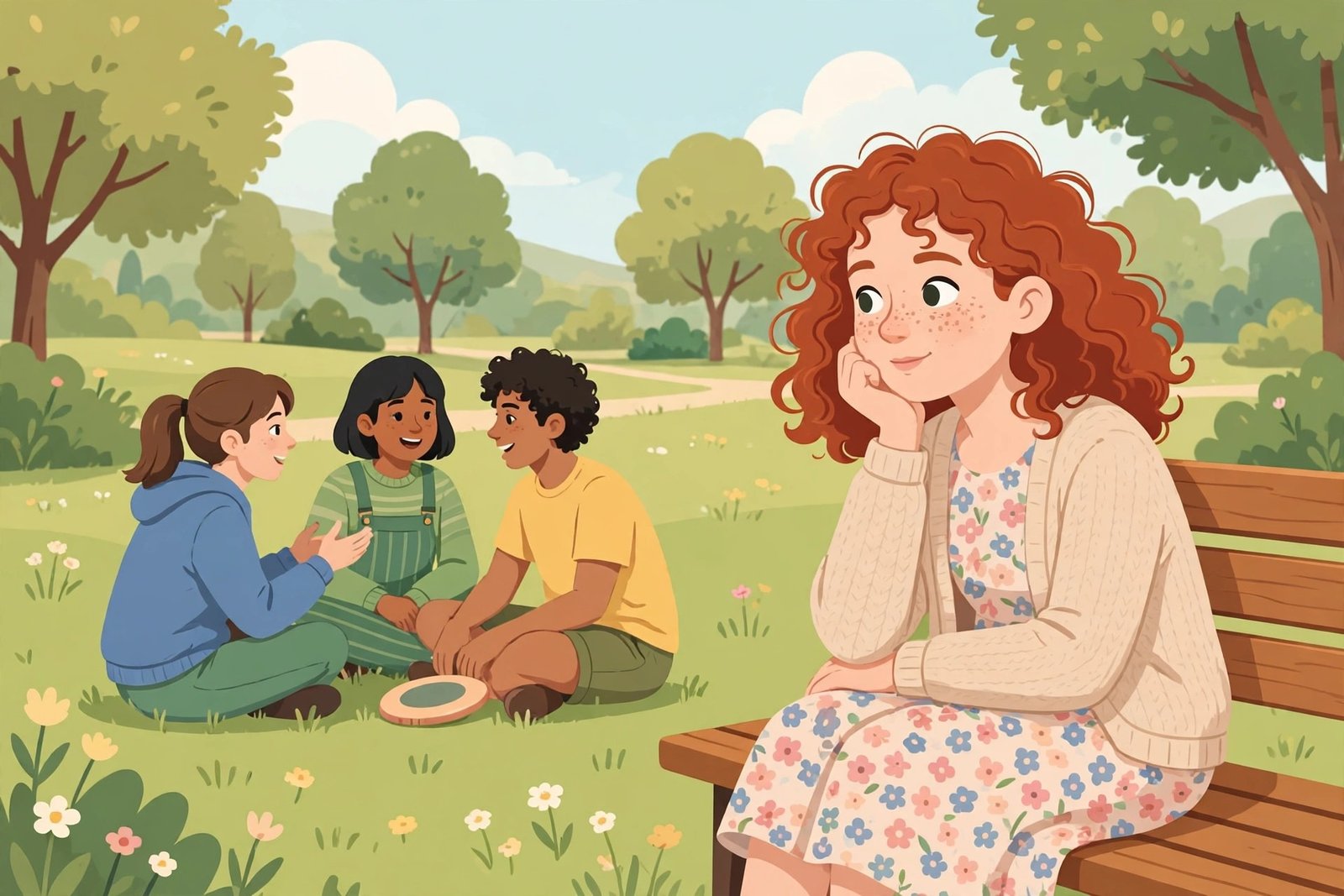
So you’ve noticed a classmate, a cousin, or a friend switching a lot, and you want a fair verdict. Good instinct. Judging people well is a life skill, and it beats both blind trust and instant suspicion. Here’s a calm way to do it.
First, watch over time, not in one scene. One switch proves nothing. A kind person can have a stiff day. A two-faced person can charm you for a week. Patterns are the truth-tellers. Ask: over a month, is this person steady in the ways that count? Do they keep promises? Do they treat nobodies as well as somebodies?
Second, compare values, not volume. Don’t ask, “Is she louder with them than with me?” Ask, “Is she honest with both of us? Loyal to both? Kind to both?” Volume is weather. Values are climate. Judge the climate.
Third, check how they talk about absent people. Someone who shreds others in front of you will, one day, shred you in front of others. Someone who stays fair about people who aren’t there is showing you their real core, and that core rarely changes with the room.
Fourth, notice your own role. Sometimes we meet someone’s careful setting because we haven’t yet earned their relaxed one. New friendships start polite. Depth takes time. If a person is more guarded with you than with their old friends, that may be a clock, not a mask.
If it helps, flip the lens for a second: our piece on why you change your personality depending on who you’re with looks at the same habit from the inside, and it’s a good fairness check. We all switch more than we admit. Judge others the way you’d hope to be judged: by pattern, by values, and by how they treat people who can do nothing for them. That’s the fair court where the question why do people act differently around certain people gets an honest answer.
One more fairness rule, and it’s the one most people skip: judge the person in front of you, not the rumor about them. Groups love to hand you a ready-made verdict on someone, and that verdict is usually half a story told by people with their own settings and their own reasons. Watch with your own eyes. Decide with your own notes. Fair judges are rare, and people can feel it when they meet one.
What to Do With What You Notice

Knowing all this is nice. Using it well is better. Here’s how to carry this skill into your real friendships and family life without turning into a suspicious detective.
First, relax your default. When you see a switch, assume manners before malice. Most of the time you’ll be right, and you’ll save yourself a lot of needless hurt. Save your worry for real patterns of mockery, lies, or use. Those deserve your attention. Small tone changes don’t.
Second, decide what each person gets from you. Not everyone needs your deepest trust, and that’s okay. Some people are recess friends, fun and light. Some are 2 a.m. friends, the ones who get your real heart. When someone’s switching worries you, you don’t have to end things in a big scene. You can quietly move them to a lighter shelf while you watch their pattern a bit longer.
Third, be the steady one. In a world of switchers, a person whose core never changes becomes rare and magnetic. You can adjust your volume like everyone else, but let your honesty, loyalty, and kindness stay fixed in every room. People feel that steadiness, and they trust it. It’s also the best protection against becoming two-faced yourself by accident.
Last, talk instead of guessing when it matters. If a close friend’s switch hurt you, a calm question beats a week of silent theories. “Hey, you seemed different with them yesterday. Are we okay?” Most friends will clear the air in ten seconds. The ones who mock the question have answered it too.
Walk away with this: people will keep switching, all your life, in every school, job, and family you’ll ever join. You can’t stop it, and you wouldn’t want to. But you can read it. And once you can read it, the old confusion of why do people act differently around certain people turns into something close to a superpower: you’ll know who’s adapting, who’s performing, and who’s worth your trust.
None of this asks you to excuse real cruelty. Reading people well and forgiving everything are different things. Read clearly, judge slowly, protect yourself early, and keep your own core steady. Do that, and other people’s switching becomes background information instead of a personal storm. You’ll still notice it. You just won’t drown in it.
Frequently Asked Questions
Is acting differently around people the same as being fake?
No. Fake means pretending to be what you’re not, to fool someone. Adapting means showing a real side of yourself that fits the moment. You’re not fake for being gentle with your grandma and wild with your friends. Both are you. It turns fake only when the change hides lies, mockery, or using people. The switch is not the sin. The intention behind it is what counts, every single time.
Why is my friend sweet with me but cold in a group?
Groups change the stakes. In a group, your friend may be performing for status, copying the group’s mood, or hiding how close you two are so nobody teases her. It stings, and it’s worth one calm conversation if it keeps happening. Watch the pattern: if she’s kind in private but joins mockery in public, that’s not shyness. That’s a loyalty problem. If she’s just quieter in groups, that’s a normal setting change.
Can someone have too many versions of themselves?
They can feel like they do. Switching styles is healthy, but switching values is exhausting and risky. A person who tries to be everything to everyone often ends up unsure who they are, and friends end up unsure too. The healthy line is simple: many tones, one core. If someone’s promises, kindness, and honesty stay fixed while their energy shifts, they’re fine. If the core keeps moving, be careful with your trust.
How can I tell if the change I see is respect or fear?
Look at the body and the after. Respect looks calm: steady voice, easy eye contact, and the person returns to normal the moment the setting relaxes. Fear looks tense: stiff answers, forced laughs, scanning the room, and relief when it’s over. Respect is chosen. Fear is endured. If someone seems afraid around a certain person, that’s not two-facedness. That might be someone who needs support, not judgment.
Should I confront someone who acts two-faced with me?
If it’s a pattern and the friendship matters, yes, once, calmly and in private. Describe what you saw, not what you decided about their soul. “You told me one thing and told them the opposite” is a fact. “You’re a liar” is a war. Give them one honest chance to explain. Then believe the pattern that follows, not the speech. In the end, this is why do people act differently around certain people matters so much: reading the answer well protects your heart and your trust.