

They walk into the cafeteria and the whole room seems to shift. Heads turn. Someone laughs a bit too loud at their joke. And you, tray in hand, suddenly feel small, quiet, and very aware of your own shoes. If you keep asking yourself how can I be less intimidated by popular people, you are not weak and you are not weird. You are having one of the most common feelings in school life. It hits shy girls and loud girls. It hits girls with big friend groups and girls still looking for one.
Here’s the honest truth. Popular people are not a different species. They eat the same cafeteria fries. They panic before the same math test. The gap you feel is mostly built by your own head, and that’s actually good news. A gap built in your head can be taken apart in your head too. This article walks through why they seem so powerful, why the spotlight in your mind lies to you, and how can I be less intimidated by popular people in real moments, not just in theory.
You’ll get small things to do with your body, your words, and your day, so the next time you ask how can I be less intimidated by popular people, you’ll already have answers that work.
The Short Answer

Short version first. You feel intimidated because your brain reads popularity as power, and power as danger. It isn’t danger. It’s just a loud group with good lighting. The fix is not to become someone else. The fix is to stop shrinking: stand like you belong, speak in small easy lines, and remember they worry about the exact same things you do. When you ask how can I be less intimidated by popular people, the real answer is practice. Small equal moments, repeated often, teach your brain that nobody in that group is above you.
And if the fear ever grows so big that you start skipping things you want to do, that’s a sign to talk to a trusted adult. Asking how can I be less intimidated by popular people is a strong first step, not a flaw.
Why Popular People Feel So Powerful From the Outside

From the outside, a popular group looks like a wall. They move together. They dress in a way that seems planned. They always seem to know what to say, and someone is always laughing. Your brain sees all that and does quick math: they have something I don’t. That math is where the intimidation starts, and it’s worth slowing down, because the math is wrong in three sneaky ways.
First, you see their highlight reel, not their full day. You see the confident walk into the room. You don’t see the girl checking her phone in the bathroom because her joke fell flat. You don’t see the boy re-reading a text ten times, scared he sounded dumb. Everyone shows their best ten seconds in public. You compare those ten seconds to your whole messy inner world. That contest isn’t fair, and you’d lose it against anyone.
Second, groups look braver than people. One popular girl on her own is just a girl holding a notebook. Six of them together feel like a force. Crowds create an illusion of strength, the same way a choir sounds louder than one voice. When you ask how can I be less intimidated by popular people, part of the answer is seeing the group as six normal people standing close, not one giant creature with six heads.
Third, popularity gets treated like a rank, and ranks feel real even when they’re made up. There’s no official list. Nobody voted with paper ballots. The “top” of the school is just a story everyone half believes. And stories can be doubted. The KidsHealth guide to shyness and feeling at ease around people makes the same point in a kind way: shy feelings grow when we feel watched and judged, and they shrink with practice and small steps. Popular people are simply the ones your brain has placed on a stage. The stage is imaginary. The people are not scary. They’re just standing on it.
Once you see the trick, it loses power. That doesn’t delete the feeling in one day. But every time you ask how can I be less intimidated by popular people and remember the stage is fake, the feeling gets a little smaller.
The Spotlight in Your Head Is Lying to You
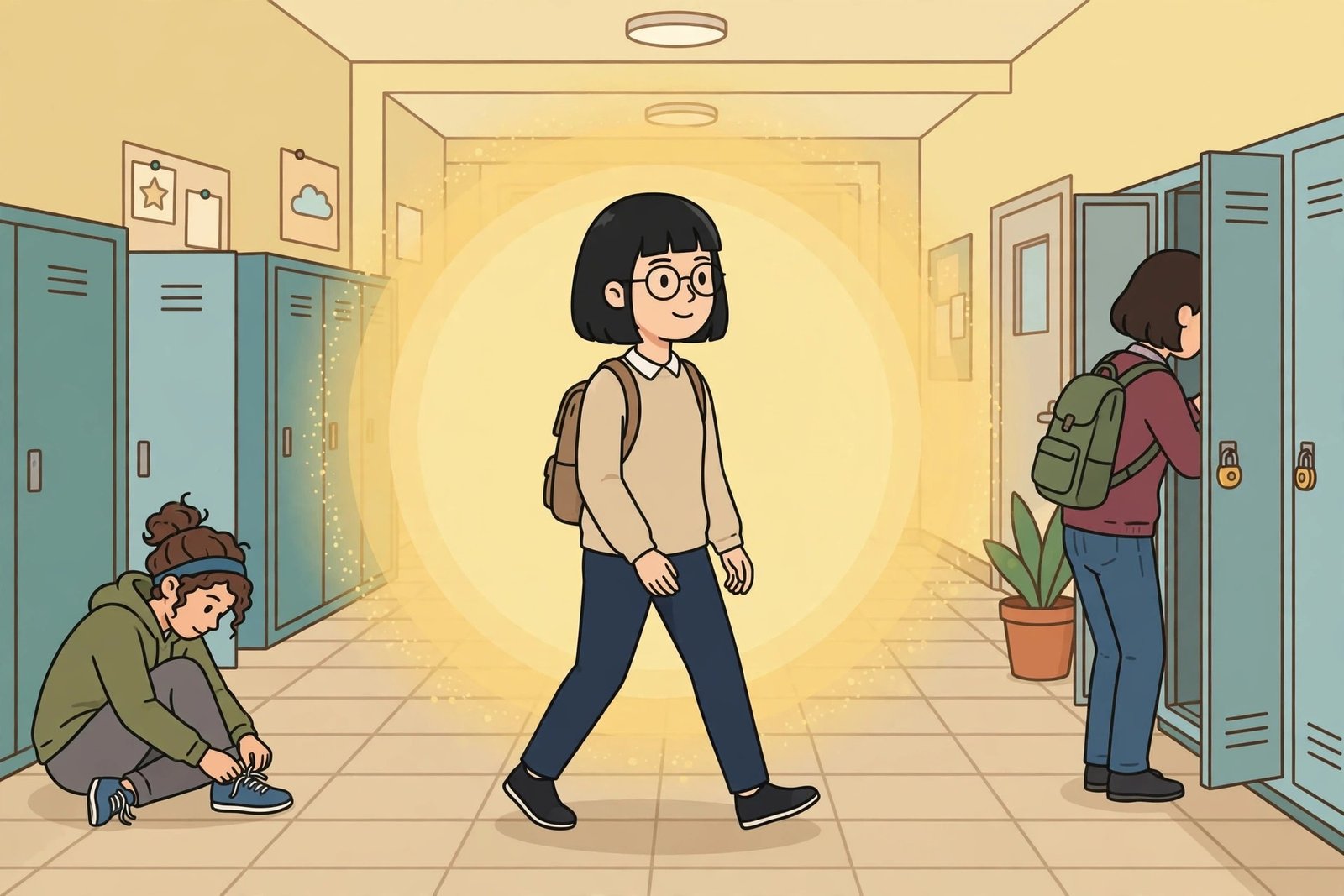
Here’s a strange fact about being a teen. Your brain has a built-in spotlight, and it points it at you way more than anyone else does. Psychologists call it an imaginary audience: the sense that everyone is watching and judging your every move. When you walk past the popular table, that spotlight screams. Everyone saw my weird face. Everyone heard my voice crack. Everyone noticed my shoes.
None of that is true. Each person at that table is busy with their own spotlight. The loud girl is wondering if her laugh sounded fake. The tall boy is checking if his hair looks odd. They are the stars of their own inner movies, just like you’re the star of yours. Your “embarrassing” moment was, for them, background noise at most.
This matters because the question how can I be less intimidated by popular people often hides a deeper one: how do I stop feeling watched? The answer is to remember that the watchers are mostly you. Try a small test. Think of one thing a classmate wore last Tuesday. You can’t, right? You barely stored it. Now think of what you wore. You remember every detail. That’s the spotlight effect, and it works the same way for everyone around you.
So when your chest gets tight near the popular group, name what’s happening. Say it in your head: “That’s just my spotlight.” Naming it takes away some of its power. The feeling may stay for a minute, but it stops being proof that something’s wrong with you.
There’s one more lie the spotlight tells. It says your nervousness is visible, like a sign on your forehead. It isn’t. A racing heart can’t be seen. Shaky hands hide fine in pockets. Most of the time, you look calm on the outside while a storm runs inside. The popular kids know this too, because they live it. If you’ve ever wondered how can I be less intimidated by popular people who always look so sure, here’s the secret: they don’t feel sure. They’ve just had more practice hiding the storm, and practice is something you can get.
Here’s one more comfort. The spotlight is not a life sentence. It fades as you get older and as you collect proof that people aren’t studying you. Every term, the effect gets weaker. Girls who felt sick walking into the cafeteria in September barely notice the same walk by spring. So when that old question pops up in the cafeteria line, you can honestly add: time is on my side, and so is practice.
What Popular People Are Actually Like Up Close
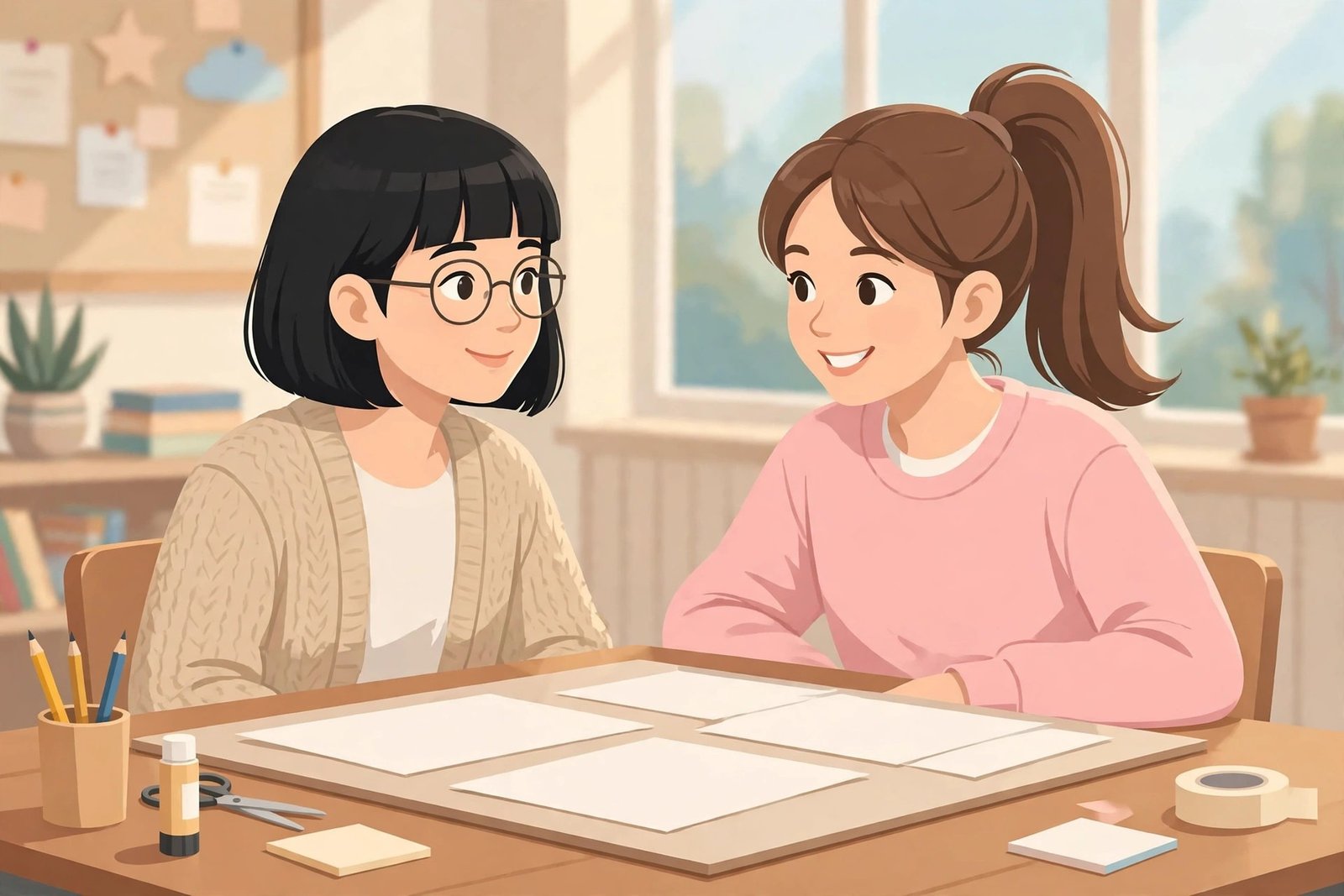
Distance makes people scary. Up close, they get a lot more ordinary. If you ever end up in a group project, a team, or a bus seat next to someone from the popular crowd, you’ll notice things that your fear never told you about.
They worry about being dropped. Popularity is a strange job: it has to be defended every week. Many popular teens feel pressure to stay funny, stay pretty, stay invited. One dull month and the group can cool off. That’s not a relaxed life. That’s a life of watching your own back. Some of them would trade places with a girl who has two close friends and zero pressure.
They also have bad days, boring days, and lonely days. A crowded story feed can hide a very quiet heart. And here’s the part nobody posts: some popular girls have told counselors they feel like nobody knows the real them, because everyone knows the “image” instead. Being admired is not the same as being known.
Knowing this doesn’t mean you have to feel sorry for them. It means you can stop putting them on a shelf above you. When you wonder how can I be less intimidated by popular people, try shrinking them back to human size in your mind. Picture the most popular girl in your school with messy hair, half asleep, arguing with her mom about dishes. That picture is true. It’s also much harder to fear.
It also helps to remember how changeable popularity is. The queen of September can be old news by spring. New schools, new classes, and new groups reshuffle the deck all the time. Building your confidence on their approval is like building a house on sand. If you catch yourself thinking how can I be less intimidated by popular people, flip it: would you want your whole worth to depend on a crowd that can change its mind by lunch? Probably not. Their power is borrowed from attention, and attention moves on. Yours doesn’t have to.
It also helps to talk to one of them, just once, about something small and real. Borrow a pen. Ask about the homework. Comment on the match. You’ll often find a perfectly normal person behind the glow, sometimes even a kind one. Plenty of girls quietly say the popular crowd was much nicer up close than from far away. Distance was the bully, not them. That small discovery is one of the fastest ways to answer how can I be less intimidated by popular people, because fear hates facts. And when the facts say these are just teens with homework and worries, your brain can finally relax around them.
Keep that in mind the next time you catch yourself wondering how can I be less intimidated by popular people from across the room. Cross the room instead. The answer lives there.
Your Body Language Speaks Before You Do
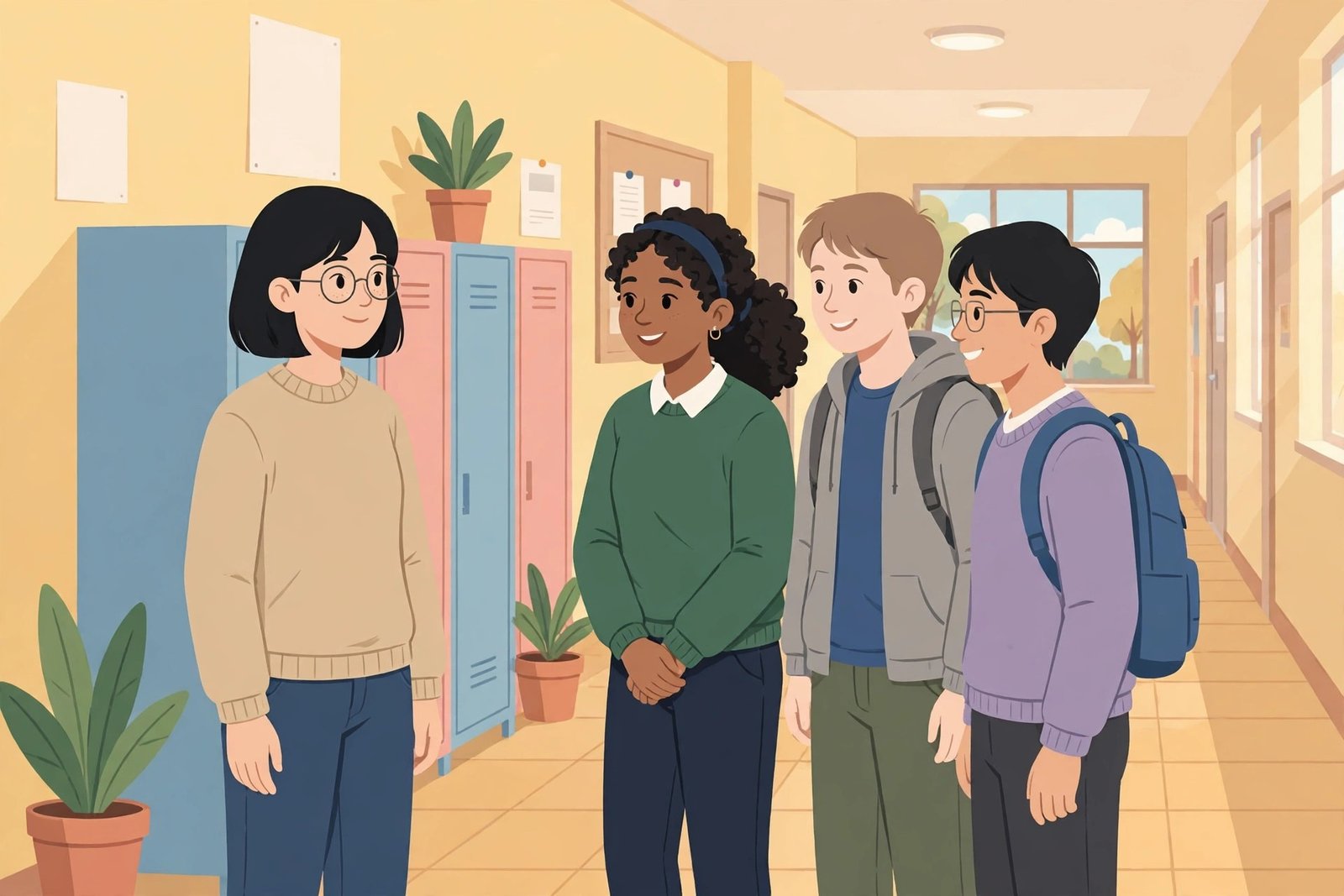
Long before you say a word, your body gives a speech. The good news: you can edit that speech, and when you do, your feelings follow. Confidence often starts as an act your body performs until your brain believes it.
Start with your feet and shoulders. When girls feel intimidated, they tend to make themselves small. Shoulders curl in. Eyes drop. Steps get short and quick. Try the opposite, gently. Feet planted. Shoulders back and down. Chin level, not up in the air, just level. You don’t need a superhero pose. You just need to stop folding. Taking up your normal space tells your brain, “I’m allowed to be here,” and brains love to believe what the body is doing.
Slow down. Nervous people rush: fast walking, fast talking, fast nodding. Moving a bit slower reads as calm, to others and to yourself. Let your hands rest. Uncross your arms when you can, since crossed arms build a wall that keeps friendly people out. And let your eyes work for you. You don’t need to stare anyone down. Just don’t study the floor. Look at faces, glance away, look back. That’s what relaxed people do without thinking.
Here’s a trick for the hardest moment: walking past the group. Pick a point beyond them, like a door or a friend’s locker, and walk toward it with your normal pace. Give a small smile or a tiny nod if eyes meet yours. That’s it. No performance. You’d be amazed how often a simple nod comes back. Small moments like that are pure training data for your brain. Every calm pass makes the next one easier, and it’s one of the most real answers to how can I be less intimidated by popular people: prove it to yourself, in tiny doses, that nothing bad happens.
Also, breathe out slowly when the nerves spike. A long exhale tells your body the danger has passed. It sounds too simple to work. Try it twice before you walk into the lunchroom and feel the difference. Your body is not your enemy here. It’s the remote control for your courage, and you get to hold it.
One last body trick: unclench your jaw and let your hands hang open. Tension hides in small places, and releasing it sends calm signals everywhere else. Do a quick scan before hard moments: jaw, shoulders, hands, breath. Ten seconds of loosening can change how the next minute feels. It sounds almost too small to matter, but girls who use it swear by it. Small hinges swing big doors, and this one is a quiet piece of how can I be less intimidated by popular people when the moment is already on top of you.
Small Ways to Talk to Them Like an Equal

Talking to popular people feels huge in your head. In real life, it’s made of tiny, boring, normal exchanges. Nobody expects you to deliver a speech. Equals don’t perform. They just trade small lines, the same ones you’d trade with anyone.
Start with the easy doors: shared situations. You’re in the same class, the same line, the same rain under the same roof. Comments about the shared moment are safe and natural. “That quiz was brutal.” “Do you know if practice is still on?” “I love your bag, where did you get it?” A question about something real gives them an easy way to answer, and easy answers build easy seconds. Ten easy seconds can undo a month of fear.
Listen like a person, not a fan. There’s a big difference between talking with someone and auditioning for them. Fans laugh too hard, agree with everything, and hide their own views. Equals can say, “Really? I liked the other one more,” and the world doesn’t end. Your honest opinion is not a risk. It’s the thing that makes you a real person in the chat instead of background decoration. If you want more practice being at ease in small talk, our guide on how to be more social when you are shy is full of small steps that don’t feel fake.
Watch out for the trap of over-preparing. Rehearsing a perfect line twenty times makes it sound stiff, and if they reply in a way you didn’t plan, you freeze. Better plan: have two or three openers in your pocket and let the rest be improvised. Real talk is messy for everyone. The popular girl who seems smooth? She wings it too. She just doesn’t panic when it gets awkward for a second. Awkward seconds end. Let them.
And if a chat goes badly? It will, sometimes. A short answer. A weird pause. Someone turns away mid-sentence. Treat it as weather, not as a verdict. Even popular people get brushed off by each other daily. When you ask how can I be less intimidated by popular people, remember that being treated like an equal also means being treated like anyone: sometimes warmly, sometimes briefly, and neither one defines you. The goal isn’t to win them. It’s to stop fearing them. Those are very different projects, and yours is the second one.
Start tiny if you need to. One line a week counts. Then one line a day. Courage grows like a plant, not like a light switch, and small reps are how it grows. Also, give yourself credit after each try, even the clumsy ones. You did the brave part: you spoke. The rest is just weather. Girls who keep a tiny mental list of their brave moments find the list gets long fast, and long lists change how they see themselves. That’s the deeper answer to how can I be less intimidated by popular people: become someone who trusts her own nerve. Trust makes equals. And equals don’t stand around wondering how can I be less intimidated by popular people.
They just talk.
Build a Life That Does Not Need Their Approval
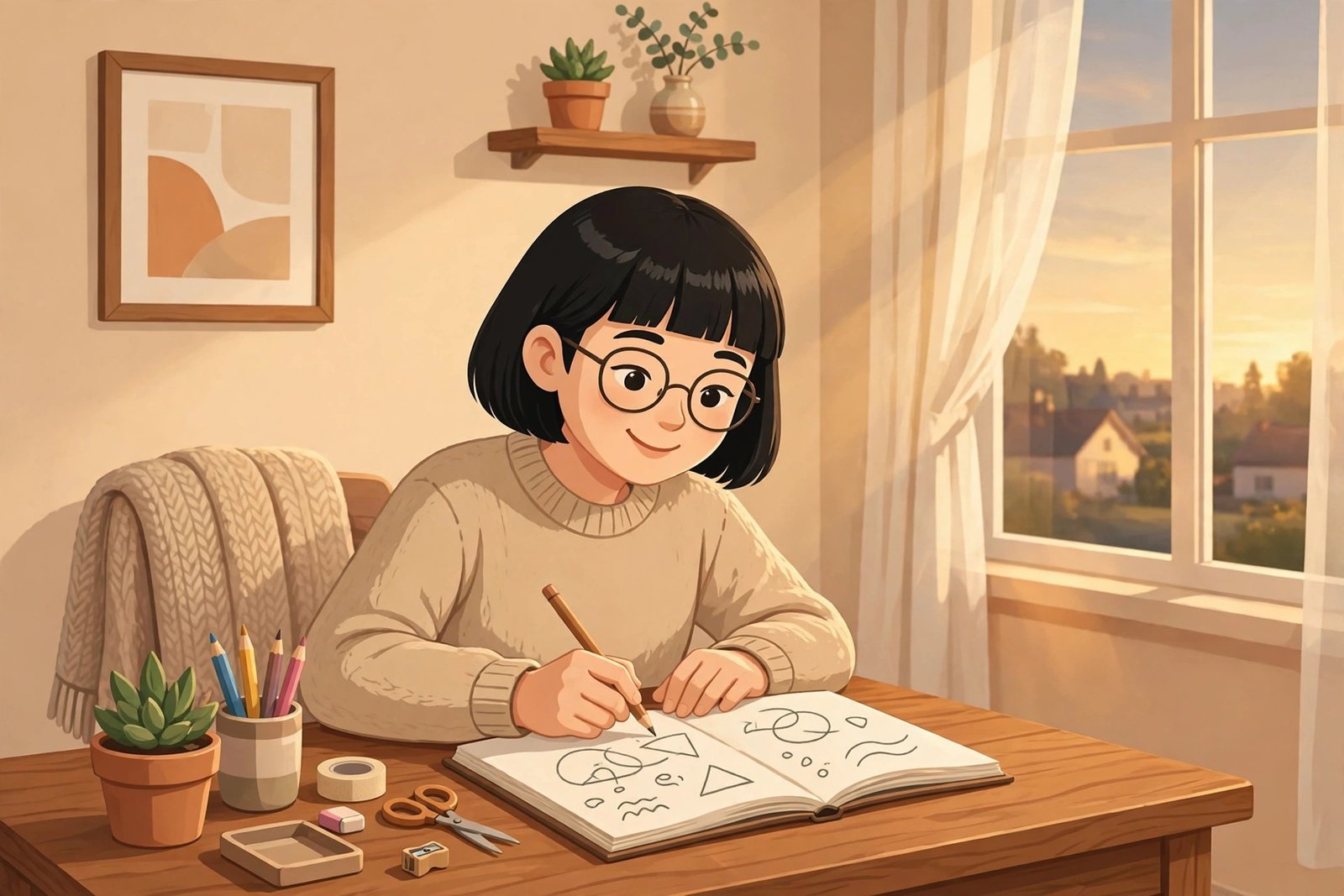
The deepest cure for intimidation is not a trick. It’s a life. When your days hold things you’re proud of, the popular group’s opinion gets smaller, the way a loud TV gets quieter when you leave the room.
Start with one thing that’s yours. A skill, a sport, a craft, a subject you’re genuinely good at or hungry to learn. Competence is quiet confidence. The girl who’s great at drawing, or coding, or free kicks, carries a private fact with her: “I can do something real.” That fact doesn’t vanish when she walks past a cool table. It walks with her. You don’t need to be the best at it. You need to be growing at it, and to know you’re growing.
Then, feed your own friendships, even small ones. One friend who laughs at your jokes is worth more than a crowd that tolerates you. Popularity looks like wealth, but close friendship is the real money. If the sting you feel is mostly “I’m lower than them,” read our piece on how to stop feeling inferior to other girls, because that comparison habit feeds intimidation like fuel.
Also, curate what you stare at. If your feed is full of the same five popular faces, your brain starts to think those five people are the whole world. Follow other stuff: art, music, sports, comedy, girls in other towns doing cool things. A wider world makes one school hallway feel like what it is: one small place, for a few short years.
Notice, too, what happens over time. Girls who build their own life stop asking how can I be less intimidated by popular people, because the popular people stop being the main characters of the story. They become side characters with good hair. That’s the real win. Not joining their table. Not beating them. Just needing them less, until one day you walk past with your tray, thinking about your own plans, and realize the old tight feeling didn’t show up.
One more builder: be useful somewhere. Volunteer. Help a younger kid read. Run the sign-up table. Being needed somewhere real is strong medicine for feeling small, because it gives you proof, in public, that you matter in a way no popularity contest can grant or take away. Girls with a role walk differently. They have somewhere to be and something to do. When you ask how can I be less intimidated by popular people, sometimes the truest answer is: build a corner of the school where your name already means something.
When Fear of Classmates Starts Closing Doors

Feeling nervous around popular people is normal. There’s a line, though, where normal nerves start costing you real things. Watch for that line, because crossing it is a sign to get support, not a sign to try harder alone.
The signs are about what you stop doing. You skip a club you wanted because two popular girls are in it. You won’t raise your hand, even when you know the answer. You turn down a party, a tryout, or a school trip because the “cool crowd” will be there. You rehearse simple sentences for an hour. Your stomach hurts on Sunday nights. When fear makes your world smaller week by week, it’s no longer just shyness. It’s a cage, and cages deserve help.
Help can look small. A parent, an older sister, a school counselor, a teacher you trust. You don’t need a dramatic speech. “I get really anxious around certain kids at school, and it’s stopping me from doing stuff” is a full and honest start. Adults have seen this a hundred times. Many of them lived it. A counselor can also teach you tools for social fear that work faster than willpower.
Please hear this part clearly: needing help with fear doesn’t make you weak or broken. It makes you a person with a common problem and the sense to solve it. The popular kids’ lives will go on either way. Yours is the one that matters here. Asking how can I be less intimidated by popular people brought you to this article. If the fear keeps closing doors, let it bring you to a person too. That’s not giving up. That’s how doors open again.
There’s also no shame in starting with smaller support. A journal where you sort the fear out on paper. A group chat with one kind friend who knows. Even reading pages like this one counts, because you’re treating the fear as a problem to solve, not a truth about who you are. Every small step says the same thing: my life gets bigger, not smaller. If, after honest trying, the fear still follows you everywhere, please go back to that trusted adult idea and use it. No girl should have to ask how can I be less intimidated by popular people while quietly losing clubs, classes, and joy. Help exists. Take it early, and take it proudly.
Frequently Asked Questions
Do popular people even notice that I feel intimidated?
Almost never in the way you fear. They may notice that you’re quiet, the same way you notice who’s quiet in class. But they’re not grading you or laughing about it later. Their heads are full of their own worries, plans, and spotlight fears. Your nerves feel giant from the inside and look tiny from the outside. Most days, you register as a normal classmate walking by, nothing more. That’s oddly freeing once it sinks in.
What if a popular person is actually mean to me?
Then the problem isn’t your confidence. It’s their behavior. A cold shoulder now and then is just mood, but mocking, exclusion games, or jokes at your expense are not things you have to accept as normal. Keep your answers short and calm in the moment, don’t hand them a big reaction, and tell a trusted adult if it repeats. You can work on feeling equal and still refuse to be treated badly. Both things can be true.
How long does it take to stop feeling intimidated?
There’s no fixed week count, but most girls feel a real shift after a few weeks of small practice. Each calm walk past the group, each tiny exchange, teaches your brain that you’re safe. It works like learning an instrument: slow at first, then suddenly easier. Be patient with the days it comes back. A bad day isn’t a reset to zero. It’s just a bad day, and the practice you’ve banked still counts.
Should I try to become friends with popular people?
Only if you actually like them as people. Some popular kids are kind, funny, and great to know. Some are not your type at all, and that’s fine too. Don’t chase friendship as a cure for fear, because that keeps their approval in charge of your mood. Let friendships grow from shared interests and real talk. If one grows with a popular girl, nice. If not, your life loses nothing at all.
Is it bad that I still feel nervous even after trying all this?
Not at all. Nerves are not a failure. They’re a feeling, and feelings can ride along while you do brave things anyway. Courage was never the absence of fear; it’s walking past the table with your heart thumping and your head up. Many adults still feel a flutter around high-status people at work. The goal was never to feel nothing. When you ask how can I be less intimidated by popular people, less is the key word, and less is a win you can reach.