
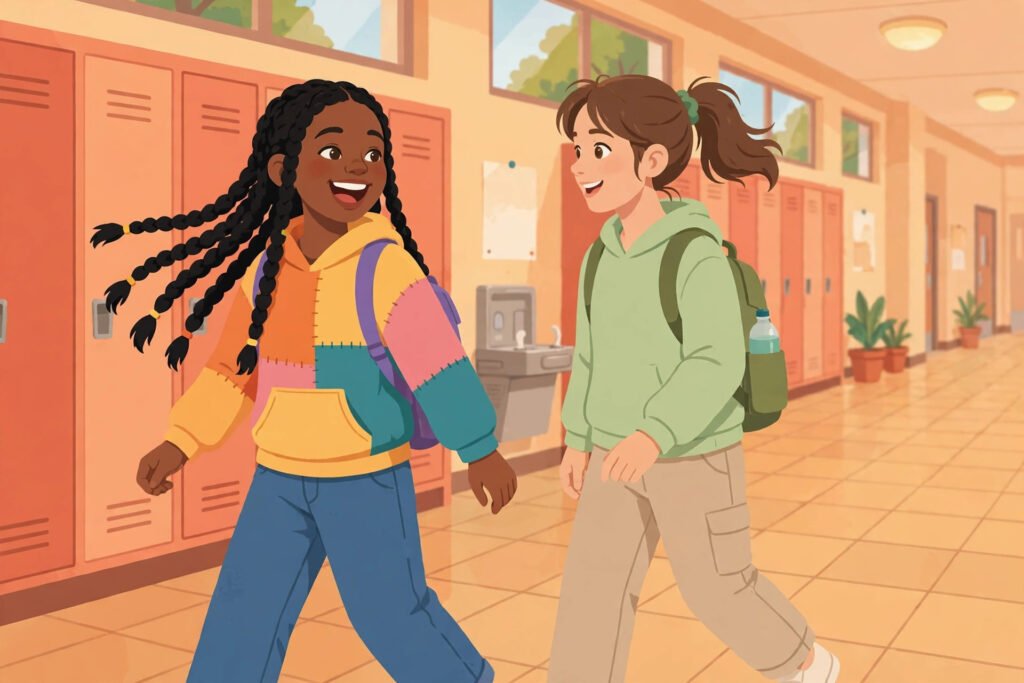
She’s new in two of your classes and somehow she keeps ending up near you. She laughs at your joke in the hallway. She asks what you’re doing this weekend. She remembers that your dog was sick last week and asks about him on Monday. And now you’re lying awake doing the most human math there’s: is she just nice, or does she actually want to be friends? Learning to read whether someone really wants to be my friend is a skill, and it’s a kinder one than most people think.
Here’s the thing nobody says out loud. Almost everyone is doing this math. The new girl is wondering if you like her. You’re wondering if she likes you. Two people can circle each other for weeks, both interested, both terrified of misreading the signs. That’s why knowing the honest signs that someone really wants to be my friend matters. It shortens the circling and saves two people a lot of unnecessary doubt.
This guide is about the beginning of a friendship, the brand new part: a classmate, a new student, a teammate, a girl from your cousin’s school. Not an old friend gone strange, and not a crush, which is a different language entirely. We will look at the signs of real interest, one by one, and then at the polite signals that look similar but mean less. By the end, the question of whether someone really wants to be my friend will feel less like a riddle and more like reading weather you already know.
And take this comfort first. If you misread a sign once and someone was only being polite, that’s not a failure and it’s not embarrassing. It’s a normal toll on the road to every real friendship anyone has ever made. Everyone pays it. The signs below simply help you pay it less often.
The Short Answer
The short answer is effort. When someone really wants to be my friend, she spends effort on me: she starts conversations, remembers details, makes room in her plans, and comes back again tomorrow. Real interest repeats. It shows up on ordinary days, not only when she needs a partner for a project or a seat at lunch. One warm moment is weather. A pattern of warm effort is climate, and climate is what you’re reading.
So don’t grade single scenes. Grade the trend across two or three weeks. Does she seek you out at least sometimes, instead of only answering when you arrive? Do small threads continue between you, jokes that return, questions that get follow ups? Those continuing threads are the clearest early evidence that someone really wants to be my friend and is building something on purpose.
Politeness, by contrast, is warm in the moment and weightless afterward. A polite girl smiles, chats, and then never thinks to start anything, remember anything, or include you in anything. That’s not cruelty. It’s just a full life with no current opening, or interest aimed elsewhere. Reading that honestly is also part of how you tell whether someone really wants to be my friend: you learn to see both answers clearly, and both answers are information, not verdicts on your worth.
One last piece of the short answer. Real interest usually feels strangely easy once it starts moving. You stop performing. Talks stretch. Silences stop being scary. If being around her keeps getting simpler instead of more effortful, that ease itself is a sign worth trusting.
Real Interest Shows Up as Effort

Friendship interest isn’t mostly a feeling people announce. It’s a budget they spend. Time, attention, memory, initiative: these are the currencies, and a person who wants to be your friend starts spending them in small, visible amounts. She walks the long way to her locker because it passes yours. She stays two minutes after practice to finish a conversation. None of it’s grand. All of it costs something. Cost is what makes it evidence.
Compare that with words alone. “We should hang out sometime” is free, and people hand it out like flyers. It might mean everything or nothing. The same sentence followed by “Are you free Saturday? There’s a market my sister keeps talking about” is a different species entirely. Specifics are effort wearing clothes. When you’re reading whether someone really wants to be my friend, weight the specifics heavily and the vague warmth lightly.
Effort also shows in repair. New connections are awkward and full of small misses: a joke that lands wrong, a plan that falls through. A person with real interest fixes the small stuff. She re sends the message that got lost. She suggests a new day when the first plan dies. A person without interest lets every small miss become the ending. Watching how someone handles the bumps tells you more than the smooth days ever will.
Notice, too, that effort flows toward you specifically. She doesn’t just talk in your direction because you’re standing there. She aims. She asks the follow up about your thing. She saves you the seat, not just a seat. Aim is the difference between a friendly person and a person befriending you. Both are lovely. Only one of them is building your friendship on purpose, and learning to see aim is central to knowing whether someone really wants to be my friend or is simply kind to everyone in the room.
That’s why the very first proof that someone really wants to be my friend is rarely a sentence anyone says. It’s a pattern of small costs, paid gladly, in your direction, before either of you has promised anything.
And be patient with scale. Early effort is small by design, because she’s also scared of misreading you. A daily two minute hallway talk isn’t a small thing. It’s a person returning, on purpose, again and again. In the beginning, returning is the whole signal. Everything bigger is built out of returns.
They Start Things, Not Just Answer Them

Here’s the cleanest test in this whole guide. Who starts things? In a forming friendship, the person who wants it’ll, at least sometimes, be the one to begin: the first text of the day, the question in the hallway, the “come sit with us” called across the cafeteria. Answering warmly is lovely, but answering is free. Starting costs a little courage, because the starter risks being ignored. People spend that courage on people they actually want.
Watch the ratio over a couple of weeks, not a couple of hours. If she starts things roughly as often as you do, you’re looking at mutual building, the healthiest shape there’s. If you start ninety percent and she answers ninety percent, she might still enjoy you, but the wanting is mostly coming from your side for now. That ratio is the raw data behind the question of whether someone really wants to be my friend, and it rarely lies for long.
Starting has many small costumes. She sends you a meme that matches a joke only you two share. She asks your opinion on something before a class you have together. She tells you news instead of waiting for you to hear it from the group. Each start is a tiny flag planted in your day that says: I thought of you when you weren’t in front of me. Being thought of offstage is one of the purest early signs there’s.
The opposite pattern deserves an honest name too. If weeks pass and she has never once started anything, while gladly receiving everything you start, you may be looking at friendliness without pursuit. That’s not a crime and she’sn’t a villain. It simply means the building permit’s currently in your hands alone. You get to decide how long you want to hold it, and other pages on this site can help when a connection turns draining; this one stays focused on the green lights.
One more subtlety. Some people are shy starters who show interest through presence instead of messages: always nearby, always lingering after the group splits, always hoping you’ll open the door. Presence is a soft form of starting. If her texts are rare but her feet keep choosing your orbit, count the orbit. With shy people, the body often files the report the mouth is too nervous to give.
They Remember the Small Stuff About You
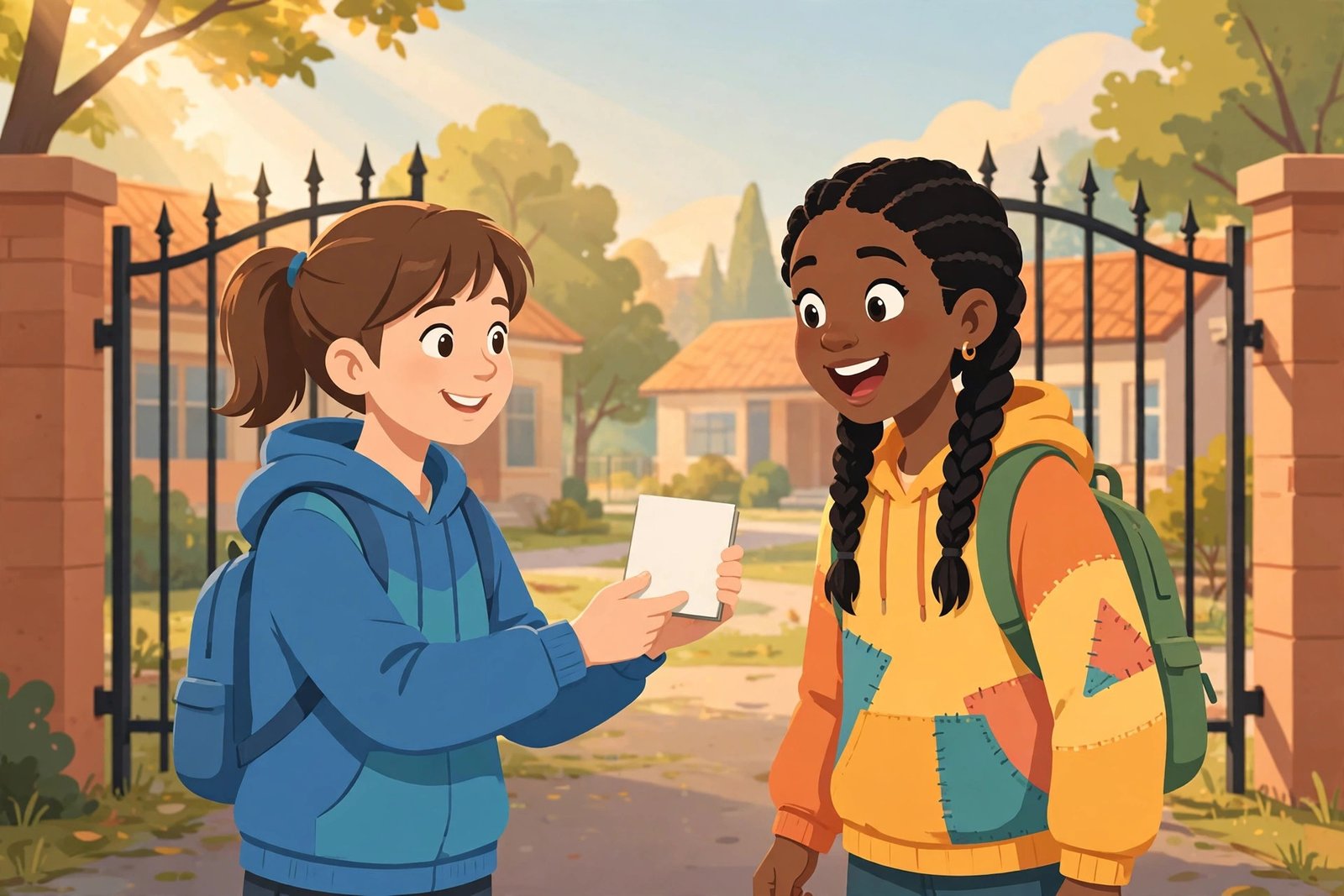
Memory is one of the loudest signs in early friendship, because memory can’t be faked cheaply. She remembers your sister’s name. She asks how the audition went, the one you mentioned once, in passing, two weeks ago. She knows you hate cilantro and steers the group away from the taco place without making it a thing. Each remembered detail is proof that your words landed somewhere with shelves, not somewhere with a drain.
That’s because remembering is a choice the brain makes about what matters. People forget most of what they hear in a day. The brain keeps what it has tagged as important, and we tag people we’re drawn to. When someone really wants to be my friend, my small facts get tagged fast. Hers will get tagged in your brain too, and noticing your own memory waking up for her is a sign about you as well: interest is probably mutual.
Listen for the callback, the golden form of remembering. A callback is when she brings back something from an earlier talk and builds on it: “Did you ever finish that drawing?” “Okay, update me on the cousin drama.” Callbacks stitch separate conversations into one continuing story, and a continuing story is exactly what a friendship is. Small talk resets every day. Friendship accumulates. If your talks accumulate, something real is under construction.
Don’t demand a perfect memory, though. People have full brains and hard weeks. The sign isn’t a flawless archive. It’s the direction of the remembering: she catches the things that matter to you, especially the emotional ones, at a rate clearly above chance. One remembered audition outweighs five forgotten homework details. Weight the heart items heavily.
So when the small stuff starts surviving in her memory, take it seriously. It’s one of the surest early proofs that someone really wants to be my friend, offered quietly, without either of you ever saying a word about it.
And here’s a sweet side effect of reading this sign clearly. Once you know memory means interest, you can offer the sign yourself, on purpose, to people you want to befriend. Remember her tryout date. Ask about the sick dog. People bloom under being remembered, because it answers their secret version of the same question you’re asking here.
Invitations That Include You on Purpose

Invitations are where interest stops being a vibe and becomes a plan. When someone really wants to be my friend, I start appearing in her future tense. “We are going to the rink Friday, come.” “My mom is driving us to the match, there’s a seat.” She doesn’t wait for you to orbit into her plans by luck. She puts your name in them, sometimes awkwardly, sometimes early, because she wants you inside the picture she’s already seeing.
Read the shape of the invitations, not just their existence. An invitation to a huge group thing where you’re one of twenty is friendly, but soft. An invitation where she clearly thought of you specifically, the art supply store because you draw, the early morning run because you mentioned training, carries far more signal. Specific invitations mean she’s matching her world to your interests, which is effort and memory holding hands.
Also watch what happens when you can’t come. Real interest survives a no. She’s briefly bummed and then invites you to the next thing, because the goal was you, not filling a seat. Convenience interest evaporates after one declined plan, because the seat was the goal and someone else filled it. How a person handles your no is one of the most honest reports you’ll ever get about whether someone really wants to be my friend or simply wanted company that day.
Group invitations have one more layer. Watch whether she works to include you inside the event, not just at it. She introduces you properly, pulls you into the conversation thread, checks on you when the group splinters. Being invited is logistics. Being included is care. A person can invite you for a dozen reasons. A person includes you for one: she wants you to belong there, next to her.
An invitation is a small risk, too. She might hear no, in front of people. People take that risk for people they genuinely want around, which is why invitations carry more weight than compliments when you’re deciding whether someone really wants to be my friend or is simply being sweet in the moment.
And if invitations have not come yet, don’t panic at week one. Some people build slowly: talks first, memory next, invitations when their courage warms up. The trend matters more than the speed. A slow line climbing in the right direction still arrives. Read direction, not velocity, and you’ll judge new friendships far more fairly, including your own slow starts with people you now can’t imagine life without.
Polite Is Not the Same as Interested

Now the harder half of the skill: telling real interest apart from plain politeness, so you don’t spend your heart on a reading that was never there. Polite people are warm in the moment. They smile, they chat, they laugh at the right places. Then the moment ends and nothing continues: no starts, no memory, no invitations, no callbacks. The warmth was real. It was also the whole product, like a free sample that was never a promise of the full box.
This is the moment to protect yourself from a painful misunderstanding. Being misread once, by you, in good faith, isn’t humiliation. It’s tuition. Every adult you admire has a story about assuming a friendship that was mostly politeness. What matters is updating when the data arrives. If weeks of data say polite, believe the data kindly and aim your effort where it can grow. That honesty is part of how you read whether someone really wants to be my friend without turning the answer into a judgment about your value.
It helps to know why politeness exists at all. Many girls are raised to be pleasant to everyone, to smooth every moment, to never let an awkward silence live. Their warmth is manners, not selection. So the absence of selection isn’t rejection. She’sn’t choosing against you. She’s simply not choosing yet, or her circle is full, or her life is loud right now. A polite no to your hopes isn’t a verdict. It’s scheduling information wearing a smile.
There’s a mirror skill worth naming here. If you suspect an old friend has gone cold, that’s a different puzzle, and our guide to people who suddenly go cold reads those signals. This page is about beginnings, where nothing has been built yet and everything is still possible. In beginnings, politeness is simply the lobby. Some people invite you further in. Some keep the lobby pleasant and wave you toward the door of your own day. Both are survivable, and only one deserves your building energy.
There’s also a timing clue that separates the two. Politeness is strongest at the start and fades as the novelty does. Interest does the opposite: it warms up as the novelty fades, because it runs on actually liking you, not on first week manners. Watching which direction the warmth travels is one more clean way to tell whether someone really wants to be my friend or was only greeting the newness of you.
A last kindness for this section. When you do read politeness correctly and step back, step back warmly. No cold shoulder, no punishment for a crime nobody committed. The girl who was “only polite” may become a real friend in another season, when her life has room. Circles open and close all through school. Leaving doors unslammed is a form of wisdom your future self will thank you for, more than once.
How to Answer When the Signs Are Green

Suppose the signs are adding up. She starts things, remembers your stuff, includes you in plans, and time with her keeps getting easier. Now what? The answer is almost disappointingly simple: match the energy, one notch at a time. Start things back. Remember her stuff out loud. Invite her into one of your plans. Friendship grows by traded turns, and green lights are an invitation to take yours.
Matching isn’t the same as flooding. Don’t go from two talks a week to fourteen texts a day because you finally feel sure. Sudden floods can scare even an interested person, because they rewrite the deal overnight. Keep the rhythm she helped set, and stretch it gently. One extra start a week. One plan suggested by you. Growth that both people can feel coming is growth that lasts.
Also, say the quiet part once, lightly, when the moment is right. “I’m really glad we ended up in the same classes” costs nothing and lands like sunshine. People who are building toward you’re often just as unsure as you were, and one clear sentence of welcome can relax the whole project. She has been reading your signs too. Give her a legible one. That mutual clarity is the moment the question of whether someone really wants to be my friend stops needing an answer, because the friendship simply starts answering for itself.
KidsHealth, the teen health site run by Nemours, describes this same early stage in its guide to making friends: look for someone who smiles at you, shares, lets others join in, and is interested in what you have to say. Notice how ordinary those signs are. Real interest is rarely dramatic. It looks like basic kindness, repeated on purpose, in your direction. You already know how to recognize it. You’re just learning to trust the recognition.
Your job in this green light phase isn’t to perform gratitude for being chosen. It’s to be easy to build with: clear, warm, and steady. That steadiness is the very thing someone really wants to be my friend is hoping to find when she takes those small early risks in your direction.
And if your courage wobbles at the starting line, borrow the frame from fake detection. You already know how to spot when a friend isn’t real, from signs like the ones in our guide to telling if a friend is fake. Positive detection is the same reading skill, pointed at the light instead of the shadow. Trust the reader in you. She has been training on people since you were five.
Give It a Little Time and Watch the Pattern

Every sign in this guide comes with the same instruction: watch it across time. Beginnings are noisy. People have exam weeks, family storms, shy phases, and phones that die at the worst moments. Any single week can lie to you in either direction. Three or four ordinary weeks tell the truth almost every time. Patience isn’t passive here. Patience is how you collect data clean enough to trust.
While you watch, keep your own life full and moving. Join the thing, do the project, enjoy the friends you already have. A full life does two jobs at once. It keeps one new person from becoming your entire weather system, and it makes you the kind of person others naturally want to befriend: someone with a world to invite people into. The girls who read new friendships best are rarely the ones staring at them hardest.
Expect the pattern to wobble before it settles. She might be warm for two weeks, then quiet for one because her life exploded, then warm again. Wobbles are weather. The line underneath is climate. If the climate is rising effort, rising memory, rising inclusion, you’re watching a friendship being built at human speed. That slow build, noticed and trusted, is the grown up answer to whether someone really wants to be my friend: not a lightning bolt of certainty, but a pattern you can stand on.
And if the pattern stays flat, let that be an answer too, delivered gently by time instead of by one painful scene. Flat patterns are not tragedies. They’re directions. Every hour you don’t spend forcing a flat line is an hour available for the people whose lines are climbing toward you, some of whom you have not even met yet. School is full of unmet friends. It’s one of its best features.
In other words, time finishes the sentence that single moments start. Give it a few honest weeks, and the answer to whether someone really wants to be my friend stops being a guess. It becomes a memory of how the friendship actually began.
So keep your eyes kind and your standard steady. Effort, starts, memory, invitations, ease. Five signs, one pattern, a few weeks of honest watching. That’s the whole method. Use it gently, use it on yourself too, and let the beginnings that are real have the time they need to prove it. They usually do.
Frequently Asked Questions
How long should I wait before deciding if she really wants to be friends?
Give it two to four ordinary weeks of shared life: classes, practices, group chats, whatever you naturally share. One week is too noisy to judge, because exams and family storms can freeze anyone’s signals. Across a month, patterns speak clearly. Count the starts, the remembered details, the invitations. If the line is climbing, it’s real. If it stays flat despite your own warm effort, that’s also an answer, and a gentle one. Time is the fairest judge this question has.
She’s super nice to everyone. How can I tell if I’m special to her?
Watch for aim. Universal kindness spreads evenly, like sunlight. Interest concentrates, like a lamp. Does she start things with you specifically, remember your details above the crowd’s, and include you in plans by name? Those aimed moments are the difference. Another clue is continuation: her talks with you pick up old threads instead of restarting from zero. When someone really wants to be my friend, the conversation behaves like a series, not a set of unrelated episodes. Sunlight is pleasant. A lamp pointed at you is a sign.
What if I misread politeness as interest and it gets awkward?
Then you’ll have a mildly awkward week, like every human who has ever made a friend. Awkward is survivable and it’s not a reputation. Step back warmly, match her actual energy, and let the connection find its true size. Most people forget these moments completely within days, because everyone is busy starring in their own worries. The fear of misreading keeps more friendships from starting than misreading ever will. Be brave enough to risk the small awkward. It’s the entry fee to every real circle.
Can a shy person want to be my friend without texting first?
Yes, absolutely. Shy interest often speaks through presence instead of messages. She keeps ending up near you, lingers when the group splits, laughs at your jokes from the edge, and lights up when you start something with her. Her starts are soft: proximity, attention, staying. Count those. With shy people, the feet and the eyes often file the report before the phone does. If her orbit keeps choosing yours, she’s telling you something in the only volume she currently owns.
Should I just ask her directly if she wants to be friends?
You can, and a light version of asking works beautifully. You don’t need a formal question. Try an invitation: “I really like hanging out with you. Want to come to the market with us Saturday?” Her answer, and what she does next, will tell you more than any interrogation. Directness isn’t desperate. It’s efficient kindness, for both of you. And remember: when someone really wants to be my friend, she will usually be relieved you opened the door, because she was standing at the same door, hoping someone would.