

Your best friend walks past you in the hallway with a face like thunder and not one word. By second period, you have replayed your last five conversations, hunting for the thing you did wrong. By lunch, she’s laughing again, and you find out her morning was a war zone at home, her phone died, and she never even saw you. Nothing about the thunder was yours. It never was. If moments like that keep hijacking your whole day, learning how can I learn to stop taking things personally might be the kindest skill you build this year.
Notice what actually happened in that hallway. An event occurred in someone else’s weather. Your brain collected it, addressed it to you, and delivered it as criticism. That delivery habit’s the real topic of this page. The question how can I learn to stop taking things personally isn’t about growing a thicker skin or caring less about people. It’s about checking the address on a package before you sign for it.
This guide stays in one clear lane. We are talking about the moments that were never aimed at you at all: a friend’s bad mood, a teacher’s clipped tone on a brutal day, a message left on read by someone drowning in their own life. Not insults. Not cruelty. Just other people’s weather, misread as your forecast. By the end, you’ll know how can I learn to stop taking things personally in exactly those moments, with habits small enough to use before lunch.
Everything below is built to answer how can I learn to stop taking things personally without flattening the parts of you that feel deeply and notice everything.
And take this in before we start. Being quick to feel things isn’t a defect in you. It’s a temperament, and it usually travels with empathy, loyalty, and a sharp eye for other people. The goal isn’t to feel less. The goal is to aim those feelings at the right address.
The Short Answer

The short answer to how can I learn to stop taking things personally is this: most behavior you witness is a report about the other person’s inner world, not a verdict on your worth. People carry stress, hunger, bad sleep, family fights, and private worries into every room. Their tone leaks their load. When you read the leak as a message about you, you end up apologizing to the weather.
The skill has one core move, and it’s small. Pause, and ask: what else could this mean that has nothing to do with me? That single question, asked honestly, breaks the automatic delivery. A quiet friend becomes a tired friend. A short answer becomes a rushed one. This question is the practical center of how can I learn to stop taking things personally, and you can use it ten times a day without anyone noticing.
Underneath the question sits a truth worth memorizing. You’re not the main character in other people’s days. They’re thinking about their own deadlines, their own hair, their own problems, with the same intensity you think about yours. That’s not sad. That’s freedom. Most of the moments you have been collecting as evidence against yourself were never even filed under your name.
So the work ahead is gentle. We will walk through the classic false alarms one by one, learn to read behavior as information about its owner, and build a few habits that help you shrug faster. Girls who master how can I learn to stop taking things personally don’t become cold. They become accurate, and accuracy is a very peaceful place to live.
Most Moments Are Not About You

Start with a piece of math nobody teaches. Every day, you cross paths with dozens of people, each one running a full inner movie you can’t see. The bus driver is thinking about his rent. The teacher is thinking about the inspection next week. Your friend is thinking about the fight at breakfast. You appear in these movies as a background extra, briefly, if at all. Yet your brain keeps casting you as the lead in every scene where a face looks unhappy.
Psychologists have a name for this casting habit: the spotlight effect. We overestimate, hugely, how much others notice and judge us. That scowl across the cafeteria feels aimed at you because you can feel your own presence so strongly. From the scowler’s chair, you might not even be in focus. Remembering the spotlight effect is step one of how can I learn to stop taking things personally, because it corrects the math your fear keeps doing wrong.
There’s a second bias riding along. When something feels bad, your brain wants a cause, and the nearest cause is always you. A dry reply must be your boring text. A canceled plan must be your annoying presence. The brain would rather blame you than sit with the honest answer, which is often “unknown, probably nothing to do with me.” Unknown feels unsafe. Blame feels like control. It’s a bad trade, and noticing it’s the beginning of a better one.
None of this means you’re self centered. It means you’re human with a brain built to track social danger. That tracking kept groups safe for thousands of years. The modern cafeteria just gives it too much material and too little information. Your sensitivity is a strong antenna. The work ahead is calibration, not removal, and calibration is exactly what how can I learn to stop taking things personally means in practice.
Try a tiny experiment this week. Each time a moment stings, silently rate your certainty from one to ten that it was about you. Then ask what a camera would have recorded. Cameras record faces, tones, timings. They don’t record motives. Most stings drop several points under the camera test, and the drop itself is the lesson arriving in your own handwriting. If you want the deeper roots of this pattern, our guide to why you take everything so much to heart explores where the habit is born.
Her Bad Mood Is Weather, Not a Message
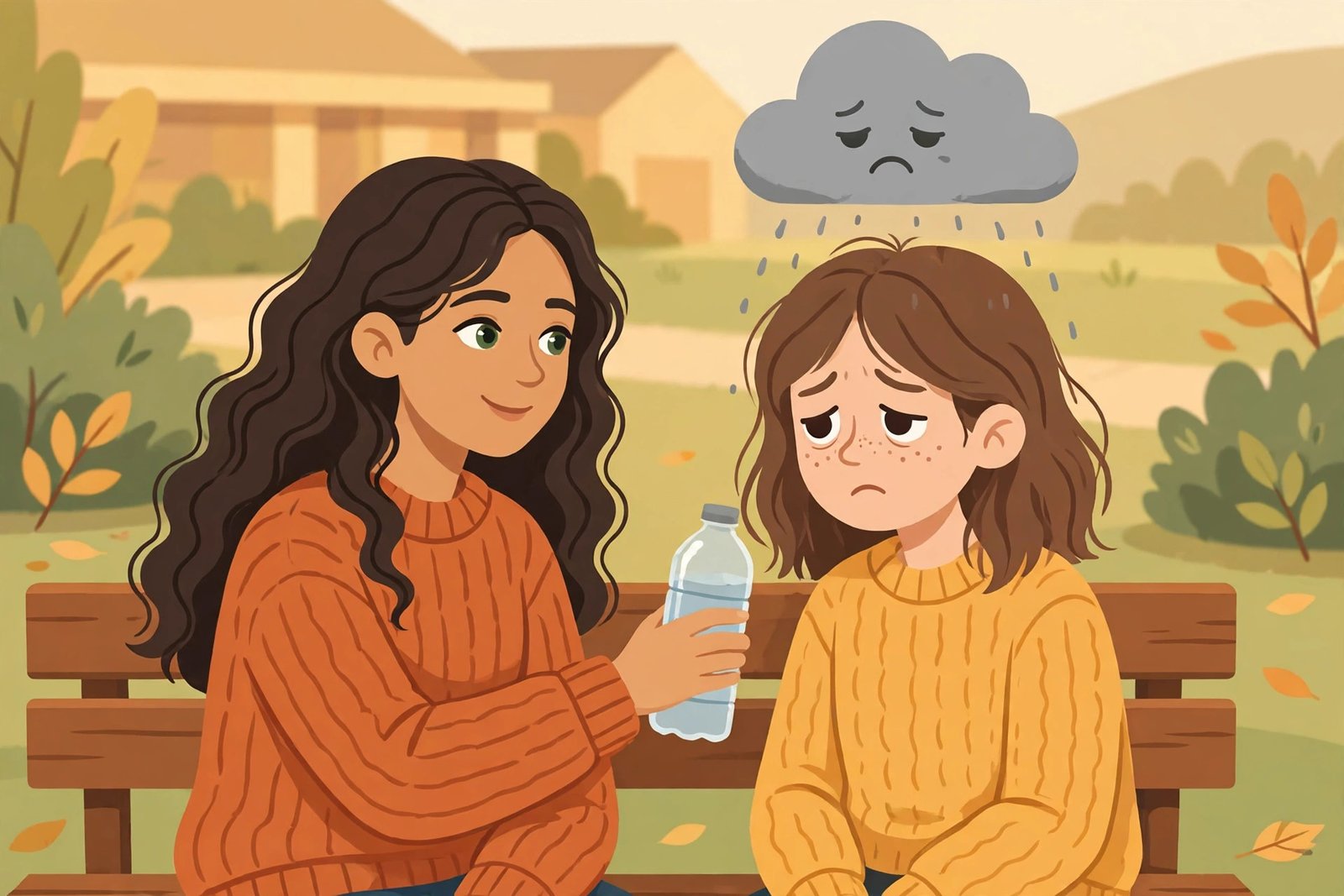
Best friends are the hardest case, because their moods matter to you and their signals fill your whole sky. She arrives quiet. She answers in short pieces. She laughs at everyone else’s joke and not yours. The sting lands instantly, and your brain opens an investigation: what did I do, what did I say, is she replacing me? Slow down. A mood is weather. Weather has causes you can’t see from your chair, and most of them formed long before you entered the room.
Think about your own bad moods for honest data. When you’re quiet because of a headache, a fight at home, or a bad grade, are you secretly punishing your friends? Almost never. You’re just carrying something heavy and your face shows it. Your friends live in the same kind of bodies and homes you do. Grant them the same explanation you would beg for on your own heavy days. That fairness, extended outward, is a huge piece of how can I learn to stop taking things personally without loving anyone less.
Bad moods also have boring causes your brain skips. Poor sleep flattens a voice. Hunger shortens every answer. Cramps, stress, a parent in a mood of their own, a test in third period. The list of explanations that involve you is short. The list that doesn’t is enormous. When the sting arrives, make your brain read the enormous list first. It will resist. Read it anyway.
What should you actually do with a friend’s dark cloud? One gentle check is allowed and kind: “You seem off today. Everything okay?” Then believe her answer. If she says she’s fine or just tired, take the words at face value instead of mining them for hidden code. Mining is how a one hour mood becomes a three day spiral. And if she does have an issue with you one day, a real friend with a real concern will eventually say so in words you can answer.
That refusal to chase weather is how can I learn to stop taking things personally in real action, not just in theory, on an ordinary school morning.
There’s a quiet dignity in refusing to chase weather. You stay warm, you stay available, and you let the cloud pass or speak for itself. Girls who learn this stop auditing every friendship hourly, and the friendships usually get easier, not weaker. Calm reads as trust, and trust is what the friendship was built on.
The Short Tone, the Closed Door, and Other False Alarms

Adults generate false alarms at industrial scale. A teacher answers your question with a clipped voice and no smile. A parent closes a door harder than usual. A coach gives the correction to you, in front of everyone, in a tone that feels personal down to your shoes. Your brain files each one under “I’m in trouble” or “I’m a disappointment.” Most days, the real file is “adult having a day.”
Teachers manage thirty students, a curriculum, and a phone that buzzes with parent mail. Their tone often reports their workload, not your worth. The day your teacher sounds short with you, listen to her with the next student too. Odds are high she sounds short with everyone, because the shortness lives in her day, not in her opinion of you. That comparison, done once, can permanently recalibrate a whole fear.
Home has its own weather systems. A parent who comes home silent and door heavy is usually replaying a boss, a bill, or a traffic jam. You happen to be the first audience. It feels personal because you love them and their tone fills your house. But love also means granting them the same grace you want on your own stormy evenings: the right to have a mood that’s not a message. Two people can share a home and separate weathers. Learning that split early is part of how can I learn to stop taking things personally under your own roof.
None of this asks you to excuse real harshness. If a tone is constantly sharp with you specifically, or crosses into mocking or contempt, that’s a different topic, and it deserves a real conversation with a trusted adult. The false alarms in this section are the one offs and the bad days, the random lightning. One offs get grace. Patterns get addressed. Knowing which one you’re looking at is the whole game.
Each time you run that comparison honestly, you’re practicing how can I learn to stop taking things personally with adults too, not only with friends your own age.
A useful question for adult false alarms: would this person, rested and calm, choose this tone on purpose? Almost always, the answer is no. People leak; they rarely aim. When you answer that question honestly, most stings dissolve into what they were: a tired human, mid leak, in your direction by pure geography.
Left on Read: the Silence That Means Almost Nothing
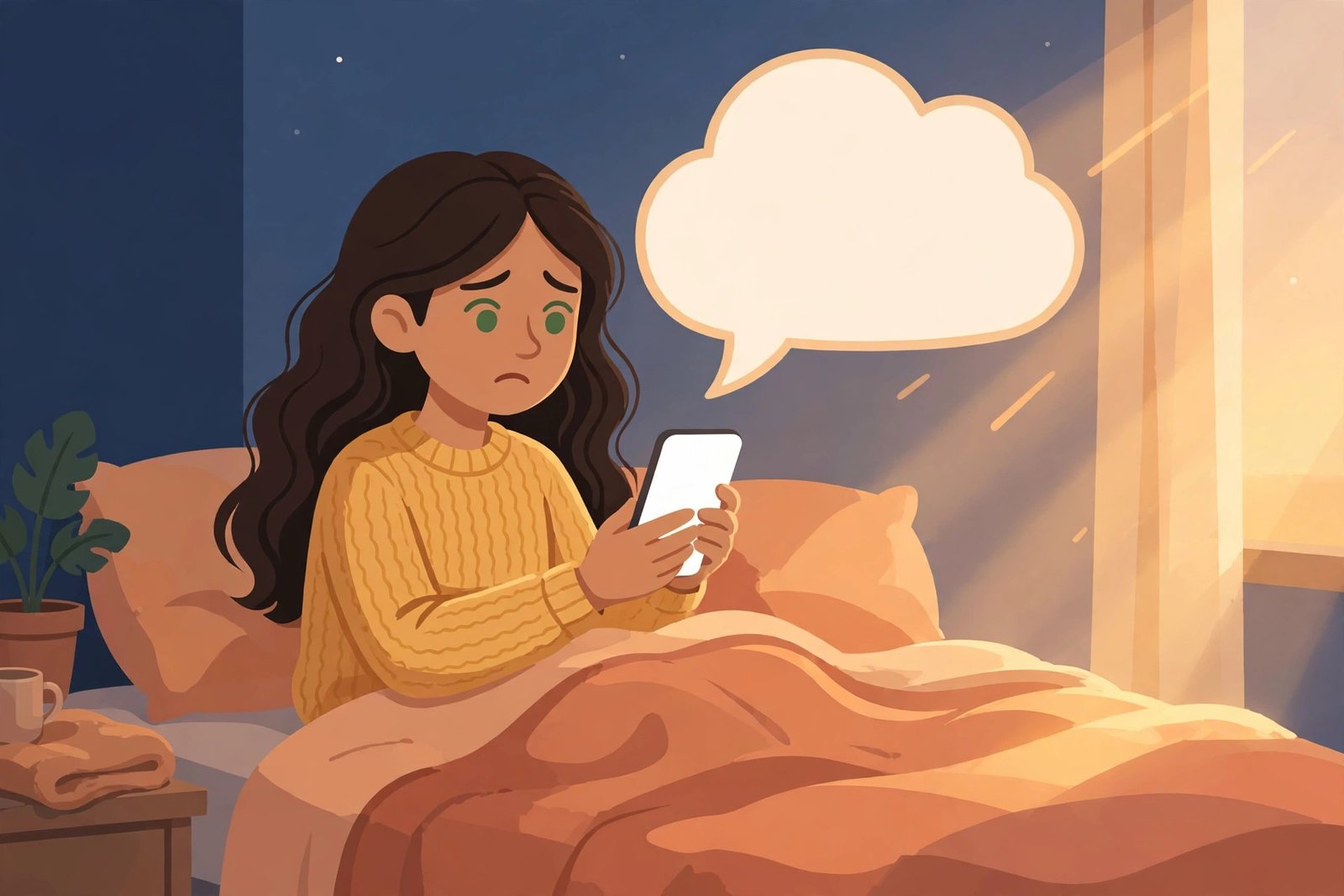
No modern moment manufactures false evidence like the read receipt. You send a message. The little word “Read” appears. Hours pass. Your brain, helpful as ever, writes the story: she’s mad, she’s bored of me, she saw it and chose silence as an answer. Meanwhile, the most common truths are almost insultingly plain. She read it in a hallway between classes. She meant to reply after dinner. Her phone died. She fell asleep.
Run the experiment on yourself again, because your own outbox is the best data you own. Count the messages you have left on read this month with zero anger attached. The friend you adore whose text you answered in your head and never typed. The cousin you meant to reply to for a week. Your silence meant nothing about them, and you know it from the inside. Everyone else’s silence runs on the same machinery. Extending that obvious truth outward is how can I learn to stop taking things personally in the group chat era.
Timing creates mirages too. A reply that takes four hours on a busy day feels colder than the same reply on a lazy Sunday, even if the words are identical. Your brain reads speed as emotion because speed is all it can see. It can’t see the shift at work, the dead battery, the family dinner with a no phones rule. It fills the invisible parts with fear, because fear is its favorite filler.
So build a rule of peace for yourself. No verdicts before twenty four hours. No second text sent in a panic spiral. No story writing after midnight, when every brain on Earth reads the world darker than it’s. If a reply truly never comes and a pattern of silence builds over weeks, that becomes real information about a friendship, and other guides on this site can help you read it. But one quiet evening isn’t a pattern. It’s a person, mid life, with a phone in her hand and a hundred things pulling at her.
This is often the first place girls feel how can I learn to stop taking things personally actually working, because the wins here are so concrete and so fast.
Notice, too, how quickly the fear evaporates when the reply lands. The friendship was never ending. Your afternoon was just held hostage by a blank space. Girls who practice this section stop donating whole afternoons to blank spaces. The blank keeps its size: small, common, and almost never personal.
Read Their Behavior as Information About Them

Here’s the mindset flip that ties the whole guide together. Every behavior you witness is a sentence about its owner. A friend who goes quiet under stress is telling you how she handles stress. A teacher who snaps when rushed is telling you how she handles pressure. A cousin who brags through every family dinner is telling you how hungry he’s to feel important. Read that way, the world becomes a library about other people, and you stop appearing as the villain in every book.
This flip is the deep version of the skill. Surface advice says “don’t let it get to you,” which is useless at 8 a.m. in a hallway. The flip gives your brain a better job to do. Instead of asking “what did I do,” you ask “what’s this person carrying, and how do they usually carry it?” Curiosity replaces accusation, including the self accusation that hurts most. That replacement, repeated daily, is how can I learn to stop taking things personally at the level where it actually sticks.
Girls sometimes ask how can I learn to stop taking things personally without becoming naive about people. The flip is the answer to that worry. You end up seeing more about everyone, not less.
Knowledge helps the flip. The more you know someone’s patterns, the less personal their weather feels. You know your friend shuts down before exams because you have watched three exam seasons. You know your dad goes silent when money worries him. Knowledge turns mysteries into forecasts, and forecasts don’t sting the way mysteries do. So collect people data the way you collect anything you care about: by paying calm attention over time.
The flip also protects you from a subtle trap: volunteering to fix every mood you witness. If her mood is information about her load, then her mood is her job to carry or share, not your emergency to solve. You can offer warmth. You can ask once. Then you can let an able person hold her own weather. Girls who stop volunteering as full time mood repair stop resenting the people they love, which quietly saves a lot of friendships. It’s the same muscle that steadies you when you’re afraid of disappointing others: you stop treating every frown as your personal assignment.
Practice the flip in low stakes moments first. The cashier who barely looks up. The bus driver who sighs at the whole world. Narrate their behavior as their story, briefly, and feel the sting fail to launch. Each small rep builds the reflex. Then, when a moment with real emotional charge arrives, the reflex is there, holding the door open for a calmer reading.
Small Habits That Help You Shrug Faster

Skills grow from reps, so here are the reps. None of them require equipment, apps, or a personality transplant. They’re small enough to run inside a school day, and strong enough to change your default reading of the world within a few weeks of honest practice.
Habit one: the three other explanations. When a moment stings, force your brain to list three explanations that don’t involve you before you allow the personal one on the table. Tired. Rushed. Bad news from home. The personal explanation often looks weak after the list, like a suspect standing next to three stronger ones. This habit’s the gym version of how can I learn to stop taking things personally: thirty seconds, a few times a day, real results.
Habit two: the overnight rule. Any sting that still glows tomorrow morning deserves a second look. The other ninety percent will be dead by breakfast, killed by sleep and sunlight. Refusing to act on a sting while it’s fresh, no confrontations, no cold replies, no 1 a.m. essays, saves more friendships than any other single rule on this page.
Habit three: check, once, in words. If uncertainty is eating you and the person matters, one plain question beats a week of mind reading. “We good?” asked lightly, can end a spiral in four seconds. Then, and this is the habit inside the habit, accept the answer you get. Asking and then refusing to believe the answer is just mind reading with extra steps.
Habit four: feed the witness list. Keep a small note, in your phone or journal, of times you were sure a moment was about you and it turned out not to be. The hallway thunder. The read receipt. The short tone. On fresh sting days, read your own archive. Nothing argues with fear like your own documented history of fear being wrong, in your own handwriting, about your own life.
Each rep is a tiny vote for the calmer reading, and votes add up. That’s the unglamorous truth inside how can I learn to stop taking things personally: nobody transforms in a weekend, but almost anybody can transform by spring.
Habit five: widen the frame on purpose. A life with full days, your own projects, your own fun, leaves less empty space for one person’s mood to echo in. Idle hours are where stings hold their meetings. This isn’t about being busy to avoid feelings. It’s about giving your attention several homes, so no single hallway moment can act like the whole world.
When It Really Is About You, and That Is Okay Too

Honesty time. Sometimes the mood is about you. You did forget the plan. You did speak carelessly. A friend’s distance is sometimes a message, and a teacher’s tone sometimes carries a real correction. The detachment skill was never meant to make you Teflon. It was meant to make you accurate, and accuracy includes owning the moments that genuinely carry your name.
Here’s the surprising part: the girls who stop taking everything personally get better at owning the real things. When every moment feels like your fault, fault loses all meaning, and real feedback drowns in false alarms. When the false alarms quiet down, a true signal stands out clearly, and you can meet it cleanly: apologize, repair, adjust. That clean ownership is respected by everyone, including you.
If someone who loves you raises a real concern, try to hear the care inside the correction. People who don’t care don’t bother correcting; they just drift. A friend saying “that joke landed wrong” is handing you information about her heart. Receiving it without collapsing or counterattacking is its own mature skill, and it grows from the same calm this guide has been building. You’re sturdy enough to be wrong sometimes. Everyone is. It’s a small room in a big house.
There’s research flavored support for this balanced view. Psychology Today’s guide to stop taking things so personally makes the same distinction: most slights dissolve under a pause and a reframe, and learning to tell the real ones from the imagined ones is exactly what frees you from both kinds of pain. Accuracy, not numbness, is the goal on every page of this topic.
So the promise isn’t that nothing will ever be about you. The promise is proportion. Most moments will return to their true size, small and not yours. The few real ones will get your full, calm attention. That’s the finished form of how can I learn to stop taking things personally: a girl who can shrug at weather and still hear a real knock at the door.
And if criticism at home or school ever stops feeling like weather and starts feeling constant or cruel, that’s not a mindset problem for you to solve alone. Tell a trusted adult what’s happening, in concrete examples. You deserve support with the real patterns too, and asking for it’s strength, the same strength you have been practicing on every page here.
Frequently Asked Questions
How do I stop taking a friend’s bad mood personally?
Start by granting her the explanation you would want on your own heavy days: tired, stressed, carrying something from home. Ask once, kindly, if she’s okay, then believe her answer and stop mining it for code. Give the mood a day to pass before writing any story about it. Keeping that pause is the daily practice of how can I learn to stop taking things personally inside a friendship you actually value. Most clouds move on by tomorrow, and the ones that don’t will eventually explain themselves in real words.
Why does being left on read hurt so much?
Because your brain can see the silence but not the reason, so it fills the blank with the scariest option: rejection. In truth, read and unanswered usually means busy, distracted, asleep, or a reply composed in someone’s head and never typed. You have done every one of those to people you adore. No verdicts before twenty four hours, and no story writing after midnight. Those two rules protect more afternoons than any other trick in this guide.
What if my teacher’s tone really does feel aimed at me?
First, run the comparison test: listen to her tone with the whole class for a day. If it’s short with everyone, it’s her workload talking, not her opinion of you. If she truly is harsher with you alone, repeatedly, that pattern deserves a calm word with a parent or counselor, with examples and dates. Distinguishing her weather from a real pattern is exactly the skill this page teaches, and either answer leaves you clearer than the spiral did.
Is sensitivity itself a bad thing I need to fix?
No, and please don’t let anyone convince you otherwise. Sensitivity is a temperament, tightly linked with empathy, loyalty, and noticing what others miss. The girls who feel things fast are often the friends everyone trusts most. What you’re training here’s aim, not amount. Your feelings are fine. Their delivery address was the only problem. Calibrating where a feeling lands is the whole of how can I learn to stop taking things personally, and it leaves your warm heart exactly as warm as it was.
How long does it take for this to get easier?
Most girls feel a shift within a few weeks of reps: the three explanations, the overnight rule, the one calm check. The sting will still arrive; it stops unpacking its bags. Old moments may glow, and that’s normal, not failure. Think of it like learning an instrument. The first scales feel clumsy, then one day your hands know. Trust the reps. The calm you’re building is the version of how can I learn to stop taking things personally, and it’ll serve you in every classroom, job, and relationship ahead.