
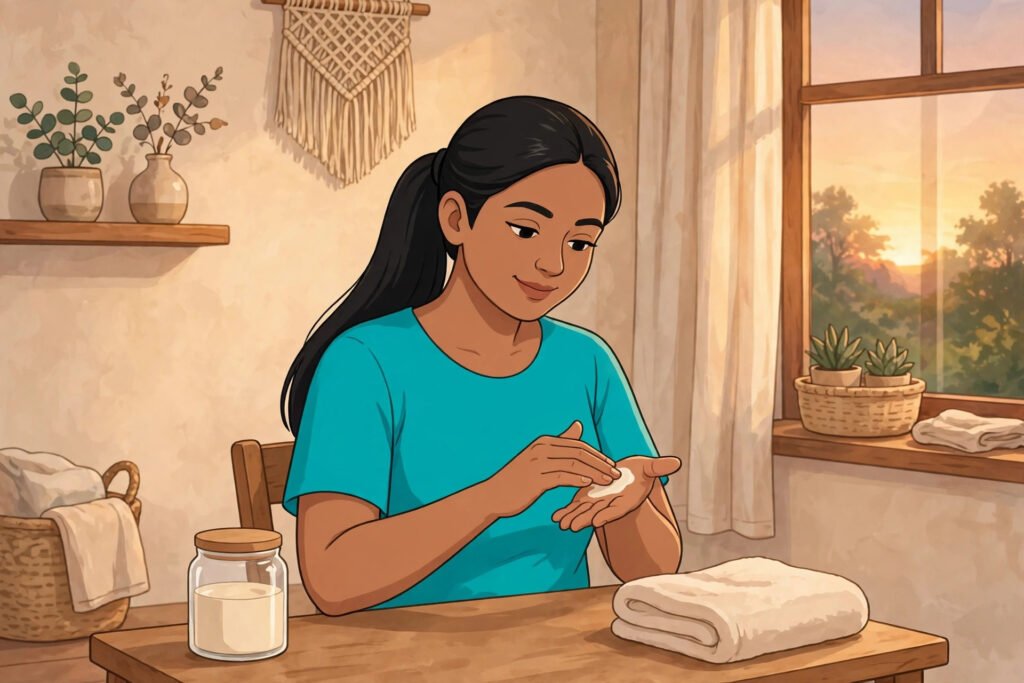
Look at your hands for a second. Really look. They type your job into existence. They cook, they clean, they carry bags, they shake hands in rooms where first impressions count. They also get washed twenty times a day, dipped in detergent, dried out by sanitizer, and ignored almost completely until a nail splits at the worst possible moment. Faces get routines with five steps and a shelf of bottles. Hands get whatever soap is near the sink.
Learning to take care of my hands and nails is one of those quiet adult upgrades nobody announces. There’s no dramatic before photo. There’s just a slow shift: your nails stop catching on sweaters, your knuckles stop cracking every winter, and your hands start looking like they belong to the same well kept woman as your face.
Think about how often your hands are on display without you noticing. In every photo where you’re holding a cup, a phone, a steering wheel, a baby cousin. In every meeting where your hands rest on the table while you talk. In the first handshake of every introduction you’ll ever make. Your face gets the mirror time and the good lighting, but your hands are in the frame of your whole life, at work, at dinner, in every picture that matters. They deserve better than leftovers. The women whose hands always look quietly polished aren’t doing anything dramatic.
They’ve just stopped treating hand care as an optional extra and started treating it as part of getting dressed, part of washing up, part of the day itself.
Here’s the good news first. To take care of my hands and nails well, you don’t need a salon budget or a free afternoon every week. You need a handful of small habits, done daily, plus a little gentleness where most of us were taught to be rough. Cuticles, especially. We’ll get to those.
This guide walks you through the whole adult routine: the daily care that does the heavy lifting, the safe way to do a manicure at home, how nails actually get stronger, and the changes that should send you to a doctor instead of a polish shelf. If your face already has a routine, even a quick 10 minute morning skincare routine, your hands are simply the part of it you’ve been skipping. By the end, you’ll know how to take care of my hands and nails at home, at work, and everywhere in between, without turning it into a second job.
The Short Answer
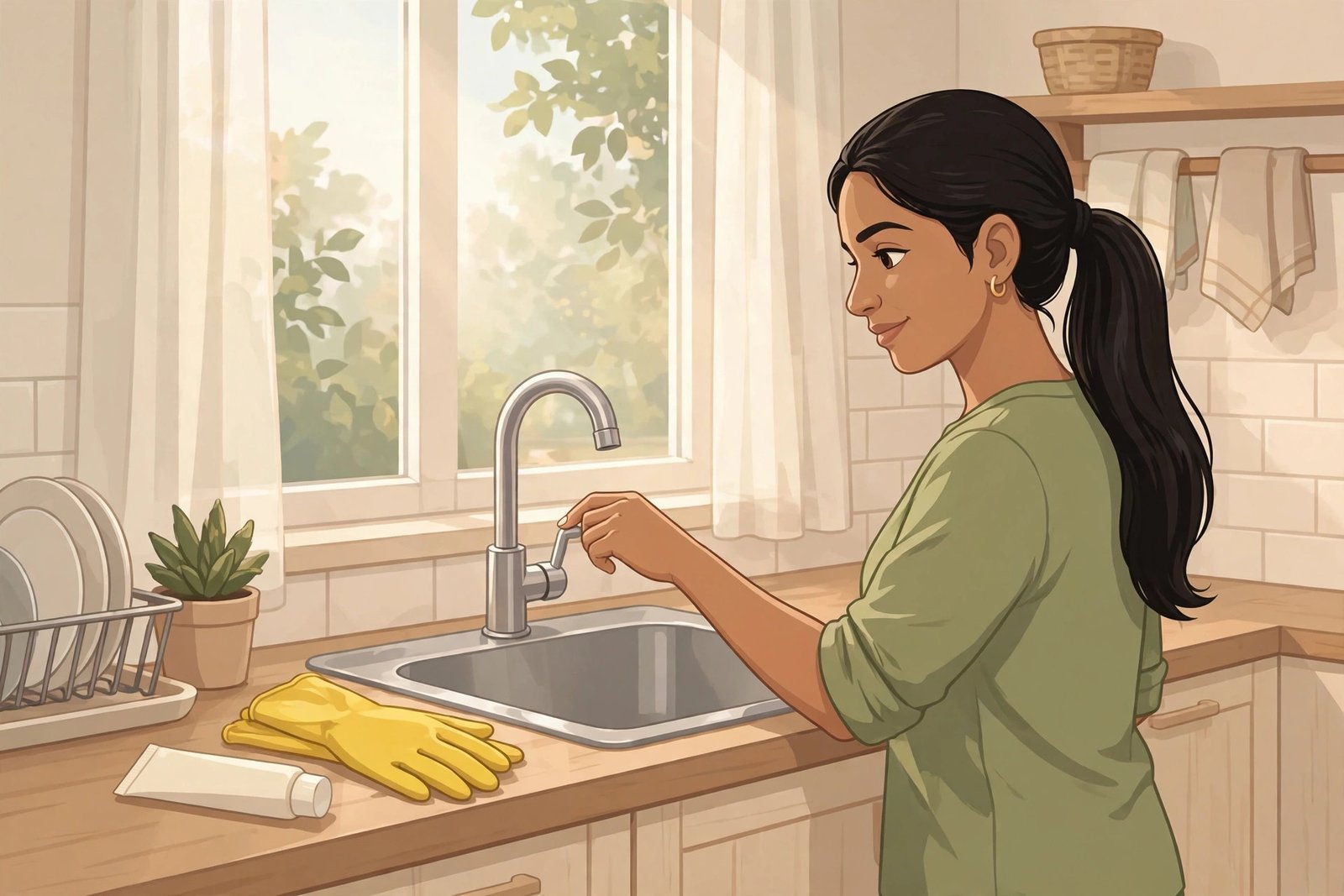
The short answer is this: you take care of my hands and nails with moisture, protection, and gentleness, repeated daily. Cream after washing. Gloves for wet work and cleaning. Cuticles left mostly alone, pushed back softly at most, never cut at home. Nails filed gently in one direction, kept at a length your real life can support. Polish enjoyed, then rested from, so the nail underneath can breathe and recover.
Women who take care of my hands and nails without fuss share three habits. They keep cream within reach, by the sink, the desk, and the bed. They protect their hands during the chores that damage them. And they treat small problems early instead of covering them with darker polish. That’s really how you take care of my hands and nails for life: small care, daily, before there’s a problem to fix.
Why Hands and Nails Need Their Own Routine
Your hands age in public. Your face gets sunscreen and serums, but your hands get the sun through the car window, the hot dish water, the office soap that could strip paint. They also work harder than any other part of your body you can see. Every keystroke, every jar opened, every bag carried runs through them. It’s no surprise they show wear early. Dryness, rough knuckles, brittle nails, hangnails that catch on everything: that’s not neglect of character. That’s workload without a care plan.
Nails have their own quiet logic too. A nail is built from layers of keratin, the same family of protein as your hair, and it grows slowly. What you see at the tip today started growing months ago. That means two things. First, damage is cumulative: months of wet work, harsh remover, and using your nails as tools adds up before it shows up. Second, improvement is slow and real: habits you start now show their results as the nail grows out. Patience isn’t a flaw in the system. It is the system.
Your hands deserve a place on the list when you decide to take care of my hands and nails seriously, because they’re not a side detail. They’re how you greet the world, literally, palm first. And there’s a comfort angle nobody mentions: cared for hands simply feel better. No snagging, no stinging cracks in winter, no low level annoyance every time you pull on a sweater.
Once you see your hands as part of your care, not an afterthought, it gets much easier to take care of my hands and nails without thinking twice. The routine below is built for that: short, cheap, and woven into things you already do every day.
There’s also a quiet confidence angle. Nobody can explain exactly why, but well kept hands change how put together a person looks, even in jeans and a plain tee. It’s the same effect as clean shoes or a pressed shirt: a small surface, kept with care, that tells the world you’re paying attention to your own life. You don’t need long nails or salon polish for that effect. Short, clean, moisturized, and healthy reads as polished in every room, from the office to your grandmother’s kitchen table.
Daily Care: Moisture Is the Whole Foundation
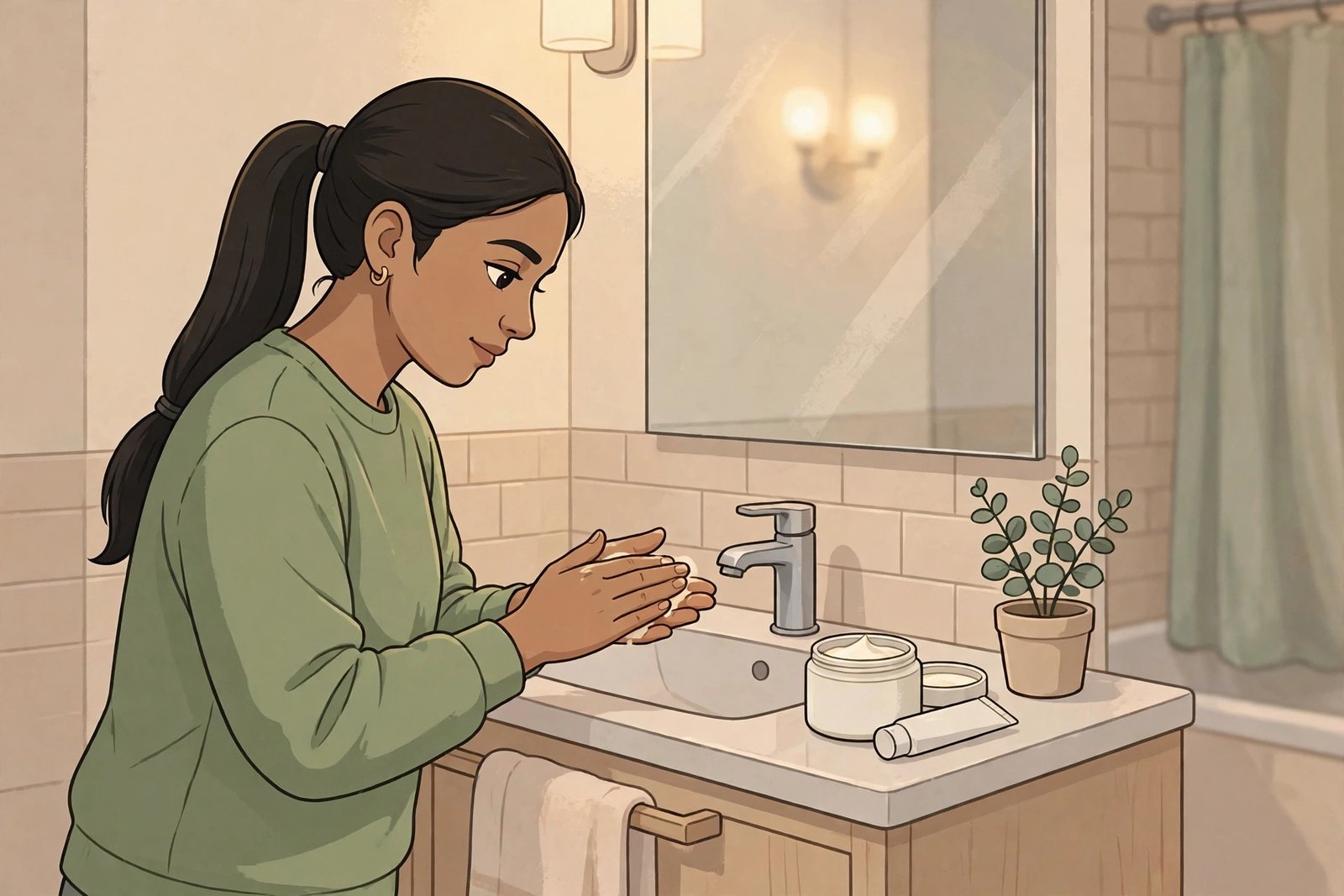
Moisture is where you start when you want to take care of my hands and nails properly, because nearly every common hand complaint is a dryness complaint in disguise. Nails lose water even faster than skin does. Every wash, every round of sanitizer, every long shower pulls moisture out. Dry nails bend, then split, then peel at the tips. Dry cuticles lift and tear into hangnails. Dry knuckles crack. One habit pushes back against all of it: cream, often, at the right moments.
Timing beats quantity. The best moment is right after washing, while your hands are still slightly damp, because cream seals in the water that’s already there. The second best moment is before bed, when a richer layer can work undisturbed for hours. Keep a light cream by the sink for the day and a thicker one by the bed for the night. A tube in your bag and one at your desk turn intention into reflex. If cream lives where the damage happens, you’ll use it. If it lives in a drawer across the apartment, you won’t.
Don’t forget the nails themselves. Rub cream, or a little plain oil, right into the nail and the cuticle line, not just the backs of your hands. It works like layering skincare products on your face: lighter layers first, richer ones last, each one given a moment to sink in. Thirty seconds, twice a day, is enough to change the texture of your hands within a few weeks. Slow, yes. But nails grow slowly, and care that matches their pace is the care that works.
Sanitizer deserves its own honest mention, because it’s not going anywhere. You need it. Your hands also pay for it, since alcohol based gels are some of the driest things you’ll ever put on your skin. The fix isn’t skipping sanitizer and hoping for the best. The fix is pairing it: sanitizer when you need it, cream when you’re back at your desk or your bag. Some women keep a tiny cream clipped right next to the sanitizer bottle so the pair travels together. It’s a two second habit, and on a day with six rounds of sanitizer, it’s the difference between hands that cope and hands that crack by Friday.
Washing itself can get gentler too. Lukewarm water instead of hot. A mild soap instead of the harshest one in the building. Patting dry instead of scrubbing with the towel, and cream right after, every time, no debate. Keep the habit tiny and constant, and you’ll take care of my hands and nails almost on autopilot by the end of the month.
Care for Your Cuticles Without Damaging Them

Cuticles are where good intentions go wrong, so go gently when you take care of my hands and nails. The cuticle is not dirt, and it isn’t a mistake. It’s a seal. That thin line of skin where nail meets finger keeps moisture in and germs out. When it’s cut, torn, or shoved back aggressively, the seal breaks, and the area gets red, sore, and open to infection. Most cuticle misery is self inflicted, with the best intentions and the worst tools.
So here’s the gentle rule: moisturize them, and otherwise mostly leave them alone. If you love a neat look, you may push them back very softly, once in a while, after a shower or bath when the skin is warm and soft, using a fingertip or a soft towel. No metal pushing, no cutting, no digging. If a cuticle is dry, it needs cream, not surgery. Cream daily and the line softens, sits flatter, and looks tidy on its own within a few weeks.
Hangnails get the same calm treatment. That little torn spike of skin beside the nail begs to be pulled, and pulling it is how a tiny tear becomes a sore, swollen fingertip. Clip it cleanly at the base with clean scissors, then cream the spot. Done. No blood, no throbbing, no regret at midnight.
Salons need a quick word here. A good salon never cuts your cuticles aggressively, keeps tools visibly clean, and doesn’t reuse files between clients. If you see tools pulled from a drawer of other people’s tools, or a footbath that clearly hasn’t been scrubbed, you’re allowed to leave. Politely, immediately, without apologizing for your standards. Treat the cuticle like a seal to protect, and you’ll take care of my hands and nails the way dermatologists wish everyone would: quietly, gently, and without a single wound in the name of beauty.
File, Shape, and Polish Safely at Home
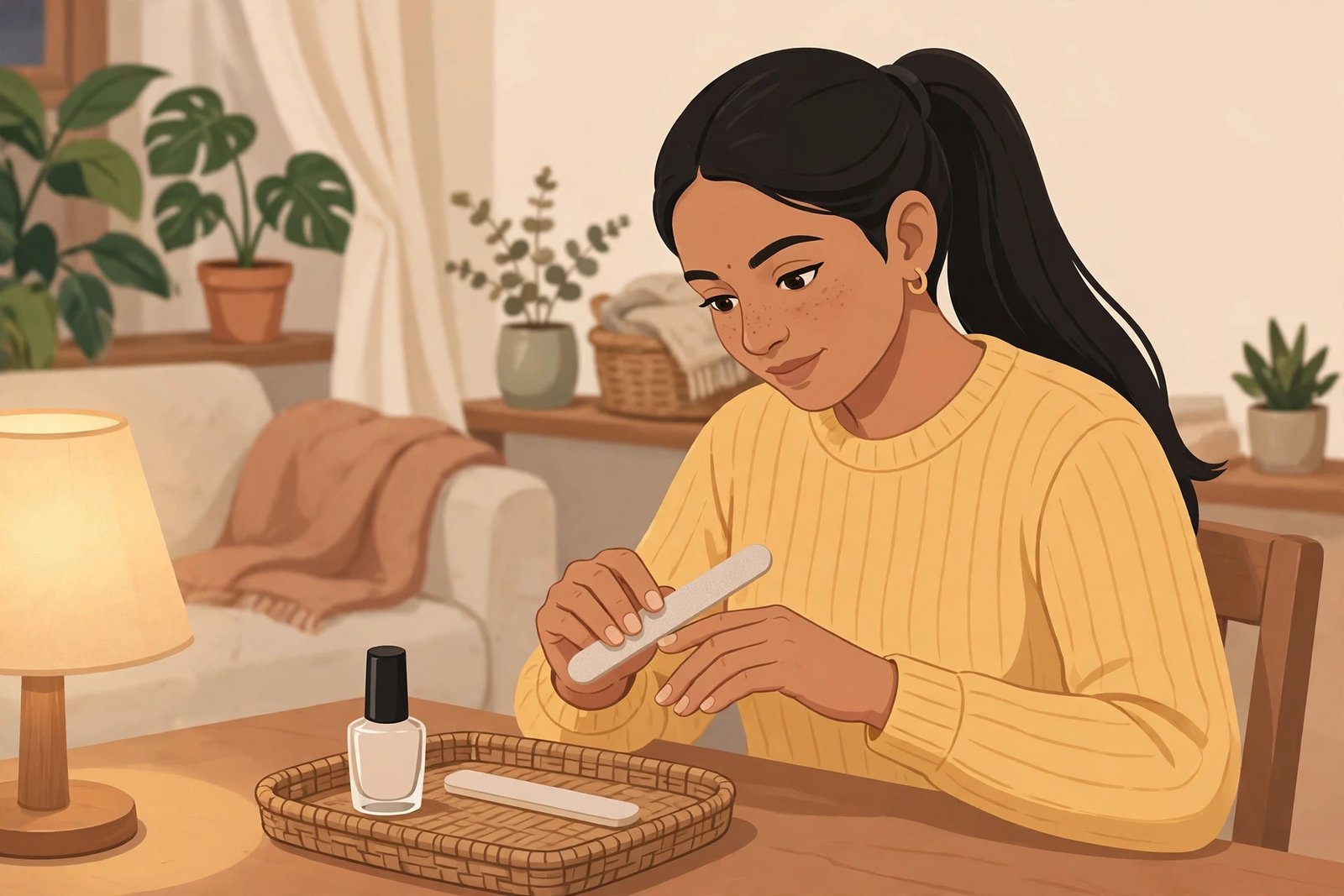
A home manicure is a lovely way to take care of my hands and nails when it’s done slowly and cleanly. Twenty unhurried minutes, once a week or so, keeps nails tidy and strong. Start with clean hands and a short soak in warm water if you like, then dry well. Work on dry or barely damp nails for filing, because wet nails are softer and tear more easily.
File gently, in one direction, with a fine file. The old sawing motion, back and forth, back and forth, frays the layers at the tip and invites splitting. Long, light strokes in one direction keep the edge smooth. Shape simply: straight across with the corners very slightly rounded is the strongest shape for most women, and it suits almost everyone’s hands. Keep the length honest, too. Nails should serve your typing, your cooking, and your life, not the other way around. If your fingertips touch a table before your nails do, your length is about right.
Tools stay clean, always. Wash your file and clippers, dry them, and keep them yours alone. Sharing nail tools is sharing whatever lived on them. Polish itself is fine and fun, with two small rules. Give nails regular breaks from polish, especially dark colors and gels, because remover is drying and constant polish hides changes you should see. And when you remove polish, moisturize right after, since remover strips the nail along with the color.
Your home kit can stay tiny. A fine file, clean clippers, a soft towel, one cream you love, and a gentle remover cover ninety percent of home care. That’s really all it takes to take care of my hands and nails between salon visits, or instead of them entirely. When you shop for remover, the gentler options cost about the same as the harsh ones, and your nails will feel the difference within a month. Keep the kit in one small pouch. A kit you can find is a kit you’ll use, and a kit buried in three different drawers might as well not exist on a busy Sunday night.
Gel and acrylics deserve one honest sentence. They can look wonderful, and the removal is where the damage hides: soaking, scraping, and peeling layers off the natural nail. If you love them, keep them occasional, have them removed patiently by a professional, and never, ever peel them off yourself in a meeting. Short, clean, and gentle beats long, fancy, and damaged every time you take care of my hands and nails at home.
Stronger Nails From Habits, Not Miracles
Every few months, a product promises nails of steel in a bottle. Here’s the plainer truth: nails get stronger mostly by losing less. Dermatologist Rosemary Keskinen, quoted by Cleveland Clinic, explains that nails lose water faster than skin, so frequent washing and sanitizing dry them out and make them brittle. Her advice for anyone learning to take care of my hands and nails is calm and boring: heavy cream at bedtime, moisture between exposures to water, and a clear, gentle polish if you want a protective coat. No miracles. Just less damage, repeated.
The biggest lever is water itself. Nails absorb water, swell, then dry and shrink, over and over, and that cycle weakens them. Long soaks, long showers with your hands in the stream, dishes without gloves: they all count. Shorten the soaks where you can, and glove up for the rest. You’ll read more about gloves in the next section, because they matter that much.
What about food and supplements? Eating enough protein and a generally varied diet supports nail growth, the way it supports everything else your body builds. If a friend swears by a supplement, be kind and be careful: supplements aren’t a shortcut around wet work and dryness, and it’s worth asking a doctor before adding anything, especially if you’re pregnant or on medication. The article makes no promises here, because honest care doesn’t need them.
And drop the habit of using your nails as tools. Prying cans, scratching labels, picking at tape: each one is a tiny trauma at the exact spot where splits begin. Use a coin, a spoon, the side of your finger. You strengthen nails by removing the daily damage, which is the unglamorous core of learning to take care of my hands and nails. Give it two or three months of growing room, and the new nail that arrives will tell you the truth about your habits.
Protect Your Hands at Work and at Home
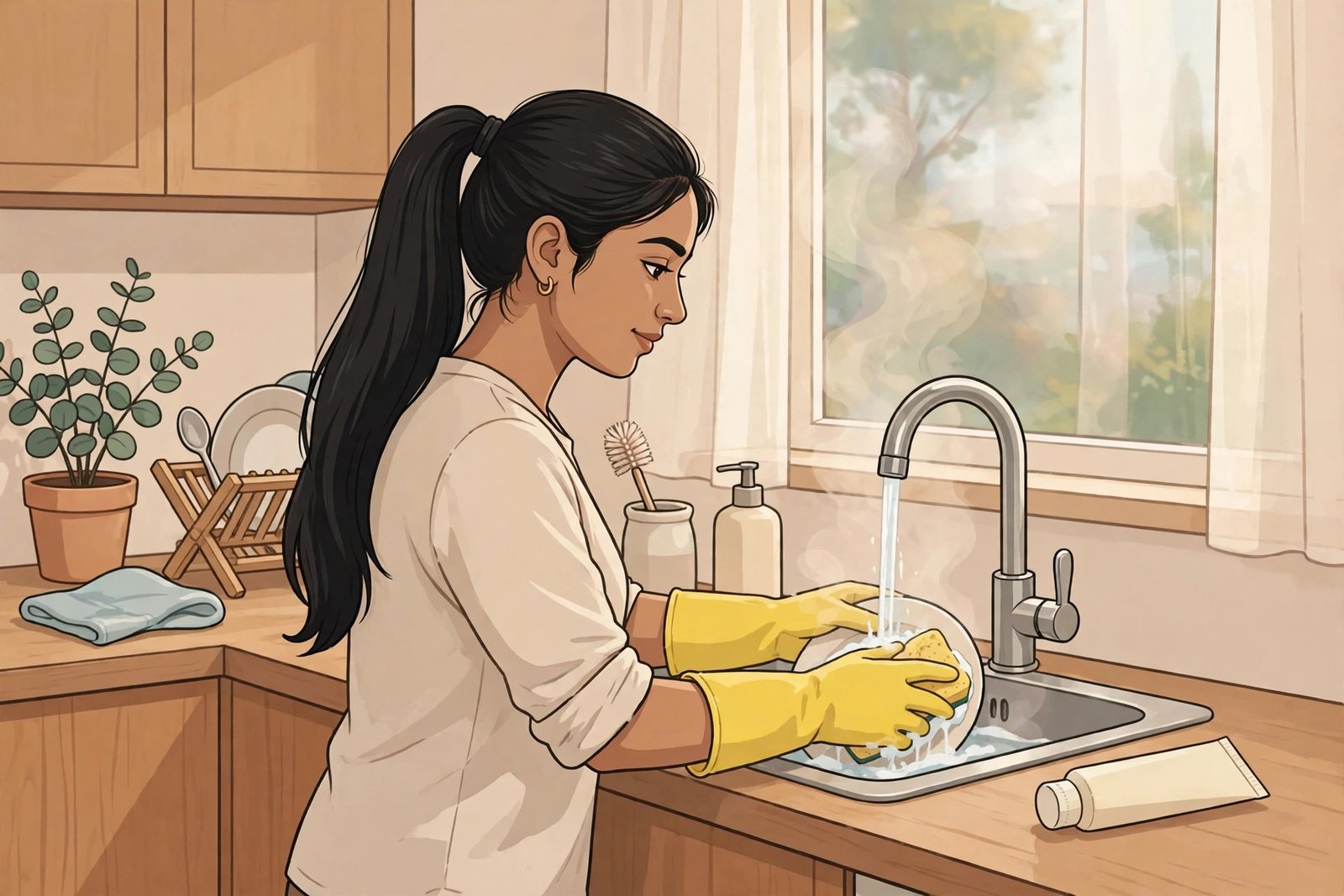
Work is where most hand damage happens, so protect them if you want to take care of my hands and nails for real. Think about what your hands meet in a week. Dish water and cleaning sprays at home. Paper, cardboard, and dry office air at work, which quietly wick moisture away all day. Sanitizer at every door. Gloves in winter wind, or no gloves, and cracked knuckles by February. None of this is dramatic. All of it adds up.
The glove rule is simple: any wet work longer than a quick rinse gets gloves. Dishes, scrubbing, cleaning with products, gardening. Cotton lined gloves are kinder if you wear them a while, and a pair that lives under the sink will actually get used. Dry your hands well before and after, because trapping damp hands inside gloves undoes the good. At work, a small tube of cream in the desk drawer and one honest reapply at lunch will undo most of what paper and air conditioning steal.
Job specific hands deserve a thought too. If you cook, clean, care for patients, style hair, or work with your hands in any trade, your hands meet water and chemicals far more than average. Barrier cream before a shift, gloves whenever your work allows, and a richer cream after are not vanity for you. They’re maintenance on your main tools. Chefs and nurses don’t apologize for looking after their hands, and neither should you.
Small daily scenes matter more than big speeches here. Carrying heavy grocery bags by their handles cuts into fingers and strains nails at the tips. Typing all day with long nails changes how your fingers strike and tires your hands by evening. Even your gym bag has an opinion: chalk, weights, and shared equipment are rough and drying. None of these need a lifestyle change. They need tiny adjustments: bags carried on the forearm, nails kept at a keyboard friendly length, cream after the gym wash. Protection isn’t one big gesture. It’s a dozen small ones, repeated until they look like personality.
Cold weather is the final boss. Wind and cold air outside, dry heated air inside: winter is a moisture ambush from both sides. Wear gloves outdoors even when you don’t feel cold yet, and start the bedtime rich cream habit in autumn, before the first crack, not after. Gloves, barrier cream, and two free minutes at the sink: that’s how busy women take care of my hands and nails during real workdays, without a single extra appointment.
Changes in Hands and Nails to Show a Doctor

Most changes in nails are harmless and boring: a white spot from bumping a doorframe, ridges that come with age, a nail that splits in winter. But some changes are information, and information deserves a professional reader. This section is general guidance, never a diagnosis. You know your hands. If something looks new, strange, or stubborn, that noticing is exactly what doctors are for.
Book the appointment if you see any of these. A nail that lifts away from the nail bed. Thickening, crumbling, or a yellow or green color that doesn’t grow out. A dark streak or spot under a nail that you can’t explain by an injury. Redness, swelling, warmth, or pain around a nail, which can mean infection. Skin around the nails that stays cracked, sore, or rashy despite gentle care. Or any change that spreads, hurts, or simply doesn’t improve over a few weeks of kindness. Most changes are harmless, but some are your cue to stop the cosmetics and see a doctor. Knowing the difference is part of how you take care of my hands and nails responsibly.
Never cover a worrying change with artificial nails or dark polish and hope. Covering hides the very information a doctor needs, and some salon products can make an infection angrier. Take a photo of the change with the date, leave the nail bare, and bring your questions. If a nail problem keeps coming back, a dermatologist is the right specialist. Hands and nails are part of their daily work, and they’ve seen your exact worry many times before.
Here’s a small tool that helps at the appointment: a photo timeline. When you first notice a change, take a clear photo in daylight. Take another two weeks later. Nails grow slowly, and memory is a terrible witness, so photos show a doctor whether a spot is growing out with the nail, sitting still, or spreading. That one detail can change what the doctor looks for. It also stops the 2 a.m. spiral of comparing your nail to frightening photos online. Your timeline is real information. Random search results are not.
One more note, gently: if caring for your hands is tangled up with habits like biting or picking that feel bigger than you, that’s common, it’s nothing to be ashamed of, and it can be talked about with a doctor too. When in doubt, get it looked at. That’s not vanity. That’s how adults take care of my hands and nails, all the way, including knowing where home care ends.
Frequently Asked Questions
How often should I moisturize my hands, really?
Aim for after every wash, plus a rich layer at bedtime. That sounds like a lot until it becomes a reflex, the way lip balm does. Keep cream where the washing happens: by the sink, at your desk, in your bag. Most women notice softer skin within two weeks and stronger feeling nails over two or three months, as the cared for nail grows in and the damaged part grows out.
Should I take a supplement for stronger nails?
Be careful here. A varied diet with enough protein supports normal nail growth, and no supplement can undo daily wet work, harsh remover, or dryness. Some people do have gaps worth discussing, but that’s a conversation for your doctor, who knows your health and medications. No supplement replaces the basics when you take care of my hands and nails: moisture, gloves, gentle filing, and patience while new nail grows.
Is it bad to wear polish all the time?
Polish itself isn’t the villain, but wearing it non stop has two costs. Remover dries the nail every single time, and constant color hides changes you should catch early. A kind rhythm is polish for a stretch, then a bare week where you moisturize well and actually look at your nails. Skip peeling polish off, too. Peeling takes layers of nail with it, and those layers were doing structural work.
Why do my nails split at the tips no matter what I do?
Splitting usually means the wet and dry cycle is winning: water swells the nail, drying shrinks it, and the tip frays from the stress. Shorten your nails a little, file in one direction only, glove up for dishes and cleaning, and moisturize the nail itself, not just your skin. Then give it time. The split part has to grow out. New habits protect the new nail that’s already on its way.
What is the simplest routine I can start this week?
Keep it tiny. Cream by the sink and use it after washing. Gloves for dishes. One gentle file session on Sunday, one direction, no sawing. Cuticles moisturized and otherwise left alone. That’s the calm core of how to take care of my hands and nails for the years ahead: moisture, protection, gentleness, and a doctor when something looks off. Start this week, and your hands will quietly thank you every winter from now on.