
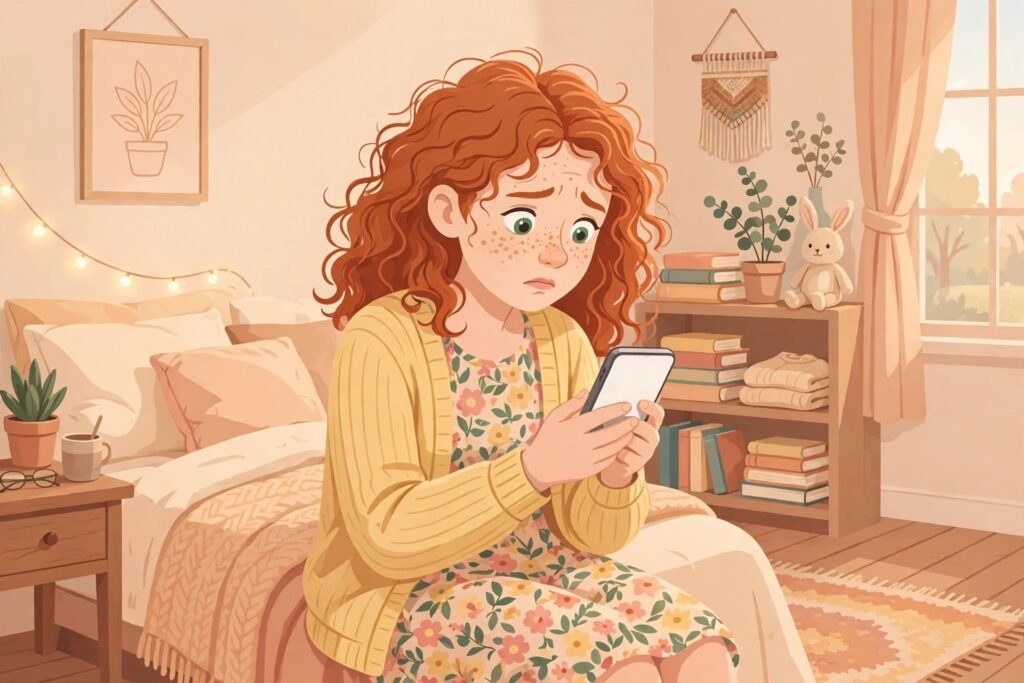
There’s a moment you probably know by heart. Someone asks you something small. A favor, a plan, a change. Inside, a clear little voice says no. But before that voice can reach your mouth, another feeling shoves past it: a hot, tight dread. What if they’re let down? What if their face changes? If you’re afraid of disappointing others, that dread runs your life more than your own wishes do. You may smile while it happens. You may even look like the easiest person in the world to be around. Inside, though, the maths never stops.
It shows up in tiny places. You agree to the group project role you hate. You say the dish was great when it wasn’t. You apologize for the rain, for the traffic, for a story that wasn’t even yours to tell. And at night, you replay faces. Was she annoyed? Did he seem off? The fear doesn’t wait for real disappointment. It rehearses it, daily, in high detail. If you’re afraid of disappointing others, even your free time isn’t fully free, because part of your brain is always on guard duty.
Here’s the first kind truth: being afraid of disappointing others isn’t a character flaw. It’s a learned alarm. Somewhere in your story, your brain linked other people’s disappointment with danger: with love cooling, with anger, with being left out or left behind. The alarm is old. The world it was built for may not even exist anymore. But the alarm still rings at full volume, and you still obey it like it’s news.
This guide stays with the fear itself. Not with scripts, not with chasing praise. Just the fear: what it feels like, where it’s learned, the stories it tells before anything even happens, and how to learn, slowly and safely, that a frown is survivable. Because if you’re afraid of disappointing others, the deepest relief isn’t a better excuse. It’s a body that no longer treats disappointment like a disaster.
The Short Answer

Here’s the short answer. If you’re afraid of disappointing others, your brain has filed their disappointment under “danger.” It predicts anger, coldness, or lost love, and it panics early, long before anything real happens. That’s why the dread feels so much bigger than the moment. You’re not reacting to the person in front of you. You’re reacting to an old prediction.
The fear is learned, which is the hopeful part. Learned things can be updated. Each time you let someone be a little disappointed, and the sky stays up, and the relationship stays warm, your brain collects new evidence. Slowly, the alarm gets quieter. Not silent, maybe. But quieter, and slower, and easier to talk over.
Notice what this fear isn’t. It’s not kindness. Kind people care about others and also sleep at night. This fear cares so hard that it erases you from your own choices. It’s also not proof that you’ve disappointed anyone. Feeling afraid of disappointing others and actually disappointing them are two different events. The first happens in your head, on repeat. The second is rare, small, and almost always survivable. Once you see that gap clearly, being afraid of disappointing others starts to feel less like a life sentence and more like a habit with an off switch.
So the work is gentle, not heroic. Notice the alarm when it rings. Check the prediction against real life. Run tiny experiments where the stakes are small and watch yourself survive them. That’s the whole path. No personality transplant needed. Just new evidence, gathered kindly, by a girl who is afraid of disappointing others and is learning that disappointment is weather, not the end of the world.
What This Fear Actually Feels Like

Let’s name it properly, because naming a feeling shrinks it. The fear of disappointing others rarely feels like fear. It feels like guilt that arrived too early, before you did anything. A tight chest when a message sits unanswered. A stomach drop when someone’s tone is a little flat. Your brain treats a flat tone like a smoke alarm treats smoke: maybe nothing, maybe fire, react now.
In the body, it can look like this. You reread your own text five times before sending. You add softeners everywhere: “sorry, just, if that’s okay, no worries at all.” You rehearse small talks in the shower, word by word, like an exam. You watch faces the way sailors watch the sky. Every sigh from another person lands on you as your job to fix.
In behavior, it looks like instant yeses. Someone asks, and your mouth agrees before your brain has even heard the question. Later, alone, the no shows up, and with it a wave of resentment you then feel guilty about. If you’re afraid of disappointing others, you know this loop by heart: yes in the moment, regret in private, guilt about the regret. It’s exhausting, and it’s not generosity. Generosity feels warm. This feels like a debt.
It also steals your resting hours. A free evening isn’t free when your brain is scanning the day for faces you might have let down. Did the teacher seem pleased? Did your friend’s “ok” text mean okay, or the other okay? The scanning is the fear’s favorite hobby. And it never brings back a clean report. A brain looking for disappointment will manufacture it from neutral faces, short replies, and busy people who were simply busy.
Naming all this matters, because a named pattern can be caught in the act. The moment you can say “this is the alarm, not a fact,” you get one small inch of space between the feeling and your next move. That inch is where your whole new life will be built, one inch at a time. A girl who is afraid of disappointing others isn’t dramatic. She is running an alarm that was installed early and set far too loud, and alarms can be reset.
Where the Fear Is Learned

Nobody is born checking faces. This alarm is taught, usually by love, which is why it’s so hard to argue with. Think back, gently, not to blame anyone, but to find the first classroom.
Some girls learned it in homes where a parent’s mood ruled the weather. When a parent was disappointed, the whole house went cold, or loud, or silent for days. A child in that house becomes a weather expert by age seven. She learns that keeping adults pleased is how you keep the house safe. Years later, she is still scanning every sky, even in rooms where the weather is fine. If you grew up that way, hear this: you weren’t too sensitive. You were well trained by a hard school.
Others learned it by being praised as the easy one. The good girl. The one who never makes trouble, never asks for much, always understands. Praise like that feels warm, but it quietly sets a trap: your place in people’s hearts starts to feel rented, paid monthly in agreeableness. Being afraid of disappointing others grows fast in that soil, because every no starts to feel like it might cancel the lease on being loved.
School can teach it too. A teacher who shamed mistakes in front of everyone. A friend group where one wrong move meant being frozen out for a week. A first friendship where love came with reviews. The brain doesn’t care where the lesson came from. It keeps the lesson long after the classroom is gone. That’s why you can be safe now, loved now, and still hear the old alarm at full volume in a perfectly safe room. It’s also why being afraid of disappointing others can follow a girl from classroom to classroom and house to house, long after the people who taught it are gone.
And sometimes there’s no single classroom. Some brains are simply wired a bit more tender: they feel other people’s feelings at high volume, like a radio that picks up every station. If that’s you, the fear isn’t a defect in your character. It’s a sensitive instrument that needs tuning, not shame. Sensitive girls are often the kindest people in the room. The goal isn’t to feel less. It’s to stop letting the alarm drive.
The Stories Your Brain Tells Before Anything Happens
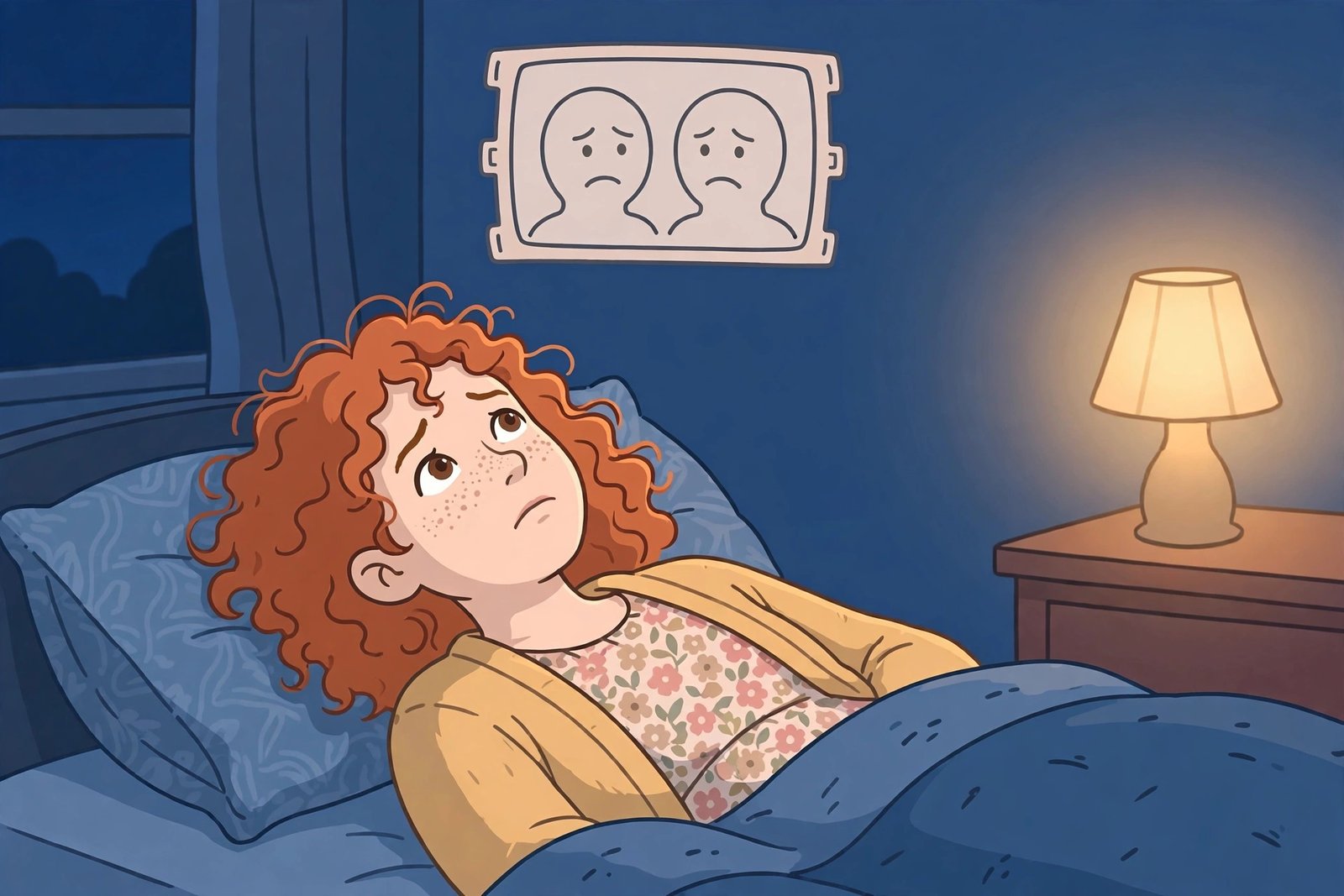
Here’s the fear’s favorite trick: it writes the ending before the story starts. You haven’t said a word yet, and your brain is already screening the film. She will be hurt. He will think I’m selfish. They will talk about me after. The film feels so real that your body reacts to it like news. Heart up. Hands cold. Yes already forming.
Look at the film closely and you’ll see it’s always the worst cut. Your brain doesn’t screen the likely ending, where the person says “okay, no problem” and forgets it by lunch. It screens the one ending in a hundred where someone is truly upset, and it screens it in close up, on loop. Girls who are afraid of disappointing others often say the film feels more real than the room they’re standing in, and that’s the trick to unlearn. Brains do this with many fears, not just this one. The disaster cut is always louder than the boring, probable one.
The film also lies about the size of your role. In the story, you’re the sun: your small no ruins their whole day, maybe their whole week. In real life, other people have full lives, full days, and a hundred other feelings that have nothing to do with you. Your no lands as a small pebble in their big river. It ripples. It passes. Being afraid of disappointing others makes the pebble feel like a dam breaking. It almost never is.
A helpful question, when the film starts rolling: “What do I actually know?” Not what you fear, not what you imagine. What has this person actually said or done, in real life, when someone let them down before? Most of the people in your life have a track record, and it’s usually kind and boring. Let the track record vote. It has better data than the film.
Also notice: the film has no ending where you’re disappointed. Your brain screens their let down in 4K and yours in a whisper. But your yes has a cost too: your time, your energy, your quiet resentment later. A fair film would show both sides. Since your brain won’t direct that version, you’ve to. Ask: “What does the yes cost me?” Put your own face in the film. You’re a character in your life too.
Why You Apologize for Things That Are Not Your Fault
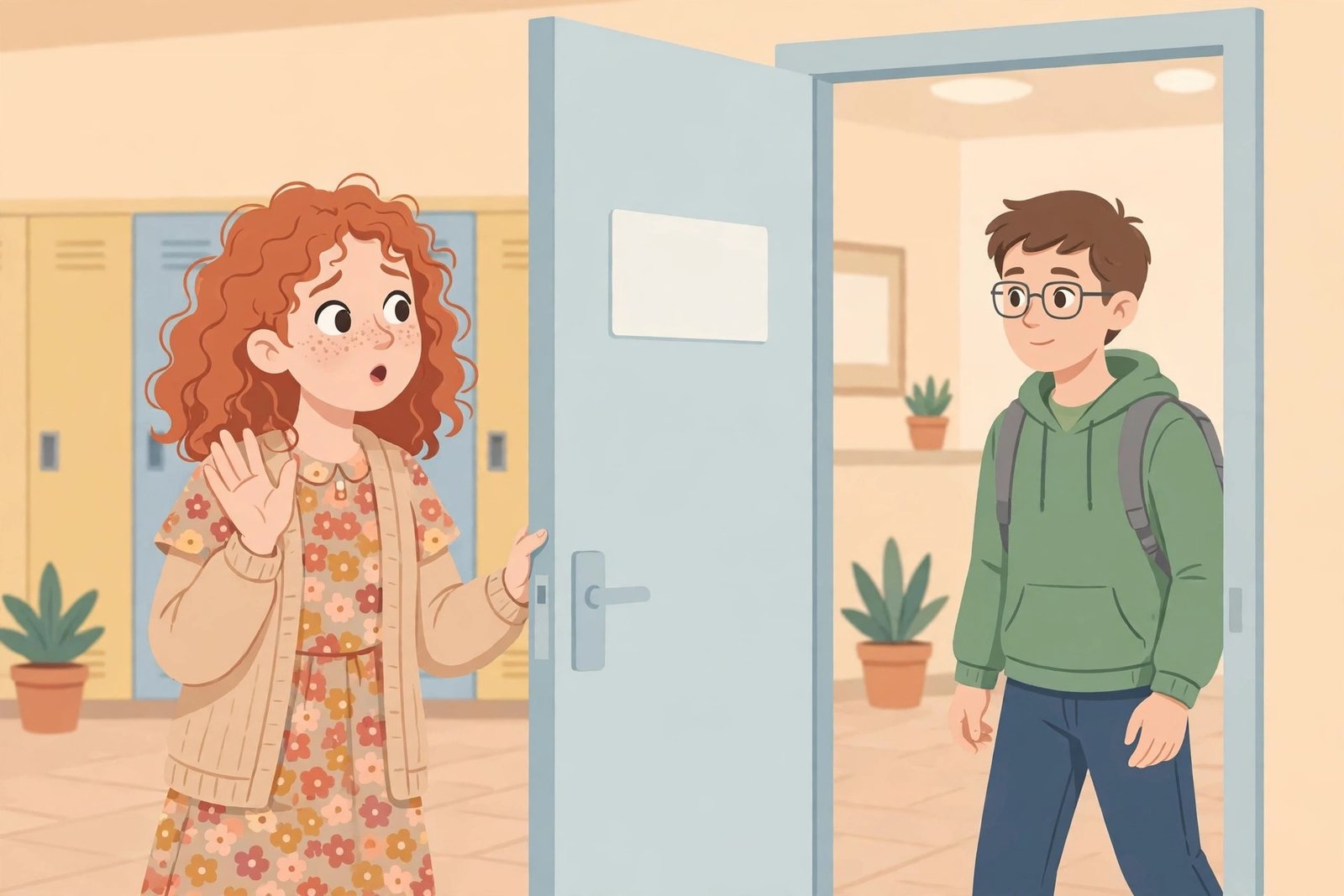
Count your sorries for one day. You may be shocked. Sorry for the weather. Sorry for asking a question. Sorry for existing in a doorway. For a girl who is afraid of disappointing others, “sorry” isn’t really an apology. It’s a spell. It means: please don’t be upset with me, please let this moment pass, please keep liking me. Notice how often that spell gets cast by girls who are afraid of disappointing others even when the other person is perfectly calm and not upset at all.
The spell feels protective, but it has a price. Every sorry for a non fault teaches your brain that you were, in fact, at fault. Apologizing for the rain tells your deep mind that other people’s comfort is your job and their moods are your report card. Over months, that lesson sinks in. You start to feel responsible for every feeling in every room, which is a job no human can do.
It also confuses your real apologies. When everything is sorry, nothing is. The day you truly owe someone an apology, the word arrives worn out from being used on doorways and weather. Saving your sorries for real moments makes them strong again, and it makes you feel strong too, like your words have weight and aim.
Try a gentle swap, not a ban. Instead of “sorry I’m late” when the bus was late, try “thanks for waiting.” Instead of “sorry, dumb question,” try “thanks, that helps.” Gratitude does the same social work as the spell, but it doesn’t put you in the wrong. You will feel the difference in your chest within a week. The moment stops being a tiny trial and becomes a normal human exchange.
And when a real no is coming, notice the urge to wrap it in ten sorries and a long excuse speech. That urge is the fear talking. A short, warm answer protects you better than a long defense, because long defenses invite debate. The fear hates short answers. Short answers are where your self respect lives. We will come back to that in the experiments below, because learning to keep it brief is a skill, and skills grow with reps.
The Hidden Cost of Never Letting Anyone Down
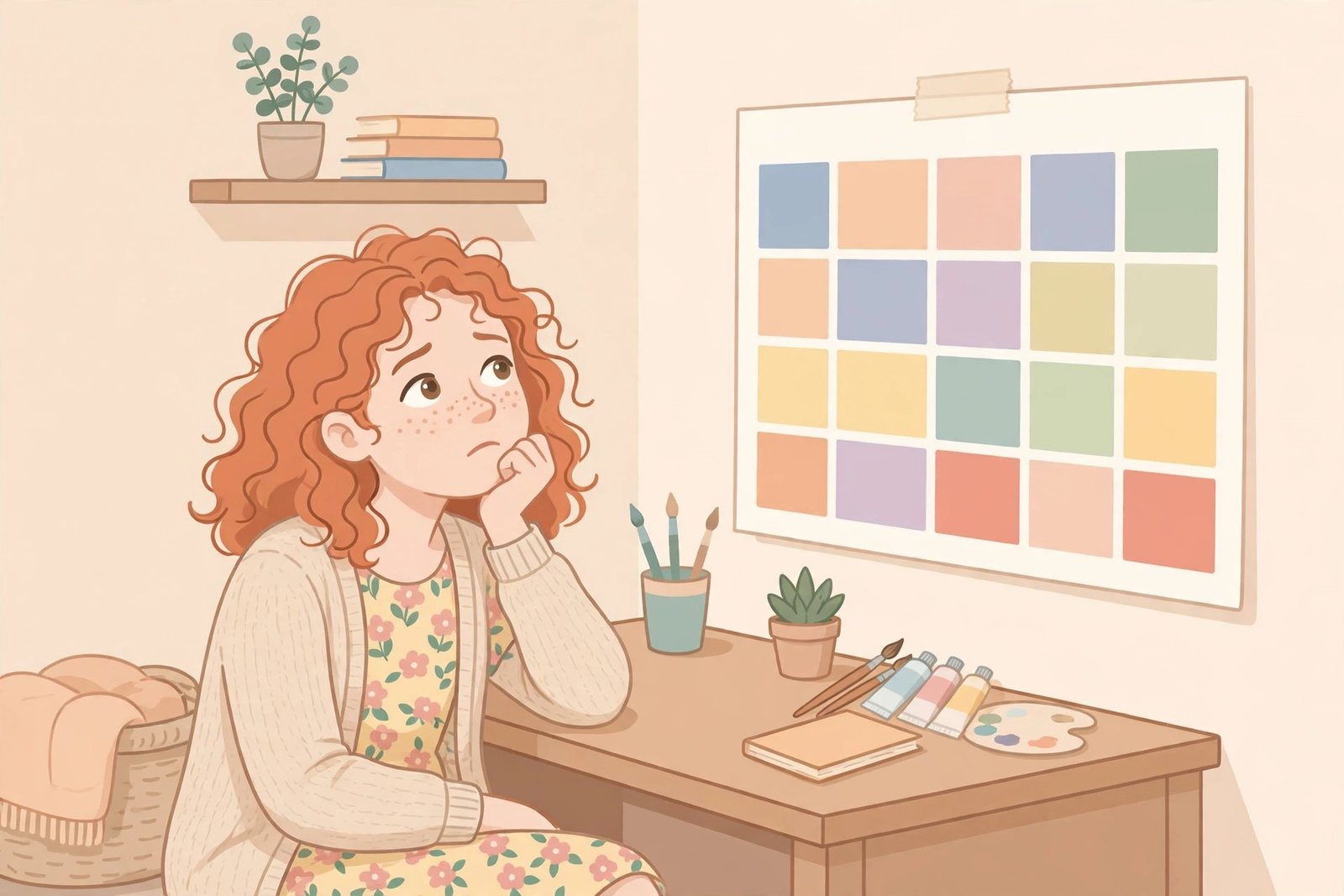
A life organized around never disappointing anyone sounds noble. In practice, it costs more than it pays, and the bill arrives in quiet places.
Cost one: your own plans keep dying politely. The art class you wanted, the rest day you needed, the opinion you actually held. Each one was traded away, one small yes at a time, and nobody even knows what you paid. That invisibility is part of the pain. You can’t even be thanked for a sacrifice nobody saw. Over years, that builds a strange sadness: a life that fits everyone except the person living it. There is also the strange grief of it. You can do everything for everyone and still go to bed feeling unknown. Nobody can love the real you if the real you never gets a speaking part.
The fear promises closeness and delivers distance, and that broken promise may be the saddest cost of all.
Cost two: honesty gets hard. If you are afraid of disappointing others, you start editing the truth in small ways. The meal was fine. The plan sounds fun. No, you do not mind. Small edits feel kind in the moment, but they add up to a fog where even you lose track of what you really think. Friends cannot truly know a girl who only shows them the edited version. So the fear, which exists to protect your place in people’s hearts, quietly keeps you lonely inside your own friendships.
Cost three: resentment. It feels ugly to admit, but yes on the outside and no on the inside breeds a bitter leak. You start keeping score. You snap at safe people. You cry over a tiny thing that was actually the hundredth thing. None of that makes you a bad person. It makes you a person whose alarm has been overruling her for too long. In fact, several of these costs show up in Psychology Today’s list of people pleasing signs, like over apologizing and feeling guilty whenever you set a limit. Seeing your pattern on a page like that can feel like a relief: oh, this is a known thing. It has a shape. Other people live it too.
Cost four is the sneakiest: people start trusting your yes less, not more. A yes that always comes, no matter what, stops meaning anything. The friends worth having actually want your real answer. They want to know the yes is chosen. A girl who can say a kind no gives her yes back its value, and gives her people the gift of knowing where they truly stand.
None of these costs mean you must flip into someone who never cares. Caring is beautiful. The line is this: care that includes you is kindness. Care that deletes you is fear with good manners. Learning to spot the difference, in the moment it happens, is the whole skill this guide is building.
Learning That a Frown Is Not the End of the World

Now the heart of it. Other people’s disappointment is a feeling, and feelings are weather. A friend can be let down at 4 pm and laughing with you by dinner. A parent can frown at a grade and still love you at breakfast, unchanged, forever. The fear tells you a frown is a verdict on your worth. Real life keeps showing that a frown is just a frown: brief, human, and survivable for both of you.
Think of the disappointments you have felt toward people you love. A friend cancelled. A sibling forgot. Did you stop loving them? Did the relationship end? Almost certainly not. You felt a small sting, life moved, and love stayed exactly where it was. Other people run the same software. When you are afraid of disappointing others, you forget that their love is as sturdy as yours. Let your own forgiveness of others be the proof of how forgiveness works. And remember, being afraid of disappointing others does not make you weak. It makes you someone whose care runs deep, and who is now learning to aim some of that care at herself.
There is a second truth tucked inside this one: you cannot actually control whether someone feels disappointed. People bring their own moods, days, and expectations to every moment. A person can be disappointed by a sunny picnic because they dreamed of rain. If disappointment is partly built by the other person’s inner weather, then preventing it was never fully your job, and never fully possible. What a relief that is, once it sinks in. You are responsible for being kind and honest. You were never responsible for managing every feeling in the room.
When you are ready for the practical side of the word no itself, our guide on how to say no without feeling guilty walks through it gently. This page stays with the fear underneath, because once the fear softens, the word gets easier on its own. And the fear does soften, every single time you watch a disappointment happen and then watch life simply continue.
If this fear ever feels constant, heavy, or so strong that it stops you from living your normal life, please do not carry it alone. Talk to a trusted adult, a school counselor, or a health professional. That is not an overreaction. Strong alarms deserve real support, and getting support is a sign of sense, not weakness.
Small Experiments That Prove You Survive It

Brains trust evidence more than advice. So let’s gather some. Tiny experiments, low stakes, real data. The rule: start so small it feels almost silly. Silly is good. Silly is safe, and safe reps are the ones that rewire an alarm.
Experiment one: let a text wait. Not a whole day, not an emergency message. Just let one ordinary message sit for one hour while you finish your thing. Notice the dread rise, peak, and fall. Notice the world not ending. Notice the friend replying later like nothing happened, because for them, nothing did. Data point one, collected.
Experiment two: give one true, tiny opinion. The movie was just okay. You would rather have tea than soda. Small truths, said warmly, in safe company. Watch what happens: almost always, a shrug, a laugh, a conversation that gets better, not worse. People lean toward a girl with real edges. Being afraid of disappointing others makes honesty feel dangerous. Tiny truths keep proving it is actually how closeness is built. Each tiny truth is one more rep for a girl who is afraid of disappointing others and is tired of letting the alarm vote first.
Experiment three: deliver one small piece of bad news early instead of hiding it. You cannot make the Saturday plan. Say it Tuesday, briefly and kindly, then stop. No ten sorries, no giant excuse file. Then watch the other person’s actual reaction and compare it with the film your brain screened. Write down both. The gap between the film and the fact is your fear, measured. Watch it shrink, experiment by experiment.
Keep a small note on your phone: “times I let someone down and it was fine.” Fill it for a month. On hard days, read it. That list is your personal research, and it will convince you in a way no article can. And if you notice the hunger underneath, the wish to be praised back into feeling safe, that is a close cousin of this fear; our piece on how to stop seeking other people’s approval explores it on its own.
You do not need to become fearless. You need a quieter alarm and a pocket full of proof. Month by month, that is exactly what these small reps build: a girl who can hear a frown, feel the old flutter, and still choose her own honest answer.
Frequently Asked Questions
Is it wrong to care about not disappointing people?
No. Caring about others is a warm, good trait, and the world needs more of it. The trouble starts when caring turns into fear that runs your choices and erases your own needs. Kindness includes you. Fear deletes you. If your caring leaves you anxious, resentful, and exhausted most days, that is the fear wearing kindness as a costume. That balance, care that includes you, is exactly what a girl who is afraid of disappointing others is learning to build, one small choice at a time.
Why do I feel guilty even when I did nothing wrong?
Because your alarm fires on prediction, not on facts. Your brain imagines a let down face, and guilt shows up to punish you for a crime that never happened. The feeling is real, but its report is not. Ask what you actually did, in plain words. Usually the answer is: nothing wrong at all. Let the fact answer the feeling.
What if someone really does get upset with me?
Then you will feel a hard hour, and you will survive it, and usually the relationship will too. A person can be upset and still love you. Let them have their feeling without rushing to erase it. Listen, be kind, and give it a little time. Real bonds bend under honest moments. They rarely break from one small, respectful no.
How do I stop apologizing for everything?
Start with a swap, not a ban. Trade “sorry” for “thanks” when no fault exists: “thanks for waiting” instead of “sorry I’m late.” Save your real apologies for real moments, where they carry weight. Your brain will resist for a week, then relax. Fewer sorries also makes your chest feel lighter in ordinary moments, which tells you the spell is loosening.
Will this fear ever go away completely?
Probably not to zero, and that is okay. A soft care for others’ feelings is part of being a kind person. The goal is a quieter alarm, not no alarm. In time, being afraid of disappointing others turns from a siren into a small tap on the shoulder, one you can hear, check, and often calmly overrule with your own good sense.