
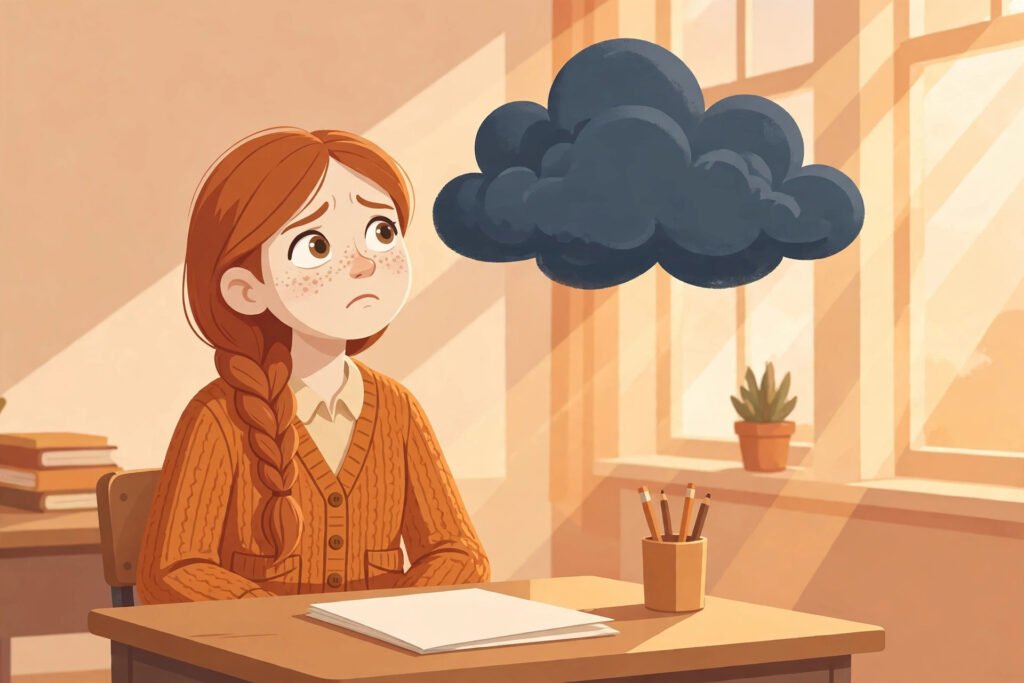
The math test is Friday. It’s only Tuesday, and your brain has already failed it, cried about it, and pictured your teacher’s disappointed face in high detail. Nothing has happened yet. The test is still three days away. But inside your head, the disaster is fully built, with furniture. If you keep asking yourself why do I always imagine the worst, you’re not broken and you’re not dramatic. You have a brain doing an old job a little too hard.
Here’s the hopeful truth first. Imagining the worst isn’t a personality flaw. It’s a protection habit. Your mind scans ahead for danger so you can dodge it, the way you look both ways before crossing a street. The problem isn’t that your brain checks. The problem is that it checks, panics, and then believes its own panic. Understanding why do I always imagine the worst starts with seeing that habit clearly, without shame.
This guide walks through the whole loop. Why your brain acts like an overprotective bodyguard. Why the scary ending feels so believable even when it’s unlikely. And most of all, the reality check method that shrinks a feared outcome back to its real size. By the end, the question why do I always imagine the worst will have a calm, practical answer, and Friday’s test will just be a test again.
One promise about this page. This is a general wellness guide, not a diagnosis of anything. Worst case thinking is one of the most common habits a human brain can have. Almost everyone you know does it sometimes. You’re simply learning to run the habit instead of letting it run you.
The Short Answer

The short answer to why do I always imagine the worst is that your brain treats a feared outcome like a fire drill. Long ago, noticing danger early kept people alive, so the brain kept the alarm and made it loud. Today the alarms go off for tests, tryouts, results, and talks instead of wild animals. The alarm system is ancient. The triggers are homework. That mismatch explains most of the noise.
Notice something kind about the loop: it spikes before real events, when the answer is still unknown. Your brain hates a blank space, so it fills the blank with the worst draft it can write. The event itself is usually smaller than the draft. Keeping that gap in view, between the draft and the day, is the working heart of why do I always imagine the worst and how it loosens its grip.
You can’t delete the alarm, and you wouldn’t want to. You can retrain what happens after it rings. That’s what the rest of this guide teaches: how to question a scary prediction, price it honestly, and wait for real life to answer. Girls who learn why do I always imagine the worst don’t stop caring about outcomes. They just stop paying for disasters that never arrive.
And one more comfort. A loud alarm says nothing about how your life will actually go. It only says your protection system is enthusiastic. Enthusiasm can be coached. That’s all we’re doing here.
Your Brain Is a Bodyguard That Overreacts
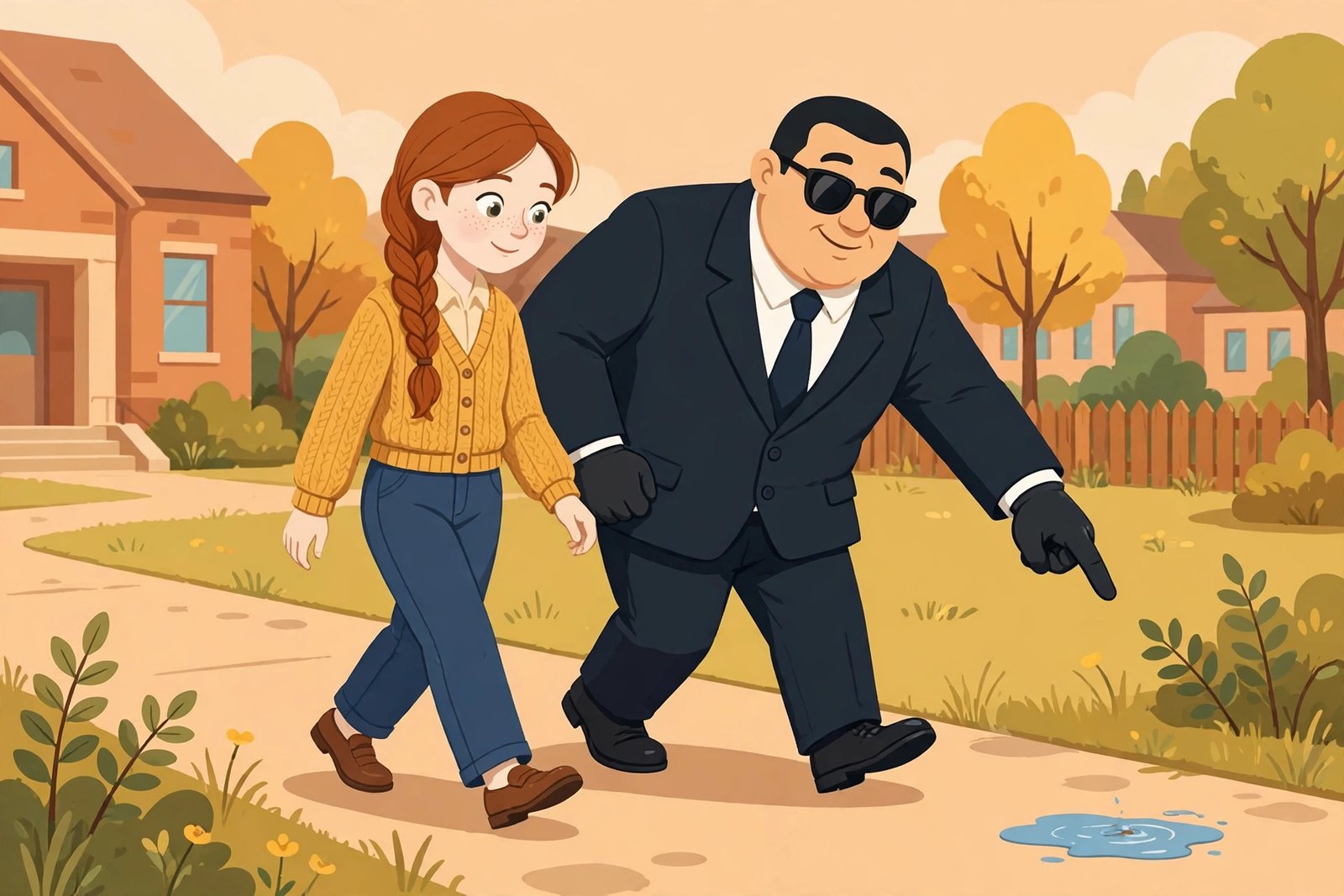
Picture your brain hiring a bodyguard. His job is to spot threats before they reach you. He is strong, loyal, and completely unable to relax. A quiz is announced and he’s already shouting about failure. A friend reads your message and doesn’t reply, and he’s drafting a speech about the friendship ending. He means well. He is just terrible at telling a spark from a fire.
This bodyguard has a simple rule: better safe than sorry. Missing one real danger would be a disaster, in his view, while false alarms cost nothing. Except false alarms do cost. They cost your sleep, your appetite, your free periods, your joy in the days before anything even happens. When girls ask why do I always imagine the worst, they’re usually asking why the bodyguard gets the final say. He gets it because nobody taught the rest of the team to question him.
Evolution is part of the story. Brains that spotted the snake in the grass lived to become your ancestors. Brains that shrugged at the rustle didn’t. So the alarm got built loud, fast, and biased toward danger. Modern life kept the alarm and swapped the snakes for report cards, audition lists, and read receipts. The system isn’t stupid. It’s outdated, like a smoke detector that goes off for toast.
It helps to give the alarm a name in your head. Call it the Bodyguard, the Alarm, the Dramatist, whatever makes you smile a little. Naming it turns a scary voice into a character you can answer. “Thanks, Bodyguard, noted. I will check the facts myself.” That tiny distance isn’t silly. It’s the first inch of space between you and the spiral, and space is where your own judgment lives.
Think of the last time he really earned his salary. A strange noise downstairs that turned out to be the cat. A headache that turned out to be a headache. His record is honestly terrible, and yet he talks with total confidence every single shift. Remembering his record is a gentle way to answer why do I always imagine the worst: the loudest voice in your head isn’t your most accurate one, just your most protective one.
So when the alarm rings this week, try not to argue with its volume. Argue with its evidence instead. That shift, from fighting feelings to checking facts, is the doorway out of why do I always imagine the worst and into a calmer way of waiting for real news.
Real Events, Unreal Endings
Let us draw a clear border, because this habit has close neighbors that look similar but work differently. Some girls overthink at night, replaying the whole day as they try to sleep. Others invent full conversations that will never happen, or build romantic scenarios around a crush. Those loops are about the past, or about pure fiction. This one is different. This habit attacks real, upcoming events in your actual daytime life, and it only edits one thing: the ending.
The test on Friday is real. The team list posted next week is real. The talk you need to have with a friend is real. Your brain doesn’t invent these events. It invents their endings, and it always picks the darkest one on the shelf. A hard test becomes a failed course. A posted list becomes public humiliation. A honest talk becomes a lost friendship. Same event, fantasy ending. Seeing that split clearly is a big part of answering why do I always imagine the worst in your own life.
Bedtime has its own version of this pain, and if your nights are the hard part, our guide to stopping overthinking before you fall asleep speaks directly to that loop. The daytime dread in this page needs a different tool, because you can’t fix a feared ending with a bedtime routine. You fix it by cross examining the prediction while the sun is still up.
Watch how specific the fantasy gets. Your brain doesn’t stop at “the test goes badly.” It adds your teacher’s exact sigh, the classroom silence, the walk home. Detail feels like evidence. It’s not. Detail is just your imagination being a good film crew. Real predictions are usually vague and boring. The vivid ones are cinema, and cinema is written to scare you.
So the next time a feared ending arrives in full color, label the parts. Event: real. Ending: unwritten. Your brain filled the unwritten part with a horror draft because horror drafts are its job. Your job is to keep the draft in the drafts folder until life publishes the real one. That labeling habit, practiced on ordinary Tuesdays, is how girls stop asking why do I always imagine the worst quite so often.
Why the Worst Ending Feels So Believable
If the worst ending is so unlikely, why does it feel so solid? Part of the answer is repetition. A thought you think forty times starts to feel like a fact you learned. Your brain confuses familiar with true. The disaster you rehearsed all week feels more real than the calm outcome you never bothered to picture. That’s a filing error, not a prophecy.
Feelings do the rest of the forgery. Fear is a loud emotion, and loud emotions vote like evidence. “I feel scared, so something scary must be coming.” It sounds logical at 2 p.m. in a hallway. It falls apart on paper. Feelings report the state of your alarm system, not the state of the future. A shaky stomach before a test tells you the test matters to you. It tells you nothing about your grade.
Memory cheats too. You remember the one time things went badly far better than the fifty times things went fine, because bad events get underlined in red. Ask your brain for statistics and it hands you highlights. The highlights reel of your life, like anyone’s, is edited for drama. Knowing the edit exists helps you stop treating it as a full report.
There’s a kinder way to see all this machinery. Your brain isn’t lying to hurt you. It’s running an old safety program with clumsy tools: repetition, loud feelings, and a biased memory. Naming the tools is most of the battle, because a trick you can name loses its costume. The next time a feared ending feels like a fact, you can ask which tool built it. That question alone is a working answer to why do I always imagine the worst.
Social feeds polish this illusion too. Everyone posts the disaster or the triumph, never the ordinary middle. Your brain scrolls a world made of extremes and quietly concludes that extremes are normal. They’re not. They’re just the only parts anyone uploads. Keeping that in mind softens the private question of why do I always imagine the worst, because your comparison set was rigged from the start.
And here’s a statistic worth borrowing from your own life. Count your last ten dreaded events. How many ended in the actual disaster you pictured? For most girls, the true disaster count is zero, or close to it. Your own record is the most convincing evidence you own. Keep it somewhere you can reread on hard days.
The Reality Check: Best, Worst, Most Likely
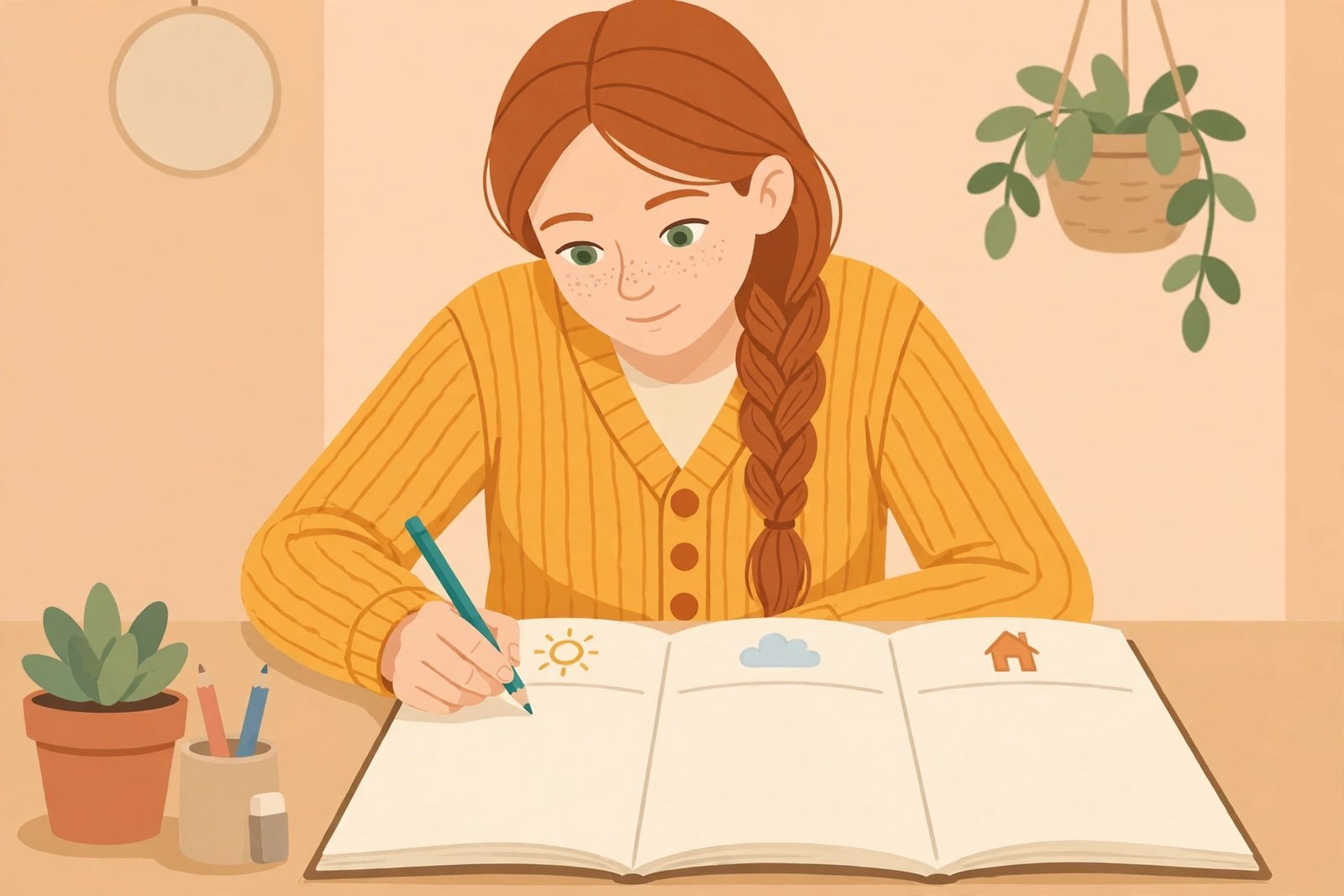
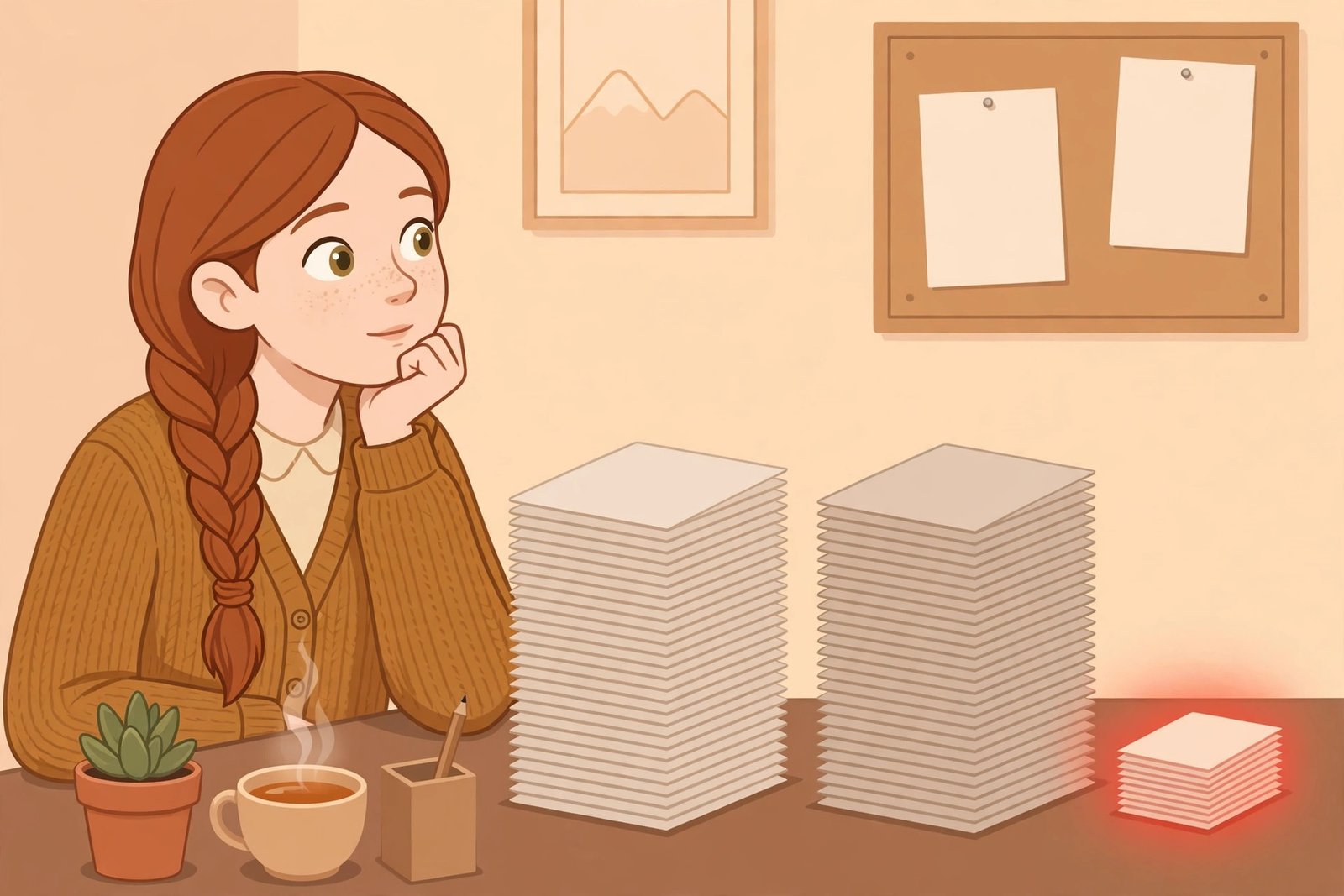
Now for the main tool. When a feared ending grabs you, stop and write three versions of the future. The best outcome. The worst outcome. And the most likely outcome. This simple trio is famous in therapy offices for a reason: it forces your brain to widen its view. The worst version is allowed to exist. It just has to share the page with its siblings, probably for the first time.
Write them honestly. Best: the test goes well and you surprise yourself. Worst: you fail it completely and have to face a hard talk at home. Most likely: it’s tough in parts, you land somewhere in the middle, life continues. Notice how the most likely column feels boring. Boring is good news in disguise. Most of real life is lived in that middle column, and girls who ask why do I always imagine the worst are usually ignoring it completely.
Then add one more question, the one that does the heavy lifting. If the worst did happen, what would I actually do? Answer it in steps. I would tell my parents. I would ask the teacher about a retake. I would study differently next unit. Watch what happens: the catastrophe shrinks from an ending into a problem, and problems have steps. A feared outcome you could cope with loses most of its thunder.
This isn’t positive thinking in a party hat. You’re not chanting that everything will be amazing. You’re doing accounting. Psychology Today’s overview of catastrophizing, which is the clinical name for this exact habit, suggests the same move: label the thought, then test it against what’s most plausible, and picture yourself coping with the outcome you fear. If the worst ending can be coped with, it stops being a monster and becomes weather.
Practice the trio on small stakes first. A quiz. A reply that has not come. A plan that might change. Small reps build the muscle so it’s there on the big days. Soon the check becomes semi automatic: alarm rings, three columns appear, the middle one steadies you. That’s the practical exit from why do I always imagine the worst. Not a silent brain. A questioned one.
Questions That Shrink a Scary Story
Between alarm and reality check, a few sharp questions can cut a scary story down to size. Keep them in your phone notes. Read them when the spiral starts. Each one targets a specific trick your bodyguard loves, and each one can be answered in under a minute, right where you stand.
Question one: what do I actually know? List facts only, out loud or on paper. The test is Friday. I studied twice. I did fine on the last one. Notice how short the fact list is compared to the fear list. Question two: what am I adding? Everything after the facts is decoration your alarm hung on the tree. Naming the decorations as decorations drains their glow. These two questions alone answer half of why do I always imagine the worst on any given day.
Question three: what would I say to a friend? If your best friend feared this exact ending, you wouldn’t feed her dread. You would list her strengths, her record, her options. Your brain owns that kind voice. It just reserves it for other people. Borrow it for yourself, word for word. Question four: how will this feel in a month? Most feared endings, even the real bad ones, shrink with time. The month view is a mercy your panicked brain will never offer on its own.
Question five is the quietest and maybe the strongest: what’s this fear trying to protect? Often the answer is tender. You fear the test because you care about your future. You fear the talk because you love the friend. The fear is love and effort wearing a scary mask. Seeing the caring under the dread doesn’t delete it, but it changes your relationship with it. You stop being a girl haunted by predictions. You become a girl whose caring runs loud, learning volume control.
Keep the five questions somewhere you’ll actually see them. A note on your lock screen works. So does the inside cover of the notebook you carry everywhere. In the first hot minute of a spiral, nobody goes hunting through old screenshots for wisdom. Put the tools where the panic is. That tiny bit of planning is part of growing out of why do I always imagine the worst, because it means past you is looking out for future you.
If replaying moments is your flavor of spiral, the hours in bed reviewing every awkward thing you said, you might also like our guide to replaying embarrassing moments before sleep, which handles the nighttime rerun habit. Different loop, same kind brain underneath. Whichever loop visits you, the move is identical. Notice the story. Check the facts. Answer with your real record. Slow, unglamorous, and it works more often than the alarm wants you to believe.
What to Do While You Wait for the Real Answer
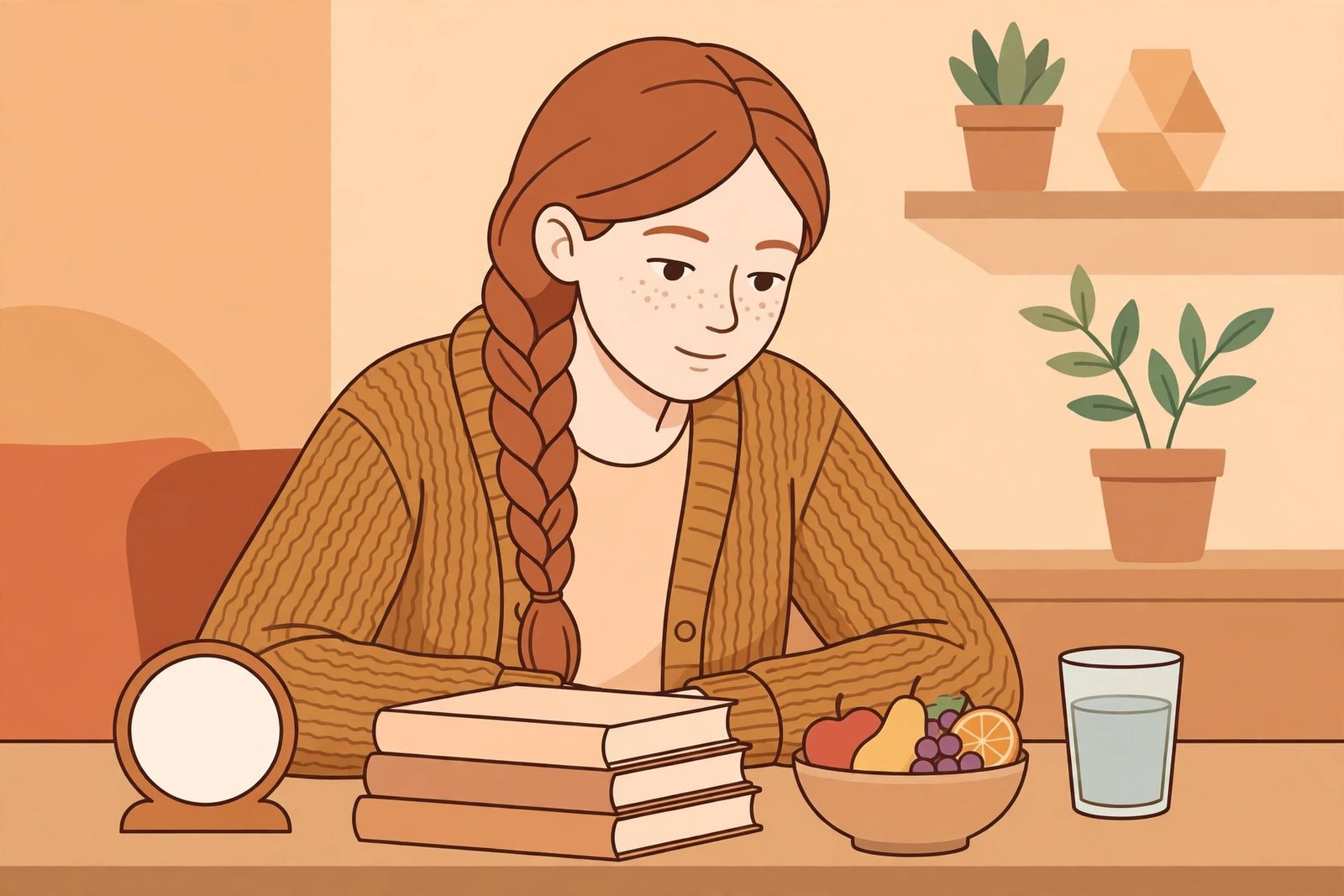
Reality checks handle the thought. But feared events also come with a waiting room: the days between now and the real answer. Waiting is where this habit eats best, because an empty schedule gives the bodyguard a stage. So fill the stage on purpose. Waiting well is a skill, and it’s mostly built from small, concrete moves.
First, give worry an appointment. Pick ten minutes a day, same time, and let the dread talk then. Outside the appointment, when the spiral taps your shoulder, you can honestly say, “Not now. Four o’clock.” It sounds almost too simple, and plenty of girls find the appointment trick genuinely useful, because dread hates being scheduled. It wants the whole day. Give it a slot and it shrinks toward the slot.
Second, spend the waiting days on the one thing that actually changes outcomes: preparation. If it’s a test, study in short honest sessions. If it’s a talk, draft your first sentence. If it’s a tryout, practice the piece you can control. Action is the natural enemy of dread, because dread feeds on helplessness. Every small prepared step is evidence your brain can’t argue with, filed under the most likely column.
Third, protect the basics like they’re medicine, because for a worrying brain they’re. Sleep, food, movement, sunlight. A tired brain catastrophizes louder; a fed, rested one argues better. This isn’t fluffy advice. It’s maintenance on the exact machine that has to do the reality checking. Girls deep in the loop of why do I always imagine the worst often find their worst spirals land on their most exhausted days, and that’s not a coincidence.
Also, tell one person what the waiting room feels like. Not for advice, just for air. Saying “my brain keeps screening the disaster version of Friday” out loud to a friend shrinks it strangely fast. Shared dread weighs half as much. Half the girls who ask why do I always imagine the worst have simply never heard how many of their friends do the exact same thing at 11 p.m.
And fourth, ration the rehearsals. Every full mental run of the disaster feels like preparation and acts like practice, practice at being terrified. Cap the reruns. When you catch the film starting, switch scenes on purpose: music, a walk, a text to someone funny. You’re not avoiding life. You’re refusing free overtime for the bodyguard. The real event will arrive soon enough, once, at its real size.
When Worry Deserves a Bigger Conversation

Everything above treats worst case thinking as a habit, because for most girls, most of the time, that’s exactly what it’s. A loud alarm, an old program, a coachable pattern. But habits have edges, and honesty means naming them. Sometimes dread stops being a habit and starts being a weight that changes what you can do with your days.
Here’s a fair test. Is the dread regularly stopping you from sleeping, studying, or seeing friends? Does it talk you out of things you actually want, week after week? Does your body live in a near constant state of alarm, even on ordinary, safe days? If yes is becoming a pattern, that’s not a character flaw and it’s not something to wrestle alone in your room. It’s a sign to bring in support.
Start with a trusted adult. A parent, an aunt, a school counselor, a coach who listens well. You don’t need a polished speech. “My brain imagines the worst about everything and it’s starting to run my days” is a complete and honest opening. Adults who care would rather hear that sentence early than learn months later that you were struggling quietly. Asking isn’t weakness. It’s the same reality check skill, applied to the habit itself.
If talking to someone you know feels too big at first, free help exists. In Canada, Kids Help Phone answers young people day and night: call 1-800-668-6868 or text CONNECT to 686868. In Canada and the United States, you can also call or text 988 any time you feel overwhelmed and need a human voice. These lines are built for exactly the size of problem you’re carrying. Nothing about your worry is too small or too strange for them.
Most girls will never need more than the tools in this guide, and that’s worth celebrating too. A brain that asks why do I always imagine the worst is a brain that already suspects the alarm lies sometimes. Trust that suspicion. Check the facts, price the fear honestly, wait with a full life, and let real endings, not rehearsed ones, tell your story.
Frequently Asked Questions
Is imagining the worst a sign that something bad will happen?
No. A feared ending is a product of your alarm system, not a preview of the future. Your brain builds the scariest draft because drafts are its job, the way a smoke detector reacts to toast. If you’re wondering why do I always imagine the worst and whether the thought itself is a warning, it’s not. Treat the image as weather inside your head. The real event will bring its own news, once, at its real size.
Why does the worst case feel more real than the good one?
Because of three tricks working together. Repetition makes the scary version familiar, and familiar feels true. Fear is a loud feeling, and loud feelings vote like evidence. And your memory underlines bad events in red while filing the fifty fine ones in a drawer. Once you can name the tricks, the worst case loses its costume. It becomes what it always was: one draft among several, written by an alarm that cares about you clumsily.
What’s the fastest way to calm down before a test or a big talk?
Run the three columns out loud or on your phone: best, worst, most likely. Then answer the coping question for the worst column, in steps, as if planning for a friend. This takes about two minutes and it works because it gives your bodyguard facts to stand down with. Add slow breathing and a sip of water. If you catch yourself asking why do I always imagine the worst right before the event, that’s the alarm peaking on schedule. Peaks pass. Walk in anyway.
How is this different from overthinking at night?
The loop is related, but the timing and fuel differ. Night overthinking usually replays the past: things you said, faces you made, moments you want back. This habit aims at the future, at real events still ahead, and it edits their endings. Bedtime tools calm the replay. Daytime reality checks handle the forecast. Many girls have both loops taking turns, which is normal. Learning which loop is running tells you which tool to pick up.
What if my worst fear actually comes true one day?
Then you’ll cope the way you have coped with every hard thing so far: in steps, with help, over time. A failed test becomes a retake plan. A lost spot becomes next season’s training. The feared ending feels like the end of the story only from inside the spiral. From real life, it’s a chapter. Girls who understand why do I always imagine the worst learn this deeply: even the worst column, on its worst day, is survivable, and usually far smaller than the film their brain screened for weeks.