

It starts innocently enough. One episode before bed. One podcast on a long drive. One documentary that a friend swears you have to see.
Then it is midnight, you are wide awake, and you are telling yourself you will stop after the next part. If that sounds familiar, you have probably asked the question behind this article: why do we love true crime, and why does it hold our attention so completely?
The honest answer is not that fans are morbid, cold or secretly drawn to harm. Most people who love this genre are kind, anxious, thoughtful people who lock their doors, check on their friends and care deeply about fairness.
The pull is psychological, not shameful. When we ask why do we love true crime, we are really asking how the human brain handles fear, uncertainty, empathy and unfinished stories.
This article stays at that level on purpose. There are no graphic case details here, no invented crimes and no attempt to turn real suffering into entertainment.
Instead, we will look at the mechanisms underneath the habit: threat detection, curiosity, problem solving, emotional rehearsal, justice, control and community. We will also look at the other side, because a genre that helps one person feel prepared can leave another person sleepless, suspicious or numb.
The short answer

The short answer to why do we love true crime is that it gives the brain several rewards at the same time, while keeping real danger at a distance.
It offers fear without immediate risk. It offers a puzzle with missing pieces. It offers a chance to rehearse hard situations in your mind, to imagine what you would notice, what you would do and what you would never ignore again.
It also offers stories about order being restored. Something went badly wrong, someone looked closely, evidence was gathered, questions were asked and, at least sometimes, the truth became clearer than it was at the start.
For many listeners and viewers, that combination is hard to resist: strong emotion, real stakes, human motives and an ending that feels more settled than the beginning.
There is also a social layer. True crime gives people a shared language for talking about safety, trust, intuition and harm without having to start with their own lives.
One friend says, “I watch it to learn what to watch for.” Another says, “I watch it because I need the case to make sense.” Both are answering why do we love true crime in different ways, and both answers can be true.
Keep that layered picture in mind as you read on. Every section below is a closer look at why do we love true crime from a different angle: the body, the mind, the heart and the habits we build around all three.
Fear at a safe distance: why do we love true crime when it scares us

Fear is one of the oldest signals we have. Long before we had language for anxiety, the human nervous system learned to notice movement in the dark, a change in a voice, a door that should have been closed.
That system still runs in modern life. It scans faces, tones, streets, messages and silences. It asks a simple question all day long: am I safe here?
True crime feeds that system a concentrated story, but it does so from the couch, the car or the kitchen table. You can feel your heart beat faster while knowing that you can pause, rewind or turn the sound down.
Psychologists often describe this kind of experience as controlled exposure. The emotion is real, but the setting is chosen. You decide when it starts. You decide when it stops.
Think of the difference in ordinary terms. A roller coaster and a sudden drop in an elevator both involve falling, but only one is chosen, expected and built with clear limits.
In the same way, part of why do we love true crime is that it lets us approach the edge of fear without stepping into real danger. The body practices alarm, and then it practices calming down again.
That second part is easy to overlook. Many fans describe a strange relief after an episode ends. The tension rises, the story resolves in some way, and the nervous system learns that arousal can peak and then pass.
For someone who lives with everyday worry, that arc can feel almost instructional. The feeling says: this is intense, and I am still here, and I can come back down.
It does not work that way for everyone, and we will return to that limit. But for many people, the safe distance is not a side detail. It is the whole doorway into the genre.
Consider a common scene: a woman listens to a podcast while she folds laundry. She is not seeking pain. She is visiting a frightening possibility in a place where the lights are on. When the episode ends, she texts a friend “that one stayed with me” and gets on with her evening.
This is also why the setting matters so much when people wonder why do we love true crime instead of simply avoiding frightening subjects altogether. Chosen fear, in a safe place, is a completely different experience from fear that arrives uninvited.
The puzzle brain: curiosity, patterns and unfinished stories

Human beings are pattern seeking creatures. We notice faces in clouds, meaning in coincidences and motives in brief conversations. We are built to ask what happened, in what order, and what it means.
True crime is structured almost perfectly for that instinct. It begins with confusion. Facts arrive out of order. People remember the same night differently. A small detail that seemed minor in minute ten matters again in minute fifty.
The brain dislikes loose ends, especially when the stakes are high. An unfinished story stays active in the mind, a little like an open tab you keep returning to even when you meant to close it.
That is why cliffhangers work so well in this genre. The question is not only who or what or how. The deeper question is whether the pieces can be made to fit at all.
Part of why do we love true crime is simple mental appetite. The story gives the brain work that feels meaningful: sorting timelines, weighing credibility, spotting contradictions and testing early guesses against new information.
Listen to how fans talk after an episode. They rarely say only that it was sad or shocking. They say things like:
“I knew something was off when the story changed.”
“Did you notice she answered a different question than the one she was asked?”
“I do not buy that he forgot that detail. Nobody forgets that.”
That is detective language, but it is also ordinary social cognition. Every day, we read people. We decide whom to trust, when to ask a follow up question and when a story feels rehearsed instead of lived.
True crime stretches that everyday skill into a longer, more dramatic exercise. It rewards attention in a way that routine life rarely does.
There is a related pleasure in expertise. Regular fans learn how investigations work in general terms, and they build a small mental library about human behavior under pressure. That learning can feel empowering, even when the subject is dark. Knowledge reduces helplessness. If the world contains harm, then understanding how harm is uncovered feels better than looking away and hoping for the best.
Curiosity also explains why unsolved stories linger. A clear ending lets the mind file a story away. An open ending keeps asking to be revisited, discussed and reconsidered, sometimes for years.
Learning to stay safe without living in fear

Ask a room of true crime fans why they watch, and safety will come up quickly, especially among women. The answer often sounds practical rather than dramatic.
“I pay more attention when I walk to my car now.”
“I share my location with my sister when I meet someone new.”
“I stopped overriding the feeling that something was not right.”
Statements like these point to another layer of why do we love true crime. The genre can function as informal safety education, even when it was not designed for that purpose.
Stories show, in general terms, how trust is built too quickly, how isolation can make a person more vulnerable, how a charming first impression can hide a pattern, and how small warning signs can look harmless one by one.
That learning is not only about strangers. Much of the real risk in life comes from people who are known, trusted or woven into daily routines. Good coverage of this genre, at its best, helps viewers think about boundaries rather than stereotypes.
If you are interested in that boundary side of the subject, our guide on how to know if you are in a toxic relationship looks at patterns that can be easy to excuse from the inside.
The safety motive also has a psychological name worth knowing: rehearsal. Athletes rehearse. Pilots rehearse. Emergency workers rehearse. Ordinary people rehearse too, in imagination, when they run through what they would say or do if a situation turned uncomfortable.
A podcast episode can become a quiet rehearsal space. What would I do if a friend stopped answering messages? What would I do if someone I dated tried to cut me off from other people? What would I want someone to notice if I went quiet?
Those questions are not pleasant, but they are not pointless either. They connect entertainment to preparedness, and preparedness reduces the feeling of being powerless.
Seen this way, the question of why do we love true crime becomes much less mysterious. Many people are quietly looking for a map of risks they hope they will never meet, drawn by stories they can study from a safe chair.
Still, there is a line between useful vigilance and constant scanning. Checking a lock is a habit. Checking it five times while imagining worst case scenarios every night is a burden.
The genre helps most when its lessons become simple, proportionate habits: tell someone where you are going, trust repeated discomfort, keep your phone charged, and ask for help early. It helps least when it convinces you that danger is equally likely in every room and every relationship.
Empathy, justice and the need for a clear ending
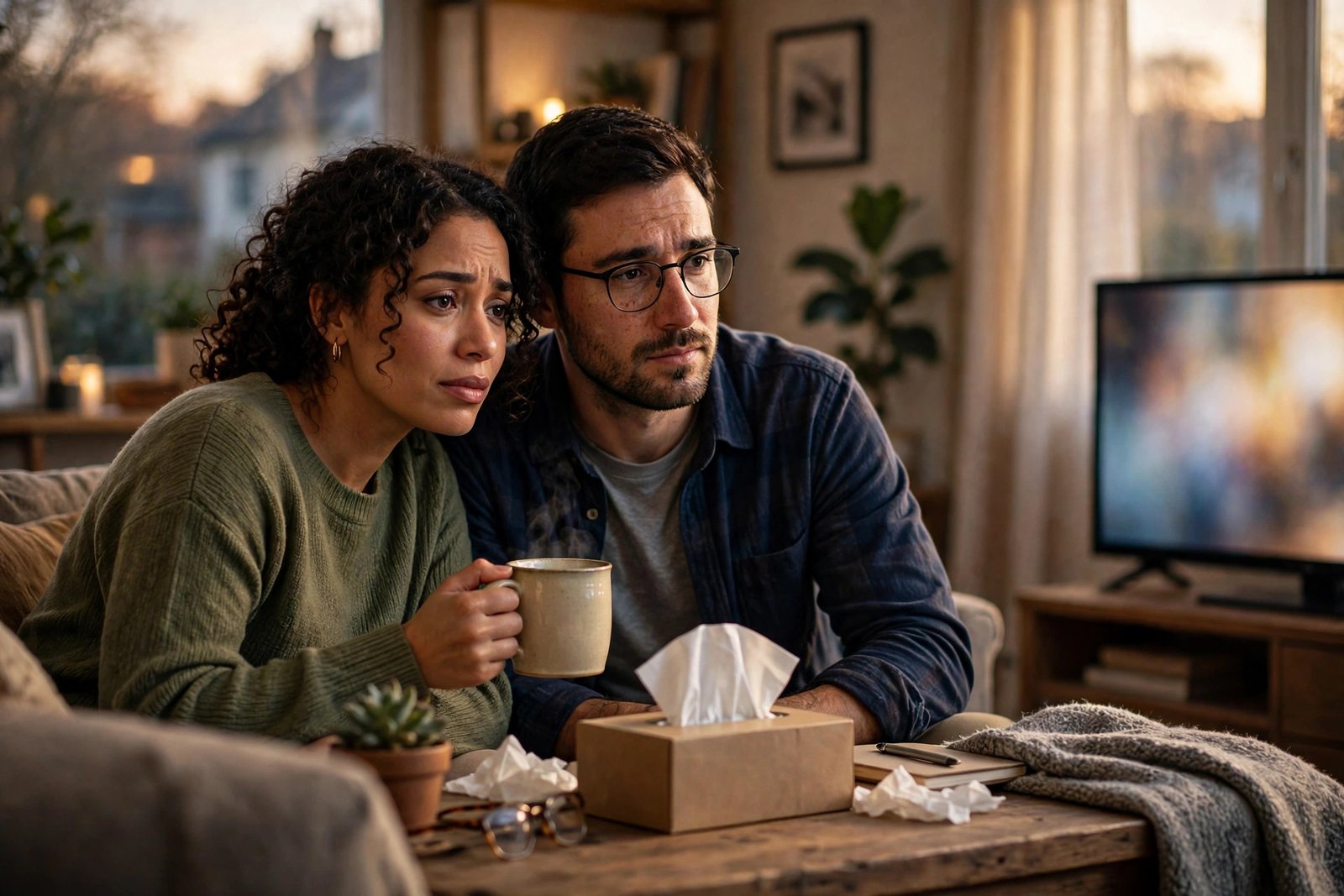
It would be a mistake to treat this genre as only fear and puzzles. For many fans, the emotional center is empathy.
They remember names. They think about families waiting for answers. They feel angry when a victim is reduced to a headline or when a system moves slowly. They stay for the human story, not only for the mystery.
That empathy is one of the most human answers to why do we love true crime. We are drawn to stories where someone mattered, where the loss is acknowledged, and where the effort to understand what happened is itself a form of respect.
There is also a deep appetite for justice. Daily life is full of unfairness that never gets a hearing. A bill is wrong and nobody fixes it. A concern is raised and nobody listens. A person causes harm and simply moves on.
Against that background, a well told investigation can feel morally satisfying. Questions are asked on the record. Evidence is tested. Contradictions are not politely ignored. Someone in authority has to answer.
Fans often describe this in conversation without using formal language at all.
“I just needed someone to keep asking,” one viewer might say about a long documentary series.
“At least now people know her name,” another might say after a podcast season ends.
Those sentences are about recognition. They suggest that the audience is not only solving a case in their heads. They are witnessing an attempt to restore a person to the center of a story that began with their absence.
Justice and empathy can also pull in opposite directions, and good fans feel that tension. A story can invite sympathy for almost everyone involved if it is told with enough context, and that can be uncomfortable.
You might understand how a family protected its own, while still believing protection became concealment. You might feel sorrow for several people at once without thinking their choices were equal.
That moral complexity is another reason the genre lasts. Simple stories are easy to forget. Stories that leave you arguing with yourself on the drive home stay with you.
That wish to see a person restored to the center of their own story is one of the most moving answers to why do we love true crime, and it deserves to be taken seriously rather than mocked.
For readers who think about that tension in close relationships, our article on whether you can love someone but not want them explores how care and choice are not always the same thing.
What research says about why do we love true crime

Research on this genre is still developing, and it helps to be honest about what it can and cannot prove. There is no single study that explains every fan, every format and every motive.
What research and expert commentary do offer is a set of converging explanations, each supported to a different degree.
First, work on media psychology consistently shows that people enjoy negative emotions in fiction and factual entertainment when they feel safe, in control and able to reflect afterward. The enjoyment is not of suffering itself. It is of intensity, meaning and resolution experienced from a protected position.
Second, research on curiosity and learning suggests that information gaps are powerful motivators. When we become aware that we know part of a story but not the part that explains it, attention sharpens and memory works harder. True crime is built almost entirely out of information gaps.
Third, studies of narrative persuasion and empathy show that following a person over time changes how we judge them. A long podcast season or documentary series gives context that a short news item cannot, and context tends to increase emotional involvement.
Fourth, audience research frequently finds that many women report safety and understanding as reasons for their interest. That finding should be handled carefully. It does not mean all women watch for the same reason, and it does not mean men watch for only one reason either. It means the genre speaks to lived concerns about vulnerability that are not evenly distributed.
Criminologist Scott Bonn, writing for Psychology Today, has described the public fascination with frightening offenders as a mix of fear, spectacle and safe distance, and his overview Why We Love Serial Killers remains a widely shared starting point for that discussion.
Other psychologists point to morbid curiosity as a normal trait rather than a defect. Morbid curiosity means an interest in dangerous or threatening subjects as a way of learning about them. It exists on a spectrum, alongside curiosity about storms, medical emergencies, survival stories and extreme sports.
That framing matters, because it changes the question. Instead of asking what is wrong with fans, research asks what information or emotion fans are trying to get, and whether the way they get it leaves them steadier or more distressed.
It also changes how honestly we can talk about why do we love true crime in everyday conversation. A normal trait, shared by millions of people in different degrees, does not need a confession. It needs curiosity about itself, which is a far healthier starting point.
Self determination theory adds another useful lens. People are more engaged when an activity supports autonomy, competence and connection. True crime can support all three: you choose it freely, you get better at following complex stories, and you discuss it with a community that shares your interest.
Attachment and social learning add a final piece. We learn what is dangerous, admirable or shameful partly by watching stories together and seeing how others react. A fan community that centers victims, questions rumors and corrects errors teaches a very different lesson than a community that treats real harm as a game.
So when we ask what research says about why do we love true crime, the fairest summary is layered: threat monitoring, curiosity, empathy, moral judgment, learning and belonging all play a part, and their proportions differ from person to person.
When fascination helps and when it starts to hurt

A healthy interest has a recognizable shape. You enjoy the story, you think about it, you talk about it, and then your attention returns to your own life.
That shape is worth naming, because part of understanding why do we love true crime is learning to notice when the love of a genre is serving you and when you have started serving it.
You can skip a heavy episode. You can disagree with a host. You can feel sad without feeling compelled to consume more and more in the same night.
The interest starts to cost too much when the pattern changes. Sleep gets lighter because your mind keeps replaying threats. Ordinary sounds at home feel loaded. You start checking people, doors or messages with an urgency that does not match the situation.
Another warning sign is emotional flattening. If graphic material that once moved you now feels like background noise, that is not proof that you have become stronger. It can be a sign that you have had too much exposure without enough recovery.
Compulsive consumption is a third sign. Autoplay makes it easy to drift from curiosity into momentum. You are no longer choosing each episode. You are simply not stopping.
None of this means you need to quit forever or label yourself. It means the balance has shifted, and balance can be adjusted.
A useful test is to ask three questions after you watch or listen. Do I feel clearer or more agitated? Did I learn something I can actually use? Would I choose this episode again, knowing how I feel now?
If the honest answers keep pointing in the wrong direction, take that seriously. Choose lighter material for a while. Talk to someone you trust. If anxiety, intrusive thoughts or sleep problems persist and interfere with daily life, a qualified mental health professional can help in a way a podcast never will.
There is also an ethical cost to consider, and mature fans think about it. Real cases involve real families. Responsible storytelling avoids rumor, respects privacy, admits uncertainty and refuses to turn grief into a guessing game.
As an audience member, you support that standard with your attention. You can choose creators who correct mistakes, who avoid graphic detail for its own sake, and who remember that the most important person in a story is not the most dramatic one.
Counter examples matter here too. Some people try true crime once and feel nothing but discomfort. Others love horror films but avoid factual cases because the reality is precisely what removes the fun. Still others are former fans who stopped after a life event made the subject feel too close.
Those reactions are not failures of curiosity. They are reminders that the same mechanisms, fear, empathy and rehearsal, produce different results depending on a person’s history, health and current stress.
What to do next: a healthier way to watch, listen and read

If you love this genre and want to keep enjoying it well, a few simple practices make a real difference.
First, set a stopping point before you start. One episode, two chapters, one walk with a podcast. A limit chosen in advance protects you from the drift that happens when you are tired and the next part begins automatically.
Second, mind the timing. Many people find that heavy material late at night follows them into sleep. If that is true for you, move your listening to a commute, a workout or a daytime chore and see whether your evenings feel different.
Third, balance the emotional diet. Follow a serious series with something funny, warm or absorbing in a completely different way. Balance is not avoidance. It is how attention stays flexible instead of stuck.
Fourth, talk about what you consume. Conversation turns private rumination into shared reflection. A friend might notice a theme you missed, challenge a conclusion you accepted too fast, or simply say the sentence you needed to hear: “That one was a lot.”
Fifth, keep the safety lessons practical and few. Write down the one or two habits that genuinely apply to your life, and let the rest stay inside the story. Preparedness should make daily life feel more manageable, not smaller.
Sixth, choose your sources with care. Prefer creators who cite court records, reputable reporting and direct interviews over creators who build tension from speculation. Notice how a show treats victims and families when no dramatic payoff is involved. That is where its values show.
Seventh, take breaks without making it a test of character. A week away, a month away, a whole season skipped. Interest that survives a pause is real interest. Compulsion is what panics when you stop.
Finally, remember the best question to carry out of any story. It is not only what happened. It is what this story taught me about attention, trust and care, and what I want to do differently because I heard it.
Over time, those small choices change your relationship with the genre itself. You stop asking only why do we love true crime in the abstract, and you start noticing what you, personally, are looking for each time you press play.
FAQ

Is it normal to enjoy true crime if I am a kind person?
Yes. Enjoying a story about harm is not the same as approving of harm. For most fans, the interest centers on mystery, empathy, learning and the wish to see questions answered. Kindness and curiosity about dark subjects regularly live in the same person.
In fact, taking a moment to understand why do we love true crime often removes the shame people quietly carry about it. Once you can name the fear, the puzzle or the empathy underneath, the habit looks less like a character flaw and more like information.
Why do women seem to be such a large part of the audience?
Audience research and fan surveys often find strong interest among women, and safety is one commonly reported reason. Many women say these stories help them think about risk, intuition and boundaries. It is one factor among many, and individual motives always vary.
Can watching a lot of true crime make me more anxious?
It can, especially if you consume graphic material late at night, binge without breaks or already feel highly anxious. If you notice poorer sleep, constant scanning for danger or intrusive worries, reduce your exposure and notice whether you feel better. Persistent anxiety deserves support from a qualified professional.
How is morbid curiosity different from being obsessed?
Morbid curiosity is a normal interest in threatening subjects as a way of learning. It becomes a problem pattern when consumption feels compulsory, crowds out other parts of life or leaves you distressed and numb rather than thoughtful. Choice is the key difference: curiosity can pause, compulsion struggles to.
What should I look for in a responsible true crime creator?
Look for clear sourcing, corrections when errors are found, respect for victims and families, and a willingness to say what is not known. Be cautious with creators who present rumor as fact, use graphic detail as a hook or invite audiences to harass people connected to a story.
A final thought
So, why do we love true crime? Because the genre meets the mind at several of its deepest crossroads at once.
It speaks to the part of us that scans for danger, the part that loves a puzzle, the part that wants the vulnerable to be seen, and the part that hopes a confusing story can still be understood if someone looks long enough and asks carefully enough.
None of that makes the fascination strange. It makes it human.
So the next time someone teases you about why do we love true crime, you do not need to apologize or change the subject. You can simply answer honestly: for the story, for the learning, for the people at the center of it, and for the rare feeling of a hard question finally getting its day of attention.
The goal is not to feel guilty about what holds your attention. The goal is to understand it, choose it deliberately and let it leave you more thoughtful, more compassionate and a little more prepared than it found you.