
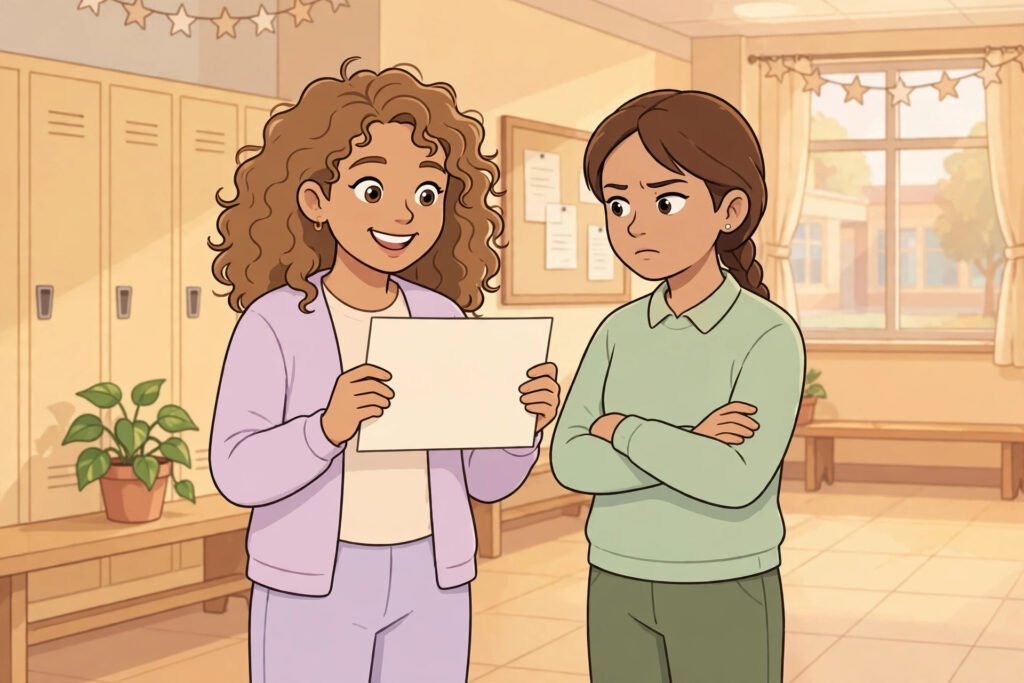
You got the news on a Tuesday. The part in the school play. The grade you worked all term for. The spot on the team. Your hands are still shaking a little as you tell your friend, and you watch her face do something strange. The smile arrives, but it arrives late. Her voice goes flat. Oh. Cool. And just like that, your happy moment feels smaller than it did ten seconds ago. If you’ve lived that moment, you’ve asked yourself why can’t some people stand seeing others succeed, even people who say they love you.
Let’s get one thing clear right away. This article is not about your own jealousy. Everyone feels a flash of envy sometimes, and that’s human. This is about the other direction. It’s about what it feels like to be on the receiving end, when your good news lands badly on someone close to you, again and again. Understanding why can’t some people stand seeing others succeed will help you stop doing the worst thing of all: shrinking your own joy to keep the peace.
And here’s a promise about how we’ll talk about it. Envy is a normal human emotion, not a sickness and not a villain’s mark. People who feel it aren’t monsters. But their feelings are not your job to manage by becoming smaller. By the end, you’ll see why can’t some people stand seeing others succeed, learn the quiet signs to watch for, and know how to share your wins in a way that protects both your joy and your friendships.
The Short Answer

Some people can’t stand your success because your win wakes up their own pain. Your good news becomes a mirror, and the mirror shows them the grade, the part, or the life they wanted and don’t have. That’s the simple heart of why can’t some people stand seeing others succeed. It is almost never really about you. It’s about comparison, and about a quiet belief that there isn’t enough success to go around. Knowing why can’t some people stand seeing others succeed doesn’t mean you stop sharing your wins. It means you share them wisely, celebrate fully with the people who can hold your joy, and refuse to dim your light for anyone.
The Silence After Your Good News: What It Really Means
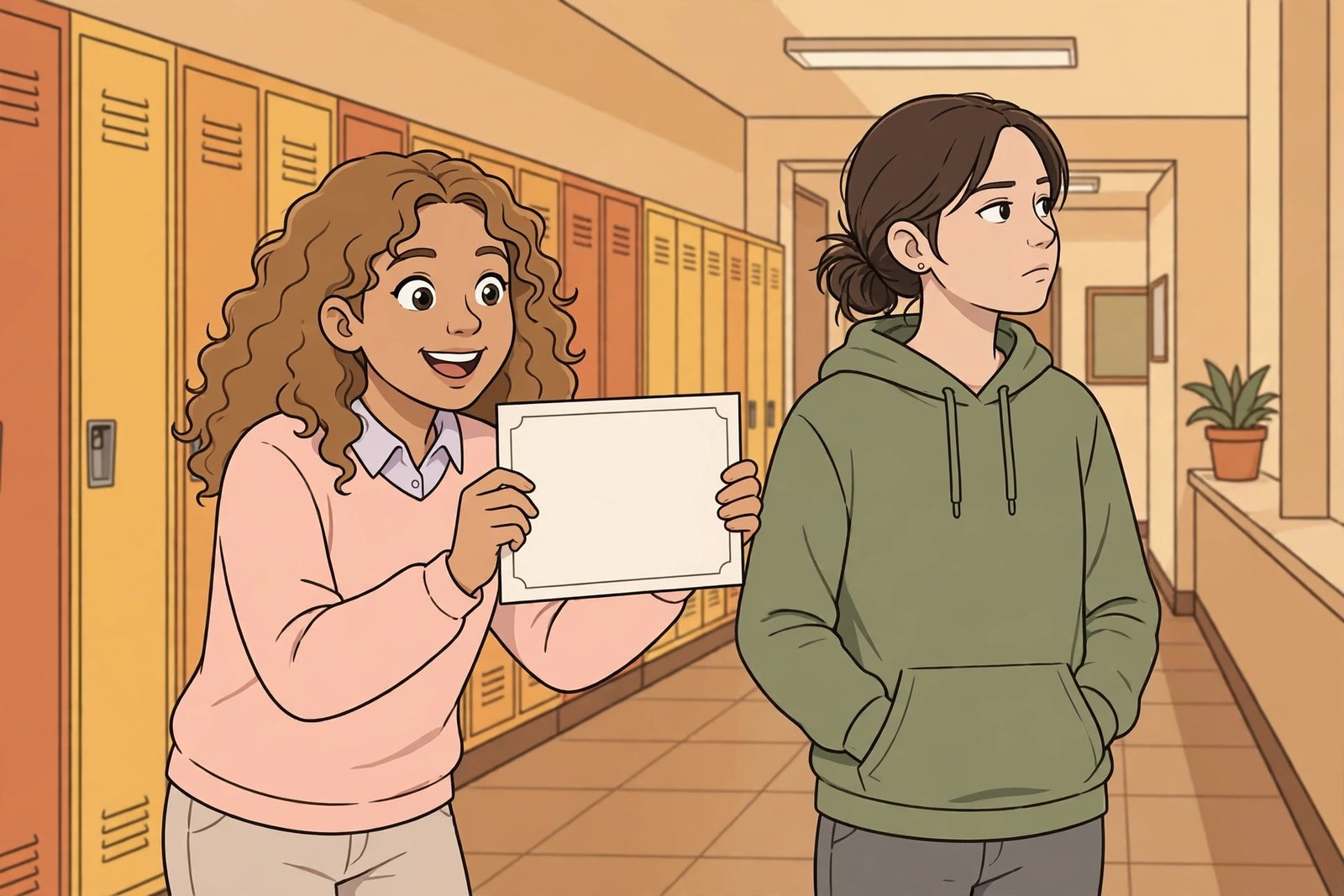
Let’s slow down that moment from the start of this article, because it holds the whole puzzle. You share good news. You expect a squeal, a hug, a dozen questions. Instead you get a pause. A flat cool. A quick change of subject. Or the strangest one of all: a compliment with a small hook inside it. Must be nice. Your brain knows something happened, but you can’t quite name it. Naming it is the first step to understanding why can’t some people stand seeing others succeed.
Here is what usually happened inside her. Your news didn’t land on her ears first. It landed on her hopes. If she wanted that part too, your casting is her rejection, delivered by your smiling face. If she’s struggling in the class you just aced, your grade is a scoreboard she can’t unsee. She isn’t thinking about you at all in that second. She’s thinking about herself, and the thought hurts. The pause you saw was the sound of a person swallowing a feeling she knows she shouldn’t show.
That doesn’t make the pause fun to receive. It can poison a whole day. You replay her face while you brush your teeth. You wonder if you bragged. You wonder if you should have hidden the news. Notice what just happened: her feeling became your homework. That’s the trap at the center of this whole topic. When you start editing your joy to manage her reaction, you’ve answered why can’t some people stand seeing others succeed with the saddest response possible: by succeeding more quietly.
There is a kinder and truer way to read that silence. Her reaction is information about her inner weather, not a verdict on your worth. A flat reaction doesn’t cancel your win. A delayed smile doesn’t shrink your grade. The win stays exactly the same size. What changes is what you learn about the friendship. Once you see it that way, the question why can’t some people stand seeing others succeed stops sounding like a mystery and starts sounding like weather. Some people can stand next to your sunshine and feel warm. Others feel it as heat on a sunburn. Same sun. Different skin.
One more thing before we dig into the reasons. A single flat reaction proves nothing. She might have gotten bad news that morning. She might be tired, or sick, or thinking about a fight at home. We judge patterns here, not moments. If the silence shows up after your good news again and again, in the same person, over months, that’s a pattern worth understanding. And patterns have causes. The next two sections open up the two biggest ones: comparison and the belief that success is a pie with too few slices.
Envy Is a Comparison, Not a Verdict on You
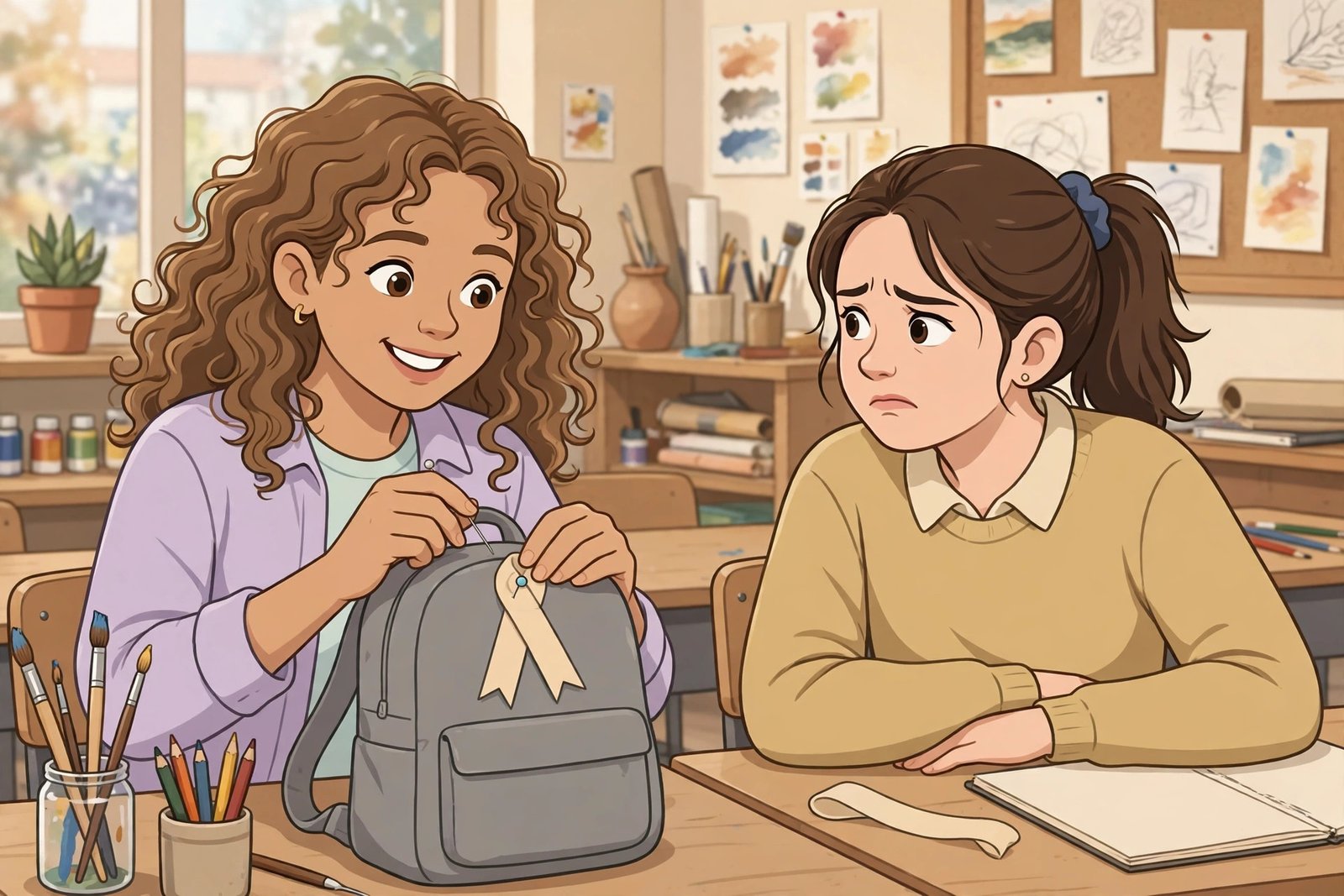
Envy sounds like a heavy word, but the engine under it is simple. Comparison. Human brains compare the way eyes blink. We check where we stand by looking sideways at the people near us. Most of the time, that checking is quiet and harmless. But when someone feels behind in life, your success stops being your news and becomes her measuring stick. That’s the engine behind why can’t some people stand seeing others succeed. They aren’t judging your win. They’re measuring their loss.
Notice who feels it most. Not strangers. Strangers’ success barely stings, because strangers aren’t our measuring sticks. The sting is strongest with people who started where we started. Same class. Same team. Same friend group. When you pull ahead of someone who stood right beside you, the comparison is instant and personal. Your win rewrites her story about herself. Yesterday you were equals. Today she feels like the one who got left.
Social media pours fuel on all of this, by the way. Feeds are nothing but other people’s best moments, cropped and shining. The Child Mind Institute explains in its piece on social media and self-doubt how looking at friends’ posts can make a teen feel like everyone has it together but her, and how that comparison eats at self-esteem. Now flip it around. If scrolling your highlight makes a struggling friend feel small every single day, imagine what your real-life win, delivered face to face, can stir up. Same engine, bigger dose.
Here is the part that should set you free. Her comparison is a story she tells herself about herself. You are not its author. You didn’t write her fears, her home pressures, or the voice in her head that says she’s behind. You just walked into the room holding good news. If you find yourself apologizing for your own success, stop and remember this. You can be kind about how and when you share. That’s manners. But the win itself needs no apology, ever. Girls who learn that early save themselves years of shrinking.
And one more freeing thought. Envy often points at the thing she wants most. In a strange way, her sting is a compliment about your aim. Nobody envies what they don’t want. The girl who goes cold at your art award isn’t cold because your drawing is bad. She’s cold because she wants to be good at something too, and your light showed her the gap. That doesn’t mean you owe her your spotlight. It just means her reaction makes sense once you see why can’t some people stand seeing others succeed: your light, her gap, and a brain that compares before it can congratulate.
Scarcity Thinking: When Your Win Feels Like Their Loss

Now for the second big cause. Some people carry a quiet belief that success is limited, like the last slice of pizza at a party. If you got the part, there’s no part for her. If the teacher praised you, there’s less praise left for her. If you shine, she dims. This is called scarcity thinking, and it’s one of the deepest answers to why can’t some people stand seeing others succeed. In their head, your win is not just your win. It’s their loss, taken from a pile that was too small anyway.
You can hear scarcity thinking in the words people use. There’s only one spot at the top. The teacher has favorites, and it’s you now. She got lucky, because if luck is the reason, maybe next time the luck lands elsewhere. Listen for luck talk after your wins. When someone rushes to call your hard work luck, they’re often protecting a scarcity story. If your win was luck, their lack of a win isn’t about effort or skill. It’s just the wheel not landing on them yet. That story hurts less, so they keep it.
Where does this belief come from? Often, home. Some kids grow up hearing that other people’s children are the competition. Why can’t you be like her? Or they grow up in places where praise really was rare, where one child’s shine meant another child stood in shadow. By the teen years, the belief feels like a fact of nature. Of course your win costs her. That’s how the world works in her house. Knowing this won’t fix her belief. But it will stop you from absorbing it. Her pie is not the real pie. In the real world, one girl’s A doesn’t use up the A’s. One girl’s spot on the team doesn’t end sports.
Your light doesn’t spend anyone else’s.
Scarcity thinking also explains a weird twist you may have noticed. Sometimes the coldest reactions come right after her own disappointment. You share your news the same week she got cut from the team, and the flatness is ten times worse. In scarcity math, your win landed on her fresh wound. Timing isn’t everything, and we’ll talk about sharing with care later. But it’s worth seeing the math for what it is. She isn’t rating your success. She’s doing subtraction with her pain, and you’re just the nearest number.
So what do you do with a scarcity thinker? You can’t argue someone out of a belief they grew up breathing. Facts about unlimited A’s won’t reach her. What you can do is refuse to play by scarcity rules yourself. Congratulate her wins fully when they come, even small ones. Show her, with your actions, that her shine doesn’t dim you. Some people slowly learn abundance by living next to it. Others don’t. Either way, you keep your own math straight: her win plus your win equals two wins. That’s the healthy answer to why can’t some people stand seeing others succeed, and it’s the math worth keeping for life.
The Quiet Signs Someone Resents Your Success

Resentment rarely walks in wearing a name tag. It shows up in small moments that are easy to excuse one by one. So let’s list the quiet signs, because seeing them clearly is part of learning why can’t some people stand seeing others succeed in your own friend group, not just in theory.
Sign one: the flat reaction, again and again. Good news from you gets a nod. Good gossip about someone else gets her full energy. Sign two: the hooked compliment. You look great, for you. Congrats, I guess the test was easy this year. The hook is the point. A clean compliment celebrates. A hooked one deflates, and it’s built to make you doubt the win a little. Sign three: she brings up your old failures near your new wins. Remember when you froze on stage last year? Said with a smile, right after your audition went well. The timing is the message. Your past is being used as a weight on your present.
Sign four: your news travels, but wrong. You told her something proud in private, and somehow the group heard a version that makes you sound full of yourself. She didn’t lie, exactly. She just framed it. Bragging, showing off, thinks she’s better now. Framing is how resentment recruits other people. Sign five: she competes in whispers. You mention your grade, and within a day she’s announcing hers, or her plans, or her new thing, just a bit louder. Not joy. Counterweight. If you’re nodding at this list, you’re seeing why can’t some people stand seeing others succeed up close: the resentment leaks out sideways, because saying it straight would sound as small as it feels.
And sign six, the one that matters most: relief at your setbacks. Watch her face when something goes wrong for you. A friend who loves you feels your pain. A resentful one feels a tiny, guilty lift. The playing field just leveled itself, and her body relaxes before her manners catch up. She may never say a cruel word. But that lift, spotted more than once, tells you the truth about where you stand.
If several of these signs point at one friend, you may also want to read our guide on how to tell if your best friend is jealous of you, which goes deeper on the best friend version of this pattern. Here, keep the wider lesson. Signs are for your understanding, not for a courtroom. You don’t need to prove her envy to anyone. You just need to know what you’re looking at, so you can decide how close she gets to your next piece of good news.
Why It Hurts More From Someone Close

A stranger’s cold reaction would slide right off you. A classmate you barely know? Whatever. But when the flat face belongs to your best friend, the same silence can echo for weeks. That’s because closeness raises the stakes. Your friend knows what this win cost you. She saw the late nights and the nerves. If she can’t celebrate the result, it feels like she didn’t see you at all. This is why can’t some people stand seeing others succeed hurts most inside close friendships: the person whose cheer you needed most is the one who can’t give it.
There’s also history to carry. With a close friend, you have a hundred good memories stacked up. The flat reaction doesn’t just sting today. It makes you re-read the past. Was she happy for me then? Did she mean it last time? One cold season can cast a shadow over warm years. That’s a heavy price, and it’s fair to grieve it. You’re not mourning one reaction. You’re mourning the version of the friendship you thought you had.
And there’s the loneliness of the win itself. Success can feel oddly isolating when you can’t share it with your person. You achieved the thing, and the first person you want to call is the one person who’ll go quiet. So you celebrate at half volume. You learn to preface your news with sorry and it’s not a big deal and you shrink it before she can. Notice that habit if you have it. Pre-shrinking your joy is one of the clearest personal costs in this whole pattern.
Does closeness mean you should demand a perfect reaction? No. Close friends are human. They have bad weeks and their own wounds, and sometimes your win will land on their sore spot and they’ll need a minute. The difference is what happens next. A close friend who loves you comes back. She says, sorry I was weird, I’m proud of you, tell me everything. Repair is the sign of love. Silence that stays, hooks that keep coming, and framing that keeps spreading: that’s the pattern that tells you the closeness isn’t safe for your joy right now.
You deserve at least one person who can hold your good news at full size. If your closest friend can’t be that person in this season, widen the circle a little. A parent, a cousin, a teammate, a teacher who gets it. Joy shared is joy finished. Don’t let one person’s sore spot convince you that your wins are too much. They’re not too much. They’re just landing in a place that’s too sore to hold them, and seeing that clearly is the kindest reading of why can’t some people stand seeing others succeed when they’re close to you.
How to Share Good News Safely

Let’s get practical. You can’t control her feelings, but you can control how, when, and where your news travels. Sharing safely is not hiding. It’s aim. You send your joy where it will be held well, and you’re thoughtful about the sore spots. Here are the moves that help, once you understand why can’t some people stand seeing others succeed and stop expecting every friend to react the same way.
First, read the room and the week. If she just got cut from the team yesterday, leading with your team news today is legal but unkind. A little timing is not shrinking. It’s manners. Tell your safest person first, enjoy the full celebration, and share with her a bit later, one to one, without an audience. Private shares land softer than public ones. There’s no crowd to perform for, and no scoreboard feeling.
Second, share the story, not just the scoreboard. People connect with effort more than results. I almost quit twice this term lands differently than I got the top grade. The story lets her stand beside you in the struggle, where she’s your friend, instead of below you at the results table, where comparison lives. This isn’t hiding your win. The win is right there in the story. You’re just handing it to her in the shape that’s easiest to hold.
Third, keep a joy list. Know your full-volume people: the ones who squeal, ask questions, and bring it up again next week because they’re still happy for you. Your biggest news goes to them first, every time. And be that person for others, loudly. The more your world is full of people who celebrate at full volume, the less one flat face can shrink a happy day. Our piece on how to stop comparing your life to influencers covers the online side of this comparison trap, and it pairs well with building that real-life circle.
Fourth, and hardest: stop pre-apologizing. No more sorry, it’s dumb, it’s not a big deal before your own news. Those little apologies train you to believe your success is a problem to soften. It isn’t. Say the true sentence at its true size. I worked really hard, and I got it, and I’m proud. The right people will meet that sentence with joy. The wrong people will show you, once more, who they are in this season. Both outcomes give you information you need, and neither requires you to shrink. That’s the practical side of why can’t some people stand seeing others succeed: you can’t soften them, but you can aim your news.
Protect Your Wins Without Dimming Your Light

Now the line you must not cross, and the place where care becomes serious. Most resentment stays at the level of flat faces and hooked compliments. But sometimes it grows teeth. Your work gets hidden or messed with. Rumors start that paint you as a cheat or a show-off. A group quietly decides you’re too full of yourself now, and the freeze-out begins. When resentment turns into sabotage or harassment, this is no longer a feelings problem. Tell a trusted adult. A parent, a teacher, a counselor. Someone’s envy is never a reason for you to be targeted, and adults can stop patterns that teens can’t stop alone.
Short of that line, your job is protection, not revenge. Don’t dim yourself to manage her. Don’t fail on purpose, don’t hide the certificate, don’t quit the team to restore the peace. Dimming never works anyway. It teaches her that your size is negotiable, and it teaches you to make yourself smaller whenever someone feels small near you. That lesson, carried into adult life, costs far more than one friendship. Protect the win instead. Keep your records. Choose your audiences. Let your work speak in rooms she doesn’t control. Remembering why can’t some people stand seeing others succeed keeps you from making the worst trade: your future, spent to buy her comfort.
And keep perspective on the friendship itself. Seasons change. A friend who can’t hold your joy at fifteen may grow out of her scarcity math at twenty. You don’t have to slam the door forever. You can love her at a distance that keeps your light safe. Less big news. Fewer front row seats to your wins. More of your joy spent with people who can carry it. Distance is not cruelty. It’s aim, again, and you’ve earned the right to aim your own life.
So let’s end where we started, with that shaking-hands moment and the flat, late smile. You know more now. You know her reaction runs on comparison and scarcity, not on your worth. You know the signs, the safe way to share, and the line where you bring in an adult. Your success is not a problem to manage. It’s a light you’re allowed to carry at full brightness. The real answer to why can’t some people stand seeing others succeed was never that you shine too much. It’s that some people are still learning how to stand in the light without flinching. Let them learn. You go shine.
Frequently Asked Questions
Should I hide my success from a friend who reacts badly?
Don’t hide it. Adjust how you share it. Hiding teaches you to shrink, and shrinking becomes a habit that follows you. Share your news first with people who celebrate at full volume. With her, share later, privately, and with your effort story included. That’s the wise middle in understanding why can’t some people stand seeing others succeed. Your win stays true, your joy stays full, and she gets the gentlest version. If the gentle version earns you hooks and rumors, that’s information about the friendship, not about your success.
Is it my fault if my friend feels envious of me?
No. Her envy is her feeling, born from her comparisons and her own sore spots. You didn’t plant it by succeeding. Think about it in reverse. When your friend wins and you feel a small sting before you feel happy for her, is that her fault? Of course not. Feelings just happen. What people do with their feelings is the part that counts. She owns her hooks, her framing, and her silences, the same way you own your reactions to her wins. Kindness matters. Blame for a feeling doesn’t.
How do I know if it’s envy or just a bad day?
Look for the pattern, not the moment. A bad day is random. It lands on good news, bad news, and Tuesdays. Envy has aim, and that aim is the signature of why can’t some people stand seeing others succeed. The flatness shows up after your wins, while her energy stays normal otherwise. Check the timing, the hooks, and her warmth at your setbacks. If she’s warmer when you fail and colder when you shine, you’ve got your answer. One reaction means nothing. A season means something. Trust the pattern.
Can a friendship survive one friend’s envy?
Yes, if both people are honest and the envious one does her work. Many friendships wobble now and steady later, because envy peaks while everyone is still figuring out who they are. What a friendship can’t survive is you shrinking to keep it comfortable. That road ends with resentment and a smaller you. Keep being kind and sharing wisely. And keep your light at full size. If the friendship is real, it will learn to live in your light. If it can’t, that space makes room for people who can.
What if I stop sharing my wins and she still acts cold?
Then the coldness was never about the news. It may be about distance growing between you, or something else in her life. Ask gently. Hey, we feel off lately. Is something going on with us? A real talk beats a year of guessing. Whatever she answers, keep this: learning why can’t some people stand seeing others succeed taught you that her weather is not your report card. Keep your wins. Keep your kindness. Keep your light. Let the friendship find its true size, and let yourself be happy meanwhile.