
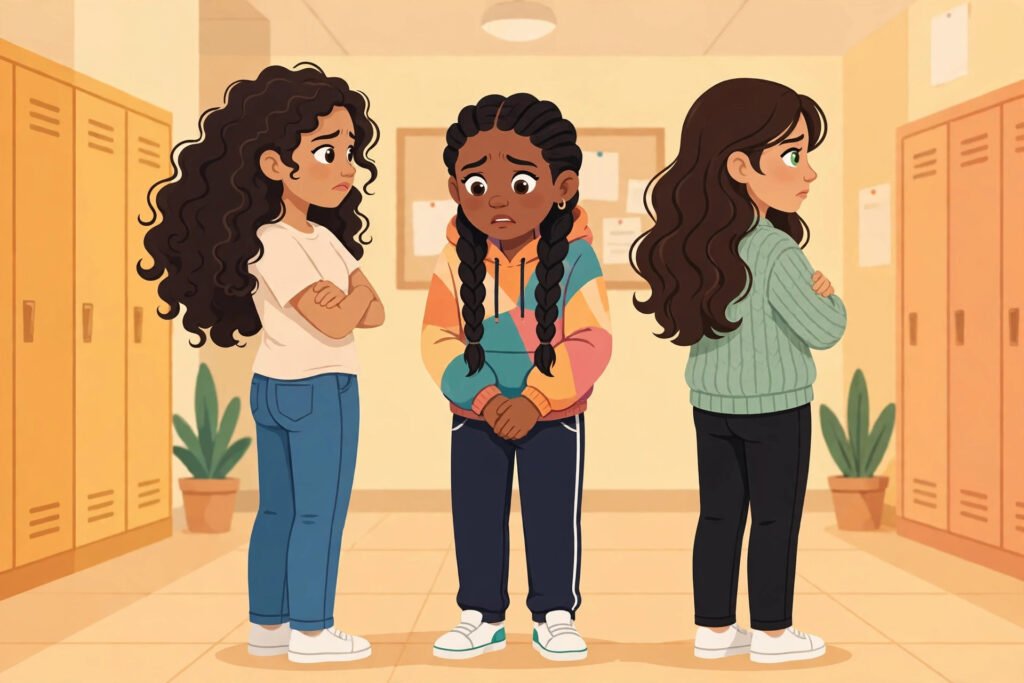
Maya was halfway down the hallway. Her backpack slipped off one shoulder. Then she stopped cold. Sofia walked on her left. Arms crossed. Eyes straight ahead. Lina walked on her right. Chin up. Not looking over. Not once.
Nobody said a word. But both of them kept glancing at Maya. Like she should fix it. Like she should pick a side. Like this whole mess was somehow hers.
Sound familiar? You’re not alone. And you’re not a bad friend for feeling stuck. Being trapped between two people you love is exhausting. It’s awkward. Some days, it quietly breaks your heart. Every lunch feels like a test. Every group chat feels loaded. Every plan turns into a problem.
You didn’t start their fight. But it can feel like your whole life revolves around it. Here’s the truth about what to do when two of your friends hate each other: you don’t have to fix it. Really. You don’t.
This guide shows you what to do when two of your friends hate each other without losing yourself in the middle. You’ll learn how to stop carrying messages. You’ll learn how to hang out with each friend without guilt. You’ll learn how to be honest about group plans. And you’ll learn this big one. Caring a lot doesn’t mean solving a fight that isn’t yours.
The Short Answer

Here’s the short answer. Your job is simple. Be a kind friend to each of them. That’s it. You’re not the referee. You’re not the messenger. You’re not the peacemaker on duty.
When you’re stuck on what to do when two of your friends hate each other, start with that one rule. You can listen. You can be loyal. You can be honest. But you can’t control how two other people feel about each other. Nobody can.
So don’t pass notes. Don’t forward screenshots. Don’t carry whispered updates from one side to the other. Make plans with each friend on her own. And don’t apologize for that. Tell both of them the same thing, kindly and clearly. You won’t pick sides. You won’t talk badly about either of them. Ever.
It also helps to accept one hard thing early. Their fight might not end when you want it to. It might not end at all. Some friendships cool off for a while and come back later. Others change for good. That hurts. But it doesn’t mean you failed.
If the dislike turns into bullying, things change. Threats aren’t drama. Exclusion campaigns aren’t drama. If it feels unsafe, it’s not just a fight anymore. Then what to do when two of your friends hate each other includes telling a trusted adult. A parent works. A counselor works. A teacher works. The guidance at StopBullying.gov explains how to respond safely and how to support someone who’s being targeted.
And please remember this. Your feelings count too. You’re allowed to feel tired, sad, or frustrated. You’re allowed to take a break from the drama. Protecting your peace isn’t selfish.
In real life, what to do when two of your friends hate each other looks like small habits. Not one big dramatic talk. You stay neutral. You stay kind. You keep your plans clear. And you let them own their own choices.
Refuse to Become the Messenger Between Them

It always starts small. It sounds harmless, too. One friend slips you a folded note in the hallway. Or she texts you late at night. Can you just ask her if she’s mad at me? Can you tell her I didn’t mean it like that?
Saying yes feels kind. For about five minutes. Then you’re carrying apologies back and forth. You’re carrying complaints. You’re carrying half true updates that upset everyone. Including you. Especially you.
Here’s the problem with being the messenger. Every message gets filtered through your words. A soft comment can sound cold when you repeat it. A joke can land like an insult. Then both friends start questioning you. Not each other. You. Suddenly you’re inside a fight that was never yours.
That’s why what to do when two of your friends hate each other starts with stepping out of the middle. Out. Fully out.
You don’t need a big speech. Use the same calm line every time. Try this. I care about you, but I’m not passing messages between you two. It just makes things worse. If you want her to know something, it’ll mean more coming from you. Say it kindly. Say it once. Then don’t argue about it. If she pushes, say it again. Same words. Same calm voice.
Expect some pushback at first. She might go quiet. She might say you’re not helping. That stings, I know. But it doesn’t mean your boundary is wrong. Most friends adjust. You still show up. You just don’t deliver mail anymore.
And here’s a key thing. Listening isn’t the same as delivering. This is where what to do when two of your friends hate each other gets super practical. Your friend can vent to you. She can cry in the bathroom between classes. She can tell you she’s hurt. You can hear all of that. You just won’t carry her words across the hallway to the other side. That’s the line. It’s a clear one.
If she keeps trying to use you as a go between, hold your ground. Then change the subject to something real. Want help with the math homework? Want to walk to the vending machine? Want to tell me about your day instead? Over time, that steady response teaches both friends something. You’re safe to be around. You’re not a mailbox for a fight.
One more warning. Venting can cross a line. If private comments start sounding like a plan to target someone, pay attention. It helps to read about signs your friends are talking behind your back so you can spot the difference. Venting is messy feelings. Targeting is harm. They’re not the same thing, and you don’t have to treat them the same.
Spend Time With Each Friend Separately

Here’s a move that helps right away. Stop forcing every hangout to include everyone. Really. Just stop.
Separate time isn’t a punishment. It isn’t a secret plot either. It’s just how you keep two good friendships alive. A group hangout right now would be tense. Silent. Full of little digs. Nobody has fun at those. Not them. Not you.
That’s a huge part of what to do when two of your friends hate each other, honestly. Balance. One friend at a time. Full attention. No mood to manage.
Look at what Maya did. She played basketball one on one with Sofia after school. They raced, they laughed, they talked trash about free throws. Just like always. The next day, she studied with Lina in the library. They shared notes. They whispered jokes over their textbooks. Nobody performed. Nobody froze. Both friends got the real Maya, not the stressed one.
You don’t need to hide your plans either. Secrets create the exact drama you’re trying to avoid. If Sofia asks what you did yesterday, just answer. I studied with Lina for the history test. It was fine. Then move on. Keep your tone calm and normal. That tone tells both friends something big. Separate plans aren’t a betrayal. They’re just plans.
Try to keep things roughly fair, too. You don’t need to count minutes. Nobody’s keeping a stopwatch. But notice the pattern. Is one friend getting all your time because she complains the loudest? That’s easy to fall into. Both friendships deserve care. And if your week is packed, say so. Don’t overpromise. Just offer another day and mean it.
Separate time is a big part of what to do when two of your friends hate each other for another reason. It lowers the heat for everyone. There’s no audience. So there’s less pressure to act angry. Less pressure to prove loyalty. And sometimes, after a few calm weeks, the two of them soften on their own. Nobody forced a reunion. Nobody staged a happy group photo. It just got quieter.
What if one friend turns it into a loyalty test? Name it, simply. I’m not choosing between you. I’m just spending time with each of my friends. Like I always have. Then keep your plans steady. Don’t cave. Don’t over explain. Consistency proves more than any speech ever will. Your actions will say what your words can’t.
Do Not Trash-Talk One Friend to Please the Other

This one’s sneaky. Your friend is venting. She’s upset. She’s looking right at you. And a quick comment feels so easy. Yeah, she’s been so annoying lately. It feels like comfort. It feels like loyalty. It isn’t.
Those small comments have a long life. They get repeated. They get twisted. They get back to people, almost every time. And they quietly change how you see yourself, too. You know you said it. That doesn’t feel great later.
Trash talk also traps you. Say you criticize Lina today to make Sofia feel better. Then tomorrow, Lina sits across from you. She’s hurt. She needs comfort. Now what do you say? You end up playing two different roles. One for each room. Sooner or later, both friends feel it. Your words change depending on who’s listening. That’s a hard thing to unhear.
That’s why what to do when two of your friends hate each other comes down to consistency. Same you. Every room. Every day.
There’s a kinder way to respond. Listen first. Then reflect what she feels, without joining the attack. Try this one. It sounds like yesterday really hurt you. Or this. I can tell you’re frustrated. Hear the difference? You’re saying, I hear you. You’re not saying, she’s a terrible person. Her feelings can be fully real. The harsh label still doesn’t have to be true.
If the gossip keeps rolling, redirect it. Maya did this at the lunch table. Things got nasty, so she changed the subject to homework. Just like that. You can do the same. I don’t want to talk about her when she isn’t here. But tell me, how did your presentation go? Changing the subject isn’t rude. It’s a gentle signal. It says a lot about the friend you want to be.
Protecting both friends’ names is central to what to do when two of your friends hate each other. It’s about trust. And trust is the whole base of friendship. Think about it. A friend who knows you never trash talk can actually relax around you. She knows you’ll treat her the same way. Even when she isn’t in the room. Especially then.
Set Boundaries Around Group Events Honestly

Okay, group events. This is where it gets messy in real life. Birthdays. Group projects. The lunch table. Team parties. Pretending there’s no tension doesn’t work. And secretly inviting one friend while hiding it from the other? That backfires. Almost every time.
Honest and early beats sneaky and last minute. A surprise reveal leaves someone feeling ambushed. In public. In front of everyone. Nobody deserves that moment.
Start with what you can actually handle. Planning a small picnic? A study group at your place? You can invite both friends. Just tell each of them who’s coming, before the day. That gives everyone a real choice. And choices matter here.
If a friend skips it, she’s not rejecting you. Please don’t read it that way. She’s just managing her own comfort. Respect that. Trust stays intact when you do.
Keep your message short and warm. No blame. Try something like this. I’m having a few people at the park on Saturday. I invited both of you because you both matter to me. No pressure if it feels like too much right now. See what that message doesn’t do? It doesn’t promise the other friend will behave. It doesn’t promise an apology. It doesn’t promise a perfect day. Honesty is the heart of what to do when two of your friends hate each other, and this is where it really shows.
At the event itself, relax your grip. You don’t have to seat everyone together. You don’t have to force cheerful bonding games. Let people spread out. Let them talk to who they like. Let them leave when they need to. Your job as host is small. Be welcoming. Be fair. That’s it. You’re not staging a reunion scene for your own relief.
Clear plans also kill rumors before they start. That’s an underrated part of what to do when two of your friends hate each other. Without clear plans, each friend invents her own story. She decides you picked the other girl. She decides you hid it. Screenshots fly. Feelings spiral. A simple heads up, shared early, leaves way less room for all of that.
And if an event still goes badly? Don’t do a full review with each friend after. A quick check in is fine. Replaying every comment isn’t. That pulls you straight back into the referee chair. Thank everyone who came. Note what you’d change next time. Then let the rest go. Really, let it go.
Let Them Know You Will Not Choose Sides

At some point, it happens. One of them asks you straight up. Whose side are you on? It might sound casual. It usually isn’t. There’s real fear under that question. She’s wondering if she’s about to lose you.
Answer it clearly. Once. Kindly. That one clear answer can calm both friends more than weeks of dodging. Dodging just feeds the fear. It gives it room to grow.
Pick a calm moment for it. Not the middle of a fight. Not in a crowded hallway between bells. Keep your words simple. I’m not choosing sides. I care about both of you, and this fight is between you two. I’ll be honest with both of you. And I won’t talk badly about either of you. Short. Steady. Done. Short sentences are easier to believe than long speeches. They just are.
Say the same core message to each friend. Your words can sound like you. That’s fine. But the meaning can’t change with the listener. If it does, it stops sounding like a value. It starts sounding like a strategy. And girls can smell a strategy, trust me. Consistency is what makes your neutrality real. Both friends should hear the same honesty. The same respect.
That’s why what to do when two of your friends hate each other really means steadiness. Not fairness theater. Steadiness.
Be ready for a weird first reaction, though. One friend might hear your neutrality as rejection. She might go quiet for a few days. She might test you with smaller questions. That’s normal. Give it some room. Don’t rush to fix her feelings by suddenly criticizing the other friend. That would undo everything. A boundary feels strange before it feels safe. For everyone. Including you.
And hear this clearly. Not choosing sides doesn’t mean you don’t care. It’s the opposite. You care too much to turn friendship into a contest. A contest would wreck all three of you. You also care too much to crown a villain in a story you didn’t live. You weren’t in every moment. You don’t know every side. Nobody does.
This is the heart of what to do when two of your friends hate each other. Refuse the contest. Keep both friendships honest. Keep your own name clean.
But what if a friend can’t accept it at all? What if she demands you drop the other girl, full stop? That’s painful. It’s also real information. You can’t control her choice. And hiding your other friendship won’t build real security. It just builds more hiding.
Sometimes it helps to read about how to step back from a friend who controls you so you can see the line clearly. A hard boundary is one thing. Pressure and control are another. A friendship that demands you drop someone else isn’t asking for loyalty. It’s asking for obedience. Those aren’t the same thing. And obedience is way too high a price.
Accept That You Cannot Fix Their Conflict for Them
This one is hard. Especially if you’re a fixer. You replay their fight at night. You draft the perfect apology in your head. You plan the group chat comeback like it’s a movie scene. If you just find the right words, everyone heals. Right?
That urge comes from a good place. It really does. But their conflict belongs to them. Only they can do the talking. Only they can do the listening. Only they can forgive, if forgiving even happens. You can’t do any of that for them. Not even with the perfect words.
Trying to fix it anyway causes three problems at once. First, you burn out. You’re doing emotional work that two people keep undoing. Second, your friends may start resenting you. Yes, even with kind intentions. Nobody loves a manager in a friendship. Third, a forced peace doesn’t last. An apology you arranged just doesn’t weigh the same. An apology only counts when someone chooses it herself.
That’s why what to do when two of your friends hate each other includes real restraint. Hands off their fight. Heart still in your friendships. Both can be true.
Accepting it doesn’t mean going cold. It doesn’t mean giving up on them either. Stay warm when you see them. Hope they work it out. Leave the door open for calmer days. Just stop giving yourself homework. No more monitoring their moods. No more planning surprise run ins at the lockers. No more progress reports shipped between camps. That was never your job.
And here’s the secret relief in it. Once you stop managing an outcome you can’t control, life gets simpler. Hangouts go back to normal stuff. Jokes. Classes. Family stories. Weekend plans. Not every conversation becomes a strategy meeting about the other friend. You’ll feel that shift in your shoulders. Literally.
That’s a real step in what to do when two of your friends hate each other. Letting go of the fixer job. It frees you, and honestly, it frees them too.
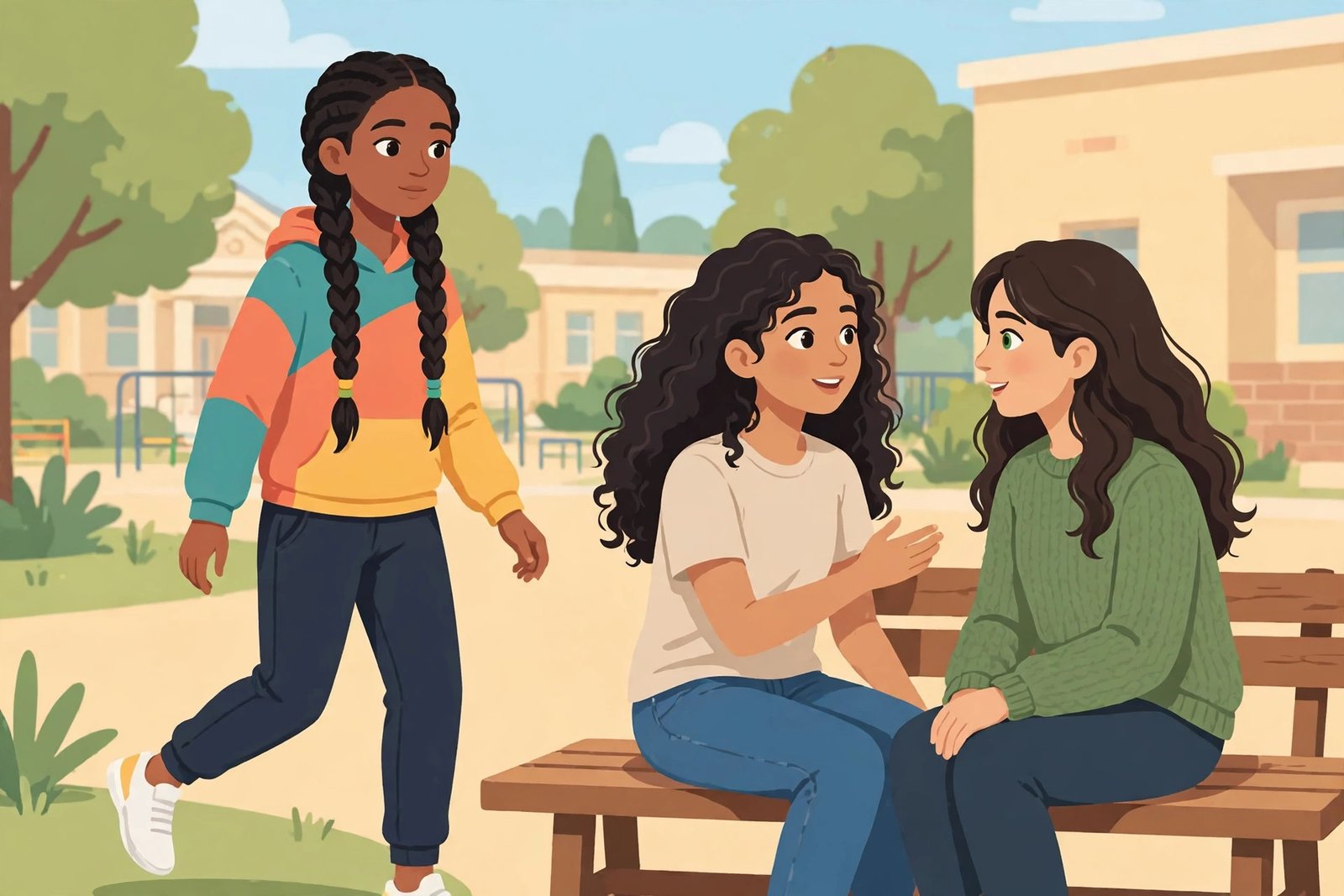
If they do talk one day, great. Maya’s friends finally did, on a bench by the gym, while she stepped back. She didn’t take credit. She didn’t jump into the details. She was just glad. They might fix things fully. They might fix things halfway. They might not fix them at all. All of those endings are theirs to live with.
Letting go also protects your self respect. You stop rating yourself as a friend by whether two other people get along. That’s not the scoreboard. Good friends support each other. They don’t carry each other’s whole relationships. There’s a big difference, and knowing it will save you a lot of tears.
Take Care of Your Own Peace in the Middle

Let’s talk about you for a second. Being the person in the middle costs something. Even when you handle it well. Especially then, sometimes.
Maybe you dread lunch now. Maybe your stomach knots when your phone buzzes. Maybe you replay conversations at 1 a.m. Those are signs. The situation is costing you more than you’ve admitted. And your feelings deserve the same care you’ve been giving everyone else. Yes, yours too.
So build small resets into your week. Resets with zero connection to either friend. Maya’s reset was jogging on the track at sunset. Headphones in. Braids bouncing. Just her, the sky, and the stress burning off lap by lap. Yours might look different. Drawing in your notebook. Journaling before bed. Shooting hoops alone. Walking your dog around the block twice. An afternoon with your cousins, or a totally different friend group. The activity matters less than this. It’s fully yours. Nobody can schedule drama into it.
That’s why what to do when two of your friends hate each other has to include rest. Not as a bonus. As the base.
It also helps to have one person outside the triangle. Just one. A parent. An older sibling. A school counselor. A coach. A teacher you trust. They can listen without needing anything back from you. And talking to them isn’t betrayal. It isn’t gossip either, not when you focus on your own feelings. It’s how you stop carrying something heavy completely alone. Nobody should have to do that.
Watch your daily limits too. You can mute the chaotic group chat for the evening. You can leave a conversation that turns into a pile on. You can say, I need a break from this topic tonight. And guess what? You’re still a loyal friend in the morning. Rest isn’t withdrawal. Small pauses stop you from snapping. They stop the exhausted words you’d never say on a calm day. We all know those words. Let’s not send them.
Taking care of yourself isn’t an afterthought in what to do when two of your friends hate each other. It’s the foundation. Everything else stands on it. A rested you listens better. A rested you speaks kinder. A rested you holds boundaries without anger. A drained you can’t do any of that for long. Good intentions don’t run on empty. Nobody’s do.
So give yourself some credit here. You’re navigating something genuinely hard, and you’re doing it honestly. Plenty of adults still can’t stay fair when two people they love clash. You? You’re refusing to carry messages. You’re refusing to gossip. You’re telling the truth about your plans. That’s the hardest stuff, and you’re already doing it. Your peace is worth protecting. Protecting it might be the most loyal thing you do in this whole story. For them. And for you.
Frequently Asked Questions
What if one friend gives me an ultimatum to drop the other friend?
Slow down. Don’t obey out of panic or guilt. Tell her you care about her, clearly. Then say you won’t be forced to end another friendship. Ask for time to think, and take it. If the pressure keeps coming, watch closely. Threats aren’t fair. The silent treatment isn’t fair. Controlling who you sit with isn’t fair either. Talk to a trusted adult if it continues. Real friendship can hold hurt feelings. It should never need fear or obedience to survive.
Should I tell one friend what the other friend said about her?
Almost always, no. Repeating hurtful comments rarely heals anything. It usually starts a fresh round of anger instead. There’s one exception. If you heard something about safety, listen up. Someone being targeted, excluded on purpose, or at risk changes things. A trusted adult should know about that. Otherwise, point your friend toward talking directly. That’s how issues actually get addressed. Carrying complaints across friendships makes you look involved, even when your intentions were kind. Nobody needs that extra mess.
How long should I keep my friendships separate?
There’s no fixed timeline here. Sorry, I know a date would feel easier. The right length depends on them, not on you. Keep plans separate while group time still feels tense. Check in now and then with a simple question. How are you doing with everything? Don’t push for a reunion, though. Let their readiness decide, not your discomfort. If both friends seem calmer one day, you can gently test a small group plan. Until then, separate is fine.
What if I accidentally slip and take a side in the moment?
It happens. You’re human, not a robot referee. A friend’s crying, the moment’s heated, and you say too much. Own it fast and keep it simple. Say you spoke out of frustration. Say it wasn’t fair. Say you’re sorry, and mean it. Then go back to your steady behavior. Don’t overexplain to both sides for days. One honest fix, plus consistent actions after, rebuilds trust way better than pretending it never happened. Everyone slips sometimes. What matters is the repair.
When does a friends’ fight become something an adult should handle?
Tell an adult as soon as it crosses into danger. Threats count. Physical intimidation counts. Humiliating photos or rumors count. Organized exclusion and online attacks that won’t stop count too. Also speak up if you’re anxious most days. If you can’t focus at school, or you dread seeing either friend, that’s enough. School adults handle this stuff all the time. Asking for help is strong and sensible. Figuring out what to do when two of your friends hate each other should never mean handling a safety problem alone.
When you are not sure what to do when two of your friends hate each other, return to the simple rule in this guide. Stay kind to both friends, stay honest about your plans, and stay out of the middle of their fight. Knowing what to do when two of your friends hate each other does not mean you have to fix anything. It means you keep showing up as the same steady friend for each of them.
If the tension keeps pulling you in, reread the steps for what to do when two of your friends hate each other and pick one small habit to practice this week. Maybe you stop passing messages, or you plan one calm hangout with each friend separately. Practicing what to do when two of your friends hate each other one step at a time protects your peace and keeps both friendships honest.