

Let’s describe your most worn outfit. A plain tee or a simple sweater. Jeans. The shoes you grab without thinking. It’s comfortable, it’s easy, and some mornings it feels like the most boring outfit on Earth. You look at it and think: this is it? This is the look? Meanwhile the girls whose style you admire seem to wear almost the same pieces, and on them it looks sharp, awake, intentional. The difference isn’t the clothes. It’s a handful of tiny moves. Once you see them, you can wear basic clothes without looking boring any day of the week, with what’s already hanging in your closet.
Here’s the truth nobody puts on a poster: basics are not the problem. Basics are the base. A white tee, straight jeans, a plain knit, a simple dress: these are the most worn pieces in every stylish wardrobe you’ve ever admired. What separates a flat outfit from a finished one is rarely a louder garment. It’s fit that looks chosen, one texture that wakes things up, one piece that talks, and two minutes of finishing touches. In this article, we’ll go through those moves one by one, across all your basics, not just one hero piece. By the end, the goal isn’t a new wardrobe.
It’s a new way of seeing the one you have, so that wear basic clothes without looking boring stops sounding like a trick and starts sounding like your normal Tuesday.
The Short Answer
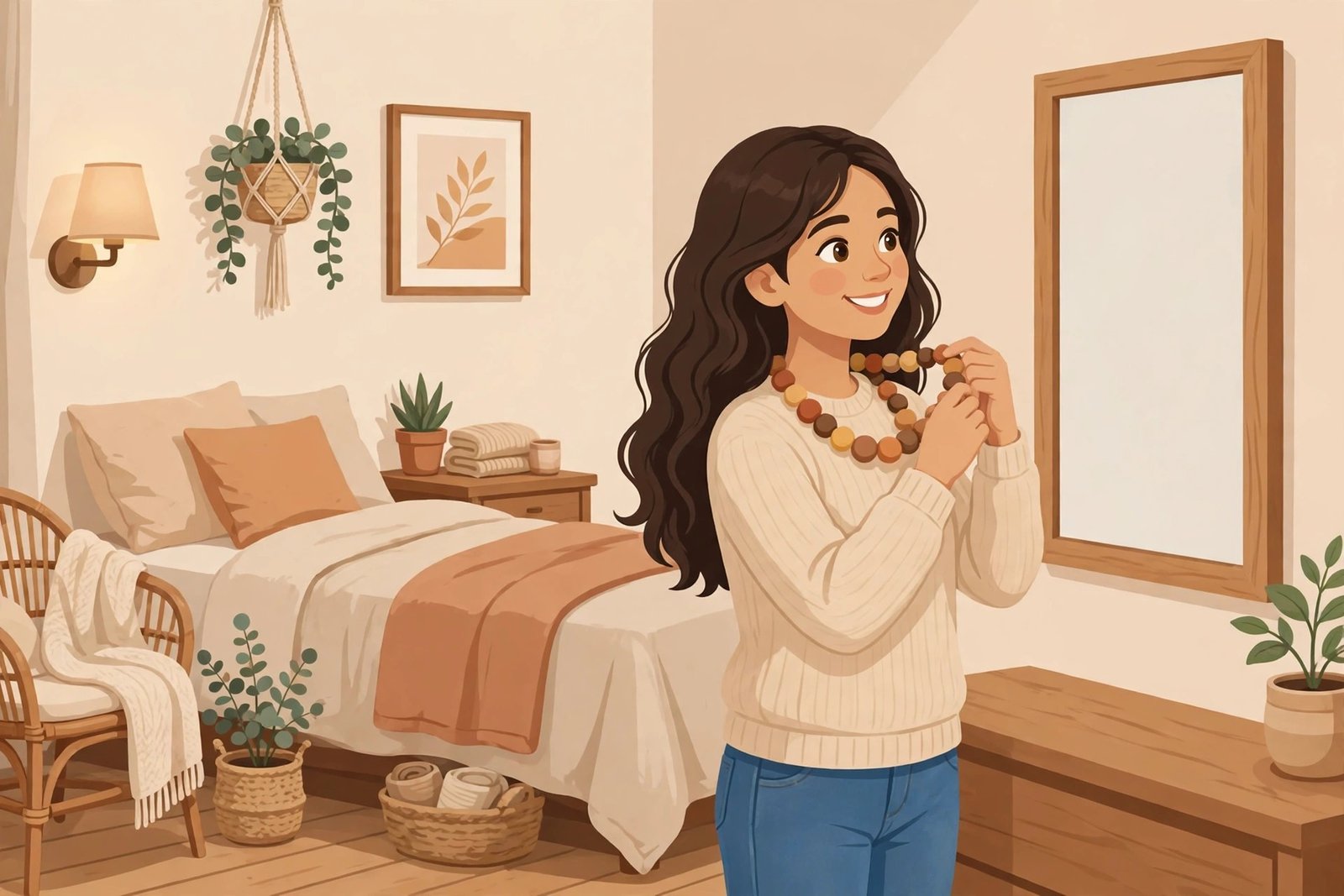
Short version first. You can wear basic clothes without looking boring by changing the details around the basics, not the basics themselves. Fit comes first: clean lines, the right lengths, no accidental sloppiness. Then add one interest point, a texture mix, a statement piece, or a smart layer, so the eye has somewhere to land. Finish with shoes, a bag, and a two minute touch like a tuck or a rolled sleeve. That’s the whole system. The girls who wear basic clothes without looking boring aren’t buying more exciting clothes. They’re styling plain ones on purpose.
Boring Is Rarely About the Clothes Themselves
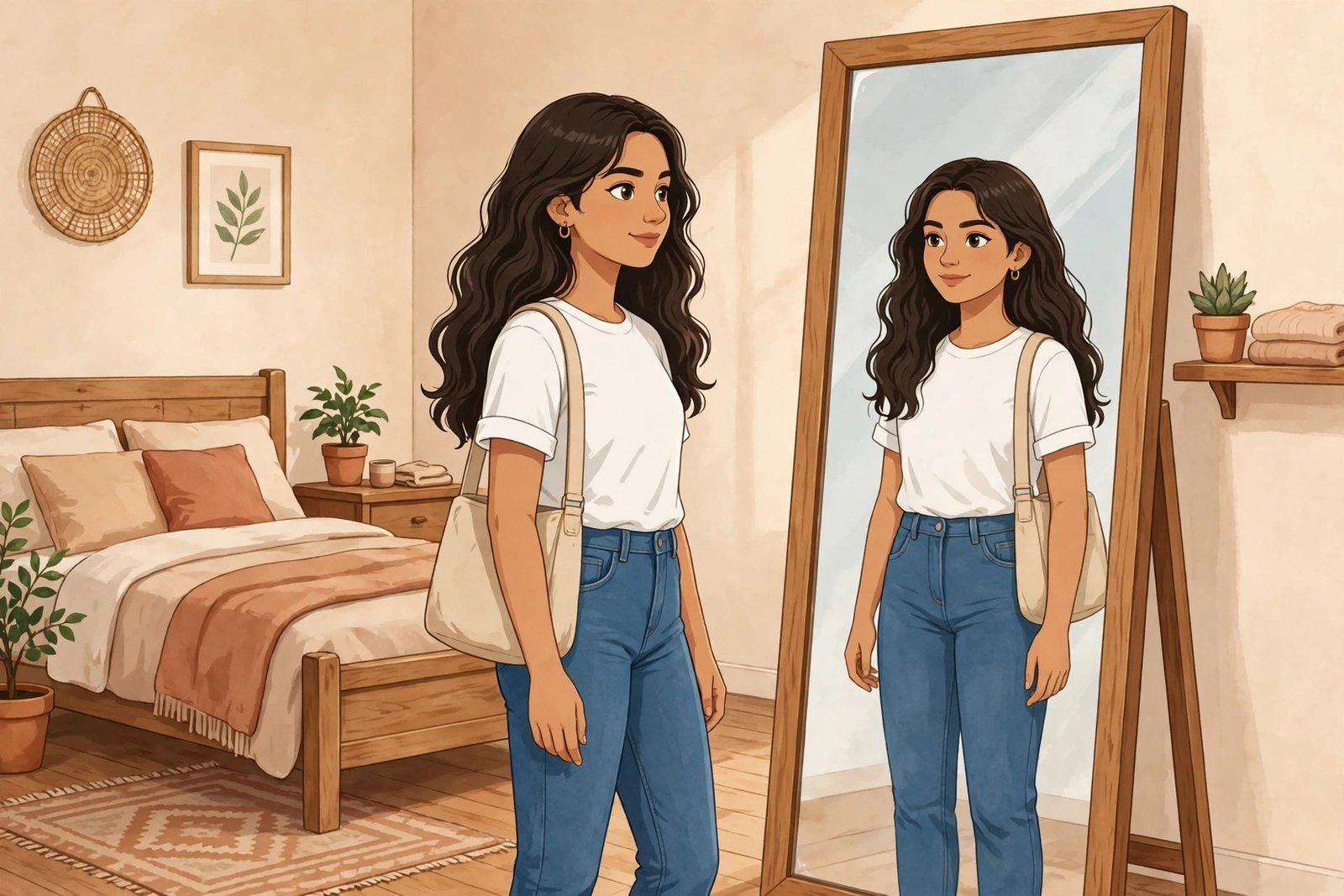
Start with a small experiment in your head. Picture two girls in the exact same outfit: white tee, blue jeans, white sneakers. One looks like she got dressed in the dark. The other looks like a style photo. Same clothes. So what differs? Her tee is tucked just at the front. Her jeans end at the right spot on her ankle. Her sleeves sit clean. Her hair and bag look chosen, not grabbed. The outfit didn’t change. The finishing did. Boring, it turns out, is usually not a garment problem. It’s an unfinished problem.
This is good news, and here’s why. If boring were about the clothes, the only fix would be shopping. New prints, new colors, new everything, every time you felt flat. That’s expensive, and it doesn’t even work for long, because new clothes go unfinished too. But if boring is about finishing, the fix is free and it lives in your mirror. You can wear basic clothes without looking boring starting with tomorrow’s outfit, using pieces you’ve owned for a year. The wardrobe stays. The habits change.
There’s a second reason basics get blamed unfairly. We compare our plain outfits, seen up close in bad bedroom light, with other people’s finished outfits, seen in their best photo of the week. Up close, every outfit is just fabric. From a small distance, with fit and one interest point in place, the same outfit reads as a look. Distance is part of style. When you judge your basics from thirty centimeters in a harsh light, you’re grading them by a standard no outfit passes. Step back. Look at the whole picture, head to shoes. That’s the view everyone else gets, and it’s kinder and truer.
So keep your basics, all of them. The plain tee is not the enemy. The enemy is a pile of small neglects: the wrinkled front, the wrong length, the shoes that belong to a different outfit, the hair that says you gave up at 7 am. Fix the neglects one at a time and watch what happens to the same old clothes. Girls are often shocked the first time they wear basic clothes without looking boring just by finishing the outfit. It feels like the clothes changed. They didn’t. You just stopped leaving them half done.
One more comfort before we move on: the girls in the photos are finishing too. Those sharp basic outfits you saved took a tuck, a roll, and a mirror check, same as yours will. Nobody wakes up styled. They just ran small moves so often that the moves look like talent. You’re not behind them. You’re one habit stack away from them, and habit stacks are learnable at any age, with any closet. That’s the real promise hiding inside this topic: wear basic clothes without looking boring is a skill, not a shopping level.
Fit First: The Quiet Trick Behind Every Good Outfit
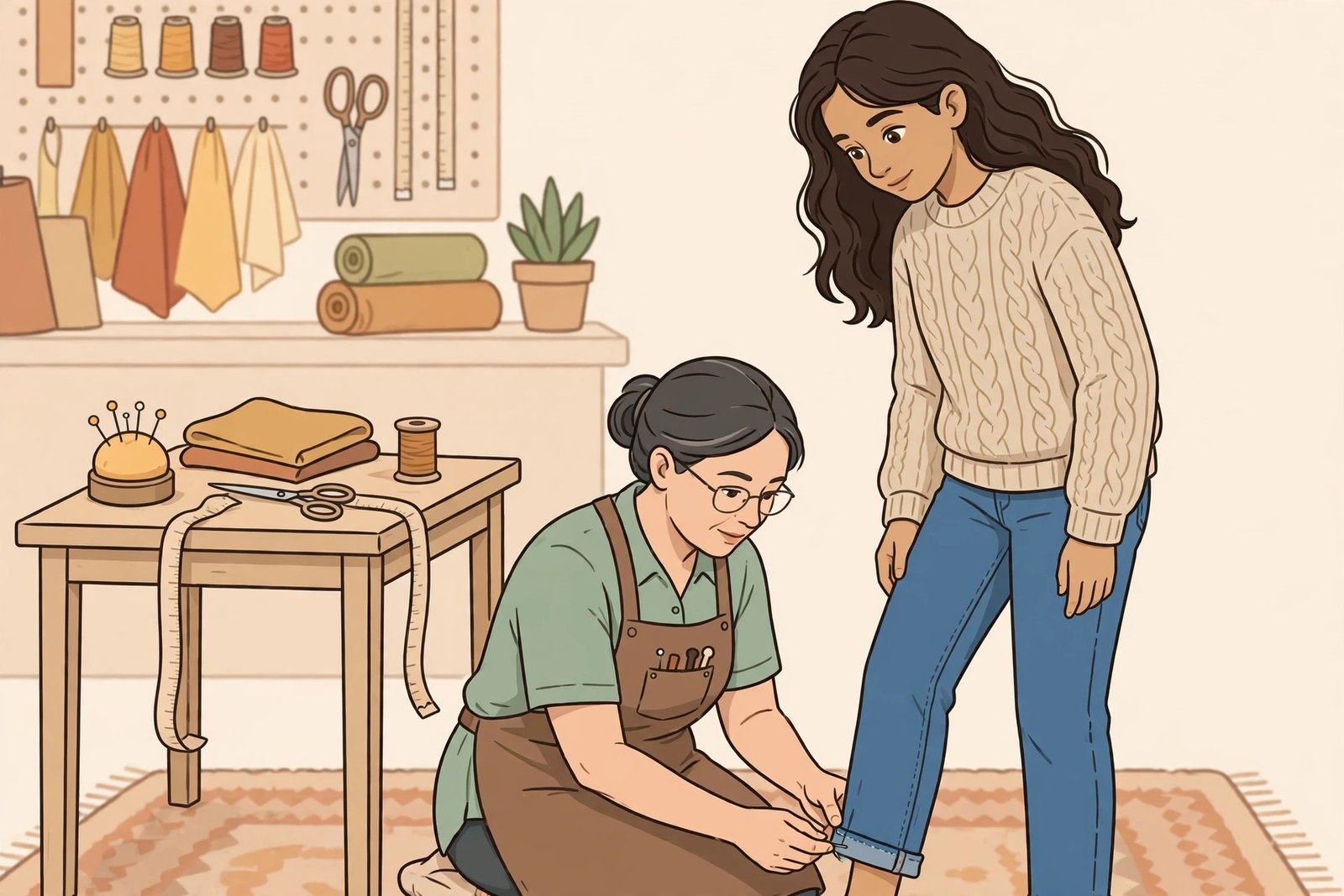
If you change only one thing, change fit. Fit is the quiet trick behind almost every “she always looks put together” you’ve ever thought. A basic in the right fit looks calm and expensive. The same basic in a sloppy fit looks tired, no matter how new it is. And here’s the secret: fit doesn’t mean tight. It means the clothes look like they belong to your body on purpose. Shoulders sitting where shoulders live. Waistbands that stay put. Lengths that end where they help you.
Start with the three lengths that do most of the work. Top length: a tee or sweater that ends around your hip bone or tucks cleanly gives your outfit a shape. Jeans length: a hem that kisses the ankle or sits cleanly on the shoe reads sharp, while extra fabric pooled at the bottom reads sleepy. Sleeve length: sleeves that stop at the wrist bone look finished. Sleeves swallowing your hands look borrowed. You can wear basic clothes without looking boring on these three lengths alone, before a single accessory enters the room.
Then check the accidental sloppiness list. Wrinkles across the front. A stretched neckline. Jeans that need hitching up every ten steps. A sweater that’s pilling into fuzz. None of these are style crimes. They’re just noise, and noise is what the eye reads as boring or messy. A two minute steam, a fabric shaver pass, a belt that ends the hitching: tiny repairs, huge difference. This is also why one well fitting basic beats three almost fitting ones. Fit is visible from across the street. Price tags are not.
Fit also explains a mystery: why the same basic outfit looks great on your friend and flat on you. Bodies differ, so the right lengths differ. Copying her exact pieces won’t copy her fit. Copying her fit checks will. Measure outfits against your own mirror, not against her photo, and your version will stand on its own. That’s the moment wear basic clothes without looking boring becomes personal instead of copied.
A quick word on tailoring, because girls often think it’s only for fancy clothes. Shortening jeans, taking in a waist, or fixing a hem is cheap at most local shops, and it turns a basic into a made for you piece. Stylists say this constantly. In his MasterClass tips on dressing with style, Tan France puts fit and tailoring near the top of the list, and talks about texture as the simple way to lift an outfit you already own. He’s dressing adults for TV, but the rules are the same in a school hallway. Fit first, then interest.
When the base fits, everything you add later works twice as hard, and you wear basic clothes without looking boring almost by accident.
Mix Textures So Simple Pieces Stop Looking Flat
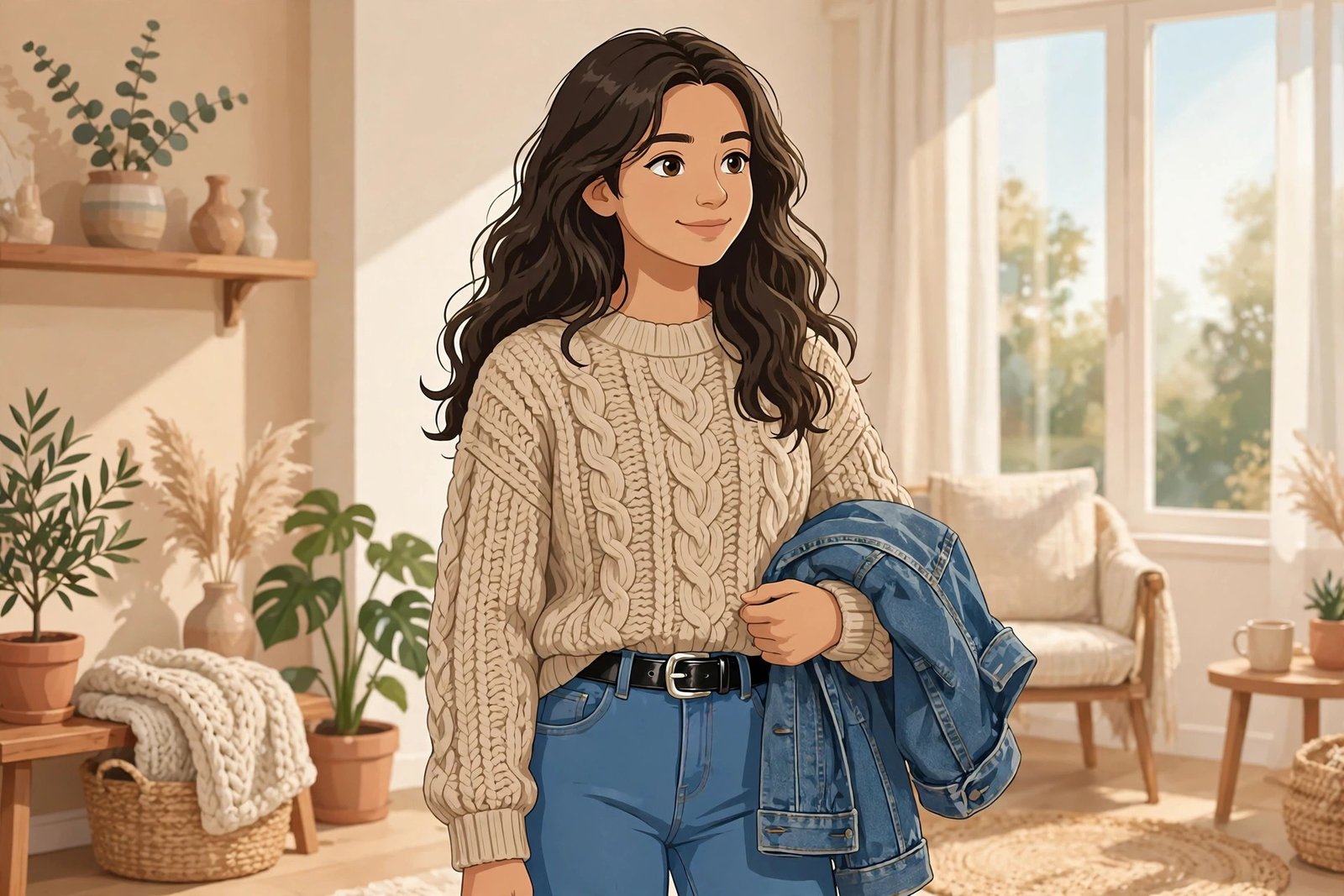
Now for the most underrated move in this whole article: texture. An outfit can be all plain colors and still look rich, if the fabrics differ. Denim with a soft knit. A smooth cotton tee under a rough jacket. A silky skirt with a chunky sweater. The eye reads texture contrast as interest, even when the colors are quiet and the shapes are simple. Flat outfits are usually flat because everything in them has the same surface: all smooth cotton, head to toe, nothing for the light to play with.
Think of it like food. A plate of only soft things tastes dull, even if each thing is fine. Add one crunch and the plate wakes up. Clothes work the same way. Your basics probably already contain more textures than you realize: the rib of a knit, the shine of a belt, the matte of canvas shoes, the smooth of a watch strap. Styling is often just letting two different surfaces stand next to each other on purpose. When girls ask how to wear basic clothes without looking boring on a budget of zero, texture is usually the first answer, because it costs nothing. It only asks you to combine what’s already there differently.
Try a few easy pairings with pieces you likely own. Jeans plus a knit sweater plus a smooth bag. A plain cotton dress plus a denim jacket. A simple tee plus a skirt with any shine or pleats in it. A monochrome outfit, all black or all cream, becomes a great texture exercise: same color family, three different fabrics, and suddenly the plainest pieces look like a deliberate look. That’s the trick stylists use when a star wears “just jeans and a tee” and somehow looks like a campaign photo. It’s never just jeans and a tee. It’s fit, plus texture, plus one more move we’ll get to next.
Don’t overdo it. Two or three textures in one outfit is plenty. More than that and the eye gets confused instead of interested. And if an outfit still feels flat after the texture check, look at the shoes and bag before you blame the clothes. A worn out, shapeless bag can flatten a good outfit in one glance. Fresh, simple accessories are texture too. The point of this section is simple: before you buy anything printed or loud, mix the surfaces you own. You’ll be surprised how often that’s the whole answer to how to wear basic clothes without looking boring on an ordinary day.
A quick texture test lives in your laundry basket, funny enough. Look at the pieces you wore most this month. Odds are they mix surfaces without you planning it: the knit you live in, the jeans that go with it, the smooth bag that finishes both. Your hands already know this rule. Styling with texture is mostly letting your hands do on purpose what they’ve been doing by luck. Notice the pairings that worked, write them down if it helps, and repeat them with intent. Intent is the whole difference between accident and style, and it’s free.
Repeat your best two pairings this week and watch how fast wear basic clothes without looking boring stops being a question and becomes just your look.
One Statement Piece Does the Talking
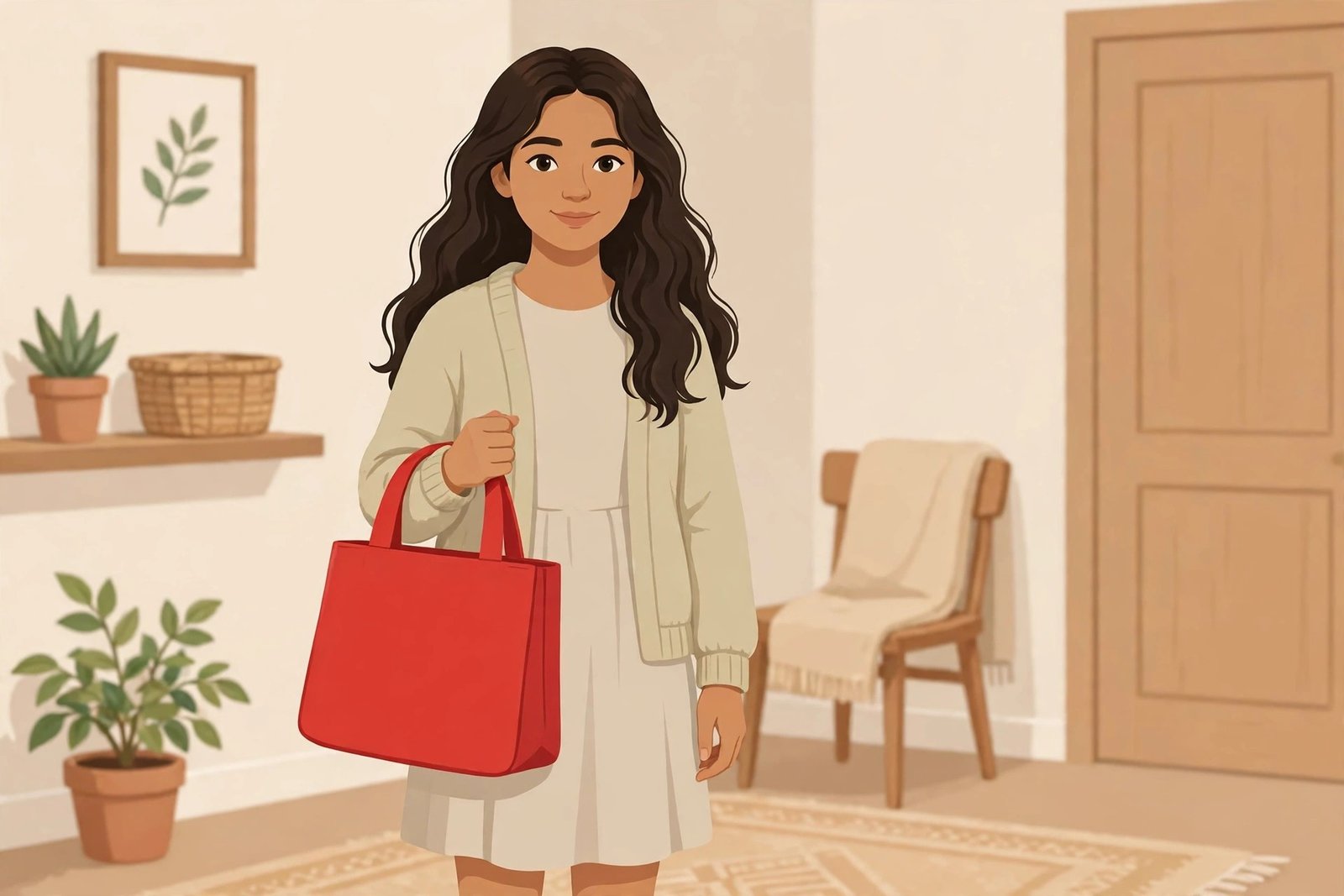
Every finished outfit has a focal point: one place where the eye lands first. In a loud outfit, ten things shout at once. In a basic outfit with no focal point, nothing speaks at all, and that’s what boring really is: silence. The fix is to give your basics one speaker. One statement piece. Not five. One. A bold bag. A chunky necklace. Red shoes. A patterned scarf. A great jacket. The basics become the calm background that lets that one piece glow, and the outfit suddenly has a story.
Notice how this flips the usual thinking. Girls often feel they need interesting clothes everywhere. Actually, interest works best in one dose. When everything is a statement, nothing is. When one thing is, the whole outfit borrows its energy. This is how you wear basic clothes without looking boring even on days when you own nothing new: rotate the speaker. Monday, the bag talks. Wednesday, it’s the earrings. Friday, the jacket. Same basics underneath, three different outfits to everyone watching.
If choosing the speaker feels hard, use the guest test. Imagine a friend visiting your room and seeing the outfit on you. Where would her eyes go first? If the answer is “nowhere special,” the outfit needs its speaker. If the answer comes instantly, you’re dressed. It really can be that simple, and simple is the whole point here: wear basic clothes without looking boring is a one decision problem, not a whole wardrobe problem.
Choose your statement pieces from what you already love. The scarf from your grandmother. The boots that make you walk taller. The bright cardigan that gets compliments every single time. Statement doesn’t mean expensive or trendy. It means noticeable and yours. A piece with a story works even better, because you’ll carry it differently. Confidence is visible, and it finishes outfits faster than any accessory.
There’s a single garment that proves this whole system, and you probably own it: the white shirt. Alone, it’s as basic as basics get. Tucked, sleeved rolled, with one necklace and the right jeans, it becomes the outfit everyone asks about. Our full guide on how to style a white shirt takes that one piece through the whole method, if you want to watch the moves happen slowly on a single garment. Then come back here and run the same moves on your tees, knits, and dresses. One speaker, calm background. That’s the recipe, and once your eye learns to build outfits this way, you wear basic clothes without looking boring without even thinking about it.
Layers That Add Depth in Two Minutes
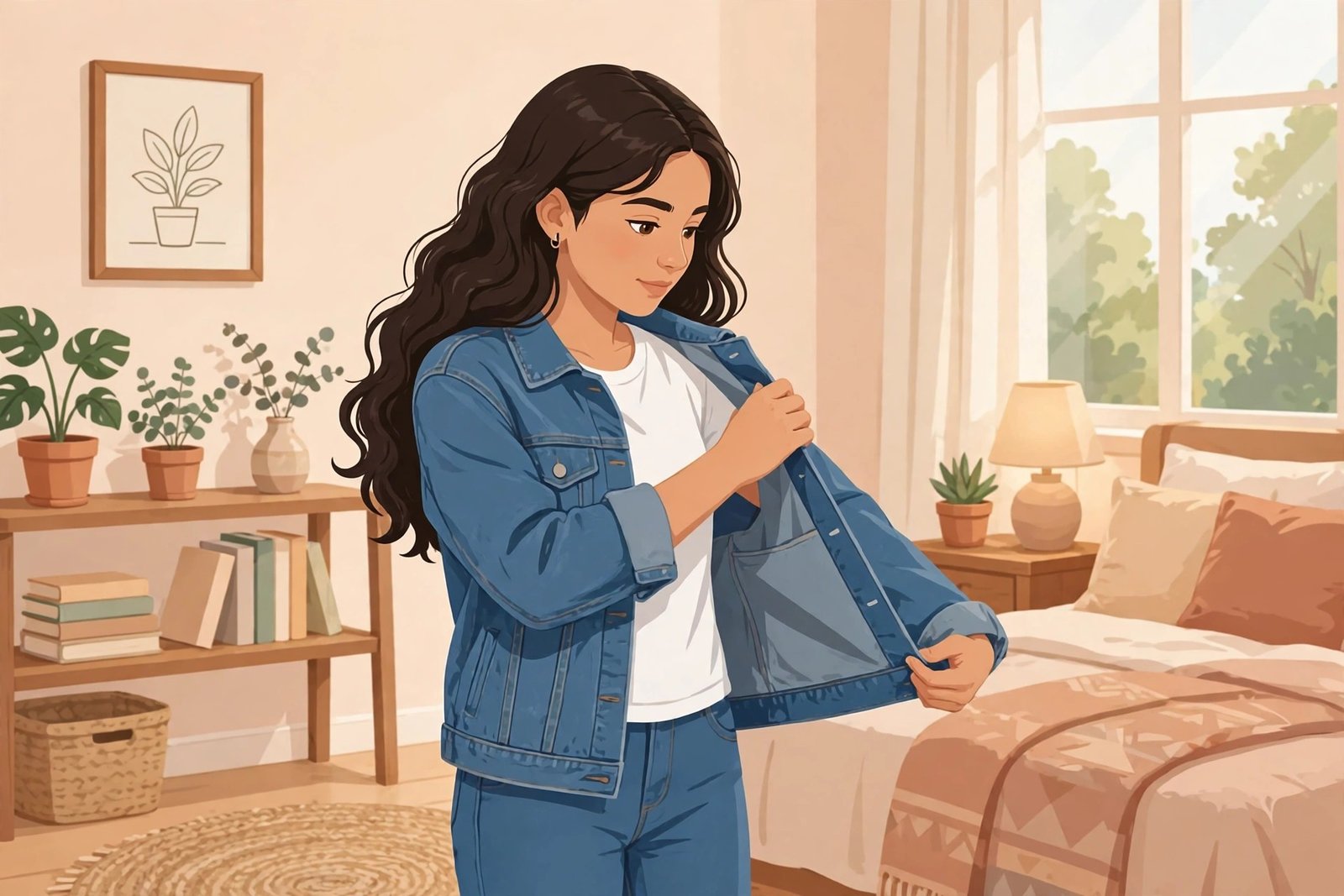
Layers are the fastest depth you can buy for free. A single layer outfit is a sentence with no punctuation. Add one layer and it gains rhythm. An open shirt over a tee. A cardigan over a plain dress. A jacket over literally any basic you own. The layer adds a new line for the eye to follow, a new texture, and often a new color. Two minutes, and the outfit has a before and after.
The trick is contrast. A layer works when it differs from what’s under it: longer over shorter, structured over soft, dark over light or light over dark. A denim jacket over a white tee works because the surfaces and weights clash in a good way. A hoodie under a coat works because the casual piece peeks out of the formal one. If the layer matches the base too closely, the eye reads it as one blob, and the depth disappears. When you wear basic clothes without looking boring in winter, layers are doing most of the heavy lifting, so give them contrast to work with.
Keep a small layer wardrobe ready. Three layers can carry a whole season: a denim or casual jacket, a cardigan or open knit, and one smarter jacket or blazer if you have it. Hang them where you can see them while dressing, not buried behind coats. A layer you forget exists is a layer that never helps you. Some girls keep one jacket on a hook by the door for exactly this reason: the outfit gets its depth on the way out, in the last ten seconds.
Layers also solve the in between weather problem that ruins basic outfits. Too warm for the sweater alone to look right, too cold for just the tee: the open layer in the middle fixes the temperature and the look at the same time. And they give you a midday edit. Room gets warm, layer comes off, and the outfit underneath still works because you built it as a complete base. That’s the sign of good layering: both versions look finished. Practice that test at home once, and you’ll trust the system on busy mornings. Layer, check. Remove, check. Now you can wear basic clothes without looking boring in any weather your town invents.
On the coldest weeks, when every outfit hides under a coat anyway, let the layer itself be the statement: your coziest knit, worn open over a plain tee, can be the whole show.
Shoes and Bags Change the Whole Story
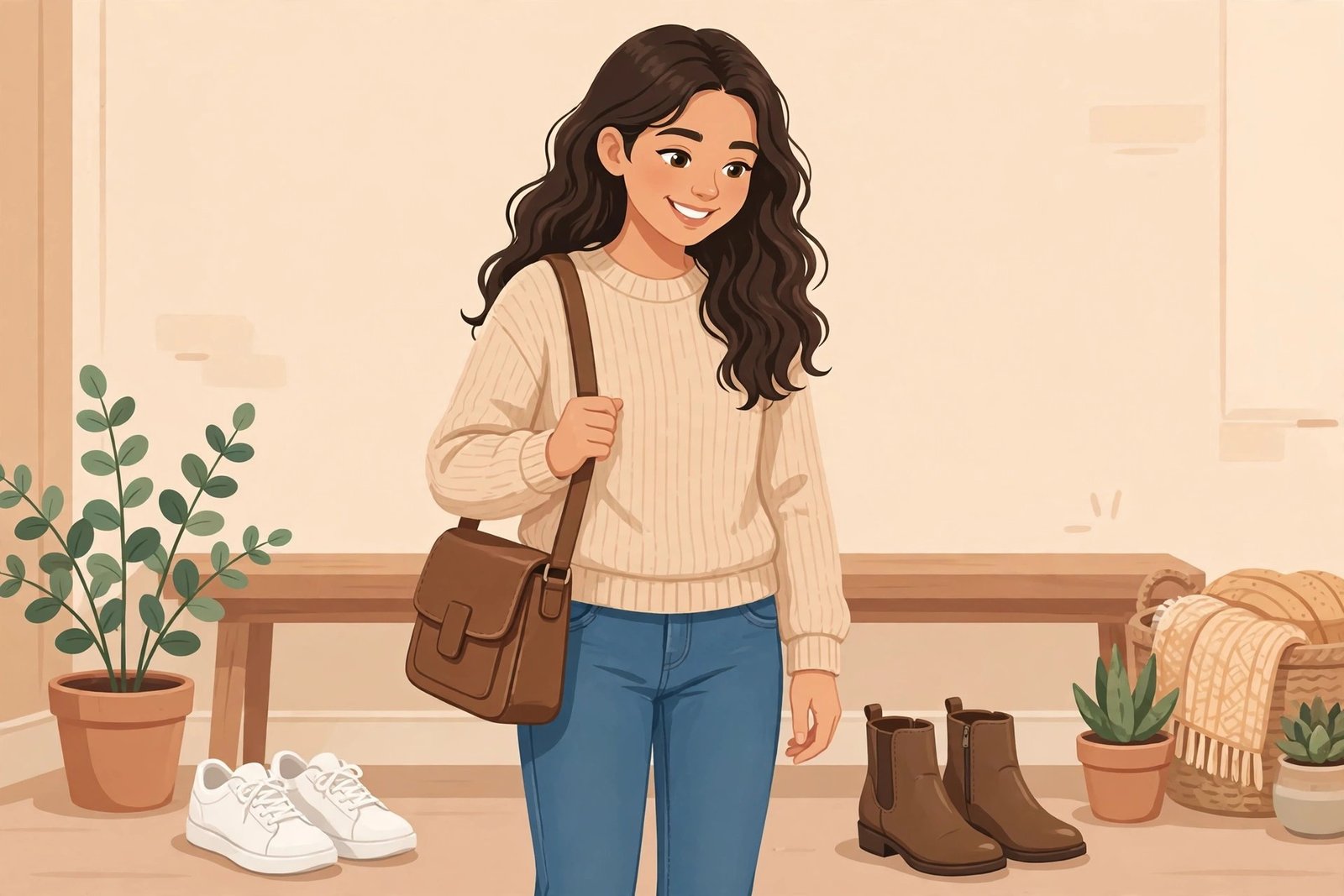
Here’s a fun truth: you can change an outfit’s entire mood without touching the clothes. Swap the shoes. A tee and jeans with sleepy, beat up sneakers reads one way. The same tee and jeans with clean white sneakers, loafers, or ankle boots reads like a decision. Shoes are the period at the end of the outfit’s sentence. If they’re mumbling, the whole sentence sounds unsure. You don’t need many pairs. You need two or three that are clean, in good shape, and different from each other in mood.
Bags do the same work at the other end of the outfit. A structured bag sharpens basics instantly. It tells the eye: this was chosen. A soft tote keeps things relaxed and weekend like. A small crossbody adds a line across a plain top, which is texture and shape in one move. And color lives here safely. If your basics are all neutral, a bag in a real color is the easiest statement piece you’ll ever own, and it never has to match anything else you buy. Many girls find their first reliable way to wear basic clothes without looking boring is exactly this: plain outfit, great bag, done.
Care matters here more than variety. Clean shoes and a bag that isn’t peeling will lift basics further than a new top would. Five minutes with a cloth on Sunday gives you a week of sharper outfits. Also match the energy, not the exact color. Sporty shoes with a dress can work beautifully when it looks deliberate, with clean lines and a confident layer. What breaks an outfit is the accidental mismatch: the gym bag with the nice dress, the hiking shoes with the skirt, chosen only because they were by the door.
Think of shoes and bags as the frame of a picture. The picture is your basics, and it’s a good picture. A frame that’s clean and chosen makes people look twice. A cracked, random frame makes them glance away. Frames are a small part of the wall, but they decide how the art is read. When your mornings are rushed, this is your shortcut: build the plain outfit, then spend your last sixty seconds on the frame. It’s the highest value minute in getting dressed, and it’s how busy girls wear basic clothes without looking boring day after day.
Try it for one school week, frame first, and notice how often the compliment lands on the whole outfit when really, you only changed the edges.
Small Finishing Touches: Tuck, Roll, Belt, Repeat
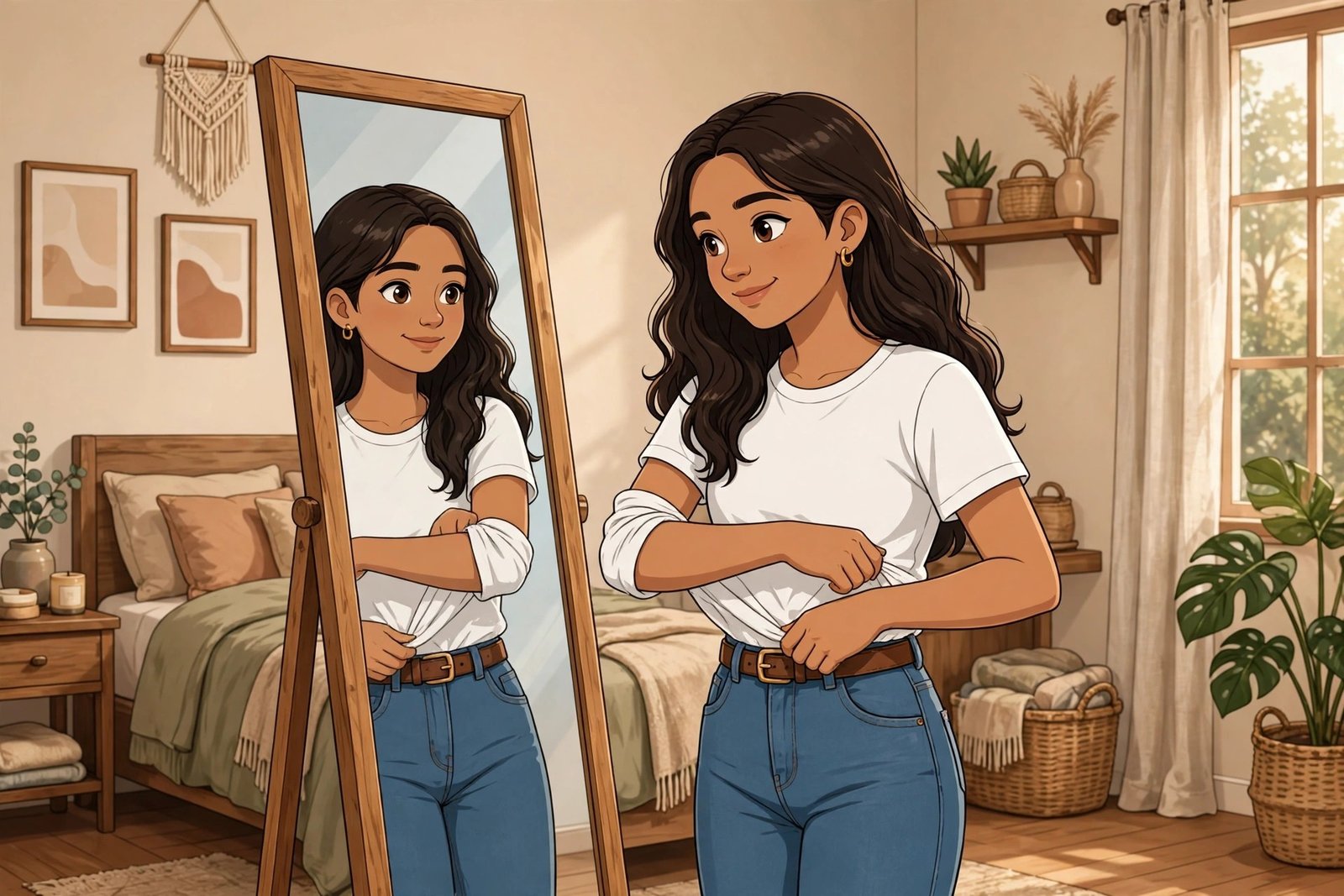
Welcome to the two minute section. These moves are so small they feel like cheating, and they are responsible for more “you look nice today” comments than any shopping trip. First, the tuck. A front tuck on a tee or sweater gives your waist a line and your outfit a shape. It takes three seconds. An untucked top over jeans can look fine, but the tucked version looks dressed. Same clothes. One gesture.
Second, the roll. Rolling sleeves to the forearm is a classic for a reason: it shows the slimmest part of the arm, adds a casual edge, and makes any top look worn on purpose. Rolling or cuffing jeans once can do the same for the ankle, especially with boots or loafers. Third, the belt. A belt over a plain dress, a long cardigan, or high waist jeans adds shape and a texture break in one move. It also tells the eye where the outfit’s middle is, which quietly organizes everything above and below it.
Fourth, repeat a color. If your shoes are tan, let your belt or bag nod to tan. If your earrings are gold, a gold toned watch joins them. One small echo makes separate pieces look like a set that was planned. This is the secret behind outfits that look “put together” in photos. Nothing matches exactly. One thing echoes another. It costs nothing, because the pieces already exist in your room. They just need to be introduced to each other.
Finally, the thirty second mirror check before you leave. Not a criticism session. A finishing scan: tuck sitting right, sleeves even, one statement in place, shoes clean. That scan is the difference between an outfit and a look. And here’s the hopeful part: these touches become automatic fast. Two weeks of doing them on purpose, and your hands start doing them alone. That’s when the system clicks. You stop asking how to wear basic clothes without looking boring, because your normal routine answers it. If you’re still building the bigger picture of your style, our guide on how to find your own clothing style as a teen helps you choose which of these moves feel most like you.
Keep the ones that do. Repeat them. Basics plus your signature touches equals a style people remember, and it was never boring for a second.
Frequently Asked Questions
Which basics should every girl own first?
Start with the pieces that mix with everything: a white and a black tee, straight or slim jeans, a plain knit sweater, a simple dress, and a jacket that goes over all of it. Shoes: one clean sneaker and one sharper pair, like loafers or ankle boots. That set can build weeks of outfits with fit and finishing in place. Add slowly, and only pieces that pair with three things you own. A wardrobe built like that is how you wear basic clothes without looking boring from day one.
How do I stop a plain outfit from looking lazy?
Lazy usually means unfinished, not plain. Run the quick scan: Is anything wrinkled or stretched out? Do the lengths sit right? Is there one focal point? Are the shoes clean? Nine times out of ten, one fix from that list changes the whole read. A tuck and a sleeve roll alone can rescue most outfits in under a minute. If the pieces fit well and one detail looks chosen, plain reads as calm and confident, not lazy. The difference is tiny, and it’s almost never about buying something louder.
Can I wear the same basics several days in a row?
Yes, and stylish girls do it constantly. The base repeats; the finish changes. Same jeans, different top layer. Same sweater, new statement piece. Nobody tracks your basics the way you fear they do. What people notice is whether the outfit looks finished. Rotating your layers, shoes, and one speaker piece makes repeats invisible. It also keeps laundry sane and mornings fast. Repetition with variation is not a style failure. It’s literally how capsule wardrobes work, and it’s a calm way to dress.
What if my basics are old or not great quality?
Old basics can still look sharp if they fit and are cared for. Wash them gently, fix the pilling, replace a stretched neckline’s worst offenders when you can, and lean on fit and finishing. A five year old tee that fits perfectly will out style a new one that doesn’t. Quality matters most at the touch points: shoes, bag, and the one layer you wear daily. Upgrade those slowly, as budget allows, and let the simple pieces be simple. Good styling covers a lot of humble fabric.
What is the fastest full fix on a rushed morning?
Give yourself ninety seconds and do four things: front tuck, sleeve roll, one statement piece, clean shoes. That combo has rescued more mornings than any outfit planning app. If you have one more minute, add a layer with contrast. Rushed mornings are exactly why this system exists: it doesn’t ask for creativity at 7 am, just a short checklist your hands can run half asleep. Most girls find that once the checklist is a habit, they wear basic clothes without looking boring even on their most chaotic days.