
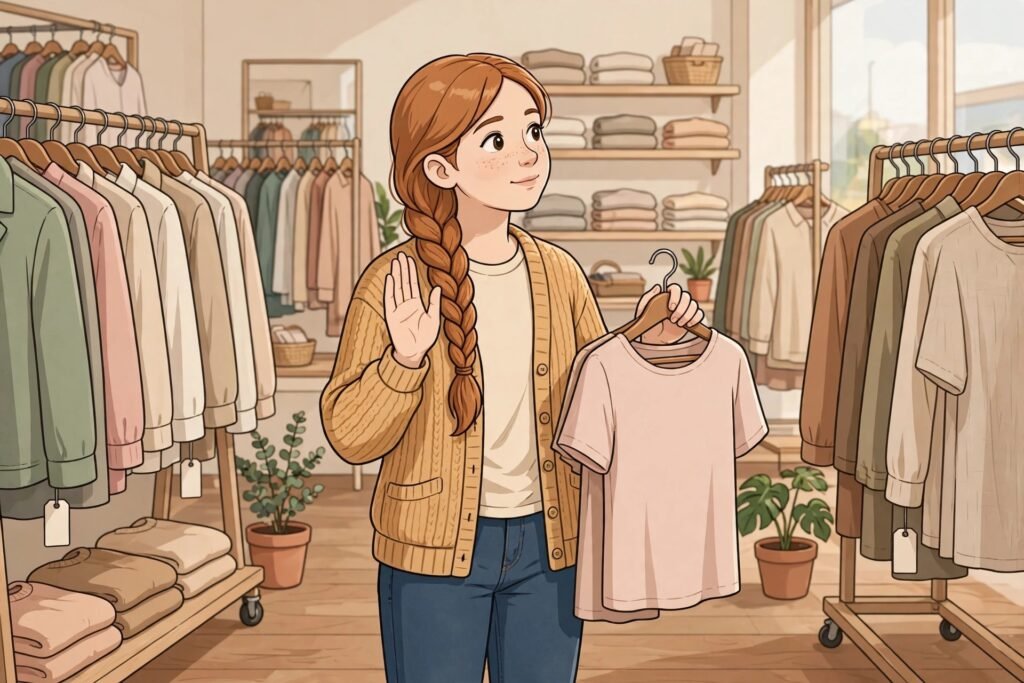
Picture the moment. You’re in a store, holding a top that’s cute, soft, and half price. Your friend says it looks great. The mirror is kind. Your hand is already reaching for your wallet. And somewhere under all that, a small quiet voice asks: will I actually wear this? Most shopping regrets are born in exactly this moment, in about five minutes, with good music playing. The mistakes to avoid when buying clothes aren’t made at home in front of your closet. They’re made right here, in the store, while the tag is still on.
Here’s the good news. Those mistakes aren’t random, and they aren’t a sign that you’re bad with money or style. They’re the same six or seven traps, repeated by almost every girl, in almost every store. Stores are designed around them, honestly. The sale signs, the mirrors, the fitting room lighting: all of it nudges you toward a fast yes. Once you can name the traps, the nudges lose their power. You don’t need more willpower. You need a slower five minutes. This article walks through the classic mistakes to avoid when buying clothes one by one, with the exact moment each one strikes and the small question that disarms it.
Breaking the bigger buy and regret habit at home is a whole topic of its own. This page stays in the store, where the damage is done.
The Short Answer
The short version is this. The biggest mistakes to avoid when buying clothes happen fast and feel good in the moment: buying because it’s on sale, buying for the size you plan to be, buying for a fantasy life, saying yes in a rushed fitting room, skipping the care label, and buying a twin of what you already own. Every one of them can be stopped with a pause and one honest question. Slow the moment down, and the mistakes to avoid when buying clothes mostly stop happening. The last section gives you five questions to ask before you pay. They’re short enough to keep in your phone, and they work in any store, at any price.
The Sale Tag That Blinds You
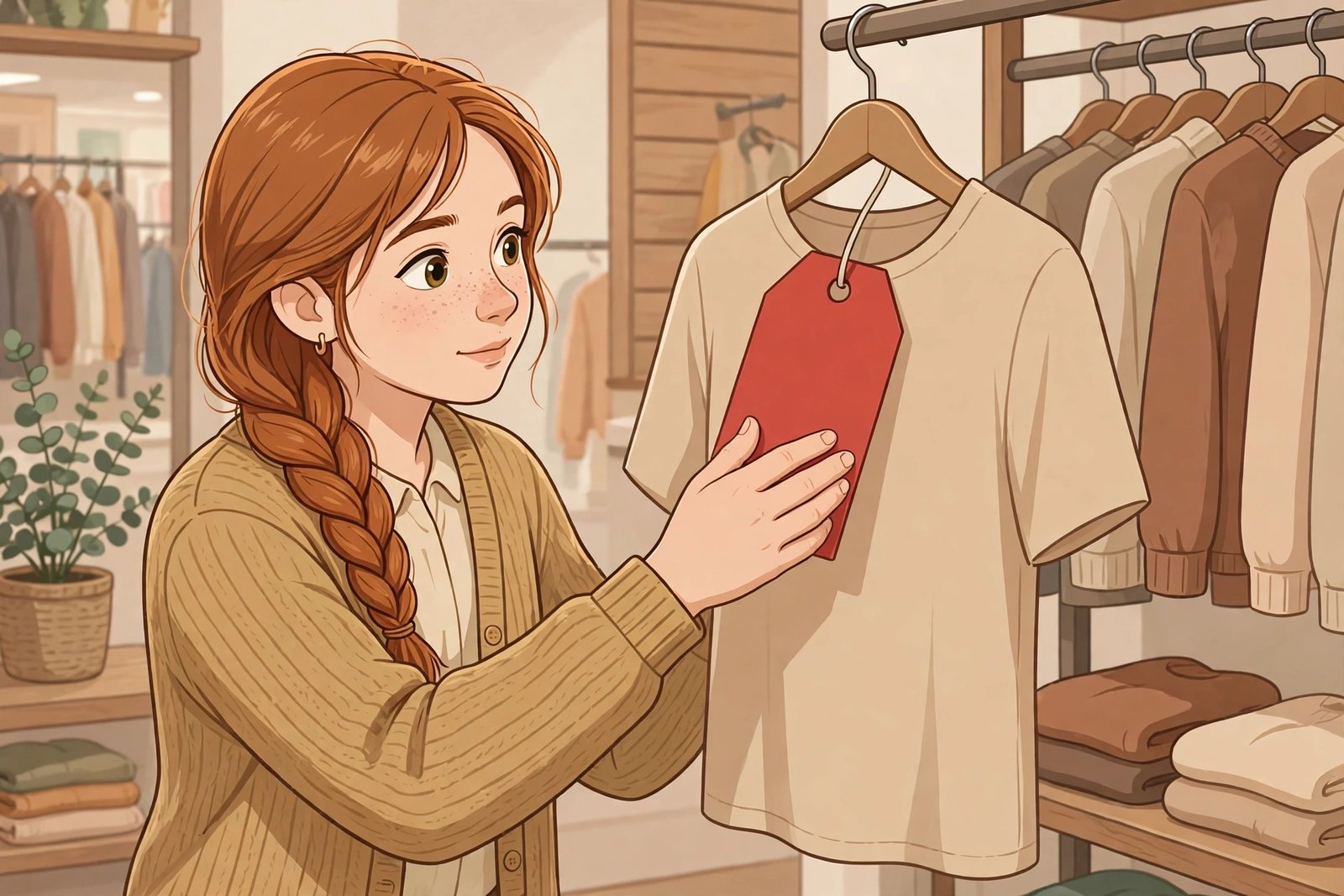
The first trap wears a red tag. Fifty percent off has a magic effect on the brain. A top that costs 20 suddenly feels like a win, even if you’d never have looked at it at full price. Your brain stops asking “do I love this?” and starts asking “how much am I saving?” Those are very different questions. Saving 20 on something you’ll wear twice is not saving. It’s spending 20 on a closet decoration. The sale didn’t change the top. It changed the question.
Stores know this, which is why the discount math is always loud and the real price is always small. The crossed out number does the selling. Your job is to quietly cover the tag with your thumb and ask the full price question anyway: would I want this if it cost the original number? If the answer is no, the sale is not a deal. It’s bait. This is one of the most common mistakes to avoid when buying clothes, because it disguises itself as being smart with money.
There’s a cousin trap standing right next to it: the deal that expires. “Today only.” “Last day.” “Almost gone.” Urgency is a sales tool, not a fact about your life. Clothes are not concert tickets. Another top, in another store, on another day, will exist. If a piece is truly right for you, a calm tomorrow brain will still want it. And here’s a small truth from every girl who’s learned this the slow way: the pieces bought in a panic almost never become favorites. They become the tags still on, months later, quietly accusing you from the rail.
A gentler way to shop sales does exist, and it’s boring in the best way. Go in with a list of actual gaps in your wardrobe: the plain black pants, the warm layer, the shoes your real outfits need. Then let sales work for you, discounting things you already decided you need. A sale on a needed piece is a real win. A sale that creates the need is the trap wearing a smile. Keep that order straight, list first and sale second, and this whole family of mistakes to avoid when buying clothes loses its favorite trick.
Buying for the Size You Plan to Be
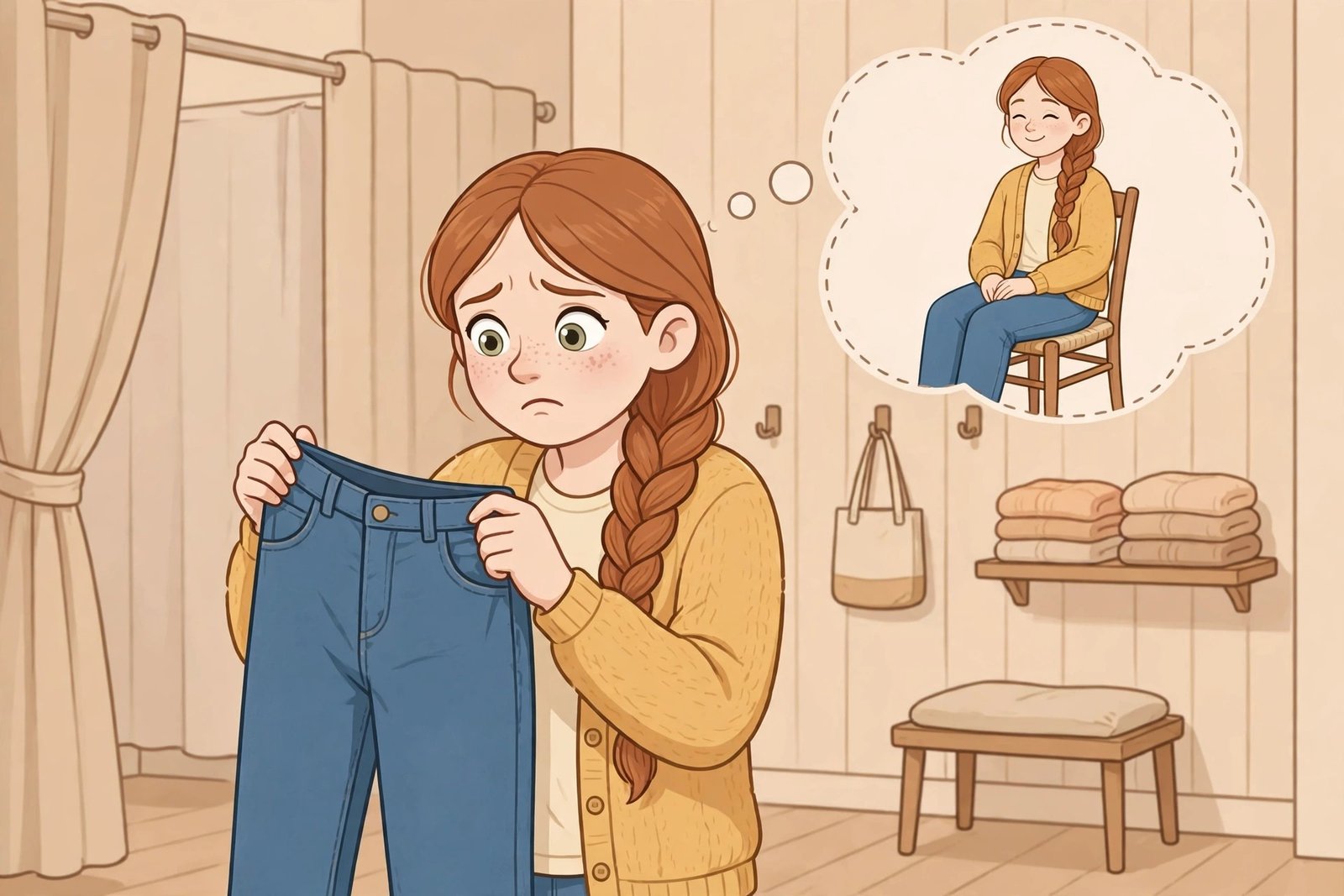
The second trap is kinder on the surface, and crueler in the closet. You try on jeans. Your usual size feels snug. The smaller size almost fits, if you hold your breath and don’t plan on sitting down. And a hopeful voice says: keep them. I’ll grow into them. I’ll be that size by summer. It feels like motivation. It almost never is. It’s a purchase made for a future body, and future body clothes have a special talent for making present body mornings miserable.
Let’s be gentle and clear here. Your body is not a before picture. Clothes are meant to fit the person wearing them today, at lunch today, sitting through a whole school day today. A size is just a number on a tag, and tags are wildly inconsistent between brands anyway. The same girl can be three different sizes in three stores on one afternoon. When one of the mistakes to avoid when buying clothes is this common, it’s worth saying plainly: the number is not the goal. Comfort and confidence are.
What happens to almost fitting clothes? They wait. They wait through the season they were bought for. They get tried on hopeful mornings and taken off by sad ones. Each try on costs a little mood, which is an unfair price for a pair of jeans. And because they were bought with a plan attached, getting rid of them later feels like giving up, so they stay and stay. The closet fills with homework.
The fix is one fitting room rule: buy for the body you brought to the store. If a piece only works in a future version of your life, it stays on the rack, with love. If your body changes one day, stores will still exist, and you can shop for that day then, in clothes you can sit down in. This sounds strict, but it feels like relief in practice. Girls who drop this one from their list of mistakes to avoid when buying clothes describe the same thing: shopping got kinder the day the tag stopped being a test.
There’s one more quiet cost worth naming. Ill fitting clothes don’t just sit in the closet. They whisper. Every time you get dressed, they remind you of a plan that didn’t happen, and getting dressed is hard enough without a daily guilt exhibit. Compare that with the pieces bought for your real body: they ask nothing of you. They just work, wash after wash, and let you think about your day instead of your size. When girls talk honestly about the mistakes to avoid when buying clothes that hurt the most, the almost fitting jeans win every time. Not because of the money. Because of the whisper.
Shopping for a Fantasy Life
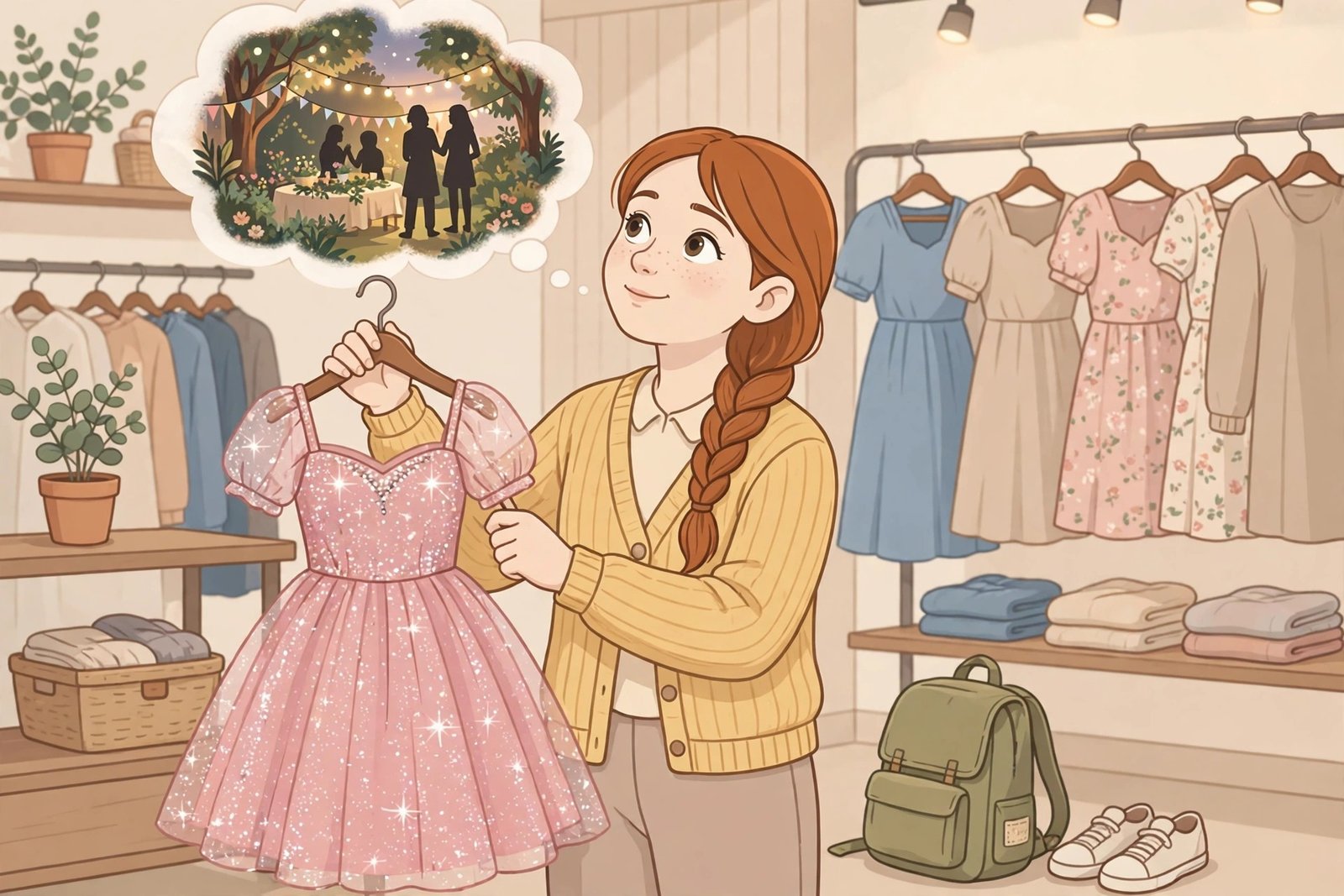
Trap three is the dreamiest. You see a dress and you don’t really see the dress. You see the life that comes with it: garden parties, a trip to a pretty city, being the kind of girl who brunches. The sparkly top sells you a New Year’s Eve you’re not even invited to yet. The floaty skirt sells you a holiday you’re not taking. You’re not buying fabric. You’re buying a trailer for a film about someone else.
Everyone does this sometimes, and it isn’t foolishness. It’s imagination, and imagination is lovely. The problem is only the bill. Fantasy pieces hang in your closet with their tags of hope, and every morning they take up space, hangers, and a little of your mood. Your real life, school, home, friends, the bus, needs clothes too, and it’s less glamorous about asking. When girls list their own mistakes to avoid when buying clothes after a closet clear out, fantasy buys are usually the biggest pile. Not the ugliest clothes they own. The most unworn.
The test is one question, asked in the store, before the wallet opens: where will I wear this in the next month? Not someday. Not in the life I might have next year. A real place, a real day, a plan that exists or could honestly happen. If you can name it, the piece may be a good buy. If you have to build a whole new lifestyle first, you’re holding a fantasy, and fantasies are cheaper to enjoy in the fitting room mirror for free.
Psychology has a name for the mood side of this. The Psychology Today piece on treatonomics and our small splurges explains how buying a little treat can feel like a small repair on a hard day, and how marketers design offers to catch exactly that feeling. A treat you choose on purpose is fine. A fantasy dress chosen by a tired mood is a bill for a film you won’t watch. Knowing the difference is most of the skill. Shopping for the life you actually live this month is how you quietly retire half the mistakes to avoid when buying clothes in one go.
The Rushed Fitting Room Yes
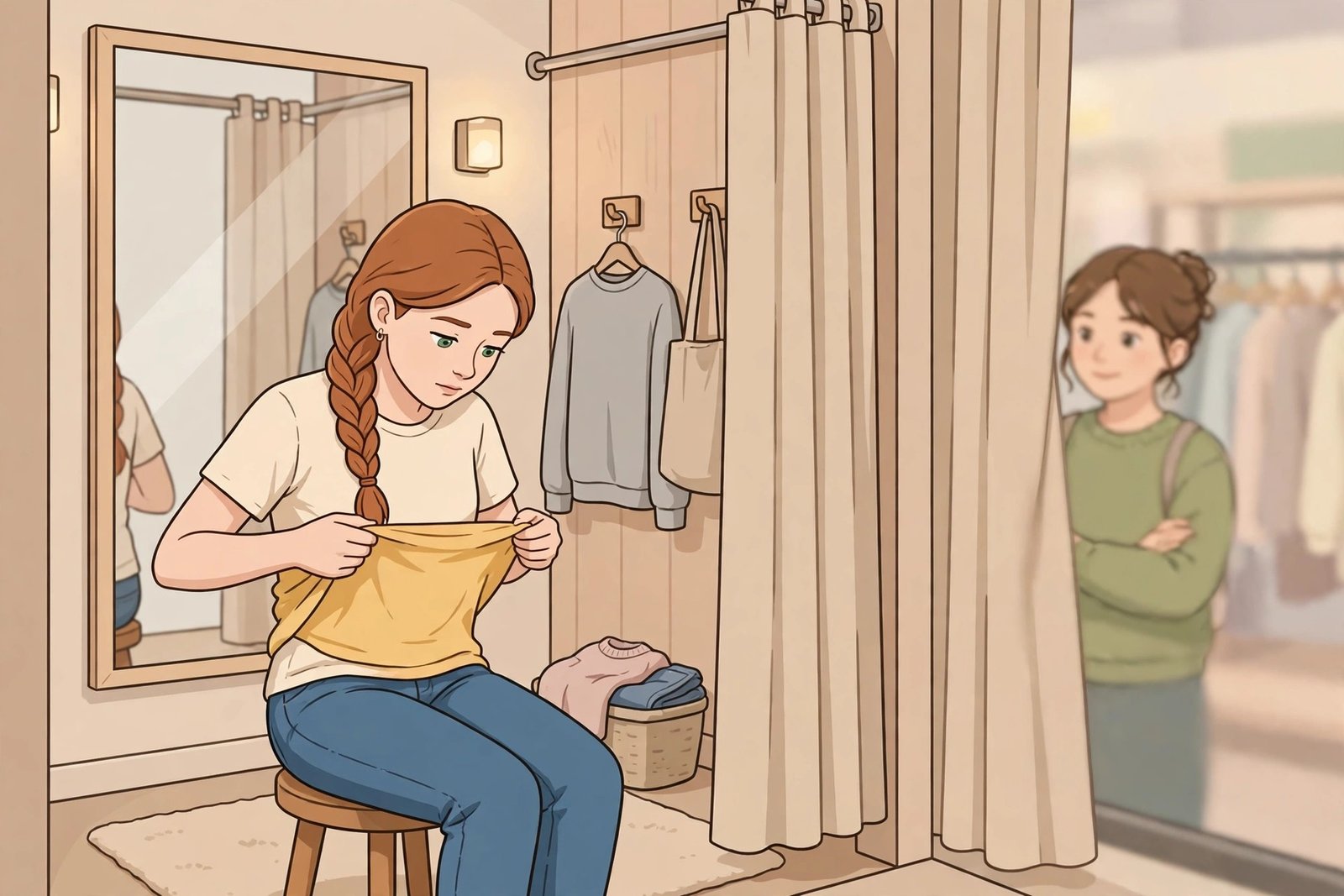
Trap four is about speed. The fitting room is small, warm, and slightly stressful. Your friend is waiting. The store is closing in twenty minutes. The line behind you is growing. In that pressure cooker, “yes” is just the fastest way out. You buy not because you’re sure, but because deciding feels easier than not deciding. Then you get home, try it on in honest light, and meet the piece you actually bought.
Fitting rooms also flatter on purpose. The lighting is warm and angled. The mirror may be tilted. The size you grabbed is the size you grabbed, and asking for another feels like a bother. So girls settle. The shoulders almost fit. The length is almost right. Almost is the most expensive word in shopping. One of the sneakiest mistakes to avoid when buying clothes is treating “almost fits” as “fits,” because clothes don’t improve at home. The mirror at home is honest, and it wins every argument with the store mirror.
Slow the room down with three small moves. Sit down in the piece. If you can’t sit comfortably, it fails a basic test of your real life. Walk a few steps, raise your arms, bend like you’re picking up your bag. And check it in the store’s main light if you can, near the door or a window, where the light tells the truth. These moves take ninety seconds. They rescue more purchases than any style rule ever written.
And give yourself permission to use the strongest sentence in shopping: “I’m going to think about it.” You can leave, get a drink, finish your day, and come back tomorrow if the piece still calls you. Stores will survive your pause. Most of the time, the walk out of the store is the fitting room test that matters most. If you forget the piece by dinner, it was never a yes. It was a rush. Learning to spot the rushed yes kills one of the most expensive mistakes to avoid when buying clothes, because rushed pieces are the ones that come home, get worn once, and retire.
A word about friends in fitting rooms, because they matter. A good shopping friend is not the one who says “get it” to everything. She’s the one who asks, “Where will you wear it?” and waits for a real answer. If your usual shopping partner is a fast yes machine, borrow these questions instead of her opinion. And be that slower friend for her too. Fitting rooms are where friendships quietly save each other real money, one honest pause at a time. Of all the mistakes to avoid when buying clothes, the rushed group yes might be the most social one, and the most fixable.
Ignoring the Care Label and the Fabric
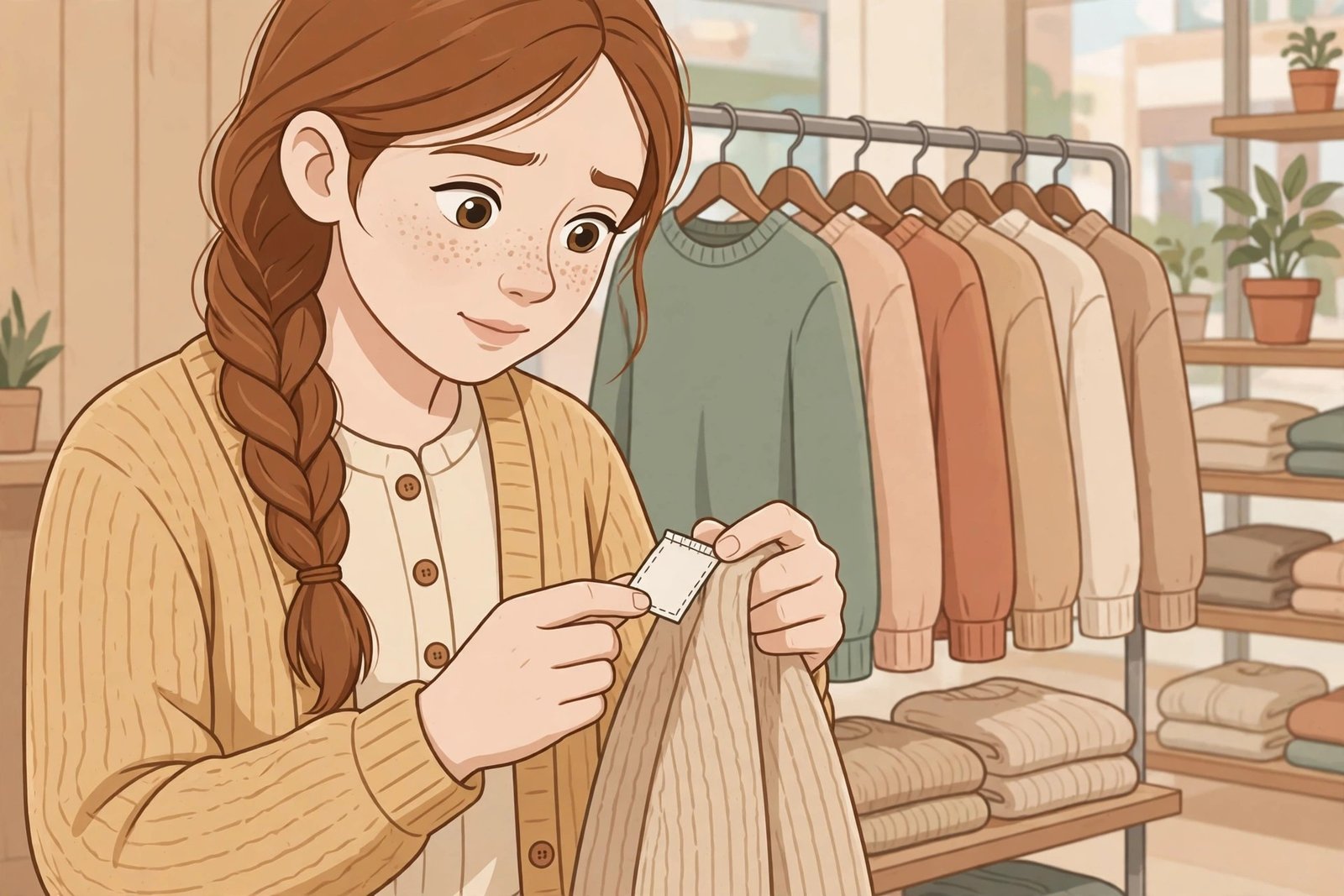
Trap five is quiet, and it strikes after the shopping high fades. The piece is lovely in the store. Then the label says dry clean only, or hand wash cold, lay flat to dry, do not iron, basically: this garment needs a staff. Or the fabric is the kind that wrinkles if you look at it, pills after two wears, or feels fine for four minutes in a cool store and itchy by noon in real life. The mistake isn’t buying delicate things. It’s buying them by accident, without agreeing to their terms.
Care is a real cost, paid in time and laundry days. A top that needs special washing will miss school mornings because it’s sitting in the special pile, again. A sweater that can’t go in your normal wash becomes a once a month guest in your wardrobe. When you count cost per wear, which is the only math that matters, the cheap high care piece often ends up pricier than the sturdy one. Add this check to your list of mistakes to avoid when buying clothes and your future laundry days get calmer too.
The fix takes ten seconds in the store. Read the care label before the price tag impresses you. Rub the fabric between your fingers and ask: will this feel good at 3 pm, not just at first touch? Hold it up to the light to see if it’s thinner than it looks. Check the seams and buttons like a tiny inspector. You’re not being fussy. You’re interviewing the piece for a job in your real life, and real life includes washing machines, backpacks, bus seats, and long days.
This trap has a budget angle too, and it’s a kind one. Girls shopping with little money often feel pushed toward the cheapest version of everything, and then pay twice when it fades, stretches, or dies by October. Our guide on how to look elegant on a small budget digs into spending small but smart, and the care label check is one of its quiet heroes. A sturdy piece you can wash and wear fifty times is the true bargain. Spotting that in the store is a skill, and like all skills here, it’s just a slower five minutes and one honest look. Skip the label once and it may cost you a season.
Read it always, and this entry leaves your personal list of mistakes to avoid when buying clothes for good.
Buying the Twin of What You Already Own
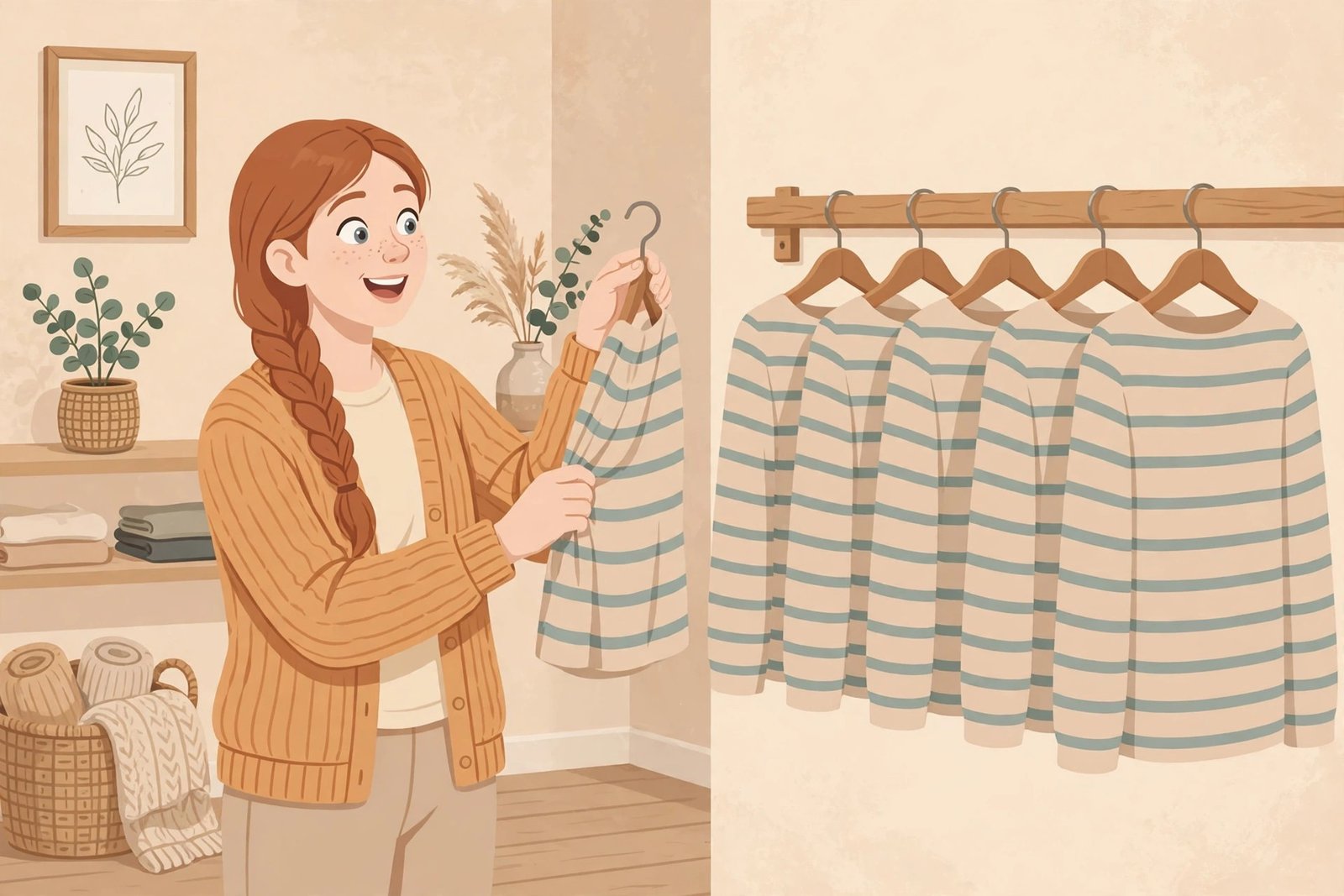
Trap six hides in plain sight. You love a certain kind of top. Striped, soft, a little loose. So you buy it again. And again. Your closet ends up with five near twins, and somehow you still wear the same favorite one while the other four watch. Buying the twin feels safe because it has worked before. But a wardrobe isn’t a team that needs five identical players. It’s a set of pieces that cover different days, weathers, and moods.
The twin trap also shows up in colors. Everything you buy is black, or beige, or the same dusty pink, because those feel safe in the store. Then your closet, which looked so promising purchase by purchase, turns out to be one outfit repeated with tiny variations. Mornings get boring, not because you lack clothes, but because you own the same idea five times. Variety isn’t about being bold. It’s about coverage: one warm layer, one rain friendly pair of shoes, one dressier piece, pieces that do different jobs.
How do you spot a twin in the store? Hold the piece up and ask: what in my closet is this replacing or repeating? If you can name an owned piece that does this exact job, in this exact color, the new one needs a strong reason to exist. “It’s slightly softer” is not a strong reason. “Mine is worn out” is. Replacing a dead favorite is smart shopping. Cloning a healthy one is how budgets quietly leak.
Here’s the hopeful flip side. The money and hanger space saved by skipping twins can go to the gaps, the pieces your outfits keep asking for and not finding. That’s how wardrobes get better without getting bigger. If you ever do a closet sort and find your own twin collection staring back, don’t be hard on yourself. It means you know what you like. Now you get to like it once, in its best version, and let the rest go. Of all the mistakes to avoid when buying clothes, this one might be the easiest to forgive, because it comes from knowing your taste. It just needs a chaperone in the store.
One more twin hides online, where you can’t feel or try anything. The twin order: the same style, in a second color, bought in the same click because the first one “might” work. Online, also add the size guess twin, ordering two sizes with a plan to return one, then keeping both because returning feels like a chore. The screen makes cloning painless, and painless is exactly the danger. Before any online order, scroll your own photos for a minute. Your camera roll shows what you truly wear on repeat. If the cart doesn’t match the camera roll, the cart is dreaming. This is one of the modern mistakes to avoid when buying clothes, and it lives in every phone.
Five Questions to Ask Before You Pay
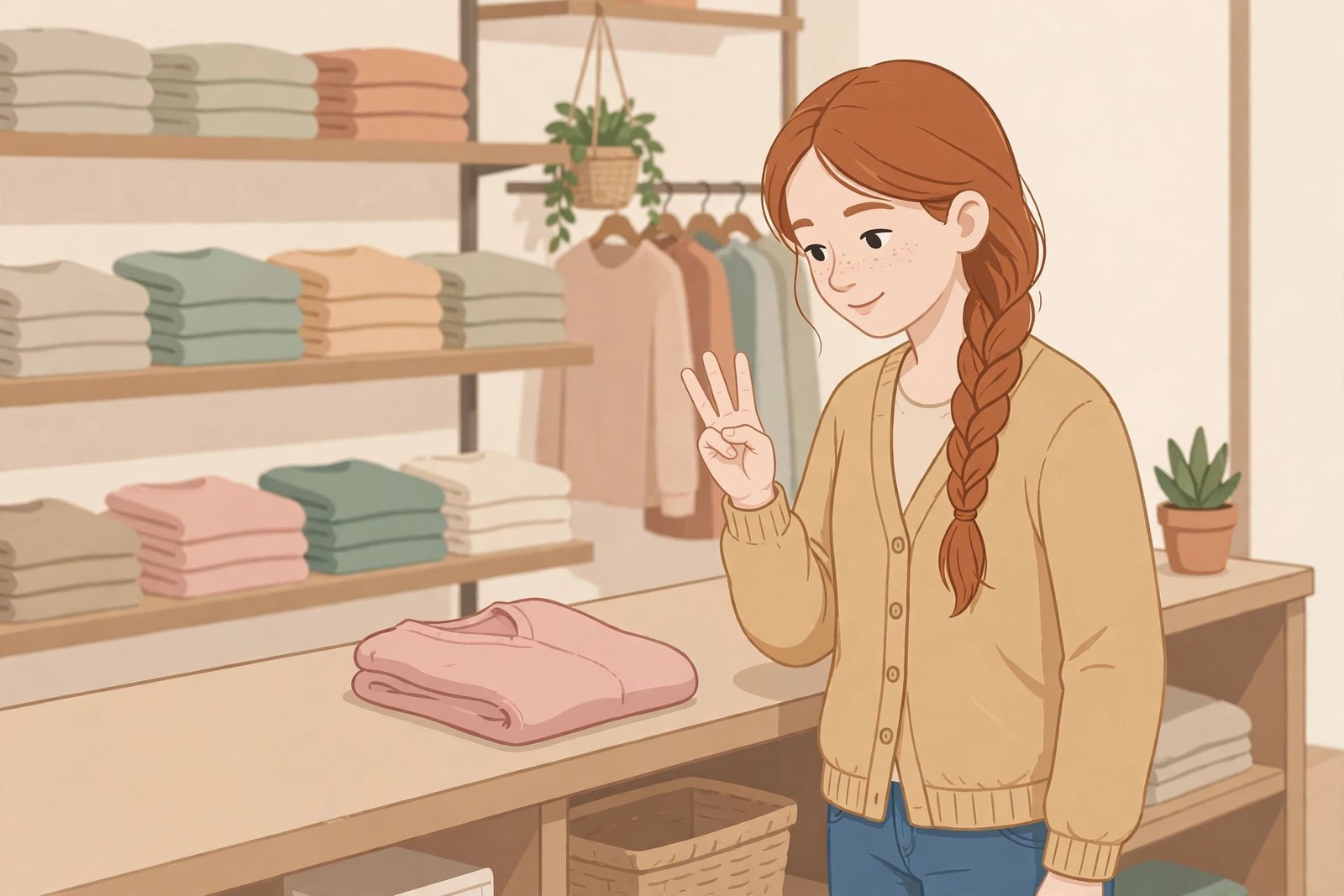
Let’s gather the whole article into your pocket. Before you pay for anything, run these five questions. They take about a minute. They catch nearly every trap above, which is why girls who use them watch their personal list of mistakes to avoid when buying clothes shrink month by month.
One: would I buy this at full price? If the sale is the reason, put it back. Two: does it fit the body I brought to the store, sitting, walking, and breathing? If it’s for a future body, put it back. Three: where will I wear it in the next month, on a real day that exists? If you must invent a life first, put it back. Four: what does the care label ask of me, and am I honestly willing? If the care is a part time job, put it back. Five: what does this replace or repeat in my closet, and what gap does it fill? If it’s a twin with no job, put it back.
Keep the five questions somewhere you’ll actually see them: a note in your phone, a photo of them as your lock screen for a month, a small card in your wallet. Tools you can’t find in the moment don’t exist in the moment. The girls who beat the classic mistakes to avoid when buying clothes aren’t stronger than you. They’re just reminded at the right second.
Notice what these questions never ask. They never ask if the piece is trendy. They never ask what anyone online would think. They ask about your body, your month, your laundry, and your closet. Shopping mistakes shrink fast when the questions stay personal like that. And if a piece passes all five, buy it with a clear heart and no guilt spiral later. That’s the other gift of the questions: the yeses get happier too.
One last habit ties it together: the pause. For anything that isn’t a planned gap filler, wait a day. Take a photo of the piece, go home, and see if you still think about it tomorrow. Real wants survive a night of sleep. Store hypnosis rarely does. If you’re curious about the strongest version of that pause, our piece on the no buy trend explained shows how girls are using buying breaks to reset their habits entirely. You don’t need a full break. You need a breath between wanting and paying. That breath, plus five questions, is how the mistakes to avoid when buying clothes stop being your story.
And on the days a mistake slips through anyway, be kind to yourself. Return it if you can, learn its trap name, and count the lesson as the purchase.
Frequently Asked Questions
What is the single most common shopping mistake?
For most girls, it’s buying because of the sale. The discount changes the question from “do I love this?” to “how much do I save?” and that swap is where the regret sneaks in. A piece you wouldn’t want at full price rarely becomes a favorite at half price. It just becomes a cheaper regret taking up a hanger. If you fix only one of the mistakes to avoid when buying clothes, fix this one. Cover the tag, ask the full price question, and let the answer decide.
Should I ever buy clothes for a future size?
It’s almost always kinder not to. Future size clothes charge rent in your closet and tax your mood on hopeful mornings. Sizes also vary so much between brands that the number means less than how a piece fits and feels today. Shop for the body you have now, in clothes you can sit, walk, and live in. If your body changes later, you can shop for that day then, and it’ll feel like a celebration instead of a test you set for yourself.
How can I tell if I’m buying for a fantasy life?
Ask where you’ll wear it in the next month. Fantasy buys struggle with that question. They need a party that isn’t planned, a trip that isn’t booked, or a whole new personality to make sense. Real buys answer fast: school on Thursday, the family lunch, work on Saturday. Also watch your mood in the store. If you’re tired, sad, or celebrating and suddenly a dramatic piece feels necessary, that’s the fantasy talking. Sleep on it. Real wants are still there in the morning.
Is it okay to buy something delicate that needs special care?
Yes, if you choose it on purpose. A delicate piece you truly love, for real occasions in your actual life, can be worth its care. The mistake is buying high care clothes by accident, for everyday wear, without reading the label. Then the piece lives in the special wash pile and misses your real days. Read the label in the store, picture your laundry routine honestly, and decide with open eyes. An informed yes is never a mistake. A surprised one usually is.
What should I do with the mistakes already in my closet?
First, don’t use them to be hard on yourself. Everyone’s closet holds a few. Start with returns if any tags remain. Then sort the rest honestly: pieces that can be fixed, swapped with friends, sold, or donated. The most useful step is naming the trap each one fell into: sale, size, fantasy, rush, care, or twin. Once named, you spot the trap next time. That’s how the list of mistakes to avoid when buying clothes turns into a list of mistakes you used to make.