

You are in the cafeteria line, tray in hand, minding your own business. Then you feel it. That prickle on the side of your face. You glance up, and yes, a girl two spots ahead is looking at you. Not a quick look. A long one. She does not smile. She does not look away. Someone stares at me weirdly, your brain says, and in one second you are scanning everything. Is my hair a mess? Is there food on my chin? Did my shirt ride up? Your lunch suddenly tastes like stress.
If that scene sounds familiar, take a breath. It happens to every girl, and it freezes almost every girl the same way. A stare feels like a spotlight. It makes you feel watched, judged, and oddly powerless, all at once. It can happen anywhere. The morning bus. The library. The queue at the bakery on Saturday. When someone stares at me weirdly, my whole body wants to shrink, and I did not even do anything. I just existed, in public, in my own face. If you recognize that shrinking feeling, this article was written for you. But a stare is also one of the most misread signals in the world. Most stares mean far less than they feel like.
This article will help you read them calmly, check yourself in ten seconds without anyone noticing, and answer with quiet confidence. And when someone stares at me weirdly in a way that is not okay, you will learn that too, plus exactly what to do about it.
The Short Answer

Here it is in short. When someone stares at me weirdly, the stare is almost never a verdict about me. People stare because they are lost in thought, because something about me caught their eye for a harmless reason, or because they are simply rude or bored. My job is small. Breathe, do one quick discreet check, read the room, and choose a soft response or none at all. If the stare ever feels threatening, I move closer to other people and tell an adult. That is the whole game, and you can learn it fast. Keep one sentence in your pocket for the hard moments. Someone stares at me weirdly says something about their eyes or their day.
It says nothing proven about me. Repeat it like a shield until your shoulders drop and your breath slows down again.
First, Take One Slow Breath
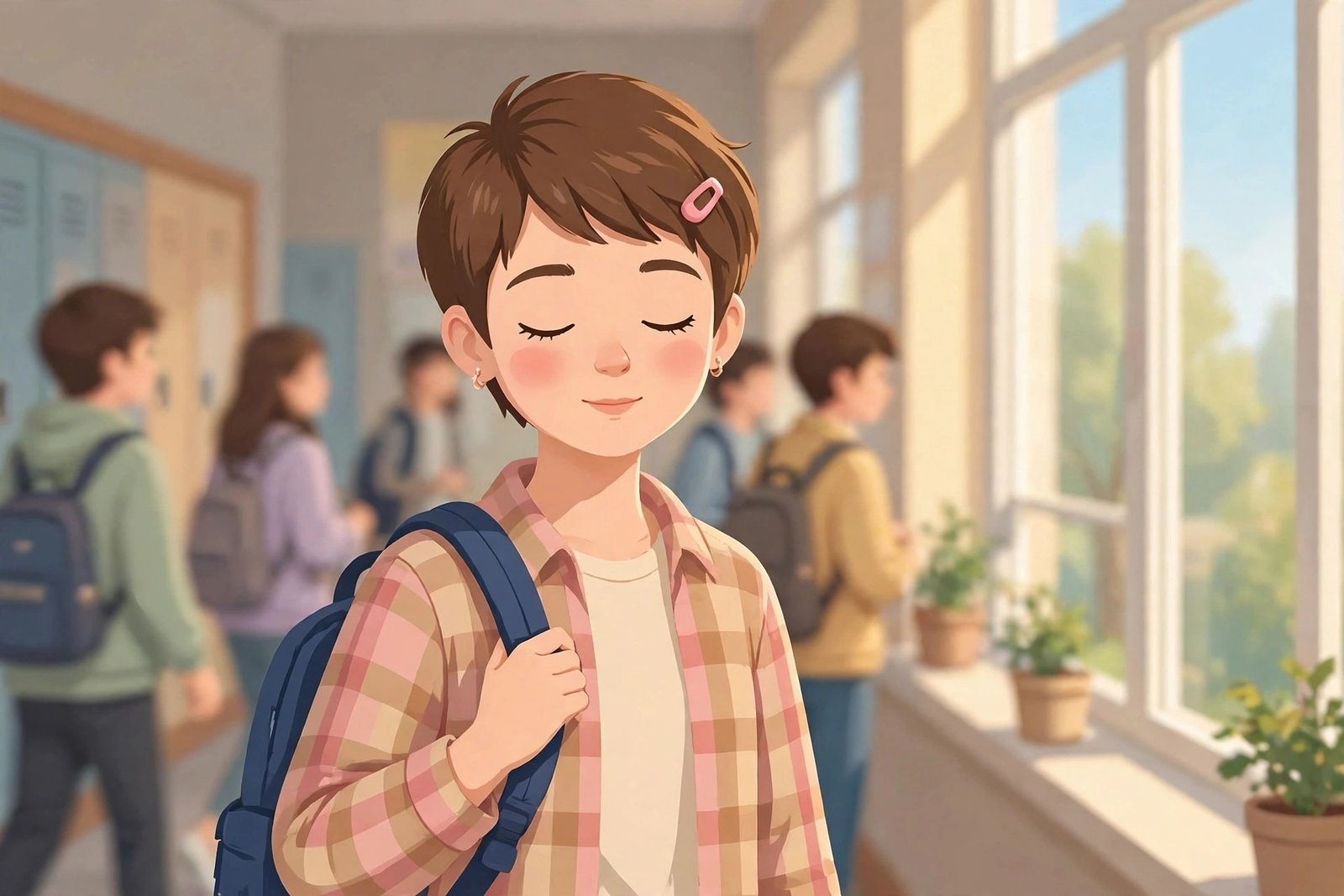
Your body reacts to a stare before your mind can think. Heart faster. Face warm. Hands unsure where to go. That reaction is ancient and normal. Long ago, being watched could mean real danger, so your body still treats eyes on you like an alarm bell. The alarm is loud, but it’s not smart. It rings the same for a harmless daydreamer and for a real problem. Your first job is to buy your brain a few seconds so it can tell the difference.
Try this tiny reset. Let your breath out slowly, longer than you breathe in. Drop your shoulders. Unclench your jaw. Look at something neutral for a moment, like your tray, your book, or the window. These aren’t tricks to make you invisible. They’re signals to your own body that you’re safe, and they work faster than you would guess.
While you breathe, remind yourself of one plain fact. Feeling stared at and being judged are two different things. When someone stares at me weirdly, my feelings shout that something is wrong with me. But feelings are weather reports from a nervous system, not news from the real world. Most of the time, the person staring could not even tell you what they were thinking about, because their mind was somewhere else entirely.
Think of the last time you caught yourself staring at a stranger. Last week, maybe. Were you judging them? Almost surely not. You were thinking about your own life while your eyes rested somewhere. Keep a piece of that kindness for yourself, please. When someone stares at me weirdly, the odds are strong that I am just the resting place for their thoughts, the same way strangers have been the resting place for mine.
It also helps to zoom out. In a whole school day, you pass hundreds of faces. Your brain forgets nearly all of them. The one stare survives in your memory only because it scared you a little. That’s a memory trick, not proof that the world is watching you. Girls who understand this trick stop giving one pair of eyes the power to run their whole afternoon.
What a Stare Usually Means, and What It Rarely Means

Let us decode stares honestly, because the real list is much kinder than the fear list. When someone stares at me weirdly, here is what is usually going on.
First, the daydream stare. People’s eyes park somewhere when their mind wanders, the way a car idles in a driveway. If you happen to be standing in that parking spot, you get the full blank look. It’s not aimed at you at all. You’re just furniture in their daydream, and the moment they snap back, they look away, often a bit embarrassed themselves.
Second, the spark of recognition. You remind them of someone. A cousin, a girl from summer camp, an actress. Their brain is busy matching your face to a memory, and the matching takes a few long seconds. Third, simple curiosity. A new haircut, a bright shirt, a funny phone case. Eyes go to what is new. That’s not mockery. That’s just how eyes work.
Fourth, admiration, believe it or not. Girls stare at outfits they love, hairstyles they want to copy, and confidence they wish they had. A long look can be a compliment wearing a strange face. And fifth, plain bad manners. Some people never learned that staring is rude. That’s a flaw in their manners, not in your face.
Now the rare list. A stare is almost never a detailed judgment of you. Strangers don’t know your life, your worth, or your story. They can’t judge what they don’t know. This is also where the crush question belongs, because it’s different. If a boy looks at you often and looks away fast when caught, that’s another puzzle, and our article on why he stares but never talks to you is about that specific case. This article is about the strange, uncomfortable stares from anyone else, the ones that make your skin prickle in the bus or the hallway.
One more everyday cause deserves a line. Screens have trained all of us to look at faces for a long time without blinking. Video calls, short videos, streams. People now hold eye contact with real faces longer than they used to, without noticing they are doing it. Half the strange stares of this decade are just screen habits walking around in public. When someone stares at me weirdly, I sometimes count that as a tech bug, not a message, and it honestly helps.
When someone stares at me weirdly, running through this kind list first is not naive. It is accurate. The boring reasons outnumber the mean ones by a mile.
The Ten Second Self Check, Done Discreetly
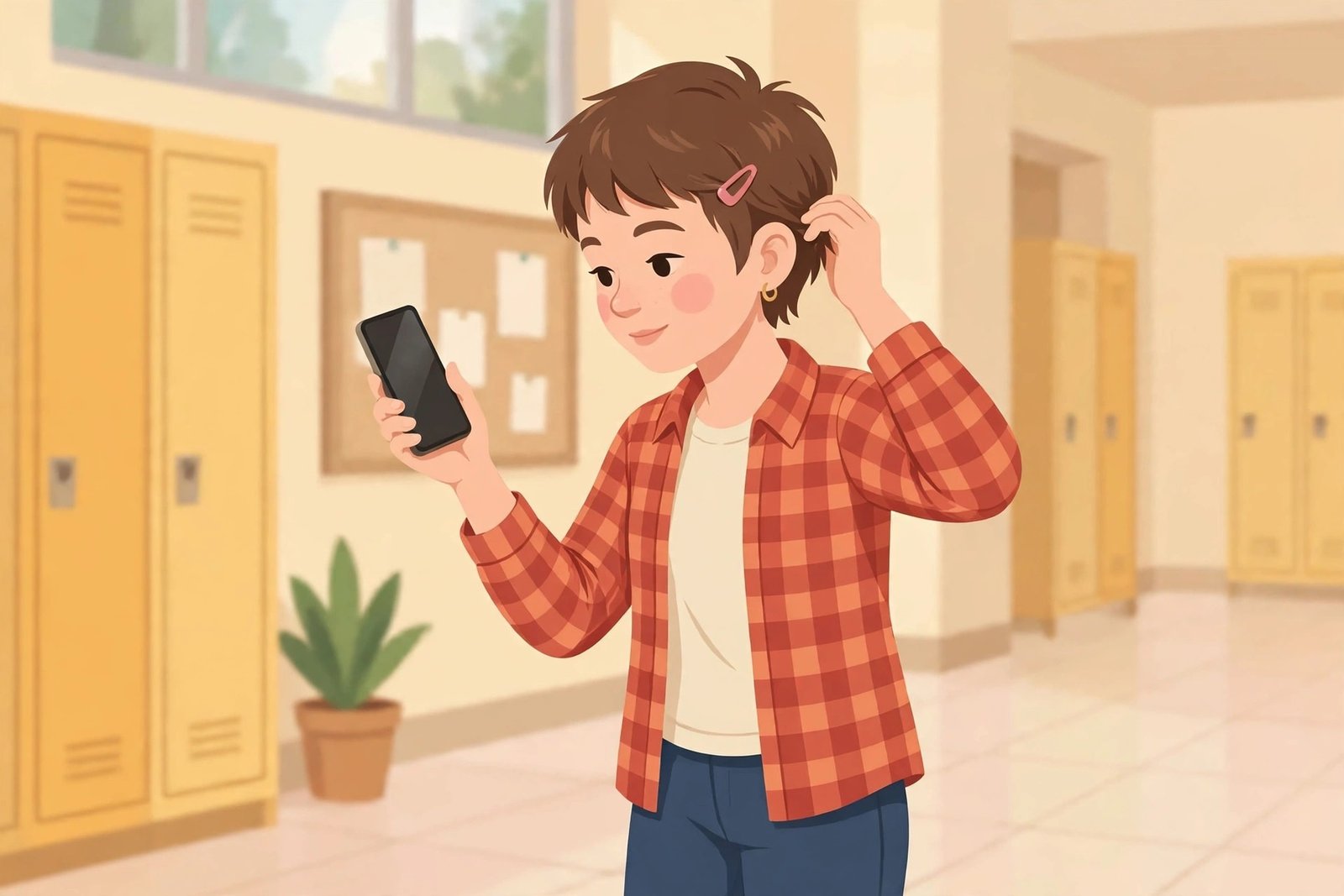
Let’s be honest. Part of you won’t relax until you know there’s nothing on your face. That’s fine. Checking is allowed. The trick is to check like a spy, quickly and smoothly, so the check itself never becomes a show. Here’s a ten second routine you can run anywhere.
Seconds one to three. Let your hand drift to your hair as if you’re just tucking it back. You will feel any big mess, a stuck leaf, a clip gone sideways. Seconds four to six. Glide a finger along the corner of your mouth and your chin, the classic food zones, as naturally as if you’re thinking. Seconds seven to eight. A quick downward glance covers your shirt front, your fly, and anything spilled. Seconds nine to ten. Phone screens make perfect mirrors when they’re dark, and so do windows and the backs of spoons in a cafeteria.
Notice what this routine does not include. No bathroom dash. No frantic jacket shaking. No asking three friends if you look okay. One calm pass, then done. If the check finds nothing, believe it. When someone stares at me weirdly and my check comes back clean, the stare is officially not about my appearance anymore. I can let my brain drop that theory and move on.
And if the check does find something? A smudge, a crumb, a tag sticking out? Wonderful. Fix it in two seconds and feel oddly grateful. The stare just did you a favor. Girls who can laugh at a spinach tooth moment instead of dying inside it are girls who stay light all day. A tiny flaw, fixed fast, is a story for your friends at lunch, not a scar.
Friends can help with the check, if you ask the right way. Do not ask, “Do I look weird?” That question begs for worry. Ask a close friend one plain thing. “Anything on my face?” She looks, says no, and the case closes. When someone stares at me weirdly and my best friend has already cleared my face, I stop arguing with the facts. Her quick no is worth more than twenty anxious mirror visits.
One warning about mirrors. Checking once is a tool. Checking ten times is a trap. If you find yourself hunting for mirrors every hour, the problem isn’t your face. It’s the worry itself, and the last section of this article has kind words about that.
How to Read the Room Around the Stare
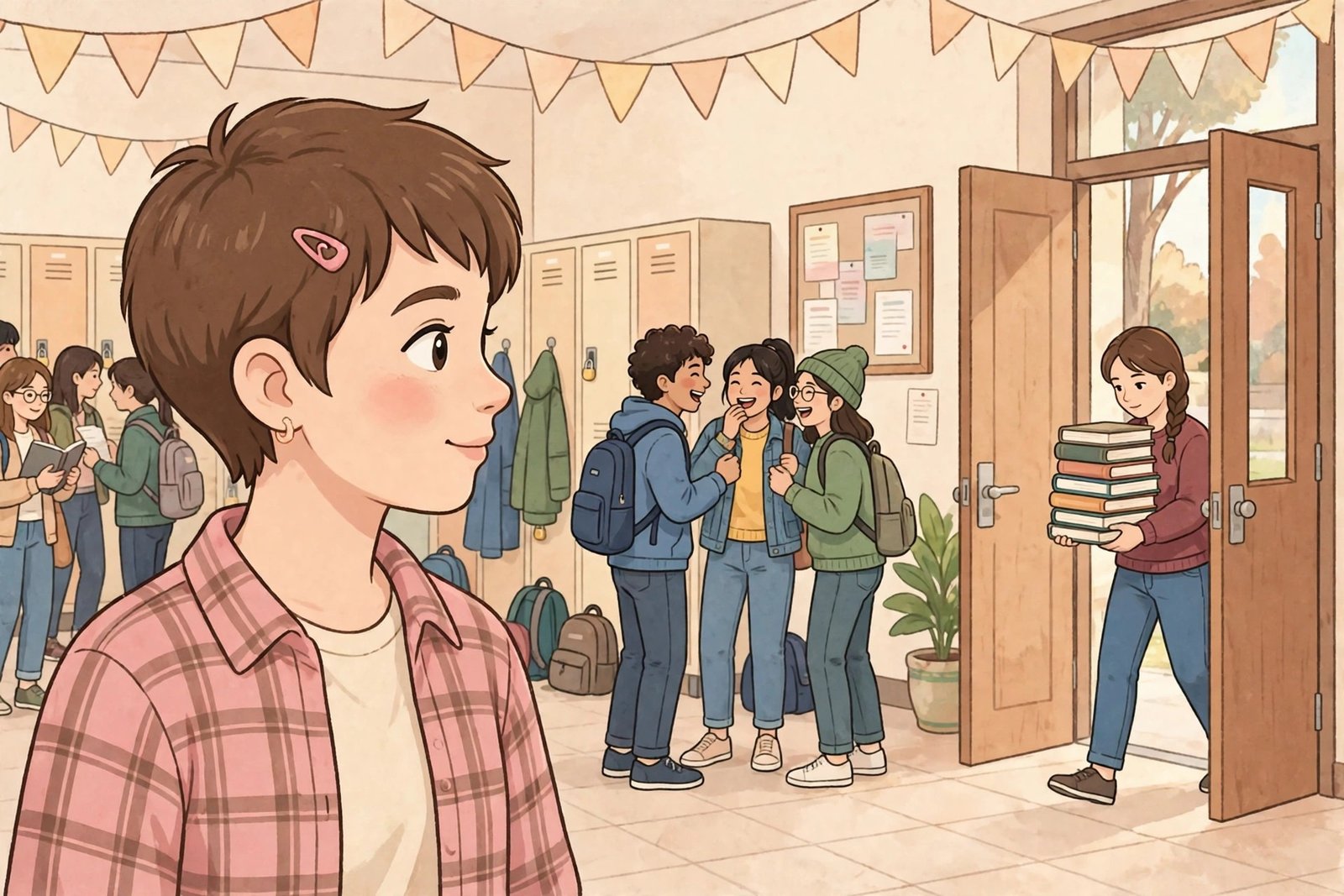
A stare never happens alone. It happens in a place, at a moment, inside a small scene. Reading the scene tells you what kind of stare you are dealing with, and each kind asks for a different response. So when someone stares at me weirdly, I quickly read three things.
First, the face around the eyes. A soft, unfocused face with a slack mouth is a daydreamer. A face that keeps glancing at your outfit, then at their friend, then back, is curious or admiring. A hard face, with a smirk or whispering, is a social game, and that one belongs to the safety section below, not to your self esteem.
Second, the setting. On a bus or in a waiting room, everyone stares at everyone. Seats face each other and there’s nowhere else to look. In those places, staring is built into the furniture. At school, a stare near your classroom usually has a small, local reason. At a party or a match, people scan the crowd constantly. Context lowers the volume on almost every stare.
Third, what happened just before. Did you just walk in, laugh loudly, trip on a step, or start a presentation? Eyes turn toward movement and noise like sunflowers toward light. If something about your entrance was lively, the stares are about the moment, not about your body or your worth. They fade in seconds, and they would have landed on anyone who made that entrance.
Here is a tiny habit that sharpens this skill. After a stare ends, give it a label in your head. Daydream. Curious. Rude. Unknown. The label matters less than the act of labeling. Your brain calms down when a mystery gets a name, even a rough one. When someone stares at me weirdly and I file it under daydream, my body lets it go twice as fast. Practice labels for a week and you will feel your shoulders stay down more often.
Reading the room turns a scary mystery into a small, solvable puzzle. And here is the bonus. The more often you practice reading scenes instead of reading minds, the less often you will feel watched at all. When someone stares at me weirdly these days, my first move is curiosity, not shame. What is happening around us? The answer almost always calms me down.
Soft Responses That End a Stare

Sometimes you don’t need to do anything. Stares die on their own, usually within seconds. But having a few soft responses ready makes you feel like the author of the moment instead of its victim. Pick the one that fits your personality. All of them are quiet, and none of them start a war.
The small smile. Catch the person’s eye, give one brief, friendly smile, then look away. This works like magic on daydreamers and curious people. It says, I see you, we’re fine, and it breaks the spell without a word. The raised eyebrow and smile combo is the playful version, for girls with that spark. It turns an awkward stare into a tiny shared joke.
The gentle question works with people you sort of know. “Do I have something on my face?” said with a grin, gives the starer a friendly door to walk through. Nine times out of ten they will laugh, say no, and explain themselves. “You look like my cousin, sorry!” Mystery solved, new small connection made.
The move is the simplest response of all. Change your seat, join another group, step into the shop. You are never a tree. You can always relocate, and relocating is not losing. When someone stares at me weirdly in a cafe and I do not like the vibe, I take my drink to a sunnier table and the whole problem stays behind at the old one.
Tone matters more than words in all of this. A soft response said with a shaking voice still works, so do not wait to feel brave before using one. Your hands can tremble and your smile can wobble. The move still counts. When someone stares at me weirdly, I would rather answer imperfectly than freeze perfectly. Courage with a wobble is still courage, and the starer cannot hear your heartbeat anyway. They only see a girl who handled it.
What not to do? Don’t glare back for a full minute, don’t mouth rude words, and don’t send a friend to ask what their problem is. Those moves turn a ten second stare into a real conflict with a real memory. Your peace is worth more than winning a staring contest with a stranger you’ll forget by Friday.
When a Stare Is a Safety Signal
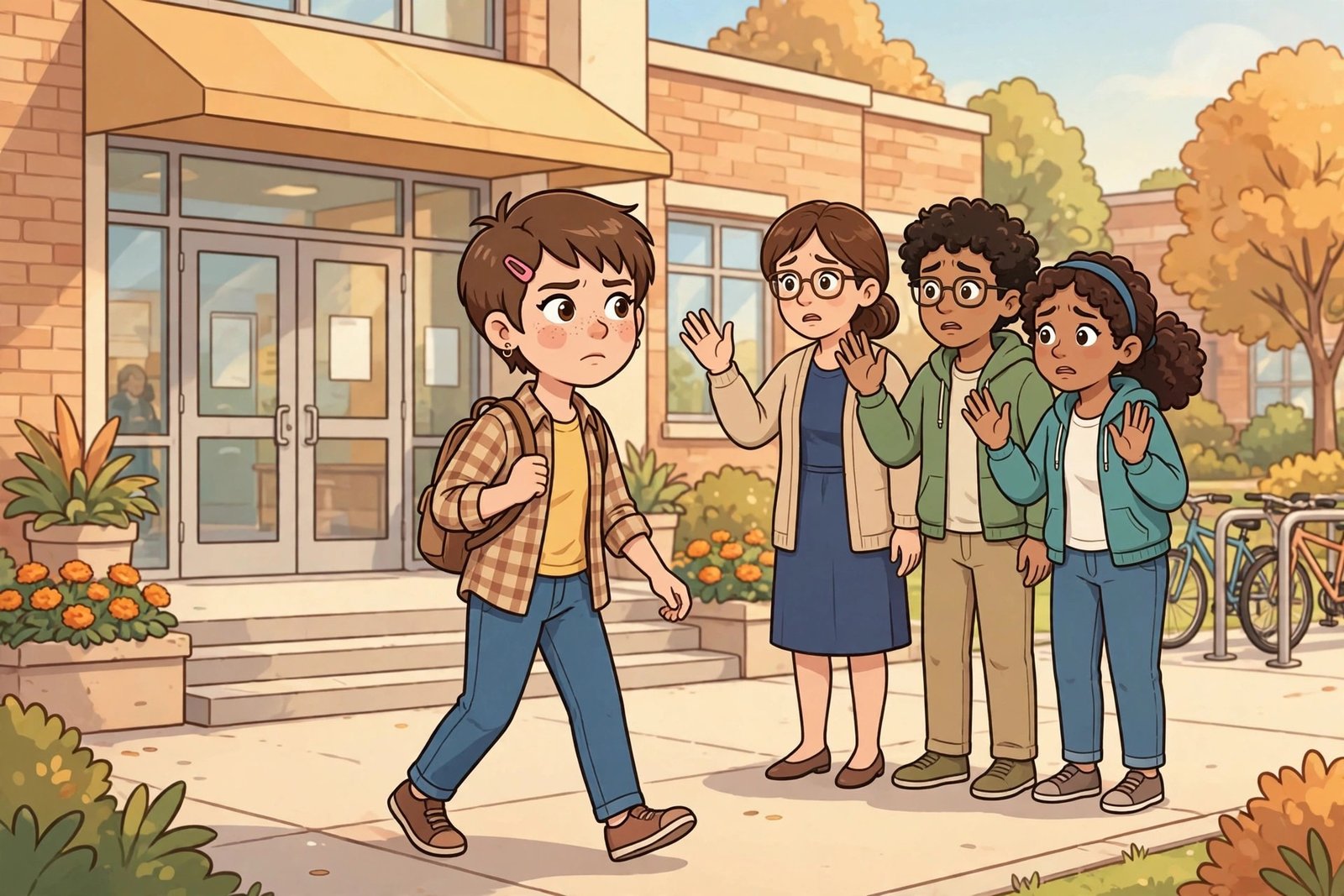
Now the serious part, and it matters. Most stares are harmless. A few are not, and you’re allowed to take those ones seriously without feeling dramatic. Trust the difference your body notices. A daydream stare feels annoying. A wrong stare feels cold. Learn to honor that cold feeling.
Here are the signs that a stare has crossed a line. The person keeps staring after you have moved away. They follow you with their eyes and then with their feet. They stare in a way that feels fixed and angry, or they try to get closer while you back away. They’re an adult stranger who pays you far too much attention, in a place with few people around. Any of these turns a stare from a social moment into safety information.
Your response is simple and you never need to apologize for it. Move toward people. Join a group, step into a busy shop, stand near a teacher, a driver, or a family. Tell someone. A friend, a staff member, a parent by phone. Say it plainly. “That man has been staring at me and following me. I need to stay near you.” Adults would rather hear that ten times than miss the one time it counted.
One more safety note, about phones. If a stranger seems to be filming or photographing you while staring, treat that as a line crossed. Move away, join people, and tell an adult or staff right away. You never have to pose, smile, or wait it out. When someone stares at me weirdly through a phone camera, that is not a social puzzle anymore. That is a report, and making it is the right and strong thing to do.
If it happens at school with another student, and it keeps happening, that pattern deserves an adult too. One strange look is nothing. A daily campaign of looks, whispers, and laughter aimed at you is bullying behavior, and schools have ways to stop it. You’re not snitching. You’re reporting a pattern that affects your days.
When someone stares at me weirdly and it feels wrong in my gut, I do not debate it. I move, I join people, I tell. Please do the same. Your instincts are older and wiser than your politeness, and in safety matters, instincts go first.
How to Stop Carrying the Stare All Day

The stare lasted ten seconds. The replay can last ten hours. This last skill is about shortening the replay, because your day deserves better tenants than a stranger’s eyes. If you also know the watched feeling at the lunch table, you’re not alone in it. Many girls describe the same spotlight feeling while eating, and we wrote about feeling embarrassed eating in front of certain people for exactly that cousin of this moment.
Start with the facts, said once, in plain words. Someone looked at me for a while. I checked. Nothing was wrong. It ended. That’s the whole event. When your mind tries to add sequels about what they must have thought, answer with the facts again. You can’t know their thoughts. You do know yours, and yours can be kind.
Give your eyes a new job. The fastest way to stop feeling watched is to watch something else with real interest. A game, a friend’s story, a window full of street life. Attention is a flashlight. You choose where it points. Point it outward and the spotlight feeling fades, because your brain stops scanning for eyes.
Here is one last reframe that girls find freeing. A stare is two seconds of someone else’s life. You are the main character of your own day, with classes, jokes, plans, and people who light up when you arrive. When someone stares at me weirdly, I try to remember that I am a passing face in their day, exactly like they are a passing face in mine. Neither of us owes the other a single extra minute of thought.
Watch your mirror and phone habits for the rest of the day too. After a stare, the urge to check your face every twenty minutes can spike. Each check feeds the story that something must be wrong. Set the checks aside. Your morning face was fine. It still is.
If feeling watched is becoming a daily thing for you, if you’re changing routes, skipping cafeteria lunches, or dreading school because of eyes on you, that’s bigger than one article. The KidsHealth guide on shyness explains these feelings in a warm, normal way, and a school counselor or trusted adult can help you loosen their grip. Asking for that help is strength, not surrender.
Talking about the moment helps more than silence, too. Tell your friend at lunch. “The strangest thing, a man on the bus stared at me the whole ride.” Saying it out loud shrinks it, and her reply will almost always be the same. “That happens to me too.” Shared awkwardness is half awkwardness. When someone stares at me weirdly, I try to give the story away before bedtime, so it does not move into my dreams rent free.
Most days, though, it ends simpler. Someone stares at me weirdly, I breathe, I check, I read the room, and I get on with my life. The stare becomes a pebble, not a boulder. Practice will shrink it faster than you think.
Frequently Asked Questions
Should I stare back at them?
A brief, calm look back is fine. It tells a daydreamer that their eyes have parked on a real person, and most people look away, a little embarrassed. But a long, hard stare back turns the moment into a contest, and contests raise your heart rate, not your peace. Try the short look plus a small smile first. If the person keeps going after that, use your feet instead of your eyes. Move closer to your people and let the moment die behind you.
What if I actually have something on my face?
Then the stare just saved you, and you can honestly be glad it happened. Fix the smudge, the crumb, or the wild strand in two seconds and carry on. Everyone has walked around with a flaw for an hour. Everyone. The people who love you have seen you with bed hair and morning face, and they kept loving you. A tiny visible flaw is a human moment, not a reputation. Laughing at it, even a small laugh, takes all its power away.
Why do I notice every stare so much?
Because your brain is wired to spot eyes. Humans read faces for safety and belonging, so a pair of eyes aimed at you gets flagged fast, like a notification you can’t mute. Girls who feel self conscious notice even more, because their scanner is turned up high. The volume knob moves with sleep, stress, and how kind your inner voice has been lately. Noticing stares does not mean everyone stares at you. It means your scanner works, maybe a little too well.
What should I do if the same person keeps staring?
A pattern deserves a plan. Note when and where it happens, and tell a trusted adult, especially if it’s at school or on your way there. Staying near friends in those places is smart, not weak. If the person is a classmate and you feel safe doing it, one calm sentence can work. “Hey, I have noticed you looking at me a lot. What is up?” Said once, it often ends the mystery. If it does not end, adults step in. That’s what they’re there for.
Is it normal to feel shaky after being stared at?
Yes, completely. Shaky hands, a hot face, and a racing heart are your body’s old alarm system doing its job too loudly. It passes within minutes once you breathe slowly and give your mind a job. You are not overreacting, and you are not fragile. When someone stares at me weirdly, my body still buzzes for a bit, even now that I understand stares well. The difference is that the buzz no longer gets to write the story of my day. Yours will not either, with a little practice.