

You’re in the fitting room. The top looked amazing on the rack. On you, it’s… fine? Maybe? You turn left, you turn right, you suck in your stomach, you tilt your head. The light is lying to someone, either to you now or to you later at home. Every girl knows this small, hot room and this exact doubt. Because knowing when a piece of clothing really suits me is a skill, and nobody teaches it in school.
Here’s what usually happens next. You buy it on a hope. You wear it once, fidget all day, and then it moves to the back of the closet, where the regret clothes live. Or you leave a piece that was actually perfect, because the fitting room light was mean and your mood was low. Both mistakes cost money and confidence. Both are fixable with tests.
This guide gives you the tests. Not color tests (that’s its own topic, one line, coming up). These are the fit test, the movement test, the fabric test, the real life test, the photo test, and the feeling test. Run them in the shop, in about three minutes, and you’ll know. When a piece of clothing really suits me, it passes all six without a fight. When it doesn’t, at least one test rats it out before your money leaves your hand.
By the end, the fitting room stops being a courtroom. It becomes a lab, and you’re the scientist, calm and quick. You’ll still have a style, a budget, and taste. You’ll just stop gambling with them. That’s the whole promise: clear signs you can check, so that the next time you think a piece of clothing really suits me, you’ll know it’s true, and you’ll know why.
The Short Answer
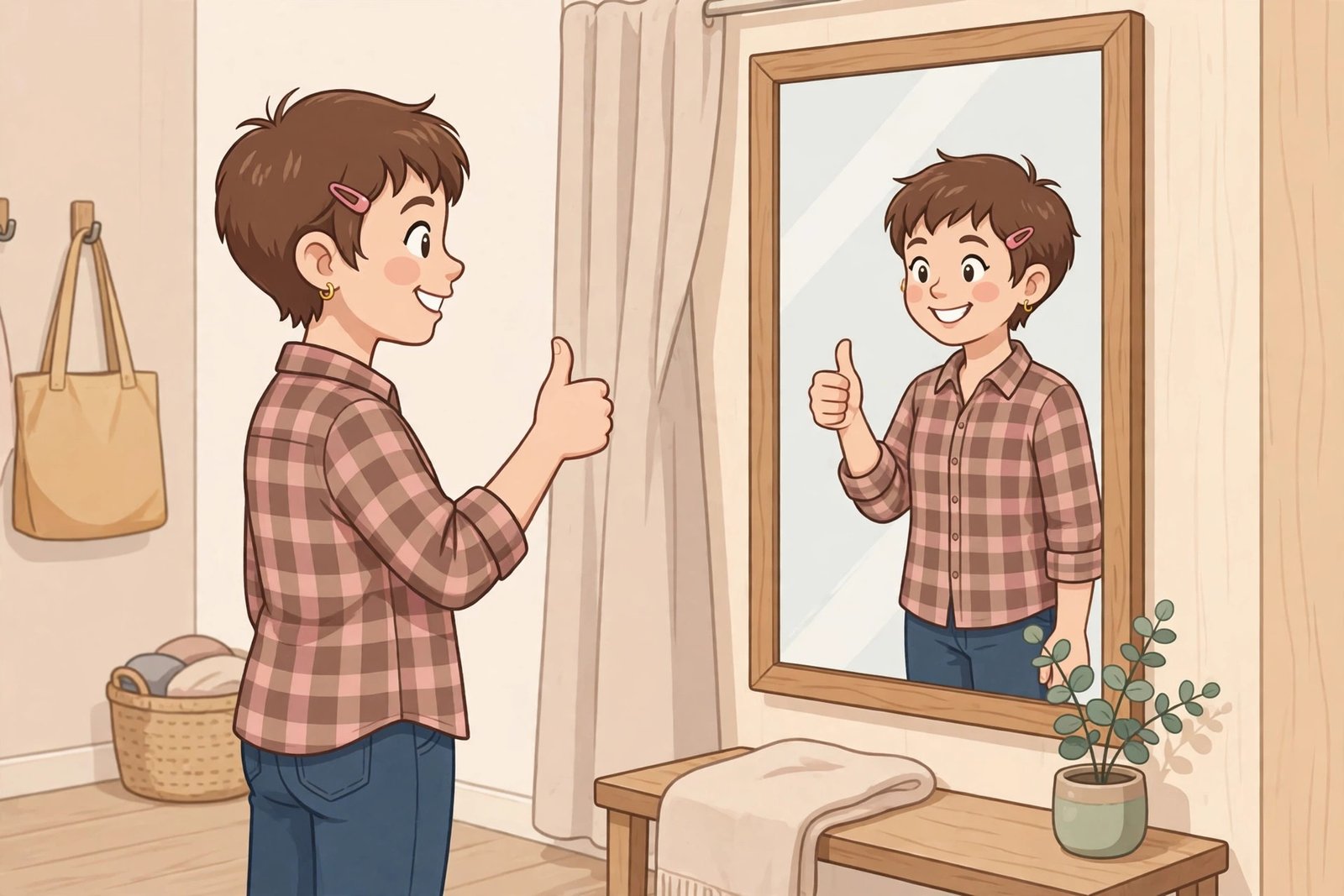
Here’s the short answer. A piece suits you when it fits your body at the checkpoints, lets you move like yourself, behaves on your skin, matches your real daily life, and still looks right in a plain daylight photo. When a piece of clothing really suits me, I don’t have to hold my breath, tug it down, or imagine a different version of my day to make it work.
Run six quick tests. Fit: shoulders, waist, and length sit where they should. Movement: sit, reach, walk, and bend without a fight. Fabric: it doesn’t cling in the wrong places, ride up, or itch you out of your mind. Life: it suits the days you actually live, school, bus rides, weather, all of it. Photo: it looks good in a plain photo, not just in shop light. Feeling: you want to wear it tomorrow, not someday.
If a piece passes all six, buy it with a calm heart. If it fails one, that’s your answer too, even if it’s pretty, even if it’s on sale, even if your friend loves it on the rack. A sale price can’t fix a failed test. It just makes the regret cheaper to buy.
Notice what’s not on the list: the size on the label, the trend of the week, and other people’s taste. Those things shout in fitting rooms, but they know nothing about your body or your life. The tests know. Trust the tests. Every girl who always seems to know when a piece of clothing really suits me is really just running quiet tests like these, fast, from habit.
One more thing before we start. These tests work for thrift shops, for hand me downs, and for your own closet on a Sunday. You can test the clothes you already own and learn why some pieces feel like you and others feel like a costume. That knowledge is the real prize. Once you can say a piece of clothing really suits me and prove it in three minutes, shopping stops being a lottery.
The Mirror Can Lie, So Use Tests Instead
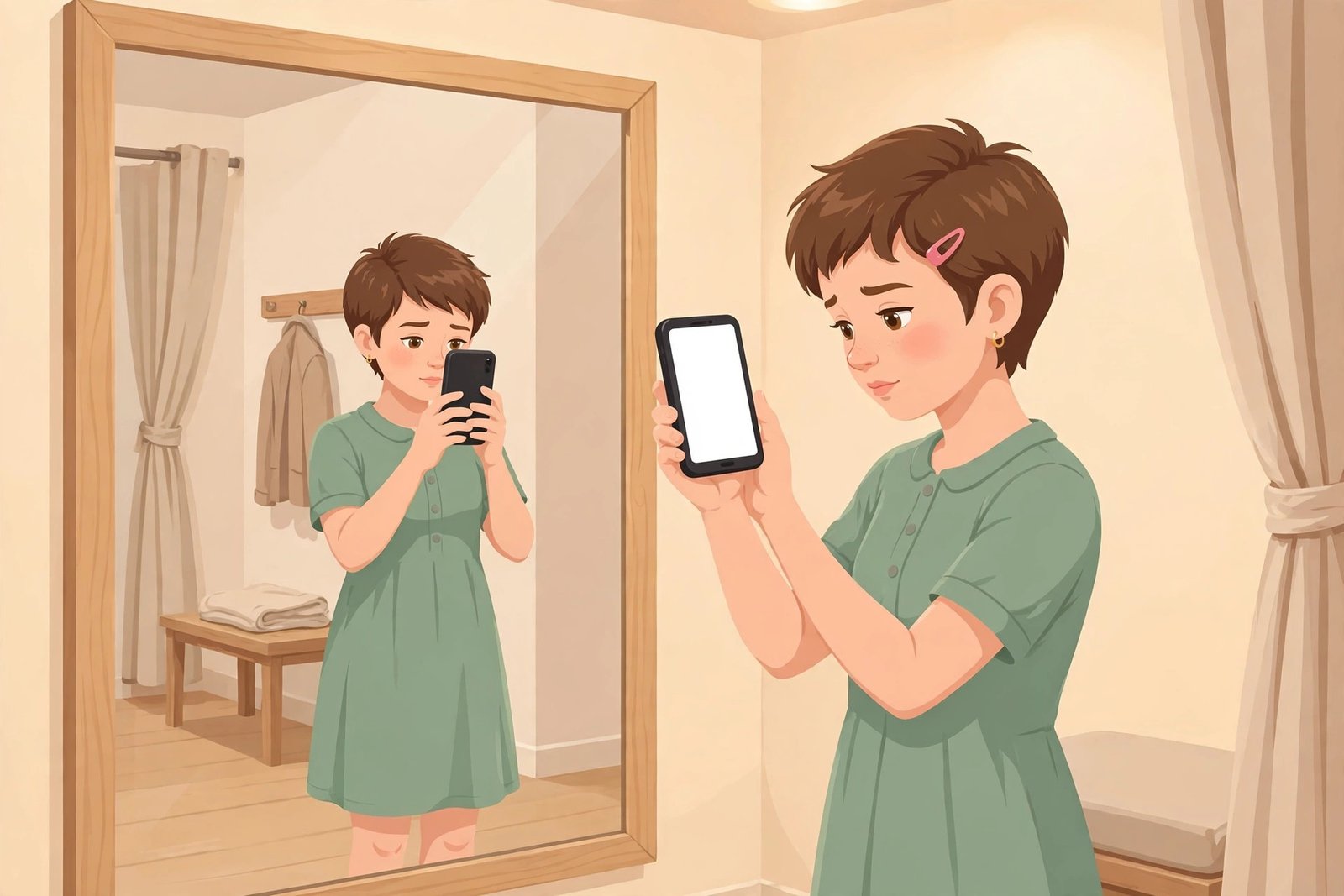
Let’s start with the enemy: fitting room mirrors. Shop mirrors are built to flatter or to rush you, depending on the shop. The light comes from above and carves shadows. The mirror tilts a little. The room is warm, you’re a bit flustered, and a song you like is playing. None of that is a fair judge. A mirror gives you a feeling. Feelings swing with your mood, your lunch, and your day.
That’s why this guide is built on tests instead of feelings. A test asks a question with a clear answer. Can I sit? Does the shoulder seam sit on my shoulder? Can I build three outfits with this? Yes or no. No mood required. When a piece of clothing really suits me, the tests say yes in a row, even on a day when my confidence is low and the mirror is in a mood of its own.
Use your phone as your lab tool. It takes the photos for the photo test, it holds your list of checkpoints, and it can show you the piece next to photos of your own closet for the outfits test. Three minutes, phone in hand, tests in order. That’s the whole fitting room system.
One line for color, as promised: color matters, and it has its own full guide, so read our piece on how to know which colors suit you best for that part, and let’s test everything else here.
Also, test on a normal day if you can. Bodies change across the month and even across the day. A piece tested when you’re bloated and tired gets a harsher trial than it deserves. If you love it but the day is off, test again another day before you decide. Fair trials make for true answers, and true answers are how you learn to spot when a piece of clothing really suits me without second guessing yourself at home.
Last, keep a tiny note in your phone: your best lengths, your comfiest waist style, the sleeve length that never bothers you. Every passed test teaches you one of your numbers. Girls who shop well aren’t gifted. They just carry their own data. Start collecting yours today, one fitting room at a time.
The Shoulder, Waist, and Length Check
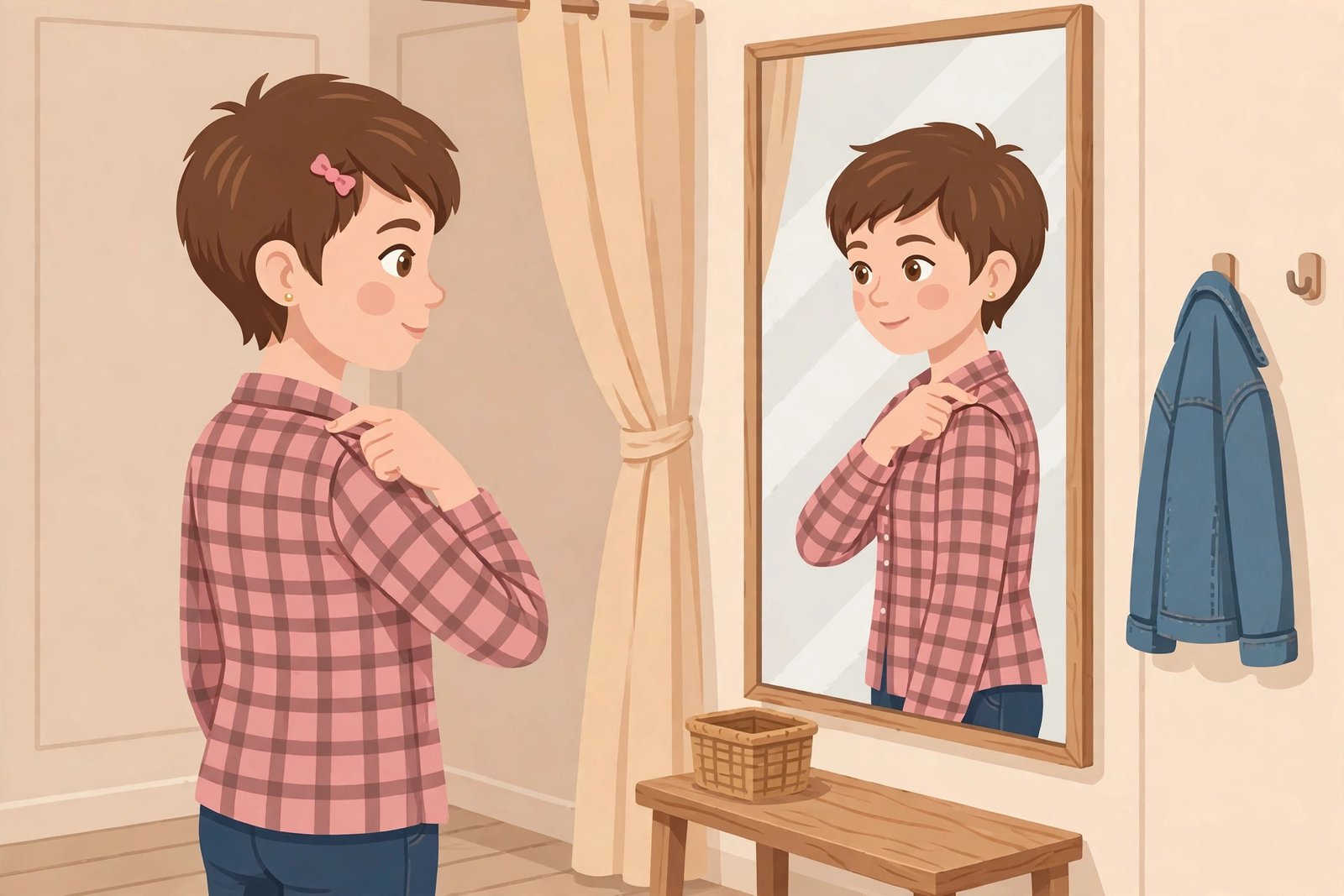
Fit has checkpoints, and they don’t move. Learn them once and you can judge any top, dress, or jacket in under a minute. These are the same checkpoints tailors and clothing teachers use, and the Purdue Extension consumer clothing guide teaches them to teens in almost the same words: the neckline should lie smooth, and sleeve seams should sit at the edge of your shoulder bone.
Shoulders first, always. The seam where the sleeve joins the body should end right at the edge of your shoulder. If it droops down your arm, the piece is too big or cut loose on purpose; if it creeps in toward your neck, it’s straining. For plaid shirts and jackets, this one checkpoint decides half the look. When a piece of clothing really suits me, the shoulder line is clean, and I never think about it again after the mirror.
Necks and collars next. The neckline should lie flat and smooth, no gaping when you lean forward a little, no choking when you turn your head. Buttons down the front should close without pulling into little X shapes between them. Pulling buttons are the piece telling the truth out loud: not your size, not your cut.
Waist third. The waist of the piece should meet your waist, or sit where the style means it to, without squeezing. Do the two finger check: you should fit two fingers at the waistband in comfort. Breathe deep. If you can’t, the long school day in this piece will be a small war, and wars are not style.
Length last. Tops should end where you like them, without riding up when you raise your arms. Skirts and dresses should let you sit and climb stairs without a second thought. Jeans should reach the shoe without pooling in folds or floating high, unless that crop is the style and you chose it. A hem you keep tugging is a hem that’s wrong.
Fit is a bit like the lesson in our guide on how to choose a first bra: the right fit goes quiet. You forget it’s there. The wrong fit talks all day. When a piece of clothing really suits me, it passes these checkpoints and then goes silent, and silence from your clothes is one of the best sounds in the world.
If a piece fails by a little, ask if it’s fixable. A hem can rise. A waist can move a touch. Shoulders, though, are bones of the garment; fixing them costs more than most pieces are worth. Learn that one rule and you’ll dodge the most common almost right purchase girls make.
The Movement Test: Sit, Reach, Walk, Bend

A fitting room is small, but your life isn’t. Clothes don’t live standing still in front of a mirror. They live in classrooms, buses, bikes, stairs, and lunch benches. So test the piece in motion, right there between the curtain and the mirror. It feels a bit silly for thirty seconds. It saves you months of fidgeting.
Sit down, fully, like you’d sit in class. Does the waistband dig? Does the skirt ride up more than you’re fine with? Do buttons strain? Stand up and check if the piece settled back into place or stayed twisted. Pieces that need a full reset after one sit will need a hundred resets a day, and you’ll hate them by Friday, even if you swore in the shop that this one was different.
Reach up, like grabbing a book from a high shelf or holding the bus rail. Tops that fly up and show more than you want will do it all day at school. Then reach forward, like you’re writing at a desk. Sleeves that pull hard at the shoulders will tire you out by lunch. Reach is the test sleeves fear most, and the one that tells the truth fastest.
Walk the few steps the room allows, then turn. Fabric that twists as you walk will twist all day. A skirt that spins slowly to one side is telling you its cut fights your body. Listen to it now, while the tag is still on and your money is still yours.
Bend down, like tying a shoe. Necklines and waistbands confess everything in a bend. If you’re already planning how to hold the piece with one hand every time you bend, that’s not a small flaw. That’s a part time job, and you didn’t apply for it.
Finish with the stairs step: lift each knee high, like climbing steep steps. Trousers and skirts that pass the knee test will pass your whole day. I know a piece of clothing really suits me when it clears sit, reach, walk, and bend without one single tug. Motion doesn’t lie, and it never flatters. That’s why it’s the test to trust when the mirror is trying to sell you something.
Fabric Behavior: What the Cloth Does on You
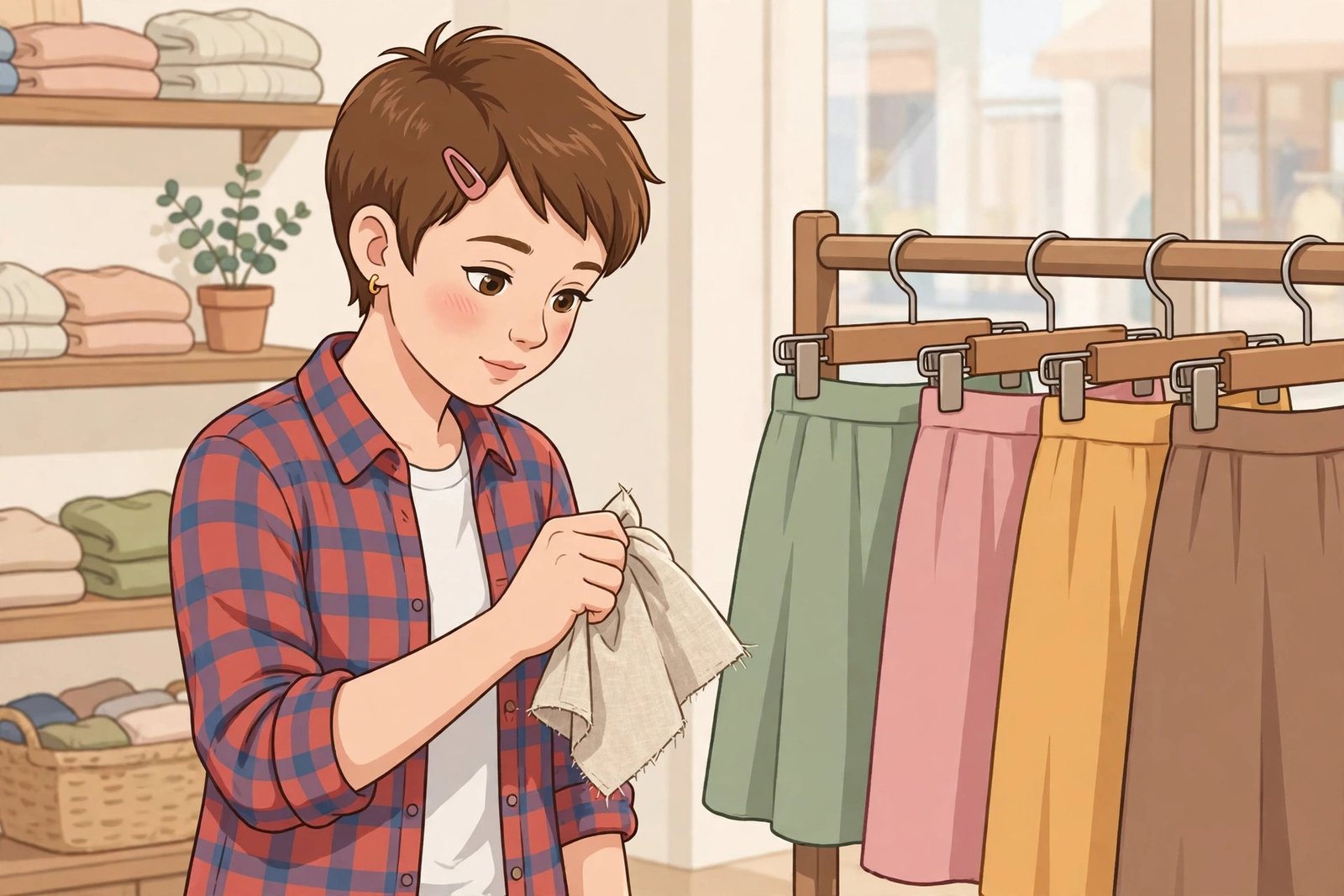
Two pieces can share a size and a shape and still live in different worlds, because fabric behaves. Fabric is the piece’s personality: how it hangs, how it clings, how it moves, how it treats your skin for eight hours. Learn to read behavior in the shop, and you’ll stop being surprised at home.
Start with the cling check. Turn sideways in the mirror. Some fabrics skim the body and fall clean. Others grab every line and edge under them and announce it all. Neither is good or bad by itself, but you get to choose what you like living in. If you’re already planning a special undershirt just to calm this piece down, count that as a strike. When a piece of clothing really suits me, I don’t need a rescue team under it.
Do the wrinkle test. Scrunch a bit of the fabric in your fist for ten seconds, then let go. If it stays crushed, it will look crushed by second period. Some girls don’t mind a lived in look. But if your heart sank watching the creases stay, believe your heart. It’s forecasting your school photos.
Check the ride up factor. Some skirts and tops travel as you move and need a tug every few steps. In the fitting room, walk your small steps and watch the hem. A piece that climbs in ten steps will climb all day. Tugging is the tax you pay for ignoring this test, and the tax is charged every single minute you wear it.
Feel the fabric on your inner arm, where skin is honest. Itchy, scratchy, or plasticky on the arm means war on your neck and waist by noon. Also hold thin fabric up to the light. If it’s far more see through than you expected, you’ll be layering and checking all day. Some girls are fine with that trade. Just make it a choice, not a surprise.
And think about sound and sweat, the secret tests. Some fabrics rustle loudly with every move. Some show sweat in seconds. Neither makes a piece bad, but both change where you can wear it in peace. I decide a piece of clothing really suits me only when its behavior fits my real days, school heat, long walks, and all. Fabric that behaves is invisible. Fabric that misbehaves becomes the whole day’s story.
Does It Match Your Real Daily Life?

Here’s the test girls skip the most, because it’s not about the body. It’s about the calendar. A piece can fit like a dream and still be wrong for your life. The dress that needs a special bra, special shoes, and a special event will sleep in your closet while your plain favorites do all the work. Suiting you means suiting your days.
List your real week. School days with a dress code or a long bus ride. Sports or clubs. Family time. Weekend plans with friends. Weather where you live, the real kind, not the postcard kind. Now hold the piece up against that week. Where does it go? If you can name three real days it serves, it’s a worker. If it serves one imaginary party, it’s a guest, and guests should be rare and cheap.
Care effort counts as part of your life too. A piece that needs hand washing, gentle drying, and ironing before every wear asks a lot from a school week. Some pieces are worth it. Most girls find that the pieces they love longest are the ones that survive the normal wash and come out ready. When a piece of clothing really suits me, its care fits my energy, not just its color fits my eyes.
Think about your other clothes as part of your life too. A new piece joins a team. If it needs shoes you don’t own and a bag you can’t afford, its true price is much higher than its tag. The honest question is never can I buy this piece. It’s can my real life carry this piece, happily, starting this week.
Also be honest about your habits. If you live in sneakers, the piece that only works with heels will wait forever. If you run cold, the pretty sleeveless top needs a layer plan or it waits till summer. None of this is about rules. It’s about knowing your own patterns better than the shop does. Shops sell to an imaginary girl. You dress a real one.
Run this test on your closet too, someday when you’re bored. You’ll find pieces that fit your body but never fit your week, still wearing their tags of shame. Forgive yourself, learn the lesson, and shop with your calendar open from now on. The deepest meaning of a piece of clothing really suits me is that it suits my life, and my life is the one I’m actually living.
The Photo Test and the Three Outfits Test

Two tests left, and they’re the strongest pair in this guide. They take the piece out of the shop’s spell and judge it in your real world: plain light, real clothes, real days. If a piece passes both, it almost never becomes a regret.
The photo test first. Take a plain photo in the fitting room, no filter, no pose, arms relaxed. Then look at the photo, not the mirror. Photos flatten flattery. They show fit, length, and fabric behavior the way classmates will see them. Many girls know the shock of a piece that felt fine in the mirror and looks off in the photo. Trust the photo’s honesty. When a piece of clothing really suits me, the plain photo looks calm, and I don’t have to zoom in hunting for what’s wrong.
Daylight matters too. Shop light is warm and kind. If you can, step near the shop door or a window and check the piece there. Some fabrics change character in real light: thinner, shinier, or duller than the mirror promised. Two steps toward daylight in the shop can save a whole purchase.
Now the three outfits test. Name three outfits this piece makes with clothes you already own. Top test: which three bottoms does it work with? Bottom test: which three tops? Say them out loud or picture them clearly, piece by piece. If you stall at two, the piece is a loner, and loners get worn rarely, even when they’re lovely. Three clear outfits means the piece joins your team’s rotation from day one.
Use your phone’s closet photos if you keep them, or just your memory of your most worn pieces. Your new piece should befriend your favorites, not your other loners. A team of friends is a wardrobe. A pile of strangers is just storage with sleeves.
If a piece passes photo and outfits but your budget says not today, take the photo home anyway. Good pieces teach you your taste, and the photo keeps the lesson for free. And when you do buy with both tests green, wear the piece that same week. New pieces that wait for a special day often wait forever. Start the friendship now, while you’re sure that a piece of clothing really suits me is a fact, not a hope.
The Final Feeling Check Before You Pay

One test left, and it’s the softest one. After fit, movement, fabric, life, photos, and outfits all say yes, stand still for ten seconds and ask your body one question: do I want to wear this tomorrow? Not someday when you’re braver, slimmer, or different. Tomorrow, as you are, in your real life.
Feel for fidgets. Are you already adjusting it, sucking in, holding a pose to make it work? A piece you must pose in will exhaust you. The right piece lets your shoulders drop. Many girls describe the same small sign: a quiet exhale in the fitting room, like the piece agreed with them. When a piece of clothing really suits me, I stop performing for the mirror and just stand there, comfortable, a bit pleased, already planning its first day out.
Check the doubt level honestly. Small doubt about a detail is normal. A big fog of maybe usually means no, and the fog rarely lifts at home. If you’re sending photos to three friends begging them to decide, the piece hasn’t passed. Put it back with thanks. It taught you something about your taste, and lessons are free.
Also ask the tomorrow question about your mood, not just the piece. A bad day can fail good clothes. If everything in the shop looked wrong today, the common thread is the day, not the clothes. Drink some water, go home, and test again on a kinder day. Fair trials, remember. You deserve them, and so do the clothes.
When the answer is yes, buy it cleanly, no guilt spiral. You’ve run six honest tests. That’s more care than most purchases ever get. Wear it this week. Let it join your real life fast, while the yes is fresh.
And when the answer is no, walk out proud too. Every no you give a wrong piece is money and closet space saved for a right one. The goal was never to buy more. The goal is a closet where you can say, piece after piece, a piece of clothing really suits me, and mean it every single time.
Frequently Asked Questions
Can a piece suit me if my friend says it doesn’t look right?
Yes, it can. Your friend sees the piece through her own taste, her own body, and her own habits. She doesn’t live your days or feel the fabric on your skin. Thank her, then run the tests: fit, movement, photo. If they all say yes, trust them over any single opinion, even a loving one. When a piece of clothing really suits me, the tests confirm it, and I wear it with a calm mind.
How long should I spend testing a piece in the fitting room?
About three minutes once you know the system. One minute for fit checkpoints, one for movement, and one for the photo and a quick outfits count in your head. Speed comes with practice, and the tests get faster every time you use them. I can tell a piece of clothing really suits me much faster now than when I started, because my hands and eyes learned what to check first.
What if a piece suits me but it’s not my usual style?
Then ask one question: is it not my style, or is it my style growing? A piece can pass every test and still feel new, and new is allowed. Wear it once with your most trusted pieces around it, like your favorite jeans or shoes, so the day feels safe. If you reach for it again within two weeks, it has joined your style. If not, it was a fun visit, not a mistake.
Is it normal that my size changes from shop to shop?
Completely normal, and honestly a bit silly. Sizes aren’t laws; every brand cuts differently, and the same label can mean three real sizes across three shops. Never let a number talk you out of a piece that passes the tests. When a piece of clothing really suits me, I couldn’t care less what the tag says, because my body and my mirror at home are the only judges that count.
What’s the one test to use if I can only pick one?
Use the photo test. A plain, unposed photo in normal light tells you more truth per second than anything else: fit, length, fabric, and how the piece sits on your real body. If I had to choose with one glance, I’d trust that photo. When a piece of clothing really suits me, the photo shows me wearing the clothes with ease, not the clothes wearing me, and that image settles the question fast.