
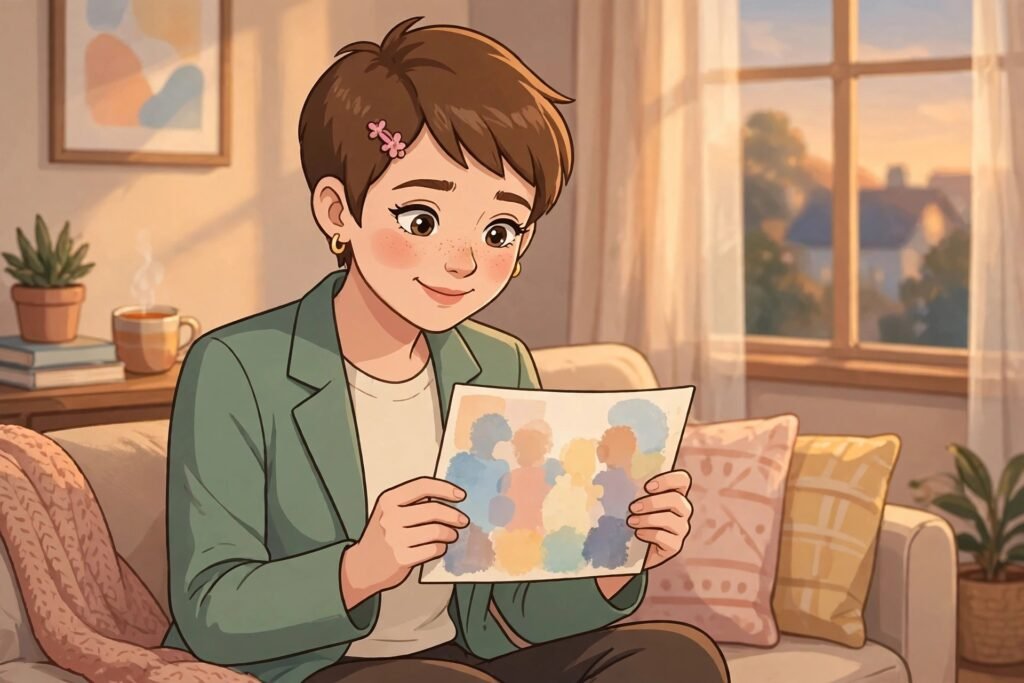
You can probably still picture her face clearly. The friend from school, or from your first job, the one who knew everything, the one you swore would be in your life at forty. And now: a birthday text, maybe. A like on a photo of a life you no longer recognize. No fight happened. No villain entered the story. The friendship didn’t end so much as thin out, message by message, month by month, until one day you did the quiet math and felt the loss land. So let me answer the question sitting under that math, the one women ask at 2 a.m.: is it normal to lose friends as you grow up?
Yes. Plainly, fully, yes. Losing friends across your twenties is one of the most common experiences of the decade, and one of the least talked about, because every woman going through it assumes she’s the exception. She isn’t. The girl group of five that swore eternal loyalty at eighteen is, by twenty eight, usually two close bonds, one warm acquaintance, and two people you wish well from a respectful distance. That’s not a failure rate. That’s the standard shape of a life where people move cities, change jobs, fall in love, burn out, recover, and become new versions of themselves on different schedules.
What makes it hurt is the story we attach to it. We treat a faded friendship like a failed one, as if love that changes shape was never real. We audit ourselves: Was I boring? Did I miss a sign? Was I the problem all along? Sometimes the honest answer to is it normal to lose friends as you grow up gets lost under that audit, so here it is again, slower: most friendship loss in adulthood has no culprit. It has geography, timing, and growth, three forces that move people apart the way rivers move stones, without malice and without asking permission.
This article walks through the whole thing with that lens on: why paths split, how cities and partners and timelines redraw a circle, what a “season” of friendship really means, how to tell a natural ending from a friendship worth one more honest try, and how to let go well when letting go is the truth. If you’re grieving someone who is still alive and just… elsewhere, this is for you. By the end, is it normal to lose friends as you grow up will feel less like an accusation and more like weather: real, sometimes sad, and not your fault. And one small warning in advance: this article is about drifting, the no fault kind.
A friendship that turned cruel or one sided is a different story with a different name, and we’ll mark the border clearly when we reach it. So, is it normal to lose friends as you grow up? Keep reading; the answer gets kinder the closer you look.
The Short Answer
Yes, completely. Adult lives run on different rails: cities change, jobs eat the hours school used to lend you, partners arrive, priorities quietly re-sort themselves. A friendship built inside one shared life stage often can’t survive the move to the next one unchanged, and unchanged is the key word. Many of these bonds don’t die; they downshift, from daily to occasional, from everything to a warm few things. When women ask is it normal to lose friends as you grow up, most of what they’re losing is the old shape, not always the person.
So grieve the shape honestly, and stop auditing your worth over it. The friends who stay into each new stage are rarely the most numerous; they’re the ones whose lives and values keep rhyming with yours, plus a few beloved exceptions you both feed on purpose. And remember the arithmetic of a life: losing some friends across a decade is the tax on growing. Everyone pays it. The question is it normal to lose friends as you grow up has the same answer for the friend you’re missing, by the way. She’s paying it too, possibly while looking at an old photo of you.
Yes, It Is, and Here Is What That Means

Start with the scale of it. At sixteen, your social world is a pond: small, shared, and restocked daily by school. At twenty six, it’s an ocean with weather. People you adore now live in other time zones of life, some literal, some not. Research on friendship keeps landing on the same plain fact: the number of active friendships peaks in the early twenties and then declines, for nearly everyone, in every country studied. Your shrinking circle is not a personal anomaly. It’s the statistical shape of adulthood, visible from space.
It also happens in plain sight, to the women you’d least expect. The social one, the organizer, the friend with the legendary group chat: she loses people too. She’s just quieter about it, or better at restocking. Nobody’s charisma outruns geography and time. When a woman whispers is it normal to lose friends as you grow up like it’s a confession, she’s usually describing the exact same decade as the confident friend she’s comparing herself to. The difference is narration, not reality.
Here’s what “normal” does not mean, though. It doesn’t mean painless, and it doesn’t mean you’re supposed to shrug. A friendship that fades after ten years of your life deserves a moment of real sadness, the way any good chapter ending does. Normal is not the same as nothing. Normal means: this loss is part of the design of a long life, not evidence that you loved wrong or were loved too little. Let it be sad. Just don’t let it be a verdict. Two things can be true at once: the answer to is it normal to lose friends as you grow up is yes, and losing this one genuinely hurts.
Different Cities, Different Directions
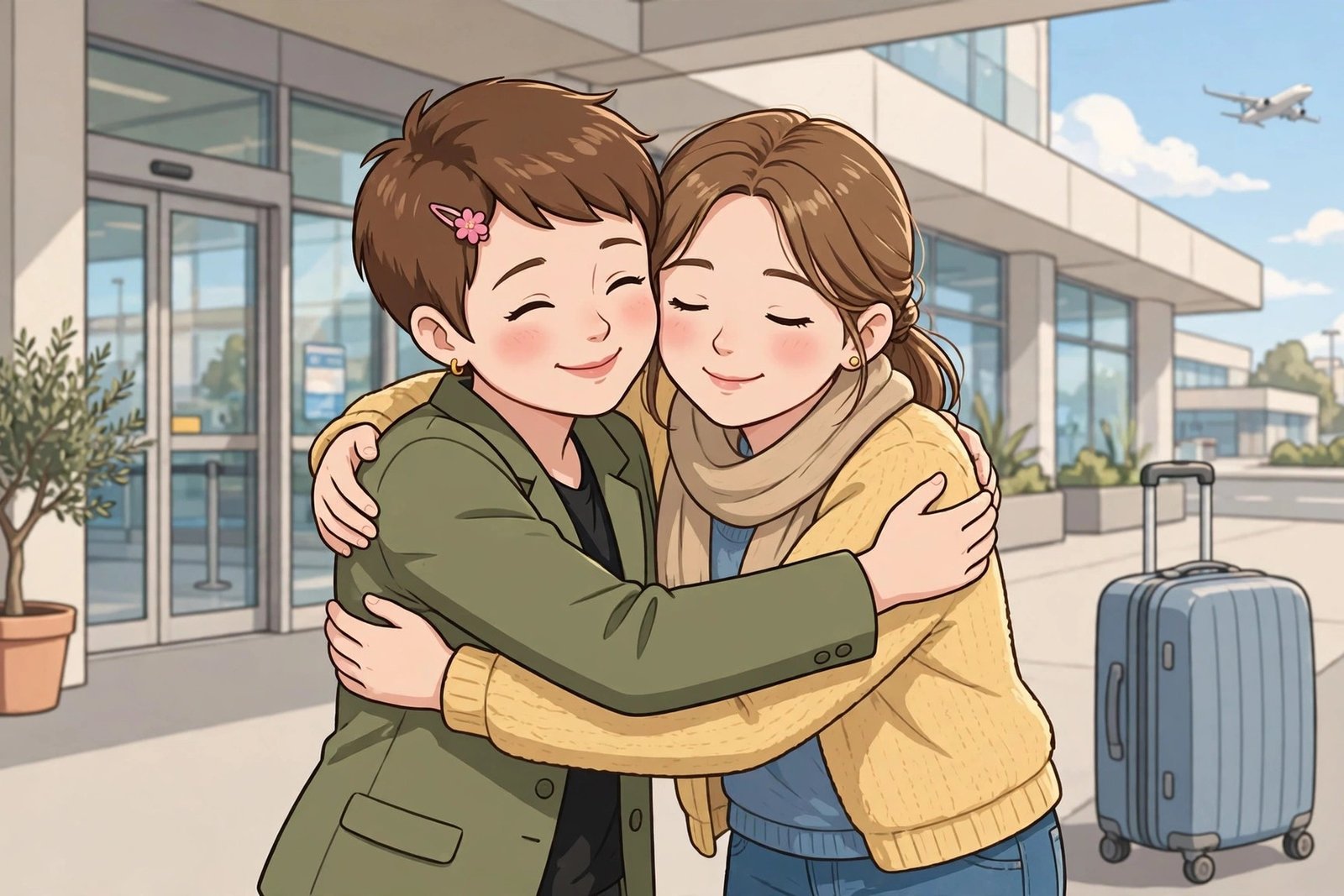
The single biggest friendship force of your twenties is a moving van. First jobs scatter people. Love relocates people. Rent prices evict people from the neighborhoods where the friendship lived. You can survive one friend’s move with effort and video calls. What you can’t easily survive is the arithmetic: she moves, you move, a third friend moves home to save money, and suddenly the group that shared a postcode shares nothing but a chat thread and a holiday plan that keeps slipping.
Distance doesn’t just remove meetings. It removes the small stuff meetings were made of. She no longer knows your coffee order, your boss’s name, the guy from the gym, the saga of your landlord. Every catch up call has to spend its first twenty minutes on background briefings, and background briefings are tiring, so the calls get rarer, and the briefings get longer, until one day there’s so much backlog that starting feels like homework. Nobody chose that spiral. It’s what distance does to a friendship fed on daily detail.
Direction matters as much as distance. Two friends can stay in the same city and still drift onto different rails: one climbing a career ladder with travel and dinners, one building a quiet life around a partner and a garden, both happy, both sincere, and slowly out of shared topics. The friendship doesn’t break. It just runs out of present tense. Most of what fills it becomes old stories, fondly retold, and a bond can live on old stories for years, warmly and honestly, at a lower flame. That’s worth naming without shame: a lower flame is still a flame.
When you ask is it normal to lose friends as you grow up, sometimes what you mean is “is it normal for the flame to change,” and the answer there is also yes, entirely.
Practical peace comes from grading friendships by their real altitude instead of their old one. The daily friend may become a monthly friend, the monthly friend a birthday and big news friend. A downshifted friendship is not a demoted one; it’s a friendship that found its sustainable altitude for this stage of both your lives. Some will climb back up when life re-converges, a shared city again, kids the same age, jobs that rhyme. Some won’t. Both outcomes fit inside a good life. And notice: none of this paragraph contains a villain, because this kind of loss doesn’t have one.
That’s the deepest reason is it normal to lose friends as you grow up gets a yes: rivers move stones without hating them.
Partners, Jobs, and Timelines That No Longer Match

Even without a single move, the twenties re-sort everyone’s hours. A partner arrives, and a friend’s free evenings, first calls, and holiday plans quietly change address. A job turns serious, and another friend’s life reorganizes around deadlines and a commute. Someone’s timeline accelerates: engaged at twenty six, a mortgage at twenty eight. Someone else’s slows down on purpose. None of these are betrayals. They’re lives being lived. But friendship runs on overlap, and overlap is exactly what mismatched timelines eat. Every missed overlap quietly feeds the same question, is it normal to lose friends as you grow up, and the honest answer stays yes.
The sting has a specific shape here: it’s rarely the big events that drift you apart. It’s the small repeated no’s. She can’t do weeknights anymore. You can’t do her spontaneous late nights with your early shifts. The plans that survive are the planned ones, and planned plans are the first to die in a busy month. After a year of this, the friendship lives in the gap between two calendars, and both women start protecting themselves from the disappointment by wanting it less. That self protection is human. It’s also how good people lose each other without a single harsh word.
A gentle reframe helps: a friend deep in a new relationship or a brutal work season hasn’t ranked you lower. Her capacity changed, the way yours will in a different season. The friend you barely see this year may be the one who shows up completely in a crisis, because depth and availability are different currencies. Confusing them causes half the pain in this topic. Some friendships are daily bread. Some are emergency rations. Both feed you, and a wise woman stops demanding that every bond pay in the same coin.
Timelines heal, too, which nobody mentions. The friend lost to the intense early years of a relationship often resurfaces when the couple finds its rhythm. The career swallowed friend reappears at the next job, blinking, looking for her people again. If you left the door open without keeping score of the quiet years, those reunions are sweet and easy. If you slammed it in a verdict of “she chose him over us,” they’re awkward or impossible. So this section’s whole advice fits in one line: mismatch is a season, not a sentence, and treating it like weather is most of how friendships survive it.
That is the kindest frame for is it normal to lose friends as you grow up when the cause is two calendars, not two hearts.
Seasons of Friendship Are Real
Some friendships are for a reason, some for a season, and a few for a lifetime, and the painful trick is that you can’t always tell which is which while you’re inside them. The school friend who carried you through two brutal years did a lifetime sized job in a season sized span. The colleague who made a grim job bearable for eighteen months was a real friend, in a real friendship, that was always going to end when the job did. Season friendships aren’t lesser friendships. They’re complete ones, with a beginning, a full middle, and an ending that doesn’t erase any of it.
A season ending is the most common shape of is it normal to lose friends as you grow up, and it is the gentlest one.
The research on drifting points at exactly this machinery. A Medical Daily overview of why friends drift apart explains that proximity is the glue of friendship, and that as two lives grow less alike, the bond weakens; it cites work by psychologist Brett Laursen showing that similarity between friends predicts whether a friendship survives, while growing dissimilarity disrupts it. Read that without flinching: friendships end when lives stop resembling each other. That’s not a moral event. It’s a mechanical one, and it happens to the kindest people alive.
Your grandmother’s generation knew this in their bones, by the way. They kept “old friends” as a category of honor, people written to at Christmas, thought of fondly, rarely seen, and nobody called that failure. The modern pressure to keep every friendship at full intensity forever is new, and it’s mostly manufactured by apps that show you everyone’s highlight reel daily. Permission to run your friendships at grandmother settings is hereby granted. Warmth without frequency is a legitimate setting, and it has been for centuries. Grandmother settings are one more proof that is it normal to lose friends as you grow up was answered yes long before apps existed.
So let the seasons be seasons. Thank the friend, in your heart or out loud when a moment allows, for the chapter she filled. A season that ends cleanly leaves the memory intact and the door unlocked. And unlocked doors matter, because life is circular in ways your twenties can’t predict: people move back, jobs end, couples split, kids start at the same school. The friend of one season occasionally returns for another, older and different, and that second season can be its own good thing.
A Season Ending, or a Friendship Worth Fighting For?

Not every fade should be waved through. Some friendships thin out from pure logistics, and one honest reach out restarts them for years. Others are quietly asking to end. Telling them apart is the real skill of this decade, so here are the tests that help. First: the history test. Was this bond strong and kind for years, with the fade starting exactly when life scattered you? That’s logistics, and logistics can be fought with one message. Second: the energy test. After time with her, even a call, do you feel warmed or drained? Faded but warm is worth a try. Drained is information of a different kind.
Ask is it normal to lose friends as you grow up about a warm but faded bond, and the tests usually say: logistics, not love, did this.
Third: the effort symmetry test. Drift is mutual and lazy; both of you went quiet, both of you feel a pang at her name. One sided silence is different. If your last five attempts met one word answers and no return questions, the friendship may already have ended on her side, and your dignity gets a vote. And fourth, the values test: do you still like who she is now, and does she still like you? Growing into different people is natural; growing into people who quietly disapprove of each other is the honest end of a bond, and forcing it helps no one.
If you’re reading this section with one specific face in mind, this gentle guide on is it normal to stop liking a friend you used to love walks through that exact crossroads. It sits right next door to this article’s question: sometimes the shape of “losing a friend” is that your feelings changed first, and that, too, happens in kind people. Not every door needs you to be the one who closed it.
When the tests say fight, fight small and warm. One message, specific and light: “I miss us. No big talk needed. Coffee this month?” If she meets it, you have your answer, and the friendship gets a second season on working adult terms. If she doesn’t, you also have your answer, delivered kindly, and you can grieve with the clean conscience of someone who tried once, honestly. One try is the line. More than that becomes chasing, and chasing a season that has ended only bruises both the memory and you. One try honors the friendship; is it normal to lose friends as you grow up covers the rest without needing a single villain.
Letting Go Well, Without a Villain
Letting go well starts with refusing the villain draft of the story. The villain draft is tempting because blame hurts less than randomness: she got snobby, she chose the boyfriend, she was always selfish really. Sometimes those drafts are true, and section six covered how to spot the real cases. But in the plain drift that fills most of this topic, the villain draft poisons a good memory to soothe a sad present. A cleaner sentence exists, and you can practice saying it until it feels true: “We were right for each other then. Our lives moved. I’m sad, and I wish her well.” That sentence keeps your past intact, and your past matters; those years were real.
Letting go also has a practical side: stop feeding the ache. You don’t have to stage a dramatic unfollow, and cruelty is never required. But if her highlight reel lands on your chest every Sunday, muting is not bitterness; it’s hygiene. Archive the chat if opening it stings. Keep the photos; they’re yours too. Small acts of tidying tell your brain the chapter has a cover and can go on the shelf, next to other good books you don’t reread weekly. Tidying is not denial; it is how is it normal to lose friends as you grow up becomes something you live with instead of something you argue with nightly.
Say the goodbye somewhere, even if only to yourself. Some women write the unsent letter, the one that thanks her for the 2 a.m. calls and the borrowed dresses and says the quiet part: I miss who we were, and I release who we’ve become. Some mark it smaller: a last look through old photos with a friend who gets it, a walk, a cry in the car to the song that was yours. Ritual sounds dramatic until you notice the alternative is an unmarked ache that leaks into every new friendship as a fear of starting. Mark it. Grieve it at full size, briefly.
Then let the size shrink, as grief does when it’s been honored instead of argued with.
And here is the part nobody believes until it happens: letting go well makes room. The women who thrive socially in their thirties aren’t the ones who never lost anyone. They’re the ones who stopped treating each ending as a life sentence against new beginnings. Every released season frees hours, warmth, and courage for the people arriving in the next one. You don’t replace her. You just stop asking the future to be a rerun, and the future, generous thing, sends new faces. That release is the lived answer to is it normal to lose friends as you grow up: room, not ruin.
The Friends Who Stay, and the Space That Opens

After all this weather talk, end with the stayers, because they exist and they matter more than the losses. Who stays? Usually, it’s a mix: the friend whose life keeps rhyming with yours, the one friendship you both feed deliberately across every season, and the surprise bond, an old acquaintance who becomes vital at twenty nine, a new person met inside your adult life who fits it like she was always there. The circle at thirty five is smaller than at twenty two and, for most women, deeper per person. That’s not a consolation prize. That’s the actual upgrade this decade is smuggling in.
The stayers share habits worth copying. They answer eventually and warmly. They keep tiny rituals alive across busy years. They forgive quiet seasons without keeping a ledger, because they know seasons come for everyone, including them. And they say the quiet thing out loud once in a while: “You’re one of my people. Distance doesn’t change the paperwork.” If you have even one friend like that, you are not doing friendship wrong, whatever your headcount says at midnight. Quality was always the real metric. School just hid it behind quantity. A small, deep circle is not the sad ending of is it normal to lose friends as you grow up; it is the good one.
The space that opens deserves its paragraph too, because it’s the part of this question nobody asks about and everybody needs. An emptier calendar in your late twenties is not only loss. It’s the first unclaimed space of your adult life, and what grows in it decides your thirties: new circles built on who you are now, not who you were at seventeen; hobbies chosen instead of inherited; the odd, lovely solitude of a woman becoming her own company. The girlhood version of this fear, the one in afraid of changing schools and losing my friends, gets the same answer at every age: the fear is real, the loss is real, and so is everything that arrives after.
So, one last time, the question in full: is it normal to lose friends as you grow up? Yes. It’s the tax and the weather of a life in motion, paid by every woman you admire, including the ones whose group photos make you ache. Mourn the seasons that ended. Fight, once and warmly, for the ones worth restarting. Tend the stayers like the treasures they are. And walk into the open space without calling it failure. It’s not failure. It’s room.
Room is exactly how a life makes space for the friends you haven’t met yet, which is the last and kindest answer to is it normal to lose friends as you grow up: yes, and it is not the end of your social story. It is the middle, and middles are where stories turn.
Frequently Asked Questions
How many friends is it normal to lose in your twenties?
There’s no official number, but the pattern is steady: friendship counts peak in the early twenties, then shrink as lives scatter. Losing touch with most of a school circle across a decade is common, and keeping two to four close friends is the usual adult shape. If your circle shrank a lot, you’re inside the normal range, not outside it. Compare depth, not headcount.
Should I tell a friend that we are drifting apart?
If the friendship matters and the fade feels fixable, one honest, gentle message beats a formal summit. Keep it light and free of blame: “I miss us, life got loud, coffee soon?” A heavy talk about drifting often creates the very distance it fears. Save deeper conversations for friendships where something specific went wrong, not for the plain logistics of two busy lives pulling apart.
What if I am the one who drifted?
Then you’re the normal case from the other side. Almost everyone has been the quiet one during a buried season: new job, new love, family weight. If the friendship still matters, a warm restart message with no groveling works wonders: “I went quiet, you crossed my mind, how are you, really?” Most friends are relieved, not offended, because they’ve stood exactly where you’re standing now.
Can a faded friendship come back later?
Yes, and it happens more often than people expect. Lives re-converge: a move back to the same city, a job change, kids the same age, a shared new stage. Friendships left warm and unblamed restart easily, sometimes in a single message after years. It won’t be the old shape; it can be a good new one. Leaving the door unlocked, without standing in it waiting, is the whole art.
When is losing a friend not normal growing up?
When pain, not distance, did the damage. If you’re relieved she’s gone, if contact left you smaller, anxious, or constantly apologizing for existing, that’s not drift; that’s a bond that hurt, and its ending is protection, not growing pains. So yes, is it normal to lose friends as you grow up when lives simply move apart, and the kindest proof is that the question is it normal to lose friends as you grow up is being asked by caring people everywhere, not by the ones who never cared at all.