
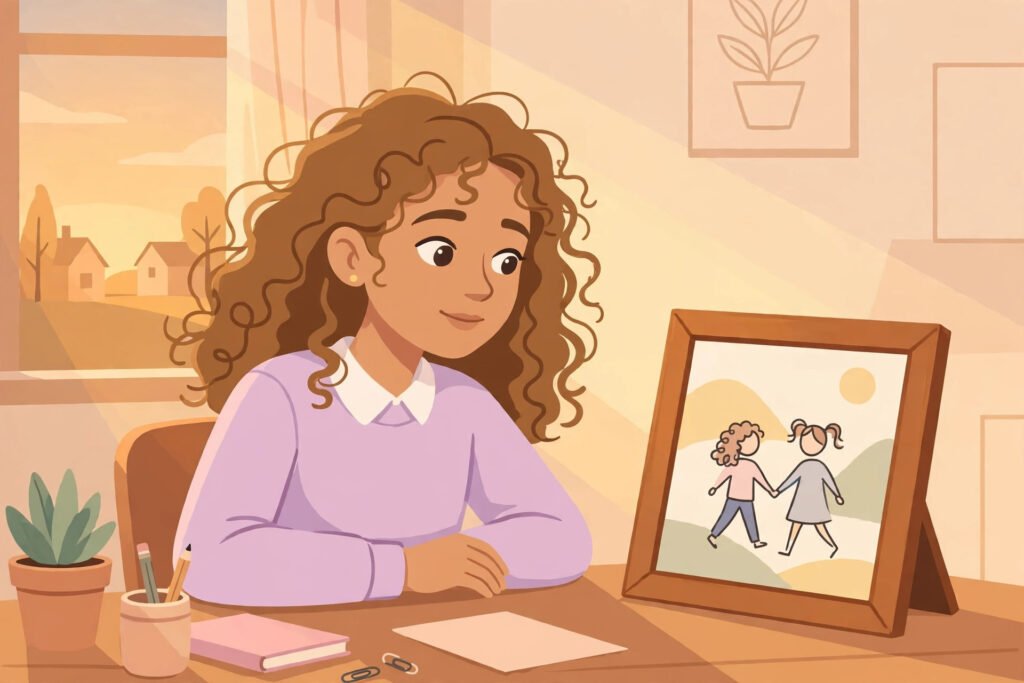
Elena sat at her desk one quiet night and looked at the framed photo she kept there. It showed her and her childhood friend as little kids, with matching braids and ice cream on their shirts. She smiled at their goofy grins, then her chest felt strangely tight and heavy. She had not truly missed this friend in weeks, and that thought scared her a little. It made her ask herself, is it normal to stop liking a friend you used to love?
She did not say it out loud that night, because the question itself felt disloyal. But the feeling behind it was honest, and it was not cruel at all. She did not hate her friend. She just did not feel close to her anymore, which is a very different thing.
If that question has been sitting in your chest too, please hear this first. You’re not cold, you’re not disloyal, and you’re not broken, even if guilt says otherwise. Lots of girls feel this exact thing and keep it secret, which makes it feel bigger. You can still wish your friend well and laugh at old photos with her. And you can still not want to reach out, all at the same time.
This article will walk beside you without judgment, like a big sister who gets it. We’ll look at why friendships drift as you grow and change over the school years. We’ll learn how to tell a rough patch from a real ending, too. By the end, you’ll understand is it normal to stop liking a friend you used to love in a much kinder way.
The Short Answer

Yes, it’s completely normal, and it happens to almost everyone in the teen years. The honest answer to is it normal to stop liking a friend you used to love is yes. You’re changing fast right now, in every way that counts for a friendship. A friendship built in one season of life does not always fit the next one. Liking someone less does not erase the good years you shared, not one bit.
Think of a friendship like a pair of shoes you loved when you were younger. They were perfect for a while, and they went everywhere with you, every single day. Then one day they just didn’t fit anymore, no matter how much you liked them. Nothing is wrong with the shoes, and nothing is wrong with your feet either. You’ve just grown, and growing is what this stage of life is all about.
It also helps to know that liking is not the same thing as caring. You can stop wanting every weekend with her and still care about her happiness. When girls quietly wonder is it normal to stop liking a friend you used to love, they often learn something. They haven’t stopped caring at all, they’ve only stopped feeling close to that person.
You don’t need a villain or a big dramatic reason to explain this change. Sometimes a friendship fades because schedules change, interests split, or talks stop feeling easy. That slow fade is a normal human thing, not a crime you have to explain. Naming it honestly is kinder than faking enthusiasm you simply don’t feel anymore.
So breathe, and let the guilt loosen up a little before you do anything. Asking is it normal to stop liking a friend you used to love does not make you mean. It makes you thoughtful, because you care enough to handle the change with honesty.
You also don’t have to decide everything today, this week, or even this month. Feelings like these unfold slowly, over weeks and months of small moments adding up. Just knowing this is normal, shared, and survivable is enough to begin with today. The sections ahead will help you sort it out, one kind step at a time.
Understand That Growing Apart Is Part of Growing Up

When you were younger, friendship was built on simple and lovely things. You lived on the same street, sat together at lunch, and liked the same songs. You traded stickers between classes and walked home along the same path each day. Those shared moments were real, and they mattered a lot at the time.
As you get older, your inner world gets bigger, sharper, and more your own. You form stronger opinions, pick up new hobbies, and think more about your time. A friend who once felt like a perfect match might now feel like a habit. Noticing that shift when you ask is it normal to stop liking a friend you used to love can feel sad.
Growing apart is not a failure story, even when it stings to admit it. Trees in the same garden grow in different directions toward the light every day. Nobody blames one tree for reaching a different patch of sky than the other. People do something similar as they follow curiosity, new schools, and new dreams.
It helps to look back with thanks instead of suspicion when you think of her. Ask what this friendship gave you, and what it taught you about trust. Ask which memories you want to keep with respect, because you can keep them. Gratitude lets you honor the past without forcing yourself to live in it forever.
Elena learned this when she and her friend started walking the same school path. They still chatted a bit each morning, like they always had since childhood. Then they turned toward different classroom doors, different clubs, and different lunch crowds. Both girls felt a little sad at the split, yet neither had done anything wrong. If you’re wondering is it normal to stop liking a friend you used to love, remember those doors. Different doors are a sign of growth, not a sign of betrayal at all.
Try to let go of the idea that a childhood friendship must last forever. Some friendships are for a season, and some teach you one big lesson. Some truly do last for decades, through school, work, and everything after that. All three kinds can be meaningful, and a shorter one is not a lesser one. That’s worth remembering whenever is it normal to stop liking a friend you used to love crosses your mind at night. You didn’t waste those years, and neither did she, because the joy was real.
Notice When Your Interests and Values Stop Matching

Pay attention to what you both reach for now, because it tells you a lot. Elena started carrying her art supplies toward art club, thrilled about sketching and quiet creative time. Her friend lit up on her way to a party planning group instead. That group was all music, decorations, and big social events with lots of people. The girls exchanged polite, distant smiles in the hall, and those smiles said plenty.
Interests are the surface clue, but values are the deeper one underneath it. You might value honesty while your friend now loves gossip and drama. Or you want calm weekends while she wants constant plans and late night group chats. When daily choices keep pulling you apart, it’s fair to ask is it normal to stop liking a friend you used to love.
Small moments usually reveal the pattern long before any big talk happens. Conversations feel flat, jokes land differently, and you leave hangouts tired instead of happy. You might start editing yourself, hiding a new interest just to keep the peace. That self editing gets exhausting over time, and it drains the fun out of everything.
None of this means your friend is a bad person for liking different things. A love of big parties isn’t worse than a love of painting quietly. A quiet hobby isn’t better than a busy social life either, not at all. The point is fit, not ranking, and two good people can fit less well now. Keep that truth close when is it normal to stop liking a friend you used to love feels like a guilty secret.
If it helps you think clearly, make a gentle little list somewhere private. Write what you still enjoy together now, and what feels forced or flat. Write what you each seem to want from friendship at this age and stage. Seeing the lists side by side can turn a foggy feeling into clear information.
Once you can name the mismatch, you can respond with kindness instead of confusion. You might keep a smaller, occasional friendship, or you might let things fade naturally. Either choice gets easier when it’s based on honest observation, not guilt or guesswork. If you’ve also caught yourself wondering if it’s normal to not want to see your friends anymore, that feeling often grows from this same mismatch. You’re not the only girl standing in that hallway feeling torn and unsure.
Accept That Not Every Drifting Feeling Is Someone’s Fault
Our brains love a clear story with a hero and a villain in it. When a friendship cools, it’s tempting to hunt for the exact moment it broke. Maybe it was that one cold text, or the party you weren’t invited to. Sometimes a specific hurt is real and worth addressing with a calm talk. But often there’s no single moment, only a slow change nobody chose at all.
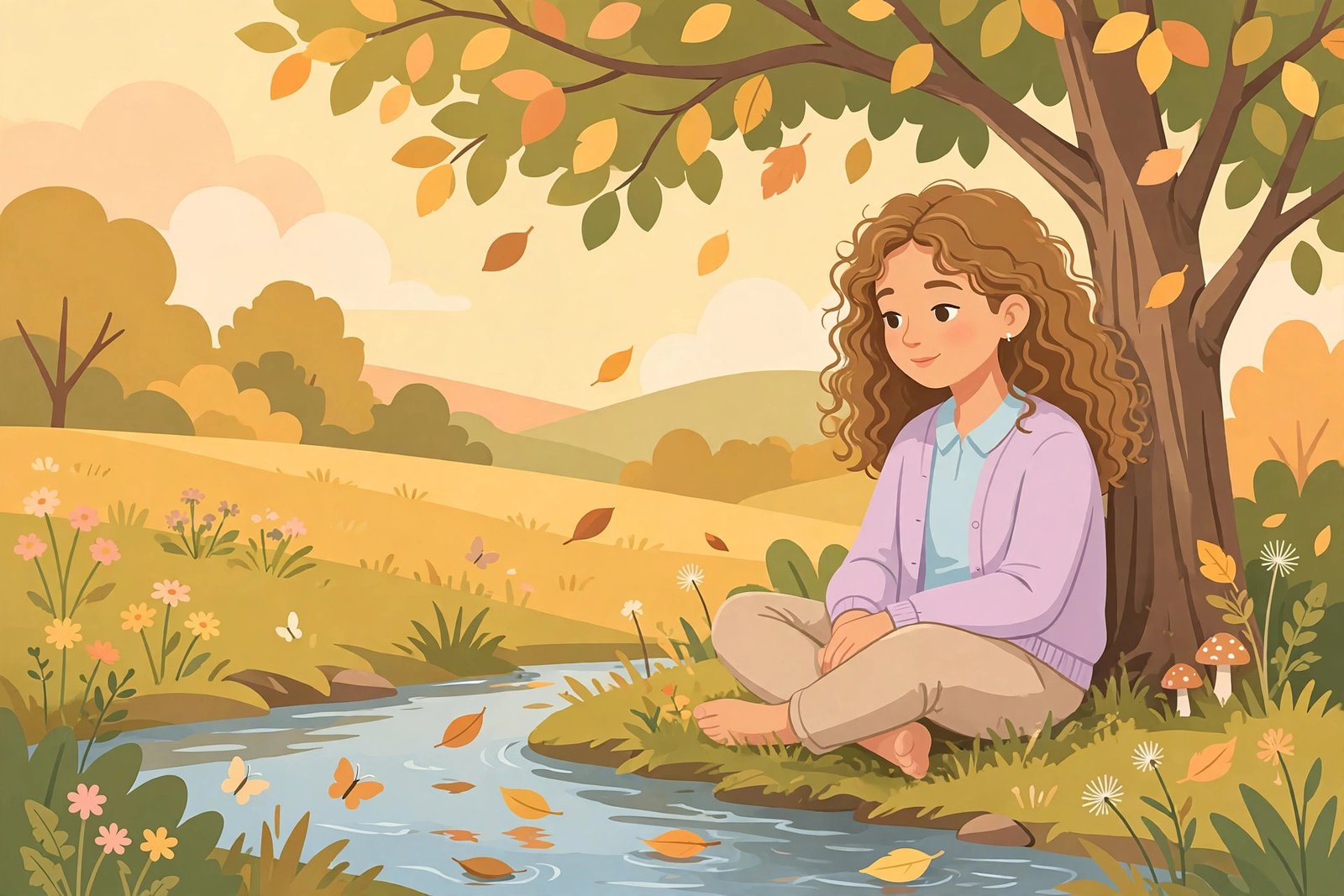
Elena found peace in a simple image one afternoon under a tree. She watched leaves float down a small stream, each moving at its own pace. Nobody was pushing, grabbing, or failing those leaves as the current carried them along. Sitting there calmly, she understood that change can happen without anyone being at fault. That thought softened the question is it normal to stop liking a friend you used to love for her.
Blame feels powerful for a moment, but it usually makes letting go harder. If you decide your friend is entirely at fault, every memory turns into a warning sign. If you blame only yourself, you carry shame for a completely normal feeling.
Try a more balanced story instead, one that leaves room for both of you. Two people can both be decent, both try in small ways, and still drift. Life pulls them toward different people, places, and priorities as the months go by. That story leaves room for respect and for a friendly greeting in the hallway. It’s why asking is it normal to stop liking a friend you used to love should lead to compassion, not a trial.
It also helps to separate your feelings from your actions as you sort this out. You can’t fully control whether affection fades, because feelings shift on their own schedule. But you can control whether you gossip, exclude, mock, or disappear without a word. Your feelings are information, not a verdict on your character as a person. And your actions are where your character shows, especially toward someone who once mattered.
When guilt spikes, talk to yourself like you’d talk to a younger sister. You’d tell her growing is allowed, kindness matters, and she owes nobody a performance. Offer yourself that same grace while you sort out this confusing change in private. You’ll choose better when you’re calm, and you deserve that calm too.
Tell the Difference Between a Rough Patch and a Real Ending
Not every distant week means a friendship is over, so don’t panic too fast. Friends get busy with exams, family stress, sports seasons, and health worries at home. Even close people can miss each other for a while and still be fine. A rough patch usually has an outside cause you can point to easily.
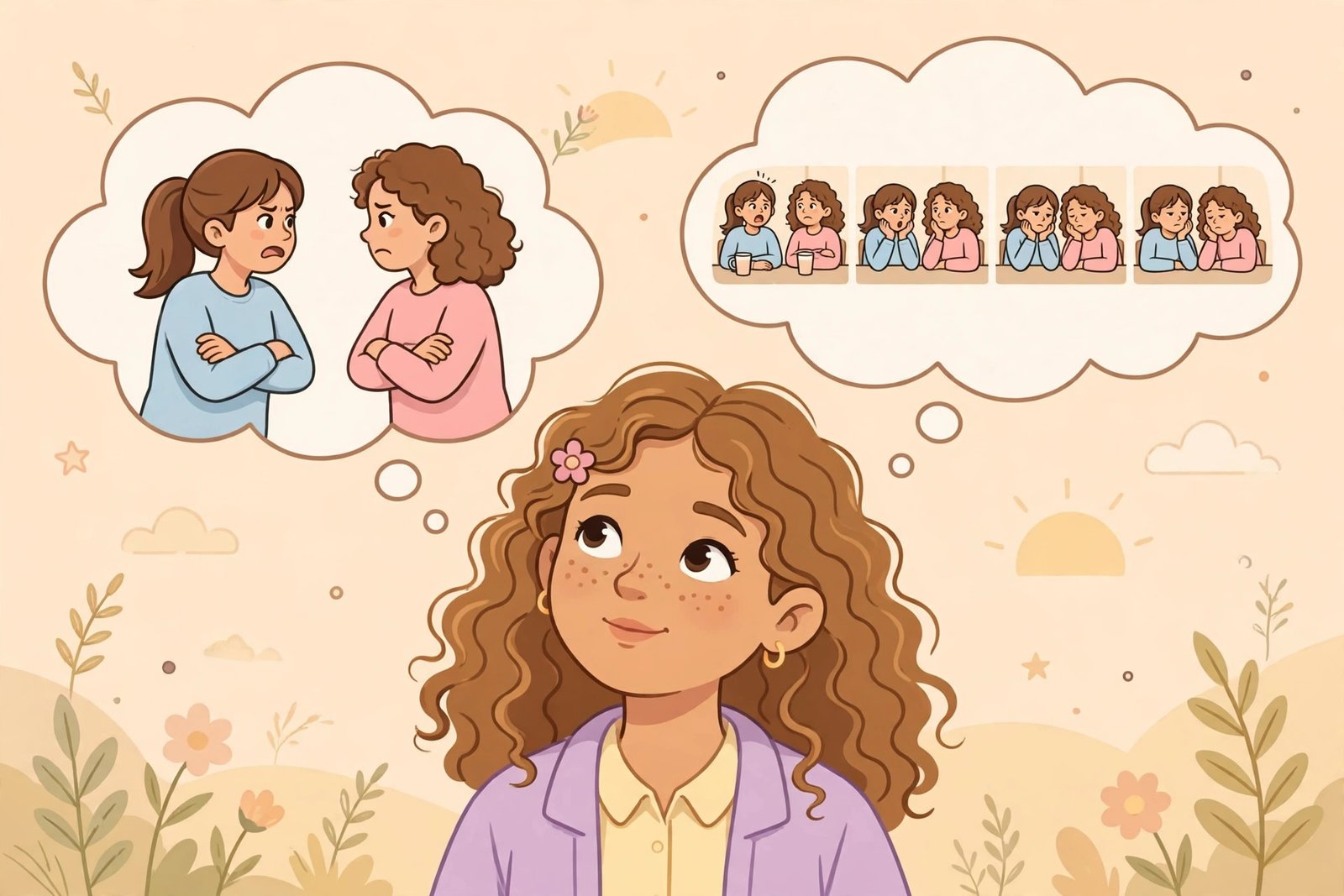
A real ending tends to look quieter, steadier, and much more consistent over time. The distance lasts for months, and the effort flows mostly one way, from you. Hangouts feel flat or forced again and again, not just on one bad day. Elena pictured two thought bubbles to sort this out in her own head. One bubble held a single argument that could probably be repaired with a talk. The other held months of bored, forced hangouts that left her drained every time.
Ask yourself a few honest questions, and answer like nobody will ever hear you. Do you still enjoy her company when life is calm and nothing is wrong? Or do you mostly feel relief when plans get cancelled at the last minute? Do you trust her and feel trusted back when it really counts between you?
Repair is another useful test when you’re trying to tell these two situations apart. In a rough patch, a small honest conversation often helps more than you’d expect. You might say you miss how things felt and ask if something is wrong. In a real ending, you may have tried that already, more than once even. And the same distance keeps coming back, which is information, not a personal failure. It matters when you wonder is it normal to stop liking a friend you used to love and what to do next.
Time can clarify what urgency and worry simply can’t, so give it room. Give a confusing friendship a few weeks of normal, kind effort first. Watch what happens without forcing a verdict on yourself on day one. A clear pattern lets you act with confidence instead of guilt driven guessing.
Whatever you conclude, respect the evidence of your own experience in this friendship. Other people may pressure you to stay close because you have history together. History matters, but so does the present, and only you know the real feeling. Keep that in mind whenever is it normal to stop liking a friend you used to love comes up with others. You’re the one sitting in that flat silence, so your view counts most here.
Stop Forcing Hangouts That Feel Like a Chore

There’s a particular tiredness that comes from social obligation, and you know it well. You say yes because you always say yes, then you show up out of fear. Then you count the minutes until you can finally leave and go home. When hangouts feel like homework, your body and mood are sending you real information.
Forcing yourself rarely fixes the distance between you, no matter how hard you try. It usually builds quiet resentment instead, and resentment has a way of leaking out. It leaks as sarcasm, lateness, half listening, or sudden irritation over small things. It can turn a gentle fade into something hurtful that neither of you wanted. That’s why honesty matters when is it normal to stop liking a friend you used to love is on your mind.
Start smaller than a big breakup speech, because you really don’t need one. You can say yes less often, suggest shorter plans, or pick activities you enjoy. Elena practiced this at her locker, politely declining an invitation with a kind smile. Then she walked happily toward her own club meeting, without guilt weighing her down.
Notice how you feel after you set just one small boundary for yourself. Many girls feel lighter, calmer, and surprisingly kinder once they stop overcommitting out of habit. Their yes becomes real again on the occasions when they do agree to plans. Less forced time can sometimes save a smaller friendship between two people. Sometimes it simply confirms the friendship is ending, and that clarity helps too.
Be careful not to swing from forcing everything to avoiding every hard feeling. Occasional compromise is part of any healthy friendship, and showing up still matters sometimes. You show up for her big game, and she shows up for your art show. The concern is a pattern, where dread becomes the default and joy becomes rare. That pattern is worth naming when you ask is it normal to stop liking a friend you used to love.
If you need words for it, keep them simple, warm, and pretty brief. You might say your schedule is full, or you’re focusing on a club now. You might say you can’t make it this time but hope she has fun. Simple honesty protects both people better than invented emergencies or endless flimsy excuses. Each small, honest no keeps things clean, kind, and free of extra drama.
Let the Friendship Fade Kindly, Not Cruelly

How a friendship ends matters as much as whether it ends, honestly. A kind fade is gradual and respectful, with fewer invitations and shorter but warm replies. There’s no public coldness, no gossip, and no humiliating scene in front of others. It gives both people space to adjust, save face, and build new routines quietly.
Ghosting is different, and it usually hurts far more than honesty would have. Disappearing overnight or leaving messages unread for weeks can leave her replaying everything. She might hunt for mistakes she didn’t even make, late into the night. Unless someone is unsafe or cruel to you, a gentle step back is fairer.
Kindness also means protecting her dignity in public while you step back privately. Don’t recruit other friends to your side or post vague hints online about her. Don’t rewrite her as a villain just to make your choice feel easier. You can read about why friends sometimes drift off when you start doing well if shifting success changed your circle too. In your own actions, though, aim for steadiness and respect every single time.
Sometimes a short, honest conversation is the kindest option you actually have here. If she asks directly what changed, say you’ve been growing in a different direction. Say you value what you shared and can’t be as close as before now. Keep it about fit and change, not a list of her flaws or mistakes. She may feel sad even if you speak gently, and that’s honestly okay.
Elena and her old friend eventually found a rhythm that felt right for both. They exchanged a warm, genuine wave across the schoolyard one sunny afternoon last spring. Each girl stood happily with her own new group, without jealousy or performance. That small wave said the past was honored and the present was accepted. Hold onto that image when is it normal to stop liking a friend you used to love feels painful.
Letting go kindly also includes letting go privately, in your own head and heart. You might feel waves of nostalgia when a song or place brings her back. That’s allowed, even after you’ve stepped back and built a new routine already. Missing a memory is not a command to restart a friendship that doesn’t fit. Gratitude can live alongside distance, a reassuring answer for anyone asking is it normal to stop liking a friend you used to love. You can feel glad for what was and sure about what is now.
Make Space for Friendships That Fit Who You Are Now

When one friendship takes up less space, your life doesn’t stay empty for long. Time, energy, and attention open up for people who match who you’re becoming. That open space can feel lonely at first, before it feels like anything else. Then, slowly, it starts to feel like breathing room you didn’t know you needed.
Start where your real interests already live, because that’s the easiest door in. Clubs, classes, teams, volunteer work, and creative spaces gather people around something shared. That makes first conversations easier and more natural than forced small talk anywhere else. The KidsHealth guide to coping with cliques and friend groups has helpful advice on keeping your circles open.
Look for fit in small, everyday ways instead of waiting for instant sparks. Notice who listens well, who respects a no, and who laughs with you. Notice who laughs at others, too, because that tells you something important fast. Notice who leaves you feeling calm and energized instead of drained and small. Healthy new friendships don’t need instant intensity to be real or worth keeping.
Elena discovered this on a cozy twilight evening with a blanket on the grass. She was laughing while stargazing with new friends, a small telescope beside them. She wasn’t trying to replace anyone, and she wasn’t trying to prove anything either. She was simply present, comfortable, and fully herself for the first time in weeks. Moments like that show what’s possible when you stop forcing a bad fit.
Keep your heart open toward your old friend too, even from a distance. Life circles back in surprising ways, and people reconnect later with new maturity sometimes. Leaving a door respectfully closed, rather than slammed, protects that possibility for you both. It also protects your own peace, which matters more than most people admit. That’s a hopeful note for when you wonder is it normal to stop liking a friend you used to love.
Most of all, trust that wanting friendship that fits is a healthy instinct. It’s not selfish, even if a small voice in your head says otherwise sometimes. You deserve companions who see who you are now, not who you were at eight. As you grow, your circle can grow with you, kinder, clearer, and more honest. And if you’re still asking is it normal to stop liking a friend you used to love, let this be your answer. Yes, it is, and a good, full life is waiting on the other side.
Frequently Asked Questions
Should I tell my friend that I do not like her as much anymore?
Usually you don’t need to announce it in those exact words, because that phrasing can sound harsher than the truth underneath it. If she asks directly, be honest but gentle, focusing on how you’ve grown in different directions and how your time and interests have changed. If nobody asks, a gradual, kind fade with warm but less frequent contact often communicates enough on its own. Choose clarity over cruelty, and conversation over gossip, every single time you can.
Is it mean to stop liking someone if she did nothing wrong?
No, it’s not mean to have a feeling you didn’t choose, especially during years when you’re changing so quickly and so much. Feelings of closeness need shared interests, trust, time, and energy, and those ingredients can shift even when both people behave well. What matters is how you act on the feeling, whether you stay respectful, avoid gossip, and treat her dignity with real care. A quiet, kind distance is very different from deliberate coldness or exclusion.
How long should I wait before deciding a friendship is really over?
Give a confusing situation a few weeks of fair observation before deciding, unless the friendship feels unsafe or deeply unhappy for you. Watch the pattern across several interactions rather than judging from one awkward afternoon or one cancelled plan on its own. Notice whether effort, warmth, and enjoyment return when life calms down, or whether distance and dread keep repeating week after week. A consistent pattern over time is usually a clearer guide than a single emotional day.
Can we become friends again later after growing apart?
Yes, many people reconnect later, sometimes in a new grade, a new activity, or even years afterward with more maturity and perspective. Growing apart now doesn’t have to become a permanent verdict on either person, especially if you parted with respect and kindness. Keep greetings warm, avoid burning bridges, and let any future reconnection happen naturally around genuine shared interests you both have. For now, though, let the present be honest, and don’t cling to a maybe.
What if my friend gets upset or our other friends take sides?
Stay calm, brief, and kind, and resist explaining your feelings to the whole group as if you need a verdict from them. You can say that you value the history you share, that you’re not trying to hurt anyone, and that your schedule and interests have changed lately. Avoid recruiting allies, sharing private details, or criticizing her character to make your choice easier for others to accept. Most group tension settles faster when nobody turns a private change into public drama.