

You’re holding your tray in the cafeteria line. Your crush walks past. And down goes your juice box, your fork, and half your lunch. Your face burns. Your brain says, cool, great, perfect timing. Then it adds the line you know by heart: I get clumsy when I am nervous, and it always strikes in public.
Here’s the thing no one tells you. This isn’t a you problem. Calm people drop things too, but they drop them at home, alone, where no one sees. You drop yours in front of an audience, so your brain keeps the clip and plays it back at night. That’s why it feels like a curse. And the label in your head is always the same one: I get clumsy when I am nervous. It plays while you mop up the juice. It plays again at night in bed.
Nothing is broken in you. Your body is doing a normal thing at a loud volume. Nerves change how your muscles work. They change where your attention goes. And hands and feet are the first to pay for both.
This guide will walk you through it step by step. You’ll learn what stress does inside your body, in plain words. You’ll learn why your brain drops the small stuff when it feels watched. And you’ll get quick resets that help in the moment, plus ways to train your steadiness before big days. By the end, the thought I get clumsy when I am nervous will feel less like a label and more like a thing you can work with.
The Short Answer

Here’s the short answer. When you feel nervous, your body switches into alert mode. It sends out stress signals that make your heart beat faster and your muscles tense up. Tense muscles shake a little. Shaky hands drop things. That’s the whole trick behind I get clumsy when I am nervous, most of the time.
Your brain plays a part too. When you feel watched, a big part of your mind starts tracking the people around you. It reads faces. It guesses what they think. That leaves less mind left over for small jobs, like holding a cup or watching your step. So you trip on flat ground and laugh it off, while inside you think, of course, I get clumsy when I am nervous again.
It also helps to know this is common. Teens feel stress in their bodies a lot. Sweaty palms, a racing heart, a shaky voice, clumsy hands. They’re all the same family. If your friend blushes when she is nervous, and you drop your pen, you aren’t so different. Your body just picked a different outlet. Same split, same spill, same thought on loop: I get clumsy when I am nervous, and it means nothing bad about you.
The good news is that you can train this. Steady breathing calms the body signal. Small habits, like slowing down and planting your feet, give your hands a fair chance. And practice makes big moments feel smaller, so the nerves spike less. You don’t have to accept I get clumsy when I am nervous as your forever story.
One last note before we dig in. For most girls, this comes and goes with stress, and it’s a normal part of being a teen. If clumsiness is there all the time, even when you feel calm, or it starts to block your normal life, that’s worth a real talk with an adult. We’ll map that out at the end of this guide.
Clumsy Moments Are More Common Than You Think

First, let’s clear out the lonely feeling. You aren’t the only girl who knocks over a water bottle in a quiet classroom. You aren’t the only one who trips on a step that has been there all year. It happens in every school, every week. Most of it just gets forgotten fast by everyone except the girl it happened to.
Think about the last time you saw someone else drop something. A boy in the hall drops his books. A girl at lunch spills a bit of soup. Do you still think about it today? Almost never. You forgot by the next class. That’s the kind truth about your own moments too. People are busy with their own worries. Your drop barely makes their list.
Your brain isn’t fair about this. It keeps your worst clips in a special folder. It deletes the calm, normal days, because those are boring to store. So when you think back, all you see is proof. Your memory lies by picking only the loud moments.
It also helps to hear this from the other side. Many girls tell themselves I get clumsy when I am nervous like it’s a fixed trait, like eye color. But watch the same girl at home, relaxed, cooking with music on. Her hands work fine. The clumsiness isn’t in her hands. It’s in the moment, and moments pass.
Athletes know this well. A gymnast who nails a routine in practice can wobble on the day of the show. A great free throw shooter can miss when the gym goes quiet. It isn’t a lack of skill. It’s what nerves do to a body that knows exactly what to do. If pros deal with this, you’re in good company.
Ask a friend and you’ll hear your own line back at you: I get clumsy when I am nervous, said with a laugh and a shrug. It’s that common.
So start here. You’re a normal girl with a normal stress response. It’s loud, it’s annoying, and it feels unfair. But it isn’t a flaw in who you’re. It’s a body thing, and body things can be understood and eased.
What Stress Does Inside Your Body

Let’s look under the hood, in simple words. Your brain is always scanning for risk. When it spots a moment that feels big, like a class talk or a date, it sounds a small alarm. That alarm tells your body, get ready. This is called the stress response, and it’s built to protect you.
When the alarm rings, your body sends out stress hormones. One of them is adrenaline. Adrenaline speeds up your heart. It makes your breathing faster. It sends more blood to your big muscles, the ones you would use to run or jump. Your body is getting ready for action, fast.
That sounds helpful, and for real danger, it’s. But you aren’t running from danger. You’re holding a glass of water at a party. Your big muscles are primed and tense. Your hands, though, get the leftovers. Tense hands shake. Shaky hands grip too hard or too soft. Cups slip. Pens roll away. KidsHealth explains this stress response in a clear way if you want to read more.
There’s more. Stress can make your palms sweat. Sweaty palms plus a smooth phone or glass is a bad mix. Stress can also narrow your focus to the thing that scares you. You watch the crowd, not the tray. The tray loses.
You might notice other signs at the same time. A tight stomach. A dry mouth. A voice that feels thin. A face that gets hot. Girls who blush at crushes know another branch of this same tree, and our guide on how to stop blushing when you talk to a boy covers that one in full. It’s all one system doing its loud, clumsy job. Different girls get different outlets, but the inner sentence is shared: I get clumsy when I am nervous, or I blush, or my voice shakes, or my stomach flips.
None of this means your body is weak. It means your body reacts fast and strong. The alarm is a bit too eager, that’s all. And eager alarms can be calmed. Slow breathing is one of the fastest ways to tell your body, we’re safe, stand down. We’ll practice that soon.
So when you say I get clumsy when I am nervous, hear what’s under it. My alarm is loud, my muscles tense up, and my hands pay the price. That’s a body pattern. Patterns can shift.
Why Your Brain Has No Attention Left for Your Hands

Your brain can only track so much at once. Think of your attention like a small team of workers. On a calm day, the team has spare hands. Someone watches your step. Someone minds your grip. Someone plans your next move. All jobs get covered.
Now add nerves. A big moment hires most of the team for one job: watching people. Are they looking at me? Did that sound dumb? Is he smiling or laughing at me? The team rushes to read faces and guess thoughts. It’s hard work, and it eats your whole budget.
What’s left for your hands and feet? The new kid on the team, half asleep. So your feet miss the edge of the rug. Your hand bumps the cup it reached for a hundred times before. You walk into the door frame you pass every single day. It isn’t carelessness. It’s a staffing problem. That’s the hidden math behind I get clumsy when I am nervous: too many jobs, not enough workers, and your hands draw the short straw.
This is also why clumsiness loves an audience. Alone in your room, there’s no one to read, so your team is free. Your hands work like a dream. Add three friends watching you pour drinks, and the team leaves its posts. The spill isn’t about the drink. It’s about the eyes.
Knowing this gives you a trick. You can lend your hands a bit of help on purpose. Slow the job down. Look at the cup as you pick it up. Feel your feet on the floor. These tiny acts pull one worker back to the job that matters. It sounds too small to work, but it does, because attention goes where you point it.
It also means you can drop the self blame. When I get clumsy when I am nervous, it isn’t because I am a careless person. It’s because my brain is busy protecting me from social risk. It picked the wrong job to guard, sure. But its heart is in the right place.
With time, your brain gets better at this balance. Adults still feel nerves, but their teams are more trained. And you can train yours early. Every calm rep you give your hands in a small tense moment teaches the team to share the work.
The Moments When Clumsiness Loves to Strike

Clumsiness has favorite hunting grounds. Once you know them, the moments lose some of their power to surprise you. And a moment you see coming is a moment you can prepare for.
Presentations are the classic one. You stand up, all eyes turn, and your note cards feel like they grew slippery edges. Your hands shake just enough to make the paper tremble. Your hands know those cards by heart, but your head is busy chanting I get clumsy when I am nervous on repeat. If this sounds familiar, our guide on how to speak in front of the class without shaking goes deep on that exact scene. The short version: you aren’t bad at talks. Your alarm is just loud in front of a crowd.
Dates and crush moments rank high too. You reach for your drink and clip the straw. You go for a high five and miss by a mile. The more you want to look smooth, the harder your brain works, and the less it has left for your hands. Wanting to impress is heavy fuel for nerves.
Sport has its own version. A pass you catch in practice ten times a day can slip in a real game. The crowd, the score, the coach watching. Same alarm, same tense muscles, same story.
Then there are the carrying jobs. A tray in a full cafeteria. A stack of books in a busy hall. A full mug at a family dinner with everyone seated. These jobs need steady hands at the exact moment your body wants to rush. Rushing is the enemy here. Tense and fast is the mix that spills. No shock, then, that the thought I get clumsy when I am nervous shows up right there, tray in hand, crowd all around.
First times are big triggers too. A new school, a new team, a new group of friends. New places mean more faces to read and more rules to learn. Your attention team works overtime, and your feet pay for it. Give yourself grace in week one of anything new. It gets easier as the place turns familiar.
Last, tired and hungry days make all of this worse. A tired brain has a smaller team to start with. Low sleep and an empty stomach turn the alarm up. So on big days, the basics count more than you think: sleep, food, water. Boring advice, real effect.
Quick Resets That Steady You Right Away
Now for the part you can use today. When nerves hit and your hands start to wobble, you need small moves that work fast. None of these need tools. None of them look odd in public. You can do most of them without anyone noticing a thing.
Start with your breath. This is the fastest answer to I get clumsy when I am nervous: breath first, hands second. Slow breathing is the off switch for the alarm. Breathe in for a count of four. Let it out for a count of six. Do that three or four times. The long out breath is the key part. It tells your body the danger has passed. Your heart slows. Your muscles let go a bit. Hands follow.
Plant your feet next. Feel the floor under both shoes. Press down a little, like you’re rooting yourself. A steady base makes steady hands. If you’re seated, plant both feet flat and press your legs gently into the chair. Ground first, then move.
Slow the job down by half. Most drops happen in a rush. Pick the cup up like it matters. Set it down like it matters. Speed feels like confidence, but at high nerves, speed is just risk. Slow is smooth, and smooth reads as calm to everyone watching, including you.
Loosen your grip. A tense hand often squeezes too hard, then overcorrects and goes soft. Both ends spill drinks. Aim for a firm, kind hold, like holding a small bird. Not crushed, not loose. Just sure.
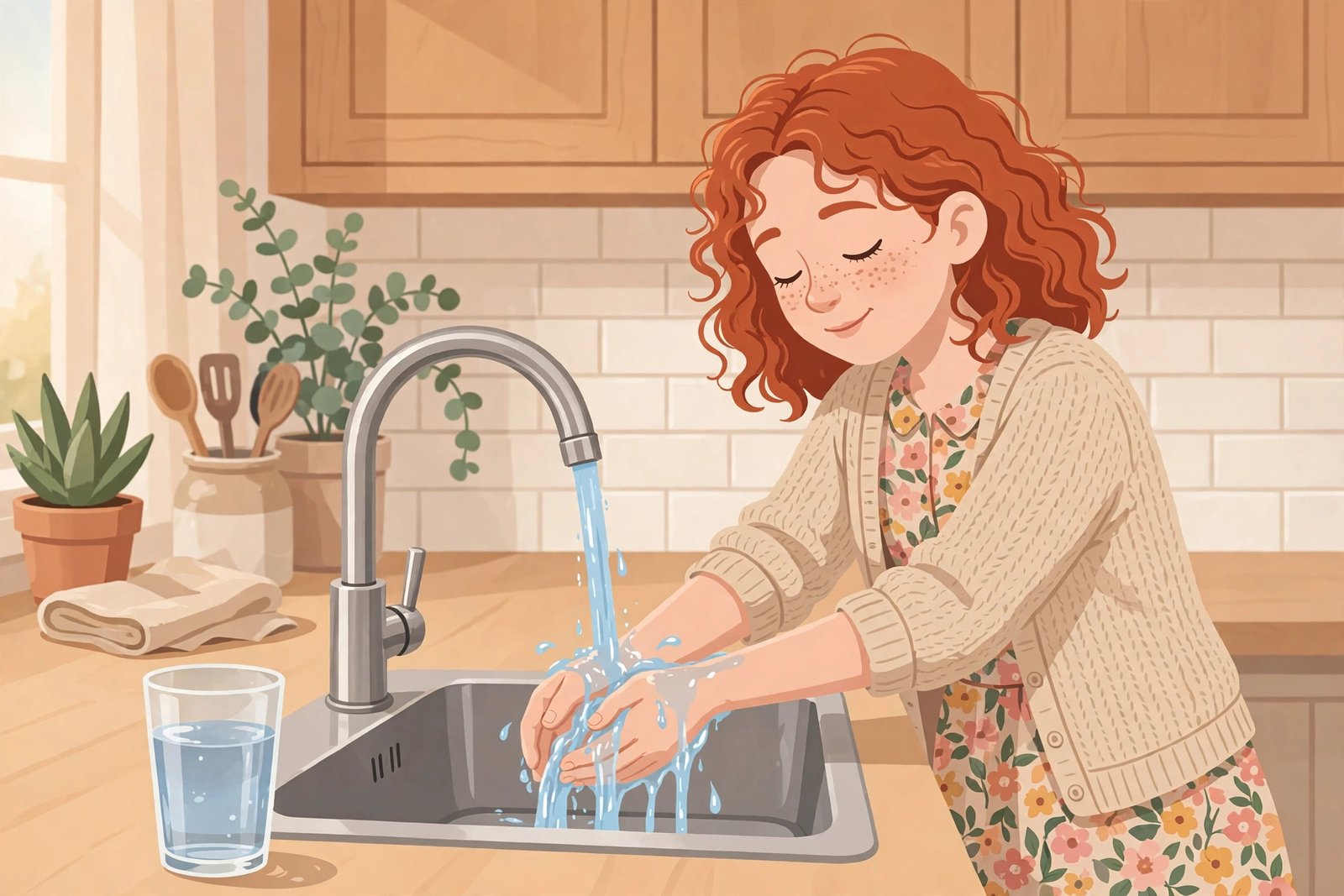
Use cold water when you can. Run it over your wrists or hold a cold can or bottle. Cool skin gives your body a fresh signal that pulls focus away from the alarm. It’s a small shock in the best way. Many girls swear by a cold drink in hand at parties, and now you know why it helps.
If something does drop, have a line ready. A small laugh and a simple, oops, gravity wins, turns a disaster into a three second moment. People take their cue from you. If you treat it as small, they file it as small. The reset isn’t just for your hands. It’s for the story you tell right after. And the next time you think I get clumsy when I am nervous, remember you also have a reset kit now.
Train Your Steadiness Before the Big Moments
In the moment tricks help a lot. Training helps even more. The goal is simple: make big moments feel smaller before they arrive. A moment that feels routine doesn’t ring the alarm so loud.
Rehearse the real thing. If you’ve a class talk, say it out loud at home, standing up, cards in hand. Your body learns the shapes of the moment. On the day, your hands have already done this job in this order. Familiar is calm. Calm is steady.
Do small reps in low risk moments. Carry the full tray at home. Pour drinks for your family. Walk the hall route with your books at a quiet time. Each easy win tells your brain, we can do this, no alarm needed. Stack enough wins, and the story starts to change. The new story sounds like this: I get clumsy when I am nervous sometimes, and I know how to steady myself anyway. That small shift matters more than it sounds.
Build a tiny pre game routine. Athletes do this for a reason. Same song, same snack, same two deep breaths before you walk in. A routine is a signal your body learns: we’ve been here, we know the steps, we’re fine. It doesn’t need to be fancy. It needs to be yours and repeated.
Take care of the base. Sleep is the big one. A rested brain runs a bigger attention team and a calmer alarm. Food and water matter too. Big day nerves on an empty stomach are a rough mix. Eat something simple, even if your stomach feels tight.
Warm up your hands, too. Roll your wrists. Open and close your fists a few times. Shake your hands out like you’re shaking off water. Loose hands are steadier than stiff ones. It looks small because it’s small. Small is the point.
And be patient with the pace. You’re training a body pattern, not flipping a switch. You’ll still have clumsy days. The win is that they come less often, feel less huge, and end faster. Progress like this is quiet, but it’s real.
One more training trick helps a lot: practice the exact object. If mugs always slip at family dinners, use that same mug at home all week. If your tray wobbles at school, carry a tray at home with plastic cups first, then real ones. Your hands learn the weight, the balance, the grip. On the big day, the job feels old and known, and old and known is what steady is made of.
When Clumsiness Deserves a Real Check-In

Most of this guide is about normal nerves. This last part is about the line where a bit more care is the right move. Read it calmly. It isn’t here to scare you. It’s here so you know the map.
Normal clumsiness comes and goes with stress. It spikes before talks, dates, and games. It fades when you feel safe. It doesn’t grow week by week. And it doesn’t stop you from living your normal life. That pattern is the one this whole guide is about.
A check-in is worth it when the pattern looks different. Say the clumsiness is there every day, even in calm moments at home. Say it keeps getting worse. Say you often feel weak, numb, or very shaky in a way that doesn’t match the moment. Or say it starts to block things you love, and you begin to skip them. Those are signs to bring in an adult.
Who do you tell? Start with a parent or a trusted adult at home. A school counselor is a great next step too. And a doctor or health professional can check the simple body basics, like sleep, iron, or vision, that can play a part. You don’t need the right words. Try this: I want to talk about something my body keeps doing, and it worries me.
Asking isn’t making a fuss. It’s the same move as telling an adult about a knee that keeps hurting. Bodies talk. Smart girls listen early, while things are small and easy to check.
And if what you mostly feel is heavy stress or worry that won’t ease up, say that too. Support exists for that, and you deserve it. You don’t have to carry a loud alarm alone.
So here’s the full picture. I get clumsy when I am nervous is a normal, common, trainable thing. Know your body, keep your resets close, and speak up if the pattern changes. That’s the whole job.
Frequently Asked Questions
Is it normal to drop things only when people are watching me?
Yes, very normal. Watching eyes hire most of your attention, so your hands get what’s left. At home alone, your full mind is on the cup, and the cup is safe. In front of friends, your brain is busy reading faces and guessing thoughts. That split is exactly why I get clumsy when I am nervous in public but fine in my own kitchen.
Can slow breathing really make my hands steadier?
Yes, it really can. Slow breathing, with a longer breath out than in, sends your body an all clear signal. Your heart rate drops a little. Your muscles stop bracing so hard. Steadier muscles mean a steadier grip. That’s why breathing sits at the top of the list when I get clumsy when I am nervous and a crowd is watching. It won’t fix every wobble, but three or four slow breaths before you pick up that tray can change how the next minute feels.
What should I do right after I drop or spill something?
Keep it small and keep moving. A quick laugh and a short line, like oops, that one got away, tells everyone how to file it: tiny moment, no big deal. Help clean up if you can, then let the moment go. People copy your reaction. If you act like it’s nothing, they treat it as nothing, and it fades from the room fast.
Will I grow out of this, or am I stuck with it?
You aren’t stuck. Most girls get steadier as their brains mature and big moments start to feel routine. Practice speeds that up. Every calm rep teaches your body that these moments are safe. You might always feel a small flutter before a talk, but I get clumsy when I am nervous can shrink from a daily story to a rare one.
When should I tell an adult about my clumsiness?
Tell an adult if it happens every day, even when you feel calm, or if it keeps getting worse. Also speak up if it comes with feeling weak, numb, or shaky for no clear reason, or if you start skipping things you love. Say it plainly: I get clumsy when I am nervous, but lately it happens all the time, and I want to check it. A parent, a counselor, or a doctor can help you sort out the cause.