
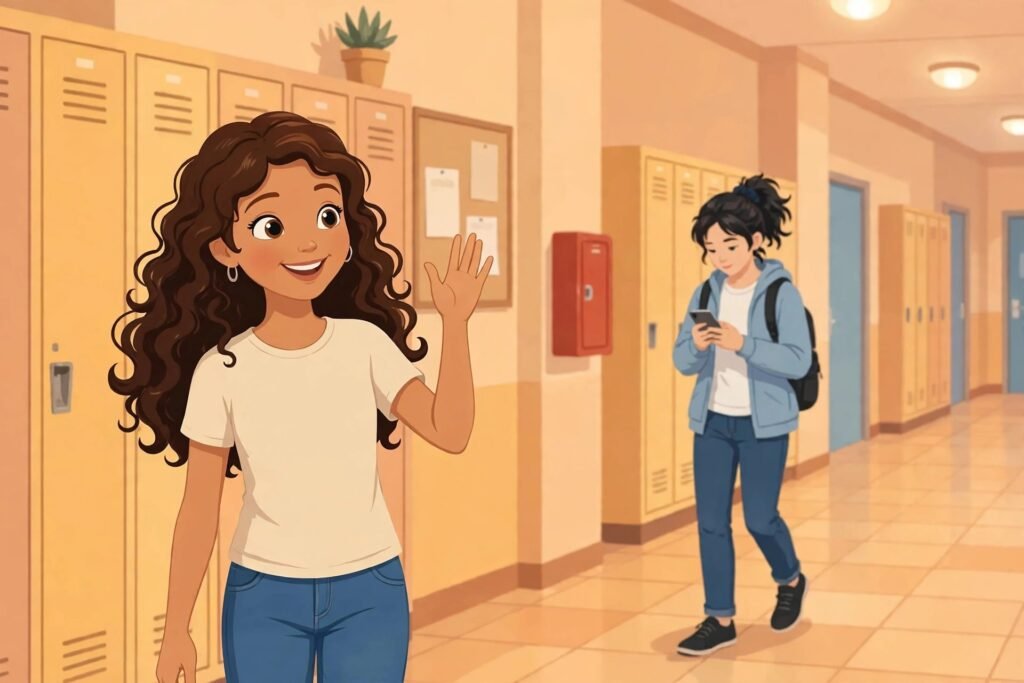
You walk into school on a normal Tuesday. You see a girl from your math class near the lockers. You smile, lift your hand a little, and say hi. She looks right past you and keeps walking. Nothing. No wave, no smile, no word. And just like that, your whole morning feels off. Someone does not answer my hello is a tiny moment, but it can sit in your chest for hours. You replay it in class. You replay it at lunch. You wonder what you did wrong, and the honest answer is usually nothing at all.
If this has happened to you, you are in good company. It happens to loud girls and quiet girls. It happens to the girl everyone loves and to the girl who is still finding her people. A hello that lands nowhere says almost nothing about your worth. It says a lot about noise, timing, and how busy other people’s heads are. This article will walk you through what that silence usually means, how to read the moment before you read into it, and what to do with your next ten seconds. It is written for the real places where this happens. The school hallway at eight in the morning. The family gathering where the music is loud.
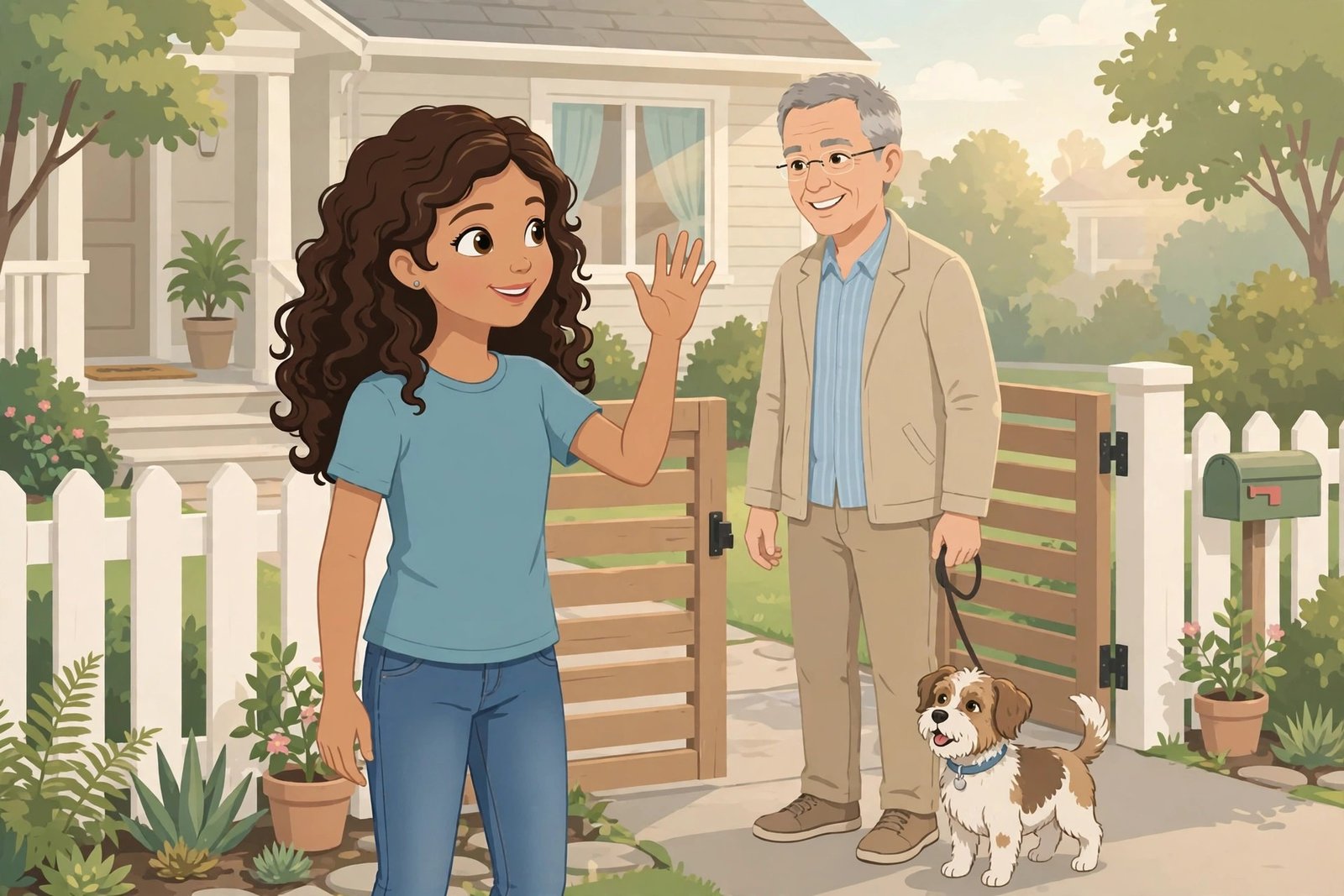
The front gate of a neighbor you have known for years. Different doors, same small moment, same sting when someone does not answer my hello in any of them. By the end, you will have simple words ready for the next time someone does not answer my hello, so one small moment stops ruining a whole day.
The Short Answer

Here is the short version. When someone does not answer my hello, the reason is almost never you. The person may not have heard you. They may be lost in their own worries. They may be shy, half asleep, or having a rough morning. Your job is small and simple. Stay calm, do not chase an answer, and do not shrink. One unanswered hello is just one unanswered hello. It is not a verdict on who you are, and it does not get to decide how you greet the next person who crosses your path.
Why That Small Silence Feels So Big

A hello is a tiny gift. You offer it in one second, with a smile and an open face. When it gets ignored, it can feel like the gift was thrown back at you. That is why the sting is so out of size compared to the moment itself. Your brain treats social signals as important news, because friends and belonging matter deeply at your age. So when someone does not answer my hello, your brain files it under danger, even when it is nothing of the sort.
Think about how fast it happens. The whole thing takes two seconds. But your mind can stretch those two seconds into a whole story. She hates me. Everyone saw. I looked stupid. My voice sounded weird. The story feels true because the feeling is strong. But a strong feeling isn’t the same as a true story. Feelings are loud. Facts are quiet. Learning to pause and ask what actually happened, instead of what it felt like, is the first real skill here.
It also helps to know this. The people who greet others warmly are the ones others remember as kind and confident. Every hello you give is a small deposit in how people see you over time. One missed answer does not empty that account. The girl who said hi and smiled is still the girl who said hi and smiled, even when someone does not answer my hello back. The kindness happened. It counts, whether or not it gets returned on the spot.
There’s another reason the moment sticks. A hello is never just a hello. Underneath it, you’re asking a tiny question. Are we okay? Am I welcome here? Do I count? When no answer comes back, it’s not really the missing word that hurts. It’s the missing answer to that bigger question. That’s why a stranger’s silence at the bus stop barely registers, while a classmate’s silence can follow you to third period. The closer the person is to your daily world, the louder the quiet gets. Knowing this won’t erase the feeling, but it explains its size, and a feeling you can explain is a feeling you can steer.
And here’s a secret worth keeping. Almost everyone has been on both sides of this moment. You have almost surely missed a hello yourself. Maybe you had music in one ear. Maybe you were thinking about a test. Maybe you were upset about something at home and the whole world was blurry. You weren’t being cruel. You were just somewhere else in your head. The person who missed your hello is usually in exactly that place.
The Most Likely Reasons Have Nothing to Do With You
When someone does not answer my hello, your brain jumps to the harshest reason first. She does not like me. But the real reasons are usually boring, and boring is good news. Let us go through the usual suspects, one by one.
The first is simple. They didn’t hear you. School hallways are loud. So are bus stops, cafeterias, and family parties. Your hello may have been softer than you think, especially if you were a bit nervous saying it. A hello aimed at someone’s back, or said from a few meters away, often never arrives at all.
The second reason is distraction. People walk around wrapped in their own thoughts. A girl heading to class may be rehearsing what she will say to a teacher. A neighbor may be worrying about work. Your cousin at a family lunch may be upset about something that has nothing to do with you. Their face looks blank because their mind is full.
The third reason is shyness. Some people freeze when they’re greeted, especially if they didn’t expect it. Their own hello gets stuck. By the time they find their voice, you have already walked past, and now they feel awkward too. If you want a gentle read on that, our guide on how to be more social when you’re shy shows how much of this is nerves, not coldness.
The fourth reason is mood. Someone who got bad news, slept badly, or argued with a parent that morning may have nothing left to give. Their silence is weather, not a message. And the fifth reason is plain hurry. Sometimes a person is late, stressed, and moving too fast to register anything kind along the way.
Here is a small scene to make it real. Imagine your neighbor, the one with the garden and the cat. You say good morning as she unlocks her gate. She nods at the ground and hurries inside. Your brain whispers that she finds you annoying. The truth, which you learn a week later from your mom, is that her sister was in the hospital that week. She was running on no sleep and pure worry. When someone does not answer my hello, there is almost always a hidden chapter like this one. You just rarely get to read it. Remembering that hidden chapters exist is half of staying calm.
Notice what is missing from this list. Deliberate cruelty is rare. It does happen, and we will talk about that case too. But when someone does not answer my hello once, the smart money is on ears, timing, and a busy head. Start there, and your day stays yours.
Read the Moment Before You Read Into It

Before your mind writes its scary story, run a quick check on the moment itself. This takes about five seconds, and it can save you hours of replaying. Ask yourself four small questions.
Was I close enough to be heard? Sound fades fast in a crowd. If you were across the hallway or behind them, your hello may simply not have landed. Was there eye contact, even for a second? If their eyes never reached you, they may not have known the hello was for them. Hallways are full of greetings flying in every direction, and people tune most of them out.
What was on their face before you spoke? A person who already looked stressed, upset, or miles away was probably in that state long before you appeared. You walked into their weather. You didn’t cause it. And what happened right after? Sometimes the answer comes late. A nod two seconds later. A small wave as they pass. A “oh, hi!” from behind you. Late answers still count as answers.
This little check is not about making excuses for anyone. It is about giving your brain real data before it starts guessing. When someone does not answer my hello, the facts of the moment are usually right there, if you look at them calmly. Distance, noise, eye contact, mood. Four facts beat ten fears.
Groups change the picture too. At a family gathering, a hello thrown toward three cousins at once can die in the noise, because each one thinks another one answered. At school, a greeting aimed into a laughing group often lands nowhere, since the group is mid story and nobody feels personally called. In groups, nobody is ignoring you. The hello simply has no single owner. The fix is easy. Pick one person, catch their eye, and greet them by name. When someone does not answer my hello in a group, it is usually a delivery problem, not a people problem.
There’s one more thing to check, and it’s closer to home. How were you feeling before the hello? If you were already anxious, tired, or having a bad day, a missed greeting hits harder. The same small moment can feel tiny on a good day and huge on a hard one. That does not make you dramatic. It makes you human. It just means the sting says as much about your day as it does about their silence.
What to Do in the Next Ten Seconds
So the moment has happened. Someone does not answer my hello, and you are standing there with your smile hanging in the air. What now? The next ten seconds matter, because they decide how the moment will feel in your memory later. Here is a calm little plan.
First, let your face relax. Drop your shoulders. You don’t need to hold the smile or fix anything. A neutral, easy face is enough. Second, keep walking at the same pace. Don’t speed up like you’re escaping, and don’t stop like you’re waiting for a verdict. Same pace, same direction. Your body tells your brain that nothing terrible happened.
Third, don’t say it louder. Repeating a hello at higher volume almost always makes both people feel worse. And fourth, don’t apologize. There’s nothing to be sorry for. You were kind. Kindness needs no apology, even when it’s not picked up.
If it helps, give your hands and eyes a small job. Open your locker. Check your bag. Look for your classroom door. Movement breaks the freeze. Then, when the little spike of shame shows up, name it plainly in your head. That was awkward. Okay. Moving on. Naming a feeling shrinks it. It turns a wave into a puddle.
What you do with your thoughts in those ten seconds matters just as much. The first thought that shows up is usually a cruel little sentence about yourself. I sounded so dumb. She thinks I am weird. Do not argue with it and do not obey it. Just let it pass like a cloud. A thought is not a fact, even when it arrives in your own voice. Replace it with the plainest true sentence you have. She did not answer. That is all I know. When someone does not answer my hello, that plain sentence is the floor I stand on, and it holds my weight every time.
One more tip that girls swear by. Keep a friendly face for the next person you pass, even a small one. It proves to your own brain that you are still you, and that one silent person does not run your morning. When someone does not answer my hello and I greet the next person anyway, I feel the power move back to my side. Try it once and you will feel it too.
Simple Words That Save the Moment
Sometimes the moment isn’t fully closed. Maybe the person looks up a second late. Maybe you end up side by side at the lockers anyway. Maybe you’ll see them again in class in ten minutes. Having a few light words ready keeps these moments smooth, so you never have to stand there searching your brain.
If they look up late, a warm “Oh, hey!” with a smile is perfect. It tells them the door is still open and nobody is keeping score. If you end up next to each other, you can add something tiny and easy. “Morning. Did you finish the homework?” A small question gives both of you something normal to stand on.
If someone does not answer my hello in a group, aim your next words at the group, not at the silent person. A cheerful “Hi, everyone” spreads the greeting around, and nobody has to carry the awkward bit alone. If it is a teacher or an adult at a family event, a clear “Good morning” with eye contact, said once, is enough. Adults miss greetings too, usually because their heads are full of grown up lists.
What about the funny save? A tiny bit of humor can melt the ice, when the setting is right. A smile and a “Wow, loud hallway today” works when the noise really was the problem. Keep it light, keep it rare, and never use humor to mock the other person. The goal is warmth, not a comeback.
Family events deserve their own little note, because the cast is different there. An uncle glued to the game, a grandmother who hears less well than she admits, a cousin lost in her phone. When someone does not answer my hello at a family lunch, it is almost never a snub. Hearing, habit, and distraction run the show. Get a bit closer, touch an arm lightly if that is normal in your family, and say it once more with a smile. Older relatives, especially, often light up at the second try. The first miss was ears, not heart.
And if words fail you completely, remember that a nod and a smile are a full sentence in body language. They say, I saw you, I am friendly, no hard feelings. When someone does not answer my hello, that quiet grace makes you the calm one in the story, and people notice that more than you think.
How to Greet the Next Person Without the Old Sting
The hardest hello is the one right after a miss. Your hand wants to stay down. Your voice wants to stay small. That’s your brain trying to protect you from a second sting. It means well, but if you listen to it every time, you slowly become someone who greets nobody. That’s a lonely trade, and it’s not worth it.
Here is a kinder way to think about it. Every hello is a separate coin toss. The girl in the next class knows nothing about the silence before her. She is a fresh moment, with fresh ears and a fresh mood. Judge each greeting by itself. When someone does not answer my hello at nine in the morning, that tells me nothing about the hello I give at ten.
Small habits keep your greetings brave. Make eye contact first, then speak, so your hello has a clear address. Say the person’s name when you know it. “Hi, Léa” lands ten times better than a floating “hi” that could belong to anyone. Stand a bit closer when the room is loud. And keep your voice at normal volume. A confident hello is rarely the one that gets missed.
If fear of being ignored online feels familiar too, you’re not alone. The same sting shows up with screens, and our article on why he leaves you on read when he’s online looks at that twin feeling. Different setting, same lesson. A missing answer is weak evidence about your worth, in person and online alike.
It also helps to decide your greeting style once, instead of renegotiating it every morning. Some girls are wavers. Some are smilers. Some always say the name. Pick your signature move and make it automatic. Automatic is the key word. When greeting is a habit, one miss cannot shake it, the same way one rainy day does not cancel your whole season. When someone does not answer my hello and greeting is simply what I do, I barely file the moment at all. It becomes a blip, and blips do not get replayed at lunch.
Practice helps more than talent here. Greet the bus driver. Greet the lady at the bakery counter. Greet the neighbor with the little dog. Low stakes hellos build the muscle, so school hellos feel easier. Each small greeting that lands reminds your brain that most people, most days, are glad to be greeted. And when someone does not answer my hello in the middle of all that practice, it becomes a drop, not a flood. Just one miss in a long line of kind moments that did land.
When Social Worry Deserves a Bigger Conversation

Most of the time, this whole topic is small. A hello missed, a day slightly dented, life moves on. But sometimes the worry around moments like this grows bigger than the moments. That’s worth naming, gently and honestly, because help exists and it works.
Notice the pattern, not the single moment. If someone does not answer my hello one time, that is life. If you stop greeting anyone at all because of it, that is a pattern. If you skip school events, eat lunch alone on purpose, or turn down every invitation because you fear small social moments, the worry is starting to run your life. That is the line. Not one awkward hello, but a shrinking world.
Talking to a trusted adult is a strong move, not a dramatic one. A parent, a school counselor, or a teacher you like has seen this before. They can help you sort what is normal shyness from what needs more support. If you want to read more first, the Child Mind Institute explains how anxiety affects teenagers in clear, kind words, including why being judged by others can feel so huge at your age.
Please hear this part clearly. Needing support with social worry does not mean you’re broken, weak, or too sensitive. It means your brain’s alarm is set a bit loud, and alarms can be tuned. Plenty of girls have felt exactly this and learned, step by step, to walk into school with their heads up. You deserve that too.
One last thought before the questions. The fact that you care about this at all says something good about you. You notice people. You want your small moments with them to be kind. When someone does not answer my hello, the hurt you feel is the price of being that kind of person, and it is a price worth paying. The answer is never to greet less. It is to carry each miss more lightly, exactly the way you are learning to do right now.
And until then, keep the small rule from this article close. One silence is weather. It passes. You’re still the girl who is brave enough to say hello first, and that’s a genuinely lovely thing to be.
Frequently Asked Questions
Should I say hello again if they ignore me?
Usually, no. One clear hello is enough, and repeating it can make you both feel cornered. The exception is when you’re fairly sure they truly didn’t hear you, like a loud cafeteria or a hello said to their back. Then one more try, a bit closer and with eye contact, is fine. If the second one also gets nothing, let it go with grace. You have done your kind part, and your part is the only part you control.
What if the person heard me and still said nothing?
It stings, and it’s okay to admit that. But even a heard silence has many roots. The person may be shy, upset, or unsure how to answer. Watch the pattern over time instead of judging one moment. If the same person is cold to you again and again, while being warm to everyone else, that’s real information. You can then choose to spend your greetings where they’re welcome, without drama and without begging.
Is it rude to stop greeting someone who never answers?
No, it’s not rude to quietly adjust. You don’t owe anyone a daily performance of friendliness that only flows one way. You can soften your greetings to a polite nod, or save your warm hellos for people who meet you halfway. Stay civil, stay kind in passing, and don’t gossip about them. Stepping back with dignity is very different from being cold back. You’re protecting your peace, not punishing them.
Why do I keep thinking about it for hours?
Because your brain is built to scan for social danger, and a missed hello feels like a tiny alarm. Brains at your age feel these signals at full volume, so a two second moment can echo all day. The echo fades faster when you give your mind a job. Class work, music, a chat with a friend, anything real. And remind yourself of the facts once, clearly. Then let the topic close. Replaying is a habit, not a duty.
What if it happens with a friend, not a stranger?
That one hurts more, because a friend’s silence feels personal in a way a stranger’s never will. Give it a day. Friends have bad mornings too, and most cold moments turn out to be a headache, a fight at home, or a worry you know nothing about. If it keeps happening, ask once, kindly and in private. “Hey, are we okay?” is a brave, fair question. When someone does not answer my hello and that someone is a friend, one honest talk usually clears the air fast.