

The alarm goes off. You open your closet. And your brain serves you a blank page. You’ve worn clothes every day of your life, but today, nothing comes. You pull out a top, shake your head, put it back. The pile on the bed grows. The clock does what clocks do. And the thought lands, same as always: I do not know how to dress today.
Here’s a secret the always put together girls won’t say out loud. They have blank mornings too. Every single one of them. The difference isn’t talent, and it isn’t a bigger closet. The difference is that they don’t decide from zero. They run formulas: ready made outfit recipes they trust, built on days when their brain worked fine.
That’s what this guide gives you. Not a closet makeover. Not a shopping list. Just a small set of formulas you can grab on the mornings when I do not know how to dress is all your brain can say. A school formula. A weekend formula. One for surprise plans. Plus a personal uniform you can build from pieces you already own.
By the end, the blank morning loses its power. You won’t need inspiration at 7 a.m. You’ll need ten seconds and a formula. And on the days when the words I do not know how to dress still show up, you’ll smile, because now those words are just the start of a routine, not the start of a panic.
The Short Answer
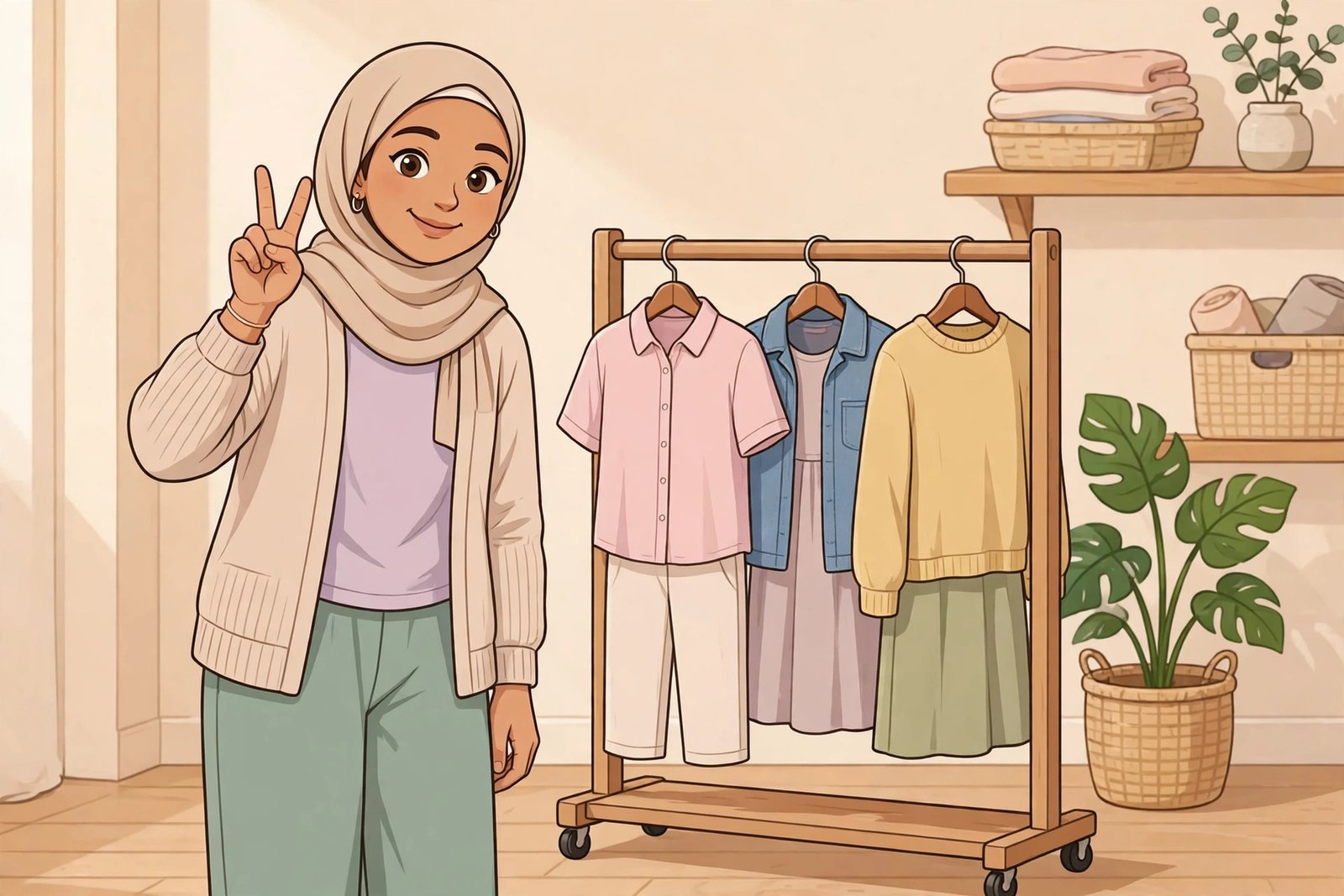
Here’s the short answer. Stop deciding from zero. When I do not know how to dress, the fix isn’t more clothes or more talent. The fix is a formula: a set outfit recipe you decided once, on a calm day, and now reuse without thinking. Bottom, top, layer, shoes. Done.
Keep three to five formulas ready. One for school days. One for weekends. One for dressier plans. When the blank hits, you don’t invent. You pick a formula, the way you pick a song from a playlist. The choosing is tiny, because the real work was done before.
A personal uniform helps even more. That’s one outfit shape you love and can repeat with small swaps: same bottom style, same top style, colors rotated. Many girls who look effortlessly put together are quietly wearing a uniform. It’s not cheating. It’s the smartest trick in the book for anyone who thinks I do not know how to dress way too often.
Two tiny habits back all of this up. Decide the night before, when your brain is calm and the clock isn’t ticking. And keep a photo album on your phone of outfits you wore and liked. On a blank morning, scroll, pick one, copy it. Past you did the thinking. Present you just gets dressed.
So if I do not know how to dress is your morning anthem right now, don’t fight it with willpower. Fight it with recipes. The next sections give you the exact formulas, one by one, with real pieces and real swaps for real life.
Why Formulas Beat Staring at the Closet

Let’s name what’s really happening at 7 a.m. Your brain is half asleep. It’s also facing forty small choices at once: which bottom, which top, do these match, is this too much, is this too plain. Brains hate open questions that early. So they freeze. The freeze isn’t a style problem. It’s a decision problem.
A formula kills the open question. Instead of what could I wear, which has a hundred answers, you ask which formula today, which has three. Small question, fast answer. That’s the whole game. Girls who get dressed in five minutes aren’t faster thinkers. They just ask smaller questions.
Think of it like cooking. No one invents a new dish on a tired weeknight. You make the pasta you know by heart. Clothes work the same way. A formula is a dish you know by heart: these jeans, this kind of top, this layer, those shoes. You’ve tested it. You know it works. Your only job is to cook it.
Formulas also end the try on spiral. That’s the loop where outfit two makes you doubt outfit one, and outfit four makes you late. With a formula, the first pick is the final pick, because past you already approved it. You save your doubt budget for things that matter more than a Tuesday outfit.
And here’s the part girls miss: formulas don’t make you boring. They make you consistent. The pieces rotate. The colors change. The shape stays easy. When I do not know how to dress stops being a daily event, you get your mornings back, and oddly, you start dressing better, because calm brains pick nicer details than panicked ones.
If the words I do not know how to dress feel personal, like a flaw, let that go today. It’s a systems problem, and systems can be fixed in one calm afternoon. Let’s build your system.
The School Day Formula That Always Works

School is where most blank mornings happen, so start here. The school day formula has four slots: a bottom you can sit in all day, a simple top, one layer, and shoes you can walk in. Fill the slots, and you’re dressed. No art degree needed.
The bottom: jeans or trousers you trust, or a skirt with tights if that’s your style. Pick the pair that never lets you down: no tight waistband digging in by lunch, no fabric you adjust all day. The top: a plain tee, a soft long sleeve, or a simple blouse. Solid colors are your best friends here, because solids match everything you own.
The layer does the magic. A cardigan, a denim jacket, or an open shirt over the top turns two plain pieces into an outfit. Layers also save you from classroom weather, which is somehow always freezing or boiling, never in between. For a hijab, a soft beige or pastel scarf that you know pairs with most of your tops keeps this slot simple too.
Shoes: clean sneakers or flats you can run for the bus in. That’s it. That’s the outfit. Now watch how it flexes. Monday: dark jeans, white top, cardigan. Wednesday: the same jeans, a striped top, denim jacket. Friday: trousers, the white top again, open shirt as the layer. Same formula, three different looks, zero new thinking.
The white top slot deserves a special note. One good white shirt can carry half your school life, dressed up or down in seconds. Our guide on how to style a white shirt shows just how many ways that one piece can work, so steal the ideas for your own formula.
On the school mornings when the words I do not know how to dress echo the loudest, this is the formula to trust first, because those mornings allow the least time to think.
Test the formula once on a calm weekend morning. Get dressed with it, time yourself, adjust what pinches or slips. Once it passes a real school day, write it down in your phone notes. On the mornings when I do not know how to dress hits at full volume, you won’t be thinking. You’ll be reading your own note and moving.
Keep a backup slot ready too. Weather flips, spills happen, the top you wanted is in the wash. A formula with one spare top and one spare bottom never collapses. That’s the difference between a plan and a hope. Plans survive laundry day.
The Weekend Formula for Easy Days

Weekends ask for something softer. The pace is slower, the plans are loose, and your clothes should feel like a day off too. But loose plans are exactly when the blank brain strikes, because there’s no dress code to guide you. A weekend formula gives the day a shape without killing the chill.
Here’s a base that works for almost any Saturday. Soft bottom: leggings, wide leg pants, or your most loved jeans. Easy top: an oversized tee, a cozy knit, or a long tunic. One fun layer or none. Shoes that match the plan: sneakers for walking days, sandals or boots when the day has a bit more sparkle.
The dress version is even simpler. One dress, one layer, one pair of shoes: done in ninety seconds. A flowy dress with a denim jacket and sneakers reads cute and easy. Swap the jacket for a cardigan and the sneakers for flats, and the same dress handles lunch with family. One piece, two moods, no thinking.
Now add your personal twist. Maybe your thing is a pastel color story: soft pinks, creams, and light blues that all mix. Maybe it’s always a hat, or always a crossbody bag. A small signature makes a simple formula feel like you, and it takes zero extra minutes. When I do not know how to dress on a Saturday, your signature is the answer your hand reaches for first.
Plan for the photo factor too. Weekend outfits end up in pictures more than school ones. A formula you’ve tested in photos is worth gold, because you already know you like how it looks on screen, not just in the mirror. If a combo photographs well, save it in your album. Future blank mornings will thank you.
Every girl has a weekend uniform hiding in her habits. Noticing yours, and naming it as your formula, turns I do not know how to dress into a two minute job instead of a mood.
And keep comfort non negotiable. A weekend outfit you fidget with all day steals the day. If the formula needs adjusting every ten minutes, it isn’t a weekend formula, it’s a chore with sleeves. Comfort first, cute built on top. That’s the order that works.
So when Saturday comes and I do not know how to dress floats up while you’re still in pajamas, smile. Weekend formula, signature twist, shoes for the plan. Then go enjoy the day you just saved twenty minutes for.
The Last Minute Plans Formula

Now for the true ambush: the text that lands at 4 p.m. We’re going out, be ready at six. Or a family visit you forgot. Or photos, suddenly, with people you want to look nice for. No time to invent. No time to spiral. This is exactly what a plans formula is for.
Build this one a step above your school look, using pieces you already own. The reliable core: dark jeans or a neat skirt, a blouse or your best simple top, and shoes with a little polish, like clean ankle boots or nice flats. Dark bottoms read dressier than light ones, even when everything else stays casual. That’s a free upgrade, no shopping needed.
Have one hero piece ready for this formula. A hero piece is the item that lifts everything around it: a silky looking scarf, a blazer, a favorite dress, the earrings you save for good days. On blank evenings, you don’t build an outfit. You pick the hero, then dress simply around it. The hero does the talking. The rest just shows up on time.
Keep the whole formula hanging together in your closet, or listed at the top of your phone notes. When the surprise text comes, you aren’t searching. You’re executing. Wash day can’t hurt you either, if you guard this set: the plans formula gets worn, washed, and put back together like a kit. Treat it like a uniform for good evenings.
Hair and face get a mini formula too. Pick one fast hairstyle you can do in five minutes and that always works: a sleek low bun, soft waves from a braid you put in earlier, or a neat ponytail with a pretty clip. One simple makeup routine if you wear it, the same steps every time. Decisions end. Getting ready begins.
Test this formula once before you need it. Put it on, check it in daylight and in evening light, take a photo. If it passes, it graduates to your notes. Then the next ambush text feels almost fun, because when I do not know how to dress for plans, past you already answered, and her answer is hanging in your closet.
That calm is the whole reason this formula exists. When I do not know how to dress and the clock is being rude, tested beats new, every time.
Notice what’s missing here: panic buying. The plans formula uses what you own, on purpose. A new outfit bought in a rush is the one you regret in photos later. Calm formulas beat fast shopping, every single time.
Build Your Own Personal Uniform
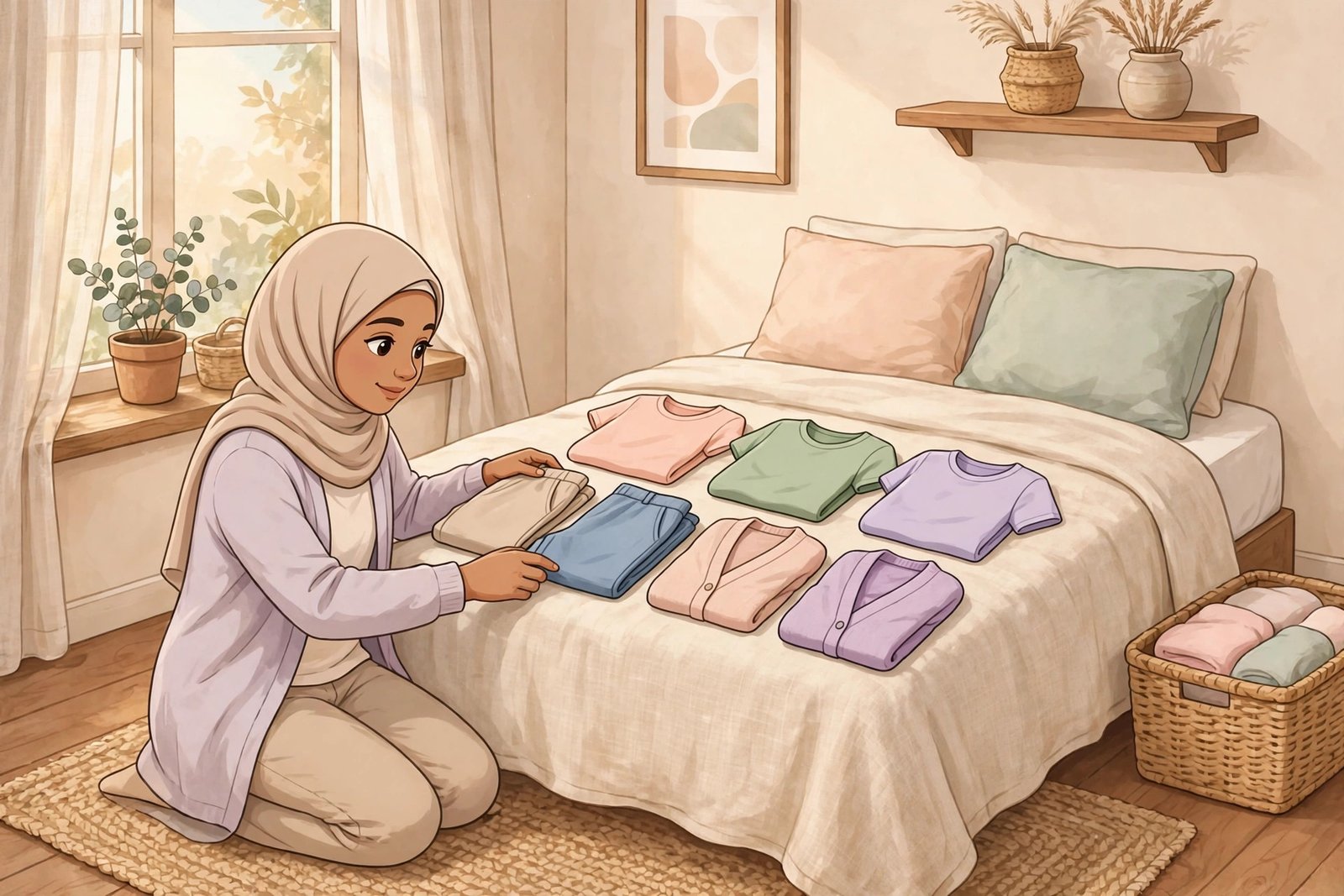
If formulas are recipes, a personal uniform is your signature dish. It’s the outfit shape you wear most days, with small swaps so it never feels stale. Think of girls whose style you can spot from down the hall. Same shapes, same vibe, tiny changes. That’s a uniform at work, and it’s the strongest weapon against blank mornings.
Build yours from evidence, not wishes. Open your photo album and your laundry basket. What do you actually wear on repeat? What shows up in your favorite photos of yourself? Your uniform is hiding in those answers. Maybe it’s jeans, a fitted top, and a cardigan. Maybe it’s skirts and tees. Maybe it’s wide leg pants, a long top, and a soft hijab in rotating pastel shades. The right uniform is the one your real life already voted for.
Now lock the slots. Two or three bottoms in your best shapes. Four or five tops that all match those bottoms. Two layers. Two pairs of shoes. Everything should mix with everything. This is where a tiny capsule mindset helps: fewer pieces, all friends with each other. If you want the full method, our guide to a capsule wardrobe on a budget walks through building one without spending much.
Colors do the quiet work here. Pick a small palette: two neutrals you love, like denim blue and cream, plus two or three soft colors that suit your skin and your scarves or tops. When every piece lives in the palette, matching stops being a task. You can dress in the dark, literally, and still match.
Write the uniform down like a recipe card. Slots, pieces, palette. It sounds silly until the first morning it saves you. When I do not know how to dress, the uniform is the answer that needs no thought at all. You wear your shape, rotate the colors, and walk out looking like yourself on purpose.
Refresh it once a season, not once a week. Swap a layer for the weather, add one new piece if a slot wears out. A uniform that changes slowly stays easy. A uniform you rebuild every month is just the closet freeze in a new costume.
One more proof to collect: ask your best friend what she thinks your uniform is. She’ll answer fast, because she sees the pattern you can’t. Girls always can name each other’s shapes: the cardigan girl, the skirt girl, the jeans and pretty top girl. If her answer matches the pieces you picked, your uniform is real, and it’s already working in public.
Give it two honest weeks. The first days might feel plain. Then something shifts: getting dressed takes three minutes, you like your photos more, and compliments start landing on your consistency. That calm, repeated, put together look is what people actually call style.
Decide the Night Before and Win the Morning
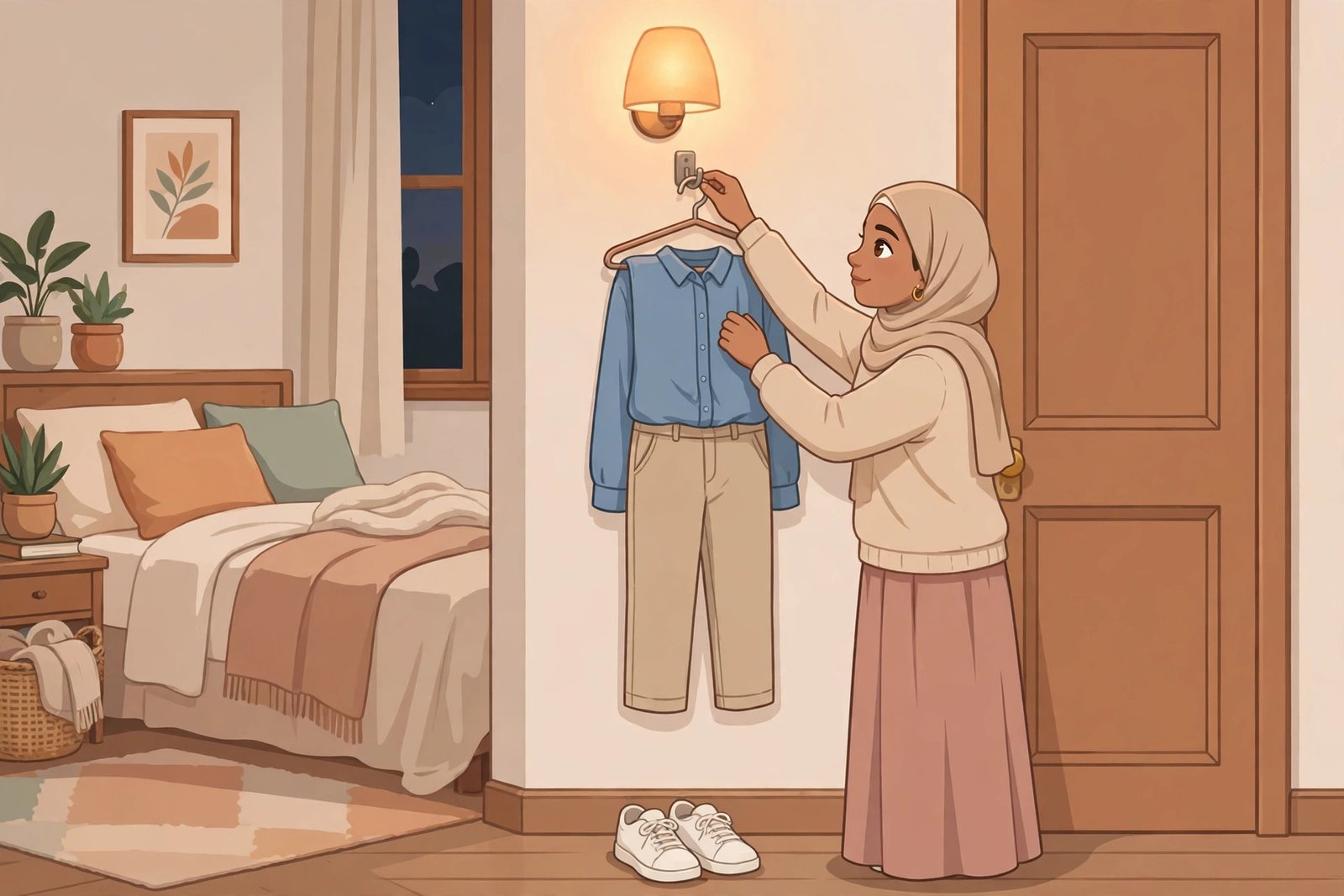
Every formula in this guide gets twice as strong with one habit: decide the night before. Evening you is calm, unhurried, and has a whole day of information. Morning you is sleepy and racing a clock. It’s unfair to give the hardest job to the weakest version of you. So move the job.
The night before routine takes five minutes. Check tomorrow’s weather. Pick the formula that fits the day: school, weekend, or plans. Pull the pieces out and lay them on a chair, or hang them together on one hook. Shoes underneath, bag by the door. When the alarm rings, there’s nothing to decide. You just put on what calm you chose.
This is the same planning idea behind good wardrobe systems in general. The Purdue Extension consumer clothing guide teaches teens to plan a coordinated wardrobe on purpose, with outfits ready for every part of life. Your chair of clothes is that idea, shrunk to one evening and one outfit. Small, but mighty.
Add the photo album habit here too. Each time an outfit makes you feel great, snap a quick mirror photo. Don’t pose, don’t post, just save. In a month you’ll own a personal lookbook of proven outfits. On a night when even choosing a formula feels hard, scroll the album, point at a photo, and copy it piece by piece. Zero taste needed. The photo is the taste.
Expect the habit to feel odd for three days. Then it feels like a gift you give yourself nightly. Girls who do this say mornings turn quiet. No pile on the bed. No outfit regret at the bus stop. Just a calm start that colors the whole day better.
If you share a room or your chair space is tiny, a single hanger works. Hang tomorrow’s full outfit on one hanger, layers and all. It takes no space and sends the same signal: decided. Done. Sleep now.
So tonight, when the day is done and I do not know how to dress tries to book tomorrow morning’s panic slot, cancel it in advance. Five minutes, one chair, one calm decision. Morning you says thanks.
Finishing Touches That Take One Minute

A formula gets you dressed. Finishing touches make it look deliberate. The good news: they take about a minute total, they cost nothing, and they work on every formula in this guide. These are the small moves that separate dressed from put together.
The tuck. Tuck the front of your top into your bottoms, just a little, or tuck it fully if the outfit suits it. A tuck shows your waist and tells the eye the outfit was chosen, not grabbed. It takes four seconds and changes the whole shape.
Sleeves and hems. Roll long sleeves to the forearm for an easy, relaxed line. Give jeans one neat cuff if they’re long. Smooth the front of your top with your hands. These tiny tidies photograph well and feel good, like making a bed for your outfit.
Hair counts as a finishing touch. You don’t need a style session. A neat brush through, a tidy ponytail, or a fresh, smooth hijab wrap in a shade that matches your palette pulls the look together. Messy hair can undo a fine outfit. Calm hair seals it.
Shoes and bag are the last frame. Wipe dusty shoes with a damp cloth the night before if you can. Pick the bag that matches the day: backpack for school, small crossbody for weekends and plans. One bag switch takes ten seconds and makes the formula fit the mission.
And on the days when I do not know how to dress at all, these small touches are the line between almost ready and actually ready.
Do a final ten second scan in the mirror. Not a judge session, just a checklist: tuck done, sleeves set, hair calm, shoes clean. If something small is off, fix just that. Then stop. The scan is a tool, not a courtroom.
Save these touches in your notes with your formulas, as the last line of each recipe. When I do not know how to dress, the recipe now ends with a polish step, and you walk out looking like a girl with a system, because that’s exactly what you are.
Frequently Asked Questions
Won’t formulas make me look the same every day?
Not if you rotate the pieces inside them. A formula is a shape, not a costume. The same school formula can wear dark jeans and a cardigan on Monday, then trousers and a denim jacket on Friday. Colors, layers, and shoes change the mood. What stays is the ease. On the mornings I do not know how to dress, ease is the whole point, and no one at school is tracking your repeats.
How many formulas do I actually need?
Three cover almost every life: one for school, one for weekends, one for dressier plans. Add a personal uniform if you want mornings to run on autopilot. More than five formulas and you’re back to too many choices, which is the problem you were solving. Keep the set small and tested. When I do not know how to dress, a small menu answers faster than a big one.
What if the weather changes faster than my plans?
Build one weather swap into each formula. For the school formula, that’s a warmer layer and a closed shoe option. For weekends, a light jacket you can tie or carry. Check the forecast the night before while you lay out your clothes, and let the swap live in the formula itself. Sudden rain then means one small change, not a whole new outfit hunt at 7 a.m.
Can formulas work with a strict school dress code?
Yes, and they help even more there. A dress code shrinks your options, which makes formulas easier to build: one code safe bottom, a few code safe tops, one allowed layer. Test each combo once against the rules, then stop rechecking every morning. When I do not know how to dress under a dress code, your tested formula is both safe and fast, and you never start the day with a rule worry.
What’s the very first step if my mornings are total chaos?
Start with one formula only: the school one. Build it this weekend from pieces you already own, test it once, and write it in your phone. Use it every school morning for two weeks. When I do not know how to dress tomorrow, that’s your whole job tonight: pick that one formula, lay it on a chair, and let morning you simply get dressed. Small system first, calm mornings follow.