

This post contains affiliate links. If you buy through them, Mxralis may earn a small commission at no extra cost to you. See our Affiliate Disclosure.
A coffee table is the hardest-working surface in the living room, and usually the messiest. It holds remotes, mugs, mail, and whatever came out of your pockets, then somehow is also supposed to look like the styled tables in magazines. The trick is that knowing how to style a coffee table is less about buying beautiful objects and more about a few simple rules of grouping, height, and restraint.
In this guide, you will build an arrangement step by step, starting from a completely bare table and adding only what earns its place. The whole process takes about fifteen minutes once your pieces are gathered, and it is designed to survive real life: movie nights, coffee cups, and feet up at the end of the day included.
Steps
1. Start with a completely empty table
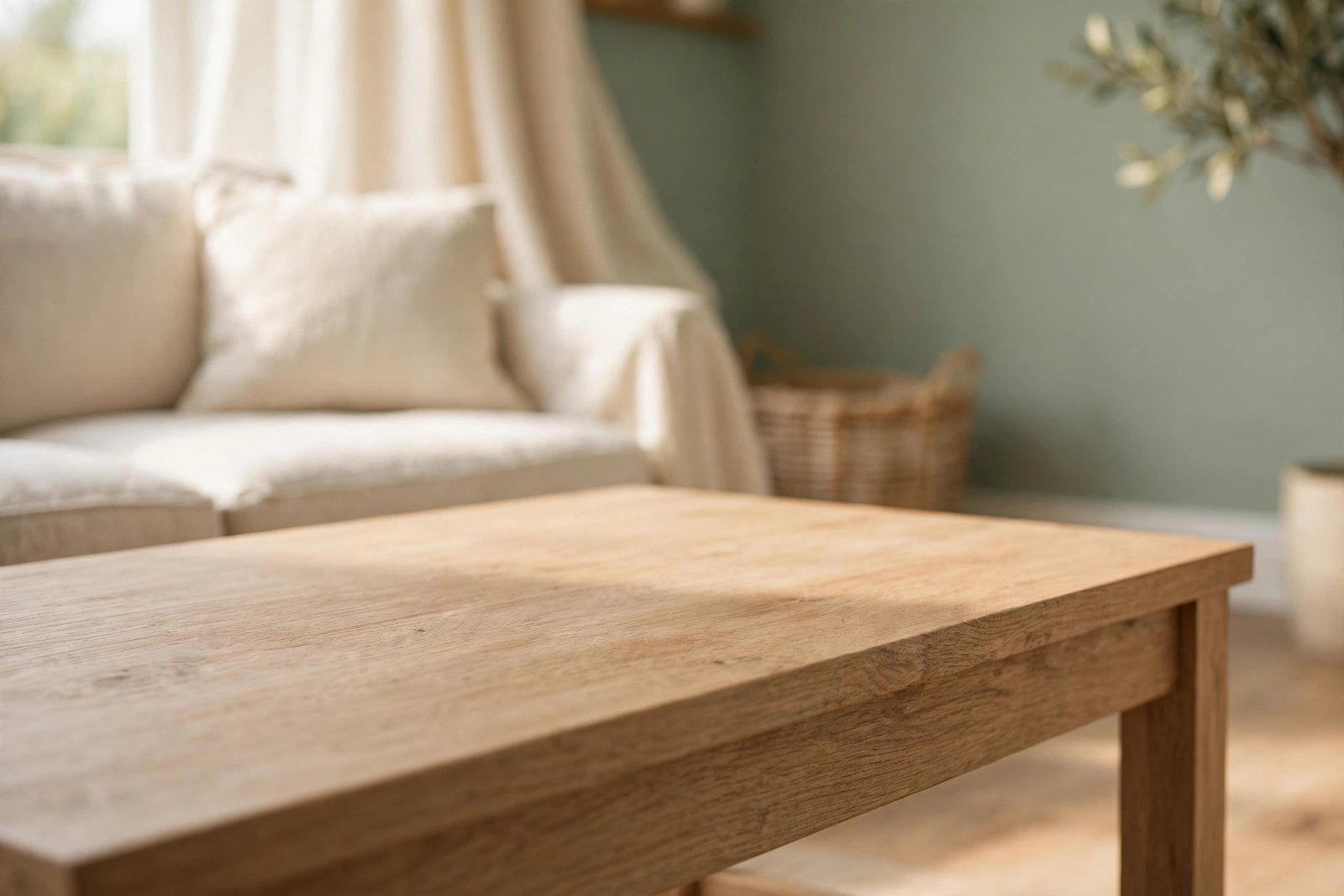
Styling always starts from zero, so clear the whole table and clean it before you place a single object. Take everything off, including the things you are sure will go back, and give the surface a proper wipe. Starting empty breaks the habit of arranging around the clutter that was already there, and it shows you the table’s real size and shape, which decides how much it can hold. While the table is bare, look at its material and color: a dark wood table can carry lighter objects, while a glass table needs a little weight to ground it. Gather your candidate objects in one place nearby, more than you think you will use, so you can edit as you go.
2. Anchor the arrangement with a tray or books
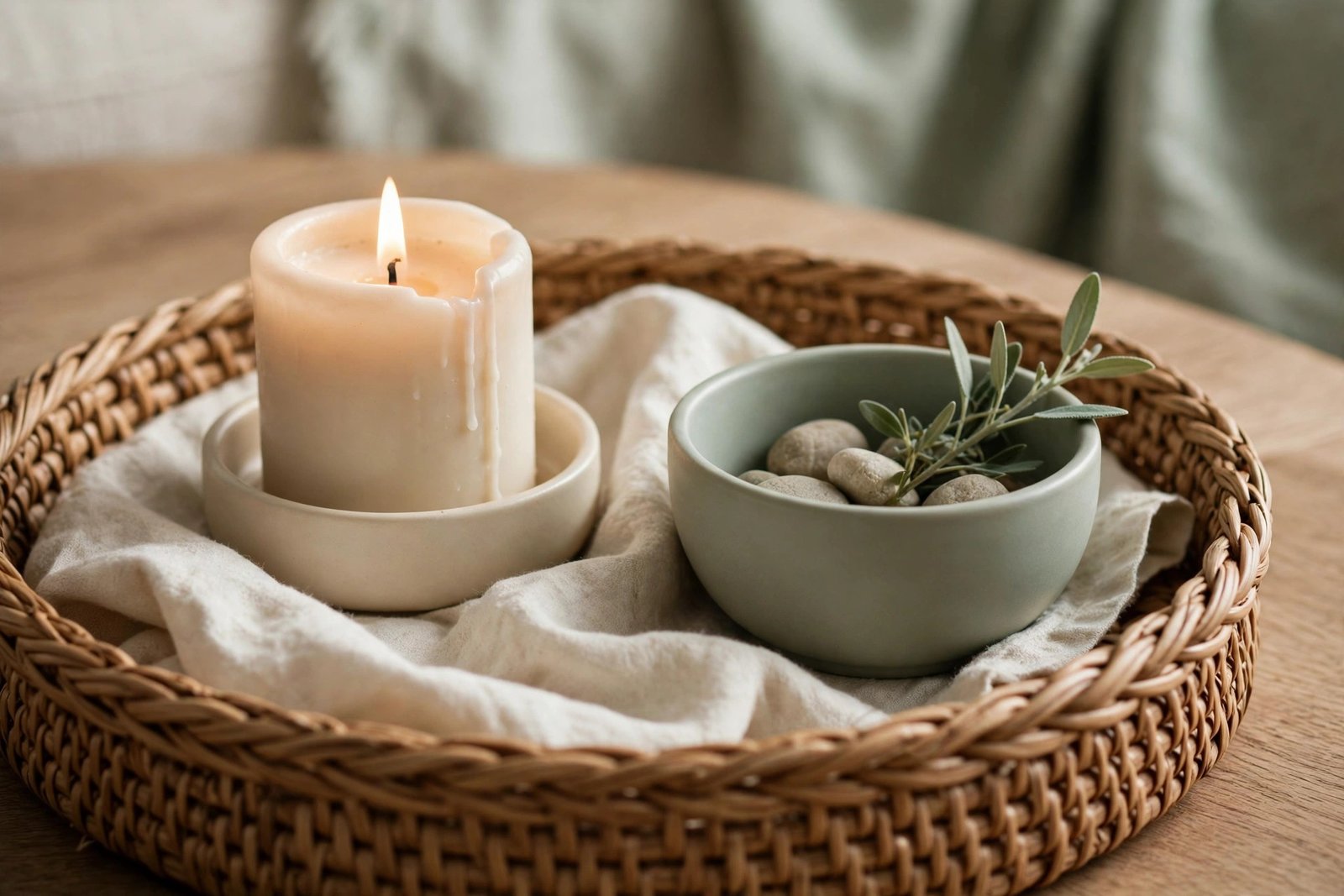
Every styled coffee table has an anchor, usually a tray or a small stack of books, that holds the arrangement together. An anchor gives loose objects a boundary, which is what separates a styled table from a table with things on it. A tray works beautifully because it corrals candles, coasters, and the remote into one defined zone and makes the whole arrangement easy to lift when you need the surface. If you prefer books, choose two or three with covers in your room’s palette and stack them flat, largest at the bottom. Place the anchor slightly off-center rather than dead middle; asymmetry looks natural and leaves a clear landing spot for a mug on the other side.
3. Group objects in odd numbers
Objects grouped in threes or fives look composed, while pairs and even groups tend to look like storage. This is the rule stylists reach for first, because the eye finds odd groupings more interesting and less static. Within your anchor, try a candle, a small bowl, and a short stack of coasters; outside it, a vase can join the book stack to make a loose triangle across the table. Count groups, not individual items, and aim for two or three groups total on an average table. If an arrangement feels off and you cannot say why, remove one piece from an even group and look again. Nine times out of ten, the odd number fixes it.

4. Vary the heights across the table
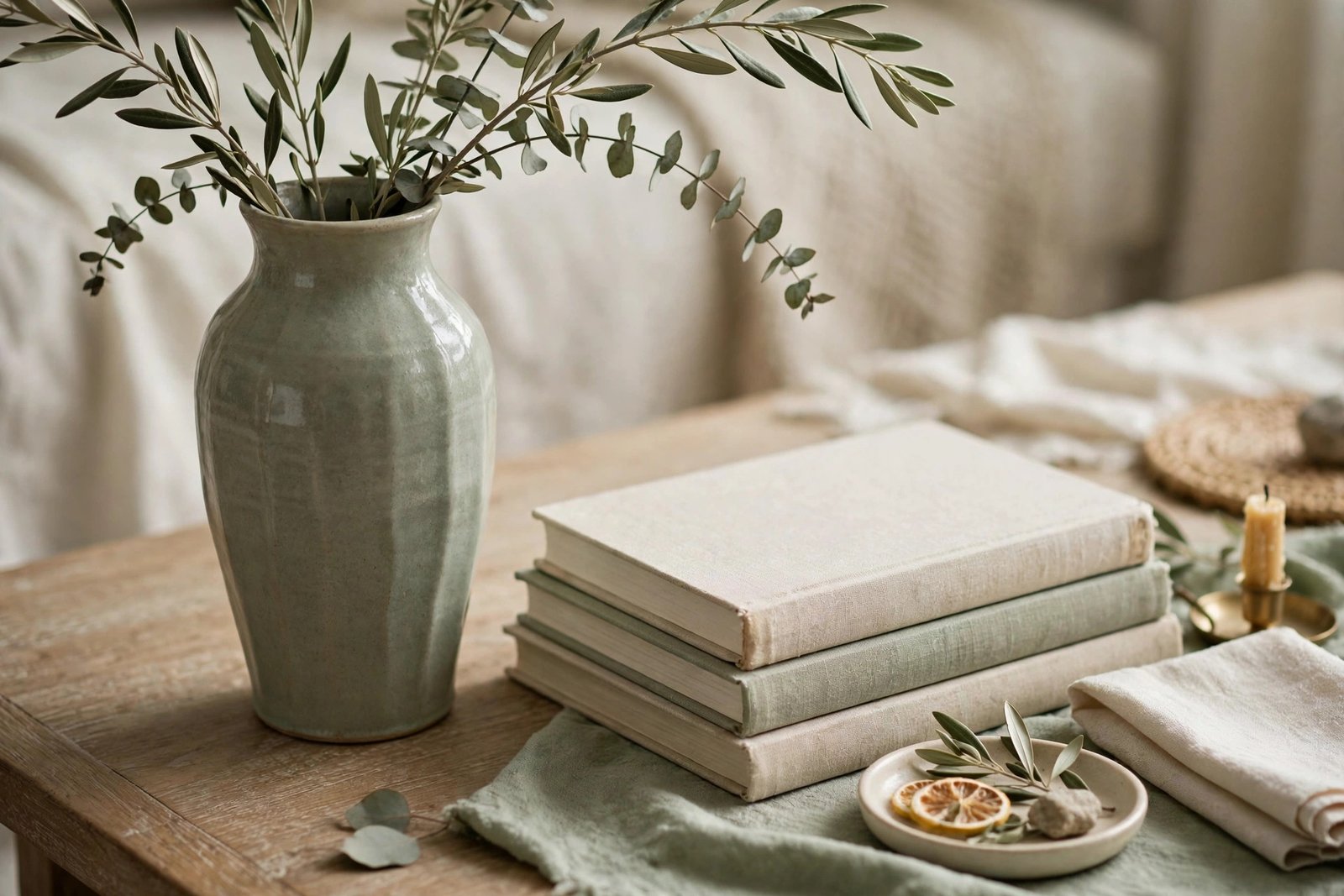
A styled table needs a high point, a middle, and a low point, so the eye travels instead of skimming flatly across. Flat arrangements of same-height objects look like a shelf, not a vignette. Build your high point with a vase with branches, a tall candle holder, or a small plant on top of the book stack, which borrows height without buying anything new. Keep the middle layer at candle or bowl height, and let books, coasters, and the tray itself form the low line. Check the silhouette from the sofa, since that is where the table is actually seen from: you want a gentle skyline, not a wall of tall objects blocking the view of the room or the television.
5. Add one living, green element
Something alive, a small plant, a stem in water, or even a bowl of fruit, keeps a styled table from feeling like a shop display. Greenery adds a shape and a color that no manufactured object quite matches, and it softens the hard edges of books and trays. A small potted plant in a simple ceramic pot is the lowest-effort option; a single stem or two of eucalyptus in a vase lasts for weeks and asks for nothing. If your room gets very little light, a realistic faux stem is a fair trade and nobody will inspect it. Keep the scale small: the plant should be a member of the arrangement, not a centerpiece competing with it.
6. Mix textures, but limit the color palette
Texture is what makes a simple arrangement feel rich, so combine materials like ceramic, wood, glass, linen, and metal instead of matching everything. A ceramic vase next to a wooden bead strand, a glass candle holder, and a woven tray gives the eye plenty to enjoy without a single loud color. The secret is to let texture do the work while the palette stays narrow: pick two or three colors already present in the room and repeat them across the table. Metallic accents count as a color, so choose one finish, brass or black or chrome, and stay with it. When everything matches in both color and finish, the table looks staged; when nothing matches, it looks accidental. Aim for the middle.
7. Leave breathing room and plan for real life
The final and most professional step is subtraction: a styled table should still be at least a third empty. Empty space is not wasted space; it is what makes the objects you kept look chosen. Leave a clear area roughly the size of a dinner plate or two where drinks and feet can land without negotiation, and keep everyday items like remotes and coasters inside the tray so they look intentional. Then live with the table for a day before you adjust anything. You will quickly learn which piece keeps getting moved, and that piece, however pretty, is the one that has to go. Professionals style for the life that happens on the table , not just the photograph.
Tips
- Style in daylight if you can: colors and shadows read differently under evening lamps, and arrangements tuned at night often look harsh the next morning.
- Take a photo of your table from the sofa and study it; the camera flattens your habits and shows you the one object that does not belong.
- Rotate a single object with the seasons, a shell in summer, a small pinecone bowl in winter, instead of restyling the whole table every time.
- Square and rectangular tables take trays well, while round tables prefer a central stack of books with objects grouped tightly around it.
A well-styled table is often the finishing touch in a small living room, and the same less-but-better logic runs through our guide to 7 Small Apartment Ideas That Make Tiny Spaces Feel Luxe. Start there if your whole space needs the treatment, then come back and give your table its five quiet minutes of fame.