
This post contains affiliate links. If you buy through them, Mxralis may earn a small commission at no extra cost to you. See our Affiliate Disclosure.
A small bedroom does not have to feel small. Most tiny bedrooms are not actually short on square footage; they are short on light, breathing room, and furniture that earns its place. The good news is that learning how to make a small bedroom look bigger is mostly about editing and a few visual tricks, not about knocking down walls or buying an entirely new room.
In this guide, you will work through the changes in the order that matters most: color first, then the bed, then light, then the small styling moves that pull everything together. Each step is something you can do in an afternoon, and most of them cost nothing but a little rearranging. By the end, your bedroom will feel calmer, brighter, and noticeably more spacious.
Steps
1. Paint and dress the room in one light palette
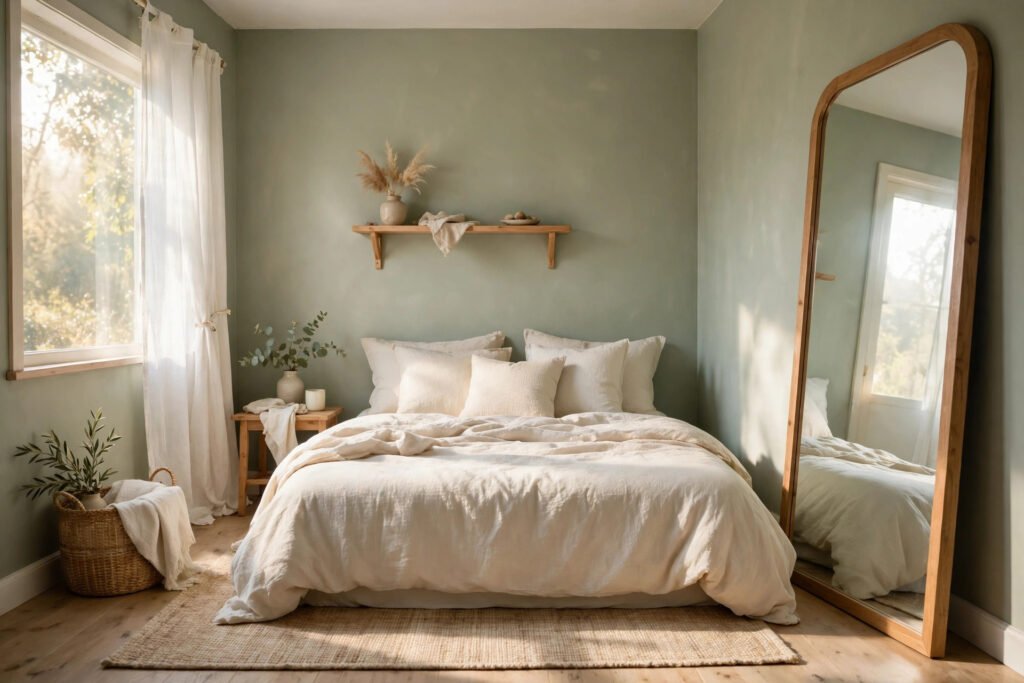
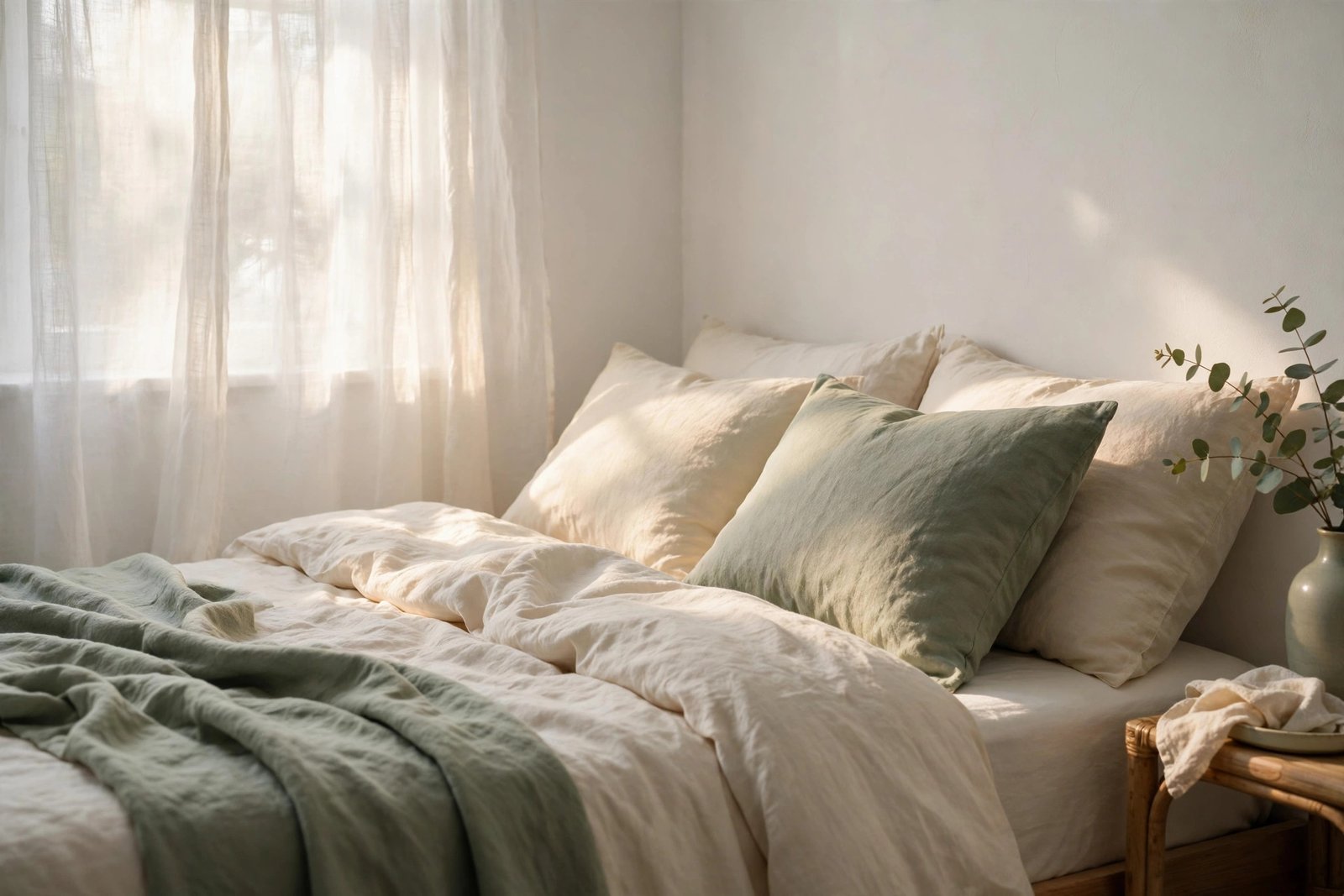
A light, low-contrast palette is the single fastest way to make a small bedroom look bigger. Walls, bedding, and curtains that sit in the same soft color family blur the edges of the room, so your eye travels without stopping at hard contrasts. Warm whites, pale greiges, and washed-out blues or greens all work; the exact shade matters less than keeping the big surfaces close in tone. If you love a darker color, save it for one small accent, like a cushion or a throw, instead of a whole wall. You do not need to repaint everything at once. Start with the bedding and curtains, the two largest soft surfaces, and the room will already feel lighter and more open.
2. Choose a bed that fits the room
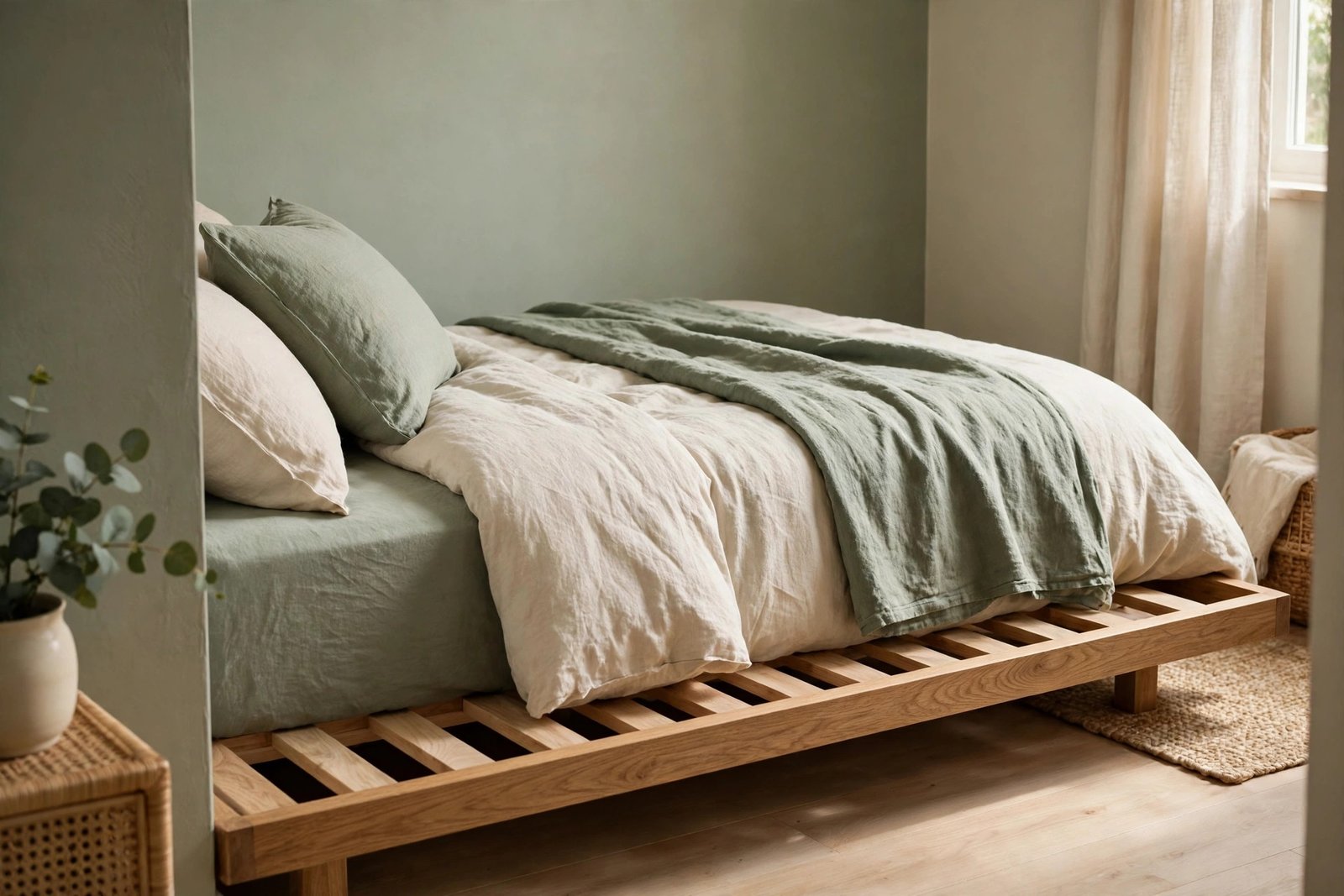
The bed is the biggest object in the room, so getting its size and height right changes everything. In a small bedroom, a tall, bulky frame with a thick headboard eats visual space even before bedding goes on. A lower profile frame, ideally with a simple or no headboard, lets the wall show above the bed and makes the ceiling feel higher. If you are keeping your current frame, remove the footboard if it has one, or swap heavy bedding for a lighter duvet that drapes closer to the mattress. Measure before you buy anything: aim for walking space on at least two sides of the bed, even if it is only a slim gap. Breathing room around the bed reads as luxury, and luxury reads as space.
3. Borrow light and depth with a mirror
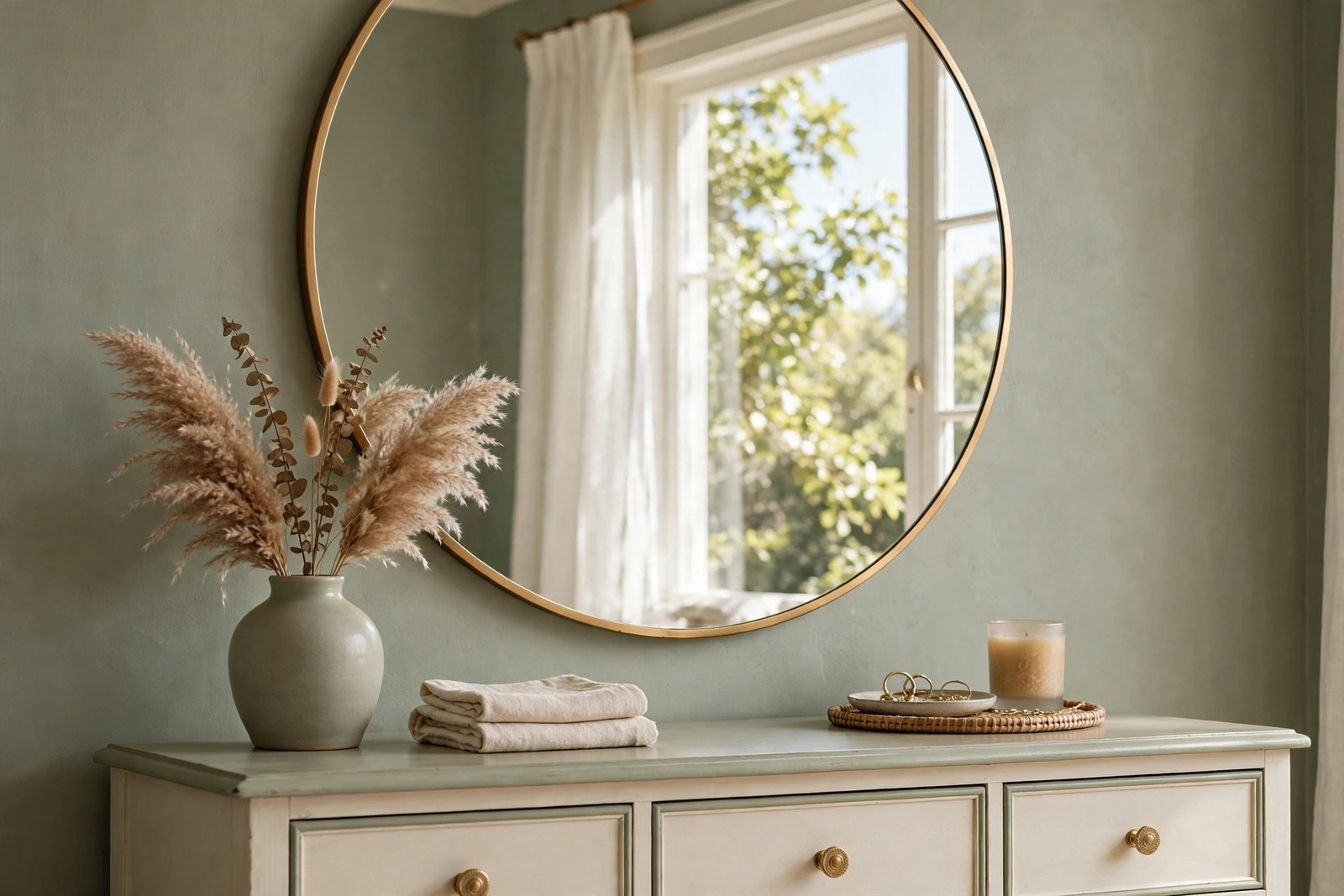
A well-placed mirror doubles the light in a small bedroom and fakes the depth the room does not have. Hang or lean the largest mirror you can fit on the wall opposite or beside a window, so it catches daylight and throws it back into the room. A round mirror softens all the straight lines of a bed and dresser, while a tall leaner mirror can make a low ceiling feel taller. Mirrored or glass-topped nightstands do a smaller version of the same trick without taking up wall space. Just check what the mirror reflects from where you lie in bed: a calm wall or a window works beautifully, while a cluttered closet will simply be doubled.
4. Keep as much floor visible as you can
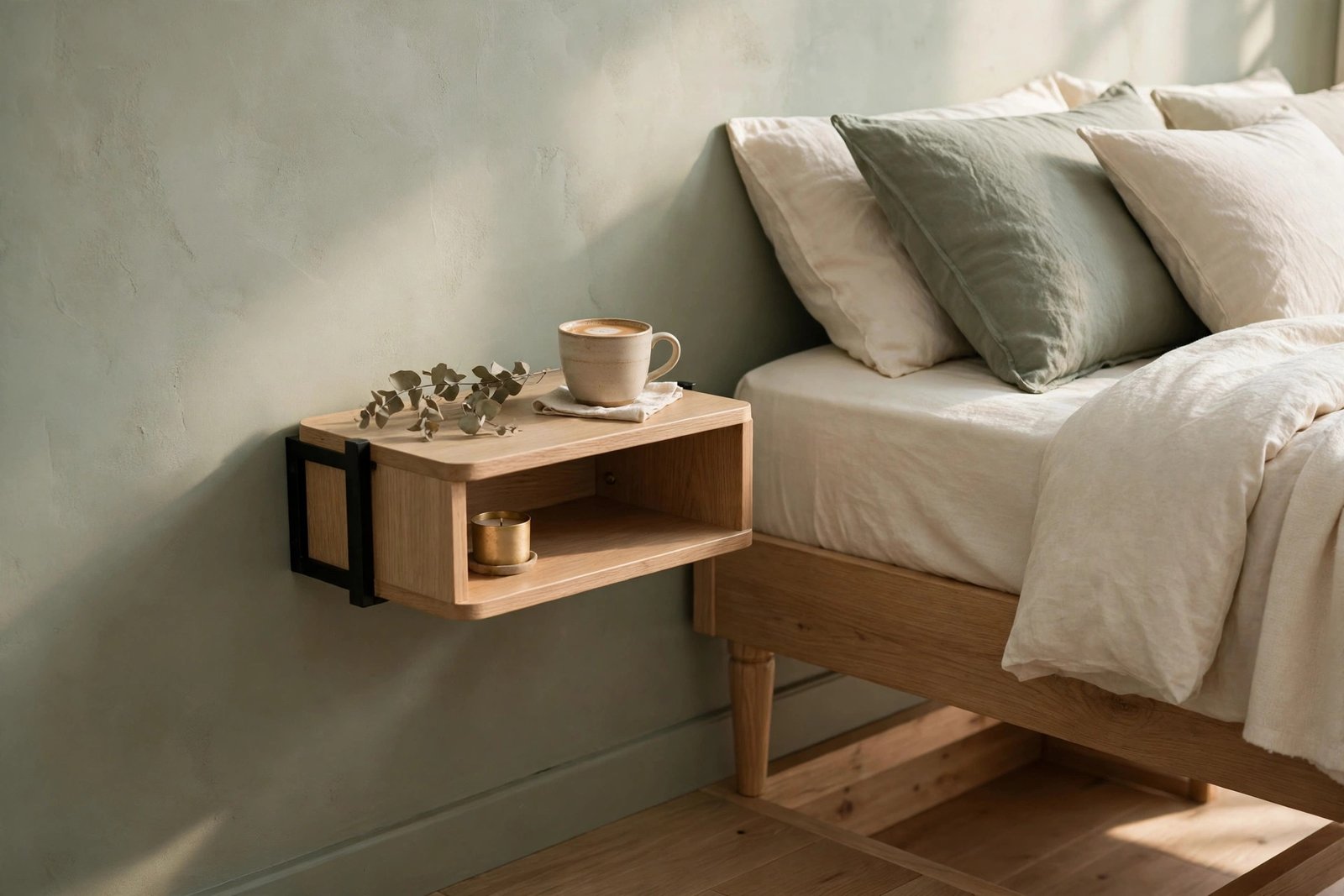
The more floor your eye can see, the bigger the room feels, so lift furniture off the ground wherever possible. Choose a bed frame and dresser with legs rather than pieces that sit flat on the floor, and skip the bed skirt, which closes off the under-bed space visually. Wall-mounted nightstands or a floating shelf free up the floor on both sides of the bed and make cleaning easier, too. Keep the floor itself mostly clear: shoes, bags, and laundry baskets belong in closed storage, not along the walls. Even a narrow border of visible floorboards or rug around the furniture convinces your brain the room extends further than it does.
5. Dress the bed in one soft color family
Bedding in a single light color family makes the largest surface in the room feel calm and continuous. A bed layered in whites, creams, or the palest version of your wall color becomes one smooth visual plane instead of a stack of competing patterns. Add interest with texture rather than contrast: linen bedding with its natural creases, a waffle-weave throw, or a quilted coverlet all read as rich without shouting. Keep patterns small and sparse if you use them at all, and limit the pillow pile to what you actually sleep with plus two decorative cushions at most. A tidy, low, one-tone bed instantly lowers the visual temperature of the whole room.
6. Hang curtains high and wide
Curtains hung close to the ceiling and wider than the window make both the window and the wall look larger. Mount the rod a few inches below the ceiling rather than right above the window frame, and extend it beyond the frame on both sides so the fabric stacks mostly on the wall, not over the glass. This lets in the maximum amount of daylight and stretches the window visually in both directions. Choose light, airy fabrics like linen or sheer cotton in a tone close to the walls, and let them fall to just above the floor. Short curtains that end at the sill chop the wall into pieces; long ones draw it into one tall, calm surface.
7. Edit surfaces down to almost nothing
A small bedroom looks bigger the moment its surfaces are nearly empty, because clutter is what your eye measures. Go through the room with a bag or box and remove everything that does not sleep there: paperwork, chargers, spare cosmetics, the chair that became a closet. Give the essentials closed homes inside drawers or a lidded basket, and keep only one or two intentional objects out, like a small plant and the book you are reading. Do the same edit on the walls: one larger piece of art looks calmer and more spacious than a cluster of small frames. This final pass costs nothing, and in most bedrooms it is the step that makes the biggest visible difference.
Tips
- Match your largest textiles to the walls: when the bed, curtains, and rug sit in one tone, the room’s edges disappear and the space feels continuous.
- Choose closed storage over open shelves wherever you can, because hidden clutter reads as calm, and calm always reads as space.
- Keep lighting warm and layered with a lamp on each side of the bed instead of one harsh overhead light, which flattens and shrinks a room.
- Photograph the room from the doorway: the camera shows you the clutter and the dark corners your eyes have stopped noticing.
Once your bedroom feels bigger, the same editing ideas work in the rest of a small home, our guide to 7 Small Apartment Ideas That Make Tiny Spaces Feel Luxe applies them room by room. And when the room finally looks calm, protect the feeling with The Night Routine That Fixes Your Sleep (and Your Skin), so the space you have opened up also helps you rest.