

This post contains affiliate links. If you buy through them, Mxralis may earn a small commission at no extra cost to you. See our Affiliate Disclosure.
Every home has a smell, whether we notice it or not. Guests notice it the second they walk in, long before they take in the furniture or the light. If you want to learn how to make your home smell good without drowning it in synthetic sprays, the answer is quieter than you might expect: remove what causes odor, move the air, and add gentle natural scent in small doses.
This guide walks through the order that actually works, from finding hidden odor sources to setting out simple scent anchors that keep rooms fresh between cleanings. Everything here uses ordinary pantry staples and fresh air, and most steps take only a few minutes to put in place. A couple of them will probably surprise you with how much difference they make.
Steps
1. Remove the sources of bad smells first
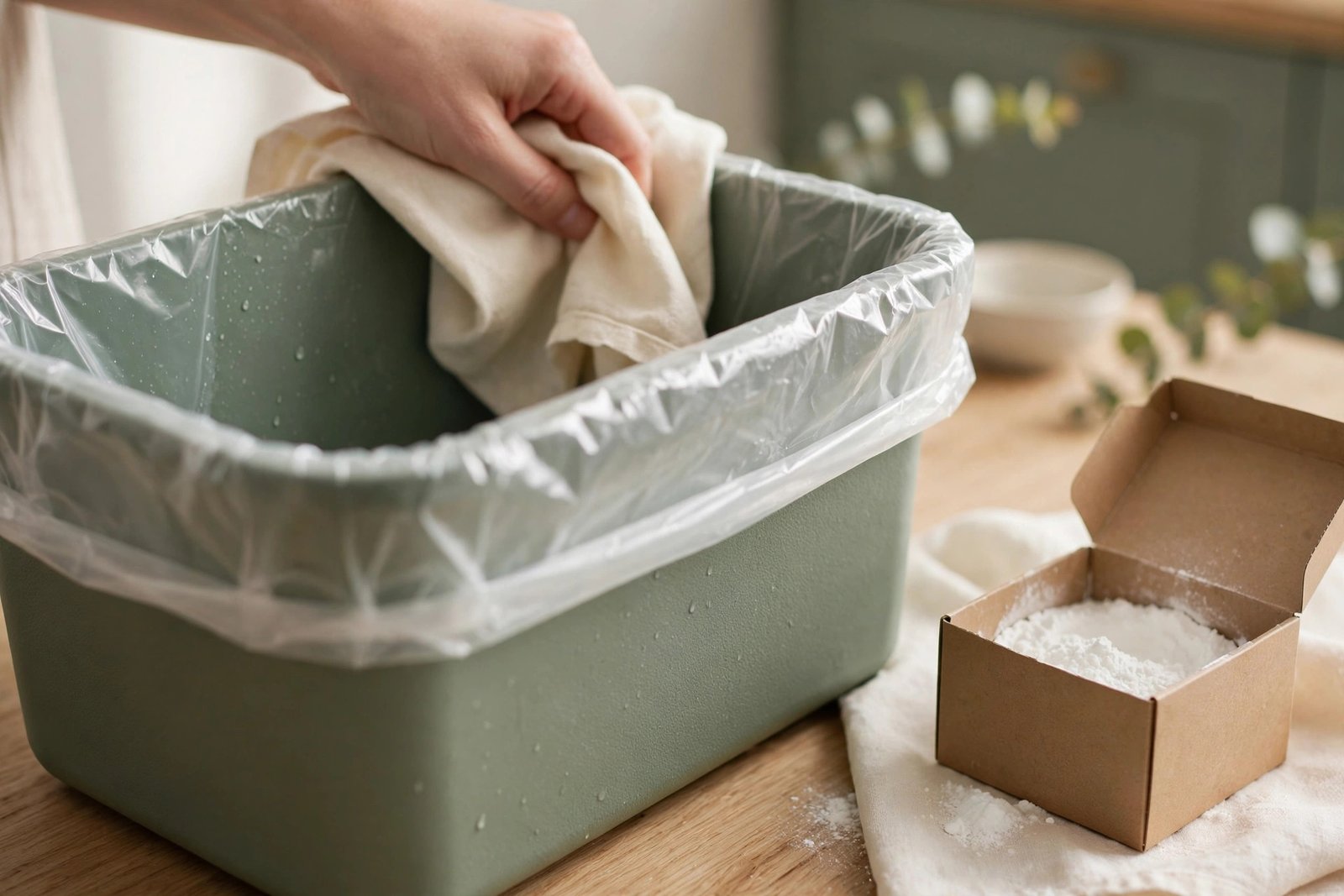
No scent can cover a smell at its source, so the first step is always to find and remove what is causing the odor. Work through the usual suspects: the kitchen bin and the food scraps inside it, the drain trap, old sponges, the litter box, gym clothes waiting for laundry, and anything forgotten at the back of the fridge. Take the trash fully out rather than tying the bag and leaving it by the door, and wash the bin itself with hot soapy water now and then, since the bin often smells worse than the trash did. Sprinkle baking soda in the bottom of the fresh liner to absorb the next round. Until the sources are gone, every other step in this guide is just perfume on a problem.
2. Let fresh air do the heavy lifting
Opening windows for ten to fifteen minutes a day is the most effective natural deodorizer there is, and it costs nothing. Stale indoor air is a mix of cooking smells, humidity, and everything your textiles have absorbed, and no candle can compete with simply replacing it. Open windows on opposite sides of the home when you can, so a cross-breeze moves through, and run the bathroom fan after showers to pull moisture out before it turns musty. Even in winter, a short, wide-open burst of airing freshens a room better than hours of a cracked window. Make it part of the morning routine while the kettle boils, and you will notice the house’s baseline smell shift within a week.

3. Simmer a gentle scent on the stove
A small pot of water simmering with citrus peel, herbs, and warm spices is the classic way to make a home smell welcoming within the hour . Fill a small saucepan with water, add orange or lemon slices or peels, a cinnamon stick or two, a few cloves, and a sprig of rosemary if you have one, then keep it at the barest simmer. The steam carries the scent through the home far more effectively than a bowl of potpourri, and the ingredients are things many kitchens already have. Top up the water as it evaporates, and never leave it unattended on the heat. This is a same-day scent, perfect before guests arrive; once the pot cools, the freshness fades, which is exactly what the next steps are for.

4. Deodorize soft surfaces with baking soda
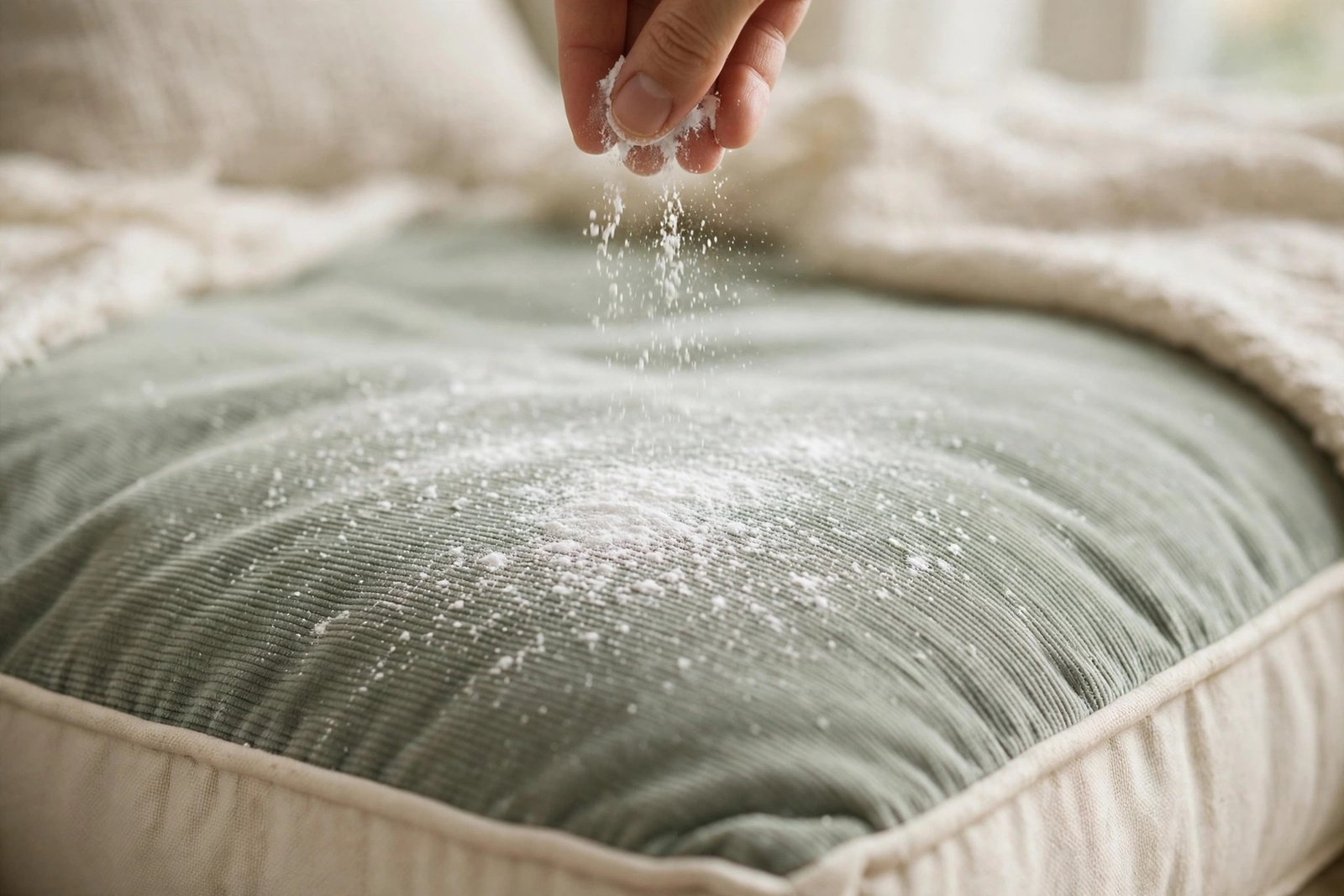
Baking soda neutralizes odors trapped in carpets, upholstery, and mattresses instead of covering them, which makes it the quiet workhorse of a fresh-smelling home. Sprinkle it generously over the sofa cushions, rugs, and the mattress, leave it for at least thirty minutes and ideally a few hours, then vacuum thoroughly. It is especially worthwhile on whatever the dog has claimed as a bed and on the rug by the front door. For a very light scent, you can stir a few drops of essential oil into the baking soda before sprinkling, but plain works perfectly well. Work it into your cleaning rhythm once or twice a month and the background smell of the whole home stays neutral, which is the real goal.
5. Set out natural scent anchors
Small, passive scent anchors, a bundle of eucalyptus, a bowl of coffee beans, a dish of dried herbs, keep rooms smelling pleasant between deep cleans. Hang a bunch of fresh eucalyptus from the shower head and the steam will release its scent every time you shower. Set a small bowl of whole coffee beans in the living room or entryway; it gives off a warm, gentle smell and absorbs some of the surrounding odors too. Cotton balls with a drop or two of essential oil tucked inside a closet or drawer work as quiet anchors for small spaces. Refresh or replace anchors every few weeks, since natural scents fade gradually and a tired anchor just becomes part of the furniture.
6. Refresh the textiles that hold onto smell
Fabric is where home odors live longest, so curtains, cushion covers, throws, and bedding need regular refreshing for a home to truly smell clean. Soft surfaces absorb cooking smells, pet odor, and general staleness, then release them back into the room slowly, which is why a home can smell off even right after you clean the hard surfaces. Wash cushion covers and throws on a rotation, hang curtains out on a breezy day even between washes, and do not let damp towels or laundry sit in closed hampers. Bedding deserves the most attention of all, since you spend a third of your life in it: wash sheets weekly and air the duvet outdoors when the weather allows.
7. Keep scents light and give each zone its own note
The homes that smell best never smell strongly of any one thing, so keep every scent subtle and let different areas carry different, gentle notes. Citrus and herbs suit kitchens and entryways, clean cotton and lavender belong in bedrooms, and the bathroom does best with eucalyptus or mint. When one strong fragrance fights its way through every room, guests smell the fragrance, not the home, and it quickly becomes as tiring as the odor it replaced. Test your work the honest way: step outside for a few minutes, come back in, and notice the first thing you smell at the door. That first breath is exactly what your guests get, and when it smells like almost nothing at all, you have done it right.