
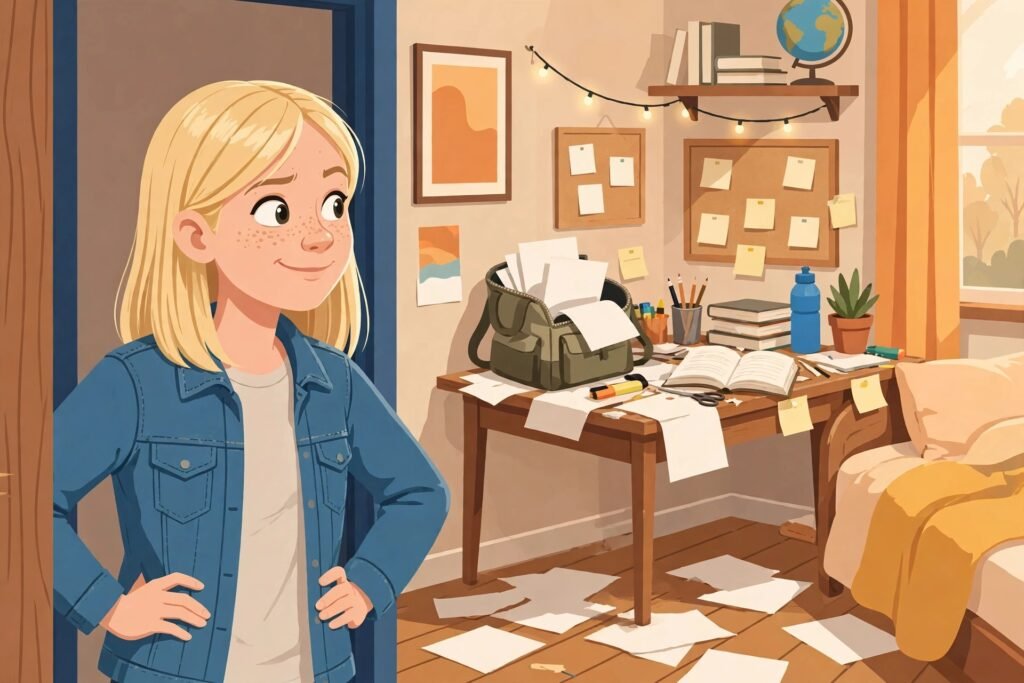
Your bag eats your homework. Your desk is a landscape of cups, worksheets, and one shoe. You missed the form, again, and you’re standing in the school office crafting an excuse while a voice in your head whispers that other girls just have their lives together. They don’t. They have systems. And I want to become more organized without pressuring myself, because every strict plan I’ve ever tried collapsed by Wednesday.
Maybe you’ve done the big reset. The Sunday where you color code your life, buy the planner, swear this is the new you. By Friday the planner is under the bed and the guilt is worse than the mess was. The mess was never the worst part. The shame spiral after each failed reset is the worst part.
So let’s set a different goal from the start. Not “become an organized person.” That’s a personality costume, and it never fits. The goal is smaller and kinder: become more organized without pressuring myself, using tiny systems that survive bad weeks, tired days, and real life. Systems, not willpower. Gentle, not strict.
This guide will show you how. We’ll look at why organization is a skill and not a trait, why big resets crash, and how to build one small home for everything you carry. Then we’ll do your bag, your homework, and your room, one small zone at a time, with rest built in as part of the plan rather than a prize at the end.
If you’re tired of starting over every Monday, you’re in the right place. The promise to become more organized without pressuring myself is not a softer excuse. It’s a smarter method, one that works with your actual brain instead of punishing it.
The Short Answer
The short answer is that organizing works when it’s small, specific, and forgiving. You don’t need a new personality or a perfect planner. You need a few tiny systems, each one so easy it almost feels like cheating, repeated until they run on their own. That’s how I learned to become more organized without pressuring myself, and it’s how most genuinely organized people actually live.
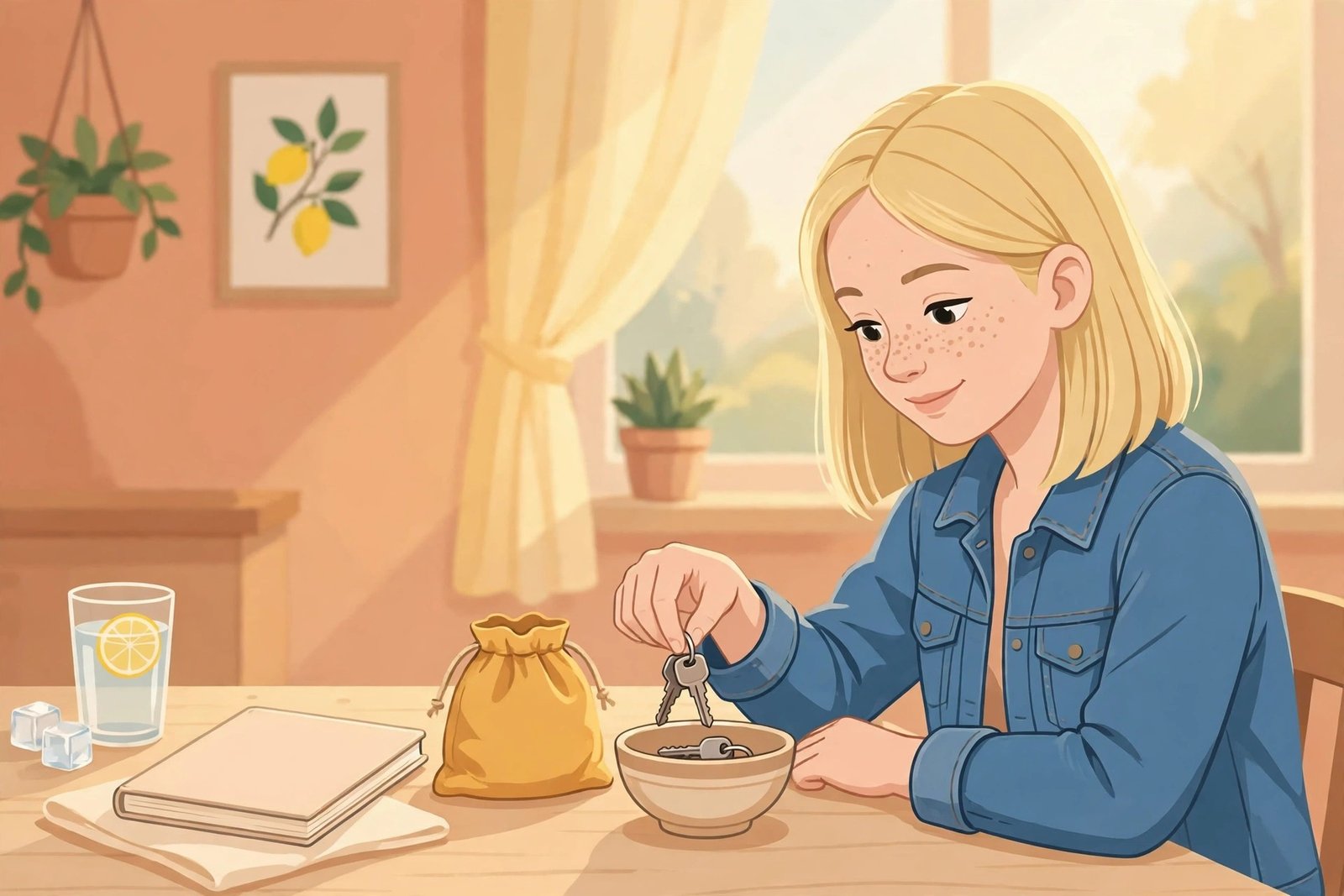
A tiny system looks like this: your keys always land in the same bowl. Your bag gets packed in the same two minute order every night. Homework gets written in one place, the same place, every time. None of these take talent. All of them remove decisions, and removed decisions are where calm comes from. Think of it as a slow promise you make to yourself: I will become more organized without pressuring myself, one home and one habit at a time.
Pressure is the enemy here, not mess. Pressure makes you avoid the system on hard days, and avoided systems die. So the rule of this whole guide is: any system you build must still work on your worst day, at half energy, in five minutes. If it only works when you’re motivated, it’s not a system. It’s a performance.
Start with one system. Just one. Run it for two weeks before you add another. By the time a year passes, girls who chose this path to become more organized without pressuring myself usually have five or six quiet systems humming along, and from the outside it looks like they were simply born tidy. They weren’t. They built it, gently, one small home at a time.
Organization Is a Skill, Not a Personality

First, the belief that needs to retire: “I’m just a messy person.” That sentence sounds humble, but it’s a trap. It turns a trainable skill into a fixed identity. Nobody says “I’m just a can’t swim person” and walks away from the pool. Swimming is steps, taught in order. Organization is the same: steps, taught in order, learned at your pace.
Think of the most organized girl you know. Watch closely and you’ll see it’s not magic. Her bag has a pocket logic. Her homework lives in one folder system. Her room has zones, even messy ones. She isn’t tidying all day. She set things up once so that staying organized costs her almost nothing. That’s a skill setup, not a personality glow.
The skills hiding under the word “organized” are plain ones: giving things a home, writing things down instead of holding them in your head, and breaking big tidies into tiny ones. None of these need talent. All of them can be practiced badly, then less badly, then fine. When girls say I want to become more organized without pressuring myself, this is the kind version of the wish: teach me the steps like swimming, and skip the lectures.
Your head is also not a storage unit. Every “I must remember” you carry all day, the form, the book, the practice time, costs real energy. Paper and planners exist to carry that weight for you. Forgetting isn’t a character report. It’s often just a girl trying to store twenty things in a head built to hold four. Writing it down is the skill. The memory was never the problem.
There’s good backup for this way of thinking. The Child Mind Institute guide to building executive functioning skills explains that the skills behind planning and organizing can be taught and strengthened with tools like checklists, planners, and packing the bag the night before. In other words, the adults who study this agree: it’s training, not talent. You can absolutely become more organized without pressuring myself by training one small skill at a time.
Why Big Resets Always Crash
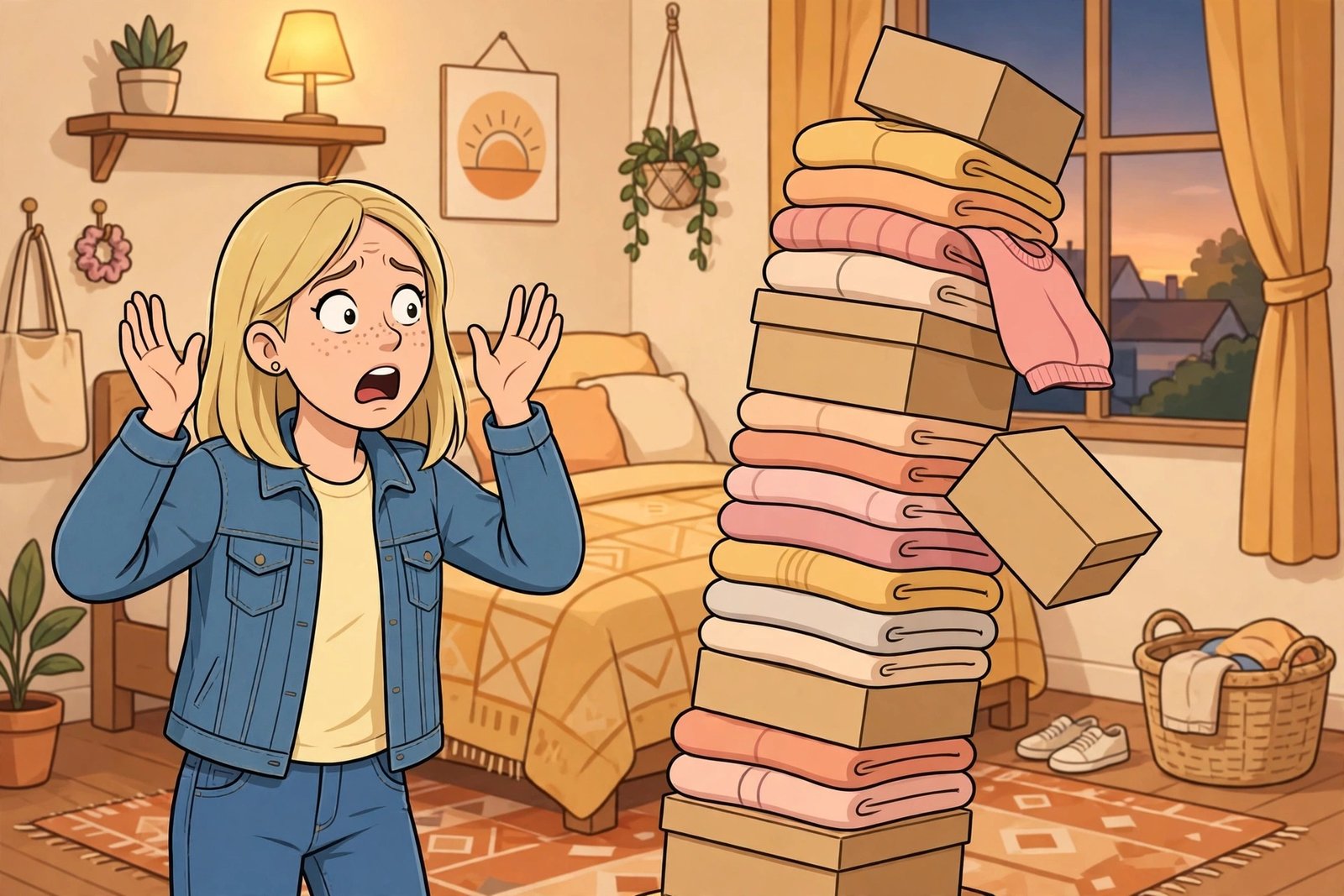
Now let’s bury the big reset properly, because it has eaten enough of your Sundays. The reset feels amazing on day one. Everything is folded, labeled, aligned. Your room looks like a photo. Your motivation is sky high. And that is exactly the problem: the system was built by your most motivated self, for your most motivated self.
Wednesday you is tired. She has practice, a headache, and a test tomorrow. The reset demands forty minutes of upkeep she doesn’t have. She skips one day. The pile restarts. By Friday the photo room is gone, and now there’s guilt on top of the mess, because you “failed” a system that was never built for a real week. The crash wasn’t weakness. It was a design error.
Perfectionist systems share the same flaw: all or nothing logic. One skipped day breaks the streak, and a broken streak feels like proof you can’t do it. So you quit entirely and wait for the next motivational wave to schedule another reset. The cycle repeats: mess, shame, reset, crash. Girls stuck in that loop often conclude they’re hopeless, when really their systems are just too brittle to live in. That’s why deciding to become more organized without pressuring myself is not giving up. It’s the first design choice that actually respects your real life.
A pressure free system works the opposite way. It’s built by your tired self, for your tired self. It assumes you’ll miss days. It has a two minute version for bad days and a ten minute version for good ones. Missing a day changes nothing, because the system was never a streak. It was a home you return to, not a performance you keep up.
So when I say I want to become more organized without pressuring myself, this is the heart of it: no more resets. No more new me Mondays. Just small systems that bend instead of break, built at the speed of real life. The rest of this guide is those systems, one by one. Steal them in order, or steal the one that hurts most first.
And notice what disappears along the way: the guilt tax. Girls often ask how to become more organized without pressuring myself because they’ve felt how heavy guilt makes everything else. Guilt doesn’t tidy rooms. It makes you avoid the room. Drop the guilt, keep the systems, and watch the room slowly change anyway.
One Home for Everything You Carry
Here’s the first system, and it’s the foundation under all the others: everything you carry gets one home. Not a tidy home. Not a pretty home. One home. The chaos in most bags, desks, and rooms isn’t dirt. It’s homelessness. Twenty small things float, and floating things are impossible to find.
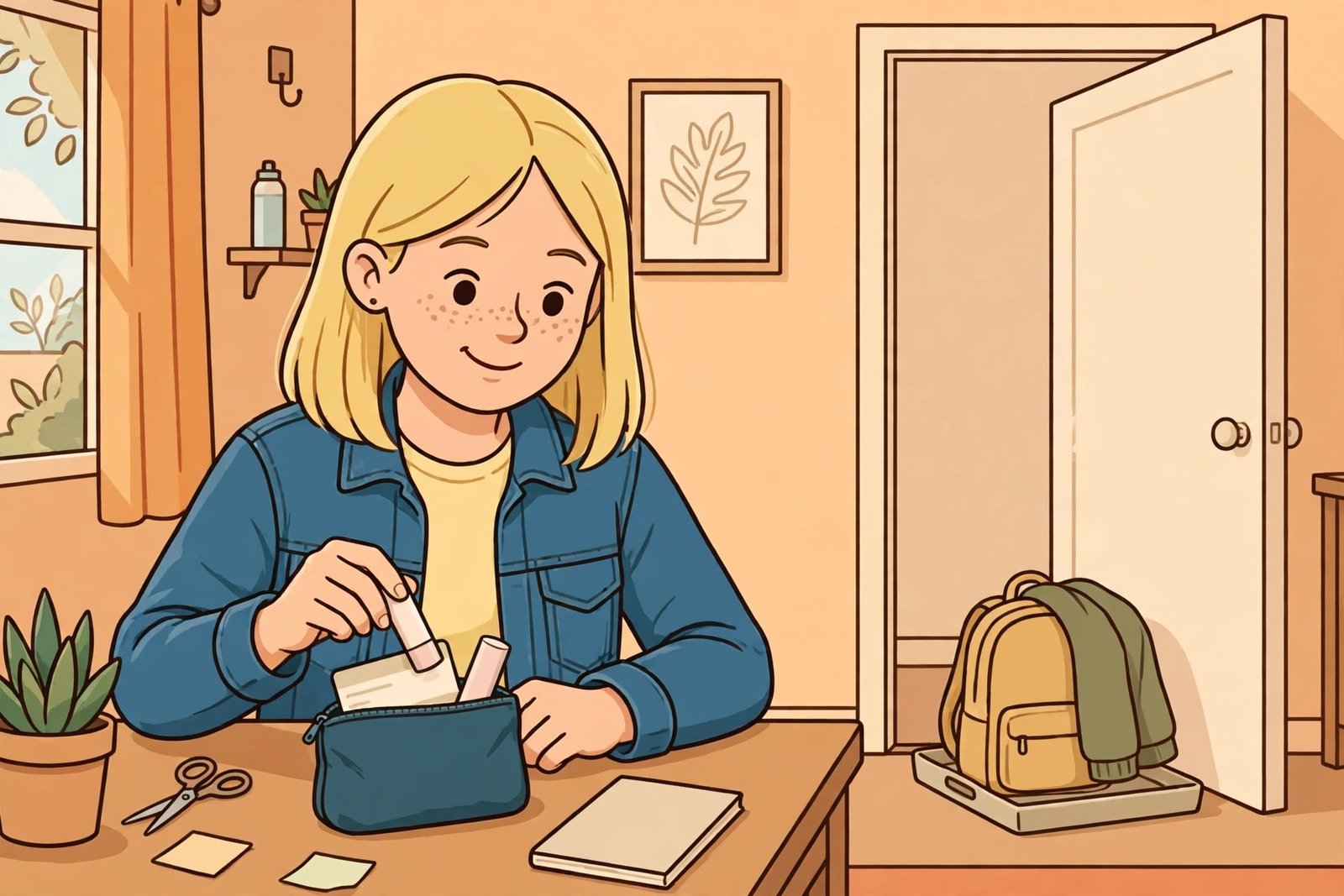
Start with the daily handful. Keys, bus pass, lip balm, phone charger, student card, the form that needs signing. Pick one pouch or one pocket that is always theirs. When the thing isn’t in your hand, it’s in its home. That’s the entire rule. Finding your keys becomes a five second event instead of a morning emergency.
Do the same on paper. One notebook, one app, one planner page where every “must remember” lands. Not three apps and a prayer. One capture place, checked once in the morning and once after school. Specialists who teach organizing give exactly this advice, because a single trusted list ends the all day background hum of “don’t forget, don’t forget.”
Your room gets the same treatment in miniature. A landing strip by the door: one tray or box where everything entering the room gets dropped before it spreads. Bag, jacket, mail, the random cup. The strip catches the chaos at the border, and the rest of the room stays surprisingly livable with almost no effort.
None of this requires buying anything. A shoe box is a home. A zip pocket is a home. What matters is the singularity. The moment something has two homes, it has none, because your brain has to search both. One home, always, is how girls actually become more organized without pressuring myself in daily life: not by cleaning more, but by searching less. That’s how the wish “I want to become more organized without pressuring myself” quietly turns into a description of your mornings.
Expect a clumsy first week. You’ll drop the keys in the old spots out of habit, then move them, annoyed, to the home. That annoyed walk is the training working. By week two, your hand starts going to the home on its own. That’s the moment a system is born: when your body remembers before your brain has to think.
A School Bag System That Takes Two Minutes
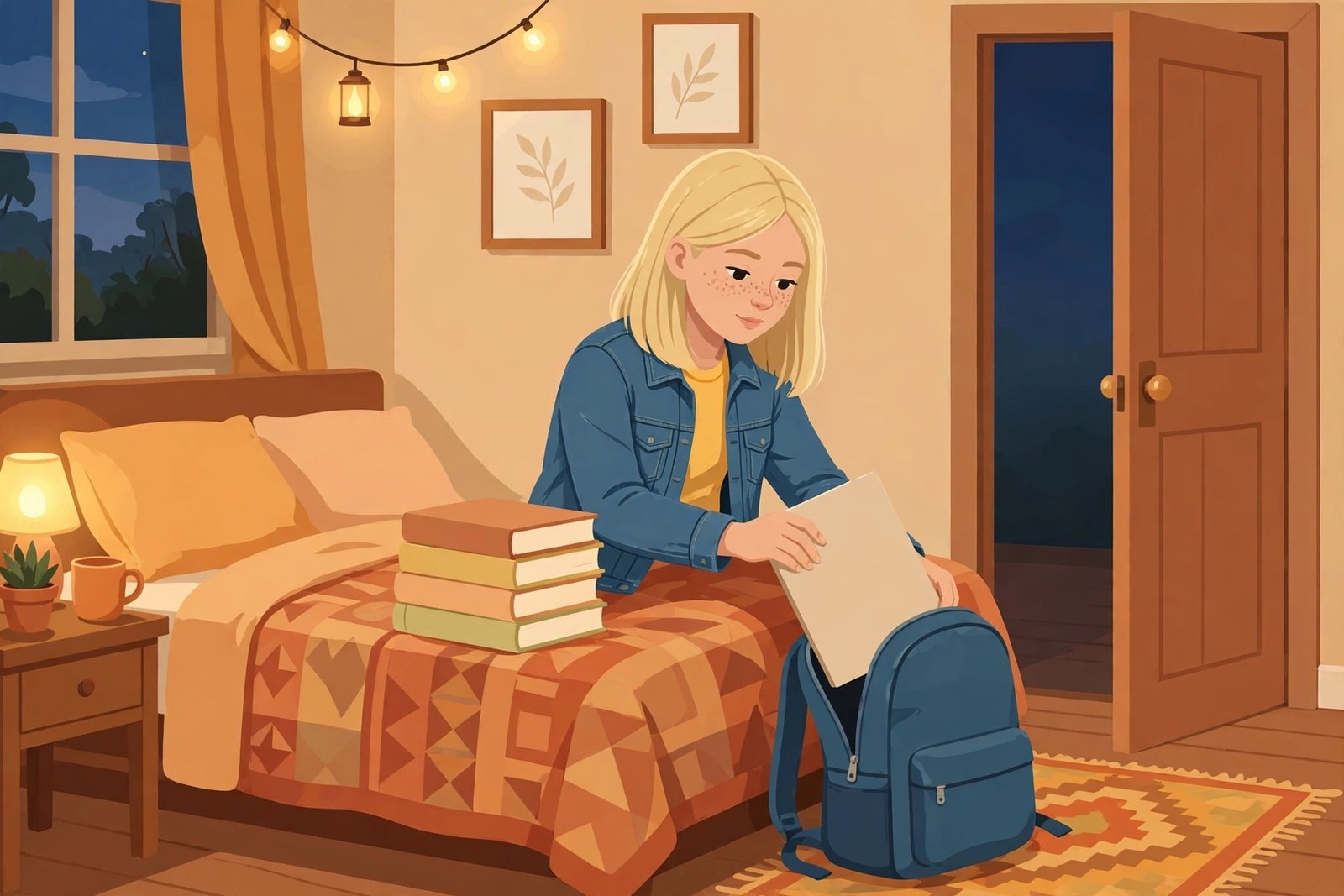
The school bag is where organization goes to be tested daily, so let’s make it pass with the smallest system in this guide. Two minutes, every night, same order. That’s it. No color coding, no twelve pockets of destiny. Just a short nightly ritual that tomorrow you will silently thank you for.
Minute one: empty the floater zone. Every bag has one, the main pocket where loose papers, wrappers, and mystery objects gather. Pull it all out onto the bed. Hand in anything that belongs at school tomorrow, bin the rubbish, and put school books in a single stack. The floater zone resets to zero. Zero is a beautiful number at 7 a.m.
Minute two: pack in tomorrow order. First lesson’s book at the back or the front, pick one and keep it forever. Homework folder in its fixed slot. Pouch with the daily handful in its fixed pocket. Water bottle last, where a leak can’t hurt paper. Done. Close the bag and park it by the door, on the landing strip, like a plane at its gate.
Why does this tiny ritual work so well? Because it moves the deciding to the evening, when you’re calm, and frees the morning, when you’re not. Morning you is half asleep and easily derailed. Evening you, given two minutes and a fixed order, is a logistics genius. This is a core trick for anyone trying to become more organized without pressuring myself: do the thinking once, at a kind hour, and let the routine carry the rest.
If your bag is shared with sports or work gear, give each life its own pouch or cube. Gym life in the red pouch, school life in the folder, work life in the small bag. When lives have containers, they stop invading each other, and the “where is my uniform” panic evaporates.
Forgot a night? The system forgives. A two minute morning version exists for exactly this: floater zone out, tomorrow order in, door. No streak broken, no guilt billed. That’s the difference between a system and a performance. Girls who become more organized without pressuring myself aren’t the ones who never miss. They’re the ones whose systems are still there, unbothered, the morning after a miss.
Homework Without the Sunday Night Scramble
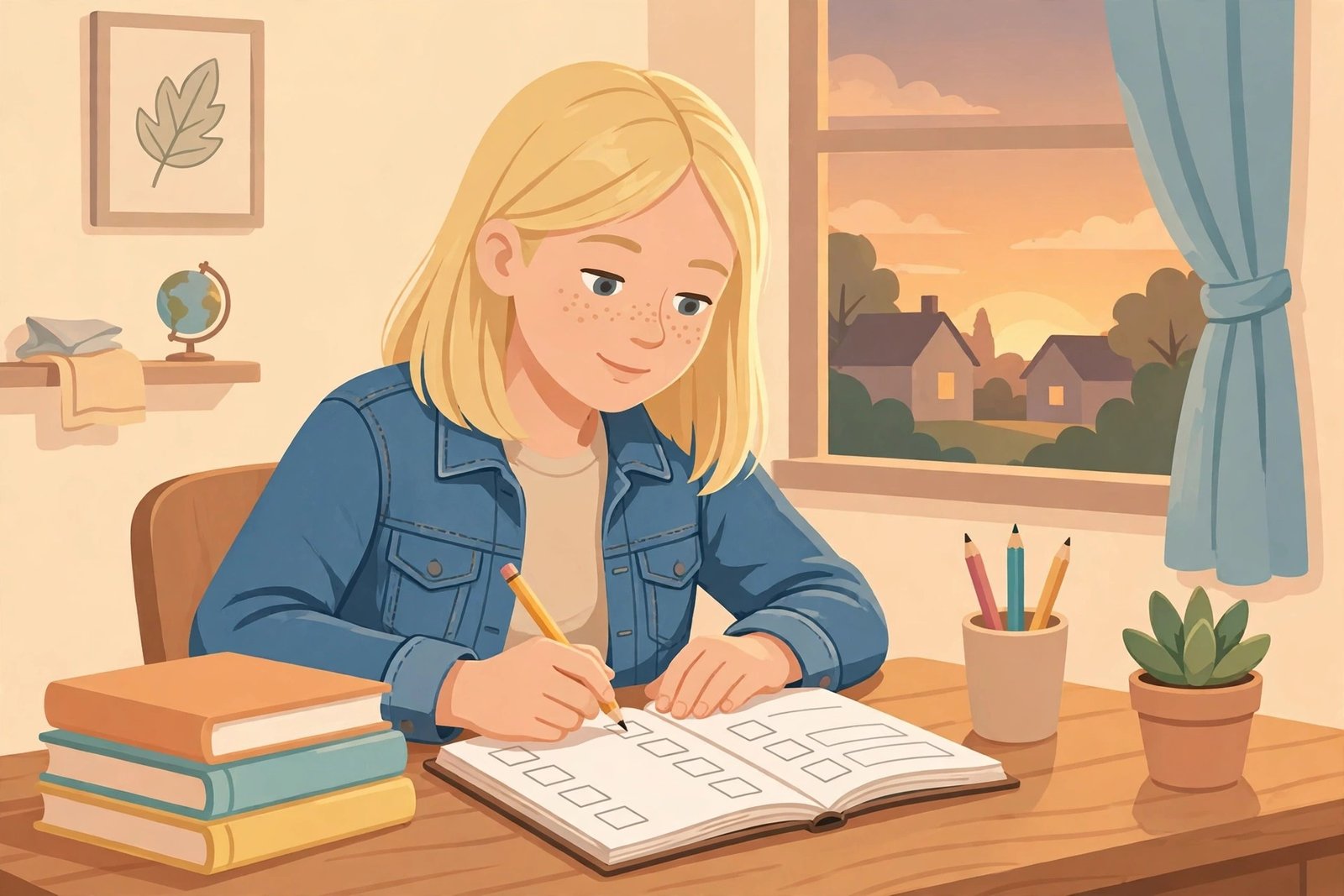
Homework chaos usually isn’t about the work. It’s about surprise. The assignment you forgot existed. The project that was somehow due tomorrow. The worksheet at the bottom of the bag, fossilized. The fix is a system so simple it feels too small to matter: one list, updated in the moment, checked twice a day.
The moment a teacher assigns something, it goes on the list. Not later. Not “I’ll remember.” In the moment, in class, in the one planner or app you chose as your capture home. Include the due date next to it. That ten second habit quietly removes ninety percent of homework drama, because drama mostly comes from discovering work late.
Then, twice a day, glance at the list: once after school, once after dinner. After school, pick tonight’s items and put them in a small order, worst first or quickest first, whichever your brain prefers. After dinner, check off what’s done and move what’s left to tomorrow’s view. Two glances, maybe sixty seconds total. That is the whole machine.
Long projects get one extra move: the backward breadcrumb. The day a project is assigned, write three or four tiny steps with rough dates, ending at the due date and working back. “Pick topic by Thursday. Find sources by Monday. Draft by next Wednesday.” Each step is small enough to sit on a normal evening. No step ever says “do project,” because “do project” is not a step, it’s a threat.
This is also where the wardrobe lesson transfers. Just like organizing your wardrobe works by giving every item a category and a home, homework works when every task has a list and a slot. Same skill, different shelf. Once you feel it work in one area of life, the others get easier to set up.
And when a scramble still happens, because it will, treat it as information, not failure. Which step got skipped? The capture, the glance, or the breadcrumb? Fix that one step next time. Girls who become more organized without pressuring myself debug their systems like this, kindly and specifically, instead of declaring themselves a mess and starting over.
Your Room, One Small Zone at a Time
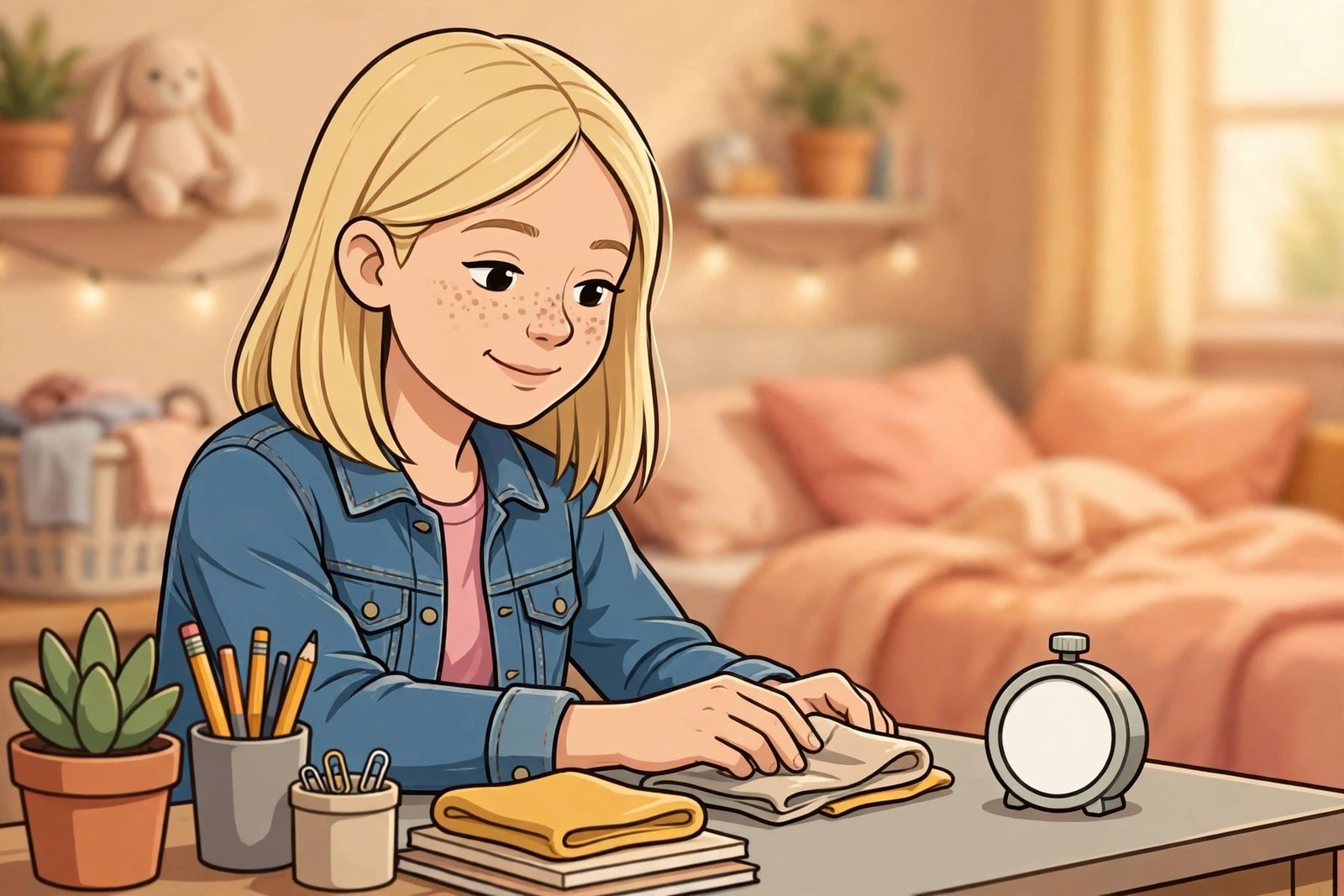
The room is where the pressure usually lives, so we’ll treat it with extra gentleness. Forget “clean your room.” That instruction is a fog: huge, shapeless, and impossible to start. Replace it with zones. A room is just five or six small zones wearing a trench coat: bed, desk, floor path, wardrobe door area, and the famous chair.
Pick one zone. Set a timer for ten minutes. Work only that zone until it looks clearly better, then stop, even if the rest of the room is still a swamp. Stopping on purpose is part of the method. It teaches your brain that tidying has an end, which makes starting next time far less scary. Ten honest minutes beat a guilty hour of drifting every time.
Give each zone the one home treatment as you go. Books get one shelf or box. Worn once clothes get one hook, not the whole chair, though the chair can be the official home if you declare it with a straight face. The rule isn’t beauty. The rule is that future you can find things and that the floor path from door to bed stays walkable. That’s a livable room. That’s the goal.
A weekly rhythm helps more than intensity: same day, same zone rotation, ten minutes each. It feels almost insultingly small, and that’s why it works. Girls aiming to become more organized without pressuring myself win by lowering the bar until stepping over it is boring. Boring is sustainable. Sustainable is what actually changes a room over a school year. That’s still the deal I made when I promised to become more organized without pressuring myself: better, not perfect, and kind the whole way through.
On bad weeks, the minimum version applies: clear the floor path, empty the bin, make the bed. Three moves, five minutes, room reset to livable. Then rest without a speech. A room maintained at “good enough” by a calm girl beats a perfect room maintained by a girl who cries every Sunday. We’ve all met both girls. Be the first one.
And when a friend with a photo perfect room makes you feel behind, remember the earlier sections. Her room is systems too, or a parent’s pressure, or one good angle in a photo. You can’t see her process. You can only build yours, zone by zone, at your speed. That’s how you become more organized without pressuring myself in the room where you actually live: slowly, kindly, and without a single dramatic reset ever again.
Rest Is Part of the System, Not a Reward
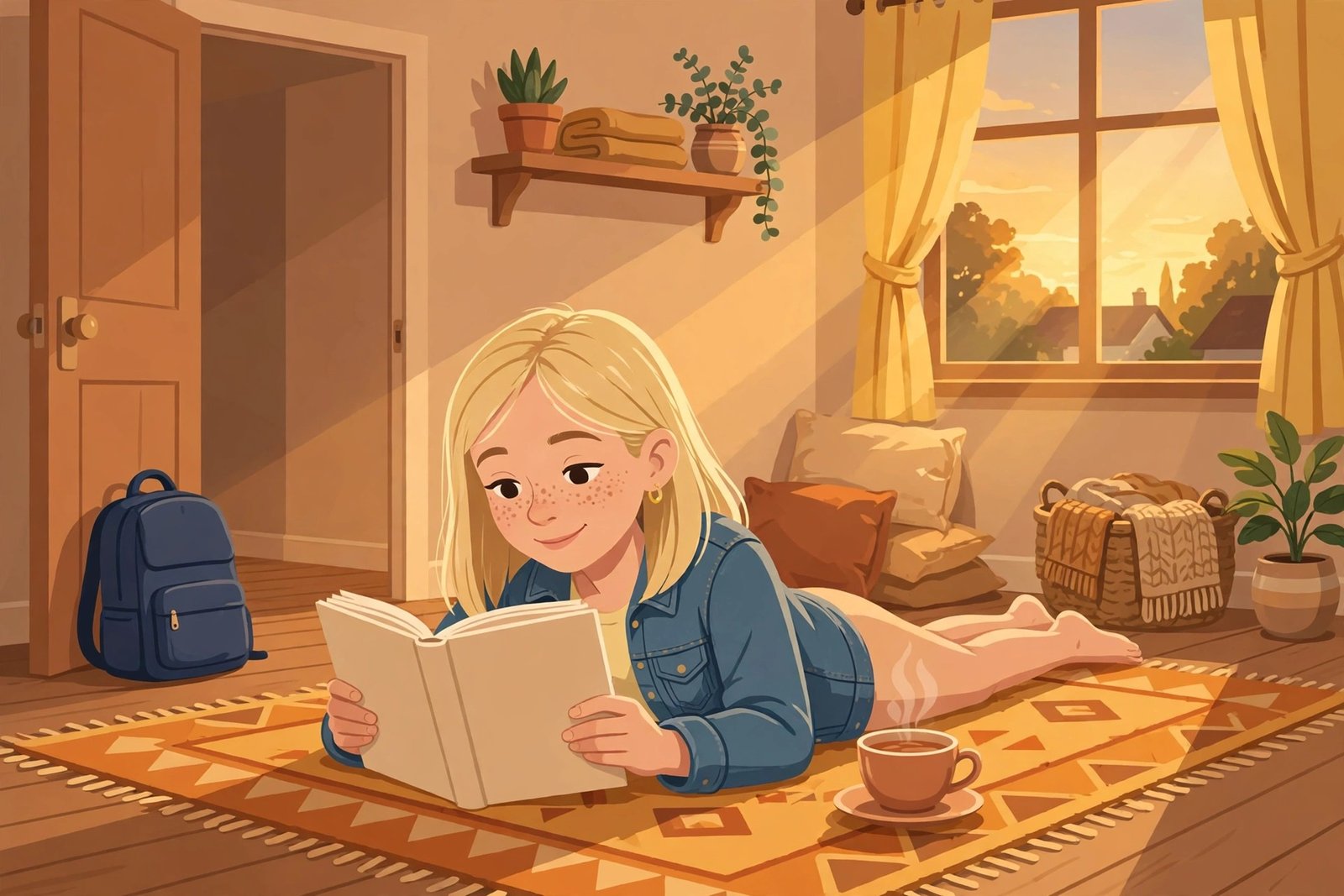
Last, the piece that makes all the others survivable: rest is built into the plan, not earned at the end of it. The pressure model says rest is a prize for finishing. The gentle model says rest is fuel that makes finishing possible. Tired brains forget, drop, and avoid. Rested brains run small systems without thinking.
So schedule rest the way you schedule systems. A real stop time in the evening, after which organizing is closed for the day. A slow morning where one exists in your week, protected on purpose. The adults who build calm routines for a living do exactly this: a morning routine that protects your energy works because it treats energy as the thing being organized, not just objects.
This is also your shield against the productivity guilt that floats around online. The videos of girls with 5 a.m. routines and seventeen step systems are entertainment, not instructions. Your system only has to serve your life: your school, your family, your energy. A small system you actually run is worth more than a spectacular one you admire and abandon. Nobody’s system survives on pressure for long. Mine only started working the day I took the vow to become more organized without pressuring myself seriously, rest included.
Expect the change to be quiet. Nobody will applaud your bag ritual. What you’ll notice instead: fewer panics, fewer lost things, fewer evenings ruined by a surprise assignment. Calm is the applause. And calm, accumulated over months, starts to feel like a different life, even though almost nothing dramatic ever happened.
So here’s the whole method in one breath. Organization is a skill. Big resets crash. Give everything one home. Run the two minute bag ritual. Keep one list for homework. Take the room zone by zone. Rest like it’s part of the job, because it is. That’s the real road to become more organized without pressuring myself, and it’s open to you starting tonight, with one small home and two quiet minutes.
You were never a messy person. You were a girl with no systems, carrying too much in her head, being graded by a standard nobody actually meets. Put the standard down. Pick the pouch, the list, and the timer up. Future you, the one who finds her keys in five seconds flat, is going to be so grateful you started gently.
Frequently Asked Questions
Where do I even start if everything is a mess at once?
Start with the smallest, most daily pain, not the biggest mess. For most girls that’s the bag or the keys, because those hurt every single morning. Pick one home for your daily handful and run the two minute bag ritual for two weeks. Leave the room and the desk for later. A small win you can feel every day builds the belief that systems work for you. That belief is what carries the bigger zones later. One system, one fortnight, then the next.
How long does a tiny system take before it feels normal?
Usually about two weeks of daily use. The first days feel clumsy and deliberate, like writing with your other hand. Then your body starts doing it before your brain argues, and that’s when it turns into a system instead of a task. If I truly want to become more organized without pressuring myself, I give every new system a fair two weeks before judging it. Most “this doesn’t work for me” verdicts are just day three talking.
What should I do when I fall off the system for a week?
Nothing dramatic. You don’t restart, you don’t apologize to your planner, and you don’t schedule a reset. You just run the next two minute session, tonight, at half quality if needed. A system with homes and rituals is still standing after a missed week, because it was never a streak. The girls who stay organized long term aren’t the ones who never fall off. They’re the ones who climb back on quietly, without the guilt ceremony, every single time.
Do I need a planner or special supplies to make this work?
No. A shoe box can be a home, a phone note can be the list, and a kitchen timer can run your ten minute zones. One planner or one app is plenty if you like them, but the tool matters far less than the singularity: one list, one home, one place. Fancy supplies often feed the reset fantasy, where buying things feels like progress. Real progress is a boring ritual repeated. Spend nothing until a system has run for a month and earned an upgrade.
Can I stay a little bit messy and still count as organized?
Yes, happily. Organized means you can find things, remember things, and start things without panic. It does not mean your room looks like a showroom or your desk could host a photoshoot. Plenty of calm, on top of it girls live in rooms with a declared chair and a creative desk corner. If your goal is to become more organized without pressuring myself, a gentle “good enough” is not settling. It is the entire strategy, working exactly as designed.