

Yuki stands by her bedroom window on Saturday. Sunlight hits her face, her black bob shines. Her round glasses catch the light. She’s wearing her usual beige sweater, it’s soft, plain, and safe. Then her friend hands her a coral scarf. “Try this,” she says. “Just for fun.”
Yuki wraps the scarf around her neck. She looks in the mirror. Whoa, her cheeks look pink, her eyes look bright. She doesn’t look tired at all, she looks awake, like she’d slept ten hours. It’s the same face, it’s the same girl. Only the color changed.
The next morning, she tries an icy blue top. It looks pretty on the hanger, it doesn’t look pretty on her. Her skin looks grey, her lips look pale. She looks like she’s getting a cold. That’s the day Yuki gets curious. She starts asking how to know which colors suit you best, and she treats it like art homework.
If you’ve done this too, you’re not weird. You’ve held a top up and wondered. You’ve deleted a photo over a shirt color. You’ve envied a friend’s “perfect” shade, here’s the truth. Learning how to know which colors suit you best isn’t luck. It’s a skill, you can test it at home. You can learn it for free, and Yuki’s little window experiment is step one.
The Short Answer

Here’s the short answer, friend, some colors love you back. Some colors fight you a bit, the winners make your skin look clear. They make your eyes look bright, they make you look rested, even on Monday.
It isn’t about your face being wrong. It isn’t about the color being ugly. It’s about how the two play together. Warm shades suit warm skin tones, cool shades suit cool skin tones. That’s the heart of how to know which colors suit you best.
You don’t need a stylist for this. You don’t need a big shopping trip. You need daylight, a mirror, and patience. You need the clothes you already own. Hold them up. Watch your face. Trust what you see, that’s really it.
Start small and stay curious. Try one color test this week. Write down what you notice. Take a photo in the same light. Compare it fairly, not harshly, your eye learns fast when you practice.
Please don’t turn this into a strict rulebook. Colors aren’t a test you can fail. They’re a tool you can use, some days you’ll wear your best shade. Some days you’ll wear your favorite anyway. Both days are fine. That’s how to know which colors suit you best without stressing over it.
One more thing before we dig in. Your best colors serve your real life. They work at school, they work on a tiny budget. They work with your uniform, if you’ve got one. Keep that in mind. We’re building a wardrobe that helps you, not a list that traps you.
Warm, Cool, and Neutral Undertones Explained Simply

Let’s start with one simple word. Undertone, it’s the quiet color under your skin. It isn’t your tan, it isn’t your blush. It stays the same all year, you don’t lose it in winter. You don’t gain it in summer.
Warm undertones lean golden and peachy. Think honey, sunshine, and apricots, cool undertones lean pink and rosy. Think rose petals and fresh snow, neutral undertones sit right between them. They borrow a bit from both sides. Lots of girls are neutral, actually.
Here’s why this matters so much, your undertone is the base note. Clothes add a top note over it. When both notes match, you glow. When they clash, you look off, you can’t always say why. You just feel it. That’s the quiet engine behind how to know which colors suit you best.
Yuki tests this at her dresser, she holds a gold toned scarf up first. Then she holds a silver toned one. The gold melts into her skin nicely. The silver looks a bit separate, somehow. Neither test is a final verdict, but it’s a clue, and clues add up.
Try the jewelry trick yourself. Grab a gold necklace or bracelet, then grab a silver one. Hold each near your face in daylight. Which one blends in kindly? Which one seems to sit on top? Don’t rush it. Look twice, your first honest reaction usually counts.
Your veins can hint at this too. Look at your inner wrist in daylight. Blue or purple veins suggest cool tones. Greenish veins suggest warm tones, can’t tell at all? You’re likely neutral, don’t stress if it’s fuzzy. It’s one clue, not a court ruling.
Hair dye and makeup can muddy things. That’s why skin near your jaw works best. It’s less changed by products. Pull your hair back. Wipe off any tinted cream, then test in clean, bare daylight. You’ll see your real base more clearly.
Warm girls often shine in cream and camel. Cool girls often shine in white and grey. Neutral girls can wear both pretty well. Lucky them, honestly, but don’t box yourself in yet. This is how to know which colors suit you best, step one. The next test gives you proof.
So keep your undertone in your pocket. Don’t tattoo it on your forehead, it’s a starting point, nothing more. When girls ask how to know which colors suit you best, this is where the answer begins. The window test comes next, and it’s even simpler.
The Natural Light Test You Can Do at Home
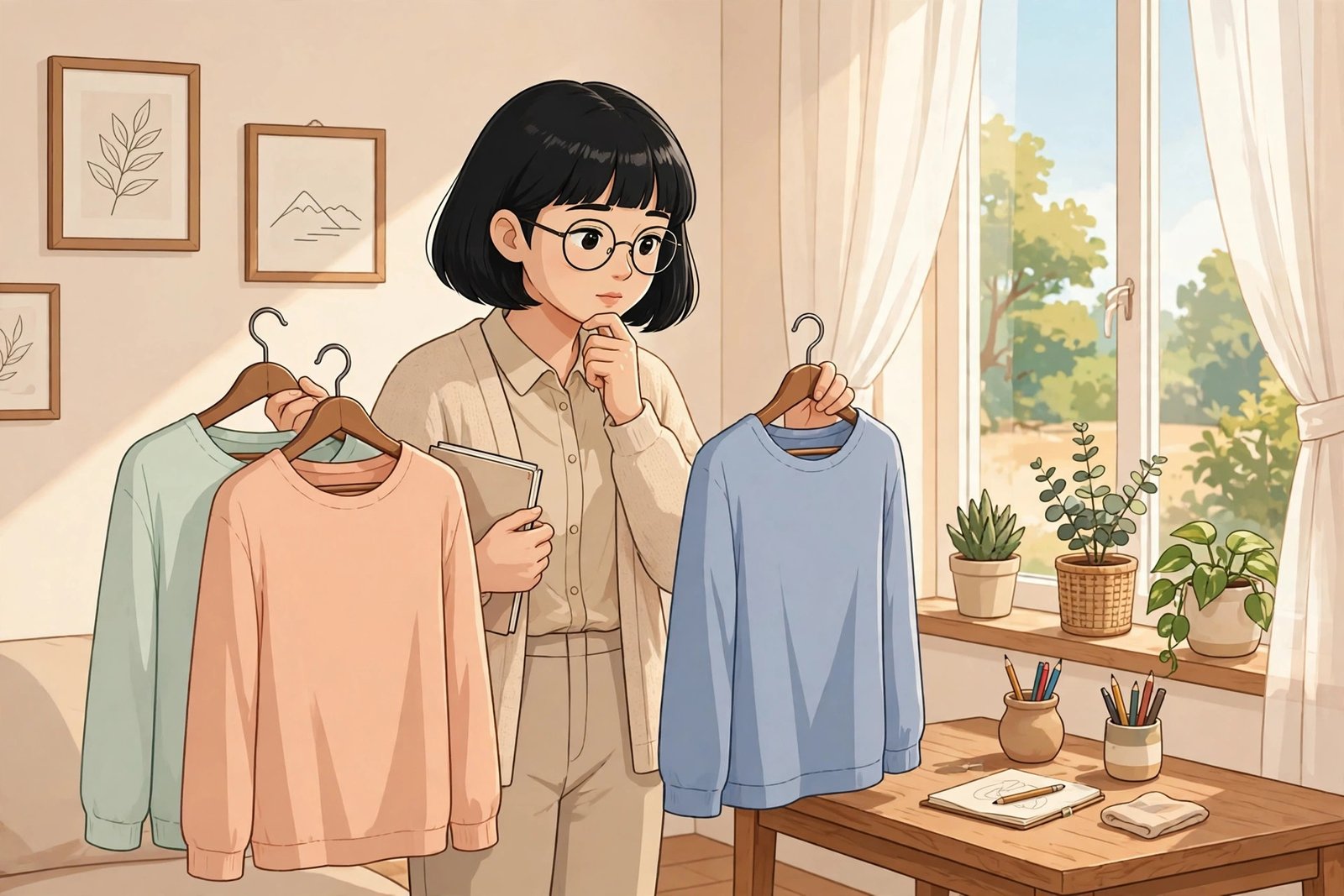
This test costs zero dollars, it takes ten quiet minutes. Yuki does it on a Sunday morning. She picks her brightest window at home. Morning light works best, she finds, it’s soft, honest, and not too yellow.
Here’s how you do it. Gather three or four tops. Pick very different colors on purpose. Grab one warm shade, like rust. Grab one cool shade, like icy blue. Add one bright and one soft, now you’re ready to test properly.
Stand facing the window, not away. Hold each top under your chin. Let the color sit near your face. Then watch your face, not the fabric. That’s the key part everyone skips, the fabric isn’t the student here. Your face is.
A good color does lovely things fast. Your skin looks smoother and clearer, dark circles seem softer, somehow. Your eyes look bright and awake, your lips keep their natural color. You look like you, on a good day.
A tricky color does the opposite, your skin can look grey or yellow. Shadows under your eyes look deeper. Tiny blemishes suddenly shout for attention, you might look tired or slightly ill. You aren’t ill, though, it’s just the color talking.
Yuki writes tiny notes after each try. “Coral: cheeks look alive.” “Icy blue: I look sleepy.” Her notebook page looks like an art log. That’s smart, because memory fudges details. Notes don’t. They’ll guide your shopping for months.
Take photos if notes aren’t your thing. Use the same window each time. Use the same plain expression, don’t add a filter, obviously. Swipe between the photos slowly, the winner usually jumps right out. You’ll spot it in seconds, promise.
Swap tops with a friend and test together. It’s free, and it’s honestly fun. You’ll see her face change too, that helps you trust the test. It isn’t vanity, it’s just light and color. Science you can see in a mirror.
Do this test when you’re rested, a sleepy, stressed face skews results. Sunday morning beats Friday night here. Also skip it right after sports. Flushed cheeks can fool your eye. Calm skin shows how to know which colors suit you best most clearly.
Repeat the test each season if you like. Your haircut may change things slightly, your tan may shift shades a touch. But your top colors stay pretty steady. That’s why learning how to know which colors suit you best starts at a window. It’s honest, it’s free, and it’s yours.
Using Your Hair and Eye Color as Clues

Your hair and eyes are clues too. You carry them everywhere, after all, they frame your face all day. So they set the stage for color. Think of them as your built in palette. You don’t choose it fresh each morning. You work with it, kindly.
Contrast is the word to know here. It’s the gap between light and dark. Dark hair against light skin? That’s high contrast, like Yuki’s look, her black bob pops against her skin. Her dark eyes add even more depth. Girls like her often carry bold colors well.
Rich jewel shades love high contrast. Think emerald, ruby, and deep teal, clear, strong colors match that energy. They don’t wash the face out, they rise up and meet it. Yuki tries a deep green top, her whole face wakes up instantly.
Soft contrast works differently, of course, light hair, light eyes, light skin? That’s a gentler, lower contrast mix, soft shades often flatter it most. Think powder blue, lilac, and dusty pink. Loud neon can drown a soft face. Gentle color lets it shine through.
Medium contrast sits in the happy middle. Most girls land somewhere in there, you can wear brights and softs both. You just balance them with care, a bright top with calm jeans works. A soft top with bold lip balm works. Balance helps you learn how to know which colors suit you best.
Eye color gives sneaky good hints. Wear a top near your eye shade. Watch your eyes suddenly pop. Green eyes love plum and warm brown. Blue eyes glow near navy and peach. Brown eyes sparkle beside gold and teal. It’s a tiny trick with big payoff.
Hair color changes can shift things. Dyed your hair last month? Your best shades may shift too, that’s normal, not a crisis. Just rerun the window test quickly. Ten minutes, and you’re sorted again. Treat your palette like a sketch. Sketches can be redrawn anytime.
Yuki actually sketches her palette out. She draws her bob, glasses, and eyes. Then she adds color swatches around them. It looks like a mini art project. But it works like a map. She can see clashes before buying.
Don’t copy a friend’s palette blindly. Her hair and eyes aren’t yours. Her winning shade may flop on you. And yours may flop on her. That’s not a flaw in anyone. It’s just how to know which colors suit you best in real life. Personal clues beat copied lists, every time.
Testing Colors With Clothes You Already Own

You don’t need new clothes to experiment. Really, you don’t. Your closet is a free test lab. Your bed is your work table. Your mirror is your judge. Let’s use what you’ve already got. If you want a bigger picture first, our guide on how to find your own clothing style as a teen helps you sort what you own and why.
Start by pulling out your basics. Grab your everyday jeans and plain tees. Add your favorite cardigan or hoodie. Lay them flat on your bed. These pieces are your wardrobe’s backbone. New colors must get along with them. Otherwise, they won’t get worn much.
Now add one brighter piece at a time. Hold it against two or three basics. Does it clash or does it sing? Try the full combo on properly. Don’t judge from the hanger alone. Clothes change completely once they’re on you. Shoulders, light, and movement all matter.
Yuki finds gold this way, honestly. Her beige cardigan goes over everything, right? One day she layers it over coral. Suddenly, both pieces look brand new. She didn’t buy a single thing. She just paired old friends differently. Two new outfits, zero dollars spent.
Check your “never worn” pile too. Every girl has one, let’s be real. That top lives at the back. You liked it in the shop. You never reach for it now. Hold it up at the window. Bet the color is the problem. It fights your skin, doesn’t it?
That discovery saves you real money. Shop lighting lies like it’s a job. It’s warm, bright, and super flattering. Colors shift hard under those lights. So test at home before buying more. Or shop in daylight near a window. Your wallet will thank you later.
Borrow before you buy, whenever possible. Swap tops with a friend for a weekend. Test her colors on your face. Test yours on hers, too. You’ll both learn twice as fast. And it’s way more fun together. Weird colors become a game, not homework.
Take mirror selfies during your try on session. Daylight only, no filter, no posing. Save the winners in one album. Name it “colors that work” or something. Next time you’re tempted while shopping, open it. Past you did the research already. Let her guide present you, please.
Sort your closet by your results. Winners go at the front, easy reach. Tricky shades move to the back. You don’t have to throw anything out. Just dress from the front most days. Mornings prove how to know which colors suit you best pays off. You’ll reach for flattering colors automatically.
Here’s the big lesson from your own closet. Testing beats guessing, every single time. You already own the proof you need. That’s the budget friendly heart of how to know which colors suit you best. No haul required. No guilt required either. Just you, your bed, and honest daylight.
Colors for School Uniforms and Small Budgets

Uniform school? Don’t panic, you’ve got options. Color play just moves to smaller details. Think cardigans, scarves, and hair ties. Think backpacks, socks, and nail polish. Small spots of color still count. They sit near your face, some of them. They can lift your whole look.
Check your school rules first, though. Every school draws its lines differently. Some allow any cardigan over the uniform. Some limit shoes, jewelry, or nail colors. Work inside your rules, with room spare. You don’t need a dress code fight. You need easy, calm school mornings.
Yuki’s school look is pretty plain. So she picks her details on purpose. A coral hair tie on bright days. A soft gold scarf in winter. A teal backpack she chose carefully. None of it breaks a single rule. All of it feels like her, still.
Small budgets work the same way, truly. One great piece beats five random bargains. A top in your best color works hard. You’ll wear it weekly, happily, confidently. A cheap top in a clashing shade? It’ll sit untouched for months. Cost per wear is the real math.
Thrift shops are your secret weapon here. They’re cheap, and they’re full of colors. You can test shades you’d never risk new. Hold each find near a window there. Use the tricks from how to feel pretty without makeup too, since bare, rested skin gives the truest read. Found a winner for two dollars? That’s a very good day indeed.
Accessories stretch a tiny budget furthest. A scarf in your best shade transforms outfits. So does a hair clip or headband. These pieces sit right by your face. That’s exactly where color matters most. Big impact, tiny price tag attached. Smart girls learning how to know which colors suit you best shop there first.
Swaps with friends cost literally nothing. Trade the top that clashes on you. Take the one that clashes on her. Both of you win a flattering piece. Nobody spent a cent at all. Run a swap afternoon each season. Add snacks, music, and honest mirrors. It’s a party disguised as budgeting.
Don’t forget hand me downs and family closets. An older sister’s sweater might suit you perfectly. A cousin’s jacket might be your color. Ask nicely, try things on in daylight. Free clothes in your shades are gold. Just return the favor when you can.
Sales need a cool head, by the way. A discount doesn’t fix a wrong color. Seventy percent off a clashing top? Still a clashing top, just cheaper. Walk past it with your head high. Save for the right shade instead. That’s how to know which colors suit you best on a real teen budget. Patience is a shopping superpower, honestly.
Building a Palette That Mixes Easily

A palette sounds fancy, but it’s simple. It’s a small family of colors. They all get along with each other. Getting dressed becomes almost automatic then. You grab pieces, and they just match. No morning panic, no outfit roulette. That’s the whole dream, isn’t it?
Start with two or three base colors. Bases are your calm, plain pieces. Think jeans, leggings, skirts, and basics. Yuki’s bases are beige, white, and denim. She owns them in several pieces each. They go with literally everything she has. Boring? Maybe. Brilliant? Definitely, on school mornings.
Next, add two or three accent colors. Accents are your flattering, happy shades. They’re the stars near your face. Yuki picks coral, deep teal, and gold. Each one passed her window test. Each one makes her skin glow. Accents show how to know which colors suit you best at a glance. Bases just hold the conversation together.
Now count your outfit options, seriously. Three bases plus three accents mix fast. Each accent top pairs with each base bottom. That’s already a pile of outfits. Add one cardigan, and it doubles. Fewer clothes, way more looks daily. Your closet shrinks while outfits grow.
Yuki tests this with her friend Clara. They lay her rack out together. Clara points at combos Yuki missed. Ten outfits appear from six pieces. Ten! Yuki stares at her own closet. “It was hiding outfits,” she laughs. Palettes really do feel like magic tricks.
Keep new buys inside your palette. That’s the rule that protects everything. A gorgeous top outside your colors? It’ll clash with all your bases. It’ll demand new pants and shoes. Leave it on the rack, sadly. Your palette keeps shopping honest and cheap.
Take a photo of your palette. Save it on your phone’s home screen. Check it before any purchase, always. It takes three seconds to compare. It saves weeks of closet regret. Pro stylists do exactly this, actually. You’re just doing it for free.
Leave a little room for one wild card. One fun color outside the family. A party top, a holiday dress, whatever. Rules serve you, not the reverse. A palette is a helper, not a warden. One joyful extra won’t wreck anything. Joy counts as a wardrobe strategy too.
Review your palette twice a year. Seasons change, and so do you. Your haircut, tan, and taste all shift. Pull out pieces that stopped working. Add one shade you’re curious about. Small updates keep the system alive. That’s how to know which colors suit you best in daily practice. It becomes a wardrobe that runs itself.
Trusting Your Eye Over Rigid Rules

Charts are helpful, but they’re not bosses. Season labels can guide your start. They can’t overrule your own mirror. They don’t know your face personally. They don’t know your life either. You do, better than any chart. Never forget who’s in charge here.
Here’s a story Yuki tells often. One chart swore coral wasn’t “her season.” But coral made her cheeks glow. It made her smile without trying. So she kept wearing it, gladly. The chart stayed quiet after that. Her mirror had the final word. Mirrors teach how to know which colors suit you best, honestly.
Confidence changes how any color looks. Wear a shade you truly love. You stand taller without noticing it. You smile faster and more often. People read that energy first, honestly. They barely clock the exact shade. A loved color becomes a flattering color. That’s not cheating. That’s how style works.
So break a rule when it serves you. Wear the “wrong” color low, though. Put beloved tricky shades in skirts. Try them in bags, shoes, or socks. Keep your best shades near your face. Everyone wins, including your favorite color. Placement is the loophole to everything.
If color stress starts eating your mornings, pause. Talk to someone kind about it. A parent, a counselor, a trusted friend. Our friends point to confidence and self esteem resources for good reason too. Clothes should add fun, not pressure. If they add pressure, something’s off. Help exists, and asking is strong.
Your taste will keep growing, by the way. A color that bored you at thirteen? It might thrill you at sixteen. New haircuts change the whole picture. New glasses change it too, ask Yuki. Stay curious and keep testing lightly. Your palette is a living sketchbook. It isn’t a label stamped on forever.
Don’t let anyone mock your color journey. Some girls act like style is a contest. It isn’t one, and you’re not losing. You’re learning your own face carefully. That’s smart, creative, and quietly brave work. Keep your notes, tests, and mirror. Let the noise stay outside your room.
Friends can help you trust your eye. Ask one honest friend for backup. “Does this shade wake me up?” She’ll tell you the truth, kindly. Outside eyes catch what yours miss. Just pick a friend who builds you up. Not one who tears outfits down. The mirror plus one good friend? That’s a styling team already, honestly.
So here’s your final permission slip. Rules start you off, that’s all. Your eye finishes the job, always. Wear what makes you feel like yourself. Stand tall in it and smile. That’s the real last lesson in how to know which colors suit you best. Trust is the finishing touch on everything.
And when you doubt it all again? Because you will, some grey Tuesday. Go back to your sunny window. Hold up your coral, your teal, your gold. Watch your face light up again. The proof is still there waiting. It never left. It was yours all along.
Frequently Asked Questions
How can I tell my undertone with jewelry?
Grab a gold piece and a silver piece. Hold each one beside your bare face. Do it in daylight, near a window. Gold blending in warmly hints warm undertones. Silver looking clear and clean hints cool. Both looking fine suggests you’re neutral. Don’t decide from one quick glance, though. Check twice, on two different days. Then confirm it with real tops at the window. Jewelry gives a clue, never a verdict. Your mirror test settles it properly.
What if my favorite color does not suit me?
Wear it anyway, honestly. Just place it smartly, that’s all. Keep it away from your face. Put it in a skirt or bag. Try it in shoes or nail polish. Or pick a softer version for tops. A deeper or dustier shade often works. You don’t have to ditch a loved color. You just move it to friendlier spots. Style is self expression first, remember. Flattering placement lets you keep both joys.
Are there colors that suit almost everyone?
Yes, a few shades flatter almost everyone. Teal is the famous one, truly. Soft coral, rich berry, and true red help too. They sit between warm and cool. They carry enough color to wake faces. Borrow a friend’s top in one. Test it at your window before buying. “Almost everyone” still isn’t literally everyone, though. Your daylight test gets the final say. It takes ten minutes and costs nothing.
How many colors should my school palette have?
Five to seven colors is plenty, promise. Pick two calm neutrals you already own. Denim blue and white work for most girls. Beige and grey work well too. Then add three or four flattering accents. Every piece should mix with every other. That tiny family makes weeks of outfits. Shopping gets clearer and cheaper as well. You’ll walk past pretty pieces that don’t belong. And you’ll save for ones that do.
Can my best colors change as I grow up?
Your undertone stays fairly steady over time. But lots around it keeps changing. Haircuts, hair color, and glasses all shift things. Your taste changes too, and that’s fine. A shade that bored you at thirteen might glow at sixteen. So rerun the window test yearly. Treat your palette like a living sketch. Update it, don’t obey it forever. That’s how to know which colors suit you best at every age.