

At 19, you could move to a new city knowing nobody and have a full social life by Halloween. It just happened: a dorm, a class, a party, a person who knew a person. At 27, you can live in the same city for two years, be friendly with dozens of people, and still spend Friday night wondering when exactly friendship stopped being automatic. If you’ve been quietly asking why is it so hard to make friends after 25, you’re not imagining it, and you’re not the only one doing the math.
The most comforting fact first: it’s not your personality. Women who were social butterflies at school hit the same wall at 27, because the wall isn’t built out of shyness or awkwardness. It’s built out of structure, or rather, out of the structure disappearing. School spent two decades quietly doing the hard part of friendship for you, and nobody told you it was doing it. Understanding why is it so hard to make friends after 25 starts with seeing what school was secretly providing.
This article is the diagnosis, on purpose. It won’t hand you a list of apps and clubs; that practical map exists, and it works better once you understand the terrain. Here, we take the machine apart: the missing structure, the synchronized busy calendars, the couples and careers redrawing everyone’s map, the lost magic of simple proximity, the pride that shows up around 25 and makes first moves feel risky, and the life stages that stop matching. By the end, why is it so hard to make friends after 25 will have an answer that has nothing to do with you being unlikable.
One more thing before we start: feeling lonely in this season is information, not a verdict. It tells you a human need is underfed, the same way hunger tells you lunch was small. It doesn’t tell you you’re broken, behind, or bad at people. If the loneliness ever turns heavy and stays for a long stretch, talking it through with a professional is a normal, strong step, like seeing a doctor about a knee that keeps aching. With that said, let’s look at the machinery.
Most women who ask why is it so hard to make friends after 25 are relieved by the end of this list, because every item on it is a fact of this stage of life, and facts like that can be worked with.
The Short Answer
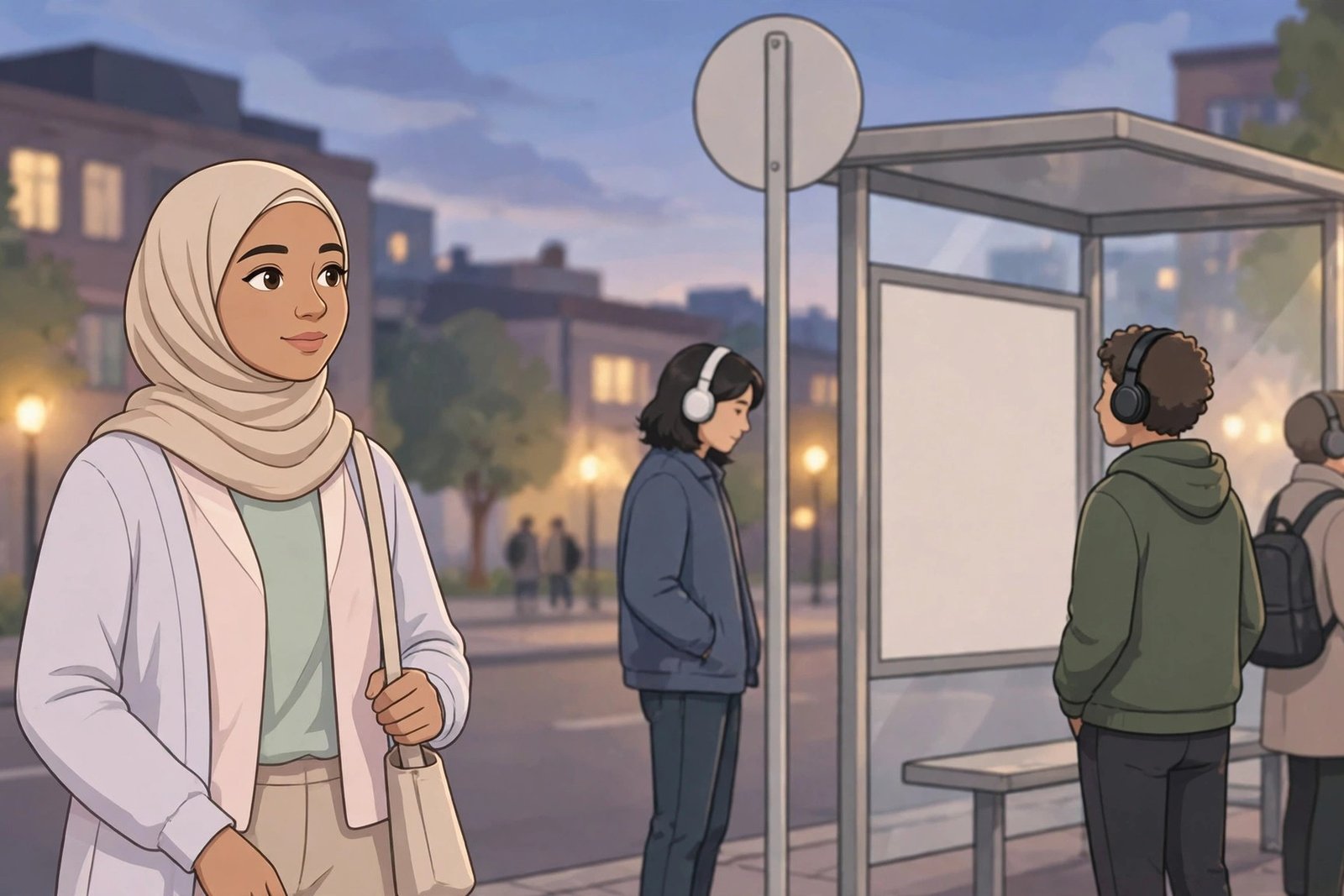
School gave you three gifts you never noticed: the same people, every day, with no planning required, and permission to be fully yourselves around each other. Adult life takes all three away at once. Work gives you people, but with professional walls up. Calendars fill in sync, couples pair off, friends scatter across cities, and pride makes “want to be friends?” feel like a sentence only children may say. That’s the core of why is it so hard to make friends after 25: the ingredients vanished, not your worth.
Nothing about this means adult friendship is rare or fake. It means it runs on a different fuel. Childhood friendship ran on proximity; adult friendship runs on intention, which feels harder mostly because it’s new. The women who thrive socially after 25 aren’t more charming than you. They grew up in, or stumbled into, pockets of repeated contact, or they made their peace with initiating. Understanding why is it so hard to make friends after 25 is the first step; the doing comes after, and it starts from a fair picture of the problem.
School Was a Friendship Machine You Never Had to Build

Think about what a school day actually was, socially. Hundreds of people your exact age, in the same building, on the same schedule, for years. You saw the same faces in the same seats until faces became people and people became friends, mostly without anyone trying. Put plainly: friendship grows out of seeing the same people again and again, with no planning, plus the freedom to be a bit raw with each other. School was a machine that produced both, daily, for free, while you were busy complaining about the food.
University ran the same machine with better lighting. Dorms, societies, shared deadlines, shared panic. Of course it felt easy. You were standing in a river of potential friends, and the river flowed past your door every morning. Nobody had to be brave, because nobody had to initiate much of anything. The structure initiated for you. When women ask why is it so hard to make friends after 25, the honest first answer is that they left the river and moved to a desert, and nobody warned them the climate would change.
Graduation quietly unplugs the machine. There’s no assembly of your age group anymore. The people you meet now arrive one at a time, in scattered places, with no shared timetable gluing you together. Even work, the closest adult substitute, only half counts: you get the repeated contact, but the open half is frowned upon, because offices run on keeping a pro face. So the machine is gone and the ingredients have to be found by hand. That’s not a personal failure. That’s the explanation, and it’s most of why is it so hard to make friends after 25.
There’s another quiet loss hiding inside the big one: nobody assigns you a group anymore. At school you belonged by default, to a class, a year, a team, whether you were charming that week or not. Belonging came first, and friendship grew inside it. Adult life flips the order. Now friendship has to come first, one person at a time, before any belonging shows up. That’s slower, lonelier work, and it’s a piece of why is it so hard to make friends after 25 that almost nobody names out loud.
Everyone’s Calendar Filled Up at the Same Time
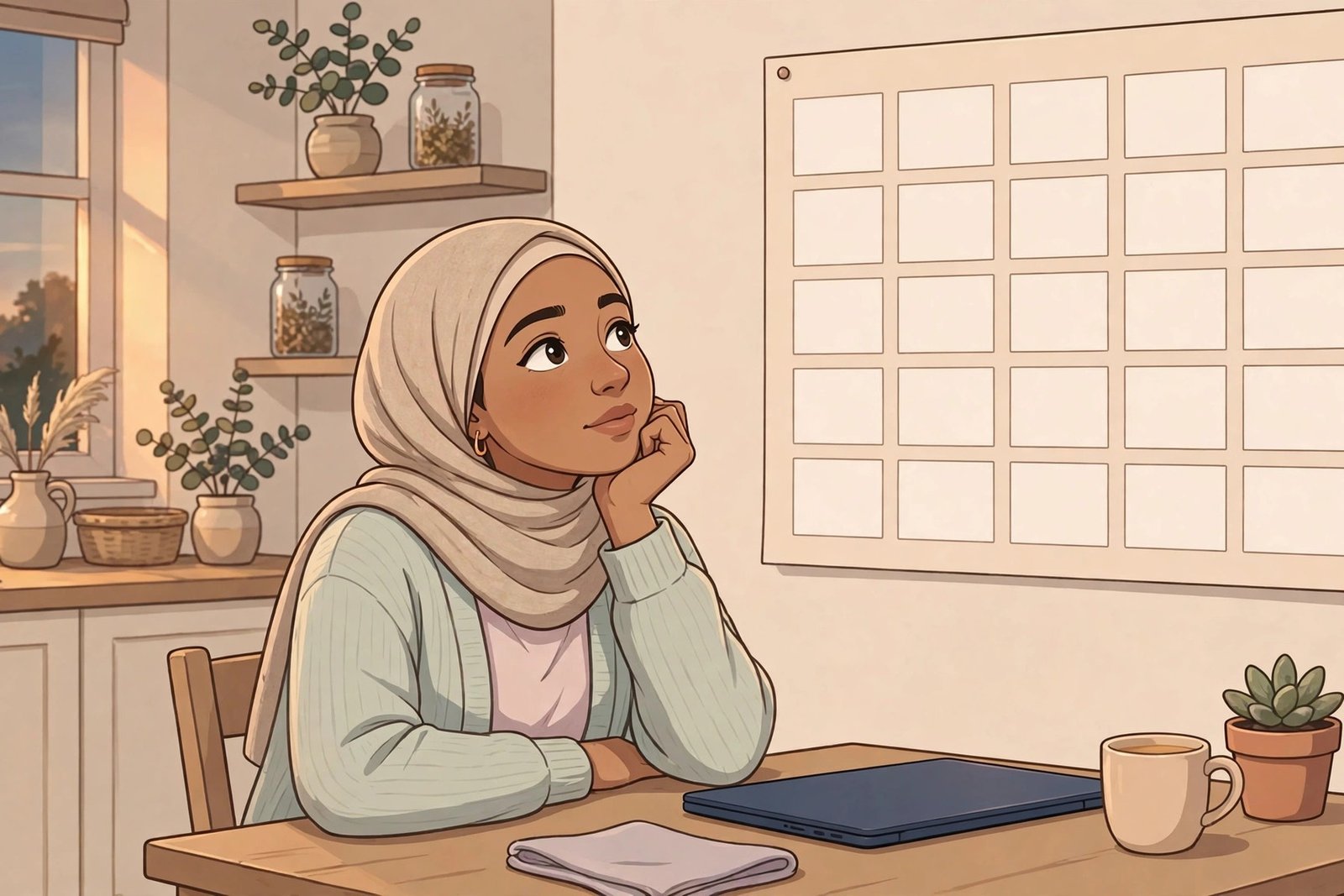
Here’s the second gear in the machine: it isn’t just that you’re busy. It’s that everyone your age got busy simultaneously, like a tide going out on the whole beach at once. At 21, a free friend was one text away. At 27, your favorite people are juggling jobs with real stakes, commutes, partners, family duties, and inboxes that never empty. Even when two women genuinely want to meet, finding a shared free evening can take three weeks of negotiations that would shame a small summit.
The math is brutal and nobody’s fault. Friendship used to live in the leftover spaces of the day: between classes, after school, long free evenings. Adult life has almost no leftover spaces. Time becomes a budget other claims eat first, and friendship, having no deadline and no boss, gets scheduled last and cancelled first. Add the energy problem: after a full workday, many women have exactly enough left for dinner and one episode of something, and the friend date loses to the couch more often than anyone admits out loud.
Notice what this does to new friendships most of all. An old friend forgives a three week gap; the bond has savings in the bank. A new connection has no savings. It needs several meetings in a row to take root, and adult calendars make “several meetings in a row” the rarest resource on earth. So sparks keep dying of scheduling, not because the match was wrong. When you wonder why is it so hard to make friends after 25, picture a hundred small sparks and a hundred full calendars, and you’ll see it’s an arithmetic problem wearing the costume of a personal one.
And here’s the cruel twist: the cancellations teach people to stop asking. You invite twice, life cancels twice, and pride whispers that a third try would look desperate. Your friend, meanwhile, cancelled because her week truly exploded, and she’s quietly waiting for you to ask again. So both sides retreat politely, each sure the other lost interest. The friendship didn’t fail. The scheduling did, three times in a row, until the story both women told themselves finished the job.
Couples, Careers, and Quietly Shrinking Circles
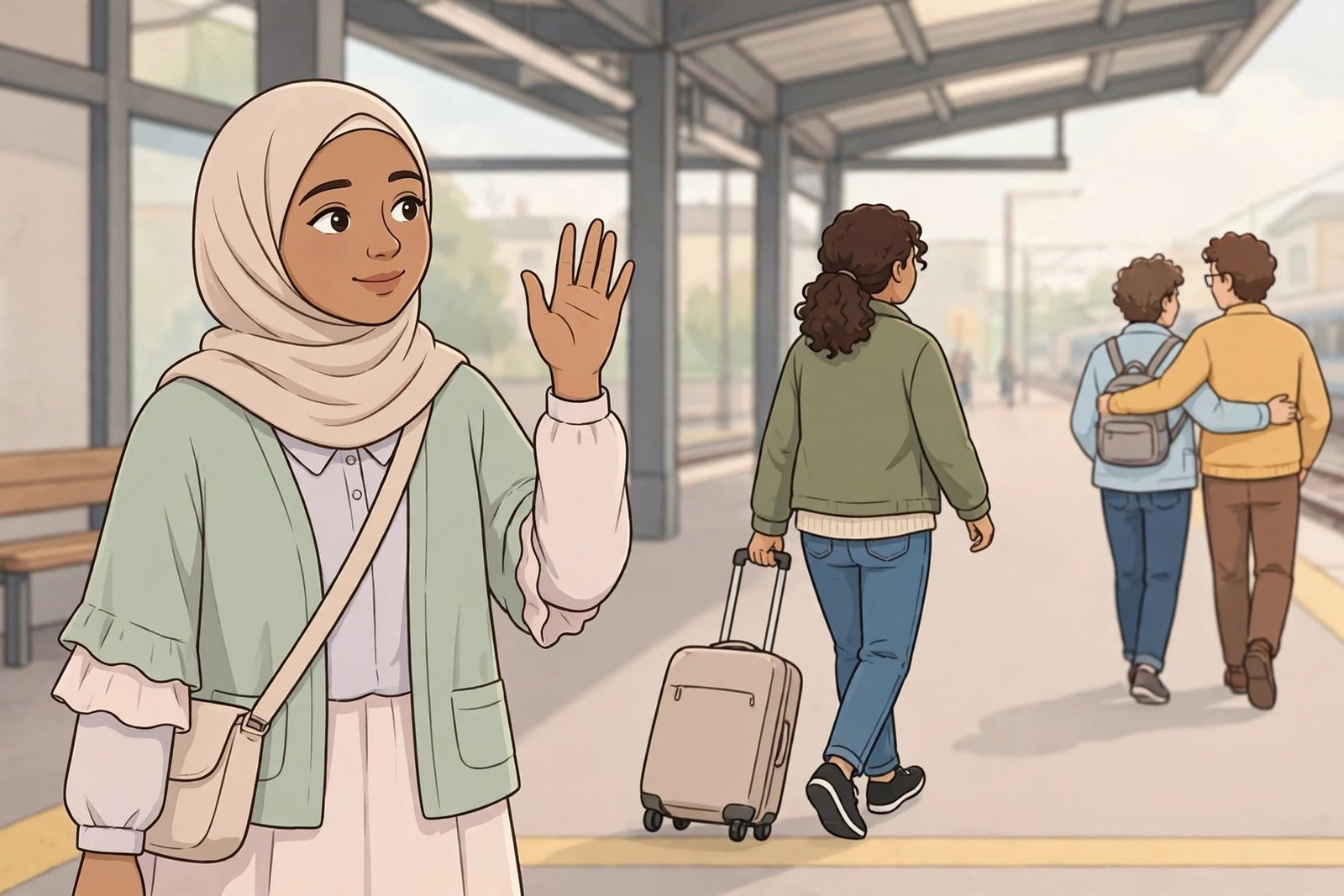
Around the mid twenties, life stops moving in a pack. School kept everyone in rough sync: same year, same stage, same problems. Then the paths fork, fast. One friend pairs off and her weekends reorganize around a partner. Another pours herself into a career with travel and late nights. A third moves home to save money, a fourth moves abroad. Nobody did anything wrong. The group simply stops living the same life at the same speed, and friendship built on sameness starts creaking.
The couple effect deserves its own honest paragraph. When a close friend falls in love, her first call, her free evenings, and her plus one all change address. Most women have been on both sides of this: the one left refreshing the group chat, and the one who vanished into a relationship for a season. It’s rarely betrayal. It’s gravity. But gravity still pulls your circle smaller, and making new friends becomes necessary at the exact age when, well, why is it so hard to make friends after 25 has a dozen answers stacking up.
Careers scatter people in space, too. The friend group that shared a city at 22 can be spread over four cities and two countries by 28, held together by a chat thread and good intentions. Long distance friendship is real and worth keeping, but it can’t hand you a coffee companion on a lonely Tuesday. So the local circle, the one that fills ordinary weeks, quietly thins to almost nothing, and the need for new local friends arrives precisely when your practice at making them is rustiest. That’s the pincer movement of this whole topic, and naming it takes half its sting away.
If this section stings, sit with the sting a second, because it hides good news. A shrinking circle isn’t proof that people liked the younger you better. It’s proof that twenty lives stopped sharing one roof. The love inside many of those friendships is intact. What died is the setup around them. Knowing the difference is half of the honest answer to why is it so hard to make friends after 25, and it’s the half that lets you grieve the change without rewriting your own worth in the process.
Proximity Used to Do the Heavy Lifting

Strip friendship down and you’ll find a plain truth: most of it comes down to sheer logistics. We bond with the people we bump into again and again. The seatmate, the neighbor, the girl from the same bus, the colleague at the next desk. Psychologists call the engine behind it repeated exposure: faces that keep reappearing become familiar, familiar becomes liked, liked becomes chosen. School and small home towns ran this engine at full speed. Adult life, with its commutes, remote work, and one bedroom flats, often switches it off.
The friendship researcher Dr. Marisa Franco explains the same two ingredients in an American Psychological Association podcast on adult friendships: real friendship needs two things, meeting the same people again and again without planning it, and being able to be open with them, and she notes that dorms and classrooms once supplied both on their own. She also points out that most of us hold our widest circle in our mid twenties, and then it thins. That thinning is a known pattern of this age. It is not a flaw in you.
Look at your week through this lens and it explains itself. Your repeated contacts now are coworkers behind professional glass, a barista, a gym full of people wearing headphones like a uniform. The encounters exist; the repetition with permission to talk barely does. Even the spaces designed for adults to gather often rotate strangers weekly, so no face gets its ten sightings. When people ask why is it so hard to make friends after 25, this is the least emotional and most mechanical answer: your life currently contains very few loops where the same unguarded people keep reappearing.
There’s a quiet hope buried in the mechanics, and it’s worth saying out loud: if proximity did the heavy lifting, then the fix is environmental, not personal. You don’t need a new personality. You need loops. Where those loops can come from in a working adult life is a practical question with good answers, and it belongs to the how to side of this topic. For now, hold the diagnosis steady: the engine stopped because the road changed. Engines can be restarted on new roads. That thought alone softens why is it so hard to make friends after 25 from a sentence about you into a problem with parts, and problems with parts have solutions.
Now think about your own last year in loops. The same train, the same faces, zero conversations. The same class at the gym where everyone’s sealed in their own bubble. We’re surrounded by almost people. At school, those almosts converted nearly every time, because the loop included talking, joking, borrowing a pen, sharing one complaint about the teacher. Adult loops keep the repetition and strip out the talking. That missing sliver of every encounter, repeated daily for years, is a real and physical part of why is it so hard to make friends after 25.
Adult Pride Makes the First Move Feel Risky

At nine, “do you want to be my friend?” was a complete and honorable sentence. Somewhere between then and 25, it became unsayable. Adults signal interest sideways: a like, a laugh, a “we should totally hang out sometime” that both parties know is weather talk. Why? Because adult pride has more to lose. A child risks a no. An adult risks looking needy, or lonely, or like she’s auditioning, and the imagination of that embarrassment is enough to keep most first moves unmade.
Franco names a second trap that lives right here: the liking gap. People consistently walk away from good conversations believing the other person liked them less than they actually did. So both women leave a promising chat thinking “she was just being polite,” and neither follows up. Multiply that by every almost friendship of your twenties and you get a landscape littered with mutual interest that died of mutual misreading. This is a serious piece of why is it so hard to make friends after 25, and it’s nobody’s character flaw. It’s a glitch in how adults read each other.
The group chat version of this trap is familiar too: how to make friends when everyone already seems to know each other starts from that exact frozen moment, standing at the edge of a circle that looks closed from the outside. From the inside, most circles aren’t closed. They’re just groups of people who also feel awkward and are relieved when someone new is brave first. Closed is usually an optical illusion created by everyone’s pride protecting everyone at once.
Work adds a professional varnish to the same fear. Colleagues can be warm for two years and never cross into real friendship, because nobody wants to be the one who misread the room. The result is a strange adult specialty: being surrounded by people you like, in a city full of people you’d enjoy, and still eating lunch alone with your phone. Naming the pride, and the liking gap underneath it, doesn’t make the first move painless. It makes it accurate. You’re not risking what you think you’re risking.
Here’s a small pattern you’ll recognize at once. You meet someone at a dinner, you talk for an hour, and it truly clicks. You both say, “we should do this again.” Then nothing. Each of you waits for a signal the other never sends, and by month two the moment feels too old to revive. Neither woman rejected the other. Pride billed them both for a risk that was mostly imaginary, and the price was one whole friendship, unpaid and unformed.
Life Stages Stop Matching

Friendship at school ran on sameness: same age, same stage, same daily problems, endless material in common. Adult life dissolves sameness on purpose. By 28, one friend is engaged, one is single and dating, one changed careers, one is caring for a parent, one is saving for a flat, one just moved in with a partner. Each life is full and legitimate, and the overlap that conversation used to feed on gets thinner. You can love each other and still run out of shared ground to stand on every week.
Stage mismatch also warps availability in ways that look like rejection. The friend deep in a new relationship or a brutal work season isn’t demoting you; her life is genuinely spoken for, in a language of hours. Meanwhile a single friend with free evenings can feel punished for a stage she didn’t choose. Both sides quietly take it personally, and “personally” is exactly wrong. It’s stage arithmetic again. Understanding that drains the blame out of half the friendship stress of this decade.
This is also why the search for new friends at this age quietly becomes a search for stage mates: people whose Tuesday looks like yours. It isn’t shallowness. Shared stage is shared context, the thing school handed out free. When women ask why is it so hard to make friends after 25, part of the answer is that the matching process got harder: at school the matching was automatic and total, and now it’s partial, scattered, and easy to miss even when the right person is standing in the same office kitchen.
The sting peaks at gatherings. Picture a reunion dinner where one friend talks babies, one talks promotions, one talks wedding venues, and you sit there doing quiet math about which of your stories still fit this table. You leave fond of everyone and oddly lonelier than when you arrived. That’s stage drift at work, not a friendship failing a test it never signed up for. When women ask why is it so hard to make friends after 25, they rarely mean strangers. They mean this exact table: known, loved, and suddenly foreign.
Hard Does Not Mean Broken

Let’s gather the whole diagnosis in one place. The school machine switched off. Calendars filled in sync across your whole age group. Couples and careers redrew the map, proximity stopped feeding you familiar faces, pride made first moves feel dangerous, the liking gap buried mutual interest, and life stages split apart. Every single item is a circumstance. Not one of them is a measurement of your warmth, your humor, or your worth as a friend. The difficulty is structural, and structural problems yield to structure, not to self criticism. Notice that why is it so hard to make friends after 25 turns out to be a question about calendars, cities, and pride, and not a question about your heart.
It’s also worth saying plainly that a smaller circle is not automatically a sadder one. Many women trade the wide shallow net of 21 for a few deep bonds at 30 and prefer it. The ache this article is about isn’t having fewer friends. It’s wanting connection, reaching for it the old way, and finding the old way gone. If you recognize yourself in is it normal to feel lonely even when you have friends, that gap between having people and feeling met is exactly this season’s signature, and it has company: half the women your age are in the same boat, refreshing the same quiet Friday nights.
So let the diagnosis do its kind work. You are not behind. You are not uniquely bad at something that used to be automatic. You are a person whose friendship machine was switched off at graduation, living in the years when everyone’s ingredients scattered at once. Why is it so hard to make friends after 25? Because the river stopped flowing past your door. Rivers can be found again, and cups can be carried to water on purpose. That carrying is the next chapter of the topic, and it starts from here: nothing about you needs fixing first.
And if you take one sentence from this whole article, take this one: the answer to why is it so hard to make friends after 25 is “the structure left,” never “you failed.”
Frequently Asked Questions
Is it just me, or does everyone feel this?
It’s nearly everyone. Friendship researchers note that circles are widest in the young and middle twenties and then taper, which means a whole generation is quietly having your exact Friday night. Most people just don’t post about it. The loneliness of this season feels private because everyone is embarrassed by the same thing at the same time, behind closed doors, in the same city.
Does it get easier after 30?
Often, yes, in a different way. The panic fades first: you stop grading your social life against school standards. Then intention replaces accident, slowly, and the friendships that form tend to be chosen and sturdier. The thirties rarely restore the old river, but many women build good wells. Different mechanics, calmer results, and far less self blame once you know the machine changed, not you.
Why do work friends rarely become real friends?
Because work gives you only half the recipe. You get the repeated contact, which is gold. But the pro face taxes the other half: being unguarded, personal, a little bit raw. Add the fear of misreading the room, and most office bonds stay pleasant and shallow for years. It isn’t hypocrisy. It’s two ingredients where one keeps getting confiscated at the door. Many office friendships stay warm for a decade without ever becoming people you’d call at midnight, and that’s the tax at work, not a failure of warmth.
Is it normal to have fewer friends than at 20?
Completely. At 20 your count was inflated by the machine: classmates, dorm mates, teammates, all maintained by shared walls and timetables. Adult counts drop because each friendship now costs real scheduling effort, so only the ones with fuel survive. Compare depth, not headcount. Three friends who would show up at midnight outweigh thirty names from a corridor you no longer walk.
If the structure is gone, can friendship still happen naturally?
Yes, just on a slower clock and with a little help from you. The ingredients never changed: repeated contact and a bit of openness. The structure used to deliver them free; now they arrive through chosen loops and small brave moments. That’s the heart of why is it so hard to make friends after 25, and also why it is not hopeless: the recipe still works. And when you strip why is it so hard to make friends after 25 down to one line, it’s this: automatic ended, not possible.