

Elena first saw it in the hallway at school. Her best friend stood with another group. She laughed loud. She told big jokes. She used her hands a lot. Elena hadn’t seen that side of her before. On the walk home, Elena felt stuck. She kept asking why does my best friend act differently around her other friends. She also asked which girl was the real one. The soft one? Or the loud one?
If that sounds like you, you’re not weird. You’re not making it up. And you’re not a drama queen for caring. Lots of girls ask why does my best friend act differently around her other friends. The switch can feel close and hurtful. With you, she’s calm and soft. She shares her secrets with you. She talks in a low voice. With them, she’s bold and silly. She wants all eyes on her. That’s a big change to watch.
This guide will help you look with clear eyes. It’ll help you keep a kind heart too. You’ll learn what’s just a normal shift. You’ll learn what leaves you feeling small. You’ll check if she still cares for you. And you’ll learn how to talk to her. You won’t need to start a fight to do it.
The Short Answer

Here’s the short truth first. Most of us act a bit new with each group. Teens do this even more than adults. You’re still learning who you are. So is she. When you ask why does my best friend act differently around her other friends, that’s often it. She’s picking up the mood of that group. She’s matching their jokes and their ways. It doesn’t mean she’s fake with you. It rarely means your bond isn’t real.
Think about how you act each day. You’re polite and neat with a teacher. You’re silly and free with your cousin. You’re quiet with a big group you don’t know. That’s not fake. That’s just you in a new room. She does the same thing too. You just see it more than most. You know her best. And you care a lot.
Some shifts are fine and healthy. She’s loud with her sporty friends at games. She’s calm with friends who love books. That’s okay. But some shifts need a closer look. She ignores you when they’re there. She mocks things she likes with you. She acts like you’re a secret. Those aren’t small things. Watch the pattern over time. Don’t judge her on one bad day.
She’s still her own person too. She can have more than one kind of friend. Asking why does my best friend act differently around her other friends doesn’t make you clingy. It doesn’t make you jealous in a bad way. It makes you a girl who notices things.
So start from a calm place. Watch what really happens. Note how often it happens. Note how you feel after it. Does she still show up for you? Does she listen when you’re sad? Does she treat you with respect in each room? If yes, the shift may just be a shift. If she keeps leaving you out, that’s real news. It’s worth a kind, honest talk.
Understand That People Show Different Sides in Different Groups
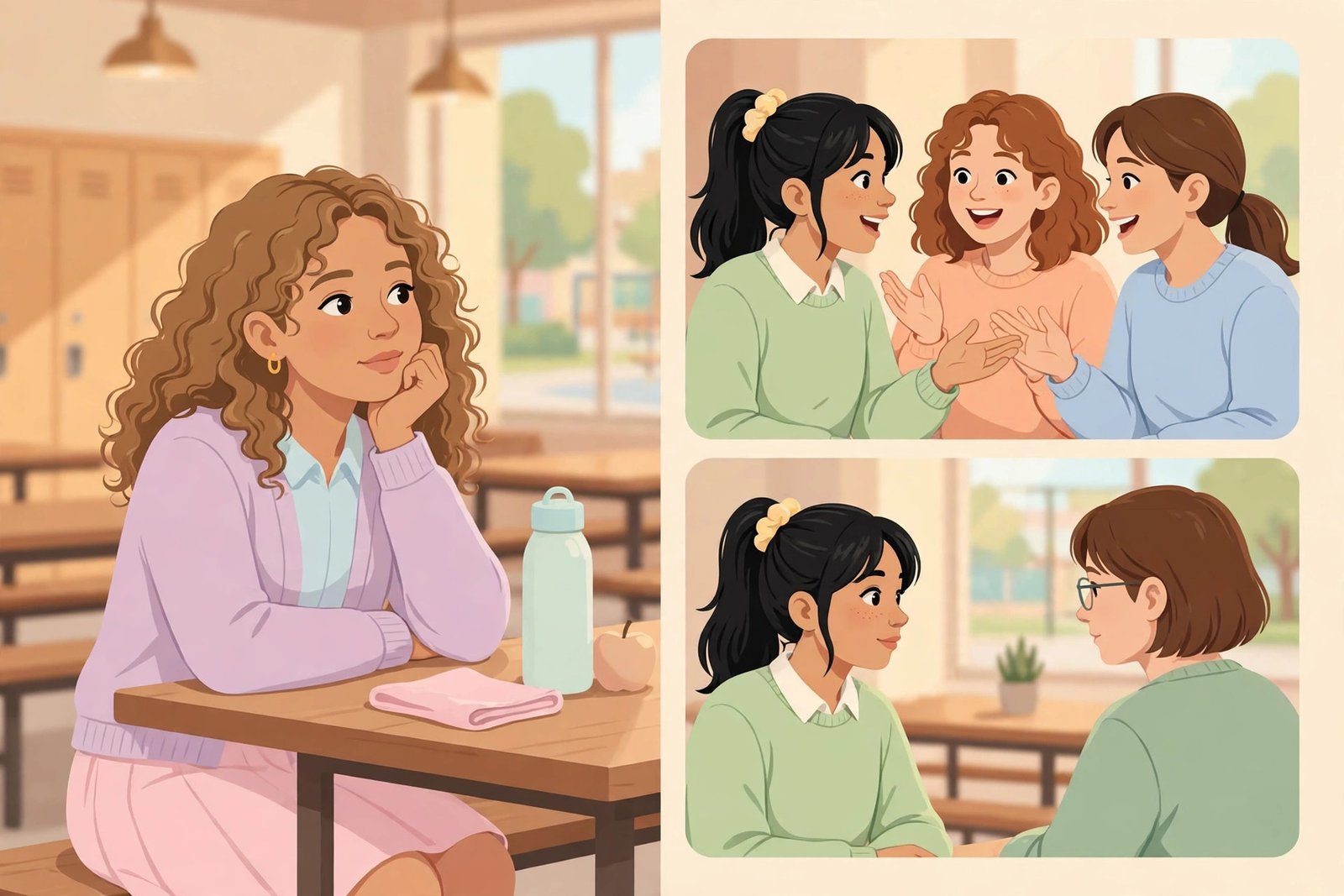
We all have more than one side. Each group pulls out a new part of us. A girl can be the funny one in one group. She can be the good listener in the next. She can be the quiet thinker in a third. None of those girls is a lie. When you ask why does my best friend act differently around her other friends, start here. This is often the first and best answer.
Each group has its own quiet rules. Some groups love big laughs and fast jokes. Some groups feel safe for slow talks. Your friend may just read the room fast. She matches the pace she finds there. Elena does that in the school library. She drops her voice without a thought. Matching a room is a skill. It’s not a betrayal of you.
Friends bond over shared things too. Those things shape how she acts. Her netball friend sees her bold, game face. You see the girl who loves songs. You get her long talks and slow walks home. Neither friend gets the whole girl. And that’s fine. No one friend has to be all things.
Ask what each group gives her. Don’t just guess she’s wearing a mask. Those friends may make her feel brave. They may make her feel liked and seen. They may feel fun and new to her. And you may be her safe place. You may be the one she can rest with. She doesn’t have to perform for you at all.
But there is a line you shouldn’t ignore. Different sides are fine. Hurtful sides aren’t fine. If you ask why does my best friend act differently around her other friends and she’s kind to you but cruel to others, trust that bad feel. Her sides can change in style. They shouldn’t change in heart. Kind girls stay kind in each room. Honest girls don’t lie to fit a crowd.
Give her a fair chance while you watch. Watch her for a few weeks. Watch her in a few places. Does she treat people well each time? Does that part stay the same? A steady heart with a soft shift is normal. A heart that flips with the crowd is not. The next parts will help you tell them apart.
Notice If She Is Quieter or Louder With Them

How loud she is may be the first clue. It can tell you a lot if you look well. Some girls get loud in a loud group. Joining in feels like the best way to fit. Some girls get quiet in a new group. They aren’t sure of their place yet. They don’t want to say the wrong thing. If you’re asking why does my best friend act differently around her other friends, name the shift. Is she louder? Or is she quieter?
A louder girl isn’t a fake girl. She may feel safe with that group. She can be playful and bold there. That group may cheer for big energy. Elena talks soft when it’s just two girls. But she yells loud at a game. Both of those girls are really her. Ask one key thing. Does her loud side stay kind? Or does she show off and hurt someone?
A quieter girl needs the same fair look. She may go quiet because she’s tired. She may be listening hard to the group. The group may talk over her a lot. She may have stopped trying to be heard. That doesn’t mean she’s cold or fake. It may mean she feels small in that room.
Watch her body as well as her voice. Does she lean in close to them? Does she laugh with ease and look calm? Or does she look around before she speaks? Does she copy what the rest do first? A calm shift often means she’s having fun. A tense shift often means she feels pushed. She wants the group to accept her. That’s why she checks each face first.
See if the shift lasts when they leave. Does she settle back to herself with you? Then the shift was just for that room. If you keep asking why does my best friend act differently around her other friends and she stays cold for hours, look closer. She may stay distant or sharp with you. She may act like you’re not there. That kind of pattern can mean more. It can mean more than a simple shift.
Try to name what you see in plain words. Don’t just tell yourself she’s fake. Say it like this to yourself. She laughs louder with them. She talks faster with them. She cuts in more with them. With me, she reads and listens well. Clear words keep your thoughts honest. They stop your brain from making up bad tales. And they help if you talk to her later.
Check If It Is About Fitting In, Not Replacing You
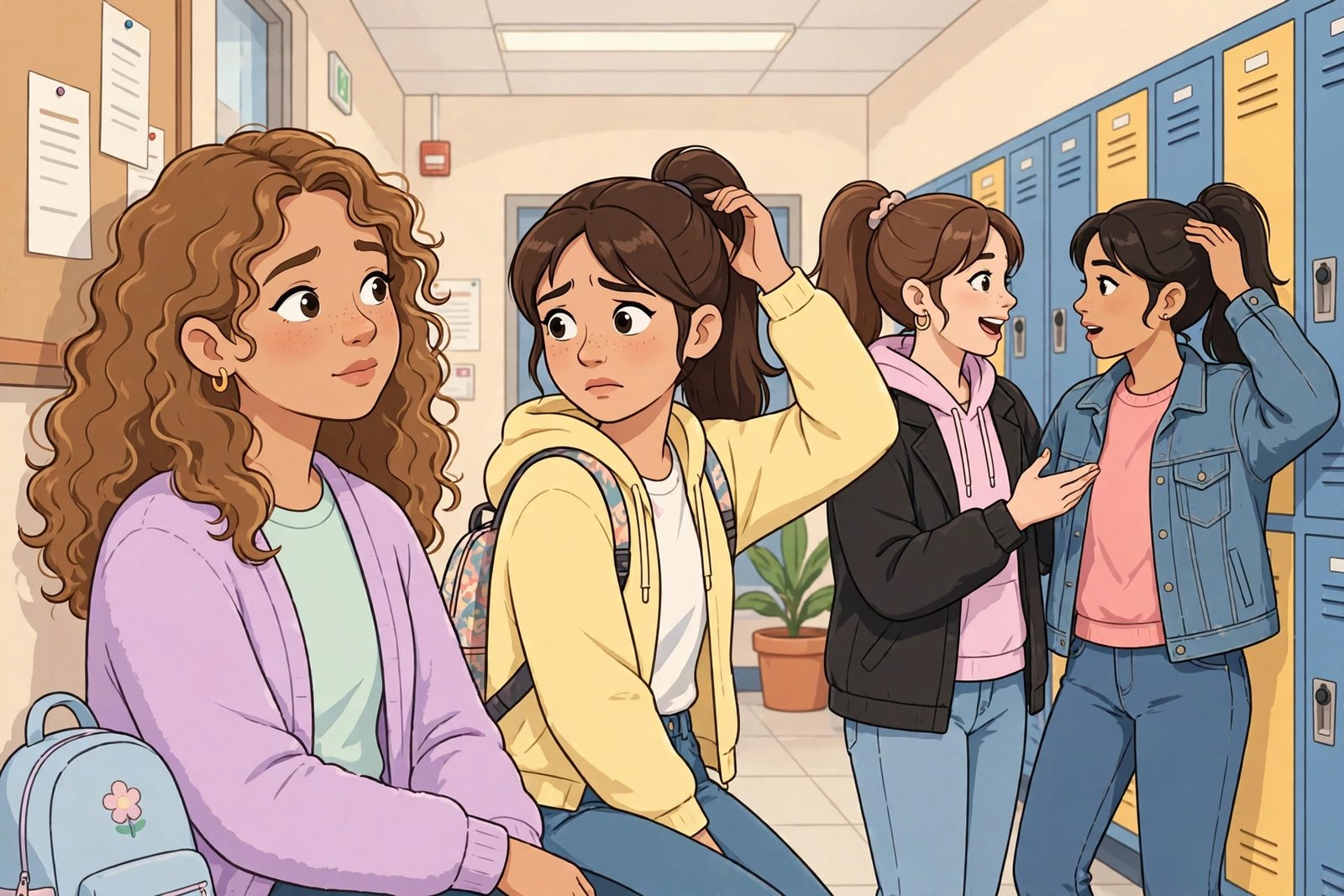
Most teens want to fit in so badly. That wish drives so much of what they do. It can look hurtful from the side. But it often isn’t about you at all. She may copy their slang or laugh. She may share their new likes and views. She does it to feel liked and safe. She doesn’t do it because she loves them more. When you ask why does my best friend act differently around her other friends, fitting in is a top answer.
Fitting in often looks like copying. She dresses a bit like they do. She repeats the words they all say. She nods fast, even if she isn’t sure. She wouldn’t do that on her own. There’s good help on how cliques and friend groups work for teens you can read. Some groups are open and easy. Tight groups can make girls fear being pushed out. That fear can change how she acts. She may not even see it in herself.
Don’t mix up two very different things. Being one friend more is not being replaced. She can gain new friends and new jokes. She can still keep your place with care. Being replaced looks much worse than that. Plans get cut again and again. Texts don’t get a reply for days. Secrets get shared with all but you. A busy life alone isn’t proof. It doesn’t mean she’s pushed you aside.
Feeling jealous can blur the whole picture. And that feel doesn’t make you a bad friend. The ache is often fear of loss. It’s not proof she’s done you wrong. When the ache hits, slow down. List facts, not fears, for a bit. She still texts you at night, right? She still saves you a seat at lunch. She still tells you her fears first. Those facts count for a lot.
But don’t talk yourself out of real signs. If you ask why does my best friend act differently around her other friends and she hides you, take note. She denies your plans in front of them. She acts shy or ashamed to know you. Then fitting in has gone too far. A group that asks her to shrink you asks too much. It asks too much of her too.
Both views can be true at once. She can find it hard to belong. And she can still be wrong in her acts. Knowing her stress can soften your heart. You can go to her with care, not rage. But you don’t have to stay silent. You shouldn’t feel unseen or small in silence.
Pay Attention to Whether She Still Makes Time for You

How she acts in a group can confuse you. Time is much more clear and plain. A friend who still makes time tells you a lot. She keeps your plans. She seeks you out at school. That says your place in her life is real. When you’re stuck on why does my best friend act differently around her other friends, look here. Look less at her acts with them. Look more at what she gives to you.
Look at the small, steady things she does. Big words don’t prove much at all. Small acts prove a whole lot more. Does she reply when you need her? Does she recall what counts for you? Does she ask how your day went? Does she sit with you on the bus? Steady small acts are the heart of this. They’re what make a close bond last.
Look too at what she does in busy weeks. Tests, home life, and new clubs fill days. Each bond has quiet weeks at times. Those weeks don’t mean much on their own. The fair test comes when things calm down. Does she come back to you then? Does the effort flow both ways over time? One busy month is just weather. Months of one way effort is a climate.
See if she makes room for you near them. It counts when they’re all around too. A good sign is warm and clear. She greets you with a smile. She pulls you into the talk. She doesn’t act like you’re a problem. You don’t need to join each hangout. She doesn’t need to merge all her groups. You just need to be treated as real. You need to feel welcome in her life.
Tell the truth to yourself on this one. If you think why does my best friend act differently around her other friends and she hardly sees you now, face it. Don’t shame yourself for feeling sad. Bonds can drift as likes change. School plans change too as terms pass. Drift isn’t always one girl’s fault. But your needs are still fair. You need time, care, and a friend you can trust.
Try one small, clear test of your own. Ask for a walk after school. Ask for a study hour at the library. Ask for a snack you both love. Then watch what she does next. Does she meet you with warmth? Or does she make weak excuses each time? Her reply tells you a lot, with no games. One kind invite tells you more than weeks of worry.
Avoid Comparing Your Hangouts to Theirs

Don’t stack your days next to theirs. Stacking turns a small worry into a heavy one. Their days may look loud in pics. Their days may look cool and fun online. Your days may look plain from inside. If you ask why does my best friend act differently around her other friends while you scroll, pause. You’re seeing their best bits, not their real life.
Pics and short clips hide so much. They don’t show the dull, quiet bits. They don’t show the girl who felt left out. They don’t show the long bus wait in the cold. Some of the best parts of a bond don’t film well. They’re too soft and too private for a pic.
This habit can change how you act too. And it won’t change you for the best. You may start to perform on your hangouts. You may try to be louder or more fun. You’ll try to beat a group you shouldn’t copy. That push steals the ease you two had. Your time doesn’t need to look like theirs. It doesn’t need pics to prove it’s good.
Cut back on the things that feed this habit. Mute a story that makes you spiral. Put your phone down late at night. Step away when a group pic stings. Lots of girls learn from why feeling lonely can happen even when you have friends and feel less shame. You’re free to guard your peace. You can do that while you sort your heart.
When you ask why does my best friend act differently around her other friends on each scroll, change the test. Ask how your bond feels, not how it looks. Do you laugh when you’re with her? Do you relax and feel known by her? Do you leave her side feeling more steady? Those answers tell the real truth. They beat any pic you’ll ever see.
Name it if you’ve pulled away too. That can cool a bond all on its own. She may not have picked them over you. You may have stepped back while you waited. You waited for her to pick you first. Give the bond a fair test of its own. Judge it by its own sweet moments. Don’t judge it by a screen of theirs.
Talk About How It Feels Without Accusing Her

At some point, watching and waiting won’t be enough. A soft talk can bring real relief. Pick a calm, private time for it. A walk home can work well. Quiet porch steps can work too. Don’t do it in the group chat. Don’t do it in front of her other friends. If you’ve asked why does my best friend act differently around her other friends for weeks, tell her. Telling her with care is fair.
Start with your feels and clear facts. Don’t start with labels or blame. You could say this to her. I felt left out on Tuesday at lunch. You walked past my table in the cafeteria. I miss how easy we are as a pair. Words like that help her listen. Words like fake or two faced won’t help. She’ll just fight back and shut down. She won’t hear what’s in your heart.
A big talk can make your mind go blank. Your voice can shake and your eyes can sting. That’s normal, and you can prep for it. You can read how to have a difficult conversation without shutting down before you go. It gives you ways to slow down. It helps you breathe and say it all.
Ask her things and leave space for her side. She may not have seen the shift at all. She may say she feels pushed in that group. She may hate how it changes her acts. Hearing her side won’t erase your feels. It just gives you both a fuller truth.
Say what you need in small, clear steps. Don’t just ask her to act better. Ask her to greet you at your locker. Ask her to keep your plans on Fridays. A new group invite shouldn’t erase you. Ask her not to joke about your likes. Those asks are easy to grasp and do. They give her a real chance to change.
Watch how she takes the talk too. If she mocks you, that’s real news. If she punishes you for a soft worry, note it. You need a friend who can hear you. If things feel unsafe or cruel, get help. Talk to a grown up you trust. That’s a parent, a teacher, or a school counsellor. Asking them for help is strong and smart. It’s never a betrayal of your friend.
And if you still ask why does my best friend act differently around her other friends after the talk, watch her acts. Watch what she does in the next weeks. Words can open a door for change. But acts are what walk through that door.
Decide What Kind of Friendship You Actually Need

Once you see her acts more clearly, turn to you. Once you’ve talked with care, ask this. What do you need from a best bond? What helps you feel safe, seen, and glad? When you ask why does my best friend act differently around her other friends, part of it may be this. Her way of being a friend may not match you. It may not match what you need now.
Write your must haves down on paper. Keep the list short and honest. Don’t make it a long list of rules. You may need time each week together. You may need the same warmth in each room. You may need to raise a worry without fear. Those aren’t big asks at all. Knowing your needs helps you stay calm. You won’t judge the bond just on bad days.
Needing more than she can give isn’t evil. It doesn’t make you the bad guy. It doesn’t make her the bad guy either. Some girls love a loose bond and many groups. Some girls thrive with one close anchor friend. Neither way is wrong for a girl. But a mismatch can hurt both girls. Name it so the hurt doesn’t grow.
Widening your world isn’t a threat to her. It isn’t revenge and it isn’t mean. You may still ask why does my best friend act differently around her other friends on some days. Join a club you like at school. Talk to a kind girl in your class. Spend time with your cousins on weekends. Those bonds give you fun and support.
Set soft limits where you need them. Hold those limits with a kind heart. You could stop lending your notes to her. She ignores you at school, so that’s fair. You could stop waiting all night for texts. Her texts rarely come, so you can rest. Limits aren’t a way to punish her. They’re a way to guard your time and heart.
Some bonds still leave you feeling small. You did your best and you talked with care. But you feel small more than you feel loved. Letting a bond get less close can be sad. It can also be healthy for you. Do it without gossip or cruel games. Don’t cut her off in a cold way. Wish her well and keep your pride.
Let her acts over time guide your choice. Don’t let one odd day in the hallway decide it. You need friends who are glad to know you. They should be glad in the open, not in secret. They make time for you each week. They hear your feels with real care. Trust the pattern, not one loud afternoon. Keep asking honest things. Keep treating people with kindness. And trust this last thought. The bond you need won’t make you shrink. You won’t have to shrink to keep your place in it.
Frequently Asked Questions
Is it normal for my best friend to act like a different person with others?
Yes, it’s very normal for most teens. You’re all still learning who you are. Most girls shift their energy with each group. They shift their jokes and their talk too. That shift alone doesn’t mean she’s fake. It doesn’t mean your bond is false either. What counts is how she treats you. Does she stay kind and loyal to you? Does she show you respect in each room? If yes, her new sides are just growth. They’re not a red flag for you.
Should I be worried if she is much louder and bolder with them?
Not at first, so don’t panic yet. Some groups pull out a wild, fun side. Quiet rooms don’t pull out that side. Watch what comes with the bold acts. Laughs and energy are one thing. Showing off and mean teasing are not. Does she diss things she loves with you? Does the loud girl still greet you warmly? If yes, there’s not much to fear. If she drops you to look cool, talk soon. Have a calm, honest talk with her.
What if she ignores me when she is with that group?
It hurts when your best friend ignores you. You don’t have to laugh it off. First, check if it was just once. Was it one busy lunch in the cafeteria? Or does it happen each time they show up? If it keeps up, tell her in private. Tell her how it felt on that day. Ask her to greet you and pull you in. A caring friend will hear you and try. If she keeps brushing you off, guard your heart.
How can I bring this up without losing the friendship?
Pick a calm, private time to talk. Use your own feels, not harsh labels. Name one clear moment, like Tuesday at lunch. Don’t call her fake or say she picked them. Asking why does my best friend act differently around her other friends out loud is best done early. Say it with care, not blame. Ask her side and hear her out. End with one or two clear asks. Keep our plans. Greet me at my locker. Talks like this can make a bond stronger.
What should I do if nothing changes after we talk?
Give her a fair chance to change first. New habits take a bit of time to stick. Then judge her acts, not her sweet words. If you still ask why does my best friend act differently around her other friends and feel small each week, step back. Step back with care, not with cruel games. Put time into other friends and clubs you love. If it feels cruel or too much to bear, tell a grown up you trust.