

It usually hits at a birthday dinner, or in a group photo, or while you’re scrolling at midnight. You look at your friends, women you’ve known since school, and then you look at yourself, and a small cold thought lands: I look older than them. Your skin looks more tired. Your face looks more lined, more changed. They seem to have stayed twenty two, and you feel like you’re aging faster than my friends, all of them, at once.
If that thought has visited you, you aren’t vain and you aren’t broken. Almost every woman in her mid to late twenties has had some version of it, usually in a bathroom mirror under bad light, usually when she is tired or stressed or both. It’s a feeling, and feelings about our own faces are famous for being loud, convincing, and often very unfair. This article is about that feeling: where it comes from, what part of it’s real, and how to quiet it down.
Because here’s a gentle truth to hold from the start. You don’t see your friends the way you see yourself. You see them laughing, moving, lit by warm restaurant light, at arm’s length. You see yourself at 7 am, six inches from a mirror, hunting for flaws. The comparison was never fair, and a big part of feeling like you’re aging faster than my friends is built on that unfair setup, not on your actual face.
We will go through it piece by piece. How stress and short sleep print themselves on a face. Why photos lie. What is genuinely changing in your late twenties, because some things do change, and that’s normal and shared. And then the kinder part: small habits that calm the spiral, and how to make peace with your own timeline. Your face isn’t falling behind. It’s just living your life, at your speed, in your light.
The Short Answer
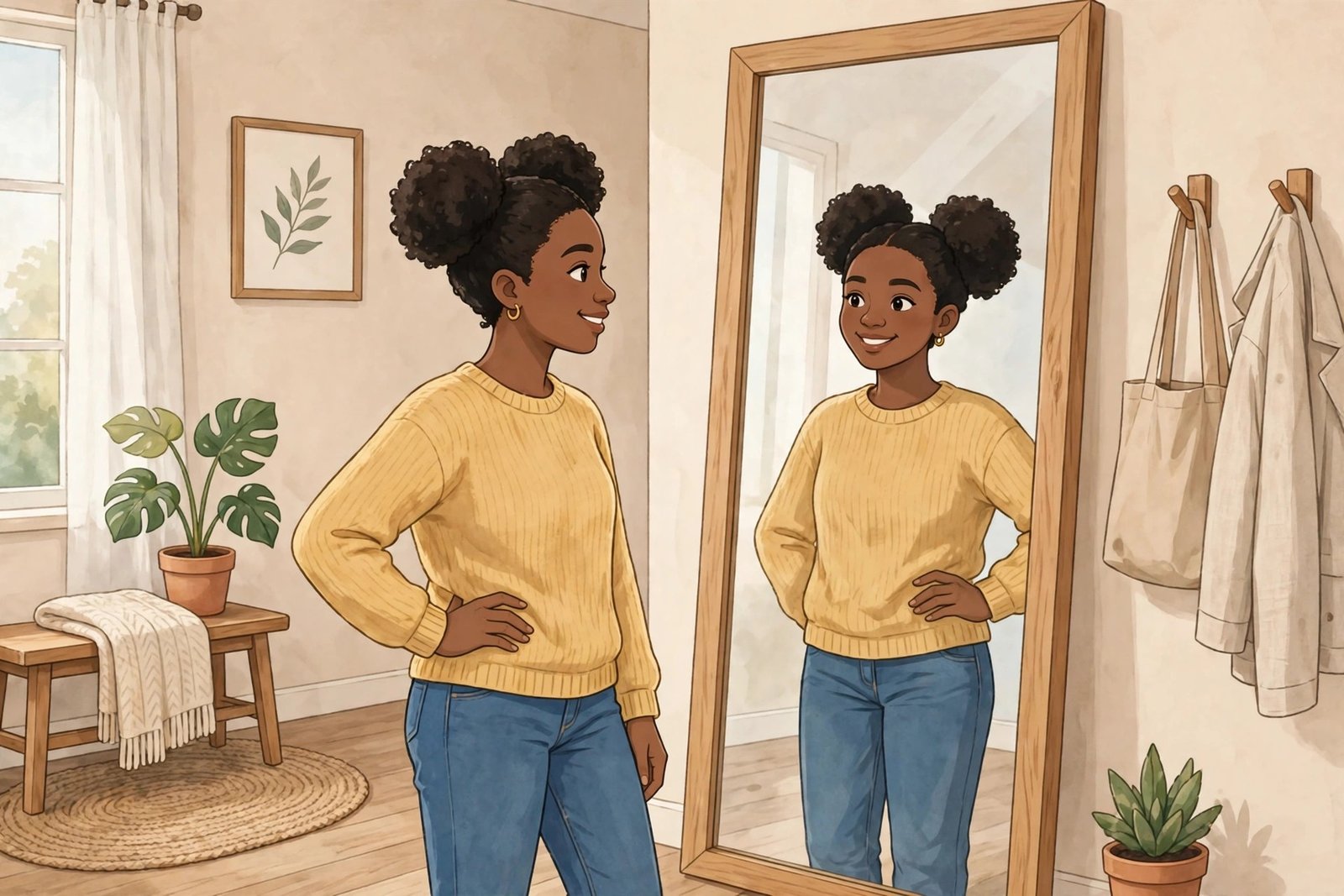
Feeling like you’re aging faster than my friends is very common in your late twenties, and it’s mostly a trick of perception. You study your own face up close, tired, and unfiltered, while you see your friends from a distance, rested, smiling, and well lit. Stress, poor sleep, sun, and hard seasons can also make anyone look more tired for a while, and tired reads as older. Small changes are real at this age and happen to everyone. Care for your sleep, your skin, and your stress like you would for a friend, and if the worry becomes constant or heavy, talking to a professional is a normal, healthy step.
It also helps to say the quiet part out loud: this feeling usually says nothing about how you actually look to anyone else. Ask the friend you trust most if you look older lately, and watch her face. She’ll probably look confused, because to her you simply look like you, the same person she had coffee with last month. Other people see a whole living face, not a list of small changes. Hold on to that gap between your mirror and their eyes. In their eyes, you aren’t aging faster than my friends at all.
What That Feeling Really Is
Start by naming it correctly. What you’ve is a feeling about aging, not a measurement of aging. Nobody has timed your skin against your friends’ skin. There’s no race, no scoreboard, no finish line where faces get ranked. What there is: a brain that spots change in the mirror, a culture that treats young as better, and a habit of comparing your closest close up with everyone else’s highlight reel. That mix can make anyone feel like she is aging faster than my friends, even on an ordinary week.
Notice when the feeling shows up. For most women it isn’t random. It arrives after a bad night of sleep, during a stressful month at work, after a breakup, in the flat light of an office bathroom. It arrives when you’re already low, and it borrows that low mood and wears your face as a costume. If the thought visits mostly when you’re tired or sad, that timing is information. The feeling is reporting on your state, not on your skin.
It also grows in the dark. Because almost nobody says this fear out loud, every woman assumes she is the only one who feels it. She is not. Ask a close friend, gently, and there’s a good chance she has stood in front of the same mirror with the same thought about herself, possibly while looking at a photo of you and thinking you look great. The fear feels private. It’s actually one of the most shared secrets of this age.
Naming it as a feeling doesn’t make it vanish, but it does shrink it to its real size. A feeling can be answered, soothed, and put in its place. A verdict cannot. So for the rest of this article, treat the thought of aging faster than my friends as weather, not as climate. It passes through. It isn’t the truth about your face, and it’s definitely not the truth about your worth.
Your Friends Are Not Aging in the Same Light

Think about how you actually see your friends. Across a cafe table, in warm afternoon light. Across a room at a party, laughing. In photos they chose, from angles they liked, often with a filter doing quiet work. You see the polished version, at a kind distance, in motion. Faces in motion always look younger, because expression is lively and skin is doing what skin does when someone is happy.
Now think about how you see yourself. In a bathroom mirror, six inches away, under a white light that flattens everything. In a front camera you didn’t ask for. In the office elevator mirror at the end of a long day. Nobody looks young under those conditions. Models wouldn’t look young under those conditions. You’re comparing your worst viewing conditions with your friends’ best ones, and then blaming your face for the result.
Distance matters too. At arm’s length, you can’t see a friend’s fine lines, pores, or the small shadows under her eyes. At six inches, you can see all of yours, in high definition. Your brain quietly forgets that this is a distance problem, not an aging problem. If you stepped six inches from any friend’s face with a hunting eye, you would find the same lines and shadows. Skin at twenty seven has texture. All of it. Everyone’s.
If this comparing habit sounds familiar, you may like our piece on how to stop feeling less pretty than your friends, because the setup is a close cousin of this one. And remember the simplest test: your friends aren’t sitting around thinking you look old. They are too busy worrying that they’re the one aging faster than my friends, which tells you everything about how reliable this fear is.
There’s a kinder test you can run. Find a photo of your friends from five years ago and one from last month, and look at them side by side. You’ll see what time has done to everyone: a little softness here, a line there, a different hairstyle covering a multitude of small changes. Time visits every face at the table. It has never once singled you out. Seeing the whole group’s story written gently across all of you can make the fear feel smaller, because the story was never that you’re aging faster than my friends. It’s that you’re all changing, together, at human speed.
Sleep, Stress, and the Tired Face Effect

Some of what you’re seeing is real, but it’s usually not aging. It’s tiredness wearing aging’s clothes. Short sleep shows up as dull skin, darker shadows under the eyes, and a face that looks somehow flatter. Stress does similar work: tense jaw, tight forehead, skin that reacts or breaks out, a general look of being worn thin. None of that’s permanent change. Most of it fades within days of real rest, which true aging never does.
Life in your late twenties isn’t evenly distributed, and this matters. Maybe your friends are in calm jobs and you’re in a brutal one. Maybe you’re caring for a parent, or studying at night, or carrying money stress they don’t have right now. Hard seasons print on faces. That isn’t your skin failing. That’s your face honestly reporting a heavy chapter. Chapters end. When the load lightens, faces usually soften again, because much of what looked like aging faster than my friends was really just a harder year than theirs.
The everyday habits play their part too, and they’re worth naming without any guilt. Sun over the years, smoking, lots of late nights, very little water: these are the classic things that can make skin look older sooner. But hear the tone here. This isn’t a lecture and it isn’t blame. It’s just information, the same for everyone, and small steps count. Sunscreen on workday mornings. Water on your desk. One earlier night a week. Gentle, doable things.
What doesn’t help is panic buying. A spiral at midnight can turn into three expensive creams by morning, and creams can’t fix sleep, stress, or a hard season. They also can’t fix a feeling. Care for the basics first, kindly and slowly, the way you would advise a friend you love. If the face in the mirror still feels like it’s aging faster than my friends after your life has calmed down, that’s the moment for the calmer steps later in this article, not for shame.
If you want a small reality check, look at an older photo of yourself from your hardest month last year, then one from your last real holiday. Same face, same age, two very different women looking back at you. The difference between those two photos is rest, light, and peace of mind, not time. Keep both photos somewhere you can find them. On the next spiral morning, they’re hard evidence that what you call aging is often just a season, and seasons, by definition, don’t stay.
Photos Compare You at Your Worst Angles

The group photo deserves its own section, because it starts so many of these spirals. Here’s what a group photo actually is: a fraction of a second, caught mid laugh or mid blink, shot from below or above, in whatever light the room had, then compressed by an app. It’s the single least reliable portrait of you that exists. And it’s the one you zoom into, alone, comparing your frozen fraction of a second with everyone else’s.
Your friends hate their faces in the same photos, by the way. Every woman in a group picture thinks she is the one who looks off. She zooms on herself, finds the angle unkind, and quietly concludes she is aging faster than my friends, while the friend beside her is doing the exact same zoom on her own face. The photo isn’t evidence. It’s a funhouse mirror that everyone takes turns believing.
Phone cameras add their own tricks. Front cameras widen the center of the face. Harsh flash flattens and ages. Overhead light carves shadows under eyes and makes everyone look five years more tired. Professional photos of celebrities, the ones your brain compares you with at midnight, use the opposite of all of this: perfect light, perfect angles, and quiet editing. You’re comparing your raw file with their finished poster.
Try a small experiment next time a photo upsets you. Look at the whole picture first, not your zoomed face. Notice the light, the angle, the moment. Then ask if you would judge a friend’s whole face and worth from that one frame. You would not. Give yourself the same mercy. And if certain albums or accounts always leave you feeling like you’re aging faster than my friends, it’s fine to look at them less. Protecting your peace isn’t vanity. It’s housekeeping for your head.
What Is Real, and What Is Just Loud
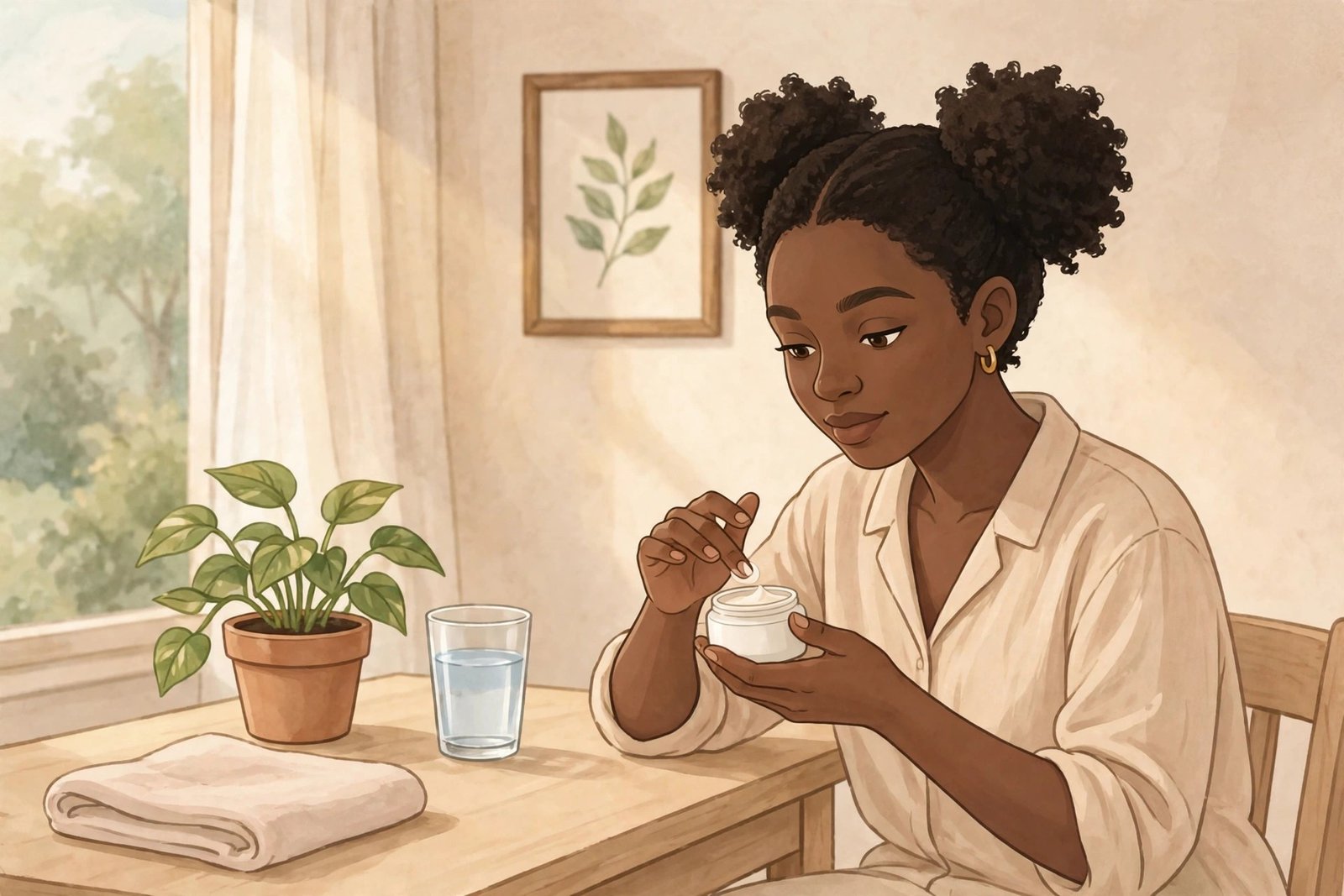
Let us be honest about the real part, because pretending nothing changes helps nobody. In your late twenties, skin does begin to change, slowly. It can hold moisture a little less easily. Fine lines from smiling and squinting can stay a moment longer. Recovery after a late night takes a bit more time than it did at twenty one. This is normal biology, it happens to every single one of your friends too, and it’s slow. We are talking about gentle shifts over years, not a cliff at twenty seven.
Genetics also deal different cards. Some families keep smooth skin for decades. Some get lines early because their faces are expressive, their skin is dry, or their heritage runs that way. Early lines are often a family trait, like a nose or a laugh, not a personal failure or a sign of a life lived wrong. Your friend’s smoother forehead may be her grandmother’s gift, nothing more. Comparing family traits is as pointless as comparing heights.
Now the loud part. There’s interesting research on the worry itself. A psychologist writing in Psychology Today described a study on worrying about aging where women who felt more anxious about getting older showed signs of aging at a slightly faster pace in blood markers. The writer is careful, and we should be too: the study shows a link, not a cause, and appearance worries were the weakest part of it. The takeaway is gentle, not scary. The worry is heavy to carry, and easing the worry is worth doing for its own sake.
So sort your thoughts into two piles. Real and slow: small skin changes, family traits, the marks of a busy season. Loud and fast: midnight spirals, zoomed photos, mirror hunting at 7 am, comparing your raw morning face to edited faces online. The first pile needs simple care and patience. The second pile needs kindness and better habits of looking. Neither pile means you’re aging faster than my friends in any way that matters. Both piles are just part of being a woman with a face and a life.
One more sorting trick helps on the loud days. Ask yourself what you’d say if a friend described your exact face as a problem. You’d stop her mid sentence. You’d name three things that are lovely about her face before she finished the thought. That instinct, instant and certain, is your real opinion about faces like yours. The critic voice is just louder, not wiser. Borrowing your own kindness back from the friend version of you is a fair move, and it works precisely on the days you feel like you’re aging faster than my friends.
Small Habits That Quiet the Spiral
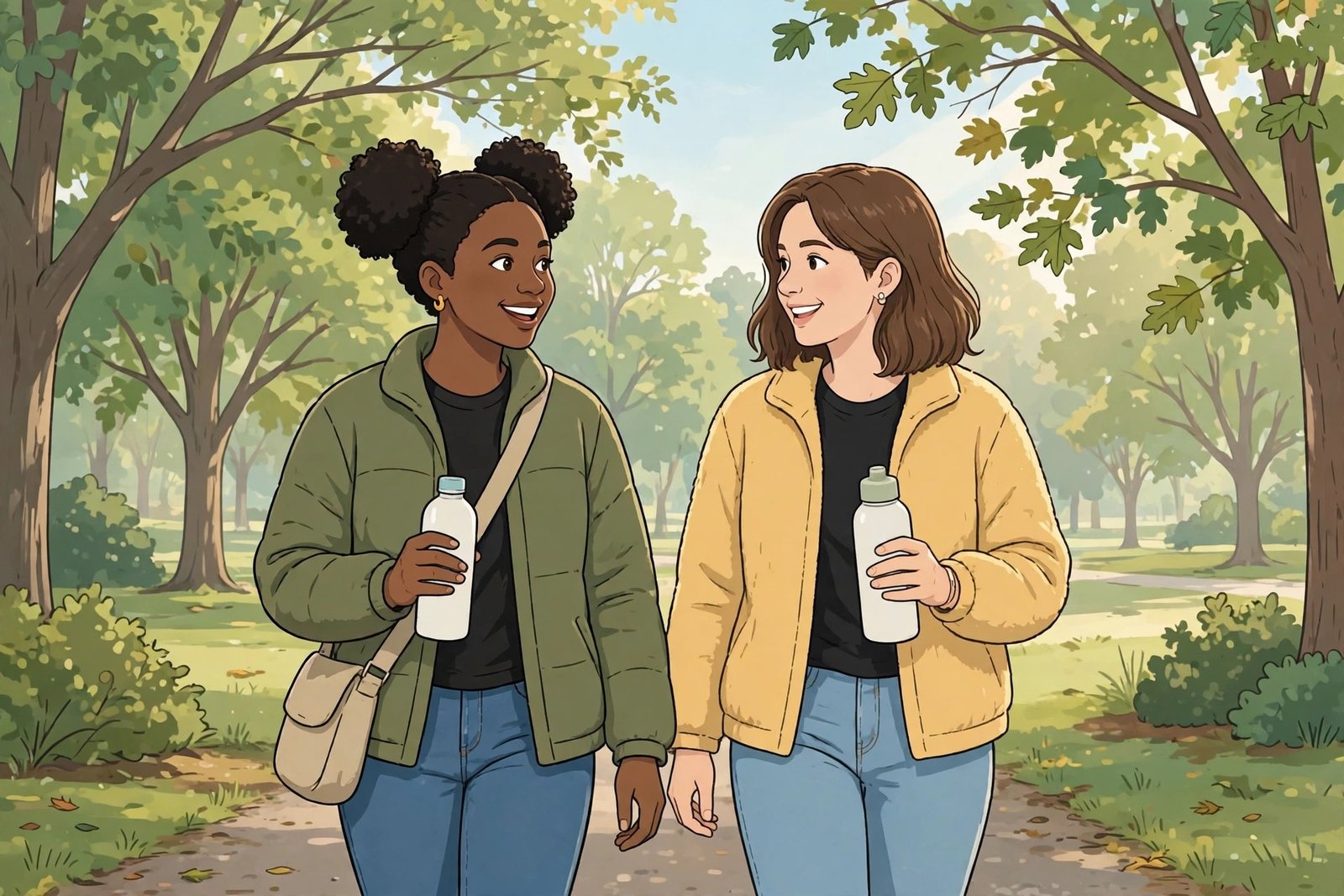
You can’t delete the thought, but you can make it smaller and rarer. Start with the mirror itself. Give mirror time a job and a limit: get ready, then leave. No leaning in for a pore census. No checking your face in every reflective surface you pass. Many women find that simply stepping back to a normal distance, the distance real people see them from, softens the whole spiral within a week or two.
Feed your eyes better food. If your feed is full of filtered faces, celebrity close ups, and before and after ads, your brain starts to think that’s what twenty seven looks like, and your real face will always lose that contest. Follow accounts with real skin and real ages. Mute what reliably makes you feel like you’re aging faster than my friends. This isn’t denial. It’s choosing a fair reference group: actual humans, living actual lives, in actual light.
Care for the basics with boring consistency. Sleep is the biggest one, and even one more hour helps a tired face more than any product. Water through the day. Sunscreen in the morning, because sun is the one everyday factor that genuinely speeds up visible skin change over time. A simple moisturizer your skin likes. That’s the whole list. Boring, cheap, and kind beats expensive panic every single time, for your skin and for your head.
Move your body in ways you enjoy, and eat like someone you care about, most of the time. Not as a beauty project, but because energy shows on a face. Women rarely look their most tired after a week of walks, decent food, and early nights. And talk about the feeling. Say it out loud to a friend or a sister: I keep feeling like I am aging faster than my friends. Said out loud, the thought loses half its power, and you’ll almost always hear: oh, me too, I thought it was just me.
Making Peace With Your Own Timeline
Underneath the skin worry, there’s often a life worry. Aging thoughts love to attach themselves to timelines: career, love, money, the feeling that everyone else is arriving somewhere while you’re still on the road. The face becomes the screen where a bigger fear plays. If that rings true, be gentle with the real fear. Your friends’ timelines aren’t your deadlines, in faces or in life. A woman isn’t behind because her twenties look different from someone else’s.
It can help to collect counter evidence. Photos of your mother, your aunts, older women you admire, laughing at forty, glowing at fifty, fully themselves. Beauty doesn’t expire at thirty, whatever the loudest corners of the internet claim. Faces gain character, ease, and a kind of confidence that no twenty year old can fake. Many women say they wouldn’t trade their late twenties face for their twenty year old one, because this one knows things. It has lived. If you want company on that road, our readers loved this gentle read on how to feel more confident about your appearance.
Practice talking to your face like a friend. When the mirror thought arrives, answer it plainly: you’re tired today, not old. You’re twenty seven, not seventy. You’re a person, not a before photo. It sounds small, and it’s small, but repeated kindly it rewires the reflex over time. You aren’t trying to convince yourself you’re a model. You’re just refusing to bully a face that has carried you through every hard and happy day so far.
And if the worry won’t quiet down, please hear this part clearly. If thoughts about your appearance take up hours of your day, if you start avoiding photos, events, or mirrors, if the distress feels constant and heavy, talking to a doctor or a therapist is a normal, strong, healthy step. People do it for exactly this, more often than you would guess, and it helps. There’s no prize for carrying a heavy feeling alone. You deserve the same support you would beg a friend to accept, especially on the days when aging faster than my friends feels less like a thought and more like a weight.
Your timeline includes your face, and it was never meant to match anyone else’s. Some of your friends will marry early, some late, some never. Some will get the corner office at thirty, some will start over at thirty five and love it. Faces follow the same scattered pattern, because lives do. Comparing any part of your chapter with someone else’s chapter will always produce the same false alarm. You’re not behind them, in skin or in life, and you were never truly aging faster than my friends. You’re simply on your own page, and it’s a good one.
Frequently Asked Questions
Is it normal to feel this way at 25 or 27?
Completely normal, and far more common than anyone admits out loud. Your late twenties are when faces begin their first slow changes, when careers and life loads get heavier, and when comparison is at its loudest. Many women quietly feel they’re aging faster than my friends at exactly this age, including, very often, the friends themselves. The feeling says more about the season you’re in than about your skin.
My friend genuinely looks younger than me. Is that possible?
Yes, small real differences exist, and they’re mostly genetics, skin type, sun history, and life load, not worth or effort. One friend may keep a baby face into her thirties while another gets laugh lines at twenty five. Both are normal faces. A few years of visible difference between friends is common and meaningless. It doesn’t predict how either of you’ll look at forty, and it doesn’t mean you’re aging faster than my friends in any lasting way.
Can stress and bad sleep really make me look older?
They can make you look more tired, and tired is what our brains read as older: duller skin, deeper shadows, a flatter expression. The hopeful part is that this kind of change is usually temporary. A few weeks of better sleep and a lighter load often soften it noticeably. That’s why caring for rest comes before any product. If you feel you’re aging faster than my friends during a hard season, treat the season first, kindly, and then look again.
Should I start anti aging products to fix this?
You don’t need to fix a feeling with a shopping list. A gentle cleanser, a moisturizer your skin likes, and daily sunscreen cover what skin genuinely needs at this age. Sunscreen is the one product with a real long game, because it slows the sun’s part in visible change. Beyond that, buy what you enjoy, not what fear sells you at midnight. Products can care for skin. They cannot, and shouldn’t have to, carry your self worth.
When should I talk to a professional about this worry?
If the worry is constant, takes up much of your day, or starts shrinking your life, like avoiding friends, photos, or events, it’s time to talk to someone. A doctor or a therapist hears this more often than you’d think, and support genuinely helps. Reaching out isn’t an overreaction. It’s good care. Nobody should have to carry the feeling of aging faster than my friends alone, and you don’t have to either, because help exists, and the thought of aging faster than my friends gets quieter with support.