
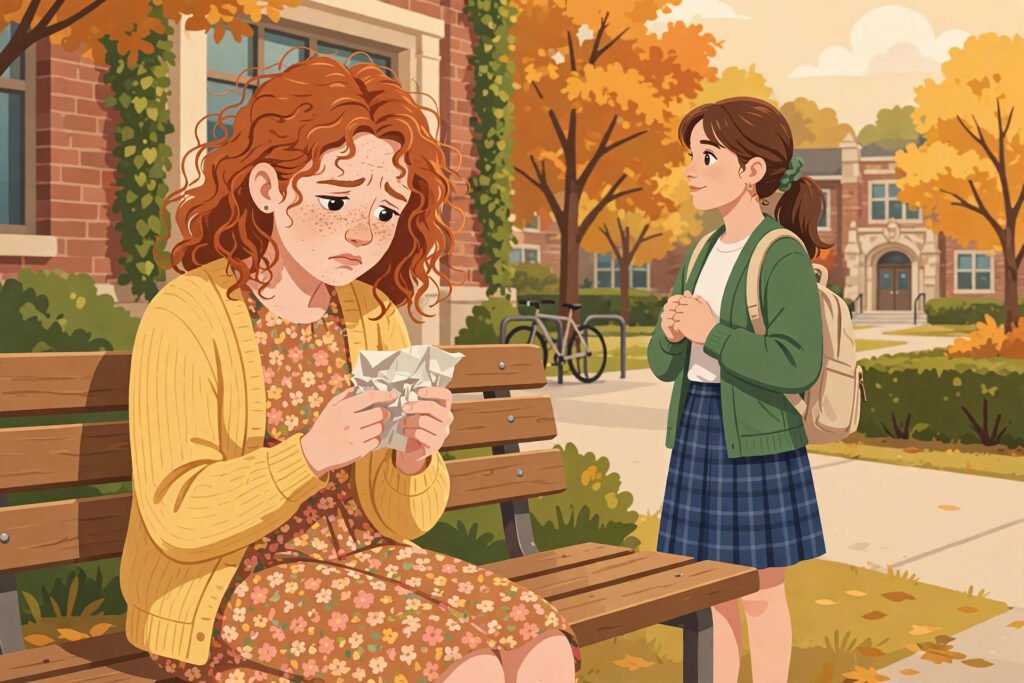
Ruby used to think her best friend was the safest person on earth. Then that friend shared a secret Ruby had told her in trust. Just like that, the girl she told everything felt like a stranger. If you’re asking should you forgive your best friend after a betrayal, you know that sick, stunned feeling. Your stomach drops. Your chest feels hollow. And the group chat keeps buzzing like nothing happened.
Please hear this first, before any tips at all. Forgiving her is your choice. It’s yours alone. It’s never a job you owe anyone. When you ask yourself should you forgive your best friend after a betrayal, both answers can be right. You can forgive her, with clear rules of your own. Or you can step back and not forgive her at all. Both can be brave. Both can be kind to you.
This guide walks with you while you decide. No rush. No deadline. We’ll look at how much it hurt. We’ll check if she owned what she did. We’ll ask if trust can grow back, bit by bit. There’s no test to pass here. And no choice makes you a bad friend. No choice makes you weak, either.
The Short Answer

Here’s the short answer. There’s no single right answer. Anyone who hands you one fast hasn’t really heard you. The honest reply to should you forgive your best friend after a betrayal rests on a few things. What did she do? How did she act after? And what do you need to feel safe and respected again?
Forgiving her can be a sweet, kind choice. It fits when the hurt came from a real mistake. It fits when she owns it, all of it. And it fits when her acts change, week after week. Forgiving her doesn’t mean you fake a smile. It doesn’t mean things snap back to how they were. It means you rebuild, slow and honest, on both sides.
Not forgiving her can be just as healthy. It deserves the same respect, too. Maybe the hurt was deep. Maybe it happened more than once. Maybe she met your tears with excuses and blame. Then stepping back may be the kindest move you can make for you. Walking away in a calm, safe way isn’t cruel. It isn’t dramatic, either. It’s just you guarding your peace.
There’s also a quiet middle path. Lots of girls forget it exists. You can forgive her in your heart. You can wish her no harm at all. And you can still pick a smaller friendship, or none. Trust has changed, and that’s real. That middle isn’t wishy washy. It isn’t cold. It’s an honest match.
So don’t let anyone push you. Not your friends. Not your family. Not even her. When they press you about should you forgive your best friend after a betrayal, remember this. Pressure isn’t a reason. You can take weeks to think. You can change your mind as you learn more. You can pick the path that lets you sleep at night. Your heart gets a vote here. And its vote counts the most.
Give Yourself Time Before You Decide Anything

The first days after a betrayal are a wild ride. Your feelings swing from hour to hour. You miss her at breakfast. You’re mad by lunch. You cry over an old photo at bedtime. That storm is normal. And it’s a bad time to make big promises. Don’t lock in an answer on should you forgive your best friend after a betrayal while the storm is still loud.
Give yourself a real pause first. Take it before any big talk. Take it before any final call. A pause isn’t a punishment. It isn’t a game, either. You can send one calm, short text. Say you’re hurt. Say you need some space. Say you’ll talk when you’re ready. A friend who respects you will respect that pause. Even if the wait feels hard for her.
Use the quiet time well. Let the first wave of shock settle. Sleep when you can. Eat real food, not just chips. Go for walks around the block. Lean on people who feel steady. When your body calms down, your head clears up too. Then the question of should you forgive your best friend after a betrayal gets easier to hear.
Watch your feelings during the pause. Notice what they do when no one’s around. Do you miss the friendship most? Or do you mostly feel relief at the space? Do you picture a talk with hope? Or does your stomach knot up with dread? Those quiet hints are real info. They’ll still be there when the loud feelings fade.
It helps to write things down, too. Pick a spot only you can see. Use a journal by your bed. Use a notes app with a lock. Or write a letter you’ll never send. Writing slows your thoughts down. It shows you the shape of them. Lots of girls find the page tells the truth first.
Keep your days as normal as you can. Be kind to yourself while you do it. Go to practice. Do your homework. Laugh at a dumb show with your brother. Let plain, daily life keep some of its shape. A betrayal can feel like it took over every room. Small, steady habits prove it hasn’t. You’re still you. Your life is still yours.
And go easy on yourself if this takes a while. Close friendships aren’t small things. A betrayal inside one isn’t a small hurt. There’s no prize for a fast answer. There’s no shame in still not knowing. Time isn’t dodging the question. Time is how you answer it with a clear head.
Be Honest About How Much It Actually Hurt

You can’t decide this fairly until you name what happened. Name what it cost you, too. Maybe she shared your secret. Maybe she lied right to your face. Maybe she spread a story in the cafeteria. Maybe she left you out on purpose, at the worst time of all. When you ask should you forgive your best friend after a betrayal, the size of the hurt counts. So does its shape.
Try to split the facts from the story pain tells. The facts are plain. She did this thing, on this day, in these words. Pain tells a darker story. It says no one can be trusted. It says you were dumb to trust her. The facts deserve your focus. That harsh story about your worth doesn’t. Don’t believe it for a second.
Ask what the betrayal touched in you. For Ruby, the shared secret hurt the most. It made her feel bare at school. It felt like everyone in the hallway knew a thing she’d kept private. Your deepest sting might be different. It might be shame. It might be lost trust. It might be grief for the friend you thought you had. When you name the real wound, you know what repair to ask for.
It’s okay to admit it hurt more than you said. Lots of girls shrink their pain to keep the peace. They say it’s fine when it isn’t fine at all. That may keep a chat smooth for a day. But it leaves you alone with feelings no one answers. Being honest with yourself is the first kind step here.
If the talk feels too big, start small. Learning how to have a hard talk without shutting down can help you a lot. It shows you how to say the true thing in a calm voice. One sentence at a time. You don’t need perfect words. You need words that match what you feel. That’s it.
Your hurt doesn’t need proof to count. It doesn’t need a permission slip, either. You don’t have to show that everyone agrees with you. You don’t have to prove this was the worst betrayal ever. You’re allowed to take it to heart, full stop. If you’re still asking should you forgive your best friend after a betrayal, that says a lot. It says the hurt is real. It says it’s worth your care.
Look at Whether She Took Real Responsibility

Next, watch how she acts. Her response is a big clue. A real apology names the exact thing she did. It doesn’t soften it. It doesn’t dress it up in pretty words. When you wonder should you forgive your best friend after a betrayal, listen hard. Can she say the plain truth? Can she say, I shared your secret, and that was wrong? Or do you get a vague sorry if you got upset? Those two are not the same.
Real ownership means she doesn’t rush to defend herself. Sure, there may be reasons behind her choice. But in a true apology, your pain comes first. Her reasons wait their turn. If each line swings back to why she had no choice, watch out. She’s guarding herself more than she’s fixing the friendship.
Notice if she tries to make things right in real ways. She might fix a rumor herself. She might tell the truth to the girls she told. She might give you space and not sulk about it. The teen guide to what a sincere apology looks and sounds like puts it well. Owning what you did, with no excuses, is what helps trust grow back. And saying okay to an apology never forces you to stay friends.
Now spot the signs of a fake apology. Watch for blame dressed up as honesty. That’s lines like, I only lied because you’re too touchy. Watch for tears that show up right when she wants the talk to end. Watch for gifts and sweet acts that come in place of real change. Sweet acts feel nice. But they aren’t the same as owning it.
Give her response time to prove itself. Anyone can sound sincere for one teary night. Real change shows up over weeks. It shows up on plain days, when no one’s watching. Does she respect the space you asked for? Does she keep her word on small things? Those quiet details answer should you forgive your best friend after a betrayal better than one big speech.
Here’s one more clue. Watch how she treats the people she pulled in. She told them your private stuff. Does she go back and set the record straight? Does she do it even when it makes her look bad? Repair that costs her something means a lot. Repair that just asks you to feel better fast means much less. Look for effort where effort feels awkward. That’s where the truth tends to live.
You’re also allowed to say a sorry isn’t enough. Even a good sorry. It can be real, and still not fix what broke. You can believe she means it. And you can still step back. Those two things can both be true. Holding both isn’t cold. And it’s your call to make.
Notice If This Was a Mistake or a Pattern

Now look at the past. History clears things up fast. Was this one painful moment? Was it out of character for her? Or is it one more in a long line of the same stuff? When girls ask should you forgive your best friend after a betrayal, this is often the part that decides it. A mistake and a pattern are not the same thing.
A mistake stands alone. It shocks the girl who made it, too. She acted in a panic. She was careless for one dumb second. Mistakes still hurt. They still need repair. But a friend who hardly ever hurts you is showing you something. If she truly hates that she did it, that’s a hopeful sign about who she is.
A pattern looks different. Put the moments side by side and you’ll see it. Secrets slipped before. Jokes at your cost keep coming back. Promises keep breaking in the same way. Each time, there was a reason. Each time, you were the one told to move on fast. Patterns tell you what comes next. They show what she does when she thinks the price is low.
It can help to list the moments in private. Write rough dates if you can. A list guards your memory in a heated talk. You won’t doubt yourself so fast. This isn’t about building a case to show the school. It’s just for you. It gives you a clear view before you pick how close she gets to be.
Reading about the clear signs a friendship is not genuine can help you sort it out. It helps you split honest slips from habits that keep hurting you. A real friend can have a bad day and still be real. But a pattern of using you is different. So is competing with you all the time. So is spilling your private life again and again.
Let the record guide you more than her last promise. Promises talk about the future she wants. Patterns show the future she’s been building. If you’re weighing should you forgive your best friend after a betrayal, trust what she’s done, again and again. Let it guard the girl you’re growing into.
Ask Yourself If You Can Trust Her Again

Forgiving and trusting aren’t the same thing. They’re close, but they aren’t twins. You can forgive a girl in your heart. And you can still know you can’t hand her your private thoughts again. When you sit with should you forgive your best friend after a betrayal, ask the trust question on its own. Answer it with no guilt at all.
Picture the next few months, in real detail. Could you tell her a small, private thing? Could you do it without running the risks in your head for hours? Could you relax when she chats with your other friends? Or would you spend the whole time scared of what she might say? Your body often answers first. Listen to them.
Trust comes back in layers, if it comes back. You might trust her to be fine in a group first. That can come long before you trust her with a secret. You might trust her with plain plans, like a movie on Friday. And you might keep the deep parts of your life private for a long time. That slow way isn’t petty. It’s smart. Trust that grows slow tends to last.
It helps to name what she’d need to do. What would earn your trust back, bit by bit? Maybe she keeps small promises, every single time. Maybe she asks before she shares a thing about you. Even small, harmless things. Clear hopes give her a fair shot to show change. They give you a fair way to judge it, too.
Small trust tests can help, with no drama. Share one minor thing. Then watch how she handles it over the next few weeks. Does she ask before she passes it on? Does she keep small promises on plain school days? You’re not setting traps for her. You’re just letting real acts, in real time, show you the truth. Words alone can’t prove this stuff.
Be honest about one more thing. Would you go back just out of habit? Or out of fear? It’s easy to drift back when the friend group feels weird. It’s easy when lunch feels lonely without a best friend. Lonely is a real feeling. It deserves comfort, for sure. But comfort from a friendship you don’t trust costs a lot later.
There’s no shame if your trust is just gone. Trust isn’t a tap you can force back on. You can’t switch it on because you miss her. You can’t switch it on because the group wants things back to normal. If, after fair thought on should you forgive your best friend after a betrayal, you know you’d always guard yourself near her, believe that. That’s your inner compass at work. It’s doing its job.
Set Clear Conditions If You Choose to Forgive

Say you lean toward forgiving her. You don’t have to do it on her terms. You don’t have to do it on anyone’s terms but yours. You can forgive with conditions. Conditions aren’t a punishment. When you decide should you forgive your best friend after a betrayal, conditions are just the shape the friendship needs. It’s the shape that lets you feel safe inside it.
Start by naming your conditions in plain, calm words. Private things stay private. Always. If she’s ever not sure if a thing can be shared, she asks you first. You might ask for honesty, even when the truth feels awkward. You might ask for a pause in your closeness while trust rebuilds. Plain words leave little room for mix ups later. Say them once, out loud, when you’re calm.
Pick conditions that guard the real wound. If she shared a secret, your condition is about privacy. If she dropped you or mocked you in front of others, it’s about loyalty. Loyalty in public, not just in private. Conditions that match the hurt show you’ve thought with care. They give her a clear, fair bar to meet.
Say your conditions once, clearly. Then watch. A friend who takes them to heart just starts living them. She does it even if she’s sad that things changed. But watch the other kind of response. She argues with each line. She mocks them as silly rules. She agrees loud, then ignores them in secret. That’s real info about whether repair can work.
It’s smart to decide one thing in private, too. Decide what you’ll do if a condition breaks. You might step back to a distant friendship. You might end the friendship, calm and with no scene. Knowing your line ahead of time guards you. It stops you from bargaining with yourself in a weak moment. Missing her could tempt you to accept almost anything. Your line keeps you steady.
Conditions can soften with time. They can, if trust truly grows. Forgiving with care at the start doesn’t lock you into guarding things forever. It just means closeness comes back at the speed of real change. Anyone still unsure about should you forgive your best friend after a betrayal can rest in that middle path. You aren’t picking between blind trust and a shut door. You’re picking a door that opens slow, as safety allows.
Remember That Forgiving Does Not Mean Forgetting

Lots of girls hold back from forgiving for one fear. They think it means wiping what happened. It doesn’t. Forgiving doesn’t mean forgetting. It doesn’t mean calling a betrayal okay. When people argue about should you forgive your best friend after a betrayal, they often picture a clean wipe of the past. Real forgiving is more honest than that. It remembers. Then it decides what that memory will mean from now on.
You can let go of the anger and keep the lesson. Both can live in you at once. The lesson might be that secrets need care. It might be that some topics stay between you and your journal. It might be that trust should match acts over time. Keeping the lesson is wisdom. It’s how a hard season makes you steadier, not just sadder.
Forgiving doesn’t ask you to fake joy you don’t feel. You can forgive her and still feel a pang. The memory can pop up on a hard day, out of nowhere. That pang doesn’t undo your choice. It just means healing has its own pace. And your pace is allowed to be slow.
For Ruby, the gentle ending wasn’t a grand speech. It wasn’t a fast return to sleepovers and shared secrets. It was planting one small, new thing, side by side. Then letting it grow slow, or not at all. Some friendships rebuild just like that. In small, plain moments. With patience on both sides. With no faking that the ground was never cracked.
Your ending might look different. It can still be a good ending. You might forgive her in your heart, in quiet. You might wish her well from far off. You might put your closeness into friends who guard it with care. That isn’t a failed story. That is a girl learning her peace is worth a lot. She spends it where it’s treated with care.
Forgetting and healing aren’t the same thing, either. Mixing them up can make you doubt yourself for no reason. Healing means the memory loses its power. It can’t wreck your whole day when it shows up. It doesn’t mean the memory is gone. It doesn’t mean you must go back to the old closeness. You can carry a small scar with grace.
Hold on to this, whatever you choose about should you forgive your best friend after a betrayal. The goal was never to win a fight. It wasn’t to punish her. It wasn’t to prove you’re the bigger person. The goal is a life where you feel respected. Calm. Free to trust again at your own speed. Pick the path that leads there. And let that be enough.
Frequently Asked Questions
Do I have to forgive her just because she said sorry?
No, you don’t. Her sorry is her part of the story. Forgiving is your part, and they don’t have to land at the same time. When you ask should you forgive your best friend after a betrayal, her sorry is one clue. It isn’t an order you must obey. You might need time first. You might need changed acts, or space, before forgiving feels honest. A polite thanks for the sorry is already a full, kind reply.
Can we still be friends if I forgive her?
Yes, you can. It will likely feel different for a while, and that’s normal. Lots of friendships rebuild in small, steady steps. You share fewer secrets at first. You talk more openly about what you need. Some friendships even grow stronger this way. Both girls say the real thing at last. Others settle into a lighter, more distant kind of kind. That’s a fine ending too. Let it grow at the speed your trust can handle.
What if she betrays me again after I forgive her?
Then you’ve learned a big thing, and you can act on it. A second betrayal, after clear conditions, is rarely a slip. You don’t owe anyone a third chance. You can step back in a calm way. No revenge. No public shaming in the hallway. No need to explain yourself to the whole school. Guarding yourself in quiet is enough. Tell a trusted adult if you feel unsafe. Let distance do the work that fights can’t.
Is it okay to forgive her but still keep some distance?
Yes, it’s fully okay. For lots of girls, it’s the wisest middle path. Forgiving can live in your heart while closeness stays small in daily life. You might be warm in a group. Yet you keep your private thoughts for friends who’ve proved they guard them. When friends question should you forgive your best friend after a betrayal, keep this in mind. Forgiving and going back to the old way are two different choices.
What if I never feel ready to forgive her?
Then you aren’t ready, and that answer deserves respect. From others, and from you too. You can’t force ready with a deadline. Group pressure can’t force it. A wish to seem grown up can’t force it. Some hurts soften with time and space. One day, forgiving just shows up, quiet and calm. Other hurts teach you the friendship is over. Stepping back in a safe way is then your healthiest ending. Either way, you aren’t a bad person. You’re a girl hearing her own heart with honesty.