

She crosses your mind every few months. A song you both loved. A street you used to walk down together, laughing about nothing. Her name in an old photo, both of you younger, mid laugh, mid life. And every time, the same small ache, followed by the same question: could I really reconnect with an old friend after many years, or has too much time passed for that door to still be open?
If nobody has said it to you plainly, here it is: the wish to reconnect with an old friend after many years is one of the most common secret wishes adults carry around.
Here’s the truth most women never hear: the door is usually more open than it feels. Nothing ended between you. There was no fight, no betrayal, no final conversation. There were just two lives, moving, the way lives do, and a silence that grew one unreturned month at a time until it felt too heavy to touch. Silence like that isn’t a verdict. It’s weather. And weather changes.
This guide is for the woman who wants to try. Why the silence grew, and why it says nothing about your worth. The first message, word by word, short and warm and free of guilt trips. What to do when she answers, and how to catch up with a woman who has lived a whole life since you last really talked. How to rebuild at a pace that respects you both. How to hold it if she answers slowly, or not at all. And how to let the friendship become what it is now, instead of demanding it become what it was. You can reconnect with an old friend after many years. Thousands of women do.
And the attempt itself, to reconnect with an old friend after many years with warmth and no demands attached, is something you get to be proud of whatever she answers in the end. Most of them say the same thing afterward: I wish I hadn’t waited so long to find out it was this simple.
The Short Answer

Yes, you can reconnect with an old friend after many years, and the odds are kinder than your fear says. Send one short, warm message that mentions a real memory, says you were thinking of her, and asks one easy question about her life now. Don’t apologize in circles, don’t explain the whole silence, and don’t load the message with everything you’ve missed. Then let her answer at her own speed. If she replies warmly, build slowly: small exchanges, then a call, then, if you can, time together in person. Accept that she has changed and so have you, and let the friendship find its new shape instead of forcing the old one. That’s the whole method.
One brave, light message, and then patience.
Notice what the short answer asks of you: one message, not a campaign. The women who reconnect with an old friend after many years almost never do it with a perfect speech. They do it with a small, honest knock on a door, and a willingness to accept whatever is on the other side of it. The knock is the brave part. Most people who reconnect with an old friend after many years and keep the friendship are the ones who treat that first message as a beginning, not as a test the friendship has to pass in one reply. Everything after that is just a conversation between two adults who once mattered to each other, and might again.
Why the Silence Grew, and Why It Is Not a Verdict
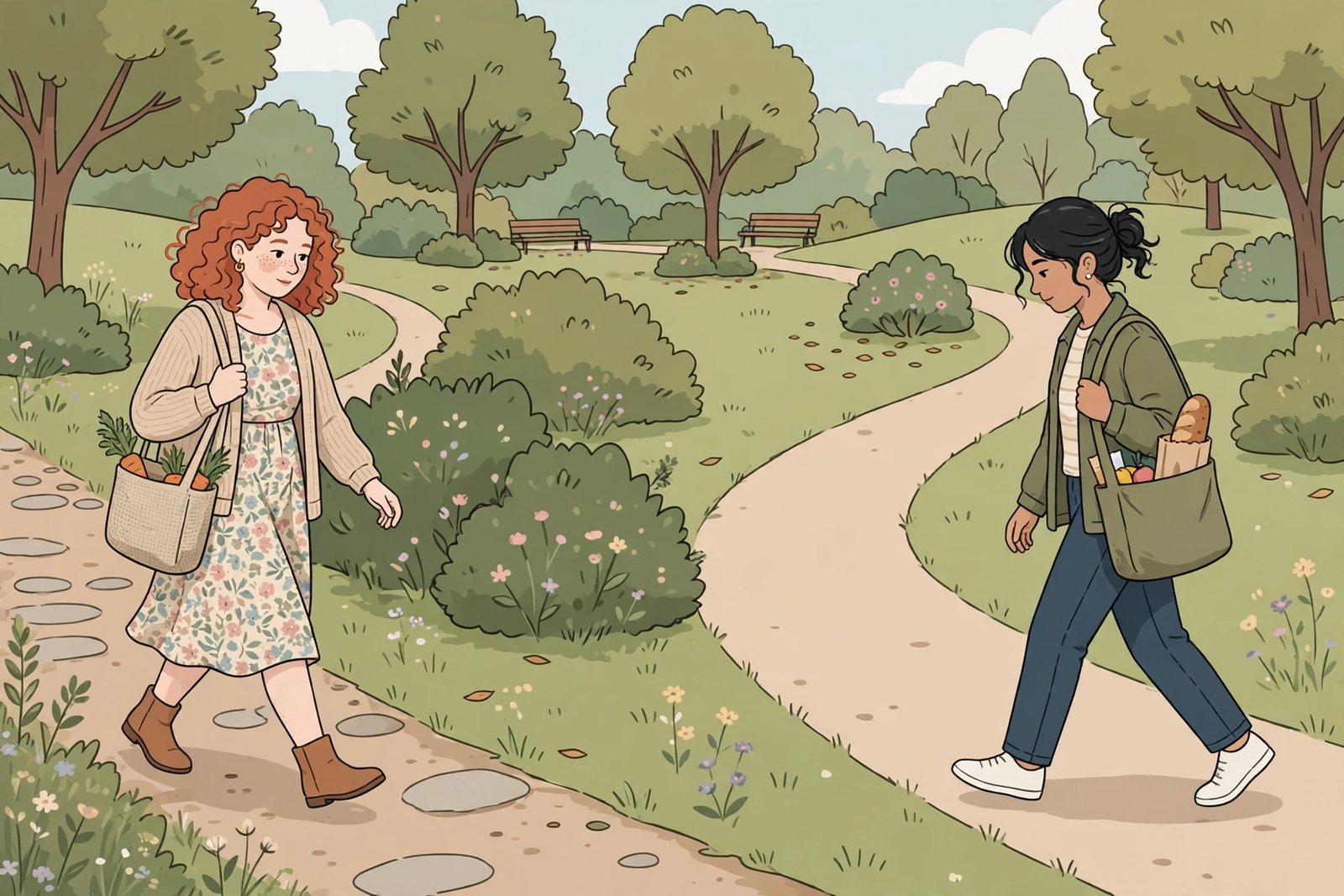
First, let’s take the shame out of the gap, because shame is what keeps the message unsent. Friendships in your teens and early twenties run on shared context: same school, same town, same stage of life. When the context changes, the friendship needs a new engine, and many simply never get one installed. One of you moved. One of you got swallowed by a job, a partner, a baby, a hard year. Texts slowed from daily to monthly to birthdays to nothing. Neither of you chose the ending. You both just kept meaning to write, on a day that kept not arriving.
Understand what that means: the silence carries almost no information about how she feels about you. It carries information about her schedule, her energy, her own guilt about the same silence, which, by the way, she very likely feels too. In most lost friendships, both women are sitting on the same side of the same unsent message, each assuming the other has moved on. Someone has to go first, and going first is a role, not a risk ranking. The one who writes isn’t the one who cared more. She’s just the one who wrote.
This matters because of the story your brain tells at midnight: too much time has passed, it would be weird now, she’s probably forgotten me, she has new friends, I’d just be bothering her. Every clause of that story feels true and almost none of it is evidence. Time passing is the normal condition of adult friendship, not a disqualification. Weird is a feeling, not a forecast. And being thought of, out of the blue, by someone from a happy chapter of her life is an experience most people quietly love. When you decide to reconnect with an old friend after many years, you’re not interrupting a life that has no room for you.
You’re offering a thread back to a person she also remembers.
There’s comfort in how common your position is. Nearly everyone you know has a name like hers in their phone: loved, not lost in anger, just lost in time. You’re not confessing a failure by reaching out. You’re doing the ordinary, healthy thing that busy adults keep postponing. The gap is not your fault. Closing it can still be your move. And one more thing worth hearing early: deciding to reconnect with an old friend after many years does not rewrite the quiet years as a mistake or a failure on your side of the story.
The First Message: Short, Warm, No Guilt Trip

The first message has one job: to make answering easy. Easy means short. Easy means warm. Easy means it asks for nothing heavy and hands her a simple thing to reply to. The formula that works is memory, honesty, and one open door. A real shared memory, because it proves this is about her, not a broadcast. One honest line about the gap, without a trial about it. And one light question about her life now, because questions give a reply somewhere to land. A message that light is how you reconnect with an old friend after many years without turning the past into paperwork she has to process before she can answer you.
It can sound like this. Hey. I drove past the lake house road last weekend and thought of you and that terrible karaoke night. I can’t believe how long it’s been. How are you doing these days? That’s the whole message. Thirty seconds to read, no weight to carry, and a door standing open with nobody pushing on it. Notice what it doesn’t contain: I’m so sorry, I feel awful, you probably hate me, we HAVE to catch up, my whole life story since 2019. A message like that isn’t a knock. It’s a moving truck. Nobody opens a door to a moving truck.
Research on exactly this moment backs up the light touch. The British Psychological Society’s Research Digest covered a study of hundreds of real reaching out notes, published in Collabra: Psychology, where people wrote messages to old friends and then decided whether to actually send them. Only about a third pressed send, and the notes most likely to stay unsent were the ones loaded with apologies and regret. You can read the summary on the BPS Research Digest site. The lesson for your first message is direct: heavy guilt doesn’t make a message better. It makes it more likely to die in your drafts, and heavier to receive if it doesn’t.
Send it on an ordinary day, in one clean act, and then do the hardest part: nothing. No follow up an hour later. No watching the read receipts like weather radar. You have done the brave thing, and brave things need room to land. Every attempt to reconnect with an old friend after many years that ends well shares that same discipline: one message, then space.
Most women who reconnect with an old friend after many years say the waiting was the worst of it, and that it looks, in hindsight, wildly out of proportion to what happened next: usually, a warm reply within a day or two, from a woman who was happier to hear from them than they ever let themselves hope.
What to Say When She Answers

She answers. Your heart does something embarrassing. Now what? Match her warmth, answer her questions, and ask yours one at a time. The catching up phase has its own gentle rhythm, and rushing it is the only real way to spoil it. Think of it as two people walking back toward each other across a field. Walking. Not sprinting, not dragging furniture behind you.
Resist the life dump. You both have years to account for, and the temptation is to send the whole novel at once: jobs, breakups, moves, losses, all in one heroic scroll of text. Summaries that big are hard to answer, and hard to answer is how conversations die a second time. Go in slices instead. One real thing per exchange. The job, told briefly. The move, told briefly. Leave hooks in each slice, small openings she can pull on: the short version is wild, remind me to tell you about the ferry. Slices keep the talk alive for weeks. A dump ends it in a day.
The women who reconnect with an old friend after many years and actually keep her afterward tend to be very good at exactly this kind of friendly restraint.
Ask about her present more than her past. Old friends sometimes spend the whole reunion in the museum of who they were, laughing at the same five stories, and then run out of road. Nostalgia is a lovely doorway and a poor house. Build toward who she is now: what her days look like, what she’s into lately, what she’s hoping for this year. If you’ve ever been on the receiving end of someone’s genuine curiosity, you know how good it feels. This piece about someone really wanting to be your friend catches a little of that warmth from the other side.
And when the talk flows, move it off text when you can: a call, a video chat, a coffee if geography allows. Voices carry what typing can’t, and old closeness lives in voices.
One caution: don’t audition. Don’t oversell the new you, hide the hard parts, or perform a highlight reel to prove the years went well. She knew you before the polish. The friendship you’re rebuilding is valuable precisely because it’s one of the few places the unpolished version is expected. Bring her the honest draft. It’s the only one she can actually be friends with.
You Have Both Changed: Meet the Person She Is Now

Here’s the tender trap in every reconnection: you are not meeting the girl you lost. You’re meeting a woman who has lived years you didn’t witness. She has new opinions, new scars, new jokes, maybe a partner, a child, a career, a whole politics of her own. Some of it will delight you. Some of it will surprise you. A little of it might even rub against who you’ve become. All of that is normal, and none of it means the reconnection failed.
Hold your memories like photos, not like contracts. Photos tell you where you started. Contracts try to force the present to match the past, and people resent being held to a version of themselves they outgrew at twenty two. When you reconnect with an old friend after many years, the friendship that survives is the one built between the two women you are now, using the old one as a foundation rather than a mold. Foundations are strong precisely because you build something new on top of them.
Expect a small, specific grief inside the joy. You’ll hear about evenings you weren’t part of, friends you’ve never met, a version of her humor that formed without you. That’s the price of the lost years, arriving in small change. Pay it gracefully. Don’t compete with her newer friends, don’t interrogate the gap, and don’t tally who she kept versus who she lost. She is allowed a whole life. So are you. The friendship gets to be new wine, and new wine has never once needed permission from the old bottle.
Practical kindness helps here: learn her current life before you lean on the old shorthand. Ask what’s hard right now before you quote the old inside jokes. The women who rebuild best treat the first months like getting to know someone fascinating who happens to come with a head start. That head start is real: shared history, old trust, a thousand references nobody else gets. It just isn’t a shortcut past the present. Use it as warmth, not as a claim. Give her that same grace, and your effort to reconnect with an old friend after many years stands on something solid: curiosity about who she is, instead of nostalgia doing all the driving.
Rebuild at the Speed of the Slower One

Every reconnection has two speeds, and the friendship can only move at the slower one without tearing. Maybe you answer in minutes and she answers in days. Maybe she’s all in for a weekend visit while you’re still warming up over text. Neither speed is a verdict on the friendship. Speed is about lives: her workload, her kids, her own feelings about the lost years, her capacity this season. The moment you start scoring her pace as enthusiasm or rejection, you turn a gentle rebuild into a test she didn’t agree to take.
So build with low pressure rituals instead of big expectations. A meme on a Tuesday. A message on the day of the thing she mentioned. A voice note when something reminds you of her, which, conveniently, was always your strongest skill in this friendship. Small, repeatable contact is how adult friendships actually grow now. It’s also how new friendships form between busy adults who barely know each other yet, a rhythm this guide on making friends when everyone already knows each other describes from the other side of the room. Old friend, new rhythm. That’s the deal.
It is how adults reconnect with an old friend after many years in real life: unevenly, kindly, fitted around jobs, kids, parents, and tired evenings.
Let milestones come in their own order. First the regular small talk. Then the first real confidence, offered when it naturally knocks. Then, maybe, the conversation about the lost years themselves, if it ever needs to happen. Many pairs find it barely does. A brief sorry we lost touch, life got huge, exchanged once, can close the subject forever. You don’t need a summit meeting about the silence. You need Tuesday messages that keep coming. Women who reconnect with an old friend after many years and keep her, five years later, all describe the same unglamorous secret: they just kept showing up, lightly, for a long time.
And protect the rebuild from your own old habits. If the friendship faded partly because you were its only engine, notice if you’re doing it again: all the initiating, all the planning, all the remembering. A rebuilt friendship needs two engines, even if one of them is smaller and slower. Give her chances to carry a little. A friendship she also feeds is a friendship that can survive your next busy season, and hers.
If She Answers Slowly, or Not at All

Now the part everyone wants to skip, and the part that will set you free if you read it well. She might answer slowly. She might answer warmly once and then fade. She might not answer at all. Each of these is information about her life, her capacity, her season. None of them is a verdict on your worth, your message, or the friendship you once had. Read that again, because your heart will try to argue, and your heart is not a reliable narrator at 2 a.m. That calm reading matters, because panic is the fastest way to spoil a sincere attempt to reconnect with an old friend after many years.
Waiting well is part of the craft here: the gap taught you both patience, so use a little of it now.
Slow answers usually mean a full life, not a closed heart. She may be mid crisis, mid baby, mid burnout, or mid her own shame spiral about the same silence, staring at your message with joy and dread in equal measure, composing replies in her head she never sends. Give the slowness room. One gentle nudge after a couple of weeks is allowed if the friendship ended without conflict: a light message, no guilt in it, something like no rush at all, just glad you’re out there. Then stop. Two messages is a door held open. Three is a hand on the door.
No answer at all is the hardest gift, and it is a gift: clarity. It hurts, briefly and honestly. Then it frees the part of you that was keeping a seat saved. You lose nothing you actually had; the silence was already there. What you gain is the knowledge that you showed up for your own life, that the unsent message is no longer yours to carry. Women who reconnect with an old friend after many years sometimes learn the door was closed. Women who never try carry the maybe forever. The maybe is heavier. You have already set it down.
Whatever happens, don’t let a quiet outcome rewrite the past. The friendship was real. The years were real. Her silence now doesn’t reach backward and cheapen any of it, any more than your message reached backward and fixed it. Both things get to be true at once: it mattered, and it’s over, or it mattered, and it’s different now. Holding both truths at the same time is most of what emotional adulthood is.
Letting the Friendship Find Its New Shape

Suppose it works. Suppose she answers, and the talk comes back, and one day you realize you’re texting her about an ordinary Tuesday like no time passed. Enjoy it, and then do the wisest thing available: let the friendship be the size it wants to be now. It may come back smaller and steadier: a few real talks a year, a standing birthday call, a person who gets the whole story in one sentence because she knew the early chapters. It may, occasionally, come back bigger. Both are wins. The only loss is demanding the exact old shape and calling everything else failure. There is no prize for the friendship that comes back the biggest.
The real prize, when you reconnect with an old friend after many years, is simply that it comes back true.
The same study the British Psychological Society summarized found one thing that predicted who actually sent their message: not charm, not the perfect words, but believing that a friendship can survive time apart. That’s the belief to carry into the rebuild. Friendships are tougher than their silences. They survive moves, marriages, babies, breakdowns, whole reinventions of the people inside them. When you reconnect with an old friend after many years, you are betting on that toughness, and it’s one of the better bets a person can place.
So send the message. Keep it light. Hold the outcome loosely and your dignity tightly. Somewhere on the other side of your fear is a woman who may have been thinking of you every few months too, looking at the same old photo, asking the same question with the names reversed. One of you had to go first. Let it be you. It is, in the end, the simplest way to reconnect with an old friend after many years: decide the silence does not get the final word. Years from now, the story won’t be about the silence at all.
It will be about the afternoon you decided the silence didn’t get the final word, and reached, simply and kindly, for an old friend.
Frequently Asked Questions
What if too much time has passed, like ten years or more?
Ten years feels enormous from inside it, and surprisingly small from the other side. Old friends routinely reconnect after decades, because shared early years leave deep roots that time alone doesn’t kill. The length of the gap changes the catching up, not the permission. Your message doesn’t need to carry the whole ten years either. One memory, one warm line, one question. The longer the silence, the lighter the first knock should be, that’s all.
Should I apologize for disappearing for so long?
A brief, honest nod to the gap is kind. An apology tour is not. I’m sorry we lost touch carries warmth. Three paragraphs of guilt carry a burden she now has to comfort you about, which reverses the whole gesture. Keep any apology to a sentence, then move the talk toward her life and the present. The study of real reconnection notes found the apology heavy ones were the messages least likely to be sent at all. Lightness is a feature, not a dodge.
What if we have nothing in common anymore?
Then you’ll find out slowly and kindly, which is the right way to find out anything about a person. Shared history gives you a starting warmth, not a life sentence. Many reconnected friends discover their common ground moved: less partying, more honesty; different music, same humor about it. Give the new version a fair few conversations before you judge it. And if the fit truly is gone, you’ll have exchanged some kind words with someone who mattered once. That’s not a failure. That’s a good afternoon.
How often should I message her after she replies?
Match the rhythm she helps set, and keep it light enough that neither of you dreads it. Weekly small contact suits many rebuilt friendships: a meme, a reply to her story with real words, a check in on the thing she mentioned. If you notice you’re always the one starting, ease off and let space invite her in. A friendship that only runs on your fuel will stall again in your next busy season. Shared rhythm is the whole goal.
Is it worth trying if I am afraid of being rejected?
Yes, because the fear is almost always worse than any actual outcome, and because not trying has a cost too: you keep carrying the question. A warm reply gives you a friend back. A slow reply gives you practice in patience. Even silence gives you the clean knowledge that you acted on something that mattered to you. When you reconnect with an old friend after many years, the bravest version of you does the sending, and every version of you benefits from having sent it.