

Elena stood with her class for the school photo. She looked along the row without meaning to. Some girls looked almost grown. Some looked just like last year. Elena felt stuck somewhere in between, and her smile went stiff.
At lunch, her best friend talked about shopping for new tops. Another friend joked about being the tallest in her house now. Elena laughed along. Inside, one quiet question kept circling. Is it normal to develop at a different pace than everyone around me?
Maybe you ask it in the changing room. Maybe you ask it when a cousin visits and looks so much older than last summer. Maybe you ask it at night, doing the math in your head. If I started later, will I finish later? Will I catch up? Is my body on time at all?
Here’s the calm truth, right at the start. Yes. It’s normal. Bodies don’t run on a class timetable. They run on their own clocks, set long before you were born. This guide will show you the real range of normal. It’ll show you why friends can look so different at the same age. And it’ll help you feel steady while your own clock ticks at its own speed. By the last page, is it normal to develop at a different pace won’t sound like a fear anymore. It’ll sound like a fact you can stand on.
Your pace isn’t a grade. It isn’t a race you’re losing. It’s just your schedule. Let’s look at how these schedules really work, so the question is it normal to develop at a different pace stops feeling scary and starts feeling simple.
Elena didn’t find her answer in the photo line, by the way. She found it weeks later, in a plain talk with her mom. Her mom laughed in the kind way and said, I was the last of my friends too, and look at me now. One sentence from the right person can do what a hundred mirror checks can’t. This guide hopes to be a bit of that sentence for you.
The Short Answer
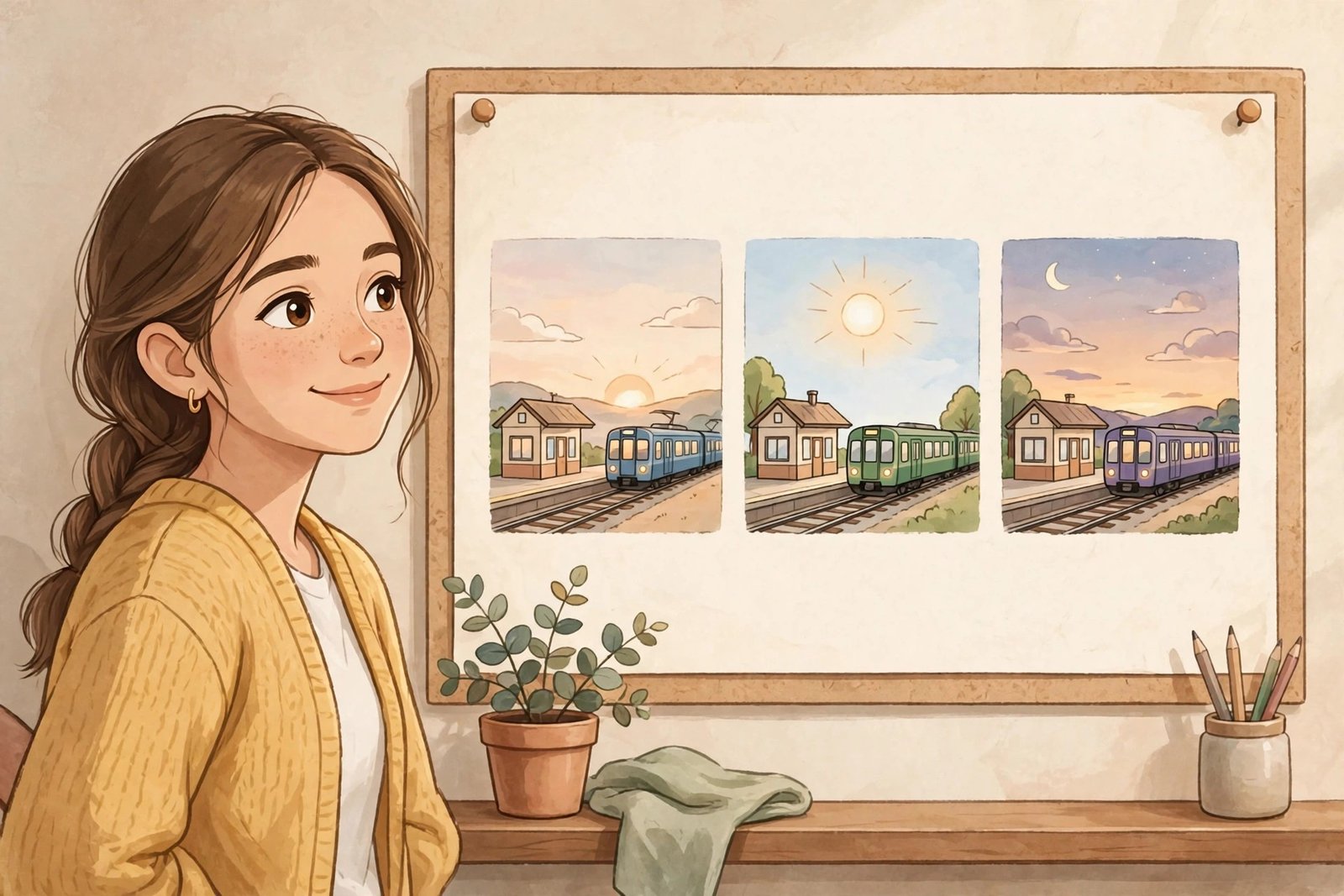
Here’s the short answer, clear and kind. When you ask is it normal to develop at a different pace, the answer is yes, fully yes. Puberty can start years apart between two healthy girls. One girl starts at nine. Her best friend starts at thirteen. Both are normal. Both end up grown.
Think of puberty like a train line. Every girl rides the same line, with the same stops. But nobody shares the same departure time. Some trains leave early. Some leave late. The line doesn’t change. The clock does. And a late train still arrives. It just arrives on its own schedule.
The order of changes can differ too. For one girl, height shoots up first. For another, her body shape changes first and height comes later. There’s no single right order. Your body picks its own sequence, and it doesn’t ask the class for a vote.
So if you’re early, you’re not strange. If you’re late, you’re not broken. If you’re in between, you’re not behind. You’re on your own timetable, like every girl around you. They just can’t see each other’s clocks. That’s why the question is it normal to develop at a different pace comes up so much at school. The clocks are hidden. The looking is public. Let’s fix that gap with facts.
One more short thought. Your pace says nothing about the woman you’ll be. Tall, small, curvy, straight, every grown shape starts in every kind of teen timing. Early girls and late girls both grow into all of them. The start date doesn’t stamp the ending. So the worry, while real, is aiming at the wrong thing. The ending was never in danger.
Every Body Follows Its Own Timetable

Let’s start with the big idea. Your body has a timetable built into it. It was set by your genes, the code you got from your family. That code says roughly when puberty starts, how fast it moves, and in what order the changes come. You didn’t pick it. You can’t rush it. And you don’t need to.
Here’s a way to see it. Think of a class garden planted on the same day. Same seeds, same soil, same sun. Do the sprouts come up on the same morning? Never. One pops up on Monday. One takes till the next week. A few take their time under the soil, growing roots you can’t see. All of them are growing. Some of the work is just hidden.
Girls are like that garden. A lot of developing happens where no one can see it. Hormones are waking up. Bones are getting ready to grow. The body is laying groundwork in silence. If your friend’s changes show on the outside and yours don’t yet, it doesn’t mean nothing is happening in you. It may just mean your work is still under the soil. That’s the garden’s whole answer to is it normal to develop at a different pace. Yes. Sprouts keep their own mornings.
This is also why feelings about a changing body can run so close behind the timing question. If your body feels like a stranger some days, that feeling has its own name and its own help. Many girls feel calmer after reading is it normal to dislike your body during puberty. This guide stays on the clock itself. That guide stays on the feelings. Both are part of the same season.
Try holding this sentence for hard days. My body isn’t late. It’s on its own time. Say it when the changing room feels loud. Say it when a photo makes you compare. A timetable isn’t a test you pass or fail. It’s just the way your one body does its growing. And it’s doing it right now, even when you can’t see the proof yet.
It may help to hear that adults forget the order fast. Ask a grown woman who developed first in her class. Most can’t tell you. It felt huge at thirteen and tiny by twenty. Your clock feels like the headline now because you’re living inside it. One day it’ll be a footnote you barely recall. Trust the girls who’ve already walked through. The timetable worry has an expiry date.
What the Normal Range Really Looks Like
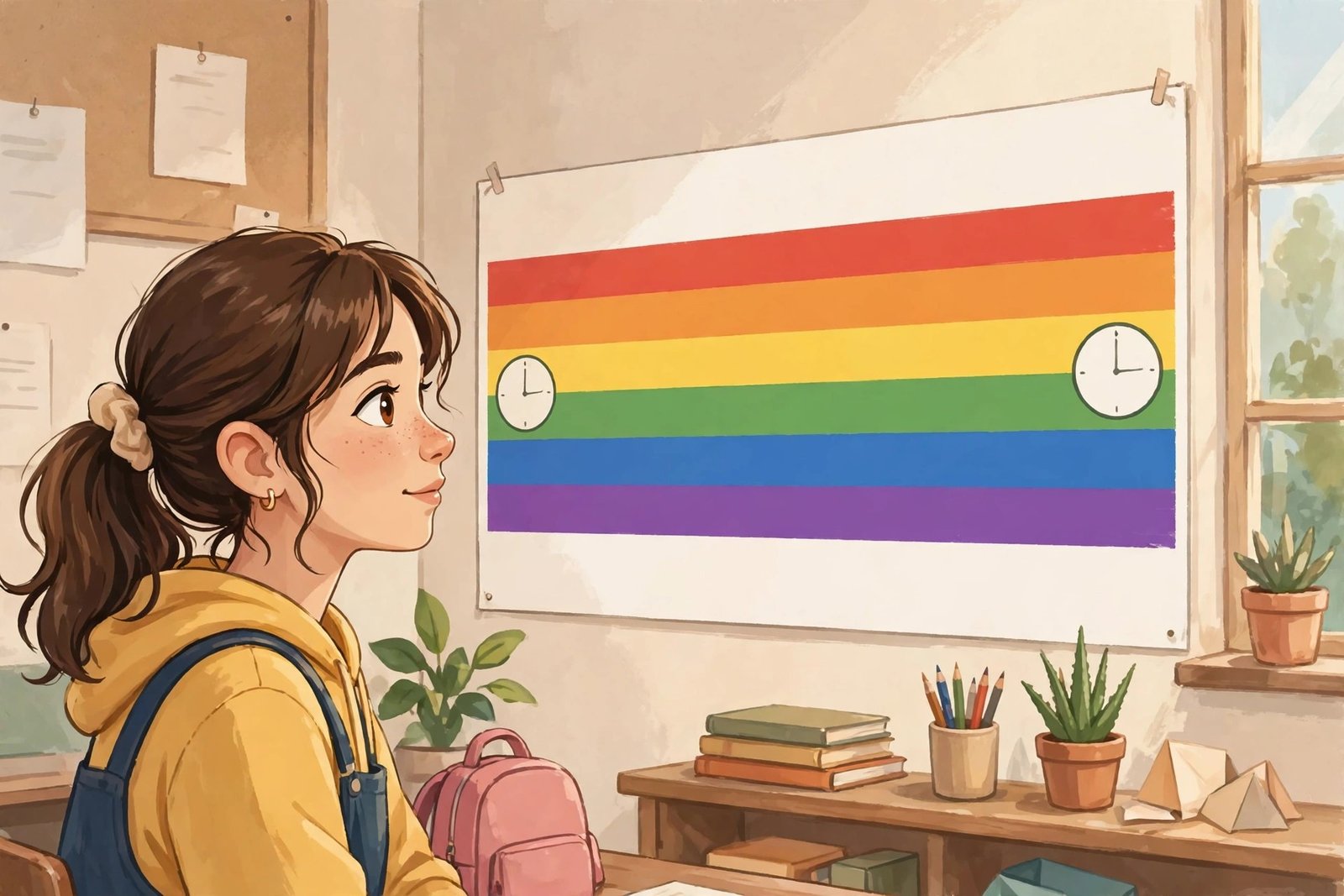
Girls hear the word normal and picture one narrow line. Real life is much wider than that. The normal range for puberty is broad, and knowing the real numbers can calm a busy mind. Let’s lay them out in plain words.
For most girls, the first signs of puberty show up somewhere between about eight and thirteen years old. That’s a five year window. A girl who starts at nine and a girl who starts at thirteen can sit in the same class, eat the same lunch, and both be fully normal. The window is wide because bodies are wide in their timing. It’s built that way on purpose.
The changes then unfold over years, not weeks. Growing taller, body shape changing, periods starting. The whole trip often takes three to five years from first sign to mostly grown. Some girls move through it fast, like a song on high speed. Some take the slow version. Both songs end at the same place. Grown.
Health experts for teens lay out this same wide range. The KidsHealth page on puberty basics explains that changes usually start between eight and fourteen, and that this wide range is normal. It also says a teen may develop years earlier or later than friends and still be just fine. If a calm expert voice helps you, that page is a good one to keep.
Periods have their own wide window too. Many girls get their first period around twelve. But a few years earlier or later is still inside the normal range. Your first period often comes a couple of years after the first body changes begin. So a girl whose body started early may still wait a while for her period. Clocks inside clocks. That’s how bodies work. Even inside one girl, is it normal to develop at a different pace from part to part? Yes again. Height may sprint while other changes stroll. Each part keeps its own small clock too.
Hold on to the shape of this. Normal isn’t a line. It’s a wide band, years wide. Almost every girl you know is standing somewhere inside it. You’re not watching the race from outside. You’re in the band, at your own mark, moving at your own speed. That’s the plain math behind is it normal to develop at a different pace. The band is wide because the pace is personal.
Why Friends Can Look So Different at the Same Age

Now the puzzle makes sense. Put thirty girls of the same age in one room. Their clocks all started in different years. Of course they look different. Same age, different chapters. It’s not a mystery. It’s math plus genes.
Family patterns are the biggest driver. Ask your mom when she started developing. Ask about your aunts if you can. Very often, a girl’s clock rhymes with her mom’s. A mom who bloomed late often has a daughter who blooms late. A family of early starters often raises early starters. Your clock was partly written before you were born. That’s not a flaw. That’s a family signature.
Bodies also answer to daily life a little. Good food, enough sleep, and health in general help a body follow its plan well. Hard illness or very poor food can slow a clock down for a while. But day to day things don’t rewrite the plan. You can’t eat your way into an early start, and skipping dessert won’t delay yours. The plan is deeper than snacks. Please don’t blame your plate for your pace.
Height plays tricks on the eye too. One girl shoots up early and looks older than she is. Another grows late and fast at fifteen, shocking everyone. Looking older isn’t being older. Looking younger isn’t being behind. Looks are a snapshot. Development is a film. The film always has more scenes coming, for every single girl in that photo.
So when you stand in that school photo line, remember the clocks. The girl who looks grown started her film early. The girl who looks young may be mid film or just starting. You’re all in the same cinema. When girls ask is it normal to develop at a different pace, this photo line is what they mean. Different frames, same film, every one of you still rolling toward grown.
Even sisters prove the point. Two girls, same house, same food, same parents. One starts at ten, the other at thirteen. If home life set the clock, sisters would match. They often don’t. That’s how deep the pattern runs. It’s written in each girl, one by one. So a classroom full of different paces isn’t a surprise at all. It’s exactly what the design predicts.
The Changing Room Problem: Comparing at School

If development has a hard room, it’s the changing room. Mirrors, bright light, and twenty girls at twenty different stages. It’s the one place where private clocks turn public. No wonder it stings. Almost every girl has felt that quick, hot compare moment in there. You’re not soft for feeling it.
Comparing feels like information, but it lies. You see one moment of one girl’s body. You don’t see her start date, her family pattern, or her worries. The girl you envy may be envying you back, for your calm skin, your fast running, or your easy laugh. The compare game shows everyone a cropped picture. Nobody’s full story is in that room.
If comparing is a daily habit for you, you’re far from alone in it. It helps many girls to name the habit and work on it directly. Our guide on why do i compare myself to other girls all the time walks through it with kind steps. Reading it can loosen the habit’s grip, one school day at a time.
Small tricks can cool the changing room down. Change at the end of the row if that feels safer. Face your locker, chat with a friend, keep your eyes on your own task. Get dressed at your own speed without racing the room. These aren’t signs of shame. They’re signs of smarts. You get to make hard rooms easier for yourself. And if the old question pops up in there, is it normal to develop at a different pace, let the room itself answer it. Twenty girls, twenty stages, one mirror. The room is the proof.
And here’s a thought that grows with you. In a few years, nobody will remember who developed first. It won’t be a story at all. The order of the photo line fades fast once school ends. What stays is how kind you were, how you laughed, what you loved doing. The clock question feels huge now because you’re inside it. From the other side, it’s just a small part of a big growing up.
So no, comparing in that room doesn’t tell you if your pace is right. It only tells you that paces differ, which you already know. The real answer to is it normal to develop at a different pace was never hiding in the mirror line. It’s in the wide, calm range of normal, and you’re standing inside it.
Early Developers Have Their Own Worries Too

It can look like early girls won some prize. They look grown. They get treated older. From the outside, early can seem like the good seat. But talk to an early developer, and you’ll hear a different story. Early comes with its own hard days, and they start before a girl feels ready.
An early girl may feel watched. Comments can come too soon, from kids and even adults. She may feel out of step in the other direction. Her body is in chapter five while her friends are in chapter two. She didn’t pick that either. Her clock just rang first, and ringing first isn’t always fun. Sometimes it’s lonely in the front.
She may also miss being treated her real age. A girl who looks fifteen at twelve is still twelve inside. She still loves cartoons, still cries at small things, still needs her mom’s hug after a bad day. When the world reads her body and forgets her age, that hurts. Her worries are real, even if they look like the opposite of yours.
Early girls ask versions of the same question too. They ask if it’s normal to be first. They ask why everyone stares. They ask when their friends will catch up so things feel even again. The worry wears two costumes, early and late. Under the costumes, it’s the same worry. Am I okay? Is my body doing this right?
And the answer, for both costumes, is the same calm yes. Early is a pace. Late is a pace. In between is a pace. None of them is the wrong one. If you remember one thing from this guide, let it be that. The train leaves when it leaves. Every girl on the line is a passenger, not a problem. Including the early ones. Including you. So when an early friend whispers is it normal to develop at a different pace and means her own fast one, you can give her the same calm answer you needed. Yes. Your pace is a pace. That’s all.
Late Developers: Waiting Is Hard, but Waiting Is Common

Now let’s sit with the late side, because waiting has its own weight. If your friends have all started changing and you haven’t, days can feel long. You may feel left out of talks. You may stuff your bag with hope each month and feel let down. That waiting is tiring, and it’s okay to say so out loud.
Here’s the part waiting girls need to hear. Late is common. In every class, some girls start at the far end of the range. Their bodies aren’t refusing. They’re scheduled later, often just like their moms were. Late bloomers have been a known, normal pattern forever. Whole family trees are full of them, and they all grew up fine. So if your private worry is is it normal to develop at a different pace when your pace is the last one in class, hear this clearly. Last in the class is still inside normal. The range has a far end for a reason, and girls stand on it every year.
The wait has some hidden gifts, if we can call them that. You get more years of being a carefree kid. Running, climbing, and swimming feel simple in a child’s body. Many late bloomers say later that they’re glad they got that extra time. You may not feel glad today. That’s fair. But the gift is real, even when it’s hard to see from inside the wait.
Growth also loves to surprise. Late starters often grow fast once they begin. The girl who looked youngest at thirteen can shoot up at fifteen and stand tall at sixteen. Catching up isn’t a hope. It’s the usual story. Your body keeps its promises, just on its own dates. The calendar is different. The ending is the same.
While you wait, live fully. Join the team. Wear what you love. Don’t put your life on pause for a clock you can’t see. And keep the question in its right size. When you ask is it normal to develop at a different pace, and your pace is late, the answer doesn’t change. Yes. Late is one of the normal paces. Your chapter is coming, and it will be yours.
It can help to find one older girl who was late too. A cousin, a sister’s friend, a young teacher you trust. Hearing a real story beats reading a fact. She’ll tell you about her own waiting, and about the year it all arrived at once. Stories like hers turn a lonely wait into a shared one. And shared waits feel half as long.
When a Quick Check With a Doctor Can Reassure You

Most paces need nothing but time. Still, a quick check can be a kind thing, and knowing when to get one is part of taking care of yourself. This section isn’t here to worry you. It’s here so a worried mind knows its next step. A step is always better than a spiral.
If worry about your pace sits with you week after week, say it out loud. Tell your mom, or another trusted adult. Saying, I keep worrying about how I’m developing, is enough. You don’t need charts or proof. A feeling that won’t settle is reason enough to talk. Talking is the first check, and it costs nothing.
A doctor can then do the simplest of checks. They’ll ask when changes began for you and for your mom. They’ll look at your growth over time. Most of the time, the visit ends with calm words. You’re inside the normal range. Your body is on its way. Girls walk out of those visits standing taller, not because they grew, but because the worry shrank.
There are a few signs that make a check a smart idea sooner. If no body changes have begun well into your teen years, a check can help. If changes began and then fully stopped for a long stretch, mention it. If you feel unwell in other ways, like big tiredness or pain that keeps coming back, that’s worth a visit too. These aren’t verdicts. They’re just good reasons to let a doctor look.
Hearing a doctor say you’re fine lands differently than hearing it from a friend. Experts carry weight, and that’s okay to want. It doesn’t make you dramatic. It makes you a girl who takes her health seriously. There’s no prize for worrying in silence. There’s only the worry.
So let’s close the whole guide here, with the balance held steady. When you ask is it normal to develop at a different pace, the answer is yes, in almost every case. Early, late, fast, slow, you’re inside a wide and normal range. And if a worry won’t settle, a trusted adult and a quick check can give you peace. Your pace is yours. Your peace can be yours too. Both are worth having.
Frequently Asked Questions
Why did my best friend develop so much earlier than me?
Because her clock started earlier than yours. Her family pattern likely points early, and yours may point later. You didn’t do anything to cause the gap, and she didn’t earn her start. It’s written into your genes, like eye color and height patterns. Same class, same age, different start dates. Girls ask is it normal to develop at a different pace mostly because of one friend like her. One close gap feels bigger than a hundred facts. Her head start won’t matter in the end.
Will I catch up with everyone else in the end?
Yes, in almost every case, you will. Puberty has a wide start window but a shared finish line. Girls who start late often grow fast once they begin, and by the late teen years the gaps mostly close. The photo line at eighteen looks far more even than the one at thirteen. Your ending doesn’t depend on your start date. Early trains and late trains reach the same station. And that, in one line, is why is it normal to develop at a different pace has such a steady answer.
Does developing late mean something is wrong with me?
Almost always, no. Late development is a common, healthy pattern, and it often runs in families. Your mom or aunt may have been late too. Late doesn’t mean broken, and it doesn’t mean less. It means later. The honest answer to is it normal to develop at a different pace is yes for late girls too, in the very same breath as early ones. If the worry keeps sitting on you, a quick doctor check can settle it. Most girls hear that they’re fine.
Can food, sleep, or sports change my pace?
A little, around the edges, but not the main story. Eating well and sleeping enough help your body follow its plan at its best. Very hard training or very poor food can slow a clock for a while, because the body waits for safer times. But no food speeds puberty up, and no diet holds it back on purpose. Please don’t blame your plate or your team for your pace. Your genes hold the pen. Habits just keep the page clean.
Who can I talk to if I keep worrying about this?
Start with someone who listens well. Your mom is a strong first pick, since her timing may mirror yours. An older sister, aunt, or grandma can help too. The school nurse hears these questions often and keeps them private. A doctor can give you the expert all clear too. If you keep asking is it normal to develop at a different pace and the asking itself feels heavy, that’s your sign. Share it out loud. Saying is it normal to develop at a different pace is a brave first step.
Pingback: How Can I Tell My Parents I Want More Privacy? - The Honest Truth