
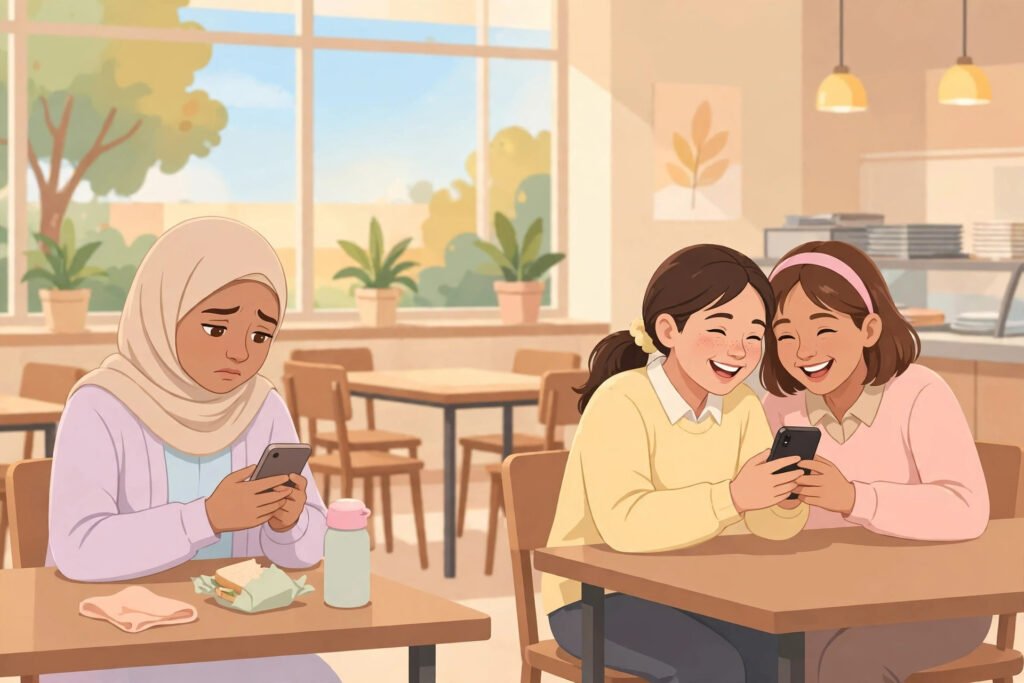
Nour was halfway through lunch when she noticed her friends around one phone. They were laughing hard at something on the screen together. They kept tapping replies back and forth, really fast. Her own phone sat silent beside her lunch tray. No buzz, no ping, no little light at all. One friend looked up, saw Nour, then looked away quickly. Her stomach just dropped in that one small second. There is a chat, and she is not in it.
If that moment feels familiar, your feelings make complete sense here. Being left out stings in a sharp, specific way. You are not dramatic, and you are not too sensitive. You start wondering if you did something wrong somehow. You wonder if they like you less than before. Learning how to react when your friends make a group chat without you starts here. Your hurt is real, and it deserves real care.
So let’s walk through this slowly, step by step together. You will learn how to pause before you react badly. You will learn how to look for simple, kind reasons. You will learn how to spot a pattern over time. There is no perfect script for how to react when your friends make a group chat without you. But there is a calmer way through it, truly. And you don’t have to figure it out alone.
The Short Answer

Here is the short answer in three simple steps. Pause first, get curious second, and talk honestly third. Don’t send an angry message in the first hot minute. Don’t pretend you are fine if you are not. The healthiest way for how to react when your friends make a group chat without you is simple. Give your feelings space, check the facts, then talk privately.
Sometimes a separate chat really does have a simple reason. It might be planning a surprise party for you. It might be homework for a class you skip. It might be a team chat for weekend practice only. One gentle question can clear that up very quickly. That is why how to react when your friends make a group chat without you begins with curiosity. Curiosity keeps doors open instead of slamming them shut. It gives your friends a fair chance to explain.
Other times, being left out is part of a pattern. It happens again and again, week after week, sadly. There are jokes about it at the cafeteria table. You feel smaller every single time it comes up. Then how to react when your friends make a group chat without you may look different. It may mean setting a boundary and telling an adult. This guide to dealing with cliques from KidsHealth reminds teens that real friends respect your feelings. Whatever you discover, one chat does not measure your worth.
Pause Before Reacting While You Are Upset

The first minutes after you notice the chat feel awful. Your heart races and your face feels hot and tight. Your thumbs itch to type something fast and sharp. That urge is normal, and it doesn’t make you dramatic. It simply means you care about these friendships a lot. The first step in how to react when your friends make a group chat without you is protection. Protect yourself from words you can’t take back later.
Try a small, physical pause before you do anything else. Put your phone face down, like Nour did at lunch. Take one slow breath in, then let it out slowly. Count to ten, get water, or step into the hallway. These tiny actions tell your body that you are safe. You don’t have to solve this in thirty seconds flat. A message sent in tears is hard to take back. A thought given an hour often becomes much clearer. It often becomes kinder and calmer as well, honestly.
It also helps to name what you feel, just privately. Write it in a phone note nobody will ever see. Or whisper it honestly to yourself under your breath. I feel hurt, I feel embarrassed, I feel left out. Naming a feeling doesn’t make it bigger or stronger. For most girls, naming it actually does the opposite. It turns a messy storm into clear, workable words. Those words stop leaking out later as sarcasm or silence.
Please skip the quick fixes that feel powerful at first. Don’t send a guilt trip message to the whole group. Don’t post a vague sad quote hoping they notice it. Don’t ask someone to spy on the chat for you. Those moves usually create more distance, not less at all. Waiting is not weakness, not even a little bit. Waiting is choosing your words on purpose, with care. That choice is a mature part of how to react when your friends make a group chat without you.
By the end of the day, ask yourself one question. If I still want to speak tomorrow, what is kindest? What is the truest, calmest version of my message? Write that morning version down and sleep on it overnight. It is usually shorter, softer, and easier to hear. Pausing doesn’t erase the problem or your hurt feelings. It doesn’t mean you will stay silent forever, either. It means you will speak as your thoughtful self. Not as your most wounded moment from lunch today.
Consider Innocent Reasons the Chat Exists

Once your breathing slows, look at the chat with curiosity. Not every separate chat is a secret plot against you. It can feel that way in the first painful minute. But friend groups make smaller chats for ordinary reasons daily. Remembering that is part of how to react when your friends make a group chat without you. Curiosity is not pretending everything is fine at all. It is giving the truth a chance to appear. Before your worries write the whole story for you.
Think about the practical, boring reasons first of all. The chat might be planning a surprise gift for someone. It might be planning a party, maybe even for you. It might cover homework for a class you don’t take. It might be a sports team you are not on. It might sort rides home for only three people. Small chats often form around one small, simple task. Then they keep chatting out of habit for weeks. That habit can look like exclusion from the outside. Even when nobody planned to hurt anyone at all.
Group chats also get messy in very normal ways. Sometimes a phone dies right in the middle of class. Sometimes a number changes and nobody notices right away. Sometimes someone starts a thread quickly and forgets you. She planned to add you later, then truly forgot. Part of how to react when your friends make a group chat without you is this distinction. Separate a careless mistake from a cold, repeated pattern. Each one deserves a very different kind of conversation.
Try gathering gentle clues instead of dramatic, heavy evidence. Are your friends still warm to you in person daily? Do they save you a seat at the cafeteria table? Do they walk with you between classes at school? Do they reply to your texts and ask questions back? Warm behavior in real life is a good sign here. It suggests the chat may have a simple explanation. Cold behavior everywhere is a very different sign altogether. The next section will help you face that honestly.
Hold two ideas at the same time, if you can. Your hurt is valid, and the reason might be innocent. Both things can be completely true at the same time. You don’t have to decide everything in one afternoon. Let curiosity soften the sharpest thoughts while you watch. If the explanation is kind, you’ll be glad you waited. If it isn’t, you’ll speak from clear, calm facts. Either way, you learn how to react when your friends make a group chat without you calmly.
Notice How Often You Are Left Out, Not Just Once

One missed invite is a moment, not a verdict. A repeated pattern is a message you should read carefully. That difference matters more than almost anything else here. Noticing it calmly is central to how to react when your friends make a group chat without you. A single oversight can happen to anyone, truly anyone. But regular exclusion deserves your honest, serious attention too. You are not sensitive for noticing a clear pattern.
Try a private, simple reflection over the next weeks. Nour did this quietly with her planner after school. Think back over the last few weeks of school honestly. How often did plans appear already fully formed without you? How often did you hear inside jokes days later? How often did photos show outings you never heard about? You are not building a court case against anyone. You are looking for a pattern with clear eyes. So your next step rests on reality, not fear.
Pay attention to your body and mood after hangouts too. Do you leave lunch feeling lighter or much smaller? Do you check your phone with hope or with dread? Do you change your clothes just to stay included somehow? Do you change your opinions or your laugh, too? These small signals add up over days and weeks. Girls are often taught to doubt their own perceptions. Keeping the peace becomes more important than their feelings. But your inner signals are real, useful information. Respecting them is part of how to react when your friends make a group chat without you safely.
Reading about wider patterns can also help you reflect calmly. This honest look at why friends leave you out of plans explores that experience with care. Read it away from the noisy cafeteria at home. It may help you find words for your situation. You may recognize yourself in some of its pages clearly. Or you may realize your case is smaller than feared. Either discovery is useful for your next step forward.
Give yourself a fair time frame for honest noticing. Two or three weeks is usually enough to see patterns. Unless something cruel happens sooner than that, of course. If jokes target you, don’t wait for more proof. If photos are waved in your face, act sooner. Mockery is already a pattern all by itself, sadly. Otherwise, calm noticing protects you from both extremes here. It stops you from ignoring real, repeated exclusion. It also stops one bad day rewriting a friendship.
Ask One Friend Privately What the Chat Is For

When you feel calm enough, choose one friend to ask. Don’t confront the whole group at the lunch table. Pick the person you trust most in the group. Pick someone who is honest and kind when awkward. A private question is key to how to react when your friends make a group chat without you. It gets real information without putting anyone on stage. Group confrontations make people defensive and loud very fast. A quiet hallway chat gives truth a better chance.
Keep your question simple, short, and very specific too. You might say you noticed a chat without you. You might say you felt a bit left out today. Then ask her what the chat is actually for. That is enough, you don’t need a long speech. You don’t need evidence or an apology for feelings. Simple words are much easier to answer honestly, truly. Then pause, and actually listen to her full answer. Let her finish, even if it surprises you.
Listen for both the facts and her attitude together. The facts tell you what the chat actually is. Maybe it is a gift plan or study thread. Her attitude tells you how she feels about your question. A caring friend might look embarrassed and apologize quickly. A dismissive friend might roll her eyes at you. She might laugh it off or call you dramatic. Both responses teach you something important about the friendship. So pay attention to tone as well as words.
Please don’t turn this step into detective work, ever. Don’t demand to scroll through the chat on her phone. Don’t ask for screenshots or borrowed phones to peek. Don’t create a fake account to watch them secretly. Those choices cross a line and rarely bring peace. A core part of how to react when your friends make a group chat without you is openness. Ask openly, and accept you can’t control her answer. If her answer feels untrue, time will reveal more. Patterns tell you more than any screenshot ever could.
Notice how you feel after she explains things to you. If she offers to add you, relief feels good. That relief is usually a very good sign indeed. If she explains kindly, the chat may be fine. Some chats truly are not meant for everyone involved. If she promises change and nothing changes, remember that. Write it down mentally as part of the pattern. One honest question gives you clarity and dignity together. It gives you a fair record of trying, too. That record is always worth having for yourself.
Say How It Felt Without Starting a Fight

Asking about the chat is only half the conversation, really. The other half is saying how being outside felt. Many girls skip this part because they fear sounding needy. Sharing a feeling calmly is actually a healthy skill. Learning how to react when your friends make a group chat without you includes this. It includes saying I felt hurt, without starting war.
Use I statements, because they describe your own experience clearly. Say you felt left out when you saw the replies. Say it simply, in a chat you weren’t part of. Compare that with accusing them of excluding you deliberately. The first sentence invites understanding from a caring friend. The second invites defense, denial, and a loud argument. You can be fully honest and still choose kindly. Honesty and kindness belong in the same sentence together. They really do, even when the topic feels hard.
Keep your message short, specific, and in the present. Talk about this chat and this week only, please. Don’t list every small hurt since September at school. Long lists make listeners shut down very quickly indeed. They blur the one thing you need heard today. Choose your main point before you speak at all. I felt sad, and I wanted to understand why. If tears come, that is completely okay, truly. Tears are not manipulation, and they are not weakness. Take a breath, sip water, and finish your sentence.
Avoid the traps that turn a feelings talk into fighting. Don’t threaten to end the friendship in heated moments. Unless you truly mean it, don’t say it aloud. Don’t bring other friends in as backup voices either. Don’t compare this group with another group to score points. If voices rise, pause the talk very calmly yourself. Say you want to sort this out after lunch instead. Walking away from heat is not losing at all. It is protecting the conversation for later, calmer minutes.
Close by naming what would actually help you most. The next section explores that choice in more depth. For now, remember a calm talk is not begging. It is information your friends need to treat you well. Girls who care will genuinely want to know it. And if you wonder whether caring is real here, read on. This guide to spotting a fake friend helps you read actions. It helps you trust what you see over time. Words in one talk matter, but actions matter more. The weeks after the talk matter most of all.
Decide If You Want an Invite or an Explanation

After the talk, you get to decide what you want. That may sound obvious, but many girls rush past it. They demand an invite before checking their real feelings. Sometimes you truly want to be added to it. Sometimes you mainly want to know it wasn’t personal. Pausing to choose is part of how to react when your friends make a group chat without you. A clear wish is easier for friends to honor. Much easier than a vague, upset hint, honestly.
Imagine the best realistic outcome, not a perfect movie outcome. Would being added make you feel included and comfortable there? Or would you watch old jokes and feel worse again? If the chat covers a class you share together, ask. If it covers a team or plan you share, ask. An invite makes practical sense in those cases, truly. If it was created for one past event only, think. An explanation might heal more than a late invite. A warmer pattern going forward might heal even more.
It is also completely fair to want both things together. You can thank her for explaining it to you calmly. You can ask to join future general chats instead. Say being included matters to you, clearly and warmly. That sentence is clear, warm, and easy to act on. Friends cannot meet wishes they have never heard before. Naming yours gives the friendship a real, fair chance. Many groups genuinely improve after one brave, specific request. That is the heart of how to react when your friends make a group chat without you growing up. Ask clearly, then believe the pattern that follows next. Not just the promise made in one emotional moment.
Watch what happens over the next week or two carefully. If future plans still form without you, that matters greatly. If friends become more open and thoughtful, that matters too. It matters in the very best way, of course. Give yourself permission to change your mind over time. You might feel relieved today and sad again next week. You might feel unsure today and settled much later. Feelings after exclusion rarely move in a straight line. What matters is that your choice stays self aware. You know what you asked for and why, clearly. You know what you will notice next, too. That clarity is yours, and nobody can take it.
Protect Your Self-Respect If It Keeps Happening

If the pattern continues after calm talks, the focus shifts. Now the question is less about one single chat. It is more about your self respect and peace. Protecting it is central to how to react when your friends make a group chat without you repeatedly. You have communicated with care, honesty, and real courage. If nothing changes, you may protect your peace fully. Without guilt, without drama, and without revenge at all.
Start by widening your world, gently and on purpose. Join a club, a team, or a school garden project. Join an art class or a volunteer group nearby. Pick something you enjoy with kind, new people there. Nour found her smile again in a school garden group. They handed her a small plant and real welcome. New circles don’t replace old friends overnight, at all. They remind you belonging exists in many places, truly. They remind you your company is genuinely wanted somewhere.
Please never protect your pride by hurting someone back cruelly. Don’t start a rival chat just to exclude them back. Don’t spread stories or turn other friends against them either. Revenge feels strong for an evening and small after. For a long time after, it feels quietly wrong. Your self respect grows from your own values instead. Even when others don’t act by theirs at all. Walk away from cruelty cleanly, honestly, and kindly yourself. The way you would want a friend to walk.
If exclusion becomes targeting or mocking, tell a trusted adult. Tell a parent, a teacher, a coach, or counselor. Exclusion used deliberately, repeatedly, to isolate someone can become bullying. Bullying is never something a teen should carry alone. Asking an adult for help is not snitching, ever. It is not overreacting, and it is not weakness. It is using support that exists for moments like this. It is a wise part of how to react when your friends make a group chat without you cruelly.
Hold onto this truth on the hardest days at school. A chat thread is not a measure of your worth. You are not too much, too quiet, or too different. You are not too late to belong somewhere kind. Some groups are simply not gentle enough for you. Realizing that can hurt and free you at once. Keep choosing people who actually choose you back daily. In chats and in real life, both matter equally. That steady choice is how to react when your friends make a group chat without you long term. With a calm voice, clear boundaries, and soft heart. Without staying where you are repeatedly hurt, though.
Frequently Asked Questions
Should I ask to be added to the chat?
Only ask if being in that chat would actually make you feel good and included. If it’s for a class, a team, or a plan you’re part of, asking makes total sense. If it was for one event that’s already done, an explanation might help more than a late add. Be clear and warm, and say you’d love to join future general chats. Then watch what they do next. Their actions after you ask will tell you the most, so trust what you see.
What if my friends say I am overreacting?
Stay calm and stick to your feeling, not their label for it. You can say you get that it looks small to them, but it hurt you, and you wanted to be honest. That’s fair. That’s mature. A caring friend can think it’s a small thing and still respect that you felt hurt. If every feeling you share gets laughed at or brushed off, that’s important info about the friendship itself, and you shouldn’t ignore it.
Is it okay to have chats that do not include everyone?
Yes, it’s totally okay. Small chats for homework, a team, a family plan, or a surprise gift are normal. Nobody has to be in every thread. That’s not the problem. The problem starts when one person is always the only one left out of the main plans, the jokes, and the photos. It’s worse if she’s already said, calmly, that it hurts her, and it still keeps happening again and again each week.
Should I check the chat through someone else’s phone?
No, please don’t do that, even when you’re anxious and you really want to know. Borrowing a phone to scroll, asking for secret screenshots, or using another account crosses a trust line. It won’t bring you peace, either. You’ll still wonder what they said later. And if it comes out, it can hurt the friendship badly. An honest private question, plus watching the pattern over time, gives you cleaner answers and lets you hold your head high.
When should I tell an adult about being left out?
Tell an adult you trust if it keeps happening, if it’s aimed at you, or if there’s mocking, rumors, or friends trying to turn others against you. Also speak up if you’re anxious most days, if you dread school, or if you’re changing who you are just to stay in. A parent, teacher, or counselor can help you plan what to do next and keep an eye on things. Asking for that help is strong and smart, not an overreaction at all.
Pingback: Why Do My Friends Post Stories but Not Reply to My Messages - The Honest Truth