

School ends, and with it ends the last period of your life when learning had an address, a timetable, and someone whose job was to check that it happened. After graduation, the chapters stop being assigned. Nobody sets the reading, nobody marks the homework, nobody rings a bell. For most adults, learning does not stop with a decision. It stops with a drift, and the question of how to keep learning after school quietly goes unasked for years.
The drift is rarely about intelligence or even curiosity. Ask adults what they would learn if they had the time, and the list comes fast: a language, an instrument, history, coding, cooking properly. The appetite survived. The structure did not. Understanding how to keep learning after school means rebuilding, at adult scale, the few parts of that structure that actually did the work: a chosen subject, a regular hour, a method that makes things stick, and a reason that survives a tiring week.
This guide builds that structure piece by piece: why learning stalls when school ends, what research on memory actually supports, how to choose a subject, which formats earn their time, how to learn with almost no money, and how to stay consistent when motivation fades, as it always does. If you came here looking for how to keep learning after school without enrolling anywhere or reorganising your life around a classroom, you are in the right place. None of it requires talent. It requires a system small enough to survive real life.
One clarification before the system. Learning, here, means more than school subjects. It includes the language you want before a trip, the instrument in the corner, the trade skill, the history of your own city, the mathematics you avoided at sixteen and now need for work. The system below does not care which one you choose. It cares that the choice is real, scheduled, and practised in a way memory respects.
The short answer

The short answer to how to keep learning after school is this: study one subject at a time, in short regular sessions, using active methods, and make something with what you learn. That is the whole secret, and the rest of this article is the engineering that makes it survive contact with a real adult week.
Concretely, it looks like this. Choose one topic connected to your actual life. Find one strong resource instead of twelve saved links. Book three sessions a week, twenty to thirty minutes each, at fixed times. In each session, test yourself more than you reread. Review at growing intervals. Once a month, produce a small output: notes you could teach from, a project, a conversation, a repaired object.
Each element exists for a reason. Regularity beats intensity because memory consolidates between sessions. One subject beats five beginnings because visible progress is what motivation feeds on. Output matters because consumption hides misunderstanding, while making something exposes it kindly and early. Adults who learn how to keep learning after school are not more disciplined than everyone else. They just run a loop that does not depend on discipline.
Notice what this answer leaves out. It does not ask you to find more time in a day that has none, to become a morning person, or to wait for motivation to strike. It replaces the two habits that quietly fail adults: collecting resources instead of using one, and consuming content about a subject instead of practising the subject itself. The loop is small on purpose. Small survives.
Why learning stops when school ends

School is best understood as an external operating system for learning. It supplied fixed hours, a teacher who sequenced the material so you never faced a blank map, deadlines that forced the work, exams that forced retrieval, classmates whose pace quietly set yours, and an identity, student, that made learning your official job.
Graduation deletes the whole system in one summer. Nothing replaces the timetable, so learning must compete against work, family, fatigue, and a phone engineered to win. Nothing sequences the material, so a beginner faces ten thousand resources and chooses none. Nothing tests, so a pleasant feeling of familiarity gets mistaken for knowledge. Nothing paces, so one missed week becomes a missed year. This is the mechanical reason learning stops, and it explains why how to keep learning after school is mostly a design problem, not a character problem.
Notice the evidence hiding in your own life. Put the same adult who believes they cannot learn anymore into a course required by their job, and they learn perfectly well, because the structure returned for eight weeks. The ability was never lost. The scaffolding was. So the real task in how to keep learning after school is to become, in miniature, your own school: your own registrar choosing the subject, your own teacher sequencing it, your own examiner checking it, on a budget of perhaps two hours a week.
There is also a quieter loss: permission. School made learning legitimate time, defended against every other demand. Adult learning can feel like an indulgence to apologise for. Naming it as part of your life’s maintenance, like health or savings, is the first repair.
Two more losses hide inside the big one. The first is feedback. At school, a marked test told you, impersonally and weekly, what you had not understood. Adult life offers no such service, so a misunderstanding can sit undisturbed for years. The second is company. Learning was social by default, done in rooms full of people at the same stage. Alone, every difficulty feels like a personal verdict instead of a normal stage everyone passes through. A good self education system has to rebuild both: a way to be corrected, and a way to not be alone with it.
What research says about adult learning and memory
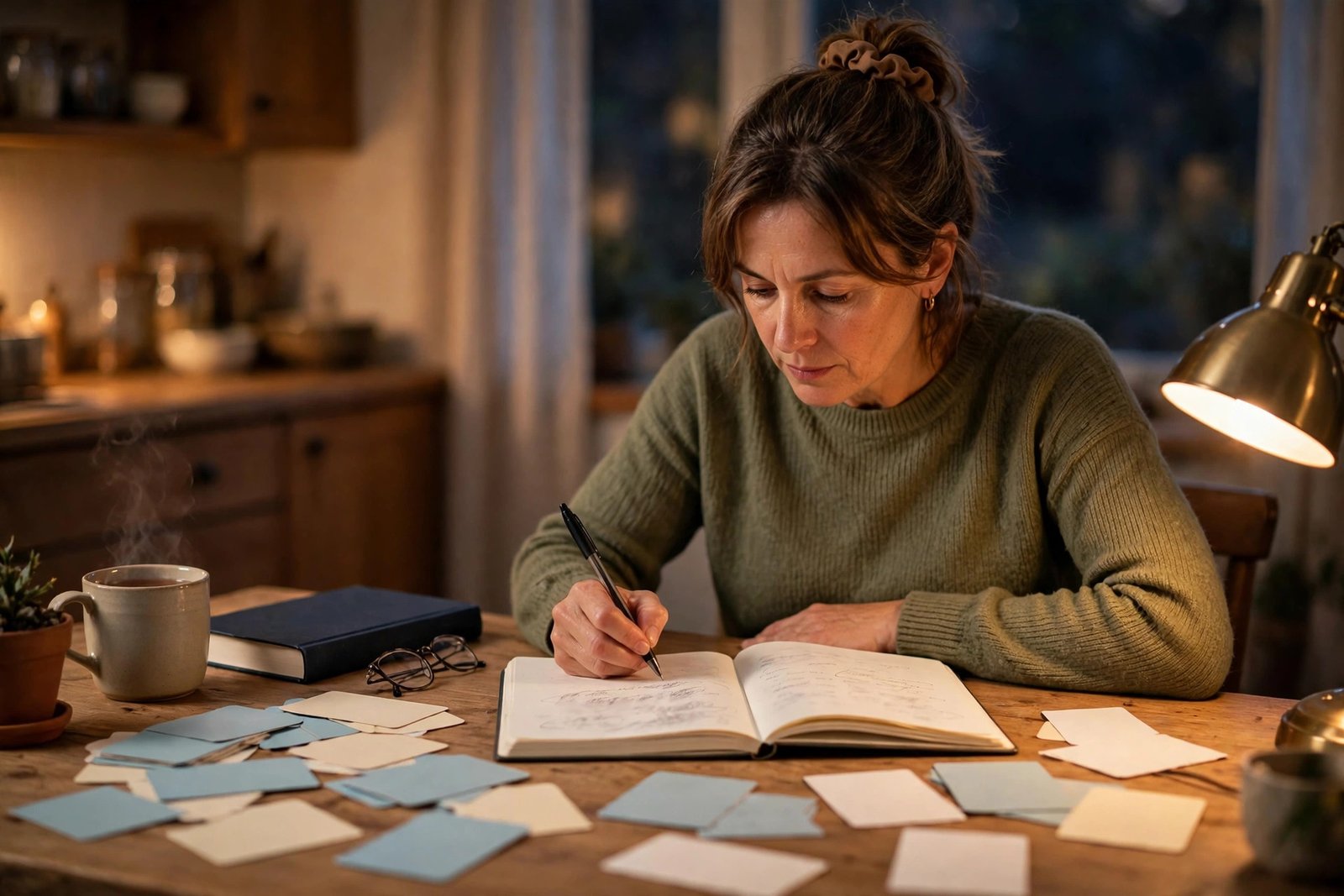
Memory research is unusually kind to self taught adults, because its most robust findings are techniques, not talents. Two of them, spacing and retrieval practice, do most of the work in any serious answer to how to keep learning after school.
The first is the spacing effect. Information reviewed at expanding intervals, a day later, three days later, a week, a month, is remembered far better than the same total time spent in one long block. Cramming feels productive because everything is fresh at the end of the session. It fades fast. Short returns feel inefficient precisely because they expose forgetting, and that exposure is what rebuilds the memory stronger.
The second is the testing effect. Trying to recall something before checking it strengthens memory more than rereading does, even when your recall is wrong. Closing the book and writing down everything you remember, answering questions, explaining the idea aloud as if teaching it: these feel harder than highlighting, and the difficulty is the mechanism. Effortful retrieval is the gym of memory.
Forgetting, meanwhile, is steepest in the first days, which is why the first review matters disproportionately. The practical rule follows directly: when you schedule a learning session, schedule its reviews in the same breath. A topic studied once is entertainment. A topic studied once and revisited three times becomes knowledge. This rhythm is the backbone of how to keep learning after school for years rather than weeks.
Adult learning research adds an encouraging correction. Adults are not simply slower students. They anchor new material to decades of existing knowledge, they learn fastest when the material connects to real problems they already care about, and they persist when the goal is self chosen. Children memorise broadly because they must. Adults integrate. Used well, experience is not a handicap to learning. It is scaffolding.
A concrete example shows the machinery at work. Suppose you are learning Italian for a trip in four months. Monday, you study twenty new phrases. Tuesday, instead of adding twenty more, you close the book and write down Monday’s phrases from memory, then check them. Friday, you review the survivors and add a few. The following week, you review again, briefly, and say the phrases aloud to a partner or an app. Nothing here is heroic. The spacing and the recall do the heavy lifting, in minutes, while a single Sunday of cramming would have evaporated by the flight.
Choose what to learn: curiosity first, utility second

The standard advice says to learn what is useful. It is half right. Utility is a good compass and a terrible fuel. A subject chosen only for its strategic value tends to die in the first busy month, while genuine curiosity keeps sending you back on tired evenings. When you decide how to keep learning after school, rank your candidates by both measures: useful enough to matter, interesting enough to return to.
Four questions sort most lists quickly. What do I already read about for free, with nobody asking me to? Which skill would visibly change my daily life or work within a season? What did I love before grades were attached to it? And the sharpest test: what would I still learn if nobody ever saw the result? That last question removes status from the decision and leaves appetite, which is the part that has to last.
Watch the two measures work on a real choice. Suppose your list holds French and spreadsheet modelling. French scores high on curiosity: you dream in it a little, and you light up when you hear it spoken. Modelling scores higher on utility: it would change your work within a quarter. Neither answer is wrong, but they lead to different cycles. Choose French, and the finish line is a conversation held entirely in French on your trip. Choose modelling, and the finish line is one automated report your colleagues actually use. What you cannot do is choose both at half strength and expect either finish line to arrive.
Then comes the hard rule: one subject at a time. Five parallel beginnings feel ambitious and produce five shallow starts, each too thin to generate the progress that motivation feeds on. Depth creates momentum. Keep a written later list for the other interests, so that choosing one does not feel like losing the rest. The list is a promise, and it makes focus psychologically affordable.
Finally, define what this cycle of learning is for. A three month project, a trip where you use the language, a portfolio piece, a meal you cook for friends, an object you repair. Learning aimed at a real event organises itself, because every session has a destination. This is how to keep learning after school without willpower theatre: appetite chooses the direction, and a destination holds the shape.
How to keep learning after school with a system that fits real life

A system beats a resolution, because a system still functions on the weeks when you feel nothing. Here is a complete one, deliberately small. If the short answer explained how to keep learning after school in one paragraph, this section is the machinery underneath it.
First, a curriculum of one page. Write the subject, the order of topics, the main resource, and the finish line event. An imperfect curriculum that exists beats a perfect one still being researched. One page also keeps the project honest: if it does not fit on a page, it is a fantasy, not a plan.
Second, fixed appointments. Three sessions a week, at the same times, twenty to forty minutes each, defended like meetings with a person you respect. Attach them to anchors that already exist: after breakfast, on the commute, Sunday morning with coffee. Sessions that float in the hours you hope to find are the first casualty of every busy week.
Third, a ready environment. The book lives on the table, not the shelf. The app sits on the home screen. The notebook travels in the bag. Every session should be startable in under a minute, because friction, not laziness, is what usually decides whether a tired adult studies or scrolls.
Fourth, build the method into the session itself. End each session with two minutes of recall: book closed, write what you remember, note what escaped. Schedule the reviews, one day, three days, one week, one month, at the moment you schedule the learning. This unglamorous detail is what separates how to keep learning after school from merely reading about learning.
Fifth, a monthly output, and sixth, a one line log. The output converts study into identity: something made, taught, cooked, fixed, or published. The log, date, topic, one line, takes thirty seconds and becomes, on flat weeks, the written proof that you are accumulating something real.
Here is the system wearing ordinary clothes. Wednesday, twenty five minutes after breakfast: new material from the main resource, then two minutes of recall notes. Friday, on the commute: a review of Wednesday, a few practice items, nothing new. Sunday morning: a longer session that mixes the week’s topics, updates the log, and glances at the monthly output taking shape. Total time, under two hours. Total drama, none. That ordinariness is not a compromise. It is the design.
The best formats: books, courses, podcasts, practice

Books remain the densest learning format ever made: years of a specialist’s thinking, sequenced and compressed, for the price of a lunch. If the reading habit itself has rusted, rebuild it first with our guide on how to start reading again as an adult, because one strong book, finished, will outperform a semester of scattered articles.
Courses sell you the two things self education lacks: sequence and external deadlines. Choose ones with exercises, projects, or feedback over pure video libraries you can only watch. And respect the arithmetic: one mediocre course finished teaches more than three excellent ones abandoned in week two, because finishing is where the structure pays out.
Podcasts and videos are superb for exposure, vocabulary, and staying in contact with a subject on days when sitting down to study is impossible. They are weak as the only format, because listening feels like learning while testing nothing. Treat them as the input layer of how to keep learning after school: valuable, enjoyable, and always paired with recall or practice somewhere in the week.
Practice is where knowledge becomes skill. Problems solved, sentences spoken, code run, dough kneaded, chords played badly. Skill also needs feedback to correct itself: a teacher, a study partner, a test, a native speaker, or reality itself, in the form of a project that works or visibly does not. Whatever combination you can arrange, prioritise the formats that answer back.
One format deserves promotion from the list, because adults forget it exists: teaching. Explaining a topic to a colleague, a friend, a study group, or an online community forces the retrieval and organisation that passive formats skip, and the questions you cannot answer are a free diagnostic of your gaps. You do not need mastery to teach. You need to be one chapter ahead of someone, and honest about which chapter that is.
Learning with almost no money

The true costs of self education are time and attention, not fees, which is good news for anyone who has to watch every line of a budget, as our guide on how to manage your money when you earn very little lays out honestly. A serious learning project can run for close to nothing if the resources are chosen in the right order.
Start with the public library, the most underpriced institution in adult life. A card unlocks books, ebooks, audiobooks, and often full course platforms and language apps, and librarians are professional resource finders whose help is free. Ask them. It is literally the job.
Then use the free tier of the world’s universities and cultural institutions. Platforms such as OpenLearn, the free learning site of the Open University, offer structured courses with readings and quizzes at no cost, and museums, archives, and public broadcasters publish deep material that marketing never promotes. What you are hunting for is structure, not content, which the internet already has in embarrassing surplus.
When you do spend, spend on the bottleneck, in this order: feedback first, meaning a conversation partner, a graded exercise, or one lesson a month, then the main resource, then tools. Second hand books and library sales cover most of the rest. Framed this way, how to keep learning after school on a small budget is mostly a scheduling achievement wearing a money costume.
Practice partners deserve a paragraph of their own, because they are the highest value free resource in most subjects. Language exchanges trade your native language for someone else’s, an hour for an hour. Study groups split the cost of materials and supply the company and deadlines school once provided. Local associations, libraries, and community centres run clubs for everything from chess to conversation to coding, usually for the price of showing up. Before you buy anything for a new subject, spend one hour hunting for the people already doing it near you.
Staying consistent when motivation fades

Motivation is weather. Systems are climate. Every adult who has learned anything over years has passed through months of flat appetite, distraction, and quiet doubt about whether it is worth it. The difference between those who continue and those who stop is rarely passion. It is that their plan was designed for the flat months in advance. Anyone serious about how to keep learning after school plans for winter while it is still summer.
The first tool is shrinking the session, never skipping it entirely. On bad weeks, ten minutes of review keeps the chain warm and the identity intact. A kept appointment at low power is worth more than a heroic session postponed forever, because the habit, not the volume, is the asset being protected.
The second tool is restarting without drama. You will break the chain: illness, deadlines, life. The skill is reopening the notebook within days, at the last page, without a guilt tax or a compensating binge. Treat a lapse as weather data, not as a verdict on your character.
The third tool is identity and company. Every session is a small vote for the sentence: I am a person who learns. Votes accumulate into something sturdier than goals. Company borrows the other force school gave you for free, which is other people. A class, a club, a friend learning in parallel, a public log. Adults consistently underestimate how much of school was simply other people in the room, and rebuilding that force deliberately is a legitimate part of how to keep learning after school across decades, not months.
Finally, distinguish a pause from a quit, and use the pause deliberately. A brutal work season, a new baby, an illness: these are legitimate reasons to suspend a cycle. A pause has a return date written down, and a ten minute weekly review to keep the thread alive. A quit has a decision and a lesson recorded. What corrodes learning is neither. It is the unmarked drift, the cycle that was never paused and never resumed, quietly converting one hard season into a verdict about your abilities.
What to do next

Start this week, with the smallest complete version of the system.
First, tonight, write your later list. Then choose one subject for the next three months, and one real event it points to: a trip, a project, a meal, a performance, a repair.
Second, pick one main resource, not five, and write your one page curriculum: the topics, in order, and the finish line.
Third, put three weekly sessions in the calendar, attached to hours and places that already exist in your life, and prepare the environment: book on the table, app installed, notebook open.
Fourth, run the first session within forty eight hours. Twenty minutes is enough. End it the same way you will end every session: book closed, writing down what you remember.
Fifth, schedule the first monthly output now, while your intentions are warm, and write the first line of your log.
If the first month goes well, resist the urge to double everything. Grow by adding one review slot or one output, not by doubling session length. Systems that grow slowly tend to be the ones still running in year two.
The adults who keep learning are not the ones with the most time, money, or talent. They are the ones who built a small system and kept returning to it after ordinary interruptions. Start with the smallest version this week, and the abstract question of how to keep learning after school quietly turns into a fact of your calendar. Months from now, that is what how to keep learning after school actually looks like: not a transformation, just a person, a subject, and a rhythm that held.
FAQ

How much time do I need each week?
About ninety minutes to two hours, split into three short sessions, beats a single weekend binge, because spacing does the remembering for you. If you truly have only thirty minutes a week, spend them on review plus one small new step. Consistency is the variable that matters. Volume can grow later, once the habit exists. A workable minimum week looks like this: two sessions of twenty minutes for new material, and one of thirty for review and practice. Protect those three appointments for a full month before adding a single extra minute.
Am I too old to learn something new?
No. Adult brains keep the ability to form new connections across the lifespan. You may memorise raw lists more slowly than a teenager and integrate new ideas faster, because you have far more structure to attach them to. Age changes which methods work best, not whether learning is possible. Spacing, retrieval, and real world relevance matter more at forty than at fifteen, and they work.
What if I keep starting and quitting?
Then the subject is usually not the problem. The system is. Shrink the sessions, fix their times, add an output and some company, and most motivation problems reveal themselves as design problems. There is also an honest exception: completing a three month cycle and deciding a subject is not for you is a result, not a failure. Silent drifting is the enemy, not changing your mind. That distinction sits at the heart of how to keep learning after school without turning it into another source of guilt.
Are certificates worth paying for?
When an employer, a client, or a licensing body requires the paper, yes, and the decision makes itself. For your own competence, proof of work usually matters more: the portfolio, the project, the conversation you can actually hold. Decide by asking who needs the proof. If the answer is nobody, spend the money on feedback instead.
How do I choose between several interests?
Score each candidate twice, once for curiosity and once for usefulness, then run a three month cycle on the winner while the others wait on your later list. Choosing feels easier when it is explicitly temporary. And notice what the question itself means: having several live interests is not the obstacle to learning. It is the raw material of how to keep learning after school for the rest of your life.
Pingback: How to Learn a New Language as an Adult: What Actually Works - The Honest Truth