

You have thought about it in the shower. You have thought about it at 2 a.m. You have almost said it at dinner three times, and each time the words stayed stuck in your throat. You know you want help. You just don’t know how to ask for it out loud. So the question keeps circling. How can I ask my parents if I can see a psychologist, without it turning into a huge, scary thing?
First, hear this clearly. The fact that you want to ask already says something strong about you. You noticed you’re not okay. You looked for a real way to feel better. That’s not weakness. That’s the bravest kind of honesty, and it deserves respect, starting with your own.
So let’s answer how can I ask my parents if I can see a psychologist together, in a way that makes the real talk feel small and doable. This guide will walk you through the whole ask, step by step. You will learn what a psychologist actually does, so the word stops feeling so big. You will learn how to prepare what you want to say. You will get sentences you can borrow word for word. And you’ll learn what to do in every direction the talk could go, including a no.
The Short Answer

Here’s the short answer. You ask the same way you would ask for help with anything else that matters. Calmly, honestly, and with a little preparation. When girls wonder how can I ask my parents if I can see a psychologist, they often picture a dramatic confession scene. Real life is usually smaller and kinder than that picture. It’s a ten minute talk at the kitchen table.
You don’t need a perfect speech. You need three small things. A calm moment. A few honest sentences about how you’ve been feeling. And one clear request at the end. I would like to talk to a psychologist. That’s the whole recipe. Everything else is decoration.
So the honest answer to how can I ask my parents if I can see a psychologist is this. Pick your moment. Say what you feel in plain words. Ask clearly. Then give your parents a little time to take it in. Their first reaction might be surprise, worry, or a flood of questions. That reaction isn’t the final answer. Talks like this often land better on the second or third try. Keep that in mind as you plan how can I ask my parents if I can see a psychologist: you’re allowed more than one try.
And one promise before we start. Asking for help is a strength, not a weakness, and it’s not a last resort for the worst cases only. People see psychologists for stress, sadness, family fights, sleep trouble, and plain hard seasons. You don’t have to earn the right to help by suffering more first. Wanting help is reason enough.
Asking for Help Is a Strength, Not a Weakness

Let’s clear away the biggest myth first. Some girls think asking for a psychologist means admitting they’re broken. That’s not true. Think of it this way. If your knee hurt for weeks, you would ask to see a doctor, and nobody would call that weak. Your mind and your feelings deserve the same simple logic. Pain that stays deserves a trained person.
Strong people ask for help all the time. Athletes have coaches. Singers have teachers. Students have tutors. Nobody masters hard things alone, and feelings are some of the hardest things there are. A psychologist is a coach for the inside of your life. Asking for one puts you in the company of people who take themselves seriously.
It may help to know you’re not the first girl in your school to think this thought. Many teens quietly wonder how can I ask my parents if I can see a psychologist while smiling in the hallway like everything is fine. Some of them ask and get help. Some wait and wish they had asked sooner. Almost nobody regrets asking. That’s a pattern worth trusting. Girls who once stood where you stand, asking how can I ask my parents if I can see a psychologist, now say the asking was the hardest part, and it took about ten minutes.
If your low feelings have been hanging around without a clear reason, you’re in very common company too. Lots of girls who read about why they sometimes feel sad without knowing why end up at this exact same next step. Sadness with no name is still sadness. It still counts. It still deserves care, whether or not you can explain where it came from.
Here’s a kinder way to frame the whole thing. You’re not asking for a favor. You’re telling your parents about a health need, the way you would tell them about a toothache. They would want to know about the toothache. They wouldn’t want you chewing on one side for a year in silence. Your feelings deserve the same honesty, and your parents deserve the chance to help.
So hold your head up as you plan this talk. The girl who asks how can I ask my parents if I can see a psychologist isn’t a problem to be fixed. She is a person taking charge of her own care. That’s a grown up, healthy, hopeful thing to do. Be proud of the ask before you even make it.
What a Psychologist Actually Does for Teens

The word psychologist can sound cold and huge. So let’s shrink it to real size. A psychologist is a trained person who helps people understand their thoughts and feelings, and build ways to feel and cope better. For teens, the work is mostly talking. You talk. They listen without judging. Together, you sort out what’s heavy and what might lighten it.
You won’t lie on a couch while someone takes silent notes, like in old movies. Most teen sessions look like a calm conversation in a normal room. You can sit how you like. You can say a lot or a little, especially at first. A good psychologist earns your trust slowly and never forces a topic before you’re ready.
The KidsHealth guide on going to a therapist explains what these visits are really like, from the first session to how privacy works, and it can calm a lot of the scary guesses. Reading it before your talk helps twice. It steadies you. And it gives you simple facts to share with your parents if they picture something strange.
Privacy is a fair question, so let’s answer it. What you say in sessions is private, with a few safety exceptions your psychologist will explain clearly at the start. Your parents usually get the big picture, not a transcript. Knowing that can make asking easier. You’re not signing up to have your diary read out loud at dinner. Knowing the privacy rules ahead of time makes how can I ask my parents if I can see a psychologist feel much less risky.
Sessions are also not forever, and they’re not a life sentence. Some teens go for a few months. Some go longer during a hard year. You and your psychologist check in about how it’s going. It’s help you steer, not a ride you’re strapped into. That control belongs to you.
So when the fear of the unknown whispers that asking is too big a step, answer it with facts. A psychologist is a person with training, a chair, and time set aside for you. That’s all. And knowing that makes how can I ask my parents if I can see a psychologist a much smaller question. You’re asking for a chair and a trained listener. That’s a reasonable thing to ask for, at any age.
Get Clear on What You Want to Say
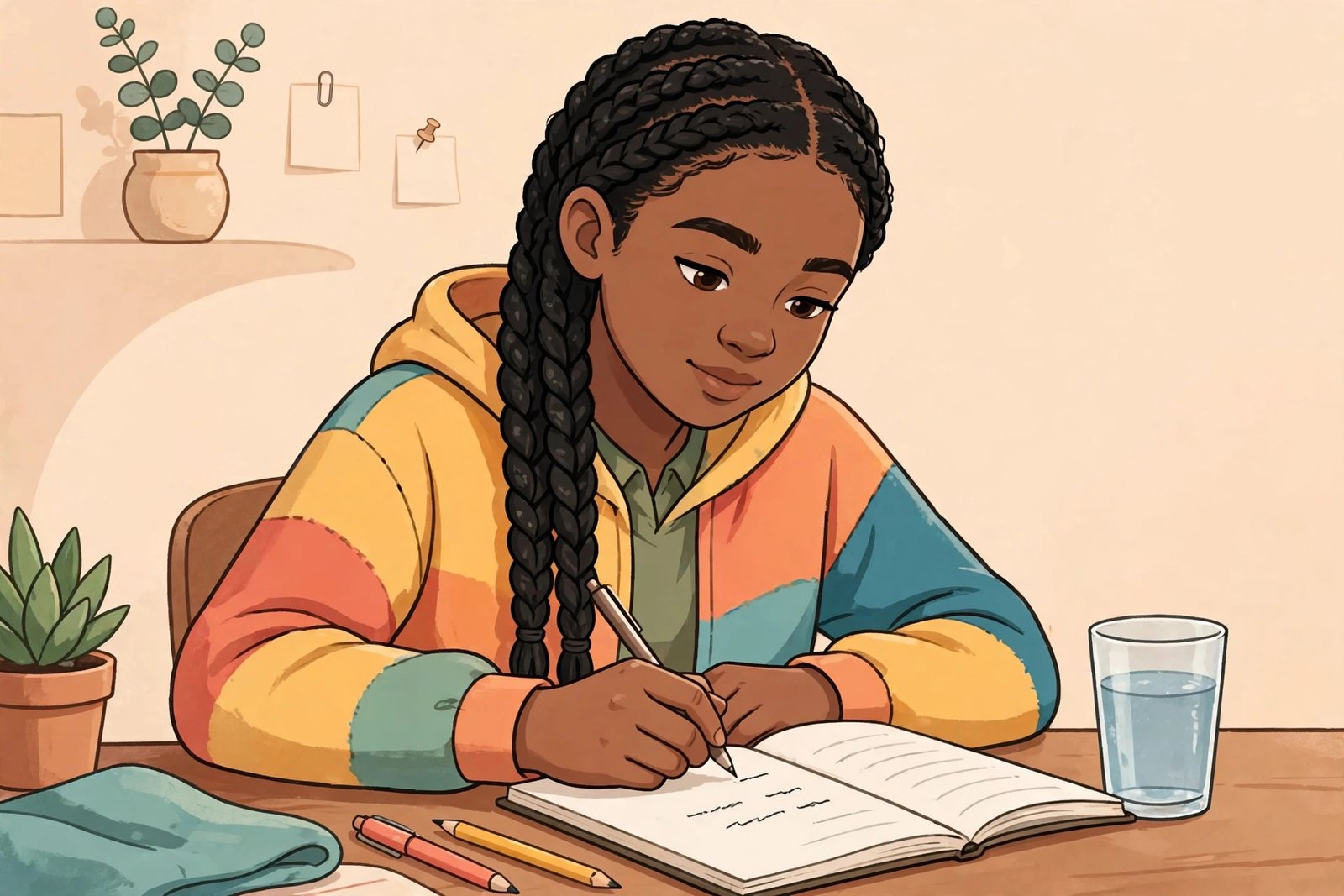
A little preparation turns a scary talk into a doable one. You don’t need a script. You need clarity about three things. What you’ve been feeling. How long it has been going on. And what you’re asking for. When those three are clear in your head, the words come out much straighter.
Start with feelings, in plain daily words. Not clinical words. Not big labels. Try lines like these. I’ve been feeling low most days since the fall. I cry in my room a lot and I don’t fully know why. My worry won’t switch off, even at night. Plain words land softly and clearly. Parents understand them at once.
Add the everyday effects, because they make feelings visible. I can’t focus on homework like I used to. I stopped wanting to see my friends. I wake up tired even after long sleep. I snap at everyone and then feel awful. Effects turn a vague worry into a clear picture. Parents respond to pictures much better than to fog.
Then name the ask itself. This is where how can I ask my parents if I can see a psychologist becomes one clean sentence. I want to talk to a psychologist. I think it would help me. Say it exactly like that, with no apology wrapped around it. A clear ask is kind. It saves your parents from guessing what you need, and guessing is where panic grows.
Write your three parts down if your mind goes blank under stress. A small note on your phone is fine. There’s no rule that brave talks must be done from memory, and no rule that how can I ask my parents if I can see a psychologist must be done without a note in your hand. Reading your own three lines out loud is still your voice, still your honesty. Many adults bring notes to talks that matter. You’re allowed to as well.
Also decide what you’re not asking for, to keep the talk clean. You’re not asking them to fix you tonight. You’re not blaming them for how you feel. You’re not demanding they solve the cost and the booking on the spot. One ask, made calmly, is enough for one talk. The rest can be step two, together.
Choose the Moment and the Way In

Timing matters for this talk more than for most. Don’t open it in the middle of a fight. Don’t open it when a parent is rushing out the door or falling asleep. Choose a calm, private moment when nobody has to leave in five minutes. After dinner on a quiet evening works well for many families.
Ask for the moment if you need to. You can say, there’s something I want to talk about tonight. It’s not bad news about trouble. I just need your attention for ten minutes. That little preview calms parents a lot. It stops their minds from racing to the worst story while they wait.
Pick the parent who feels easier first, if that fits your family. Some girls talk to their mom first, then bring in their dad together. Some girls find one parent calmer about feelings and start there. That’s not playing favorites. That’s choosing the door that opens softest. You can widen the circle after the first talk goes well. Choosing the softest door first is a smart part of how can I ask my parents if I can see a psychologist in any family.
If talking face to face feels like too much, you’ve other ways in. Writing works. A letter on their pillow, or a message you send and then discuss after they read it. Girls who practiced how to talk to an adult about an intimate question that embarrasses them often find the same tricks help here. Start in writing if you must. The door matters more than the style of knocking.
Set the scene for softness. Tea helps. A walk helps. Sitting side by side in the car after a calm drive helps some families say hard things. Face to face across a table can feel like a courtroom. Side by side feels like a team. Choose the setup where your voice is most likely to stay steady.
And remember what the moment is for. You’re not delivering bad news. You’re inviting your parents onto your team. That’s the spirit to carry in with you. The question how can I ask my parents if I can see a psychologist gets much easier when you remember you’re all on the same side of it. You want to feel better. They want you to feel better. You’re simply telling them the road you picked.
Sentences You Can Borrow for the Talk

Sometimes the hardest part is the first ten words. So here are openers you can borrow word for word. Steal them freely. They were written for throats that go tight at the big moment, just like yours does.
Opener one, the simple one. I haven’t been feeling like myself for a while, and I want to do something about it. I would like to see a psychologist. Opener two, the feelings one. I feel low and worried most days, and it’s not going away on its own. Can you help me find a psychologist to talk to? Opener three, the team one. I’m telling you this because I trust you. I think talking to a psychologist would help me, and I need your help to set it up.
Notice what these openers share. They’re honest. They’re short. They name the feeling, the time it has lasted, and the ask. None of them blame anyone. None of them beg. You’re not on trial. You’re a person reporting a need, and these sentences report it cleanly. Borrowed words are still your words once you say them, and they carry how can I ask my parents if I can see a psychologist from inside your head out into the room.
You can also borrow a line for the middle of the talk, when feelings run high. If you start to cry, try, I’m not crying to make you feel bad. This is just how much it matters to me. If they go quiet, try, you don’t have to answer everything right now. I just needed you to know. Lines like these keep a talk soft when it wants to wobble.
And borrow a closer too. Thank you for listening. Can we look into it together this week? A closer with a small next step turns a heavy talk into a plan. Plans calm everyone. They give worried parents a job to do, and doing something almost always feels better than sitting in the worry.
If your mind blanks mid talk, return to the simplest form of the whole thing. I feel bad a lot. It has lasted a while. I want help from a psychologist. Those three short sentences are the entire talk in miniature. Everything else is support beams. You can’t really fail a talk that has those three lines in it somewhere.
So when you lie awake rehearsing how can I ask my parents if I can see a psychologist, rehearse with borrowed words until they feel like your own. Actors do this. Speakers do this. There’s no rule that an honest talk must be improvised. Preparation isn’t cheating. It’s how people who care about a talk make sure it lands.
How to Answer Their Questions and Worries

Parents will have questions. That’s normal, and it’s usually care, not doubt. They may ask what’s wrong, why you didn’t say sooner, or whether something happened. Answer what you can, simply. You don’t owe them your whole inner world in one evening. You owe them honesty about the shape of it.
One likely question is, is it something we did? Answer it with gentle truth. This isn’t about blaming anyone. I just feel low and I want support. If a family thing is part of the weight, you can name it softly and later. This first talk is about getting help, not about solving every family knot at once. Keep the target small and clear.
Money and time worries may come up too. Psychologists can cost money, and parents carry the family budget in their heads. Don’t let that end the talk. There are often lower cost paths. School counsellors are free and can be a first step or a bridge. Some therapists offer teen rates or sliding costs. Community clinics exist in many towns. Offering to help research options shows maturity and keeps the door open. It also answers how can I ask my parents if I can see a psychologist when money is tight: with options on the table, not just a wish.
They may also worry about what a psychologist means. Some parents fear it means something is seriously wrong with their child. You can calm that picture with what you learned earlier. Plenty of teens go for stress, sadness, or a hard season. It’s support, not a verdict. Share that calmly. Facts are a soft blanket on a scared parent’s mind.
If a parent gets upset or cries, stay gentle and steady. Their tears aren’t your fault. They’re hearing that their child hurts, and that’s a lot for any parent. Give them a moment. Offer water. Say, I know this is a lot. Take your time. I’m right here. You may be surprised how strong you feel, caring for them while asking for care. Both things can be true at once.
And if the first talk ends in a messy place, don’t score it as a failure. Big talks often need a night of sleep. Parents think in the shower, on the drive to work, in the quiet. Many girls find the second talk is the one where yes arrives. Your job in talk one was to plant the truth clearly. You did that the moment you spoke the words of how can I ask my parents if I can see a psychologist out loud. The seed is in the ground. Give it a little time to grow.
If They Say No or Not Yet

Sometimes the answer is no, or not yet, or let’s wait and see. That can feel crushing after all your courage. Take a breath. A first no isn’t always a final no. Parents often say no to the shock, then soften as they think. Your plan for a no matters as much as your plan for the talk.
First, ask one calm question. Can you tell me what worries you about it? Their real reason might be money, fear, or a story they heard. A reason you can hear is a reason you can answer. If the worry is cost, bring the lower cost paths back to the table in a few days. If the worry is fear, share calm facts about what therapy really looks like.
Meanwhile, don’t wait in silence. Other safe adults can hold you up while the door slowly opens. A school counsellor can see you without any parent booking at all, in most schools. A trusted teacher, a relative, or a friend’s parent can listen and help you plan your next try. And helplines are there for the heavy days in between. Kids Help Phone answers by phone and text, day and night. Crisis Text Line lets you text with a trained person when talking out loud feels too hard. These are real help, not leftovers.
Using them while you wait is part of how can I ask my parents if I can see a psychologist with patience: you support yourself in every direction at once.
Keep the door warm at home too. Thank them for listening, even after a no. Live your life kindly. Let them see you using small coping tools, like walks, sleep, and journaling, while you wait. Parents often change their minds as they watch. Quiet steadiness is a powerful argument, and it’s one you can make without a single speech.
If things get heavier while you wait, speak up again, louder and sooner. If sadness or worry starts to affect your sleep, your eating, your schoolwork, or your wish to be around people, that’s new and important information. Share it. And if you ever feel hopeless or unsafe, tell a trusted adult right away and reach out to a helpline at any hour. You never have to wait for a perfect moment to deserve urgent care.
So don’t let one no close the book on how can I ask my parents if I can see a psychologist. Ask, listen, rest, gather support, and ask again with new facts. Many families say yes on the second or third ask, once the surprise fades and the love stays visible. You started something brave the day you decided to ask. Keep it going, gently and stubbornly, until you’ve the help you deserve.
Frequently Asked Questions
What if I cry during the talk?
Then you cry, and the talk still counts. Tears aren’t a failure. They show your parents how much this matters to you, and many parents take the ask more seriously when they see them. Take a breath, sip some water, and finish your sentence when you can. If the words won’t come, hand them the note you prepared. Crying and asking at the same time is still asking, and it’s brave.
Do my parents need to know everything I tell the psychologist?
No. What you say in sessions is private, apart from safety situations your psychologist explains at the start. Parents usually hear the broad picture, like how you’re doing and what might help at home. They don’t get a word for word report. Knowing that makes the ask easier for many girls. You’re asking for a private, trained listener, not for a family broadcast of your inner life.
What if my parents say I am fine and just need to toughen up?
Stay calm and add facts. Share how long it has lasted and what it affects, like sleep, school, or friends. Toughing it out is a plan for a bad day, not for a hard season. You can also suggest a middle step, like starting with the school counsellor. If the no holds, use the other supports in this guide and ask again later. A no to timing isn’t always a no to you.
How do I bring it up if we never talk about feelings at home?
Start smaller than the full ask. Share one honest feeling at dinner or on a drive. Let your parents practice hearing feelings in low stakes moments. Then choose your quiet moment and use a borrowed opener from this guide. Families that never talk about feelings can still learn. Someone has to go first, and it’s allowed to be you. Writing the first version in a letter is a gentle way in.
What if they say yes but nothing happens for weeks?
Ask for one small next step with a date on it. Can we look at names together on Sunday? Can you call the school counsellor this week? Busy parents often mean yes and then drown in daily life. A gentle reminder with a clear tiny step usually moves things. And if you’re still wondering how can I ask my parents if I can see a psychologist even after a yes, remember that follow up is part of asking. Keep nudging kindly until the first session is real.