

You can hold two thoughts at the same time, and both of them can be true. You believe women should be free to work, vote, earn, leave, stay single, or build any life they choose. You also find yourself drawn to a man who opens doors, takes the lead on a first date, wants to provide, and talks seriously about building a family. Then a quiet worry arrives: can you be a feminist and want a traditional man, or does one of those wishes cancel the other?
The worry usually does not come from the man himself. It comes from the audience in your head. Friends who would tease you. Online voices who treat every preference as a political statement. A version of yourself who worked hard for her independence and does not want to hand it back to anyone. So the question can you be a feminist and want a traditional man starts to feel less like a question about love and more like a test you might fail.
This article takes the question seriously and refuses both easy answers. It is not true that any woman who wants a traditional partner has betrayed her own freedom. It is also not true that the word traditional automatically means safe, generous, or good. If you have been asking can you be a feminist and want a traditional man, the sections below will help you separate your own values from other people’s slogans.
The short answer

The short answer to can you be a feminist and want a traditional man is yes, you can, because feminism at its core is about women having real choices and equal worth, not about every woman choosing the same life. A choice does not stop being yours because it looks old fashioned to someone else. If you freely choose a partner who leads in some areas, provides in some seasons, and protects the household you build together, while your voice, your rights, and your ability to change your mind stay fully intact, nothing in that arrangement contradicts equal worth.
But the short answer has a condition, and the condition matters more than the label. The arrangement has to stay a choice, for both of you, all the way through. The moment a role becomes a rule you are not allowed to question, the moment your income, your friendships, or your opinions become things he grants or withdraws, the problem is no longer tradition. The problem is control. So when someone asks can you be a feminist and want a traditional man, the most useful reply is another question: traditional in which ways, decided by whom, and reversible how? The rest of this article is about learning to answer those three questions clearly.
What feminist and traditional actually mean in real life

Most of the confusion around can you be a feminist and want a traditional man comes from the fact that both key words are used to mean several different things at once. Untangle the words and half the contradiction quietly disappears.
Feminist, in its plainest sense, means believing that women are full people: entitled to education, to their own money, to safety, to a vote, to a voice in the decisions that shape their lives, and to be judged as individuals rather than as servants or ornaments. People disagree, sometimes loudly, about strategy, culture, and how far social change should go. But that plain core, equal worth and real choice, is what most women who use the word actually mean by it.
Traditional is the slipperier word. For one woman it means a man who is steady, family minded, courteous, and proud to provide. For another it means a household where he earns and she keeps the home, by preference. For a third it means faith, clear roles, and a wedding before a shared address. And for some men, traditional is a polite cover for something else entirely: a partner who defers, obeys, and never outgrows the role he assigned her. Those are not the same wish, and they do not lead to the same life.
Notice what happens when you put the plain versions side by side. Equal worth and real choice on one side. Steadiness, provision, courtesy, and family on the other. There is no logical collision there. The collision only appears when traditional is defined as female obedience, or when feminist is defined as a duty to want one approved lifestyle. Neither definition is required, and you are allowed to reject both. That is why can you be a feminist and want a traditional man is really a question about definitions before it is a question about dating.
Why the question feels like a contradiction

If the logic is that simple, why does can you be a feminist and want a traditional man still feel embarrassing to say out loud? Because feelings about this rarely come from logic. They come from identity, loyalty, and fear of judgment.
Identity is the first source. For many women, being a feminist is not just a set of opinions. It is part of how they understand their own story: the degree earned, the salary negotiated, the life built without asking permission. Wanting a man to take care of certain things can feel, from the inside, like it threatens that story. The feeling says: if I let him lead here, was the rest of it a performance? It was not. A story is not falsified by a new chapter. Independence is a capacity, and a capacity does not disappear because you choose, in one relationship, not to use it for every single task.
Loyalty is the second source. Women often feel they owe something to the women before them who fought for choices that are now easy to take for granted. That gratitude is healthy. The guilt that sometimes grows out of it is less healthy, because the women who fought for choice were fighting for exactly that: choice. Freedom that only permits one direction is not freedom, it is a new script.
Fear of judgment is the third source, and in the age of screenshots it may be the strongest. A preference stated in one sentence, I like a man who provides, can be flattened online into a whole ideology you never signed. Real life is less tidy. In real life, the same woman can run a team at work, vote her conscience, split a mortgage in a way that suits her household, and still feel a genuine pull toward a partner who is protective and decisive. Human desire is not a policy platform.
Underneath all three sources sits one more, rarely admitted: exhaustion. Some of the pull toward a traditional partner is not ideology at all. It is tiredness. Wanting rest is not wanting a cage. When you ask can you be a feminist and want a traditional man, it is worth checking how much of the question is really about politics and how much of it is a tired person asking whether she is allowed to be looked after sometimes.
What research says about choice, attraction, and roles

Research cannot settle a values question for you, but it can clear away a few false claims that tend to crowd this debate. A good overview of how psychologists approach these topics can be found in the resources on feminism and gender at Psychology Today, and the broad patterns below are the ones researchers return to most often.
First, attraction is not a referendum. Studies of mate preferences consistently find that people are drawn to a mix of traits, kindness, competence, stability, humor, ambition, warmth, and that the mix shifts with life stage, culture, and personal history. Wanting a partner who is dependable and willing to provide resources for a shared household is one of the most commonly reported preferences across many societies. Reporting that preference does not predict a woman’s views on equal pay, education, or rights. Researchers treat attraction and political belief as separate systems, because in real people, they mostly are.
Second, self determination research offers a useful test for any relationship style. Psychologists who study motivation distinguish between behavior that feels chosen and behavior that feels imposed, and they find that chosen behavior, even demanding behavior, is far more sustainable and satisfying than imposed behavior that looks identical from outside. The research is clear that these are psychologically different lives, even if a photograph of them would look the same. This is the deepest reason can you be a feminist and want a traditional man depends less on the roles themselves than on whether the roles are owned or imposed.
Third, research on relationship satisfaction tends to reward fairness as each couple perceives it, not sameness. Couples who divide work in ways they both experience as fair, whether that is equal halves or a clear specialization, report better outcomes than couples locked in an arrangement one of them experiences as unjust. The key word is perceived. A fifty fifty split that one partner secretly resents scores worse, in lived terms, than a traditional split both partners genuinely endorse. Fairness is a conversation, not a formula.
Fourth, attachment research helps explain why provision and protection feel so emotionally powerful to many women. A partner who is reliably present, who follows through, who makes the household feel safer and calmer, speaks directly to the human need for a secure base. That need is not female weakness and it is not anti feminist wiring. Adults are allowed to want to be cared for. The mature question is whether the care comes with respect attached.
What you might actually want when you want a traditional man
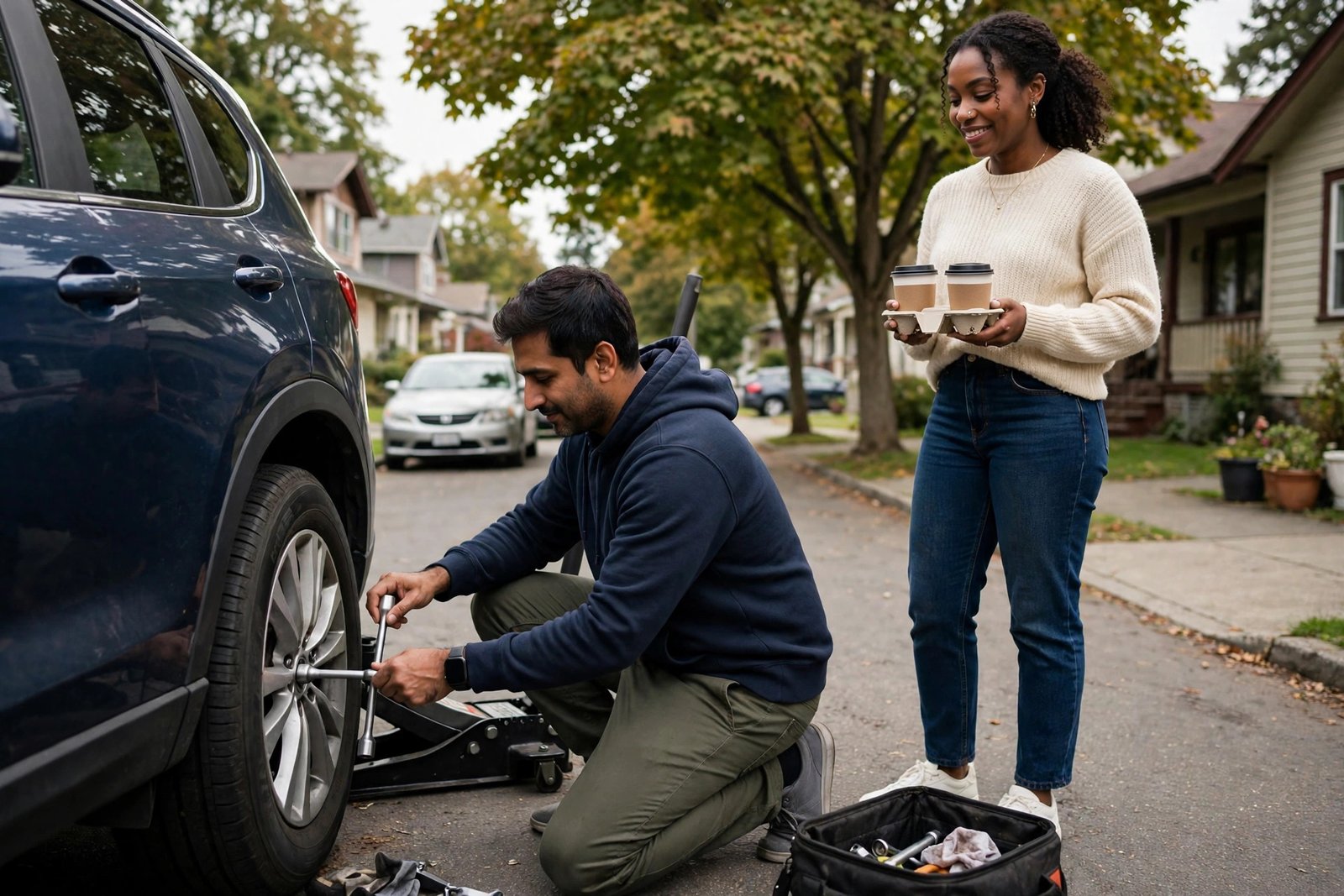
When a woman says she wants a traditional man, she is often naming a bundle of specific longings, and it helps to unbundle them. Naming each one protects you twice: you stop feeling guilty about a vague wish, and you stop accepting a poor substitute for the real thing.
Often, the first longing is for steadiness. A man who knows his own mind, keeps his word, and does not turn every plan into a three day negotiation. Steadiness is not dominance. A steady man can hear no without collapsing or punishing, because his confidence is in himself, not in his control over you. In daily life this looks like: he says he will handle the car, the bill, the difficult phone call, and it gets handled. You can relax in his presence, not because you are small, but because he is reliable.
The second longing is often for provision understood as responsibility rather than wealth. Many women are not asking for luxury. They are asking for a partner who thinks ahead about rent, food, children, and emergencies, and who treats providing for his household as a point of pride rather than a favor he performs for applause. Listen to how a man talks about money early on. A provider mindset sounds like planning. A control mindset sounds like keeping score. The two can wear the same clothes for the first few dates.
The third longing is frequently for polarity, for the felt difference between his energy and yours. This is the one women are most shy about naming, because it sounds the least political. It is also the most personal. Attraction often lives in contrast: his calm to your intensity, his decisiveness to your deliberation, his physical strength held gently. Wanting that contrast in your private life does not require you to believe men and women must live in separate spheres in public life.
The fourth longing, and often the truest, is for rest from being the manager of everything. Many capable women are not looking for a boss. They are looking for a partner who will carry a full share of the mental load: noticing what needs doing, deciding, and finishing, without being assigned each step. A traditional man who genuinely shoulders responsibility gives that rest. A man who merely gives orders adds a new job, supervising his ego, on top of the old ones.
Try translating your wish into this kind of language before you judge it. I want steadiness. I want shared responsibility with clear ownership. I want to feel chosen and protected without feeling owned. A wish stated that precisely is very hard to call a betrayal of anything, and it gives you a checklist a real man can actually be measured against. That translation work is the practical heart of can you be a feminist and want a traditional man, because vague wishes are easy to shame and precise wishes are easy to test.
The difference between a traditional partner and a controlling partner
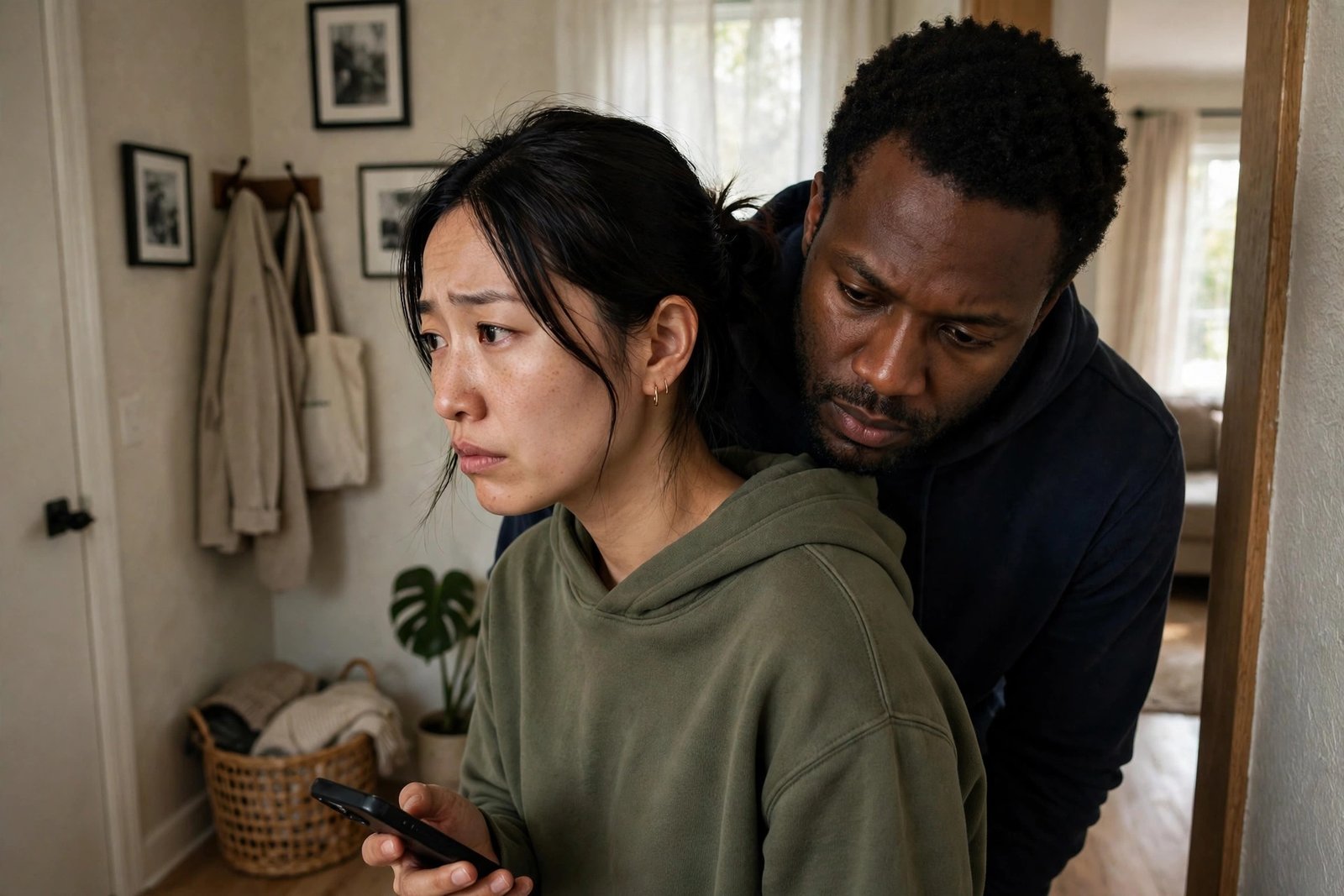
This is the section that matters most, because the honest answer to can you be a feminist and want a traditional man depends on a line that is easy to describe and vital to see early: the line between a traditional partner and a controlling one.
A traditional partner leads where he is strong and follows where you are strong, without keeping a ledger of masculinity points. He is comfortable proposing a plan and equally comfortable hearing that your plan is better. He sees his income, if he is the main earner, as household money with household purposes, and he talks about it openly. He is protective in the direction of the world, not in the direction of you: his protectiveness shows up against problems, deadlines, and dangers, never against your friends, your family, your job, or your phone.
A controlling partner uses the language of tradition to shrink your life. The signs are concrete and observable. He has opinions about your clothes that arrive as verdicts. He calls your male colleagues a threat and your female friends a bad influence. He presents financial decisions as already made. He treats questions as disrespect and tears as manipulation. He rewrites disagreements so that his anger is always your fault. And he isolates gradually, always with a reason that sounds, in isolation, almost reasonable.
Here is a real exchange, the kind women describe often. She says: I am going out with my sister on Saturday. A traditional partner says: good, you need that, drive safe. A controlling partner says: Saturday is our day, but go if your sister matters more, then goes cold for two days. Nothing was forbidden. Everything was punished. That gap between the formal permission and the emotional price is where control actually lives, and learning to see it is more protective than any debate about roles.
If you want a clearer picture of how love behaves when it is genuine rather than possessive, it helps to read about how to know if a man truly loves you, because the markers there, consistency, respect in conflict, joy in your growth, are exactly the markers that separate a man who leads a household with you from a man who rules a household over you. Love and control can both be intense. Only one of them is happy when you grow.
One more distinction belongs here, about money, because money is where traditional arrangements most often turn. In a healthy traditional household, the partner who earns less or works inside the home has full information, real access, and a voice in major decisions. In an unhealthy one, dependence is the point: she does not know what he earns, cannot see the accounts, and is given an allowance like a child. Feminism has something to say about the second household, and it should. It has no quarrel with the first one that the first one has not already settled by choice.
How to talk about roles, money, and freedom together

If you decide your answer to can you be a feminist and want a traditional man is yes, the next skill is conversation, because an arrangement this deliberate cannot be left to hints and hope. Couples who thrive with chosen roles talk about them early, plainly, and more than once.
Start with roles as a draft, not a destiny. Try language like this: I like it when you take the lead on planning and on the big household jobs, and I want to keep my career and my own account, and I want us to revisit this when life changes, a baby, a job loss, a move. A man who respects you will hear clarity. A man who wants obedience will hear a negotiation he did not authorize, and his reaction will tell you which man you are with while the information is still cheap.
Talk about money as information, not as trust theater. You do not need merged everything to be a real couple. You need shared knowledge: what comes in, what goes out, what is saved, what each of you can spend without a meeting. Many couples with a traditional earner and a partner at home fail on precisely this point, not because the split is wrong but because the at home partner is kept ignorant, and ignorance curdles into anxiety or resentment. Transparency is the tax any traditional arrangement pays to stay healthy.
Talk about freedom in specifics too. Friendships, family visits, work travel, study, faith, dress, social media: these ordinary territories are where abstract respect gets tested. The couples who do well here share an assumption worth stealing: freedom is the default, and any limit needs a reason both people accept. The couples who do badly share the opposite assumption: permission is the default. This is where can you be a feminist and want a traditional man stops being a slogan and becomes a set of agreements. That single difference predicts more about your future happiness than whether he pays for dinner.
Expect the conversation to be revisitable, because you will both change. The woman who loved being provided for at twenty five may want her own business at thirty five. The man who wanted a wife at home may discover he loves her ambition. A good traditional arrangement has doors inside it, rooms you can move between as life moves. If either of you is marrying a fixed photograph of the other person, the photograph will eventually be defended against the person, and that is when love starts losing to ideology, his or yours.
There is a useful mirror on this site for the other side of the same puzzle, a look at why some men say they want an independent woman but struggle when she actually is one. Reading it alongside this article keeps the picture balanced: confusion about roles is not a female flaw or a male flaw. It is what happens when people inherit scripts they never sat down and edited together.
What to do next

If your answer to can you be a feminist and want a traditional man is yes, here is how to act on it without apologizing for it and without sleepwalking into a bad version of it.
First, write your own definitions. One honest paragraph each: what feminist means to you, what traditional means to you, and what neither word will ever mean in your house. Writing it down ends the vague guilt, because guilt feeds on vagueness. When the definitions are yours, other people’s slogans lose their power to grade you. It is your own answer to can you be a feminist and want a traditional man, in your own words.
Second, date for virtues, not for vocabulary. Watch what a man does with responsibility, conflict, money, and your success over several months, not what he posts about manhood. Does he follow through? Does he repair after arguments instead of punishing? Does your good news make him proud or make him compete? Does he treat waiters, his mother, and his ex with basic respect when there is nothing to gain? Those observations are the real application form for the role he says he wants.
Third, protect your ability to choose, permanently. Keep your skills alive, your friendships warm, your documents in order, and some money that is yours, even inside the most traditional arrangement you can imagine. This is not distrust and it is not a plan to leave. It is what makes your staying a choice rather than a necessity, and a choice is the whole foundation of your answer. A good man will not feel threatened by your safety net. He will see it the way you see his steadiness: as part of what makes the household strong.
Finally, let the question close. At some point can you be a feminist and want a traditional man stops being a debate you conduct with strangers and becomes a life you are simply living, with a man whose character you know, in an arrangement you both chose and keep choosing. That lived answer, steadiness on his side, freedom on yours, respect running in both directions, is worth more than any label pinned on you from outside. Choose the man carefully, keep your voice, keep your options, and let the life make the argument.
FAQ

Does wanting a traditional man mean I have to give up my career?
No. Traditional is a description of how a couple organizes leadership, provision, and home life, not a mandatory resignation letter. Many couples blend the two: she works and earns, he takes primary responsibility for provision and protection in the ways they have defined together, and both adjust as seasons change. What matters is that the shape of your working life is chosen with you, not announced to you. If a man requires your resignation as proof of femininity, he is not offering tradition. He is setting a condition of control, and that is a different offer. So yes, can you be a feminist and want a traditional man and keep your career? Plenty of couples live exactly that answer.
Can you be a feminist and want a traditional man if he wants the final say?
This is where honest women often pause, and the pause is healthy. A tie breaker is not automatically oppression: some couples give one partner the final call in a defined area, budgets, logistics, faith decisions, by mutual agreement, and it works because the agreement can be revisited and the other voice is genuinely heard first. It becomes a problem when final say means every area, every time, with no appeal and a price for disagreeing. Ask whether his authority is delegated by you and revocable by you. Delegated and revocable means trust. Permanent and total means rank.
What if my friends say I am betraying feminism?
Your friends may be protecting a value they care about, and you can honor the value while declining the verdict. A calm answer usually works better than a debate: I believe women should be free to choose their lives, and this is the life I am choosing, with my eyes open and my options intact. Friends who love you will judge your relationship by your happiness, your freedom, and his character, which are the right measures. Friends who need you to perform a lifestyle to keep their approval are asking for something no movement has the right to ask of you.
How early should I talk about roles and expectations?
Earlier than feels romantic and later than the first coffee. The first dates are for watching character: reliability, kindness, consistency. Once you sense real potential, usually within the first couple of months, raise the subject plainly and without apology: how do you picture a household, what would you want, what would you never want? His answers matter, and so does his comfort with the conversation itself. A man who cannot discuss roles calmly will not suddenly become flexible about them after a wedding. It is also the fastest way to learn whether can you be a feminist and want a traditional man works with this specific man.
What is the biggest red flag in a man who calls himself traditional?
The clearest red flag is tradition that only runs in one direction: he claims the privileges of the role, authority, service, deference, while declining its duties, provision, fidelity, patience, protection, and hard work. Genuine tradition is a burden a man accepts before it is a status he enjoys. If his version mostly produces benefits for him and restrictions for you, believe the pattern, not the vocabulary. That pattern, not your preferences, is the thing a thoughtful answer to can you be a feminist and want a traditional man was warning you about all along.