

Scroll any social feed for long enough and the phrase appears: soft life. It shows up under slow morning videos, resignation announcements, quiet luxury photos, and long posts about quitting jobs that looked impressive from the outside. Understanding why is everyone talking about the soft life means understanding what people are actually rejecting, not just what they are posting.
Part of why is everyone talking about the soft life is timing. The phrase spread during years shaped by a pandemic, rising living costs, and a broad public argument about burnout and hustle culture. A short phrase that promises ease was always going to travel well in that climate.
Another part of why is everyone talking about the soft life is that the phrase is flexible. For one person it means rest without guilt. For another it means a lower stress job. For another it means luxury, travel, and being cared for. The same two words hold very different lives, which is exactly why the trend attracts both devotion and criticism.
This explainer takes the trend seriously without selling it. It covers where the soft life came from, what it means to the people who use the phrase, why it spread when it did, what critics say, and what, if anything, it changes in ordinary daily life.
The short answer

The short answer to why is everyone talking about the soft life is that the phrase names a refusal. It refuses the idea that a worthwhile life has to feel like constant struggle, urgency, and self sacrifice, and it refuses to treat rest as something that must be earned through exhaustion first.
That refusal landed at a moment when many people felt the older bargain had stopped working. Work hard, climb, lean in, and security will follow: that story lost credibility for a generation that watched wages stall, housing costs climb, and loyal employees get laid off anyway.
So why is everyone talking about the soft life, rather than simply asking for better work life balance? Because the phrase is not mainly about schedules. It is about identity and worth. It says a person is allowed to want ease, beauty, and peace openly, without apologising for it or disguising it as productivity.
It is also, frankly, a very shareable phrase. It is short, visual, and easy to attach to an image. Trends that can be understood in two seconds spread faster than trends that need a paragraph, and this one can be understood in two seconds.
What the soft life actually is
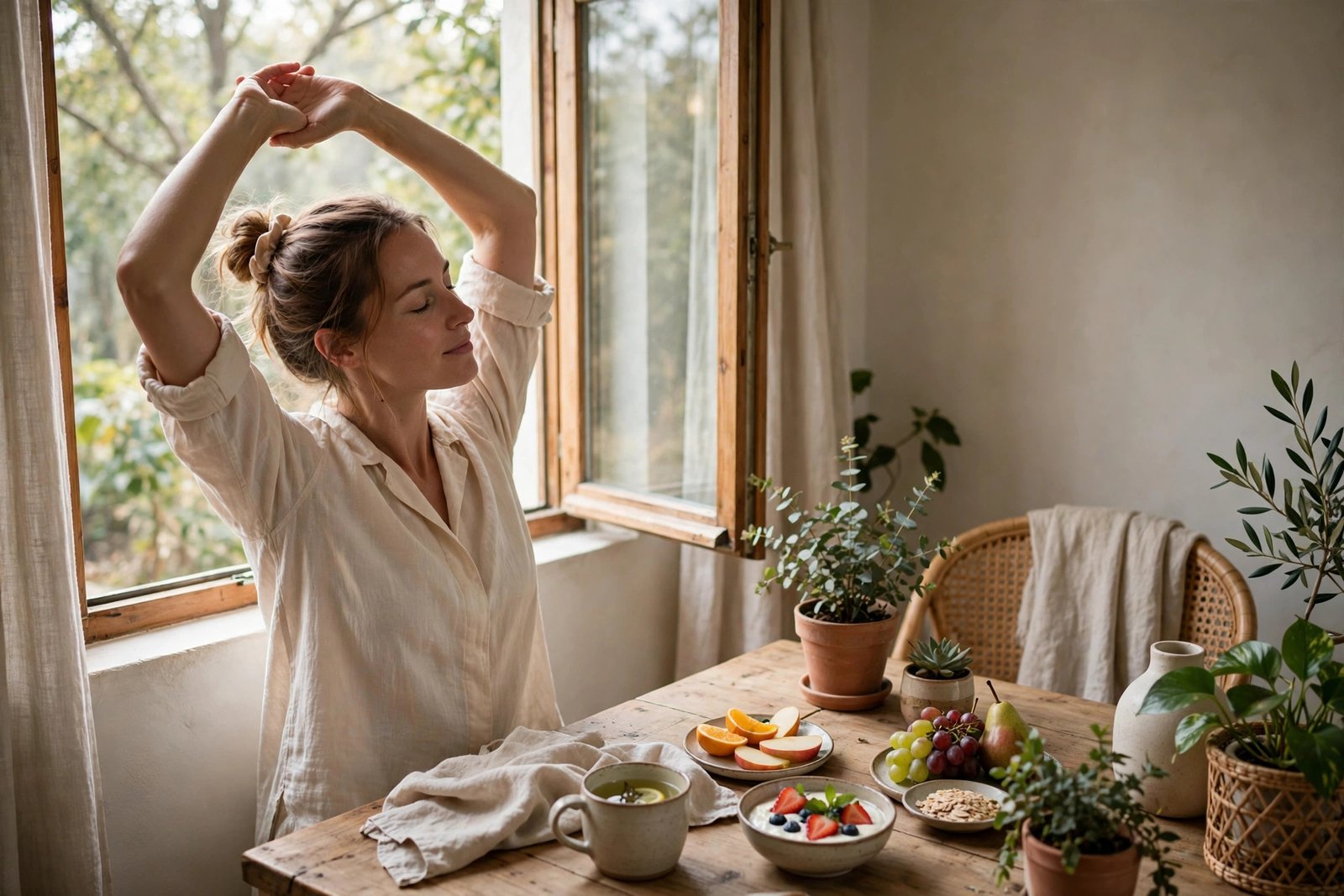
At its core, the soft life is a preference for ease over struggle as an organising principle. People who use the phrase usually describe choosing calm where calm is available: slower mornings, work that does not consume every evening, boundaries around availability, rest taken before collapse rather than after it.
That definition helps explain why is everyone talking about the soft life in lifestyle terms. The trend is less a strict programme than a filter for decisions. Does this job, relationship, commitment, or purchase add peace or remove it? The soft life answer favours peace, sometimes at the cost of status or income.
Common themes appear again and again in how people describe it. Protecting mental health. Saying no without long explanations. Romanticising small ordinary pleasures, like a good breakfast or an unhurried walk. Spending on comfort and experiences rather than on visible proof of success. Keeping a home and a calendar that feel gentle to live inside.
It is important to separate that core from its aesthetic shell. Online, the soft life often looks like silk robes, spa days, and expensive brunches. In the conversations where the phrase began, it was mostly about something plainer and harder: not being required to struggle in order to deserve a decent life.
That distinction sits underneath much of the debate about why is everyone talking about the soft life. Supporters are usually defending the core. Critics are usually attacking the shell. Both can be describing the same hashtag while meaning opposite things.
It helps to separate the soft life from its neighbours, because several trends share the same vocabulary. Self care usually means activities that restore you, like rest, exercise, or time with friends. The soft life is broader and more structural. It asks not only how you recover from your life, but whether the life itself is arranged kindly in the first place.
Slow living is a close cousin, focused on pace and attention: cooking properly, rushing less, doing one thing at a time. The soft life overlaps with that, but adds an emotional and social claim that slow living does not always make, namely that you deserve to be cared for and to have things be easier, and that wanting that is nothing to be embarrassed about.
Minimalism is different again. It is mainly about possessions and space. A person can live minimally and still run a punishing schedule, just as a person can pursue softness in a cluttered home full of objects they love. The trends borrow each other images constantly, which is why they blur together online, but their centres are not the same.
There is also a relationship dimension that comes up often. For many women discussing the trend, softness includes being in relationships where they feel cared for rather than constantly managing, fixing, and carrying. That conversation connects with bigger questions about love and wanting, the kind explored in our article on whether you can love someone but not want them.
Where the trend came from
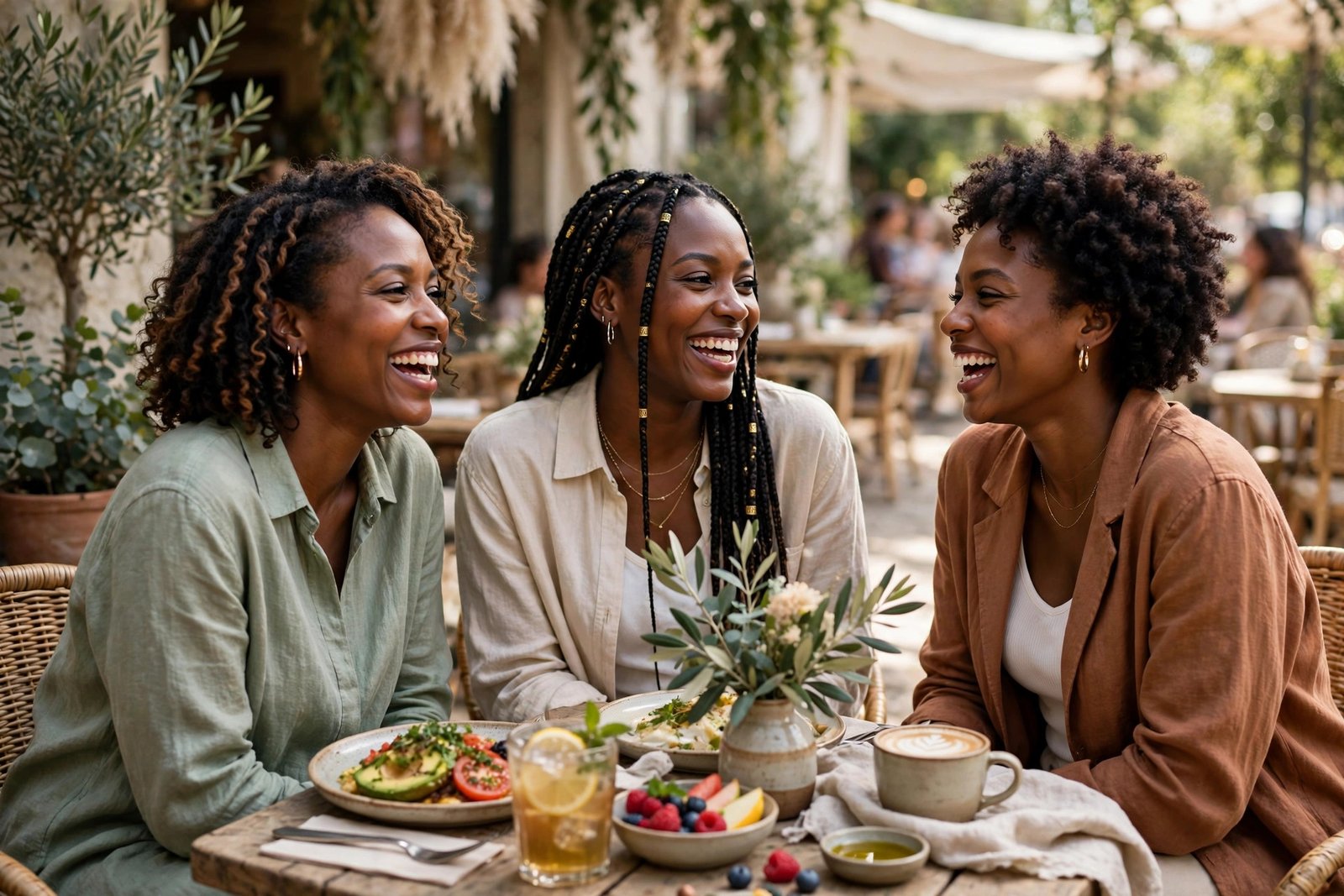
Reporting on the trend traces the phrase to Nigerian online communities, where soft life was used to describe a life free from needless struggle, and to Black women creators who popularised it on social platforms in the early years of this decade.
Context matters here. A recurring theme in those early conversations was resistance to the expectation that Black women in particular should be endlessly strong, resilient, and available to carry everyone else. The soft life was framed as the opposite of that expectation: rest, pleasure, and being cared for, claimed without shame.
From there, the phrase travelled. It moved through TikTok and Instagram, picked up millennial and Gen Z audiences far beyond its original communities, and merged with neighbouring ideas: slow living, quiet quitting, the lazy girl job conversation, and a wider turn against girlboss era hustle culture.
Each step of that journey changed the phrase slightly. What began as a pointed cultural statement became, in wider circulation, a general lifestyle label, and then, in some corners, a shopping aesthetic. That drift is a familiar pattern for online trends, and it is part of why is everyone talking about the soft life with such different definitions in mind.
Coverage in mainstream outlets followed the social spread. The Guardian, reporting on millennials leaving the rat race, described women turning away from consumerism, material pressure, and burnout in favour of smaller, calmer lives, and connected the shift to broken trust in the idea that employers or relentless effort would reliably provide security.
That kind of coverage is one reason why is everyone talking about the soft life beyond social media. Once a phrase moves from hashtags into newspapers, employers, and family dinner conversations, it stops being a niche internet term and becomes a cultural reference point people feel they need an opinion on.
Why is everyone talking about the soft life now?
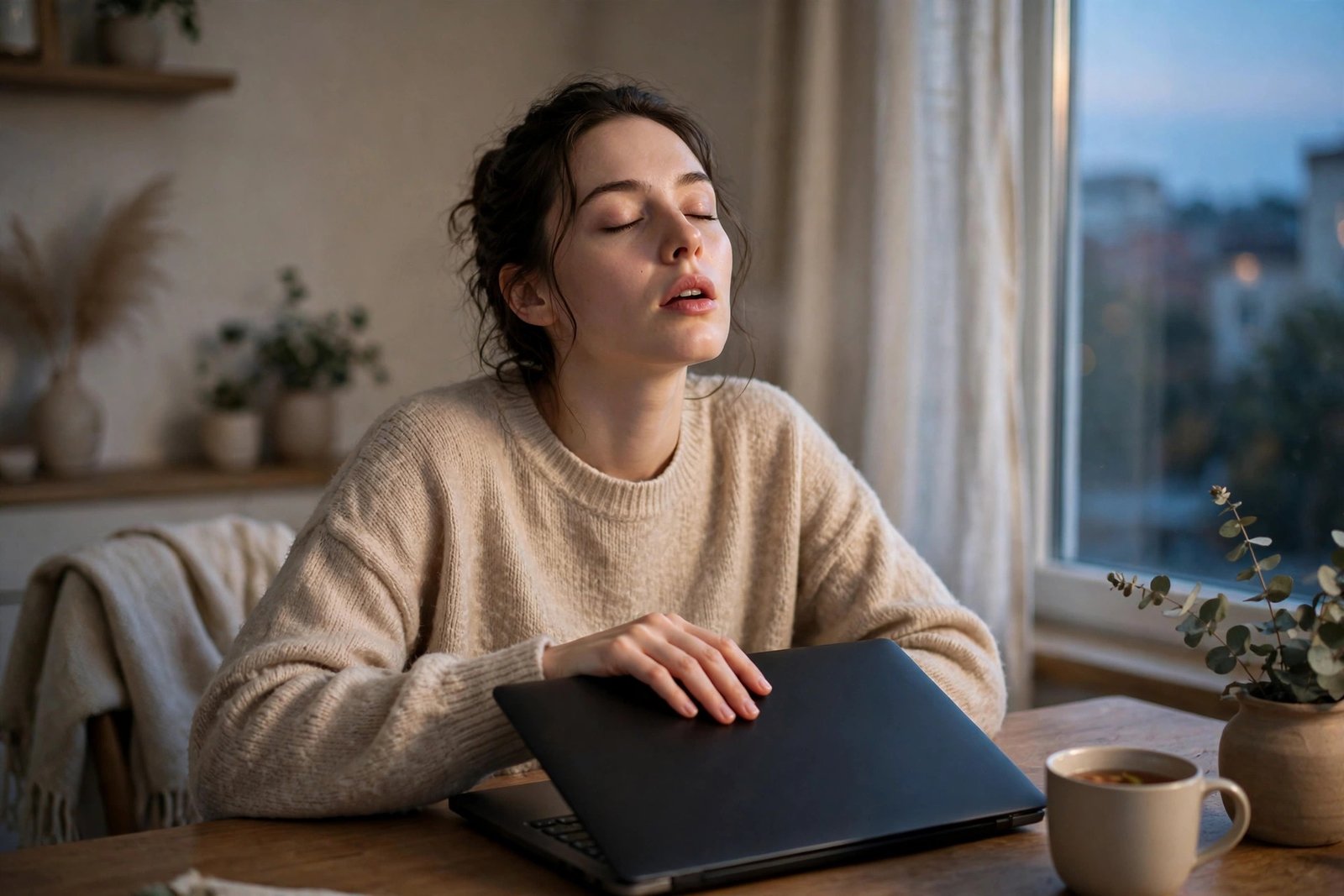
Timing is the biggest reason why is everyone talking about the soft life in this particular period. The trend rose alongside a public reckoning with hustle culture, the mid 2010s and late 2010s message that success required constant grinding, side hustles, and optimisation of every hour.
That message produced visible casualties. Burnout became a mainstream word. The pandemic then forced millions of people to stop, reassess, and notice how much of their exhaustion had been optional in structure even when it felt compulsory in practice. Many did not want to return to the old pace unchanged.
Economics added pressure from the other side. When traditional rewards for hard work, like buying a home or feeling financially secure, look out of reach, the logic of sacrificing the present for the future weakens. Some younger workers concluded that if the big prize is uncertain, the daily quality of life matters more, not less.
There is a generational argument inside why is everyone talking about the soft life, too. Older ideas of success were built around job titles, endurance, and visible ambition. The soft life conversation ranks peace, time, and health alongside or above those markers, and treats that ranking as maturity rather than laziness. Disagreement about that ranking is what keeps the debate heated.
Work culture itself shifted under the trend. Remote and flexible work made a calmer daily rhythm imaginable for office workers who had never had one. Related ideas, like the lazy girl job, a term popularised on TikTok in 2023 to describe low stress, adequately paid, flexible work, gave people a concrete, if provocative, picture of what choosing ease at work could look like.
Finally, the phrase works because it is a story, not a statistic. Nobody forwards a chart about working hours. People forward a feeling: the wish that life could be gentler. Why is everyone talking about the soft life is, in the end, partly a question about longing, and longing travels extremely well online.
What the trend looks like online, and what it looks like offline

Online, the soft life has a recognisable look: unhurried mornings, tidy and calm interiors, skincare and rest rituals, solo dates, travel, and captions about protecting your peace. The visual language is part of why is everyone talking about the soft life, because images of calm are easy to save, share, and aspire to.
Offline, the picture is usually less photogenic and more practical. It looks like turning down overtime that was quietly destroying your sleep. It looks like a job chosen for its hours rather than its prestige. It looks like leaving a group chat, a commitment, or a relationship that kept your nervous system on high alert.
It also looks like ordinary budgeting decisions made with a different priority. Money spent on a cleaner, a shorter commute, or therapy instead of on status purchases. Time treated as a resource worth defending, not just money. None of that photographs as well as a hotel breakfast, but it is where the trend actually lives for most people.
The formats online are remarkably consistent. Morning routine videos filmed in soft light. Day in the life posts where nothing urgent happens. Photo sets from trips, cafes, and quiet apartments. Longer written posts appear too, especially announcements: leaving a job, ending a draining situation, moving somewhere cheaper and calmer, or choosing a quieter relationship.
Those formats matter because algorithms reward what is pleasant to watch. Calm is unusually watchable. A slow morning video asks nothing of the viewer and gives a small feeling of rest by proxy, which makes it highly shareable. The trend therefore spreads partly on merit and partly because it is perfectly shaped for the platforms carrying it.
Offline, there is no single format, which is why the real life version is harder to argue about. It is a hundred private decisions that never get posted: the declined invitation, the renegotiated deadline, the cheaper flat in a quieter street, the friendship allowed to fade because every meeting felt like an audition. Most of the trend, measured by hours lived rather than posts published, looks like that.
The gap between the online and offline versions explains a lot of confusion around why is everyone talking about the soft life. A viewer sees luxury and assumes the trend is about wealth. A participant experiences boundaries and assumes the trend is about health. Both are looking at real pieces of it.
In dating, the offline version tends to mean choosing calm over intensity: preferring a partner who is steady, generous with care, and respectful of rest, over drama that gets mistaken for passion. That standard overlaps with the deeper question of how to know if a man truly loves you, because consistency and care, not grand gestures, are what a softer daily life is actually built on.
What critics say about the soft life

No trend this visible escapes criticism, and the criticism is part of why is everyone talking about the soft life rather than simply living it quietly. The objections cluster into a few clear arguments.
The first is that parts of the trend reward appearance over change. A feed full of expensive calm can sell products, brand deals, and courses about softness while leaving the viewer working life completely untouched. Critics note the irony: content about escaping hustle is often produced through relentless hustle, posted on a schedule, and monetised like any other niche.
The second objection is about gender. Some versions of the trend slide into prescribing traditional roles, suggesting that softness for women means being provided for and stepping back from ambition or financial independence. Commentators who support rest and boundaries often push back hard on that version, arguing that ease chosen from a position of dependence is fragile, not soft.
The third objection is generational. Some older readers hear the phrase as a refusal of effort itself, and respond that earlier generations had no choice but to endure hard work. Supporters answer that the trend is not refusing effort. It is refusing pointless suffering, and refusing to confuse exhaustion with worth.
The fourth objection is the sharpest, and it deserves its own section: the question of who can actually afford softness. That question is the centre of gravity for the whole debate about why is everyone talking about the soft life, because it decides whether the trend is a mindset anyone can use or a lifestyle only some can buy.
The debate has also reached workplaces, where the trend stops being content and becomes policy. Employers have spent recent years arguing about quiet quitting, flexible hours, and how much availability a salary actually buys. The soft life gives employees a cultural script for that negotiation, and gives managers a reason to complain that expectations have changed faster than business models.
Commentators are divided about whether that shift is healthy. One side sees a correction: work expanded into evenings, weekends, and identities, and a pushback was overdue. The other side worries about a generation entering difficult economic years with expectations of ease that the economy may punish. Both sides can point to real examples, which is why the argument has not burned out the way most trend debates do. It is not really about a hashtag. It is about what a job should cost a person.
Fair coverage should hold two truths at once. The desire underneath the trend, for rest, dignity, and a life that does not hurt, is widely shared and entirely reasonable. The packaging of the trend, at its worst, can be shallow, commercial, and exclusionary. Liking the desire and disliking the packaging is a coherent position, and many people hold exactly that.
The privilege question at the centre of the debate

The most common criticism, raised in commentary on the trend from its early days, is that choosing ease is easier with money, support, and safety. Saying no to a bad job is simpler with savings. Rest is simpler when someone else is not depending on your income. Slow mornings are simpler without a long commute or a second shift.
Wellness voices quoted in coverage of the trend have made this point directly: soft life is a choice, and being able to make that choice is itself a privilege. That does not make the wish wrong. It makes the context matter, and it makes advice that ignores context sound hollow.
This is also where the trends language can mislead. Framing softness purely as mindset implies that a cleaner, a night nurse, or a rent free spare room are attitudes rather than resources. When the material conditions are edited out, people who cannot replicate the picture may blame themselves for a problem that is actually about money and time.
And yet the privilege critique can overshoot. Many of the people who built the trend were not describing wealth. They were describing small, deliberate protections inside constrained lives: rest taken without apology, joy that costs little, help accepted without shame. Dismissing all of that as luxury misses what the phrase meant to the communities that coined it.
A balanced reading of why is everyone talking about the soft life has to keep both halves. Yes, structural conditions decide how much softness is available, and pretending otherwise is dishonest. And yes, within almost any conditions, people still make real choices about rest, boundaries, and what they will no longer tolerate. The trend lives in the tension between those two facts.
What the soft life changes in everyday life
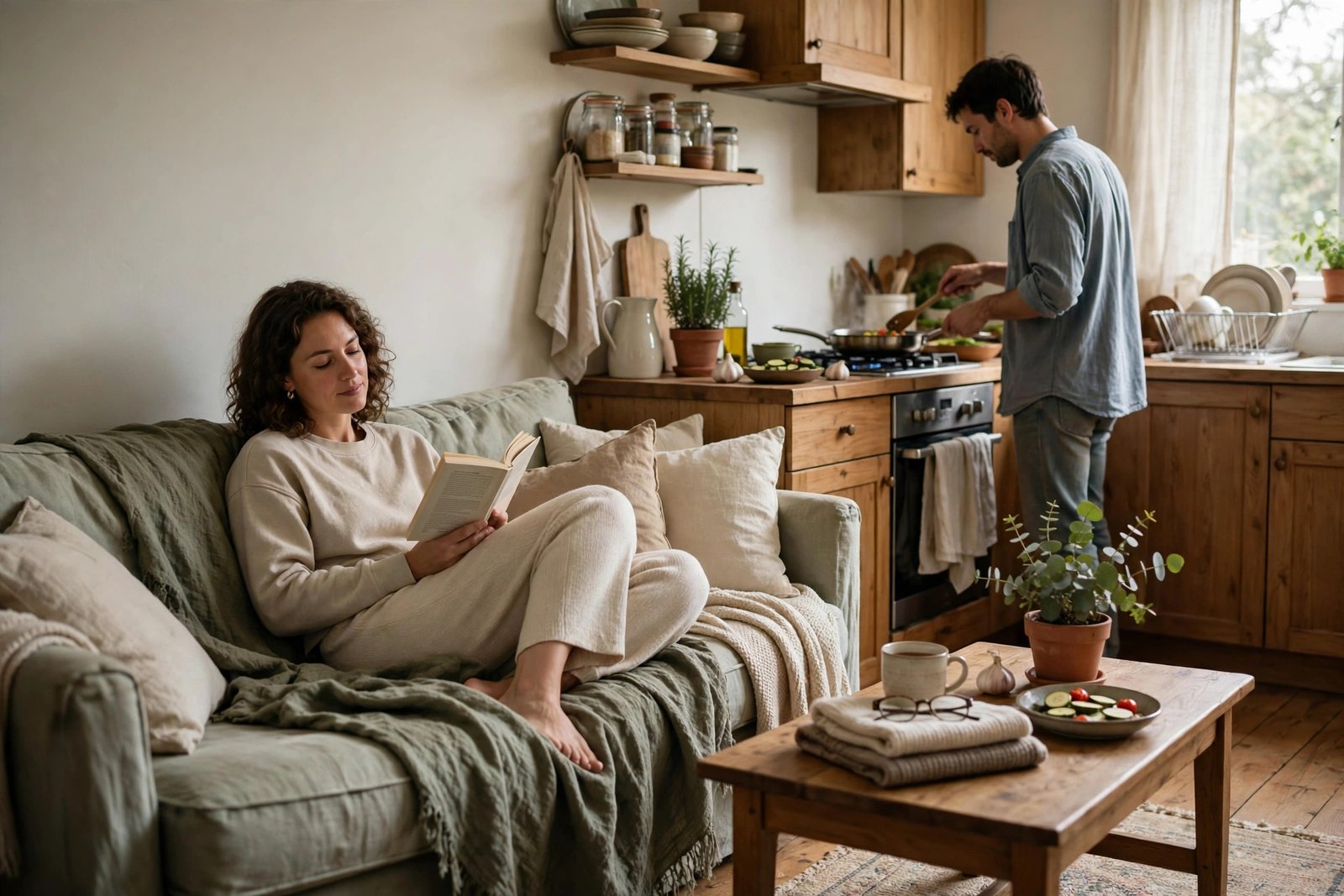
Strip away the aesthetic and the argument, and ask a practical question: what does this trend actually change on a Tuesday? More than its critics sometimes admit, and less than its promoters sometimes promise.
At work, the clearest change is negotiation. People influenced by the trend report asking, at least internally, what a role costs in evenings, sleep, and health before asking what it pays in status. Some choose flexible or remote roles, some set firmer hours, and some simply stop performing constant availability as proof of commitment.
At home, the change is often about lowering performative standards. A lived in home instead of a show home. Convenience chosen without guilt where it buys back time and calm. Rest scheduled like an obligation rather than squeezed in as a reward, which quietly reverses the old rule that rest must be earned.
In relationships, the change is a preference for steadiness. Less tolerance for chaos presented as chemistry, more value placed on kindness, reliability, and shared calm. For friendships, it can mean fewer, deeper connections maintained at a humane pace, rather than a social calendar run like a second job.
In spending, the change is directional rather than dramatic: money pointed at time, comfort, and health more often, and at impressing strangers less often. None of this requires wealth. All of it requires deciding, on purpose, what your resources are for.
Perhaps the deepest change is linguistic. The trend gave people a short, positive phrase for something that used to only be described negatively, as laziness, quitting, or lack of ambition. Having a kind word for choosing ease is itself a cultural shift, and it is a large part of why is everyone talking about the soft life years after the phrase first spread.
What to do next if the idea speaks to you

If the trend resonates with you, you do not need to rebrand your life. Start with an audit of friction: where does your week hurt in ways that are optional? One recurring meeting, one draining obligation, one habit of saying yes instantly. Softness usually begins as subtraction.
Protect one form of rest properly. Sleep, one slow morning a week, one evening with no messages answered. Small and defended beats grand and theoretical. The point is not the ritual. The point is discovering that the world continues when you stop for an hour.
Be honest about your constraints. If money, caregiving, or work make large changes impossible right now, scale the idea down rather than abandoning it: cheaper pleasures, firmer small boundaries, help accepted when offered. A softer life is a direction, not a membership tier.
Notice the effect after a few weeks rather than judging the idea in advance. People who take the trend seriously in this modest way usually report the same small outcomes: less dread on Sunday evening, fewer commitments they resent, more unremarkable and pleasant ordinary days. That is not a transformation story. It is something better, a life that costs less to live inside.
It is also worth borrowing the trend selectively. You might want its work boundaries but not its aesthetic, its attitude to rest but not its dating advice, its suspicion of hustle but not its spending. Trends arrive as packages. Adults are allowed to unpack them.
And keep your independence in view. The most durable version of this trend is built on your own choices and resources, however modest, not on depending on a partner, an employer, or an algorithm to grant you ease. Softness that can be withdrawn by someone else is not really yours.
FAQ
What does soft life mean in simple terms?
It means organising your life around ease, rest, and peace instead of constant struggle and hustle. The exact picture varies: for some people it is about work boundaries, for others about care, comfort, and calm daily routines.
Where did the soft life trend start?
Coverage of the trend traces it to Nigerian online communities and to Black women creators who popularised the phrase on social platforms, partly as a pushback against the expectation of endless strength and struggle. From there it spread globally through TikTok and Instagram.
Is the soft life just about luxury?
No, although luxury imagery is its most visible online layer. The earlier and deeper meaning is about rest as a right, boundaries, and refusing needless hardship. The luxury version is one commercial branch of a broader idea, and it attracts most of the criticism.
Is the soft life anti work or anti ambition?
Generally, no. Most people using the phrase describe working, earning, and building, but refusing to let work consume their health and identity. The argument is about the place of work in a life, not about whether to have one.
Why is the soft life controversial?
Because it touches money, gender roles, and generational values at the same time. Critics raise fair questions about privilege and commercial packaging, while supporters hear an overdue permission to rest. That collision is exactly why is everyone talking about the soft life instead of the trend quietly fading like most hashtags.
A final word
So, why is everyone talking about the soft life? Because a two word phrase managed to hold a much bigger argument: about burnout, money, gender, generational disappointment, and who gets to rest without apologising.
You do not have to adopt the label to take the useful part. Keep the question the trend is really asking, and answer it in your own circumstances: what would my life look like if ease counted as a legitimate goal? However you answer, the conversation is not going away soon, because the exhaustion it names has not gone away either.