
Your period came three weeks late. Last month it came early. The month before, it skipped you altogether. Now you’re in math class doing quiet maths in your head. You’re counting days on your fingers under the desk. And one question keeps circling back. Why are my periods irregular, and is something wrong with me?
Take a breath, love. You’re not broken, and you’re not alone in this. Almost every girl asks why are my periods irregular in the first years after her first period. Your body is still learning this whole cycle thing. It’s like a new app that keeps updating itself. Some months it runs smooth. Some months it glitches a bit.
This guide will walk you through it all. You’ll learn what a cycle really is. You’ll learn why early cycles jump around so much. You’ll learn what still counts as normal for a teen. And you’ll learn the few signs that do mean it’s time to talk to a doctor or an adult you trust.
The Short Answer
Here’s the short answer. In your first two or three years, irregular periods are very common. Your hormones are still settling into a rhythm. So your cycle may be short one month and long the next. That’s the main reason behind why are my periods irregular for so many teens.
A teen cycle often runs between 21 and 45 days. That’s a much wider range than the neat 28 days you see in textbooks. Your period may last two days or seven. It may feel light one month and heavier the next. All of that can still be normal while your body learns.
So if you’re asking why are my periods irregular, the honest answer is time. Your system needs practice, just like you needed practice to ride a bike. Most girls find their cycle grows steadier with each year that passes. It rarely clicks into place all at once.
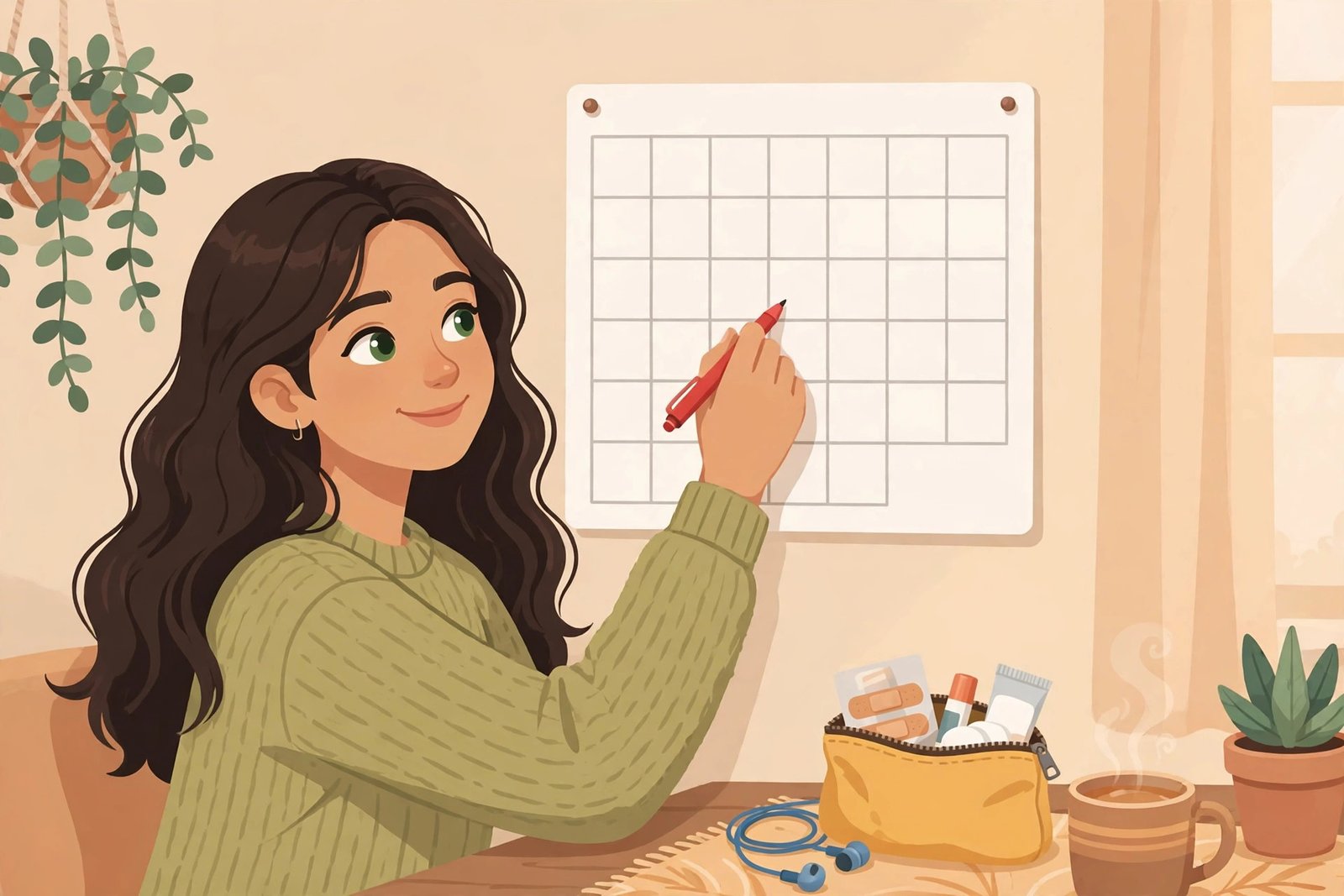
Tracking helps more than you’d think. When you write down your start dates, a pattern often shows up. The pattern may be loose, but it’s still a pattern. And seeing it on paper makes the whole thing feel less scary.
There are still a few times to ask for help. If you bleed for more than seven days, that’s one. If you soak through a pad or tampon every hour or two, that’s another. If your period stops for three months, speak up. And strong pain that stops your day is never something to just push through. A doctor or trusted adult can help you sort it out.
What a Menstrual Cycle Actually Is

Let’s start with the basics, because they make everything clearer. Your menstrual cycle is the full loop your body runs each month. It starts on day one of your period. It ends the day before your next period starts. The bleeding days are just one part of the loop.
Between periods, lots is going on inside you. Your brain sends signals to your ovaries. Your ovaries grow and release an egg. The lining of your uterus builds up, ready just in case. If no pregnancy happens, the lining sheds. That shedding is your period.
Hormones run the whole show. Estrogen and progesterone rise and fall like waves. They tell your body when to build, when to release, and when to shed. When the waves are smooth, your cycle feels steady. When they’re choppy, your timing jumps around.
Here’s a part many girls never get told. You can have a cycle where no egg is released at all. That’s very common in the teen years. When that happens, the timing of your next bleed can shift a lot. It’s one of the quiet reasons why are my periods irregular is such a common teen question.
Think of your cycle like a group chat. Your brain, your ovaries, and your uterus all have to reply in the right order. In the early years, some of them are still learning the plan. A late reply from one of them moves everything else back. Nothing is broken. The chat is just new.
Why Early Cycles Are Often Uneven

Your first period doesn’t mean your system is finished. Puberty is a long build, not a single day. The parts of your brain that run the cycle are still maturing. They keep maturing for years after your first bleed. So the signals they send can be a bit messy at first.
That’s why are my periods irregular is the question of the first years. One month, the signal to release an egg is strong and clear. The next month, it’s weak or late. Your period follows those signals, so it lands early or late too. It’s your body learning on the job.
Growth plays a part as well. You’re getting taller. Your body shape is changing. Your weight may shift as you grow. All that growth asks a lot of your hormones. While your body sorts out growing, your cycle may wobble. It’s a lot for one body to do at once, and yours is doing it.
This is also the age when your body is changing in ways you can see. If you’ve ever felt odd about those changes, you’re in good company. Lots of girls read about why it is normal to feel strange about your changing body during puberty and feel less alone. Your cycle is one more change on the same long list. It’s learning its rhythm right along with the rest of you.
Most doctors expect this uneven stage. They don’t panic about a teen cycle that jumps around early on. They look at the whole picture instead. How long has it been since your first period? How do you feel day to day? Those things matter more than one late month.
So try not to grade your body against a textbook. The 28 day cycle is an average, not a rule. Real teen bodies rarely match it in the first years. Yours is not failing a test. It’s just still in training.
One more thing about those early years. Your first period is called menarche, but it’s really just a starting whistle. The full system behind it keeps building for years. Your brain is still learning how strongly to send its signals. Your ovaries are still learning how to answer them. Two learners on one team will have messy matches at first. That’s not a fault. That’s practice.
Girls often ask if their age matters here. It does, a bit. The younger you were at your first period, the longer the uneven stage may last. A girl who starts at eleven may wobble for three years. A girl who starts at fourteen may settle faster. Both paths are normal. The clock starts at your first bleed, not at your birthday.
Breast growth, hair growth, and periods all belong to the same puberty build. But they don’t finish on the same day. Your period arriving doesn’t mean the rest of you is done growing. So if you’re asking why are my periods irregular while everything else still changes too, that’s the link. You’re mid build, all of you. The cycle is just the part with dates you can count.
And here’s a quiet truth about those dates. A cycle that jumps between 24 and 40 days is still one girl’s normal. The range is the rhythm, for now. Doctors look for health and slow steadying, not for a perfect metronome. When you wonder why are my periods irregular compared to the girl next to you, remember you’re comparing two different builds. Hers is hers. Yours is yours, and it’s on its own honest schedule.
What Counts as a Normal Teen Cycle
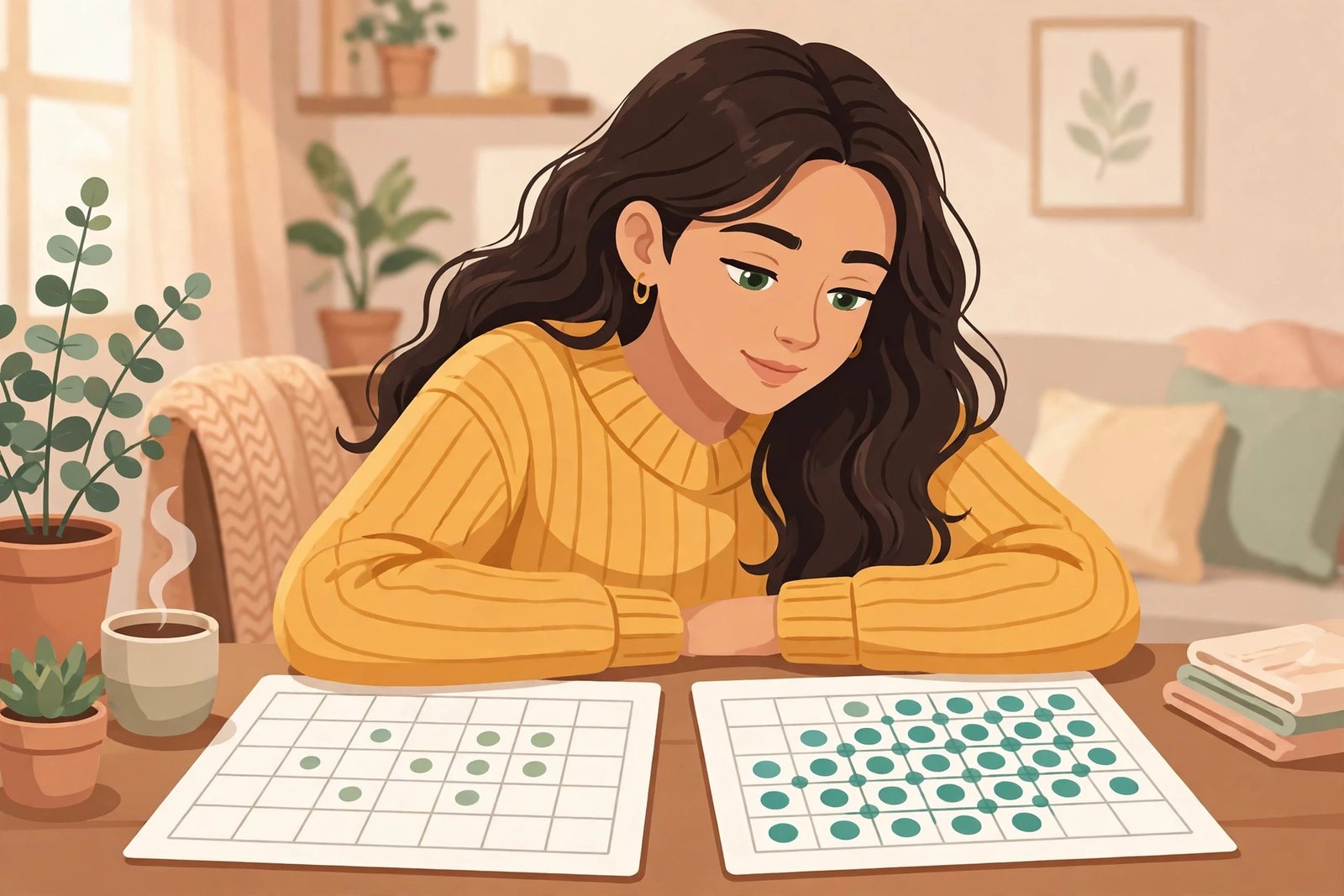
It helps to know the real ranges, not the myths. For teens, a cycle from 21 to 45 days is common. Some girls land near 30 days most months. Others swing between 25 and 40. Both can be fine, as long as you feel well.
Your period itself often lasts from two to seven days. The first day or two are usually the heaviest. Then it tapers off. You may spot a day before the real flow starts. That’s common too, and it counts as part of the picture.
Skipping a month now and then is also common early on. Stress, travel, or a growth spurt can pause things. So can a month where no egg was released. If you’re wondering why are my periods irregular when a whole month goes missing, that skipped egg is often the answer. One skipped month, early on, is rarely a red flag by itself.
What matters most is your own trend over time. Is your cycle slowly getting more alike, month to month? Do you feel okay in yourself? Are you eating, sleeping, and living your life? A loose but slowly steadying pattern is a healthy sign.
Try not to compare your cycle to your best friend’s. Her body runs on her own clock. Yours runs on yours. Two girls can sit in the same class, eat the same lunch, and have cycles ten days apart. That’s not a contest either of you can win or lose.
And here’s a calm thought to keep. Regular doesn’t mean identical. Even grown women with steady cycles vary by a few days. A few days early or late is just life. Your body isn’t a train schedule, and it doesn’t owe you one.
Everyday Things That Can Shift Your Cycle

Even a settled cycle can wobble, and teen cycles wobble more. Stress is a big one. Exam weeks, friendship drama, or trouble at home can delay your period. Your brain reads stress and slows the whole loop down. It’s your body’s way of saying, not right now.
Sleep matters too. Late nights and early school alarms mess with your hormones. So does skipping meals or eating much less than your body needs. Your body needs steady fuel to run a cycle. When fuel runs low, the cycle is one of the first things to pause.
Big changes in exercise can shift things as well. Starting intense training can delay periods. So can stopping sport all at once. You don’t need to fear movement, it’s good for you. Just know that sudden big changes can show up in your dates.
Being sick can push a period back too. A bad flu or a stomach bug can move your cycle by days. Travel across time zones can do the same. Even a growth spurt can shuffle your timing for a month or two. Life is full of small shocks, and your cycle feels them.
So when you ask why are my periods irregular right after a hard month, look at the month first. Were you stressed, sick, or sleeping badly? Was there a trip, a tryout, a family thing? Very often, the answer is right there in your calendar. Your body reacted to your life, just like the rest of you did.
Keep this in mind on rough weeks. One odd cycle after a rough month is your body coping. It’s not your body failing. Give it a month or two to settle. Most of the time, it does.
There’s one more everyday shifter worth naming. Big feelings can move your cycle too. A month of tears, rows, or dread before exams is a stress month. Your body doesn’t sort stress into tidy boxes. It just feels the load and slows the loop. So a late period after the worst month of your school year is often cause and effect, not a new problem.
Rest is the flip side of that coin. Weeks where you sleep well and eat well often bring steadier dates. You can’t control your whole life, and you don’t need to. But knowing that rest helps takes away the mystery. It gives you one kind lever to pull when your dates feel wild. Sleep in on Sunday. Eat the breakfast. Small things count more than we think.
Also, don’t let one skipped or late period rewrite your whole story. Teens love a pattern, and our brains love a scare. One odd month is one odd month. Two or three months of a new pattern is a trend worth noting. That’s the level where questions like why are my periods irregular turn into a talk with an adult. Trends deserve talks. One offs deserve a note in your diary and a calm week.
And if a friend brags that her cycle is like a clock, smile and shrug. Clockwork cycles at fourteen are the rare ones, not the rule. Most girls are quietly counting days under the desk, just like you. Some just hide it better. When you ask why are my periods irregular and hers are not, the honest answer is often luck and timing. Her system settled sooner. Yours will get there on its own road.
How to Track Your Cycle Without Stress
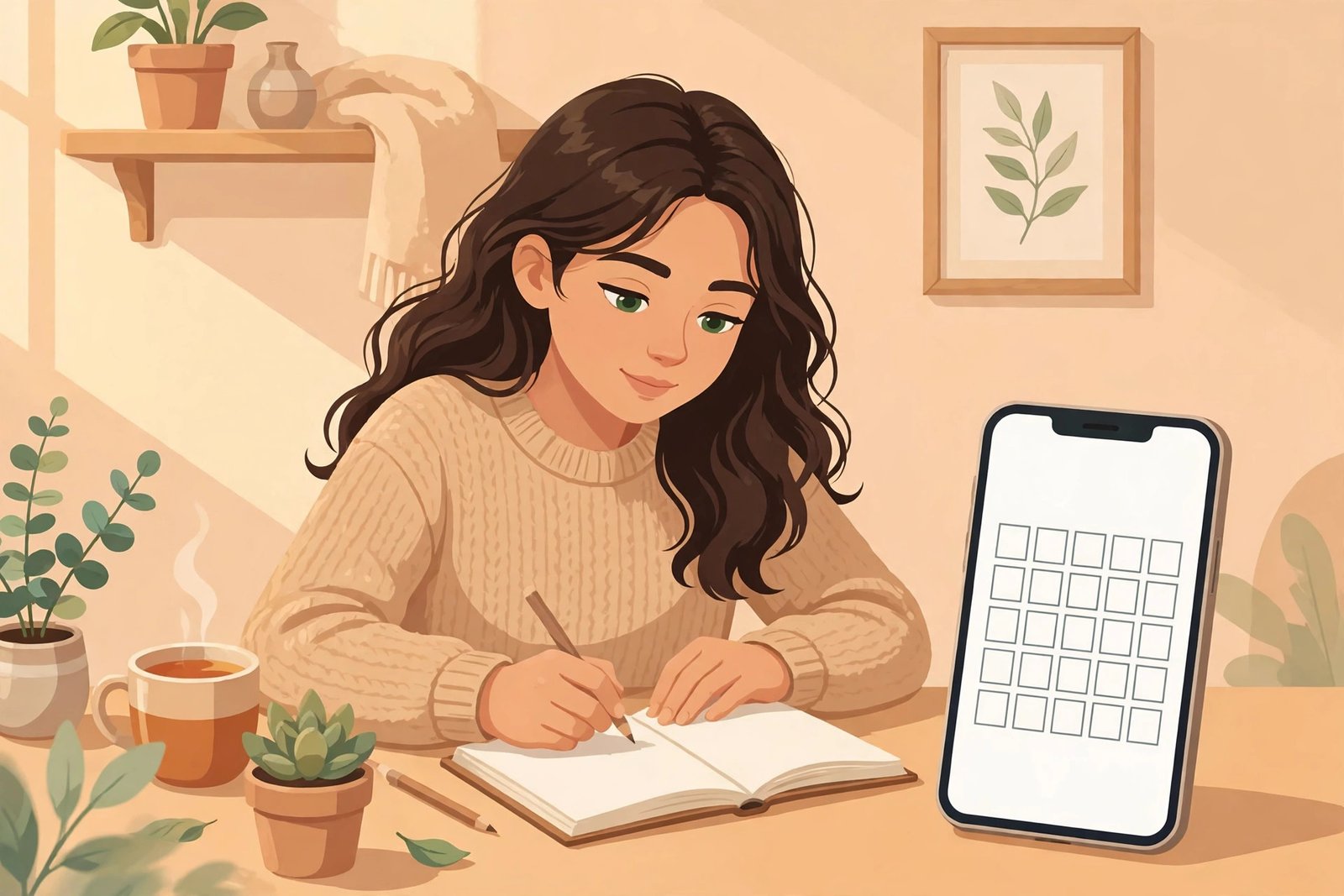
Tracking sounds dull, but it’s honestly a superpower. It turns a scary guessing game into a clear picture. And it gives you a real answer when you ask why are my periods irregular. You stop guessing from memory. You look at facts you wrote down.
Keep it simple. Mark the first day of each period on a calendar. That’s day one. When the next period starts, count the days between. That count is your cycle length. Do that for three or four months and you’ll see your own range.
You can use a notes app, a paper diary, or a period app. Pick the one you’ll actually use. Add small notes if you like. Cramps bad today. Felt fine. Flow heavy on day two. Those notes teach you your own signs.
A few habits make tracking easy. Note the start date the same day, not later. Your memory will lie to you by Friday. Keep supplies in your school bag too. A pad in a small pouch saves a lot of panic. Being ready makes irregular dates much less stressful.
Tracking also helps at the doctor’s office. If you ever do ask for help, your notes answer half the questions. When did it start? How long are your cycles? How heavy is the flow? You’ll know, because you wrote it down. That makes getting good help much faster.
And don’t turn tracking into homework. You’re not hunting for a perfect score. You’re just learning your own pattern, bit by bit. Two minutes a month is plenty. The goal is calm, not control.
A quick word about what a checkup is actually like, so it stops feeling huge. You sit, you talk, you answer questions about dates and flow. Sometimes there’s a blood test. Often, the doctor just listens, checks your notes, and says the words most girls need to hear: this looks normal, keep tracking. The visit is a chat with homework you already did. It’s not an exam you can fail. Girls put it off for months, then laugh at how small it was. If a sign from the next section matches you, don’t put it off. Book it, bring your diary, and let a calm adult do the worrying with you for once.
Signs It Is Time to Talk to a Doctor

Most irregular teen cycles need time, not treatment. But some signs do mean you should speak up. Knowing them helps you relax about the rest. You don’t have to sit and wonder in silence. Help exists, and asking for it is smart, not dramatic.
Talk to a doctor or a trusted adult if your period stops for three months. Speak up if you bleed for more than seven days. Speak up if you soak a pad or tampon every hour or two. And speak up if pain is so strong that you miss school or can’t get through the day.
Other signs count too. Bleeding between periods is worth a mention. So is feeling dizzy, weak, or very tired on heavy days. So is a sudden big change after months of steady cycles. Write the sign down with dates, and take your notes with you.
Health experts who work with teens say the same thing. The TeensHealth guide to irregular periods explains which patterns are common early on and which ones deserve a check. Reading it can calm you before you even book a visit. And if your pattern matches the check list, you’ll know you did the right thing by asking.
Worried about how to bring it up? Start small and plain. You can say, my periods are all over the place and I’m worried. That’s enough. Adults and doctors hear this all the time. You won’t shock them, and you won’t sound silly. You deserve answers about your own body.
So why are my periods irregular is a fair question to ask out loud. If your worry sticks around, that alone is a good reason to ask. Peace of mind is a real thing. You don’t need to earn it by suffering first.
How to Feel Calmer About an Unpredictable Cycle

Let’s talk about the feeling side, because it matters. Not knowing when your period will land is stressful. You plan a pool day and panic. You wear light pants and worry all through class. That low hum of worry can follow you for days.
A small kit takes away a lot of that fear. Keep pads or tampons in your school bag, your locker, and your sports bag. Add a spare pair of underwear in a zip pouch. Wear darker pants on days you feel unsure. Tiny plans like these buy you real calm.
It also helps to think about how to stop feeling insecure about your body when the worry turns inward. An uneven cycle can feel like proof that your body is wrong. It isn’t proof of anything like that. It’s a normal stage that millions of girls go through quietly.
Talk to a friend if you can. You’ll be stunned how many girls nod along. Oh, mine does that too. That one sentence can lift a huge weight. We tend to think everyone else is regular and calm. Most of them are guessing, just like you.
Give your body grace while it learns. You’re asking why are my periods irregular because you care about yourself. That’s a good instinct, not a problem. Keep tracking, keep your kit ready, and let the months teach your cycle its rhythm. Steady usually comes. It just comes on your body’s schedule, not the textbook’s.
And if the worry ever grows bigger than the facts, say so out loud. Tell your mom, a school nurse, or another adult you trust. You don’t have to carry body worries alone. Asking early is always easier than worrying late.
One last calming idea before we wrap up. Your cycle will not stay this wild forever. For most girls, each year brings a bit more order. The gaps shrink. The surprises get rarer. The pattern gets easier to read. You won’t wake up one day with a perfect 28 day loop. It creeps in, month by month, until one day you notice you’ve stopped worrying. That’s how settling usually looks. Quiet, slow, and real.
Until then, your job is small and doable. Track your dates. Keep your kit stocked. Sleep and eat like they matter, because they do. And speak up when a sign crosses the lines we listed. That’s the whole job. You don’t need to fix your body. You just need to know it, and to back it up when it asks for help.
So when the question why are my periods irregular pops up at 1 a.m., you’ll have your answer ready. It’s irregular because you’re a teen, and teen cycles run uneven while the system matures. It’s irregular because your life is full of stress, growth, and change, and your cycle feels all of it. And on the rare day it’s irregular for a bigger reason, you know the signs and you know what to do. That’s not a scary place to be. That’s an informed place to be, and you got yourself there. And soon, why are my periods irregular stops being a scary question and becomes one you can answer for a friend too.
Frequently Asked Questions
Is it normal for periods to be irregular for a whole year?
Yes, it can be. For many girls, cycles stay uneven for the first two or three years. Your hormones are still learning their rhythm, so gaps and surprises are common. That is the honest answer to why are my periods irregular all year long. Keep tracking your dates so you can see your own trend. If things feel worse, or your period stops for three months, talk to a doctor or a trusted adult.
Can stress really make my period late?
Yes, it really can. Stress tells your brain to slow the hormone signals down. So a hard month at school or at home can push your period back by days or weeks. Poor sleep and skipped meals can add to it. Your cycle often settles once life calms down. If late periods keep happening when life feels calm, that’s a good reason to mention it to a doctor.
What if my period skips a month completely?
One skipped month is common in the teen years. It often means no egg was released that month, which happens a lot while your system matures. Illness, travel, stress, and growth spurts can also pause a cycle. Don’t panic over one skip. Do speak up if three months pass with no period. And if you ever feel unwell or very worried, you don’t have to wait. Ask an adult you trust.
Should I use an app to track my period?
You can, if it helps you. Apps are handy for start dates and quick notes. A paper calendar or a notes app works just as well. The tool matters less than the habit of writing dates down. After a few months, you’ll see your own range clearly. That picture answers why are my periods irregular much better than guessing does. Pick what’s private and easy for you, and stick with it.
When should I actually see a doctor about my cycle?
Book a visit if your period stops for three months, if bleeding lasts over seven days, or if you soak through protection every hour or two. Go if pain keeps you home from school. Go if you bleed between periods or feel dizzy and weak. And go if you’re just plain worried and can’t shake it. A doctor can check the common causes and give you peace of mind. Asking is always allowed. One visit can turn months of wondering why are my periods irregular into a clear, calm answer.