
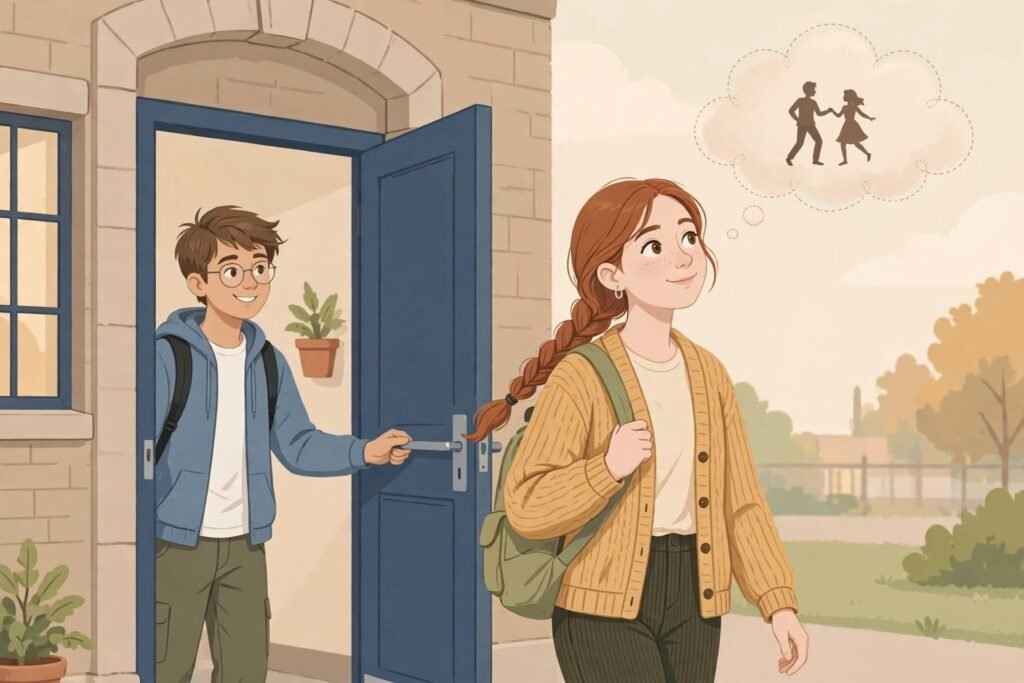
He held the door. That’s the whole event. He held the door, said “after you,” and walked to his friends. Total time: four seconds. By lunch, your brain has turned those four seconds into a first date. By dinner, you have picked the song for the school dance. By bedtime, you have met his family twice, and his mom loves you. Then you blink, look at your ceiling, and laugh at yourself. He held a door. A door.
And this isn’t the first boy, and it won’t be the last door. A boy borrows your pen and your mind writes a wedding. A boy laughs at your joke in science class and your mind books the honeymoon. The wish shows up fast, almost like a rule you set for yourself: stop making up scenarios when a boy talks to me. Stop turning hellos into love stories. Stop it.
Here’s the calm truth before we dig in. Your brain isn’t broken, and you aren’t boy crazy, whatever that old insult is supposed to mean. A mind that builds fast love stories from tiny chats is a mind with a strong imagination and a heart that hopes quickly. It’s common. It’s very teen. And it can be steered. The goal of this guide is simple to say and slow to learn: stop making up scenarios when a boy talks to me, or at least catch them early, before they eat your whole evening.
One line of care before we start. This guide is about the tiny trigger: a boy who isn’t your crush, maybe not even your friend, says one small thing, and the film starts. That’s different from thinking about an actual crush all day, and different from the quiet imagined talks some girls replay in their heads. Here, the spark is small and real. The story your brain builds on it’s the huge part. So if your private rule lately is stop making up scenarios when a boy talks to me, you’re in the right place.
The Short Answer
Here’s the short version. Your brain hates an unfinished story. One small, warm moment with a boy feels like the first page of something, so your mind races ahead and writes the rest, because the rest is fun and the not knowing isn’t. You can’t delete that instinct, and you don’t need to. What you can do is catch the film early, name it as a film, and come back to what you truly know.
So when you tell yourself, stop making up scenarios when a boy talks to me, hear it as a skill, not a scolding. The skill has three parts: notice the movie starting, check the facts you actually have, and give your imagination a better job. The rest of this guide walks through each part with real school day examples. And by the end, the rule stop making up scenarios when a boy talks to me will feel less like a fight with your own brain, and more like a habit you own.
One Tiny Chat, One Whole Movie
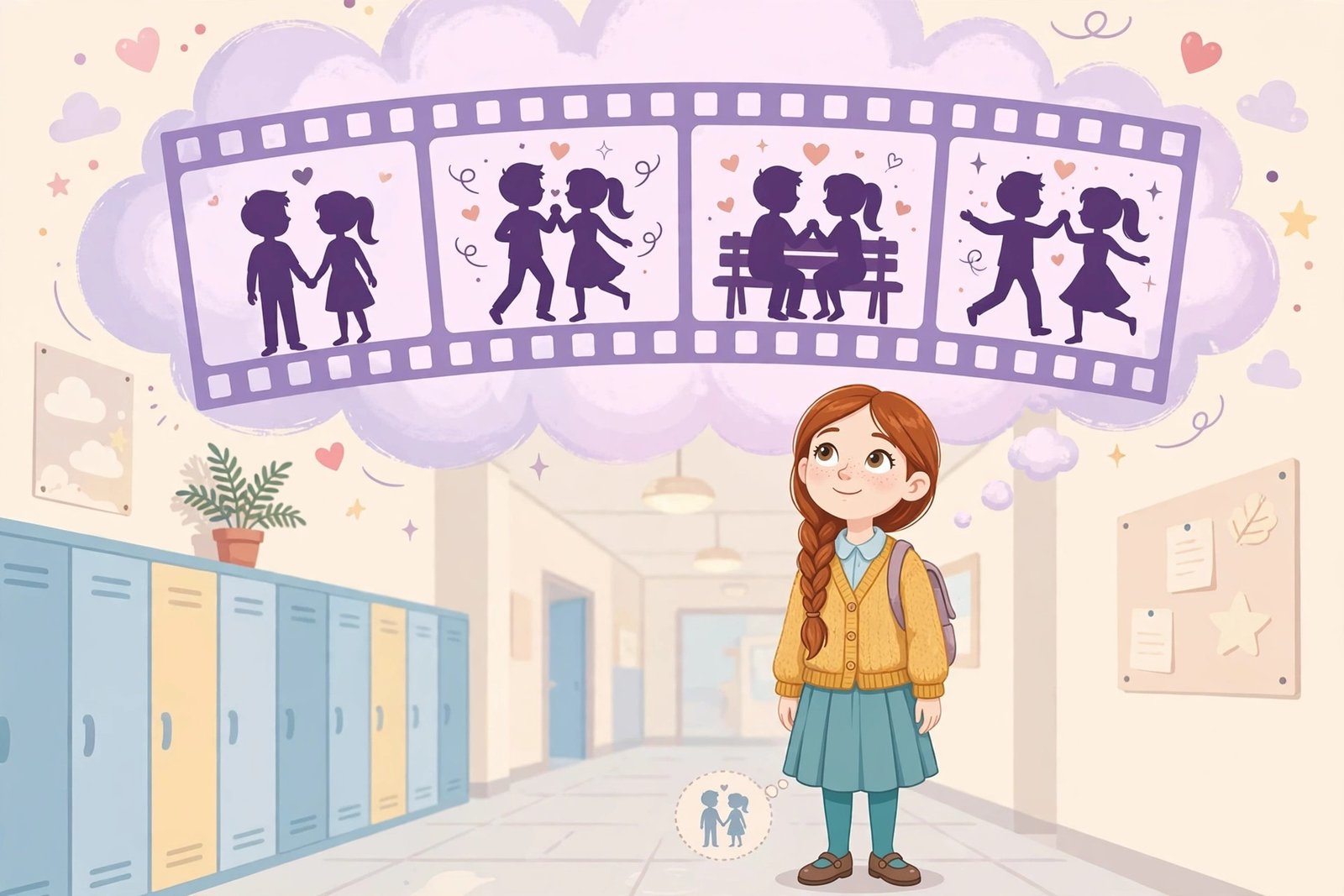
Let’s replay the thing at normal speed, because the normal speed is almost funny. A boy talks to you. He asks what page the homework is on. He says your presentation was good. He laughs when the teacher drops the markers and you both see it. The moment is warm, small, and over. Nothing has been promised. Nothing has even been hinted, most of the time.
Then your brain gets to work, and your brain is fast. It replays his face. It slows down the smile. It asks: did he look at me longer than needed? It answers its own question: yes, probably, maybe. A story starts to grow roots. By the walk home, you aren’t thinking about a boy who asked about homework. You’re thinking about a boy who might like you, and might ask you out, and might become your person. The film has a cast of two and a budget of zero facts.
This is the exact moment the wish kicks in: stop making up scenarios when a boy talks to me. Because you can feel the cost already. The real boy is now competing with the film boy, and the film boy always wins. Film boy says the perfect line. Film boy never has a bad hair day or a boring story. Real boy is just a classmate with a backpack. And somehow you end up missing film boy at night, which is a strange thing to miss, since he doesn’t exist.
Notice what the movie skips. It skips the long, plain middle of real life: group projects, awkward pauses, him talking to other girls the exact same way, him being kind because he’s kind to everyone. The film cuts straight to the dance, the hand holding, the story you would tell friends. Your brain isn’t lying to be cruel. It’s editing for joy. But joy built on four seconds tends to crash by Friday, and then you feel silly for a pain you invented. That crash is why the rule stop making up scenarios when a boy talks to me matters. Not to kill the fun. To skip the crash.
Why Your Brain Writes the Love Story So Fast
So why does your brain open a cinema every time a boy is simply nice? A few engines again, and none of them mean you’re desperate or silly.
First, your brain is a story machine. It fills gaps for a living. When facts are few and feelings are warm, it writes. A boy you barely know is almost all gap, so he’s perfect writing material. The less you know, the bigger the film can be. That’s why the scenarios bloom around near strangers and fade around boys you know well. Real knowledge is heavy. The film needs light, empty space to fly.
Second, the film feels good, and your brain knows it. A fresh maybe is a sweet hit of hope. Psychology Today even has a name for the strong, looping version of this state: its guide to limerence describes the obsessive crush feeling that feeds on not knowing if the other person likes you back. Most girls are nowhere near that strong version. But the small daily film runs on the same fuel: a hint, a hope, and a lot of not knowing.
Third, stories are how teens practice life. You rehearse futures in your head the way athletes picture a game. A love story film is practice for feelings you haven’t lived yet: being chosen, being wanted, being someone’s favorite person. There’s nothing wrong with the practice. The trouble is only when the practice tape plays during math, during dinner, and during the night before a test. Practice is healthy. A loop isn’t.
And fourth, blame the edit button in your pocket. Your feed is full of couples, meet cute clips, and songs about love at first sight. Your brain has been fed a thousand tiny films, so it makes its own in the same style. When a girl sighs, I need to stop making up scenarios when a boy talks to me, she’s often fighting her feed as much as her heart. Good news: both can be retrained, one noticed film at a time. And the girl who learns to say stop making up scenarios when a boy talks to me, calmly, without hating herself, is learning a skill that protects every crush she will ever have.
The Film Is Not the Boy: What You Actually Know
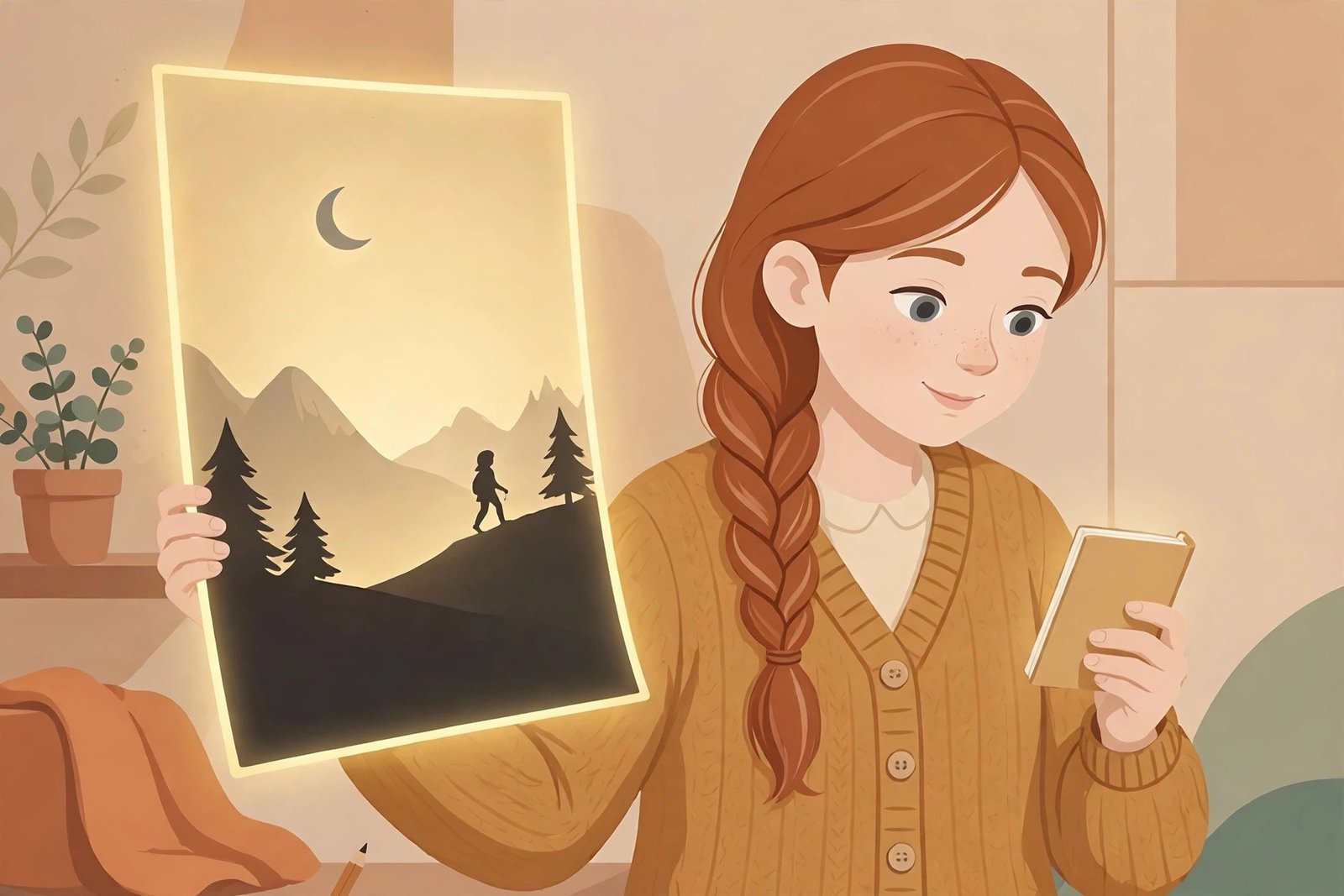
Here’s the test that pops the bubble, gently. When the film starts, ask one question: what do I actually know? Not feel. Not hope. Know.
Say the door boy comes back to mind tonight. What do you know? He held a door. He said two words. He’s in your grade. That’s the whole file. Now look at what the film added: he likes you, he thinks about you, he will ask you out before the dance, his friends already know your name. None of that’s in the file. All of it was written by a hopeful brain with a free evening. Seeing the two lists side by side isn’t sad. It’s freeing. The facts are small and calm. Only the film is loud.
Try this with any boy, and a pattern pops out. The facts are almost always tiny: a hello, a joke, a shared class. The film is almost always huge: dates, texts, a whole future. When the gap between the file and the film is that wide, you know which one is yours. You wrote the film. So you can also close it. Girls repeat the rule stop making up scenarios when a boy talks to me like a wish. It works better as a fact check: film, or file? Ask it early, and the story often shrinks back to its real size.
There’s a second gift in the fact check. It protects the boy too, in a way. The real boy didn’t sign up to be judged against a film version of himself. If you let the film run for weeks, the real boy will fail tests he never knew he was taking. He will seem cold for not texting a girl he barely knows. He will seem false for talking to other girls like a normal person. That isn’t fair to him, and it isn’t fun for you. Keeping the file small keeps your heart honest: stop making up scenarios when a boy talks to me, because he’s a classmate until life, not fantasy, says more.
And one day, a boy will do more than hold a door. He will seek you out, learn your name properly, ask real questions, and keep showing up. When that day comes, the file will grow by itself, with facts you didn’t have to invent. You’ll be glad you saved your big feelings for a story that’s actually being written by two people.
Keep one more tool in your pocket for the hard moments: the friend voice. Ask what you would tell your best friend if she built a wedding from a held door. You would laugh, hug her, and say the kind true thing. Say that thing to yourself, in that same warm voice: stop making up scenarios when a boy talks to me, sweet girl, he was just being polite. Kindness lands where scolding slides off. And on the days the film still wins, remember the score isn’t films versus no films. The score is how fast you come back.
A girl who comes back in five minutes is winning, even if she whispers stop making up scenarios when a boy talks to me ten times a day to do it.
How to Catch the Scenario Before It Runs Away
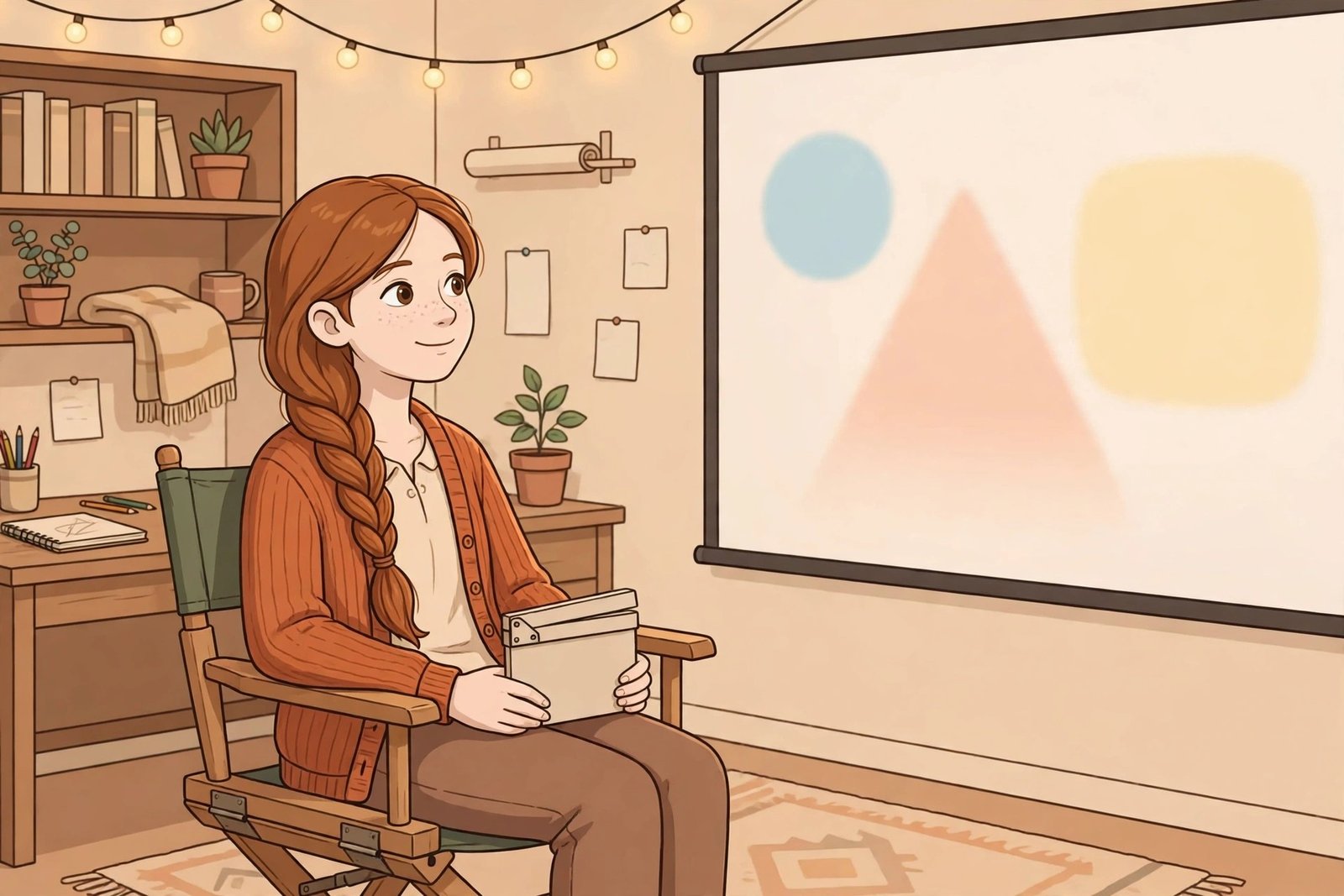
You can’t stop the first spark of a film. Nobody can. It starts in a second, before your wise brain even clocks in. What you can stop is minute ten, hour two, and day three of the film. That’s where the real skill lives: not at the spark, but at the steering wheel.
Catch it with a name. The moment you notice the story growing, label it, plainly and with a bit of humor: ah, the film is starting. Naming sounds too simple to work, and yet it works. A named film is a thing you’re watching. An unnamed film is a thing you’re living in. The second you say film, you’re back in the director’s chair, and the girl in the chair can say stop making up scenarios when a boy talks to me and actually mean it as an action, not a wish.
Catch it with a swap. Your brain wants a story, so give it a cheaper one. The second the film starts, move your body and your eyes: stand up, get water, start the homework problem, text your friend about her thing, not yours. Brains follow bodies more than we admit. A film needs a still, dreamy audience. A girl doing dishes with music on is a hard screen to project on.
Catch it with a limit you set in calm times. For example: I can replay the moment twice, then I park it. Or: no films after 10 p.m., because night films always grow teeth. Rules set while calm are easier to keep than promises made mid film. Write your rule where you’ll see it, even as a joke on your lock screen. Mine is the classic one: stop making up scenarios when a boy talks to me. Seeing it in your own words, in your own handwriting, lands differently than any advice.
Catch it with a friend, if you have one who gets it. Send the code word. Film again. A good friend will laugh with you, not at you, and drag you back to earth with one line: he asked about the homework, babe. Earth isn’t a bad place. Earth is where the real boys are, the ones worth your actual time.
Grounding Tricks That Bring You Back to Real Life
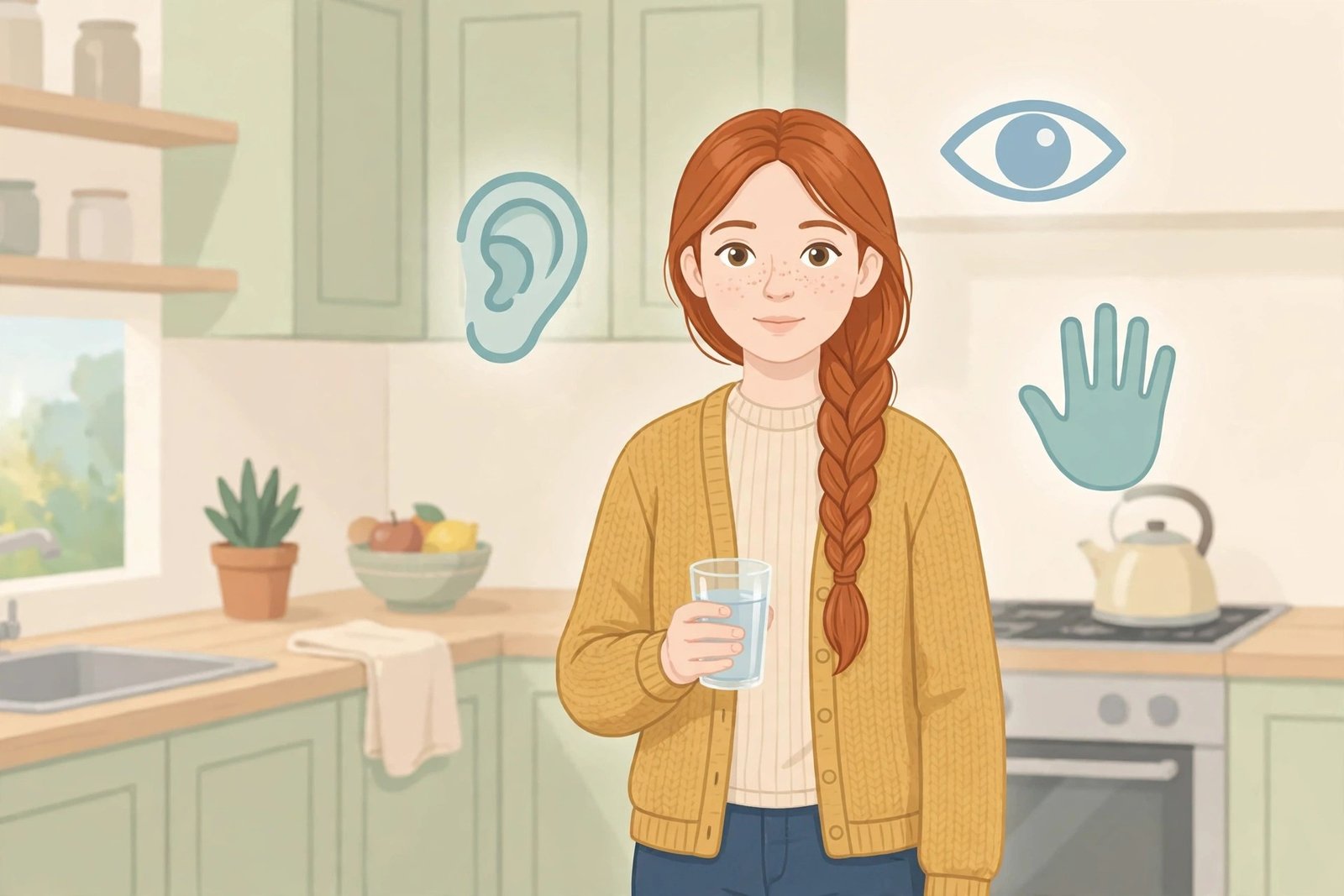
Catching the film is step one. Landing back in your real day is step two, and it helps to have tricks ready, because a stopped film can restart while you brush your teeth.
The five things trick is the fastest. Name five things you can see, four you can hear, three you can touch. It sounds like a game for kids. It’s a rope back to the present. The film lives in a soft, future place. Your senses live here, in your room, on this Tuesday. Pull the rope and the film loses its screen.
The schedule trick works on a longer fuse. Films grow in empty time: the bus ride with no book, the hour of scrolling, the slow Sunday. Fill two or three of those slots on purpose. A run, a drawing, a call with your cousin, the club you keep meaning to join. A girl with a full day still daydreams, but her daydreams visit. They don’t move in. Half the girls who beg their brains, stop making up scenarios when a boy talks to me, are really begging for a fuller calendar.
The write it out trick surprises people. Take the film and write it down, fast and silly, in a private note. The wedding, the dance, his mom, all of it. On paper, the film shows its true size. It looks like what it’s: a fun story a creative brain wrote from four seconds of door holding. Most girls laugh by line three. Laughing at the film, kindly, is one of the cleanest ways to end it.
The two column trick takes one minute and works on paper or in your notes app. Column one: what happened. Column two: what my brain added. Held a door, said two words. Added: a dance, a confession, a future. Seeing the second column in your own handwriting is a small shock every time, because it shows how much of the story is yours. You don’t have to feel bad about column two. Every creative brain writes it. You just have to stop living in it like it’s news. Fold the note, close the app, and let column one, the plain one, be the size of the thing.
And the reality anchor trick is the one to keep for stubborn films. Pick one plain fact and hold it like a stone in your pocket: he’s in my math class. He held a door. That’s all. Repeat it when the film swells. You aren’t being cold. You’re being accurate, and accuracy is a kindness to your own heart. Say it with the rule if it helps: stop making up scenarios when a boy talks to me; the file says classmate, so classmate is what he’s, until real life adds a page.
What to Do With a Real Crush If One Grows

Now, an important twist. Sometimes, under all the films, a real crush is growing. You keep meeting the same boy. He’s in your group project, your club, your bus route. The talks get longer. He remembers things. You laugh for real, not film real. What then? Do you still shut the whole thing down?
No. You change tools, that’s all. A real crush deserves real attention, the slow kind: getting to know him, talking like a person, letting him know you back in real life, in real time. The film tools were built for strangers and sparks. A growing crush is a different animal, and we even wrote a full guide on the question is it normal to think about your crush all day, because once he’s a real crush, he will visit your thoughts a lot, and that part is normal too.
The line to hold is this one: feelings for a real boy you know are fine. Films about a boy you don’t know are the trap. With a real crush, ask the file question often: what has he actually done this week? If the file keeps growing, your feelings have ground under them. If the file is still one door and one hello after a month, you aren’t in a crush. You’re in a cinema. The rule still stands, and it’s still kind: stop making up scenarios when a boy talks to me, and save my heart for stories with two authors.
And if the real crush fades or says no one day, that hurts, but it hurts clean. There’s no film to grieve, no fake future to bury. You liked a real person, you learned real things about yourself, and you move on with your dignity whole. That’s the secret prize of this whole skill. Real feelings, even sad ones, age better than films.
When Daydreams Take Too Much Room
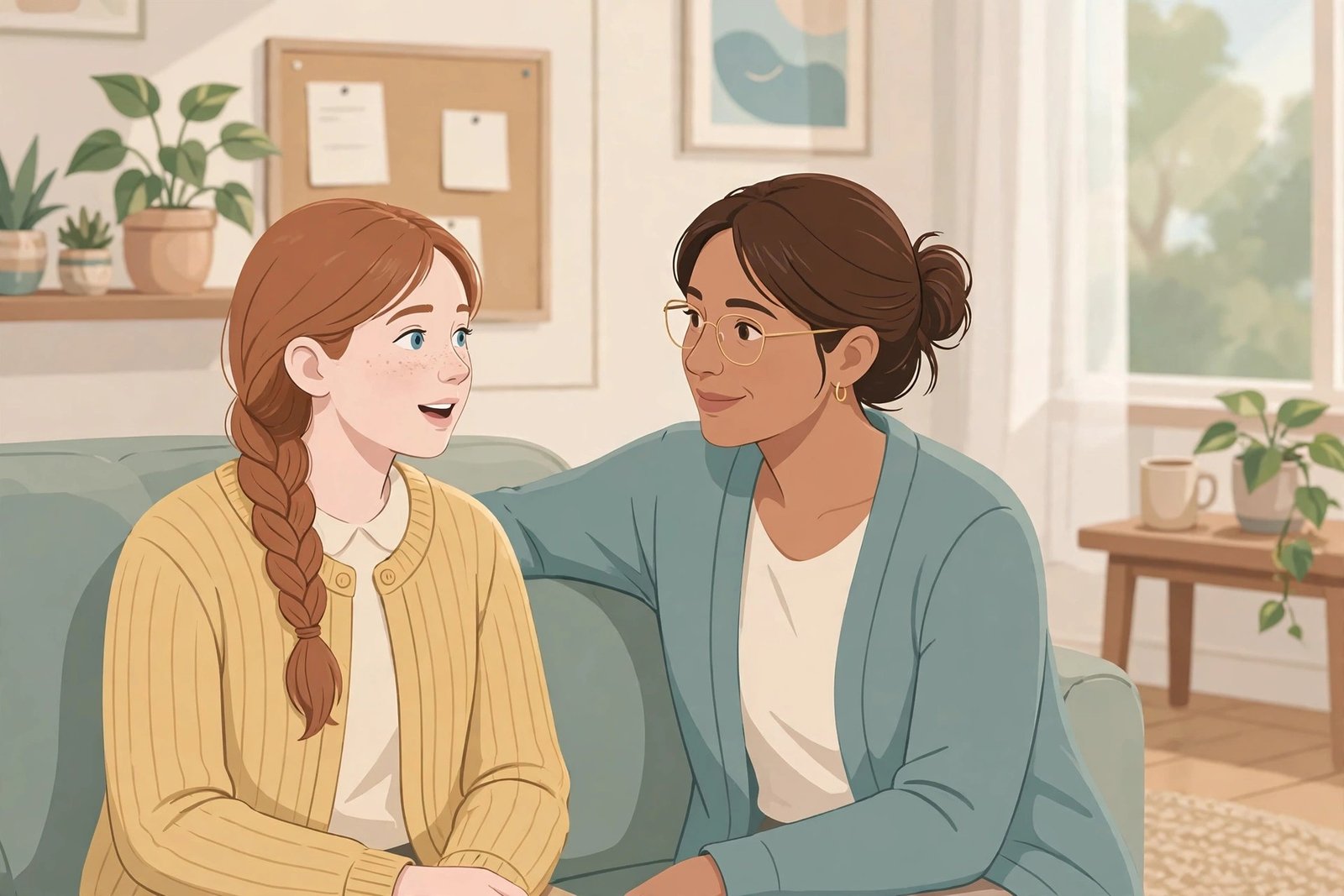
Most film habits are normal, funny, and fixable with practice. But there’s a line, and it’s worth naming, for the girls whose daydreams have stopped being fun.
Pay attention if the films run for hours every day and you can’t pull out, even when you try. If your grades drop because a classmate’s hello lives in your head rent free. If you avoid real people because the film versions are better. If the stories turn dark or panicky, or if a boy you barely know starts feeling like the only thing that matters. Those are signs the daydream habit is carrying something heavier, like deep loneliness or a hard season at home.
Girls in that spot sometimes ask a cousin of our question too, like why do I keep dreaming about my crush even at night. Dreams and day films are close family. Both mean your mind is asking for something: rest, attention, hope, a witness. There’s no shame in that ask. There’s only shame in suffering it alone and silent.
So if the films feel bigger than you, tell someone real: a parent, an older sister, a school counsellor. Say it plainly: my brain writes love stories all day and I can’t switch them off. You won’t be the first girl to say it in that office. You won’t even be the first this month. And help for a runaway imagination is real, kind, and closer than you think.
Until then, be gentle with the girl in the cinema. She isn’t foolish. She’s hopeful, creative, and still learning where stories end and life begins. Every time she catches a film early and smiles, every time she whispers stop making up scenarios when a boy talks to me and comes back to her real, good day, she’s growing. The films will get shorter. The life will get bigger. That’s the trade you’re making, and it’s a good one.
Frequently Asked Questions
Is it wrong to enjoy the scenarios a little?
A little joy is fine, honestly. A two minute film that makes you smile on the bus is just a daydream, and daydreams are part of being young. The line is cost. When the film starts eating your focus, your sleep, or your mood, it’s time to use the rule: stop making up scenarios when a boy talks to me. Enjoy the spark. Skip the rent free week in your head.
Why do I build a whole story from one tiny moment?
Because a tiny moment is the perfect blank page. You know almost nothing about him, so your brain is free to write anything, and it writes what you hope for. Add a teen brain that feels hope at full volume, plus a feed full of love stories, and one hello becomes a season of episodes. That’s exactly why the habit stop making up scenarios when a boy talks to me starts with facts: the fuller the real file gets, the less room the film has.
What if the boy really does like me?
Then real life will show it, in ways that are much clearer than a held door. He will start talks with you, remember small things you said, and make plans that include you on purpose. When that happens, you don’t need a film. You’ll have facts, and facts are better. Until then, treat every boy as a classmate you’re getting to know, and let him add pages to the file himself.
How long does it take for the films to calm down?
For most girls, the films calm down within a few weeks of real practice. Not because the imagination dies, but because the fact check gets automatic. You notice the film sooner, smile at it sooner, and land back in your day sooner. Some weeks will still be film heavy, like the week of the school dance. That’s normal. The rule stop making up scenarios when a boy talks to me is a steering habit, not a one time fix, and steering gets easier fast.
How do I stop replaying one small talk for days?
Give the replay a closing time. Let yourself replay the talk twice, on purpose, then close the tab and move your body: homework, music, a walk, a shower. If it restarts at night, write the film down once, silly parts and all, and leave it in the note. And keep your anchor close: stop making up scenarios when a boy talks to me; he asked about homework, and homework is all it was. Small facts, repeated calmly, starve a big film.