
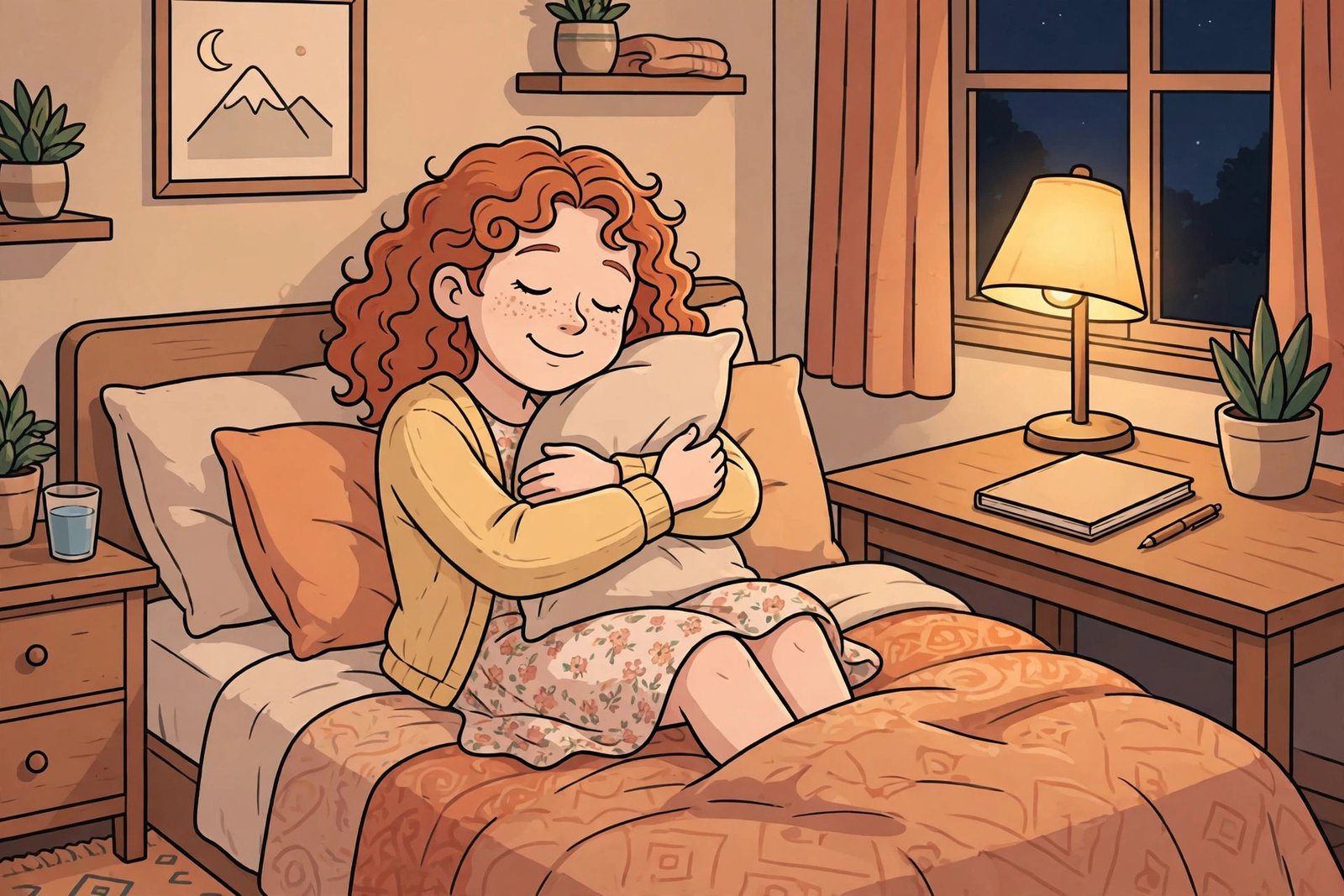
It’s 9 p.m. The essay is due Friday. The math sheet is sitting right there, and you know you should start, but a soft voice in your head says the nicest sentence in the world: I’ll do it tomorrow. You feel instantly lighter. The evening is yours again. And tomorrow night, somehow, the exact same sentence shows up wearing the same friendly smile. If you want to stop always putting things off until tomorrow, you’re not fighting laziness. You’re fighting a promise your brain makes every single evening, and keeps breaking every single morning.
And it doesn’t just happen with homework. The reply you owe your cousin. The form your mom asked you to fill. The first page of the project you actually care about. Different tasks, same sentence, same relief, same morning. When people ask how to stop always putting things off until tomorrow, they’re usually not asking about one task at all. They’re asking about a sentence that runs their evenings.
Here’s what makes this habit different from plain procrastination. It’s not about one scary task or one missed deadline. It’s a loop with a rhythm: the evening promise, the sweet relief, the guilty morning, the rushed day, and then a new evening with a new promise. The loop can run for months on homework, messages you owe people, forms, practice, everything. Learning how to stop always putting things off until tomorrow means breaking that loop at its exact weak points, not just trying harder in a general way.
And here’s the kind part, so hear it early: this loop doesn’t mean you’re dishonest or broken. Your brain is doing something very human. It’s protecting tonight you from discomfort and handing the bill to tomorrow you, a person who feels far away and suspiciously more organized. Once you see the trick, you can start catching it. This article walks the loop slowly, evening to morning, and shows you where to step in. If stop always putting things off until tomorrow is the change you want, it starts with understanding why tomorrow feels so safe in the first place.
The Short Answer

You stop putting things off until tomorrow by breaking the promise at the moment you make it, not the next morning. Tomorrow feels safer because future you seems like a different, better person, and the relief of postponing feels like a reward. The fix is small and daily: notice the promise, shrink tonight’s step to a few minutes, and leave tomorrow a kinder starting line than a cold open. That’s the heart of how to stop always putting things off until tomorrow. Not a huge life overhaul. A new move at 9 p.m., repeated until the loop loses its power.
Keep reading and we’ll walk through the whole loop, promise, relief, guilt and all, so you can see exactly where your own evenings go off track and where stop always putting things off until tomorrow quietly becomes possible. And if the sentence I’ll do it tomorrow is already warming up in your head tonight, that’s perfect timing, because the moment you hear it is the moment this whole method begins. Learning to stop always putting things off until tomorrow starts right there, mid sentence, not on some heroic Monday.
The Promise You Make Every Evening
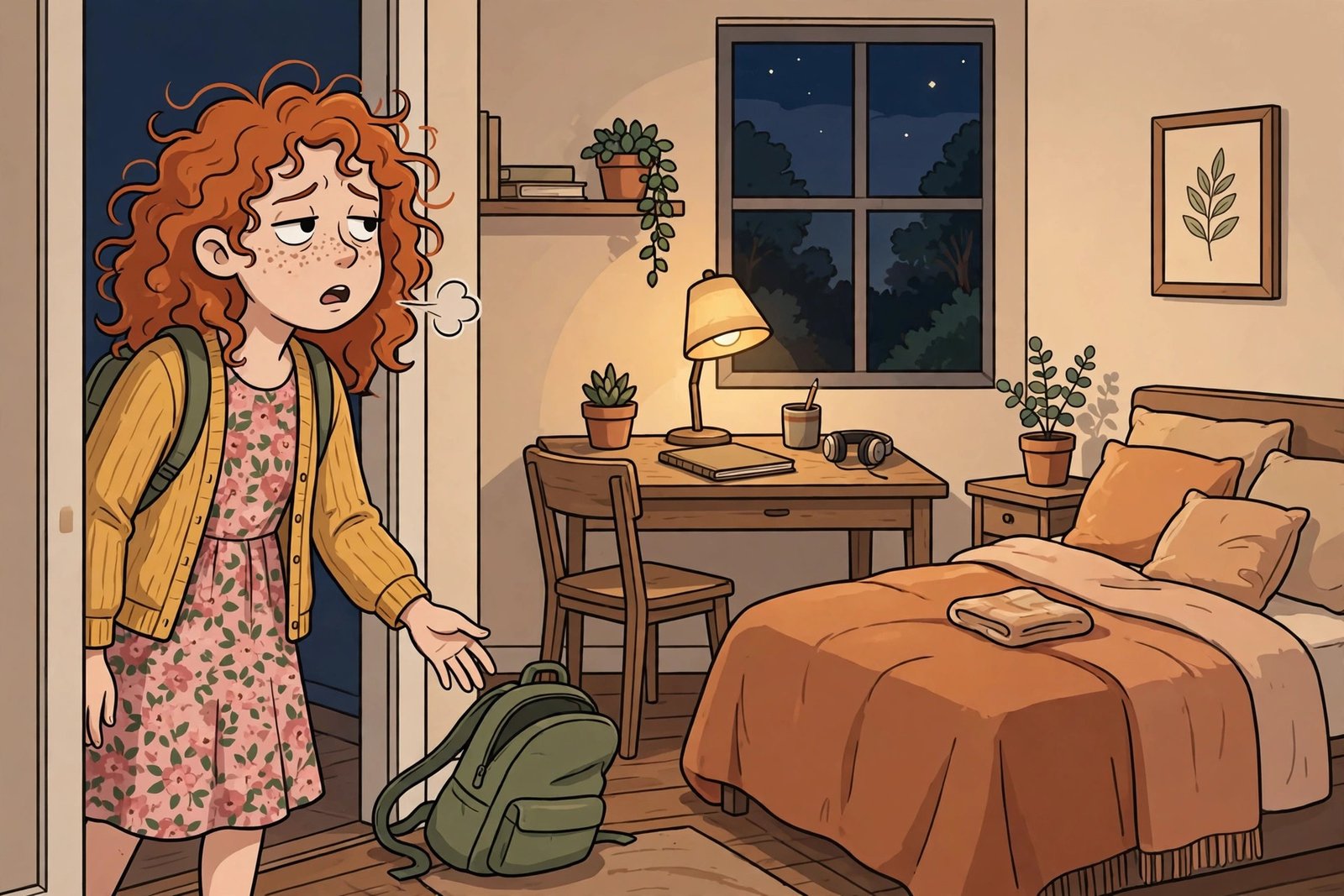
Let’s replay the scene slowly, because it moves fast in real life. Evening comes. You’re tired from school, your bag hits the floor, and the task floats into your mind: the essay outline, the permission form, the text you owe your friend. For a second, your shoulders tense. Then the sentence arrives, right on cue: I’ll start tomorrow. Watch what happens next. Your shoulders drop. The tension melts. You might even feel proud, like you’ve made a plan. You haven’t made a plan. You’ve made a promise, and the promise feels like action. That feeling is the engine of the whole loop, and it’s the first thing to understand if you want to stop always putting things off until tomorrow.
Notice how good the promise feels compared to how the task feels. Starting the essay feels heavy, uncertain and a bit scary. Promising about the essay feels light, certain and kind. Your brain isn’t stupid. It’s choosing the better feeling, the way you’d choose the softer chair. The problem is that the light feeling is the prize for doing nothing. Every evening that ends with relief teaches your brain the same lesson: say the sentence, get the reward. No wonder the sentence keeps coming back.
The promise also has a costume that makes it hard to argue with. It doesn’t sound like quitting. It sounds responsible. Tomorrow I’ll be fresher. Tomorrow I’ll have more time. Tomorrow I’ll do it properly. Each line sounds wise, and each one might even be a little bit true. That’s what makes this loop so slippery. It’s not built on lies. It’s built on half truths, delivered at the exact moment you’re too tired to check them. Catching that costume is a real skill, and girls who learn how to stop always putting things off until tomorrow usually start right here: they stop debating whether the promise sounds wise, and they start asking whether tonight’s step could simply be smaller.
There’s one more layer to the evening scene, and it matters. By 9 p.m., your decision energy is spent. School made you choose, answer and behave all day. Willpower at night is running on fumes, and fumes can’t win an argument against a warm blanket and a phone. That’s not a character flaw. That’s timing. The loop knows your weakest hour and books its appointment then. Once you see that, you stop shaming yourself for failing at night and start designing around the hour instead. The next question is the obvious one: why does tomorrow, of all places, feel so safe?
One way to see the promise clearly is to write it down once, word for word, on the night you catch it: I’ll start the essay tomorrow, when I’m fresher. In daylight, on paper, it looks thin. At 9 p.m., in your head, it felt like wisdom. That gap between the written version and the felt version is the whole trick, and seeing it once makes it easier to see forever. Girls learning how to stop always putting things off until tomorrow often say this was the first crack in the loop: the promise, caught on paper, lost its costume.
Why Tomorrow Always Looks Easier Than Today
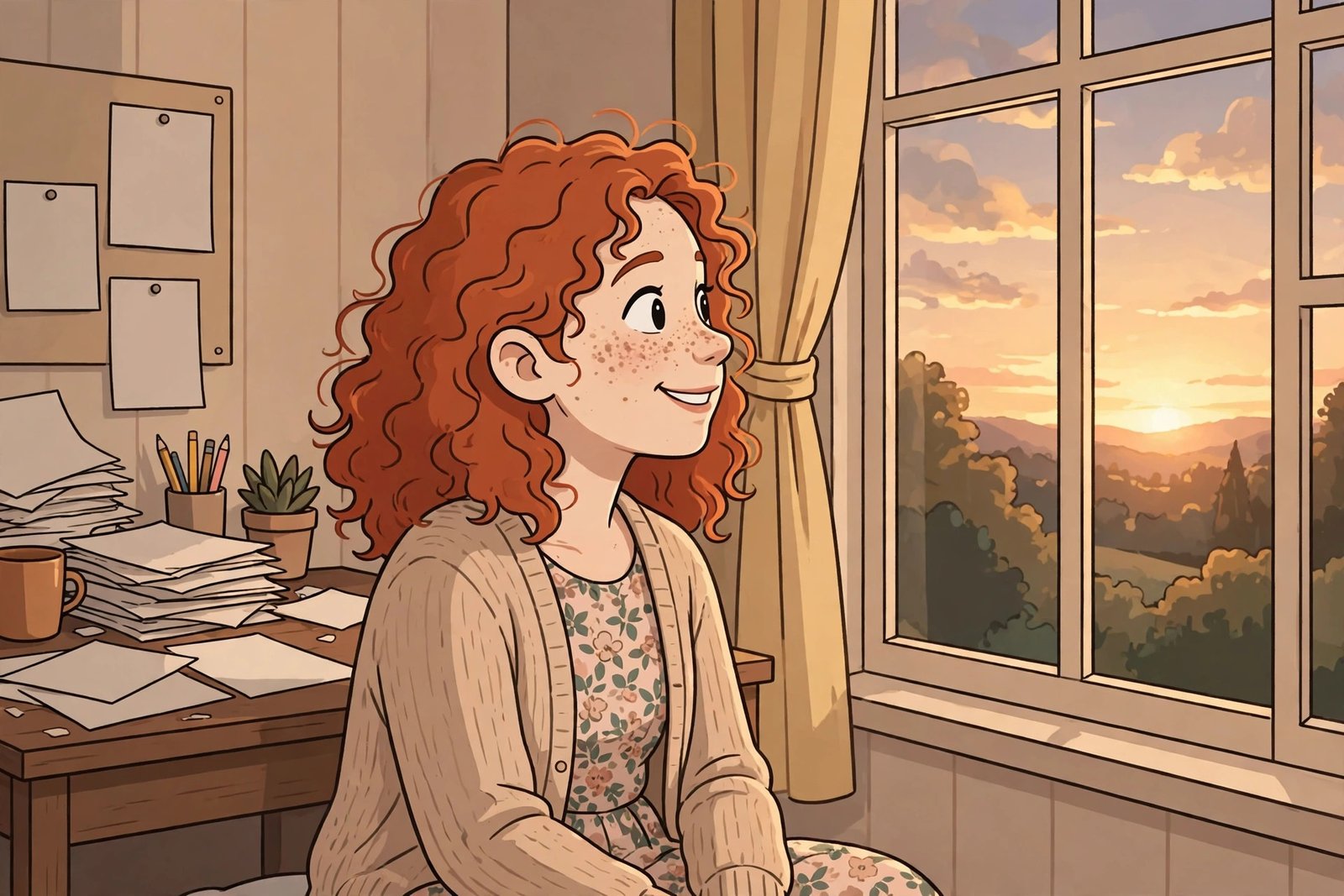
Tomorrow is the best salesperson you know. It shows you a morning where you wake up early without trying, a desk that’s magically clear, an afternoon with nothing in it, and a version of you who actually enjoys starting. Today’s picture, by contrast, is all facts: you’re tired, it’s late, the task is boring, the first step is fuzzy. A dream is competing against facts, and the dream wins every time because nobody fact checks a dream. That’s a huge part of why it’s so hard to stop always putting things off until tomorrow. Tomorrow never has to show its receipts.
Part of the trick is distance. Things that are far away feel smooth and simple in our heads. Think about how a trip next month feels like pure fun, while packing for it tonight feels like a chore. The far away version has no details, and details are where the hard parts live. Tomorrow’s homework session has no confusing first question, no missing pen, no moment of staring at a blank page. It’s just a glowing shape labeled “done.” Your brain compares a chore with details to a glow with none, and picks the glow.
There’s a real idea behind this that psychologists write about, and it’s worth knowing in plain words. A piece in Psychology Today, Why Wait? The Psychological Origins of Procrastination, explains that rewards in the future feel smaller and softer to us than rewards right now. Finishing the task pays you later, so its value shrinks in tonight’s math, while the comfy evening pays you instantly. The article also points out something that will matter a lot in the next section: we put things off partly because we don’t feel connected to our future self, the person who’ll have to deal with the mess. Tomorrow you feels like a stranger. And it’s easy to hand chores to a stranger.
So tomorrow isn’t easier. It’s just blurrier, and blurry things look light. Today’s step only looks bigger because you can see it clearly. That flips the usual story on its head: the answer isn’t waiting for a day when the task looks small. The answer is making today’s step as small and clear as tomorrow’s dream pretends to be. Hold onto that, because once you meet tomorrow you properly, the loop gets much less charming.
Tomorrow You Is Still You

Let’s talk about the person at the center of this whole deal: tomorrow you. Tonight you talks about her like she’s staff. She’ll wake up early. She’ll be in the mood. She’ll somehow have fewer classes, more energy and a sudden love for essay outlines. Tonight you hands her the task the way you’d hand a bag to someone stronger at the airport. But here’s the plot twist you already know from experience: tomorrow you is you, with the same tiredness, the same phone, and one extra gift from tonight you, which is less time.
That gap between the two yous is where the loop lives. Every evening, tonight you spends tomorrow you’s time like it’s free. Every morning, tomorrow you wakes up inside the bill. She didn’t agree to the deal, but she’s the one who pays it, in rush, in stress, in that heavy first thought of the day. When girls say they want to stop always putting things off until tomorrow, this is often the moment it clicks: they’ve been signing contracts in someone else’s name, and the someone else is them.
Try a small experiment in honesty tonight. When the promise shows up, say it in full, out loud if you can: I’m giving this to tomorrow me, who has school, a test review and twenty four fewer hours than she thinks. Said in full, the promise sounds a lot less wise. Said in its usual short form, I’ll do it tomorrow, it sounds like a kindness. The long version is the truth. The short version is the costume from the last section, doing its job.
The good news hiding inside this section is real: the same connection works in reverse. When tonight you does one tiny kind thing, tomorrow you feels looked after, and that feeling builds trust between the two of you. Trust is what turns a loop into a rhythm. You don’t need tonight you to do everything. You need her to stop writing checks she knows will bounce, and to start leaving small, honest deposits.
Think about which version of you you’d rather be loyal to. Tonight you gets an easy evening either way. The difference is what she sends forward: a closed, untouched task, or an opened one with a head start and a note saying the next page is the easy part. Loyalty to tomorrow you is the quiet engine here. Every evening you protect her a little, the promise gets weaker, because the person it was exploiting starts to feel like someone you actually know. That closeness is the deeper reason you can stop always putting things off until tomorrow without turning into a stricter, colder person. That’s the emotional core of how to stop always putting things off until tomorrow.
And it explains the morning after, which is where the loop reloads itself.
The Morning After: Guilt, Rush, Repeat
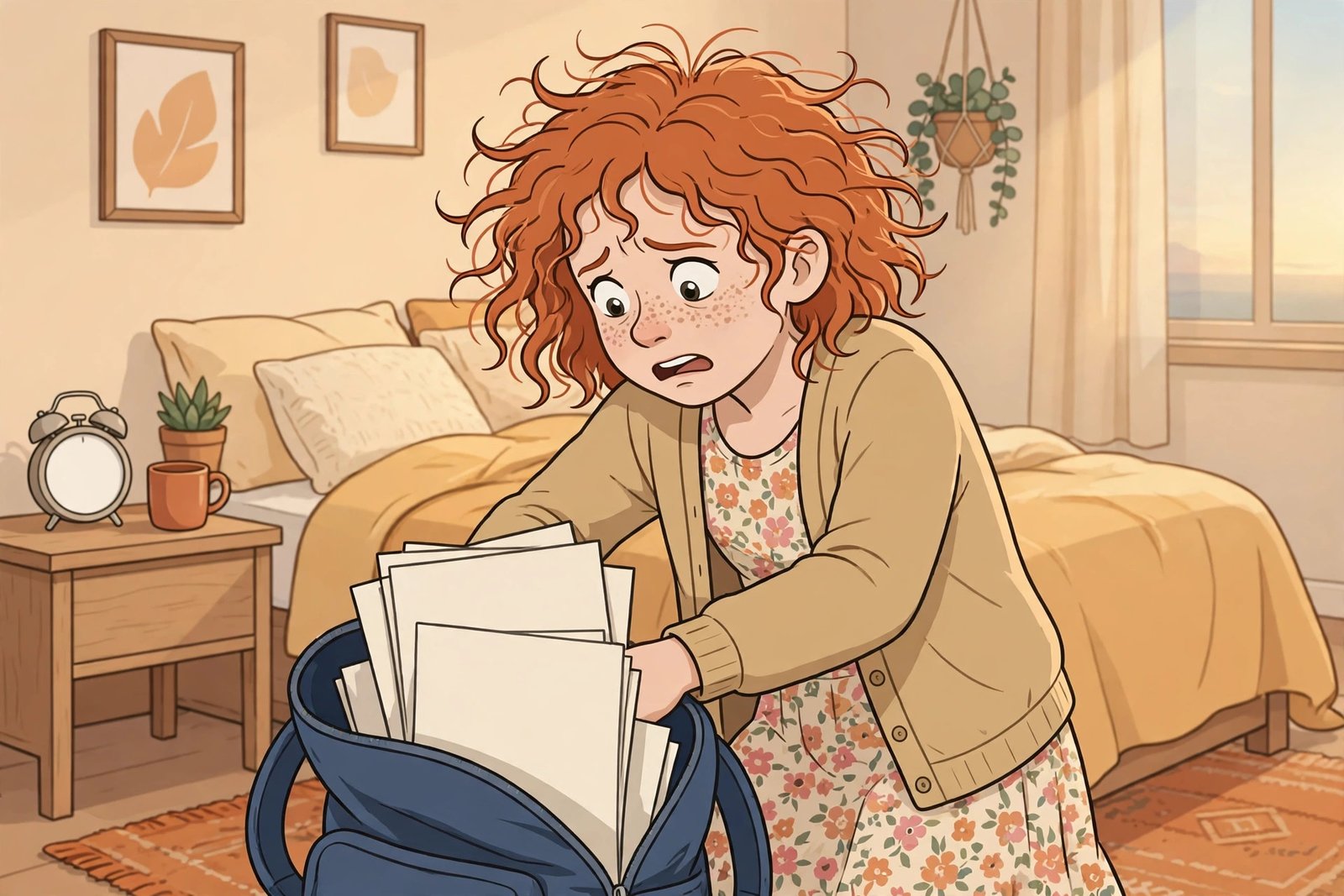
Morning you opens her eyes and meets the task before she’s even fully awake. It’s bigger now, or feels that way, because the day is real and full of edges: classes, people, a clock that doesn’t care. The guilt arrives fast. Not just guilt about the task, but a heavier kind: I did this to myself again. That sentence is the loop’s favorite fuel, because shame is exhausting, and exhausted people make evening promises. The guilt of the morning is quietly booking tonight’s escape.
Watch the rest of the day the loop creates. You rush the task or half do it, or you carry it like a stone in your pocket through every class. Either way, it costs more than it would have cost last night. And when it’s finally done under pressure, a dangerous lesson gets stamped in: see, it worked out. The deadline panic saved me. That lesson is a lie with good PR. Panic finishing works sometimes, at the price of stress, weaker work and a brain that now believes panic is the plan. Believing panic is the plan is how the loop survives for years.
There’s also a night cost nobody counts. The undone thing doesn’t always clock out when you do. It can follow you into bed and spin there, replaying itself while you’re trying to sleep. If your evenings often end with a busy, circling brain, our guide on how can I stop overthinking before I fall asleep can help you park those thoughts for the night. A task that haunts your sleep and greets you at breakfast isn’t resting, and neither are you.
So the full price of the promise is: a relieved evening, a guilty morning, a rushed day, a restless night, and a brain trained to do it all again. Written out like that, the loop looks expensive, because it is. But loops have weak points, and this one’s weakest point isn’t the morning. By morning, the train is already moving. The weak point is the exact second the promise is spoken, back in the evening, when everything still feels light. That’s where we go next, because if you want to stop always putting things off until tomorrow, that’s the moment to practice catching.
Catch the Promise at the Moment You Make It
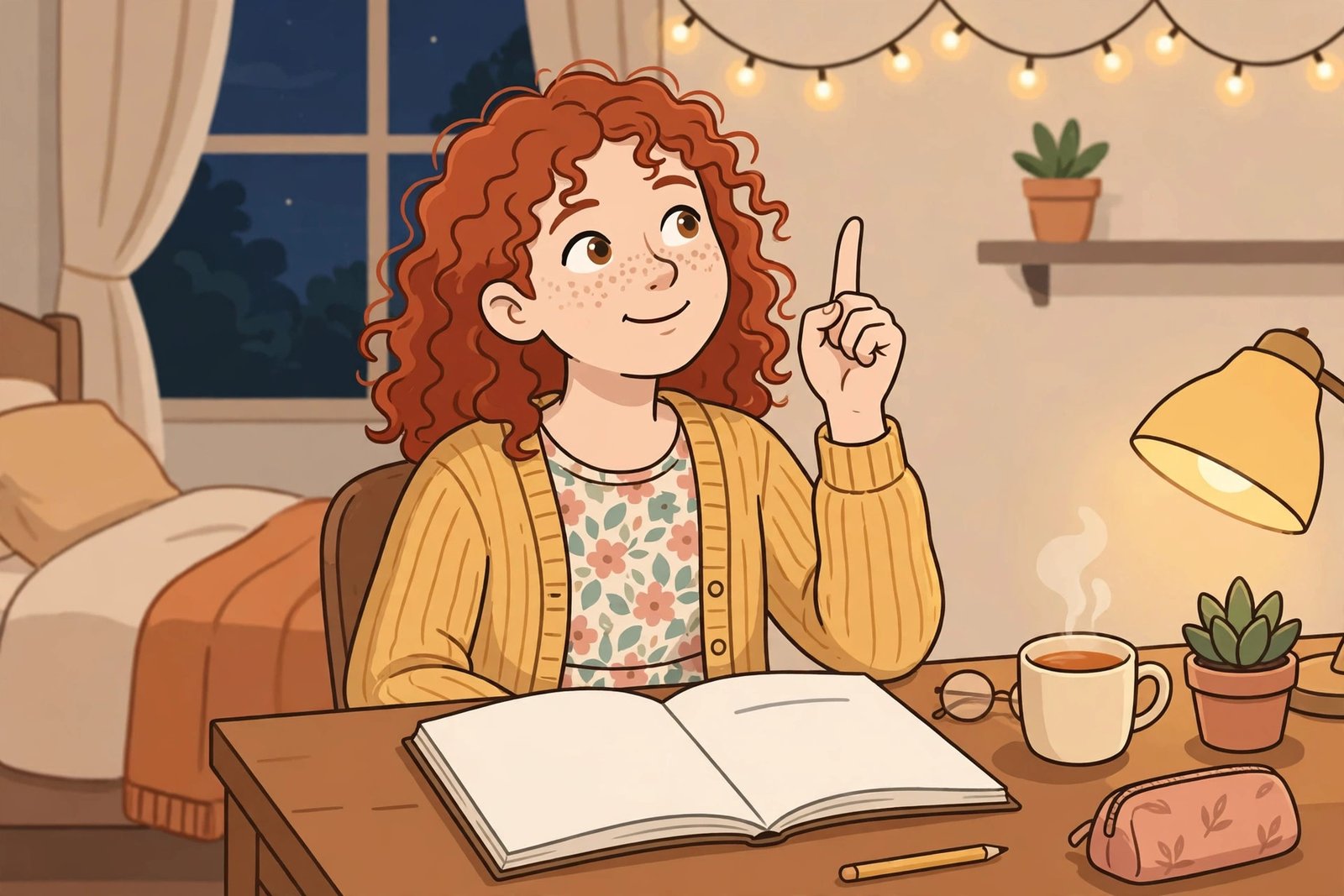
Here’s your new job, and it’s smaller than you think. You don’t have to become a different person. You have to catch one sentence. The promise has a sound, and once you’ve heard it a few times, you can’t unhear it: I’ll do it tomorrow, said fast, with a little wave of relief right behind it. The relief is your signal. Real plans don’t come with a wave of relief. Escapes do. When you feel that wave, you’ve caught the loop in the act, and catching it is half the win.
Now, what do you do in that exact second? You don’t start the whole task. You negotiate down, out loud, to something almost embarrassing. I’ll do it tomorrow becomes: I’ll open the document tonight and write the title and one rough line. That’s it. You’re not breaking the promise with willpower. You’re editing it. The evening keeps most of its rest, which matters, because a fix that steals your whole evening will be voted out by Friday. But the task loses its untouched, tomorrow only status. An opened task is a started task, and started tasks are ten times easier to return to.
A tiny script helps, because at 9 p.m. nobody invents good lines. Try this one: “Tomorrow me has a full day too. Tonight me does the first five minutes.” Five minutes is the offer. Some evenings, five minutes is honestly all you’ll do, and that’s fine, because five real minutes beat a perfect imaginary hour. Other evenings, you’ll look up and realize twenty minutes passed and the scary part is already behind you. Either way, the sentence is where it happens. Girls who stop always putting things off until tomorrow don’t win some huge battle. They win a five minute one, at the moment of the promise, again and again.
One more tool for this exact second: say the promise’s full price before you accept it. Not in a mean voice. Just factually. If I skip tonight, tomorrow I do this plus the science questions, in less time, while stressed. Sometimes you’ll still choose rest, and choosing rest on purpose is fine. The loop isn’t rest. The loop is rest purchased with a lie. The goal here is honesty at the moment of purchase, because an honest brain makes very different evening deals.
Keep the negotiation friendly, by the way. You’re not a drill sergeant, and tonight you isn’t a criminal. You’re two tired teammates passing a baton. Girls who talk to themselves like a kind coach keep the ritual going for months. Girls who turn it into a nightly courtroom quit the whole project by week two, promise and all. Kind voice, tiny offer, honest price. That’s the tone that makes it possible to stop always putting things off until tomorrow on a normal Tuesday, not just on a motivated one.
Make the First Step Too Small to Postpone
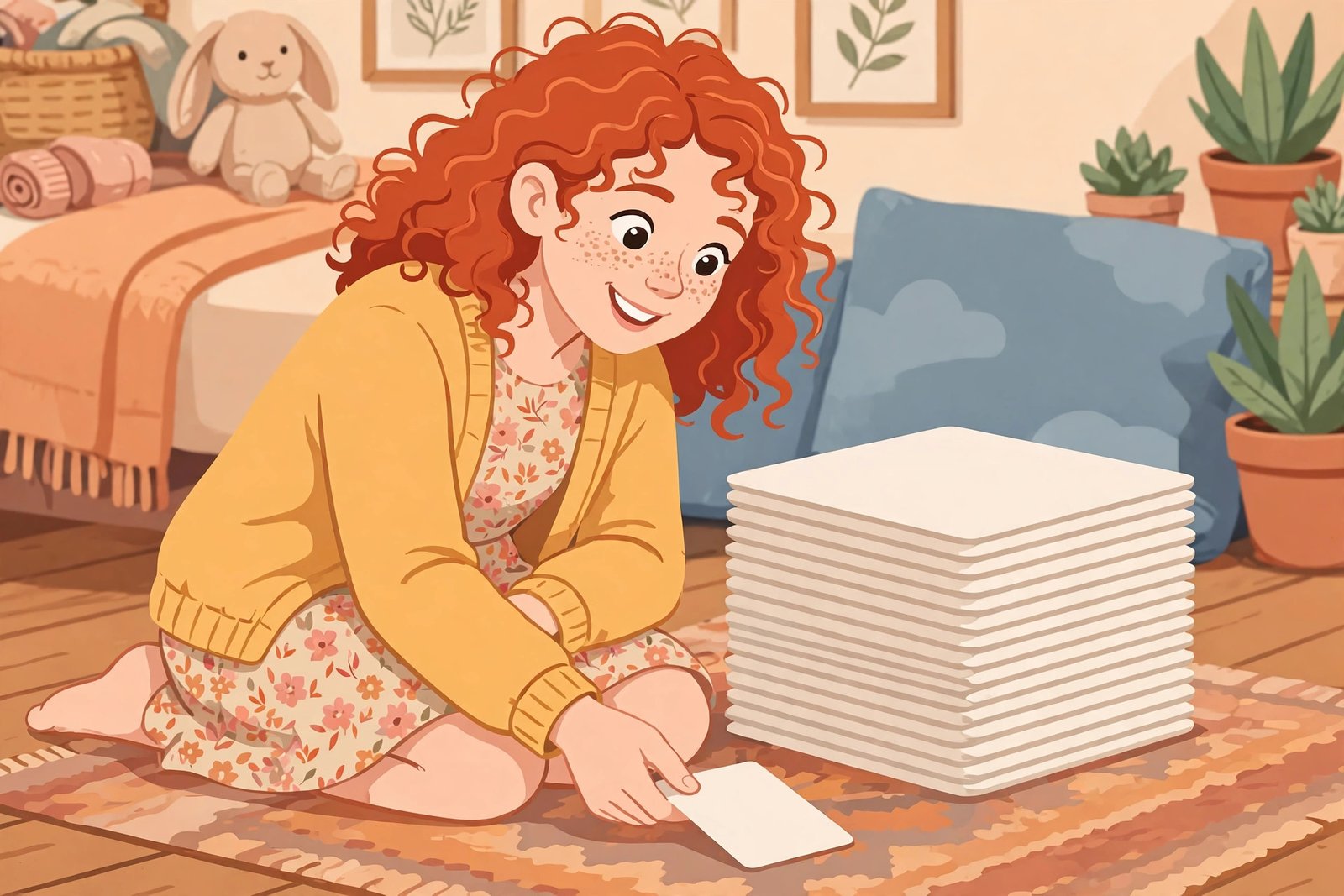
Evening you isn’t only tired. She’s also facing a task with no visible door. “Do the essay” has no handle. Where does it start? What counts as begun? When a task has no clear first move, the brain treats starting as a project by itself, and projects get promised to tomorrow. So the practical heart of how to stop always putting things off until tomorrow is embarrassingly simple: give every task a first step so small and clear that it can’t be postponed with a straight face.
Build the step out of verbs you can see. Not “work on history.” Instead: open the doc, paste the question at the top, write three ugly bullet points. Not “study for the test.” Instead: read one page and say it back out loud once. Not “text her back.” Instead: open the chat and type the first sentence, even a rough one. A step you can picture is a step you can do at 9 p.m. on fumes. A step you can’t picture is a fog, and fog always wins against a tired brain.
There’s a second trick hiding here: ugly first steps are allowed. The bullet points can be bad. The first sentence can be clumsy. Part of why tomorrow looks safer is that tomorrow’s version of the work is imagined as good, while tonight’s attempt would be judged right away, and the scary movie in your head is often what the promise is really protecting you from. Give tonight permission to be rough. A rough start tonight beats a polished imaginary start tomorrow, because only one of them exists.
Keep the step written down, too, in the place tomorrow you will actually look: the top of the notebook, a note on the phone’s home screen, a sticky note on the textbook. A written tiny step is a gift from clear headed you to foggy you. It removes the last excuse, which is I don’t even know where I’d begin. You do know. Past you wrote it down. All present you has to do is the five minutes, and the loop loses another evening.
Leave Tomorrow You a Kinder Starting Line

The last move in this article is about mornings, but not in the way you expect. You can’t fully control how a morning feels, but tonight you can change what tomorrow you wakes up to. A kinder starting line means the task is already opened, the materials are out, and the first step is written and tiny. Compare that with the loop’s usual gift: a closed bag, a vague dread, and a day that starts with an apology to yourself. Same girl, same task, completely different morning.
And on the mornings when you wake up to a ready desk, notice how the question changes: you stop asking how to stop always putting things off until tomorrow, because last night you already answered it.
Think of it as setting up a board game for a friend. You’d lay out the pieces so she can sit down and play. Do that for tomorrow you. Textbook open at the right page on the desk. Document open on the laptop. Gym bag by the door. Form on top of the pile, with a pen resting on it. Each setup takes two minutes tonight and saves twenty minutes of friction tomorrow, plus the heavy feeling that used to arrive with breakfast.
Little setups like this are how real mornings get easier, and they pair well with the gentle ideas in how to build a morning routine that protects your energy, if mornings are a sore spot for you in general.
And when a loop day still happens, because it will, don’t pay for it twice. A slipped evening followed by a morning of self attack just feeds the machine that made the slip. Instead, shrink, start, and move on. One kept five minute promise after a broken one teaches your brain something the guilt never could: the loop can be interrupted, by you, on an ordinary day, without drama. That’s the whole secret, really. To stop always putting things off until tomorrow, you don’t need a new personality. You need a caught sentence, a tiny step, a kinder starting line, and the patience to repeat them until tomorrow stops sounding like a place where a better girl lives.
She was never there. She’s here, tonight, with five minutes to give. That’s enough. It was always enough.
Frequently Asked Questions
Is putting things off until tomorrow the same as procrastination?
It’s a specific flavor of it. General procrastination can look like avoiding one scary task for weeks. The tomorrow loop is daily: an evening promise, a wave of relief, a guilty morning, then the same promise again. If your problem repeats every single night with the same sentence, you’re not just delaying. You’re looping, and loops are broken at one repeated moment, not everywhere at once.
Why do I feel relief when I decide to do it tomorrow?
Because the promise removes the discomfort right now, and your brain counts that as a reward. Starting feels heavy and uncertain. Postponing feels light and certain, so the light feeling wins and gets remembered as a good choice. That little wave of relief is actually the loop paying you for doing nothing. Noticing it is useful: real plans feel calm, but escapes feel relieved. Once you hear that relief as a warning bell, the spell starts to break, and you can stop always putting things off until tomorrow.
What if I’m genuinely too tired tonight?
Then rest is the right call, and it’s not the loop. The difference is honesty. The loop sells rest with a fake promise attached: tomorrow I’ll definitely do the whole thing. Honest rest sounds different: I’m wiped, so tonight I do the five minute opening step or I move the task to a named slot tomorrow, and then I actually rest. Naming the slot is what makes it a plan.
How do I handle a task that’s really big?
You don’t fight a big task in the evening. You slice it the day you get it. Write the slices as tiny visible steps, one per day, with the very first one small enough to do in five minutes. Big tasks feed the loop because they have no door. Slices have doors everywhere. A week of honest five minute evenings will quietly take you further than one heroic tomorrow that never comes. That slicing is how you stop always putting things off until tomorrow, even with big work.
How long does it take to break the tomorrow loop?
Most girls feel the first shift within a week or two of catching the promise nightly, because the win is small and repeats fast. The sentence will still show up. It just stops being in charge. Some evenings you’ll still postpone, and that’s normal. The loop is broken when tomorrow stops being your default plan and becomes an occasional honest choice. That’s how you stop always putting things off until tomorrow for real: not by never saying it again, but by hearing it, smiling, and doing five minutes anyway.