
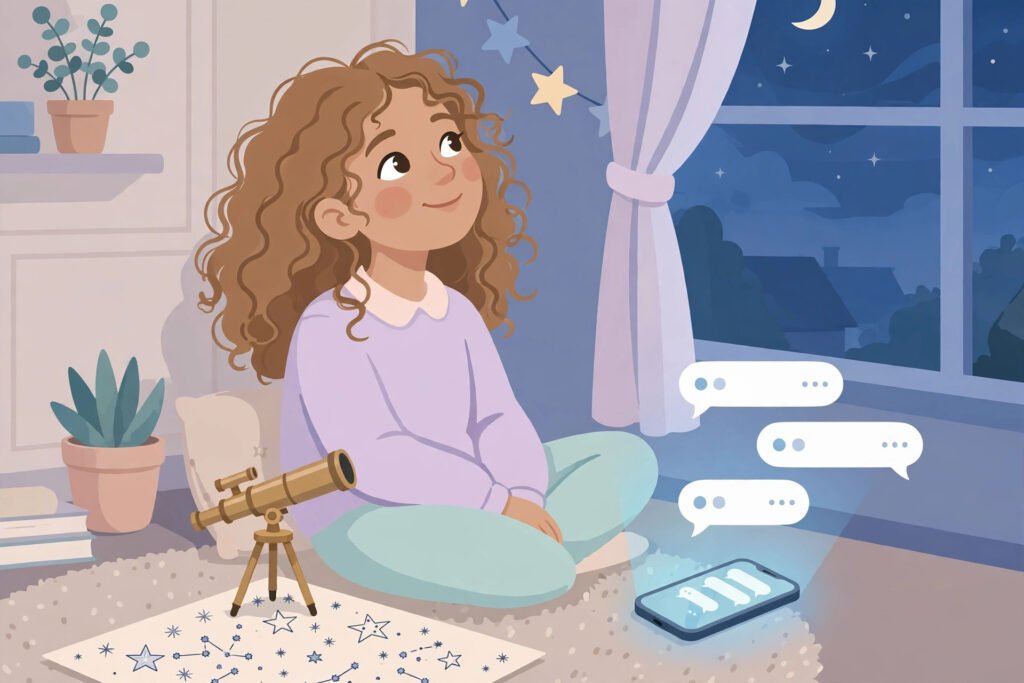
Your friends are deep in it again. The new album, the makeup tutorial, the series everyone is watching in lockstep, episode by episode, with a group chat that runs all evening. You smile at the right places. You type the right emojis. And inside, quietly, you’re somewhere else entirely, thinking about your skateboard, your astronomy app, the old game only you still love. Then the small cold question arrives. Is it normal to not have the same interests as other girls, or is something in me just built wrong?
Nothing in you is built wrong, and this guide exists to prove it slowly and kindly. To not have the same interests as other girls is one of the most common quiet experiences of the teen years, and also one of the least talked about, because every girl in the group chat may be privately wondering the same thing about herself. The girl who loves the series may be bored by the makeup talk. The makeup fan may be faking her album opinions. Groups look matching from outside. Inside, they’re patchworks.
Your interests are not a uniform you’re failing to wear. They’re information about who you are, and they’re allowed to be yours even when nobody around you shares them yet. This guide walks the whole map of what it means to not have the same interests as other girls: why groups end up matching, the quiet pressure to fake it, how to talk about your own things without shrinking, and how to find the people who light up about exactly what you love.
The Short Answer
Here’s the short answer. Yes, it’s completely normal. Interests aren’t assigned by gender like a school uniform. They grow out of your own brain, your own childhood, the things that happened to catch your attention when you were small and nobody was grading you. To not have the same interests as other girls says nothing broken about you. It says your attention has its own address, and that’s true of every person alive, including the girls who look perfectly matched from across the cafeteria.
What makes it feel abnormal is the comparison machine you live inside. At school you see the group’s taste all day, loud and constant, while your own taste happens quietly, alone, in your room. Loud looks normal. Quiet looks strange. But volume isn’t truth. If you lined up a hundred girls and asked each one, honestly and in private, whether she truly loves everything her group loves, the line would fill with confessions. To not have the same interests as other girls is so normal that it’s nearly the rule. The matching is often the performance.
So the work isn’t changing your taste. The work is smaller and kinder. Stop apologizing for your interests. Talk about them like they deserve air, because they do. Keep the door open to your friends’ world without moving out of your own. And go find, at your own pace, the people whose eyes light up at your things. That’s the whole answer to how to not have the same interests as other girls and feel at peace about it, and this guide unpacks each part.
One boundary before we start, so the map stays honest. This guide is about tastes and hobbies, the things you love doing and watching. If your difference feels bigger than hobbies, like you feel different in every room and every part of life, that’s a wider feeling with its own guides, and we’ll point to one below. Here, we stay with the interests themselves, and the right to love what you love.
Your Interests Are Not a Test You Can Fail
Start with the simplest reframe, because everything else stands on it. An interest is not an exam. There’s no answer key where the correct hobbies for a girl your age are listed, checked by some examiner in the sky. Nobody is scoring your free time. The things that pull your attention, space, skating, old games, maps, bugs, engines, poems, pulled it before you knew anyone was watching. That pull is yours. It predates the audience, and it doesn’t need the audience’s stamp.
Notice how early your real interests showed up. Most girls can trace them to being small. The kid who took toys apart. The kid who knew every dinosaur. The kid who drew the same horse four hundred times. Those early pulls are some of the truest information about a person that exists, because a seven year old has no brand strategy. When you do not have the same interests as other girls at fifteen, you’re often just still loyal to the girl you were at seven, while the group’s taste got rebuilt by trends. Loyalty to your younger self is not a flaw in the design. It’s the design working.
There’s a cousin question many girls ask alongside this one, about feeling like a different person at home and at school, quiet in one place and loud in the other. That feeling has its own guide, on why am I so different at home and at school. Your question here is narrower and, in a way, simpler. Not who am I in each room. Just, am I allowed to love different things in every room? The answer is yes, in all of them, at full volume.
Try a small thought experiment on a calm day. Imagine a girl you admire, a cousin, a singer, an older sister’s friend, and imagine learning she secretly spends her weekends on something the group would call weird. Restoring old bikes. Tracking storms. Writing fan guides for a game from 2009. Does she shrink in your eyes? She grows. She gets more interesting, more herself, more worth knowing. That warmth you feel for her difference is the warmth you’re allowed to aim at your own. Girls who do not have the same interests as other girls aren’t missing a piece. They’re carrying an extra one.
Why Girls Often End Up Liking the Same Things
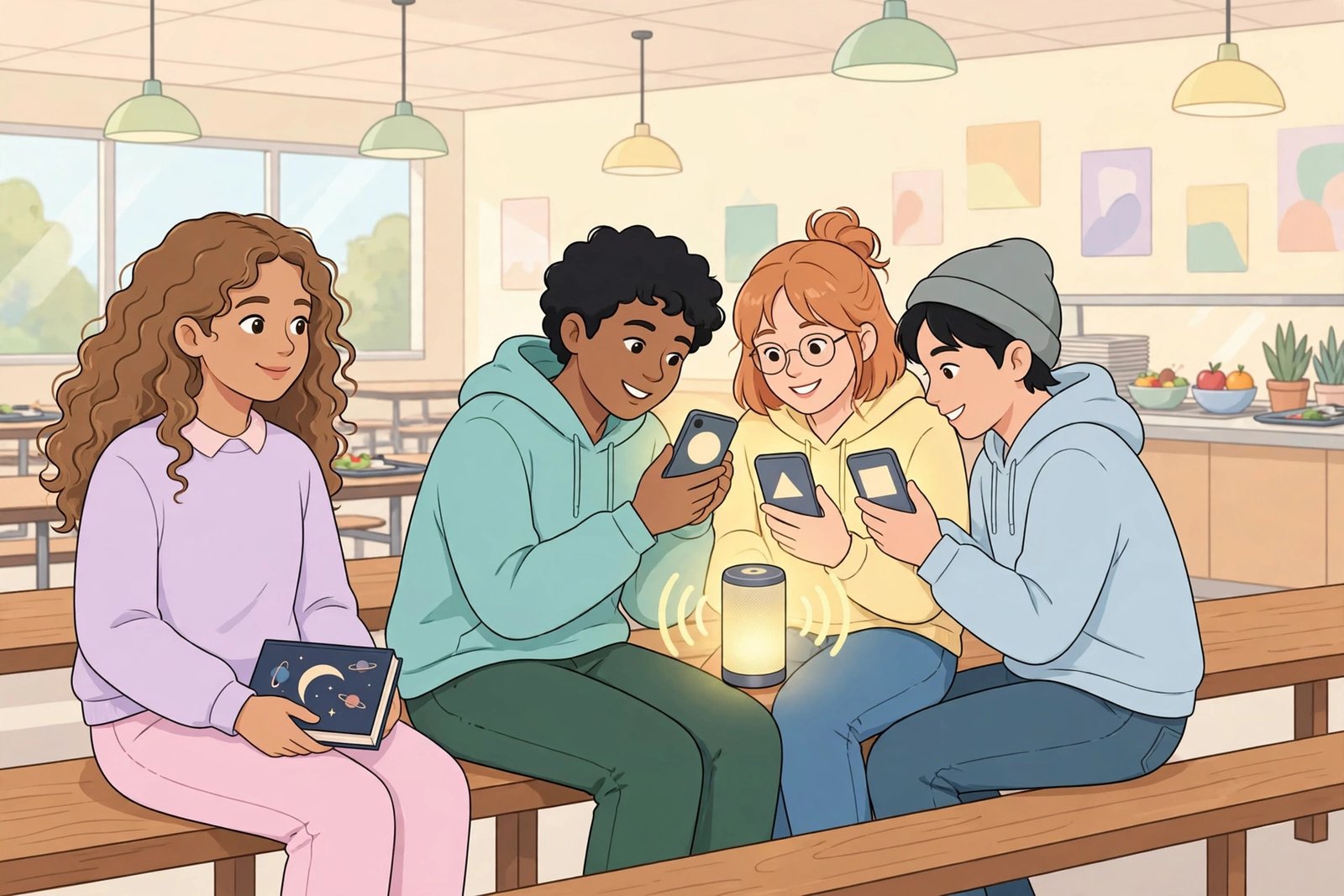
If difference is so normal, why do groups of girls so often look like they share one single taste? Because matching is what groups do, and it happens through machinery that’s nobody’s fault. Understanding the machinery takes the sting out of the comparison, because you stop seeing their sameness as proof about you, and start seeing it as weather. Groups have weather. It isn’t a verdict.
First machine: shared time. Friends spend hours together, so they watch the same series because it’s on, hear the same songs because someone plays them, pick up the same slang. Taste follows time more than it follows the heart. Half of what looks like a group’s deep shared passion is just the playlist of whoever holds the phone. If you’d been dropped into a different group at age ten, your public taste would look different by now, through no choice of yours. That thought alone loosens the shame for many girls who do not have the same interests as other girls.
Second machine: the fear of the pause. Somebody names a thing, an album, a show, a trend, and there’s a half second where each girl decides whether to say me too or risk the silence. Me too is warm and instant. Honesty is slower and colder. So me too wins, again and again, even when it’s only half true, and the group’s taste hardens into something that looks unanimous but is built of half truths stacked kindly on each other. You’ve probably added a brick or two yourself. Everyone has.
Seeing the machinery changes the question in a kind way. The puzzle stops being why am I different and becomes why did I ever think they were all the same? They aren’t. They’re a patchwork pretending, held together by shared time, kind half truths, and a feed. Underneath your own patchwork sits the same thing that sits under theirs: a girl with a few loud loves she shows the group, and a few quiet ones she keeps for herself. To not have the same interests as other girls, it turns out, is mostly to have noticed the patchwork earlier than most.
The Quiet Pressure to Match the Group
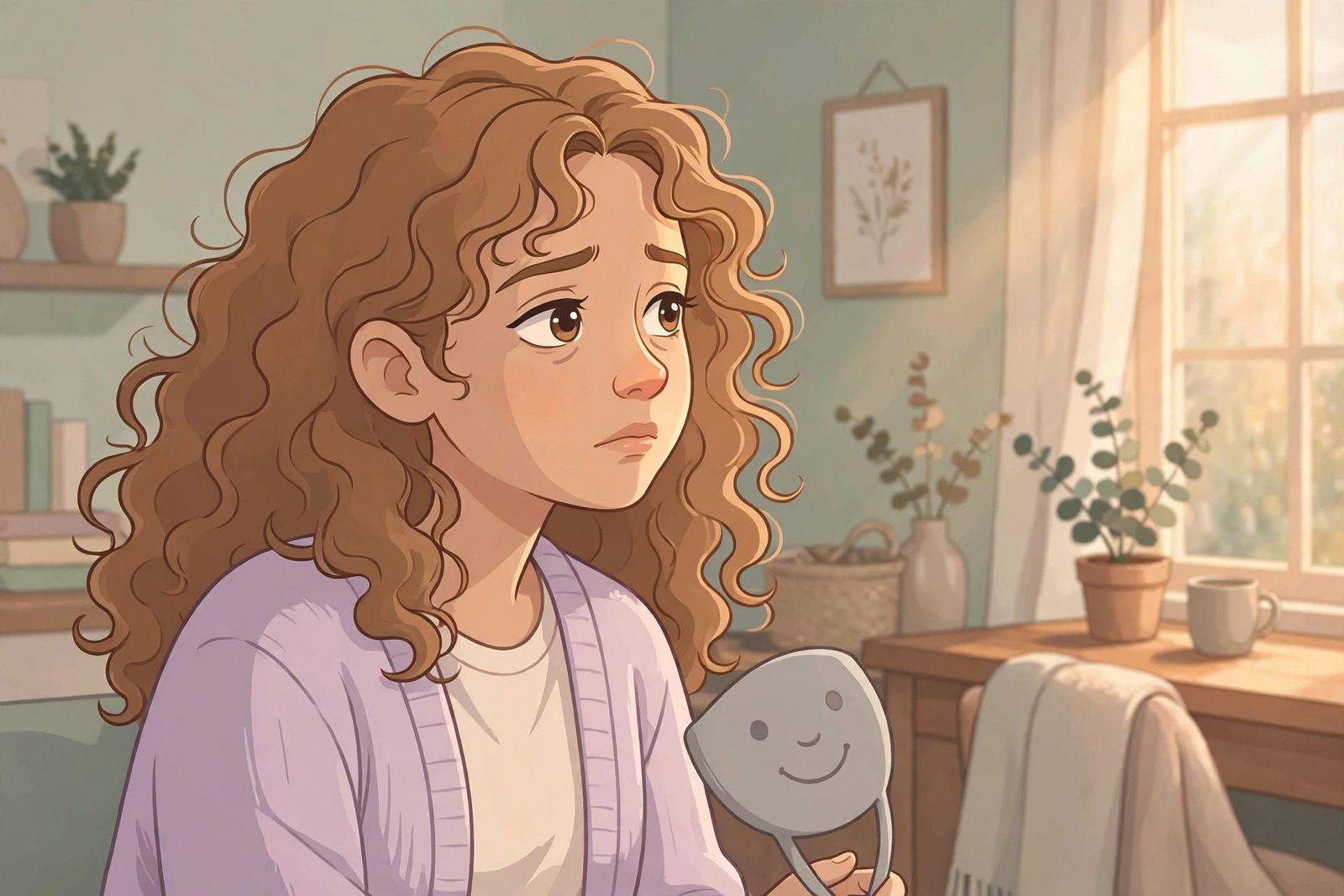
Nobody in your group has ever ordered you to love the album. That’s what makes this pressure hard to fight. It has no voice and no face. It’s just the small daily math of belonging. Agree and the conversation flows. Light up at the right moments and you’re inside. Go quiet, or worse, light up at the wrong thing, and you can feel the temperature drop half a degree. Half a degree is enough to teach a girl to perform her taste instead of having it.
The performance has a price list. Faking interest costs your evenings, spent consuming things that leave you empty. It costs your honesty, in small daily coins. And it costs you the thing this whole guide is about. The chance to be known. Friends who only ever meet your performed taste can’t love the real one, because they’ve never been shown it. Girls often say the loneliest version of to not have the same interests as other girls isn’t having different loves. It’s hiding them, and feeling unknown inside a crowd that adores the act.
The pressure also runs on a lie about stakes. It whispers that a mismatched taste will be remembered, judged, held against you at some future trial. In real life, people file your interests under trivia within a day. The friend who loves the series does not lie awake grading your hobbies. She lies awake worrying about her own half truths. The KidsHealth guide on peer pressure makes a point that fits here like a key. People feel pressure to conform mostly because they want to fit in and be accepted, and the ones who stand their ground kindly tend to feel better afterward, not worse. That has been true in every school forever, including yours.
None of this means staging a rebellion or announcing your difference like a speech. Matching the group on the small stuff, watching the series sometimes, singing the song in the car, is normal friendship glue. The line is only here. When matching starts costing your honesty every day, and your own loves get no air at all, the glue has become a cage. A girl can love her friends and still decline the cage. In fact, the friendships worth keeping are exactly the ones that survive the news that you not have the same interests as other girls in the group. Most of them do. The ones that don’t were renting your performance, not your company.
So run one honest test the next time the group lights up about something that leaves you cold. Notice the half degree of fear, name it silently, and let one small truth out. I never got into that show, but I love hearing you two fight about it. Watch what happens. Usually, nothing breaks. The conversation steps around your truth and keeps flowing, and you get to breathe inside your own skin for the rest of the evening. That’s the pressure losing, in the only arena that matters, an ordinary Tuesday. And every small truth like that is practice for how to not have the same interests as other girls without flinching.
Your Interests Are Clues About Who You Are
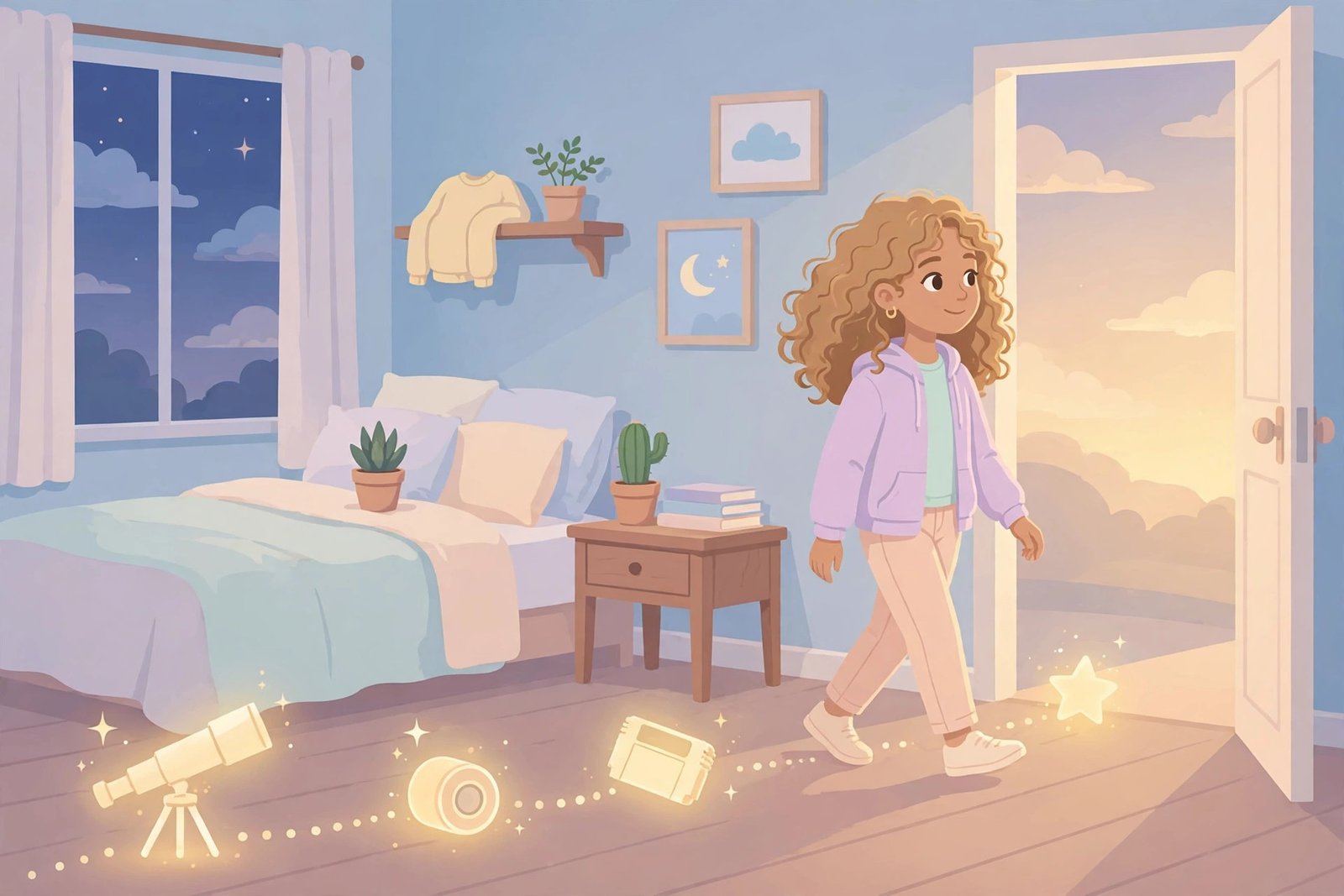
Here’s a kinder way to look at the whole thing. Your interests aren’t random noise. They’re clues, laid down over years, pointing at the shape of your mind. The girl who loves astronomy loves vast quiet questions. The girl who takes engines apart loves knowing how things work under the surface. The girl lost in old games loves worlds with rules she can master. Read your own list like a detective, and it will tell you true things about yourself.
Those clues matter beyond the teen years, even if we keep this practical. Interests are where future studies, future jobs, and future friendships quietly start. The astronomy girl may end up in science, or may just end up the friend who knows the night sky at every camping trip for the rest of her life. Both are riches. A girl who buries her clues to match the group isn’t just losing evenings. She’s misplacing directions to her own future, one small surrender at a time. That’s the real cost hiding inside the wish to not have the same interests as other girls and the shame that comes with it. Not social death. Self delay.
So treat your interests like the clues they are. Keep a small list, in your notes, of the things that make you lose track of time. Update it when a new one lands. When a wobbly day comes and the group chat is roaring about things that leave you cold, read your list like a letter from yourself. This is mine. This is real. This is allowed. Girls building that habit early become the adults who know who they are in rooms much bigger than a school hallway.
How to Talk About Your Interests Without Apologizing

Knowing your loves are allowed is one thing. Saying them out loud, in the group, without the little laugh that shrinks them, is the skill. Watch how girls usually introduce a different interest. I know this is weird, but I kind of like astronomy, sorry, it’s dumb. Three apologies before the interest even arrives. The group learns how to treat the thing from how you hand it to them. Hand it over wrapped in sorry, and they’ll hold it like something fragile and slightly embarrassing.
So practice the unwrapped version. I love astronomy. I tracked the meteor shower last week, it was unreal. Full stop, warm voice, no laugh at yourself. If a question comes, answer it like a tour guide, not a defendant. People are more curious than the fear predicts. Most friends have never met anyone who can name what’s in tonight’s sky, and novelty, offered with pride, reads as interesting far more often than it reads as strange. The first girl in any group who talks about her different thing at full volume usually discovers she was never the only patchwork in the room. She was just the first to stop hiding the pattern. Pride is not loud here.
It’s just a girl who decided to not have the same interests as other girls and to say hers like they matter, because they do.
There’s a hard cousin of this problem, by the way, the one where a girl feels she has to shrink her whole self around others, not just her hobbies. If that’s closer to your ache, the guide on why do I struggle to be myself around others goes deeper into it. Here we stay with the smaller, trainable piece. Sentences about your interests, said plainly, at normal size.
Two more tools for the toolbox. First, bring receipts of joy, not arguments. A photo of the sky you tracked. The clip of your best trick on the board. People respond to delight faster than to defense, and your delight is the most honest ad your interest will ever get. Second, ask real questions about their things in return, the ones you’re actually curious about. You don’t have to love the series to love the girl who does, and showing her that is what makes room for her to return the favor when the topic turns to your sky.
Will it always land? No. Some days you’ll get a blank look, or a joke that’s half a degree too sharp. Log it as weather, not as verdict, and notice that the friendship usually survives your honesty with room to spare. Every plain sentence you say about your loves makes the next one cheaper. That’s the quiet arithmetic of learning to not have the same interests as other girls out loud. The price drops every single time you pay it.
Find the People Who Light Up About Your Things
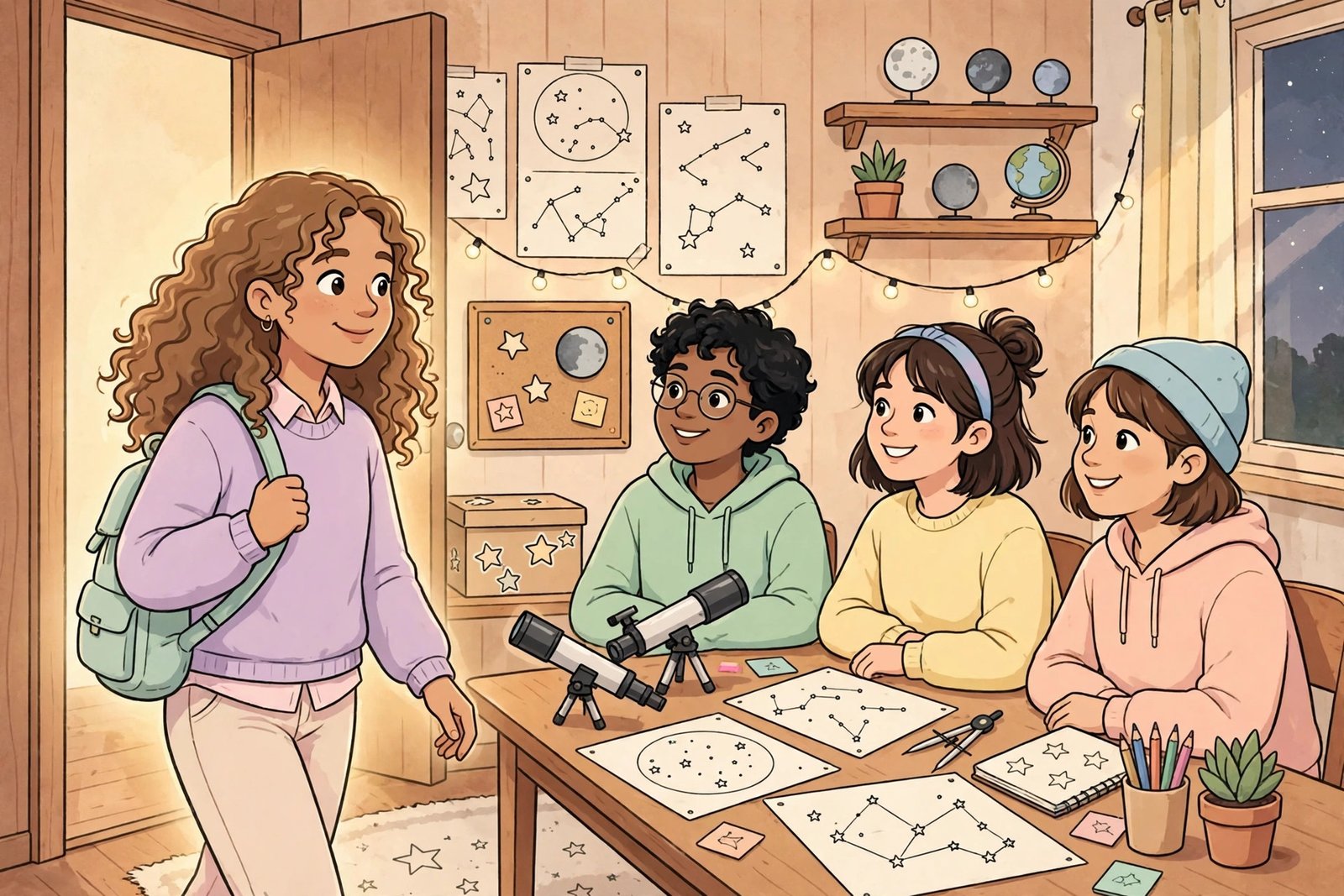
Here’s the hope at the center of this guide, stated plainly. Somewhere, probably closer than you think, are people whose eyes light up at exactly your things. The girl two grades up who runs the science club nobody talks about. The cousin who plays the same old game. The online community where your niche thing is the main event and nobody apologizes for loving it. Your people exist. The work is not becoming someone else to earn a crowd. The work is locating the crowd that’s already yours.
Start where the interest already gathers. Clubs, teams, library boards, community classes, the shop or the park where your thing physically happens. One hour a week inside a room where your love is the normal one will do more for your confidence than a month of pep talks. In that room, you’re not the exception. You’re fluent. Girls who do not have the same interests as other girls at school often find that one such room changes the whole story, because it proves the problem was never their taste. It was their sample size. They’d only ever tested their loves on one small group.
Online counts too, with the usual care. Communities built around a game, a craft, a sky, a sport can be warm and generous, and they run at all hours, which matters on the lonely evenings. Keep the safety basics firm. No real name and location shared casually, no private photos, and any person who pushes past your comfort gets blocked without a debate. Your people will never ask you to trade safety for belonging. Anyone who does isn’t your people.
And keep the timeline kind. Finding your people is not a weekend project. It’s a slow, steady widening, a club joined this term, a person met next year, a community found by accident at twenty. Some of the deepest friendships of adult life start exactly this way, two people lighting up about the same supposedly weird thing. To not have the same interests as other girls in your current group is not a life sentence of standing outside. It’s often just the early chapter of a search that ends in rooms where you fit without performing. The search is worth starting now, at bookshelf scale, one small room at a time.
Enjoy Their World Sometimes, Without Leaving Yours
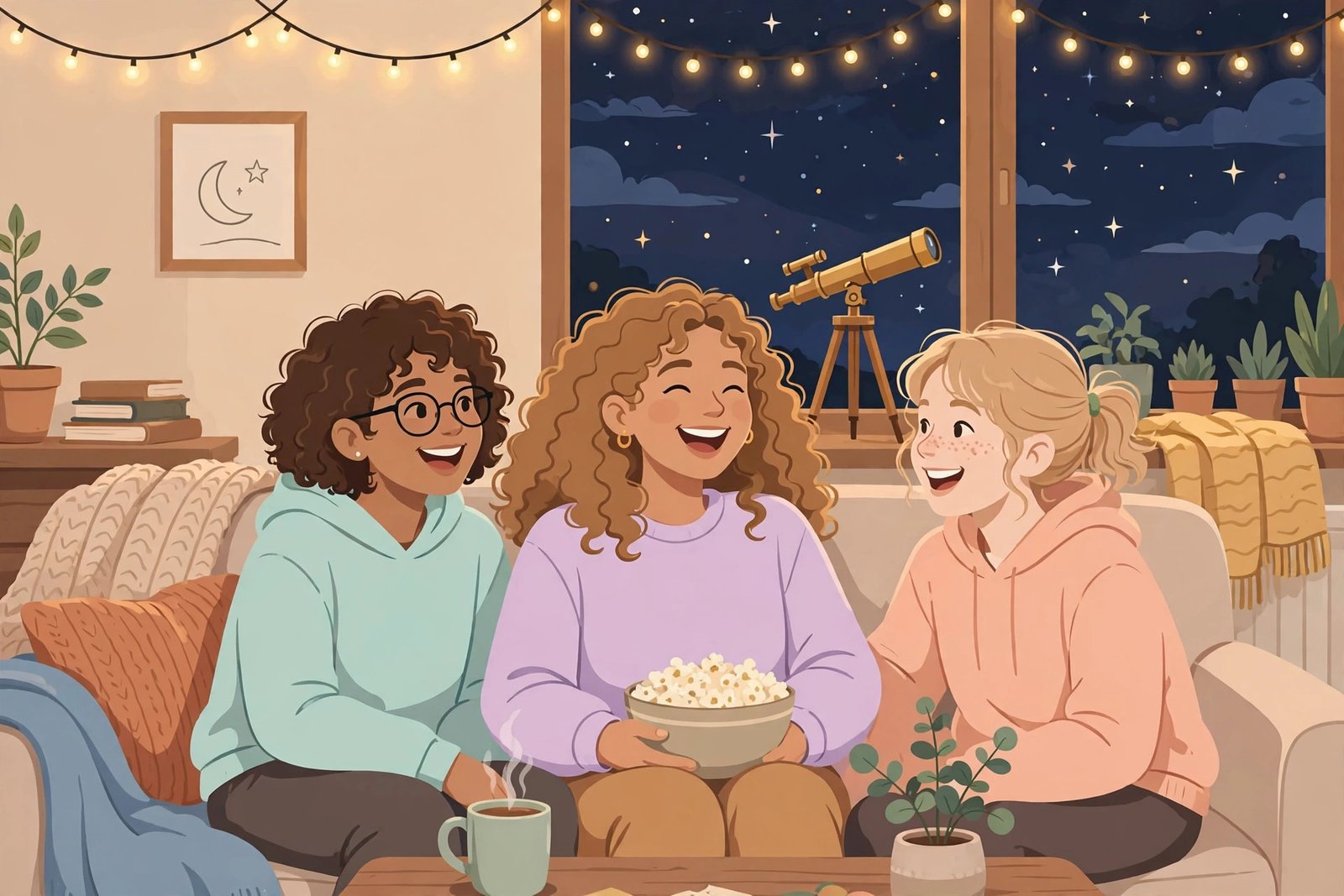
This last section is the balance beam, so let’s walk it slowly. Nothing in this guide asks you to reject your friends’ world. Watching the series with them sometimes, dancing to the album at a party, sitting through the makeup tutorial because your best friend is glowing while she explains it, all of that is real friendship, and it costs you nothing true. Sharing a friend’s joy is not faking. The difference is the door. Joining their world by choice, for an evening, with your own world waiting intact at home, is generosity. Moving out of yours and pretending to live in theirs is the cage from earlier. Same sofa. Opposite meanings.
So keep both addresses. Spend the evening in their world when the company is the point, and spend other evenings in yours without a shred of guilt. Tell them where you are, too, lightly. Tonight I’m in the sky, meteor shower, text you after. Friends rise to clear information far better than to mysterious distance. Guests go home happy. Tenants pay rent forever. You’re a guest in their world and the owner of yours, free to not have the same interests as other girls and still be loved at both addresses. You may be surprised how many of them ask, the third or fourth time, what exactly you’re watching up there, and whether they can come sometime.
Doors open from the inside.
Expect the mix to keep changing, because it will. Interests drift across the teen years like weather systems. The group’s current obsession will be unrecognizable by next year. One of your quiet loves may suddenly become everyone’s, thanks to a show or a trend, and you’ll have the strange pleasure of being the group’s elder on it. And some of your loves will stay private and yours for decades. A self with a few rooms nobody else has keys to is not a lonely self. It’s a roomy one.
If a day comes when the difference stops feeling like weather and starts feeling like a wall, if you feel unknown by everyone, most days, in a way that sits heavy on your chest, that’s bigger than hobbies and it deserves a person. Tell a parent, a counsellor, an adult you trust, the simple version. I feel different from everyone and it’s starting to hurt. That sentence has opened more doors than any hobby ever will, and asking is strength, not surrender.
So here’s the whole map, one last time. Your interests are not a test. Groups match because of time and kindness, not because sameness is truth. The pressure to match is weather, and weather passes. Your loves are clues about who you are and where you’re going. Say them at full size, find the rooms where they’re ordinary, and visit your friends’ world as a guest you choose to be, never as a tenant who pays in honesty. Do that, and to not have the same interests as other girls stops being a question you ask with a lump in your throat.
It becomes a simple fact about a girl with her own sky, her own game, her own road, and plenty of company coming. You were never built wrong. You were just built yours.
Frequently Asked Questions
Is something wrong with me if I don’t like what my friends like?
No. Taste isn’t a health chart, and there’s no correct set of hobbies for a girl your age. Your friends’ loves grew out of their histories, and yours grew out of yours. To not have the same interests as other girls is a difference, not a defect. If feeling different hurts most days or starts shrinking your life, that’s a signal to talk to an adult. Not because your interests are wrong. Because you deserve company in the feeling.
Should I pretend to like their things so I fit in?
A little joining in is normal friendship. Watching the series at a sleepover, singing along in the car, that’s company, not acting. The line is your daily honesty. If you’re performing interest every day, hiding everything you truly love, and going home strangely tired, the performance costs more than the fitting in pays. Try the cheaper move first. One small truth, said warmly, and watch how little breaks. Most groups absorb honesty far better than the fear predicts, and being known is worth more than being camouflaged.
How do I join a conversation about something I don’t care about?
Ask about the people, not the thing. You may not care about the album, but you can care that your friend is glowing about it, and people feel the difference. Ask what she loves most about it, and which part made her cry or laugh. Listen like a guest in her world, and good guests are welcome everywhere. Then let the topic turn, naturally, and take your turn when it comes. You don’t need shared taste to share a table. You need curiosity, which travels anywhere.
What if my friends tease me about my interests?
Light teasing is weather. It lands soft, it moves on, and nobody keeps score. If the teasing has an edge, if your thing becomes the group’s running joke and you feel smaller, that’s not weather anymore. Say it plainly once to your closest friend. That one stings, can we drop it? Real friends adjust. And if nobody adjusts, remember other rooms exist. To not have the same interests as other girls is survivable. Being mocked for them is a sign to widen your map, not to shrink your loves.
Can I keep my friends if our interests stay different?
Yes, and most friendships are built exactly like that. The real glue was never the album. It’s the history, the loyalty, the showing up, each other’s families and fears. Interests rotate across a lifetime. Glue like that doesn’t. Love your things at full size, visit their world warmly, and let the friendship be a patchwork instead of a uniform. Belonging was never about matching. It’s about being known. And yes, you can not have the same interests as other girls and still belong completely.